Contents
- The short version: five picks by budget
- Felt: the one craft worth real money
- The dombyra question — and whether you can fly it home
- Jewellery, silver and amulets
- Wearable buys
- Leather, wood and metal
- Edible souvenirs
- Where to buy it: Almaty
- Where to buy it: Astana, Turkestan and Shymkent
- How to pay, and how hard to haggle
- What you legally cannot take home
- Skip these
- Frequently asked questions
- Final thoughts
Search for Kazakhstan souvenirs and the first thing Google shows you is a shopping row of flag lapel pins, shot glasses, a “Kazakhstan Map Print” and — our favourite — an eBay gift set consisting of chocolate, a dombra keychain and a fridge magnet, none of which has been within four thousand kilometres of the steppe.
The best Kazakhstan souvenirs are handmade felt — a syrmak carpet or a tuskiiz wall hanging — a playable dombyra, silver jewellery set with carnelian, an embroidered takiya cap, and Rakhat chocolate, which costs about 209 tenge for the classic bar and is the single best value gift in the country. Buy them at Almaty’s Green Bazaar, the craft fair on Zhibek Zholy, or the Qazaq Oner artisans’ centre.
This guide gives you actual prices in tenge, actual addresses, and — the part every competitor omits entirely — the four things that can get taken off you at the airport.
The short version: five picks by budget
| Budget | Buy this | Why |
|---|---|---|
| Under 5,000 KZT | Rakhat “Kazakhstanskiy” chocolate; a takiya cap from about 2,000 KZT; kurt from the bazaar | Unbeatable value per tenge. The cap is wearable and genuinely Kazakh |
| 5,000–20,000 KZT | A leather torsyk kumis flask (about 14,000 KZT); a decent kamcha whip; camel-wool socks and shawls | Handmade, packable, no paperwork |
| 20,000–100,000 KZT | A playable dombyra (35,000–88,000 KZT); a small syrmak felt rug (from about 56,000 KZT) | The two things people actually keep for thirty years |
| 100,000 KZT and up | A full-size syrmak — 130,000–450,000 KZT depending on size and maker | Genuine craft object; will outlive you |
| Spend nothing | Eat it instead: dried fruit and nuts, Altai honey, kazy sausage, a shot of kumis | Zero luggage, and food is excluded from the VAT refund anyway |
Felt: the one craft worth real money
Syrmak, shyrdak and tekemet — what you are actually looking at
Every guide says “felt rugs” and stops. The distinction matters and it is the difference between paying a fair price and being sold the cheaper thing.
Syrmak (Kazakh) and shyrdak (Kyrgyz) are the same object under two names, and both are mosaic inlay: two layers of contrasting felt are cut to interlocking patterns and stitched together, producing mirrored ornament where the positive of one colour is the negative of the other. A Kazakh carpet retailer’s own product copy puts it plainly — syrmak is a handmade felt carpet in the mosaic and appliqué technique.
Tekemet is made the opposite way. Wool is spread over a reed mat, the decoration is laid directly into the loose fibre, and the whole thing is rolled and pressed repeatedly so the pattern fuses into the felt. The edges are soft and slightly blurred; a syrmak’s edges are crisp and stitched.
A syrmak’s pattern is cut and stitched by hand, piece against piece; a tekemet’s is laid into loose wool and pressed. That is your pricing logic. Both are worth owning; know which one you are buying.
One material note that is not marketing: steppe conditions produce wool that felts unusually densely, and Bactrian camel wool is used here alongside sheep. Kazakh felt genuinely is different stuff.
How to tell handmade from machine-pressed in ten seconds
Turn it over. A hand-cut syrmak has visible stitching along every pattern boundary on the reverse, and the stitches will not be perfectly even. Machine work has a bonded or glued back and identical repeats. Then look at the corners: hand-cut curves are slightly asymmetrical between mirrored halves. If both sides of a symmetrical motif are identical to the millimetre, a machine cut it.
What felt costs
| Item | Price seen (July 2026) |
|---|---|
| Small syrmak, 0.8 × 1.5 m | 56,000 KZT |
| Handmade syrmak, workshop rate | from 50,000 KZT per square metre |
| Syrmak, typical classified-ad range | 130,000–300,000 KZT |
| Large branded syrmak, 200 × 300 cm | 450,000 KZT (listed as preorder) |
| Used koshma felt rug | 45,000 KZT |
| Overall category span, classifieds | 7,000–300,000 KZT |
Tuskiiz — the smarter buy for a small suitcase
A tuskiiz is an embroidered wall hanging rather than a floor covering — the textile that goes behind the bed in a yurt. It folds flat, it weighs almost nothing, and it looks better on a European wall than a rug does on a European floor. If you spend one afternoon of your trip in a craft shop, spend it looking at these.

The dombyra question — and whether you can fly it home
The dombyra is the two-stringed long-necked lute at the centre of Kazakh music. The kobyz is the bowed instrument with the shamanic associations. The shankobyz is a small metal jaw harp, and it is the obvious answer if you want an instrument and only have hand luggage.
Souvenir dombyra vs one you can play
| Tier | Price | What you get |
|---|---|---|
| Decorative / child’s | 3,499–4,385 KZT | Wall ornament. Will not hold tune |
| Basic wholesale | from about 10,990 KZT | Playable-ish. Fine for a beginner |
| Child’s, ash or jide wood | 21,900 KZT | Real instrument, 3/4 scale |
| Handmade adult, size 48 | 35,000 KZT | The sweet spot for a visitor |
| Adult beech; 44-inch orchestral ash | 65,000–80,000 KZT | Serious instrument |
| Jeide-wood 48; bas dombyra | 88,000–270,000 KZT | For people who already play |
Family workshops are a live thing in Almaty, not a heritage display. Ruhani Dombra is the Ruhanov family’s dombyra-making business; get its current workshop address from the makers before you go. Buy from a maker and you can talk through the wood and the size with the person who made the instrument.
Getting it on the plane
This is a real problem and nobody addresses it. A dombyra is a long-necked instrument, and an adult one in a hard case is far longer than a standard cabin bag, so measure it in its case before you book.
Air Astana requires a paid extra cabin seat for large instruments; guitar- or saxophone-sized instruments can travel in the cabin or as checked baggage. FlyArystan‘s paid additional hand-baggage service takes a cased instrument up to 110 × 30 × 30 cm and 10 kg, with a maximum of three instruments per flight under that service. A purchased seat for the instrument is a separate arrangement, and its special-services page allows a case up to 120 × 50 × 30 cm and 30 kg. Do the arithmetic with the case on, then contact FlyArystan before booking to confirm which option your dombyra fits. Buy the case at the same time as the instrument, and re-check the airline’s current policy directly — these pages change.

Jewellery, silver and amulets
Kazakh silverwork is heavy, geometric and set with carnelian and turquoise rather than faceted stones. The pieces to know: syrga (earrings), blezik (bracelets, often broad cuffs), and tumar amulets — triangular or tubular cases that traditionally held a written charm. The shanyrak motif, the crown-wheel of a yurt roof, appears on everything and is also on the national flag’s emblem.
Ask the price before you commit, since jewellery varies widely with the maker and the metal. Expect to pay meaningfully more in a gallery than at a bazaar stall, and expect the gallery piece to be by a named maker.
Street-level amulet buying happens in the park between the Green Bazaar and Almaty’s Central Mosque, where hawkers sell prayer beads, protective stickers and pamphlets. It is atmospheric. It is also where you should be most alert to overpaying — see our notes on common scams in Kazakhstan.
Export permission — why the antique stall is the risky one
Flagging this here because it belongs with jewellery. Antiques and old jewellery may need Ministry of Culture and Information permission before they can leave Kazakhstan, so ask about export paperwork before you buy. That sweeps up exactly the sort of “grandmother’s silver” a dealer will offer you as the authentic option. Full details in the legal section below.
Wearable buys
The takiya — the best cheap buy in Kazakhstan
The takiya (you will also hear the Uzbek-derived tyubeteika) is the flat embroidered skullcap. Mass-market versions run from about 1,970 to 8,000 KZT; hand-embroidered pieces go to 25,000–35,000 KZT, with the overall market spanning roughly 1,500 to 35,000.
For under the price of a restaurant main you get something handmade, wearable and unmistakably from here. Nothing else on this page has that ratio.
Chapan robes and camel wool
The chapan is the quilted, often silk-faced robe given as a gift of honour — a genuine object, though a large and expensive one to carry. Camel-hair socks, shawls and blankets are the practical version, sold at every bazaar, and they are extraordinarily warm. If you are coming in winter, buy the socks on day one rather than as a souvenir on the last day.
Saukele and kimeshek: look, don’t buy
The tall conical bridal saukele and the white married-woman’s kimeshek headdress are museum pieces. An authentic antique saukele is the kind of object that may need Ministry of Culture and Information permission to export, and a modern reproduction is a theatrical costume. Admire them at the National Museum and move on.
Leather, wood and metal
Torsyk and saba. The torsyk is the small stitched-leather flask for kumis; the saba is the large fermenting vessel. A new handmade torsyk is a lovely object and it will smell faintly of fermented mare’s milk forever, which is either a feature or a warning.
Kamcha whips. The kamcha is a short, round-section leather riding whip with local ornament, traditionally incorporating roe deer hoof or horn elements. The market runs from about 2,000 to 50,000 KZT, with one “lux quality” handmade qamshy listed at 60,000 in Astana in July 2026. There is a real gap between the 2,000-tenge tourist item and the 60,000-tenge maker’s piece and you can feel it in your hand immediately. Note the horn and hoof components against the wildlife rules below — a mass-market kamcha will use synthetic or ordinary leather, but ask.
Ornamental knives. Beautiful, and paperwork. Hunting knives and their components require a permit and expert appraisal to export. A decorative letter-opener is not a hunting knife, but the line is drawn by a customs officer, not by you, and it goes in checked baggage regardless.
Ceramics and contemporary design. Almaty has a good modern design scene. Big City Home, an interior-decor shop at Kurmangazy 97, is one place to look for it; ask what it has from local makers. The shopping gallery at the Qazaq Oner craftsmen’s centre is the other.
Edible souvenirs
Rakhat chocolate — the exact bars to buy
Rakhat is the consensus number-one purchase and, refreshingly, page one is honest that it is not gourmet: the quality and taste are well known across Central Asia but sit “on the average side” for a Western palate. Buy it anyway, because the price is absurd.
- 20 g “Kazakhstanskiy” mini bar, small enough to hand out by the dozen. Buy twenty.
- Rakhat 70% cocoa, 275 g — 4,785 KZT.
- Rakhat Perfection 80% dark, 100 g — 2,559 KZT.
- A “Kazakhstanskiy” 210 g artistic gift box appears in Rakhat’s own catalogue as item №1188 — this is the one to hand to a colleague.
One correction to every other guide: Rakhat is now owned by Lotte and trades as LOTTE Rakhat JSC. It is still made in Almaty, and the factory sits next to the Green Bazaar, so the two visits combine neatly.
Kurt — a warning, and why to buy it anyway
Kurt is dried salted curd, rolled into hard white balls and sold by the heap. It is an authentic nomad food that preserved abundant spring and summer milk through the winter, and it is one of the most confronting things a Western mouth can encounter: intensely salty, faintly sour, chalky, and it does not get better on the third one.
Buy a small bag. It travels indefinitely, it costs almost nothing, and handing it round at home produces reactions that no fridge magnet will. Our guide to Kazakh food explains where it sits in the cuisine.

Dried fruit, nuts and honey
The Tajik-run section of the Green Bazaar does dried apricots, raisins, walnuts and pistachios in pyramids, and the Dungan spice traders next door measure by vodka shot glass, which is the single most Central Asian unit of measurement in existence. Altai honey and sea-buckthorn products are the northern speciality. Prices are not fixed for any of these — bargain, and buy after tasting, which they will offer.
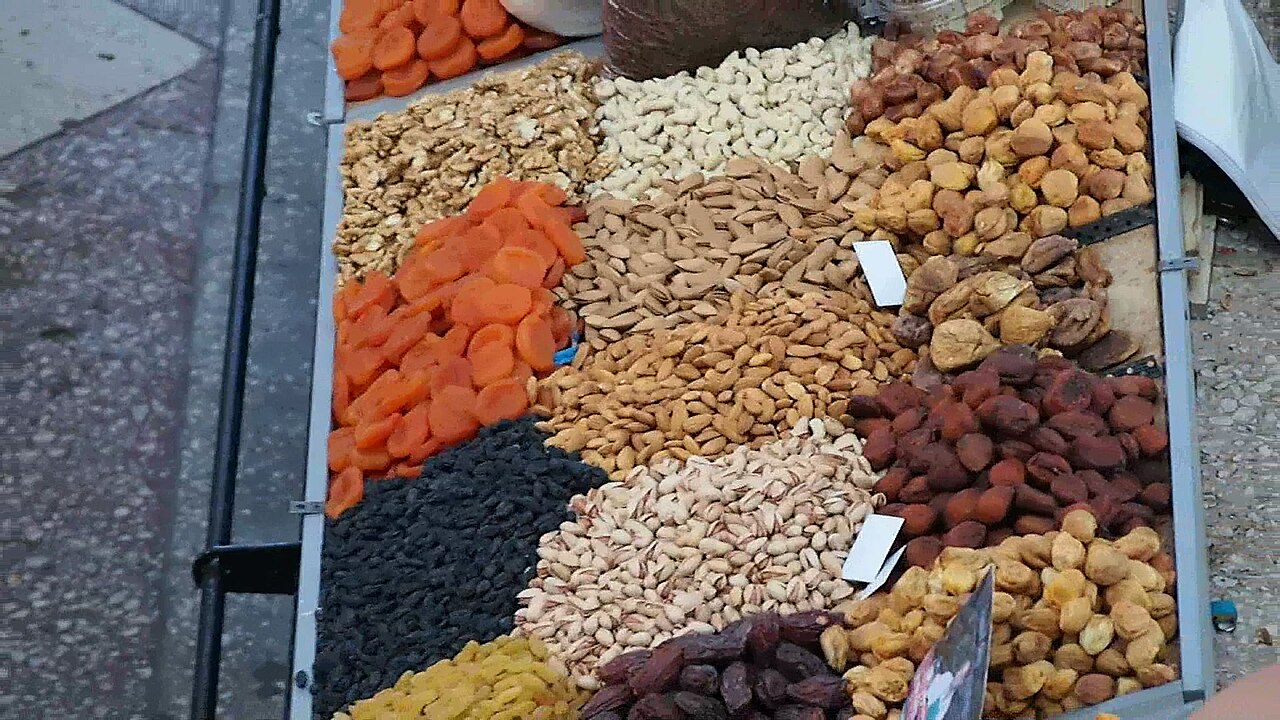
Aport apples and why you cannot take Almaty’s apple home
Almaty’s name is bound up with apples and the giant red Aport is the local hero. You cannot take them: plant products require a phytosanitary certificate to export, and nobody is issuing one for four apples in a rucksack. The souvenir substitute is the ceramic “Aport” apple sold at Big City Home. It is a fair trade.
Drinks
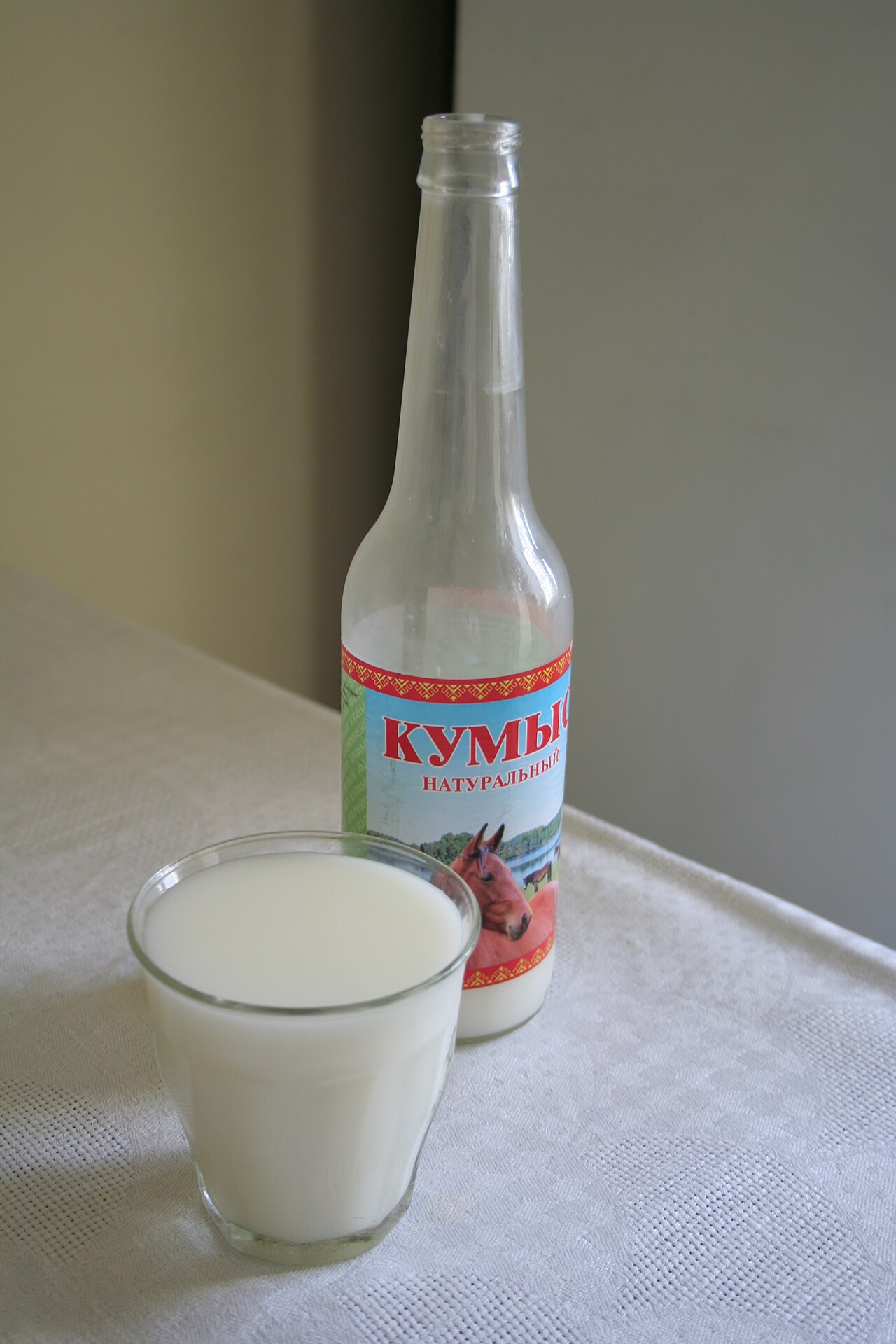
Kumis (fermented mare’s milk) and shubat (camel) are drink-on-the-spot propositions, not luggage — see our guide to kumis and Kazakh drinks. For a bottle to carry, “Kazakhstan” brandy is the standard souvenir; Farabi and Alexander are two other cognac labels, with Zhenis and Kakharman in the higher category. Bear in mind that alcohol and food are excluded from the tourist VAT refund, and that your home country’s duty-free allowance applies as normal.
Where to buy it: Almaty
Green Bazaar (Zelyony Bazar)
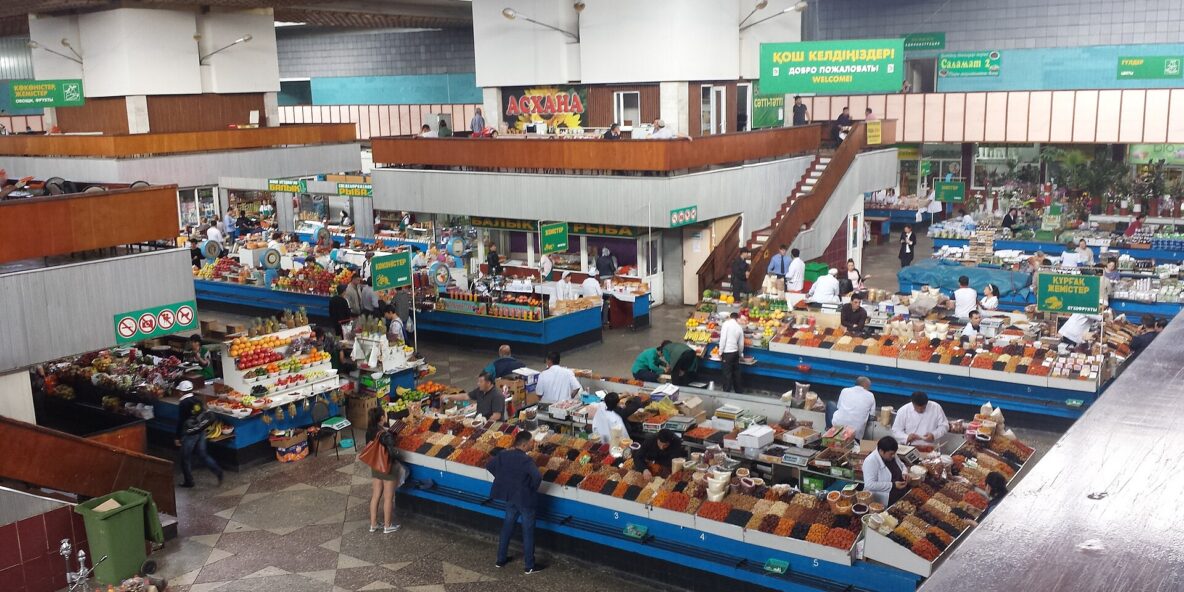
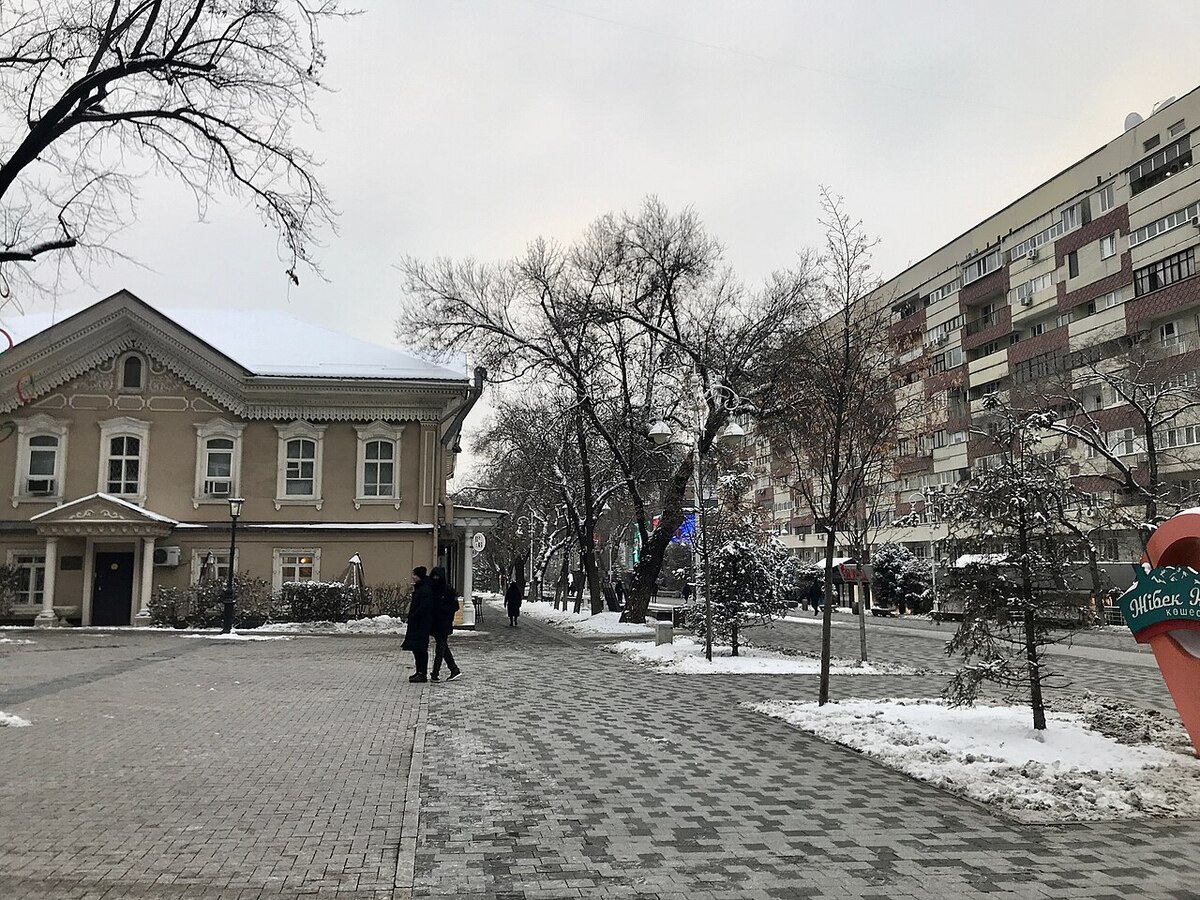
Address Zhibek Zholy 53, Medeu district. Zhibek Zholy metro station is a short walk away, with its entrances at the corner of Gogol and Panfilov streets. The covered main hall was built in 1975; a new pavilion opened in 2017 on the site of the old container pavilions and open trading counters. A second building behind opens onto Makataev Street, joined by an enclosed bridge. The national tourism portal gives the hours as 09:00 to 19:00; confirm which days it trades before you go.
Four things that will save you money:
- The basement is cheaper than the top floor. Two independent sources say so.
- The best deals are outside the building, not in it.
- Souvenir vendors cluster on the south-east side.
- Bargain. Vendors are well aware that tourists do not know local prices.
Worth walking through even if you buy nothing: the meat and dairy hall with kazy horse sausage, kurdyuk fat, kumis and shubat; the Korean salad counters, a legacy of the deported Korean community; and an “eastern medicine” section that is its own small anthropological experience. Our dedicated Green Bazaar guide has more.
Craft fairs, artisan centres and shops
| Place | Address | Hours |
|---|---|---|
| Chamber of Skilled Trades craft fair | Zhibek Zholy Ave between Zheltoksan and Nauryzbai Batyr | Check locally |
| “Qazaq Oner” craftsmen centre | 5/11 Nurkent district, Athletes’ Village | Check locally |
| SINICHKI.STORE | Aiteke Bi 53 | Check locally |
| Big City Home | Kurmangazy 97 | Check locally |
| TSUM department store | Abylai Khan Ave at Zhibek Zholy | Ask for the souvenir section |
| Ademi-Ai art house | Confirm the address before you go | Check locally |
| Karavan Saray | Panfilov Street | Check locally |
The Chamber of Skilled Trades fair carries Kazakh, Kyrgyz and Uzbek handmade work — which is worth knowing, because it means not everything on the table is Kazakh. Tengrinews described Qazaq Oner in 2023 as a complex of about 800 square metres with workshops, a traditional-music multimedia centre and a shopping gallery, which makes it a good place to buy directly from makers. TSUM is the department store Almaty’s own tourism board recommends for souvenirs.
For galleries, look up Tengri Umai, a gallery of modern art that has been showing work since 1992, the first full year of independence. Hours at all of these places move, so check them before you set off.
Where to buy it: Astana, Turkestan and Shymkent
Astana. Talisman at Syganak Street 18/2 sells national souvenirs; if anything on the shelf is made of horn or bone, that is exactly the category you should be asking pointed questions about before you buy. KERUEN is at Dostyq Street 3, floor 2, boutique 20. Khan Shatyr is a landmark you were going to visit anyway, so browse its shops while you are there.

Turkestan and Shymkent. Both have bazaars and both have stalls around their major sites, so ask prices on the spot. Turkestan appears in press coverage of the Tax Free scheme and that Shymkent airport is one of the designated refund exit points. See our guides to Turkestan and Shymkent.
How to pay, and how hard to haggle
Cash, cards and Kaspi
Kazakhstan runs on Kaspi QR, and Kaspi’s merchant partners now accept it from customers of other Kazakh banks too. Foreign visitors are also now in scope — since an Alipay+ partnership in August 2025, visitors can pay via Kaspi QR using Alipay+ enabled wallets and bank apps. Foreigners can obtain a Kaspi card without a residence permit, valid for a year.
At market stalls, bring cash anyway. Vendors who accept Kaspi QR are frequently set up for local users only, and local advice to tourists is straightforwardly “bring cash.” Expat consensus is to carry around 100,000 KZT for markets, buses and taxis. See currency and money in Kazakhstan.
Bargaining
Bargain at bazaars. Do not bargain in malls, galleries or museum shops, where prices are fixed and haggling reads as rude. That is the whole rule. Follow the venue rather than any rule about how hard Kazakhs haggle.
Tax Free: how to actually get your VAT back
Kazakhstan does have a working tourist VAT refund, and it is the opposite of what people assume — EAEU citizens are the ones excluded. It is run by IT Analytics LLP, trading as taxfree.kz.
- Eligible: non-residents of Kazakhstan who are not citizens of an EAEU state. Russian, Belarusian, Armenian and Kyrgyz citizens are out.
- Headline refund: the operator advertises up to 16% of the purchase value, subject to its conditions and less its commission, so treat it as a ceiling rather than what you will net.
- Minimum spend: 10 MCI, which the operator states is approximately 43,250 KZT in 2026. The MCI resets every January, so this figure moves.
- Excluded: food, beverages, medicines, used goods, and goods for commercial use. Chocolate, kurt, honey and brandy do not qualify.
- Process: buy on the same day the Tax Free document is issued, show your passport at purchase, keep the fiscal receipt showing VAT, keep goods in original packaging, present them to an inspector on departure.
- Exit must be by air through one of the 16 airports on the Tax Free operator’s list (check taxfree.kz for yours). Land borders are excluded.
- Payout: to Visa or Mastercard from 14 days, standard 30–45 days, with operator commission of up to 20% of the confirmed VAT.
Run the arithmetic before you queue. A 16% refund applied to a VAT-inclusive price, minus up to 20% commission, nets you closer to about 11% of what you actually paid. That estimate is ours, not the operator’s. On a 400,000-tenge carpet it is worth doing; on a takiya it is not.
What you legally cannot take home
No competitor covers this. It is the most useful section on the page.
Absolutely prohibited
- Items on Kazakhstan’s cultural-heritage register; museum, archive and private-collection exhibits.
- Artefacts relating to Kazakhstan’s history, archaeology and culture, or to notable historical figures.
- Parts of architectural, historical or artistic monuments.
- Anything found during archaeological excavation. Do not pick up potsherds at Otrar.
- Icons, manuscripts and religious items made before the mid-19th century.
- Old jewellery in gold, platinum or silver, or set with precious or semi-precious stones, where it needs Ministry of Culture and Information permission and you do not have it.
- Red Book species and anything made from them — skins, horns, bones, feathers.
- Weapons and ammunition without permits.
Requires a permit and appraisal
- Older works of art and antiques: ask the seller about export permission before you pay.
- National musical instruments of historical or cultural value — this is about an antique dombyra, not a new one.
- Applied-art and household items of cultural value; jewellery above the allowance.
- Hunting knives and their components.
- Plants and plant products (phytosanitary certificate).
- Animal products including meat, fish and caviar (veterinary certificate).
The permitting authority is the Ministry of Culture and Information, and a permit takes working days, not hours. That means a purchase made in the final days of your trip may be effectively unexportable. Buy the antique early or do not buy it.
Saiga horn — the one that will get you prosecuted
Read this even if you have no intention of buying one, because it will be offered.
Saiga horn sat under a CITES zero export quota until 2025. At the CITES conference that year, parties voted 111 to 7, with 14 abstentions, to lift the zero quota for horn from Kazakhstan’s population only, and only for trade under effective control and traceability arrangements, with CITES verifying controls before any trade begins and Kazakhstan supervising the first shipment to each new partner.
Nothing in that permits a tourist to buy or carry a saiga horn. It is a state-to-state stockpile mechanism. Conservation organisations warned at the time that it would strain enforcement and stimulate poaching. If someone offers you one, they are offering you a wildlife-trafficking charge.
Caviar: the 125-gram line
CITES exempts up to 125 grams of labelled caviar per person as personal effects. A Kazakh caviar seller gives a different figure for leaving the country, no more than 250 grams of black caviar per person, and 125 grams for entry to the USA, the UK and the EU. Check the rules of the country you are flying to as well as Kazakhstan’s: above the limit you need CITES paperwork or it is confiscated. Buy from proper retail so you have documentation.
General allowances
Value and weight allowances for goods leaving Kazakhstan, and the threshold for declaring currency, are set by Kazakh customs, so check the current figures with them before you fly. Work to the categories above, keep receipts, and if you are carrying anything unusual, declare it.
Skip these
- Fridge magnets, shot glasses and flag pins. Mass-produced, usually imported, and available on eBay for less than you will pay in Almaty.
- Airport souvenirs. Same objects, worse prices, and you have already lost the ability to bargain. Buy before you go to the airport — see our Almaty airport guide for what is actually there.
- Drop-shipped “gift sets.” If it is on eBay for $45 it is not from here.
- Generic “Central Asian” bazaar goods. A lot of what is sold as Kazakh at tourist stalls is Uzbek suzani or Chinese-made. Not a scandal — just know what you are paying for, and ask.
Frequently asked questions
What is famous to buy in Kazakhstan?
Handmade felt — syrmak carpets and tuskiiz wall hangings — the dombyra, Kazakh silver jewellery with carnelian and turquoise, the takiya embroidered cap, kamcha whips, leather kumis flasks, camel-wool textiles, and Rakhat chocolate. Kurt, dried fruit and Altai honey are the edible standards.
What is the most bought souvenir?
Rakhat chocolate, comfortably. The 20 g “Kazakhstanskiy” bar costs about 209 tenge — well under a dollar — and everybody leaves with a bag of them.
Is Kazakhstan cheap for shopping?
For handmade crafts, yes: a playable handmade dombyra and an embroidered takiya both sit comfortably inside a visitor’s budget, at the prices given above. For imported goods and mall brands, no — Almaty is not a bargain city. See Almaty prices.
Where should I buy souvenirs in Almaty?
The Green Bazaar at Zhibek Zholy 53 for food, kurt and cheap crafts. The Chamber of Skilled Trades craft fair on Zhibek Zholy and the Qazaq Oner centre for real craft. TSUM and Karavan Saray on Panfilov Street for convenience.
Does Kazakhstan accept cards, and can foreigners use Kaspi?
Cards are widely accepted in cities. Kaspi QR is the dominant local rail and, since an Alipay+ partnership in 2025, visitors can pay with it through Alipay+ enabled wallets. Foreigners can also get a Kaspi card without a residence permit. Bazaar stalls still want cash.
Can I take a dombyra on the plane?
Measure it in its hard case first. FlyArystan’s 110 × 30 × 30 cm limit is for its paid additional hand-baggage service; a purchased instrument seat takes a case up to 120 × 50 × 30 cm and 30 kg, and the hold is a third option. Air Astana requires a paid extra seat for large instruments. Confirm with your airline before you buy.
What can’t I bring home from Kazakhstan?
Anything on the cultural-heritage register, archaeological finds, pre-mid-19th-century religious items, antiques and old jewellery without the Ministry of Culture and Information permission they need, Red Book wildlife products — and above all saiga horn. The 2025 CITES decision reopened trade only in Kazakhstan-origin horn under control and traceability, so souvenir horn is not legitimately for sale and carrying it would need permits. For caviar, the CITES personal-effects exemption is 125 g, a Kazakh seller gives 250 g per person for export, and your destination may set its own limit.
Can I claim VAT back?
Yes, if you are a non-resident and not an EAEU citizen, spending at least 10 MCI (approximately 43,250 KZT in 2026) at a participating retailer, on non-food goods, exiting by air through one of the 16 airports the operator lists. Expect back up to 16% of what you paid, less the operator’s commission.
Final thoughts
The good news about shopping in Kazakhstan is that the genuinely worthwhile things are cheap and the expensive things are genuinely worthwhile. A 4,000-tenge embroidered cap, a 209-tenge chocolate bar and a bag of kurt will cover most of your gift list for less than a taxi to the airport. If you want one real object, make it a syrmak or a playable dombyra, buy it from a maker rather than a stall, and buy it in the first half of your trip so you have time to sort out paperwork if it turns out you need any.
And leave the antique silver alone unless you are prepared to spend ten working days waiting on the Ministry of Culture. The story of the thing you had to abandon at the airport is a worse souvenir than the thing itself.
For more on the culture behind these objects, read Kazakh culture and Kazakh traditions. For the food you will inevitably buy too much of, traditional Kazakh dishes.
Photo credits
Yurt interior with felt rugs: Nurken (CC BY-SA 4.0) via Wikimedia Commons. Dombra player: upyernoz (CC BY 2.0) via Wikimedia Commons. Kurt: Paul Munhoven (CC BY-SA 3.0) via Wikimedia Commons. Kumis: A.Savin (CC BY-SA 3.0) via Wikimedia Commons. Zhibek Zholy: ShadZ01 (CC BY 4.0) via Wikimedia Commons. Khan Shatyr: Bgag (CC0) via Wikimedia Commons.
Inside Almaty’s Green Bazaar: Зелёный базар в Алматы (Казахстан) by Spacekid, CC0, via Wikimedia Commons.
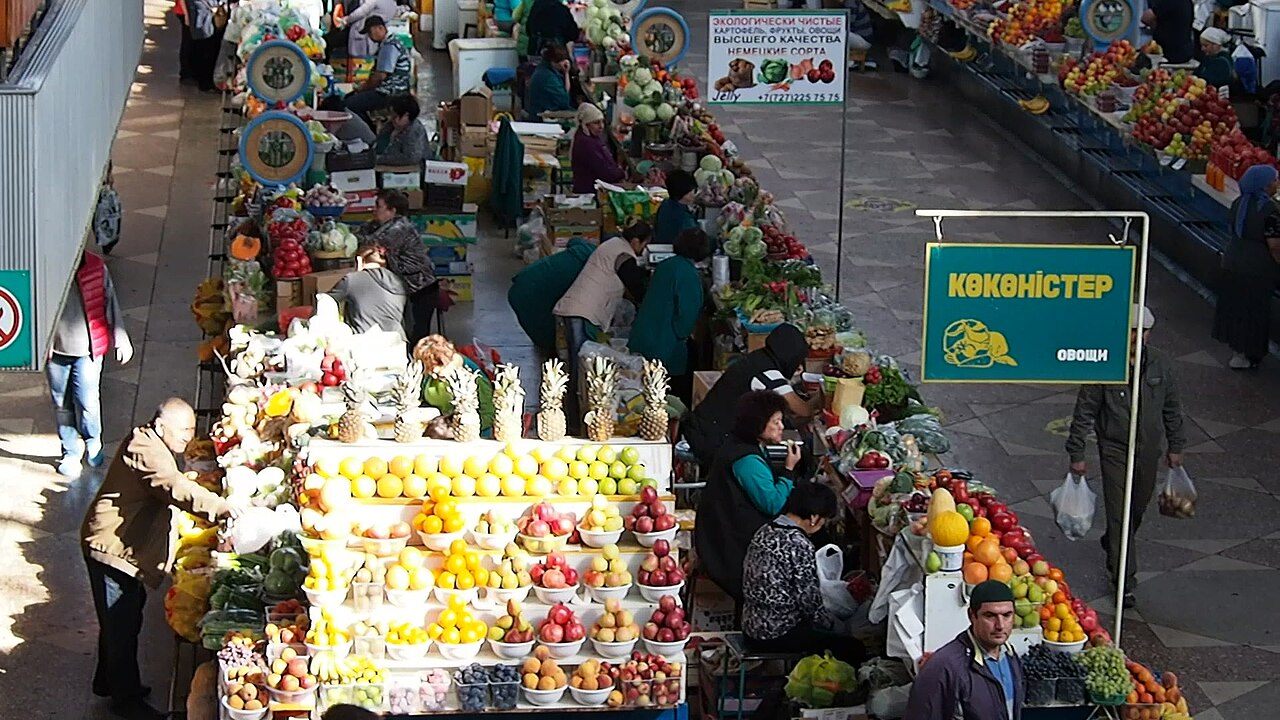
Produce counters at Almaty’s Green Bazaar: Kazakhstan P9240978 04 (39408835045) by t_y_l, CC BY-SA 2.0, via Wikimedia Commons.
Dried fruit and nuts at Almaty’s Green Bazaar: Kazakhstan P9240977 088 (39408830605) by t_y_l, CC BY-SA 2.0, via Wikimedia Commons.