Contents
- What makes Kazakh food unique
- Meat and horse dishes: the heart of the table
- Dumplings, pastries and breads
- Noodles, rice and neighbouring influences
- Soups and broths
- Dairy, drinks and sweets
- More dishes worth hunting down
- A day of eating in Kazakhstan
- Where to try Kazakh food
- Tips for eating Kazakh food
- Modern and neo-nomadic Kazakh cooking
- Frequently asked questions
- Final thoughts
Kazakh food surprises people. They arrive expecting a footnote to Russian or Turkish cooking and find something older and more distinct: a cuisine built by nomads out of meat, milk and grain, generous to a fault and deeply tied to hospitality. After a lot of meals here — in yurts, city restaurants, bazaar canteens and friends’ kitchens — these are the fifteen dishes I’d tell any first-time visitor to seek out.
Traditional Kazakh food centres on meat (mutton, horse and beef) and dairy, a legacy of the nomadic steppe. The must-try dishes run from beshbarmak, the national dish, through horse-meat sausages like kazy, hearty dumplings and pastries such as manti and samsa, fried baursak, rice plov, and fermented milk drinks. It’s savoury and filling rather than spicy — comfort food with centuries behind it.

What makes Kazakh food unique
To understand the menu, picture the life it grew from. For centuries Kazakhs were nomadic herders, moving with the seasons and measuring wealth in livestock — the “tört tülik mal,” the four kinds of animal: horses, camels, cattle and sheep. That’s why the cuisine leans so hard on meat and milk, and why so many techniques are about preservation: salting, drying, smoking and souring, all ways to keep food through long journeys and harder winters. Boiling is the signature method; grains and dough arrived and stayed, but the heart of the table is animal.
One thing to set expectations: Kazakh food is generally mild and savoury, not chilli-hot. Spices are used with restraint. What you’re eating is about the quality of the meat, the richness of the broth, the tang of fermented dairy — not heat. It’s the flagship cuisine of the country, and our broader guide to food and drink in Kazakhstan sets the whole scene.
Modern Kazakh food is also a layered thing. Two centuries of shared history added Russian and Ukrainian dishes, Uzbek plov, Uyghur and Dungan noodles, Tatar sweets, German baking and — distinctively — a whole Korean repertoire from the Koryo-saram community deported here in the 1930s. So the table you sit down to today is nomadic at its core but genuinely multicultural at the edges, which is part of what makes eating your way across the country so much fun.
Meat and horse dishes: the heart of the table
Start here, because this is where Kazakh cuisine lives. Meat isn’t a component of the meal so much as its whole reason for being, and the dishes below carry the most history and the most prestige. If you try nothing else, try these.
1. Beshbarmak
The national dish, and the one to try first. Boiled meat — horse, mutton or beef — served over wide, flat sheets of boiled noodle, dressed with onions softened in the broth, with a bowl of that broth (sorpa) on the side. Its name means “five fingers,” because it’s traditionally eaten by hand from a shared platter. It’s celebration food, dense with ritual and meaning; we’ve given it its own full guide to beshbarmak if you want the deep dive.
2. Kazy
A sausage made from horse rib meat and fat, seasoned and cased, then boiled, smoked or dried. Sliced thin, it shows a distinctive ring of dark meat and pale fat, and it’s laid over festive beshbarmak or served as a cold appetiser. Leaner and slightly sweeter than you’d guess — and a genuine delicacy here.

3. Shuzhyk, karta and zhaya
Kazy has cousins. Shuzhyk (shuzhuk) is another horse-meat sausage, often firmer; karta is a cured, fatty cut of the horse’s intestine, prized for its texture; and zhaya is salted, smoked horse hip meat. These cured horse products, usually served cold and sliced, are the charcuterie of the steppe, and they carry real prestige at a feast.
4. Kuyrdak
A robust fry-up of offal — liver, heart, kidney and sometimes lung — cooked with onion and often potato. Traditionally made fresh right after a slaughter, it’s rich, rustic and full-flavoured, the kind of dish that tells you nothing goes to waste on the steppe. If you like offal, it’s a highlight; if you don’t, it’s an easy one to admire and pass on.
5. Shashlik
Marinated chunks of lamb, beef or chicken grilled over charcoal on skewers, served with raw onion, flatbread and sauces. It’s everywhere — grill smoke drifting from bazaars, parks and roadside stands — and it’s reliably delicious. Not uniquely Kazakh (it’s beloved across the whole region) but a fixture of eating out here.
Dumplings, pastries and breads
Dough came to the steppe later than meat and milk, but it took hold completely. These are the everyday workhorses — cheap, filling and found on every corner — and the ones you’ll probably eat most often.
6. Manti
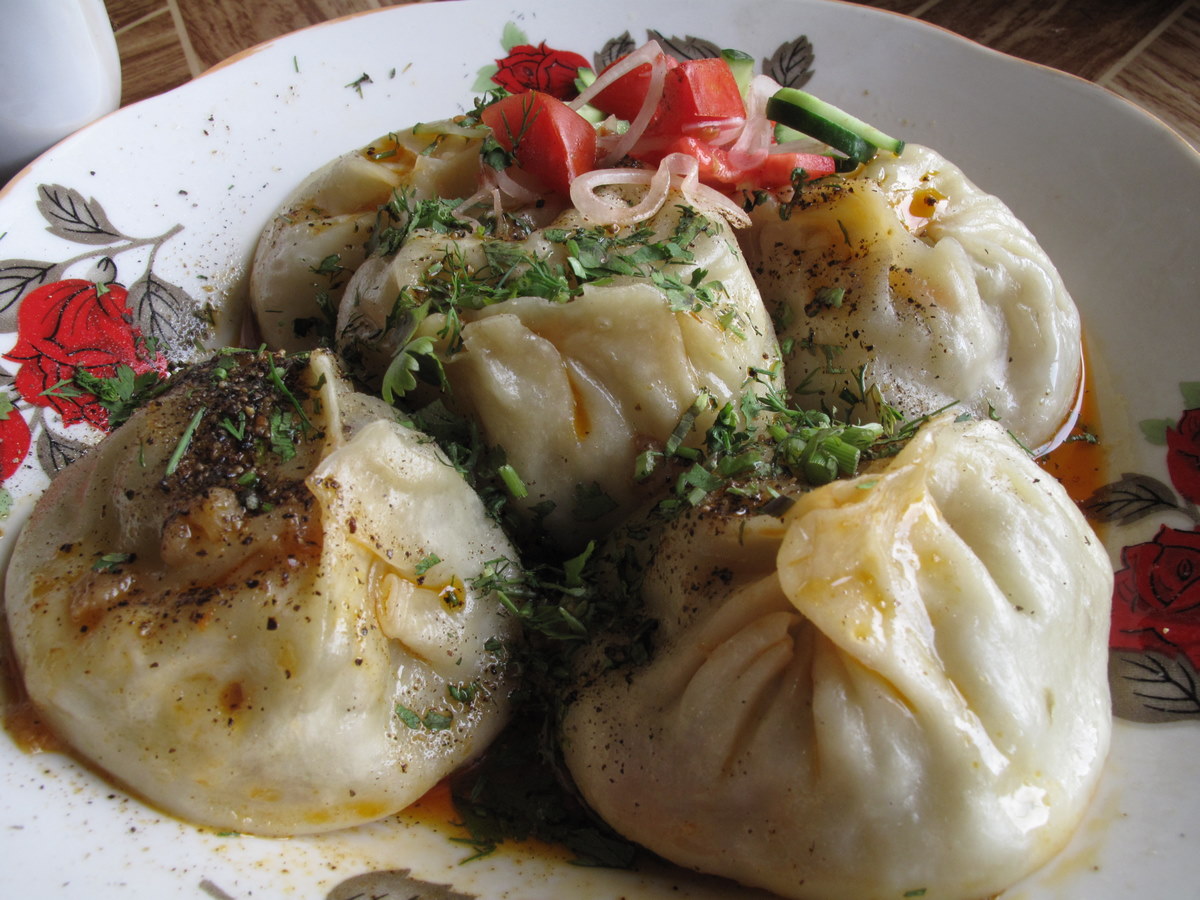
Big, juicy steamed dumplings filled with spiced minced lamb or beef — and sometimes pumpkin — pleated shut and cooked in a tiered steamer. They’re served with a spoonful of butter or sour cream and a scatter of pepper, and they’re one of the most satisfying things you can order for a few hundred tenge. A traveller favourite for good reason.
7. Samsa
Kazakhstan’s great street pastry: a parcel of dough stuffed with minced meat and onion (or pumpkin in autumn), baked — not fried — on the wall of a tandyr clay oven until the crust is blistered and golden. Bought hot from a kiosk for a dollar or two, it’s the perfect thing to eat on the move. The trick is to get one straight from the oven, when the pastry shatters and the meat juices run — a cold samsa is a sad thing by comparison.
8. Baursak
Puffy squares or rounds of yeast dough deep-fried until golden and hollow, served in mounds with tea. Slightly sweet, pillowy inside, baursak turns up at every celebration and every hospitable table; there’s even a proverb that with beshbarmak, kuyrdak and baursak you can do without the rest. Torn open and dabbed with butter or dunked in tea, it’s the simplest and most moreish thing on the dastarkhan.

9. Tandyr nan
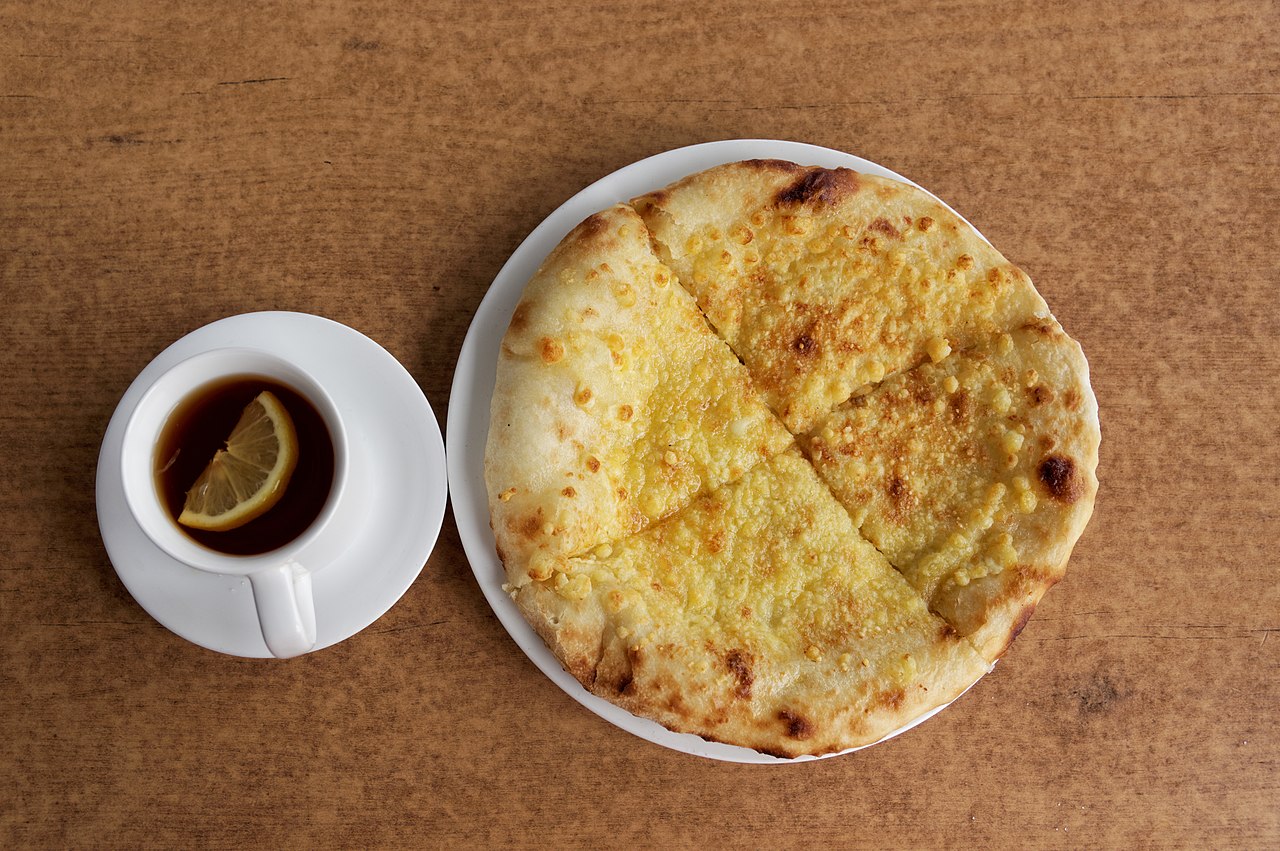
Round, decorated flatbread baked against the inside of a tandyr oven — a Silk Road city staple and the everyday bread of Kazakhstan. It comes with a stamped pattern in the centre and a puffed, chewy rim. Bread is close to sacred here, so you’ll never see it treated carelessly. (Its fried cousin, shelpek, is made for remembrance days.)
Noodles, rice and neighbouring influences
10. Lagman
Hand-pulled wheat noodles topped with a stir-fry of meat and vegetables, served either “dry” or swimming in a spiced broth. Lagman is Uyghur in origin and a signature of Kazakhstan’s Uyghur and Dungan communities, and it’s one of the best cheap, vegetable-forward meals you’ll find. A plate with tea is a lovely, filling lunch.

11. Plov (palau)
The great rice dish of Central Asia: rice cooked with meat, carrot and onion (sometimes garlic, chickpeas or raisins) in a big cast-iron kazan, so every grain carries the fat and flavour of the pot. Shared with Uzbek cuisine and beloved across Kazakhstan, it’s festive, generous and endlessly comforting. Watching a cook layer rice, meat and carrots into a metre-wide kazan and then serve out plate after plate is half the pleasure.

12. Korean carrot salad (morkovcha)
One of the most distinctive things about eating in Kazakhstan is the Korean layer. Deported to the Soviet republics in the 1930s, the Koryo-saram community brought spicy, garlicky dishes that became local staples — above all morkovcha, a julienned-carrot salad invented here as a substitute for Korean radish. You’ll find it at every bazaar, tangy and lightly spicy, and it’s often a vegetarian’s best friend. Alongside it look for funchoza (a cold glass-noodle salad) and pigodi (steamed meat buns) — the Korean-Kazakh food that quietly runs through everyday eating here.
Soups and broths
13. Sorpa and kespe
Sorpa is the rich meat broth (usually lamb or horse) that anchors a Kazakh meal — served alongside beshbarmak or on its own as a restorative soup, sometimes with pasta added. Kespe is a related noodle soup made with hand-cut egg noodles. On a cold day, a bowl of good sorpa is exactly what you want, and it’s everyday comfort food across the country.
Dairy, drinks and sweets
Half of Kazakh cuisine is made from milk — horse, camel, cow and sheep — turned into an astonishing range of drinks, cheeses and sweets. This is the part that surprises visitors most, and the part most worth an open mind.
14. Qurt, kymyz and shubat
Dairy is half the story of Kazakh food. Qurt (kurt) are hard, intensely salty balls of dried curd — a portable, keeps-forever nomad snack you’ll see heaped at bazaars. Kymyz (kumis) is fermented mare’s milk, sour and lightly fizzy; shubat is its richer camel’s-milk cousin. Both are acquired tastes and both are the authentic drinks of the steppe, most abundant in the warmer months. They deserve, and get, their own honest write-up in our Kazakh food and drink guide.

15. Chak-chak and other sweets
To finish: chak-chak, a mound of little fried-dough pieces bound together with honey syrup, sticky and moreish, of Tatar origin but beloved across the Turkic world and a fixture at weddings and Nauryz. Look out too for zhent (a pressed sweet of ground millet, curd, butter and sugar) and balqaymaq (honeyed clotted cream). None of it is subtle, all of it goes beautifully with tea. Kazakhs take their sweets seriously as an expression of welcome, so expect the table to keep producing them long after you think the meal is over.

More dishes worth hunting down
Syrne (sirne)
A slow-braised dish of young lamb or goat with vegetables, cooked down until meltingly tender. It’s autumn-and-celebration food, less famous than beshbarmak but beloved by those who know it, and a lovely thing to be served in a home.
Koktal
Out on Kazakhstan’s lakes and rivers you’ll meet koktal: a whole large fish (often carp), butterflied and hot-smoked over a rack with tomato and onion. The name nods to the willow smoke traditionally used. It’s a speciality of fishing communities and a reminder that this landlocked country still has a serious freshwater-fish tradition.
Nauryz kozhe
Once a year, for the spring festival of Nauryz, families make Nauryz kozhe — a ritual soup of seven ingredients (typically meat, water, salt, flour or wheat, millet, butter and milk), the number symbolising abundance and renewal. If you’re lucky enough to be here in late March, seek it out; it tastes of the whole holiday.
Irimshik, sary mai and the dairy larder
Beyond qurt, the Kazakh dairy larder is deep. Irimshik is a dried curd — white (ak) or reddish (kyzyl) — naturally a little sweet despite no added sugar. Sary mai is butter rendered from aged milk, qaymaq is a thick clotted cream, and ayran is a soured, lightly salted yogurt drink. Together they’re the everyday counterpoint to all that meat.
A day of eating in Kazakhstan
If you want a plan rather than a list, here’s how a good eating day comes together. Start with bread, butter, jam and tea, maybe baursak and a little cheese or cured meat — Kazakh breakfasts are simple and dairy-forward. Mid-morning, grab a hot samsa from a tandyr kiosk as a snack. For lunch, go where locals go: a plate of manti or a big bowl of lagman with tea at a bazaar canteen costs very little and fills you up completely.
Save the main event for dinner. This is when to sit down to beshbarmak, or to a shared kazan of plov, ideally somewhere that takes its national cuisine seriously. Bookend the meal with strong tea and whatever sweets appear, and if fermented mare’s or camel’s milk is on offer and you’re feeling brave, this is the moment to try a small bowl. Do that for two or three days and you’ll have covered the meat, the dairy, the dumplings, the street food and the sweets — the full shape of the cuisine — without ever forcing it. And because portions here are big and hospitality relentless, the single most useful skill is pacing: taste widely, finish nothing too eagerly, and leave room, because there is always more coming.
Where to try Kazakh food
Almaty is the country’s food capital, with everything from traditional-cuisine halls to bazaar canteens; our guide to the best restaurants in Almaty is a good starting point, and the Green Bazaar is the single best place to graze on kazy, qurt, dried fruit and street snacks. In the capital, our Astana restaurants guide covers where to eat, including polished takes on nomadic cuisine. Bazaars everywhere are where the cheapest, most authentic bites live.
Rough costs, to set expectations: a samsa runs a few hundred tenge, a plate of manti or lagman with tea maybe 2,000–3,500, and a sit-down mid-range meal around 6,500–10,000 tenge per person. Prices move, so treat these as ballparks — our Kazakhstan trip cost guide has the fuller picture.
Tips for eating Kazakh food
A few things that help. Meat is central and often halal, so if you keep halal you’re generally well served; if you’re vegetarian, be aware that “vegetable” dishes may be cooked in meat broth (we’ve written a whole survival guide for that). Horse meat is normal and respected, not a novelty — you can try it or skip it, and you’ll always know what you’re eating. Beshbarmak is shared from a communal platter and traditionally eaten by hand. And when you’re a guest, accepting a little of everything and treating bread with respect goes a long way; our Kazakh culture guide has the full etiquette. One last practical tip: carry small cash, because the best food — bazaar stalls, tandyr kiosks, family canteens — rarely takes cards, and it’s usually the cheapest and most memorable of the lot.
Modern and neo-nomadic Kazakh cooking
Kazakh food isn’t frozen in the past. In Almaty and Astana a wave of “neo-nomadic” restaurants is reworking the classics — plating beshbarmak and kazy with a fine-dining eye, reviving old recipes, and taking pride in local horse, lamb and dairy in a way that felt unfashionable a generation ago. At the other end, everyday Kazakhstan eats a fusion you’ll notice fast: Korean carrot salad next to Russian pelmeni next to Uyghur lagman in the same food court. Both ends are worth your time. Order a ceremonial beshbarmak once for the tradition, then let curiosity guide you through the everyday mash-up that Kazakhs actually eat day to day — and pair it all with a proper understanding of Kazakh table customs so the meals mean more.
Frequently asked questions
What is the national dish of Kazakhstan?
Beshbarmak — boiled meat (horse, mutton or beef) served over wide flat noodles with onion sauce and a broth called sorpa. Its name means “five fingers,” reflecting that it’s traditionally eaten by hand from a shared platter at celebrations.
Is Kazakh food spicy?
Not really. Kazakh cuisine is savoury, meaty and dairy-rich rather than chilli-hot; spices are used sparingly. The Korean and Uyghur/Dungan dishes you’ll find alongside it (like morkovcha or some lagman) bring a little more heat, but traditional Kazakh food itself is mild.
Do Kazakhs eat horse meat?
Yes, and it’s respected celebration food, not a novelty. Horse appears as kazy and other cured sausages and in festive beshbarmak. It’s leaner and slightly sweet. You’re never served it unknowingly, so you can try it or opt for mutton or beef.
What do Kazakhs drink?
Strong black tea is the everyday drink, poured little and often, usually with milk. The traditional steppe drinks are kymyz (fermented mare’s milk) and shubat (fermented camel’s milk), both sour and mildly alcoholic. Ayran, a salted yogurt drink, is also common.
What do people eat for breakfast in Kazakhstan?
Often bread with butter, jam, cheese and cured meats, plus tea; baursak and dairy like kaymak (clotted cream) are common, and heartier households may start with leftover meat or a bowl of sorpa. Hotel breakfasts add eggs, porridge and the usual continental spread.
What is the most popular Kazakh food to try first?
Start with beshbarmak for the cultural centrepiece, add manti and samsa for easy everyday wins, and graze the Green Bazaar for kazy, qurt and Korean salads. That combination gives you the meat, dairy and street-food range of the cuisine in a day or two.
Final thoughts
Kazakh food rewards curiosity. It won’t dazzle you with chilli or complexity; it wins you over with generosity, with the richness of long-boiled meat and the tang of fermented milk and the simple pleasure of hot samsa on a cold morning. Work through this list — the ceremonial beshbarmak, the cured horse, the dumplings and pastries, the strange and wonderful dairy — and you’ll have tasted the steppe itself. Bring an appetite and an open mind, and let a Kazakh host feed you at least once; that’s when it all clicks.
Photo credits
- Beshbarmak — upyernoz from Haverford, USA, CC BY 2.0, via Wikimedia Commons
- Kazy — Muzaffar Murodovich, CC BY-SA 4.0, via Wikimedia Commons
- Manti — Peretz Partensky, CC BY-SA 2.0, via Wikimedia Commons
- Baursak — Vidor, public domain, via Wikimedia Commons
- Lagman — Vmenkov, CC BY-SA 3.0, via Wikimedia Commons
- Plov — Sinchalak Musulmon, CC BY-SA 4.0, via Wikimedia Commons
- Kurt — Paul Munhoven, CC BY-SA 3.0, via Wikimedia Commons
- Chak-chak — Panpanchik, CC BY 4.0, via Wikimedia Commons