Category: Food & Drink

  • Kazakhstan Food: The Honest Guide to Eating in Kazakhstan

    Kazakhstan Food: The Honest Guide to Eating in Kazakhstan

    The first time someone in Kazakhstan handed me a bowl of warm, slightly fizzy, faintly sour mare’s milk and watched my face expectantly, I understood that eating here is never just about the food. It’s a test, a welcome, and a history lesson in one cup. I drank it. I’m still here.

    Here’s the honest version of Kazakhstan food: it is meat-heavy, dairy-rich, deeply hospitable, and far more varied than the “they eat horse” headline suggests. Expect boiled meat over flat noodles, hand-pulled noodle dishes, steamed dumplings, fried dough, smoky kebabs, fermented milk, and an entire culture built around tea. It is rarely spicy, almost always filling, and best understood at someone’s table.

    This guide is the one I wish I’d had before my first trip. I’ll walk you through the dishes that matter, the ones worth being brave for, what everything costs in 2026, where to actually eat, and how not to embarrass yourself at a Kazakh table. If you’re still mapping out the rest of your trip, it pairs well with our guide to things to do in Kazakhstan and the full Kazakhstan itinerary planner.

    Beshbarmak, the national dish and the must-try Kazakhstan food, with boiled meat over flat noodles

    Kazakhstan food at a glance

    If you only have ten seconds before your first meal, here’s the orientation. Order beshbarmak at least once (it’s the national dish and a whole ritual). Eat lagman and manti when you want something quicker. Snack on samsa from a bakery. Try the fermented mare’s milk, kumys, if it’s summer. Finish everything with tea. Be brave about horse meat at least once — it’s a point of pride, not a prank.

    If you want… Order this Rough 2026 price
    The national dish Beshbarmak (boiled meat + noodles) ₸2,500–4,500 ($5–9)
    A quick, filling lunch Lagman or plov ₸1,800–3,500 ($4–7)
    Comfort dumplings Manti (3–5 pieces) ₸1,500–3,000 ($3–6)
    Street food on the go Samsa from a tandyr bakery ₸400–800 ($1–2)
    Smoky and shareable Shashlik (per skewer) ₸700–1,500 ($1.50–3)
    To drink like a nomad Kumys or shubat (a cup) ₸300–700 ($0.60–1.50)
    Something sweet Chak-chak or baursak with tea ₸500–1,200 ($1–2.50)

    Prices are what I’d expect in cafes and bazaars in 2026 at roughly 500 tenge to the US dollar; smart restaurants in central Almaty run higher. Always treat these as “around” figures and check the menu. For a full trip budget, see what a Kazakhstan trip costs.

    What makes Kazakh cuisine what it is

    You can’t understand Kazakh cuisine without picturing the steppe. For centuries Kazakhs were nomadic herders who moved with the seasons, and everything on the modern table still echoes that life. The old framework is tört tülik mal — the “four kinds of livestock”: sheep, horses, camels, and cattle. Those four animals gave transport, clothing, and almost all the food. When people tell you Kazakh food is “just meat and milk,” they’re not entirely wrong; they’re describing a survival system that happens to be delicious.

    Three principles shaped the whole cuisine. First, preservation: on the move with no refrigeration, you salt, dry, smoke, and ferment. That’s why horse sausage is cured, why milk is soured into a dozen products, and why hardened cheese can rattle around a saddlebag for a season. Second, boiling over frying: the most prestigious dishes are boiled in a single cauldron, the kazan, because it’s efficient and travels well. Third, nothing is wasted: from offal to the fat under a horse’s mane, every part of the animal has a name and a use. Once you see those three ideas, the menu stops being exotic and starts making sense.

    Kazakhstan is also a genuine crossroads, so “Kazakhstan food” today means more than ethnic-Kazakh dishes. Russian, Uyghur, Dungan, Korean, Uzbek, Tatar, and German communities have all left a permanent mark, which is why you’ll eat borscht, hand-pulled noodles, spicy carrot salad, and pilaf in the same week. We’ll get to all of them.

    Beshbarmak and the meat dishes you came for

    Meat is the main event in Kazakhstan, and the centrepiece is beshbarmak. The name means “five fingers,” because it was traditionally eaten by hand. Picture a wide communal platter: sheets of boiled pasta laid down like soft tiles, topped with chunks of slow-boiled meat — usually mutton or beef, horse on special occasions — and crowned with sweet, broth-soaked onions called tuzdyk. Alongside comes a bowl of the cooking broth, sorpa, which you sip at the end. It is plain in the best way: the flavour is the meat and the broth, not spice.

    What makes beshbarmak unforgettable isn’t the recipe, it’s the choreography. When an animal is slaughtered for guests, the cuts are shared out by status. Elders and honoured guests get the best pieces; the most distinguished guest may be handed the boiled sheep’s head, bas, and is expected to carve it and pass slices around the table — a cheek to one person, an ear to a child so they “listen well.” If a head ever lands in front of you, don’t panic: smile, cut a few token slices, pass it on, and you’ve passed the test. I’ve watched this quiet little ceremony hush an entire noisy table. It is the heart of Kazakh hospitality.

    Kazy horse-meat sausage rounds served on a platter of beshbarmak

    Beyond beshbarmak, a handful of meat dishes deserve a spot on your list. Kuurdak is the dish nomads made on slaughter day: meat and offal — liver, heart, kidney, lung — fried hard with onions and potatoes until rich and a little chewy. It’s the original nose-to-tail cooking, and a good version is wonderful. Plov (called palau here) is the Central Asian pilaf: rice cooked in a kazan with lamb, onions, and shredded carrots until every grain is glossy with fat. It’s the go-to feast food when there are many mouths to feed, and you’ll find it everywhere from weddings to bus-station canteens.

    Plov being served from a giant kazan at a celebration

    Then there’s shashlik, the smoky thread that ties the whole region together. Skewers of marinated lamb, beef, or chicken — and sometimes cubes of pure fat that you should absolutely try at least once — grilled over charcoal and served with raw onion, flatbread, and a sharp tomato salad. In summer the smell of shashlik smoke drifts out of every courtyard and park. A couple of skewers, bread, and a salad is the easiest, most reliably delicious meal in the country, and one of the best things to seek out on day trips from Almaty when you stop at a roadside cafe.

    Shashlik skewers of grilled marinated meat

    Horse meat: yes, really, and here’s what to try

    Let’s address the question every visitor arrives with: do Kazakhs eat horse? Yes, proudly, and it is not a novelty laid on for tourists. Horse meat is festive, prestigious, and historically a marker of respect — it was the meat you served to people who mattered. If you eat meat at all, I’d gently encourage you to try it with an open mind rather than treating it as a dare. It’s lean, faintly sweet, and genuinely good.

    The thing to seek out is kazy, a cured sausage made from horse rib meat and fat, seasoned, stuffed into the cleaned intestine, then smoked or air-dried. It’s boiled and sliced into glistening rounds, often laid over beshbarmak (those neat coins on the platter above). Shuzhuk is the broader word for these horse sausages; zhaya is salted, smoked meat from the hip; zhal is the prized smoked fat from under the mane, served in thin slices to honoured guests; and sur et is salt-cured horse smoked over elm or juniper. Order a “horse meat assortment” ( assorti) in a national restaurant and you’ll get a tasting plate of several at once. Camel features too, though less often — its sausage and the fermented milk are mostly a western-Kazakhstan and desert specialty.

    Noodles, dumplings and pastries

    This is the category you’ll eat most often, because it’s quick, cheap, and on every menu. Lagman is the star: long, hand-pulled wheat noodles tossed or simmered with stir-fried meat, peppers, tomatoes, onions, and garlic. It comes two main ways — guiru (saucy, almost a stew over noodles) and fried (boso, drier and wok-tossed). It’s a Uyghur and Dungan dish by origin, and the best bowls are still found in cafes run by those communities; if you see a menu board crammed with lagman, manti, plov, and pelmeni, you’re in the right place.

    A plate of lagman with tea at a Dungan cafe in Central Asia

    Manti are the dumplings to know — big, juicy, steamed parcels of minced lamb or beef (sometimes pumpkin), pleated shut and served with sour cream, butter, or a garlicky onion sauce. They’re a two-hands, watch-the-juice-run situation. Don’t confuse them with pelmeni, the smaller boiled dumplings that arrived with Russian settlers and now turn up in every supermarket freezer and home kitchen. Both are comfort food; manti feel like an occasion, pelmeni feel like a Tuesday.

    Samsa is the snack that will save you on travel days. It’s a flaky or bread-dough pastry stuffed with minced meat and onion (or pumpkin), traditionally slapped onto the inside wall of a clay tandyr oven and baked until blistered and golden. You buy one hot from a bakery window, burn your fingers a little, and keep walking. They’re sold at every bazaar and bus station, which makes them the perfect fuel when you’re getting around Kazakhstan on long road and rail journeys.

    Samsa, tandoor-baked meat pastries

    Don’t overlook the soups, either. Sorpa (the beshbarmak broth) is a restorative in its own right. Shurpa is a clear, fatty mutton-and-vegetable soup that locals swear by after a heavy night or a cold day. Kespe is a homely noodle soup with hand-cut egg noodles. In a country where winter is a serious season, a bowl of hot soup is rarely a bad decision — something you’ll appreciate if you visit Kazakhstan in winter.

    Bread, and the magic of fried dough

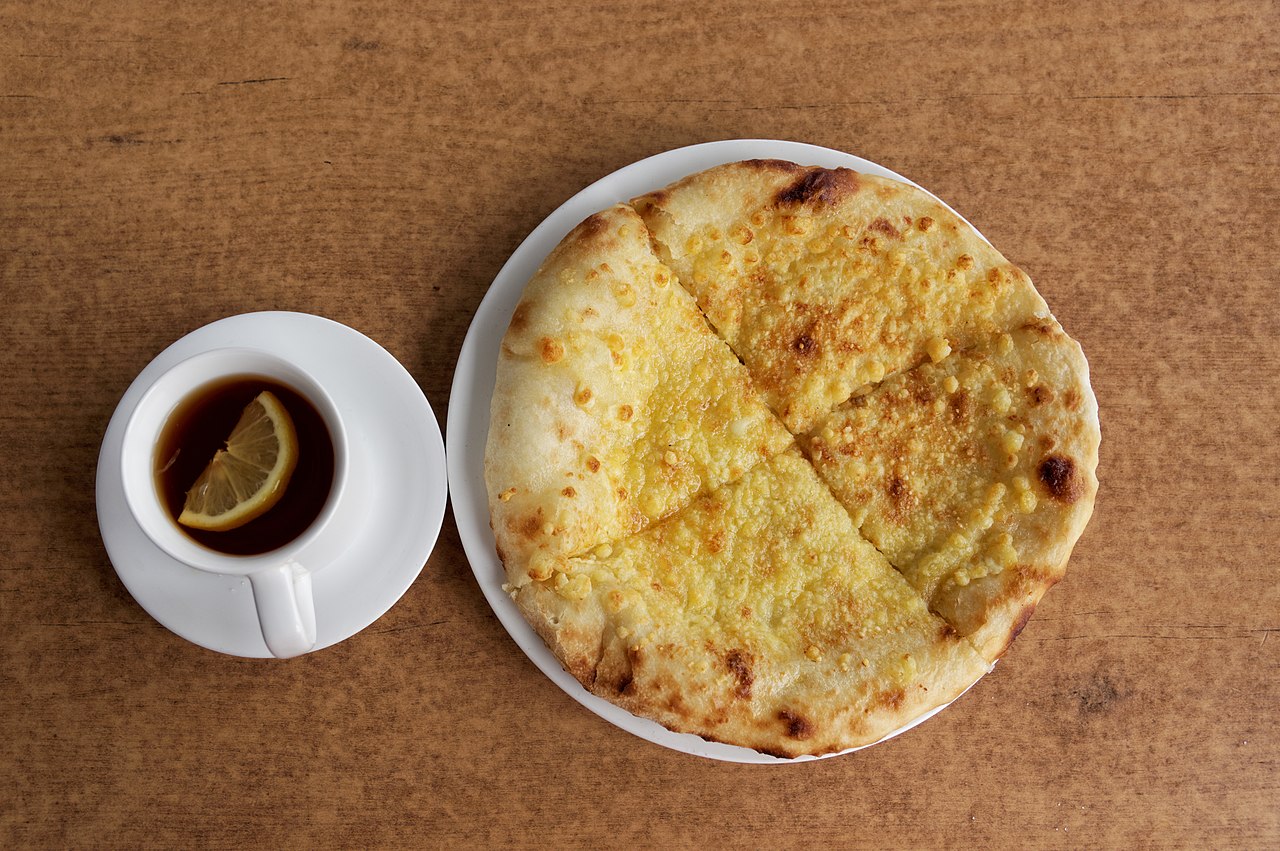
    Bread is sacred here, treated with real reverence — you don’t put it upside down, and you don’t waste it. The everyday loaf is tandyr nan (or just nan/lepyoshka): a round, dense, chewy bread the size of a dinner plate, with a stamped, dimpled centre and a puffy rim, baked against the wall of a tandyr. Warm, torn by hand, with a smear of butter or a bowl of soup, it’s perfect. You’ll see bakers shaping and stamping these discs at markets all over the country.

    Tandyr nan, round Central Asian tandoor bread

    Then there’s baursak, and I will not be objective about it. These are puffy, golden pillows of fried dough, somewhere between a doughnut and a dinner roll, piled high on the table at every celebration and funeral and Sunday. They’re eaten with tea, sometimes torn open and dabbed with butter, jam, or honey, sometimes just inhaled by the handful. There’s a tradition that the aroma of frying baursak rises to the heavens so that departed loved ones can share in the feast — which tells you everything about how central they are. Its flatter cousin, shelpek, is fried and given out on Fridays in memory of the dead. Bread, even fried bread, is never just bread here.

    Golden baursak, traditional Kazakh fried dough

    Dairy, the nomad way

    If meat is the headline, soured milk is the soul of Kazakh cuisine — the other half of that herder’s pantry. It is also where the most adventurous flavours hide. The one everybody meets is kurt: hard, intensely salty balls of dried, strained sour-milk curd. Nomads made them to last for seasons, drying them in the sun until rock-hard (you’ll see them spread out on racks at high pasture, like the photo below). They’re a shock at first — think the saltiest, tangiest cheese you’ve had — but they grow on you, and crumbled into soup or nibbled with beer they make sense fast.

    Kurt, dried salted curd balls eaten as a nomadic snack

    Softer and friendlier are irimshik (a mild, slightly sweet curd cheese), qaimak (thick clotted cream, glorious on bread), suzbe (strained sour milk, like a tangy quark), and ayran — drinkable salted yogurt that doubles as the region’s best hangover cure and hot-weather refresher. None of these will frighten anyone; all of them are worth a try with breakfast.

    What Kazakhs drink (and the tea that rules them all)

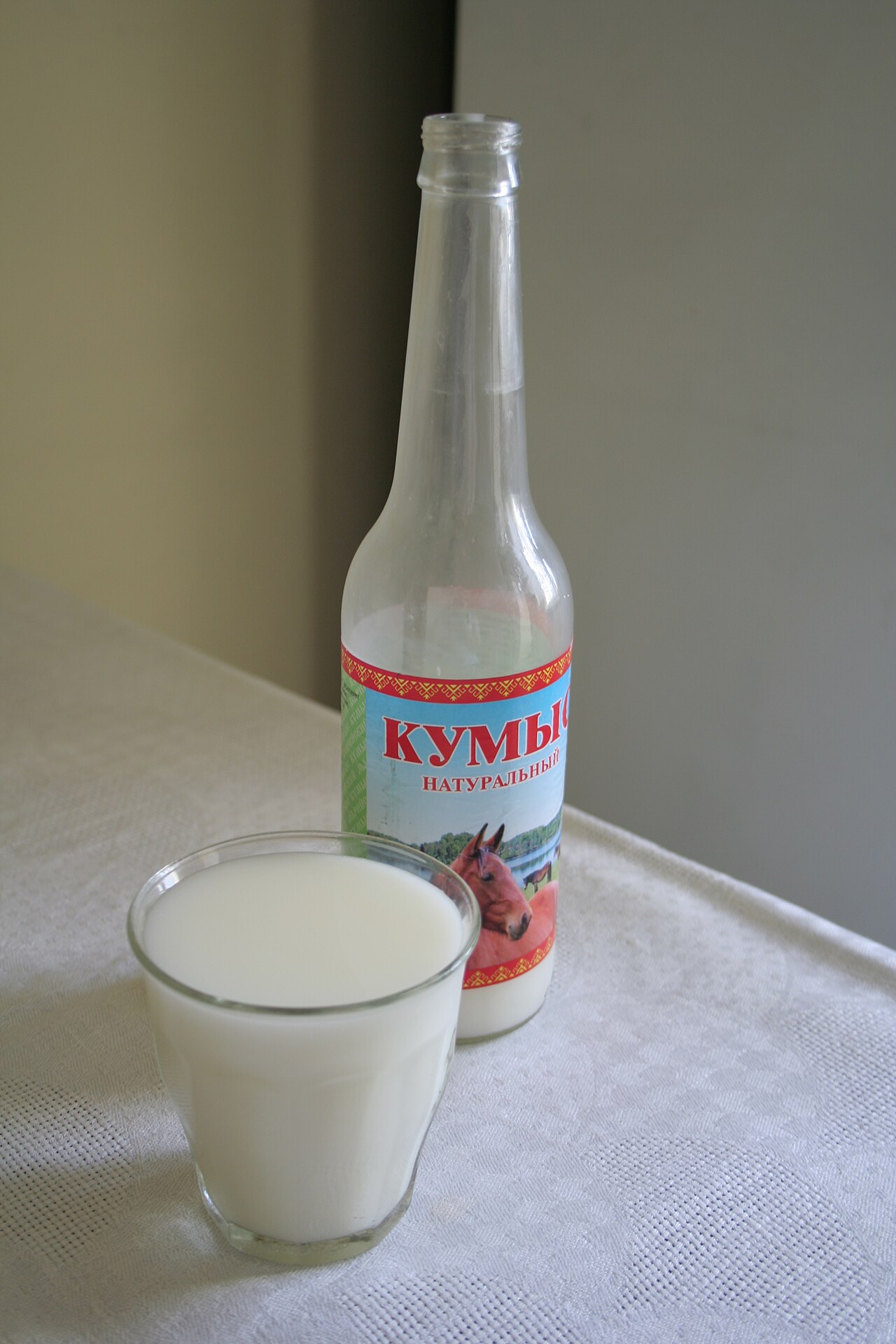
    Now for the drinks that define the place. Kumys (also written qymyz) is fermented mare’s milk: cloudy, sour, gently sparkling, and slightly alcoholic — usually around 1–2% once fermented. It’s the signature drink of the steppe summer, traditionally celebrated at the start and end of the milking season. People credit it with all kinds of health benefits, and whatever the science, drinking a bowl of it on a hot day in a village feels like tasting the country’s history. Its camel-milk cousin, shubat, is richer, even more sour, and a staple in the western deserts. Both are seasonal and best in summer; if you’re timing a trip around them, our guide to the best time to visit Kazakhstan explains when the milking season peaks. Shalap (kurt or yogurt whisked with cold, often fizzy, water and salt) is the everyday cooling drink.

    But the drink you’ll actually have most is tea — strong black tea, usually with milk, served constantly, from morning until you leave. Tea here is a ritual, not a beverage. The single most important thing to know: a host pours your tea only half full, and refills it again and again. This is not stinginess. A nearly empty cup means the host has to keep attending to you, keeping your tea hot and showing care; a brimming cup is practically a hint that you should drink up and go. Hold your kese (the little handleless bowl) with a small nod of thanks each time, and you’ll be fine. Modern Kazakhstan has also fallen hard for coffee — Almaty’s third-wave cafe scene is genuinely excellent — and alcohol is widely available, with cheap, good local beer, vodka, and a surprising domestic wine and brandy industry around the southern foothills.

    Sweets and the tea table

    Kazakh sweets are simple and tied to that endless tea. The famous one is chak-chak (also shek-shek): little nuggets of fried dough bound together with hot honey syrup into a sticky mound, cut into squares or piled on a plate. It’s Tatar in origin but beloved across the country, and modern versions get dressed up with chocolate or nuts. Alongside it you’ll find zhent (a pressed sweet of ground millet, butter, sugar, and sometimes raisins), the ever-present baursak with honey, and — thanks to the Soviet century — an entire universe of layered honey cakes (medovik), Napoleon cake, and chocolate-glazed pastries in every cafe. Sugar is a love language at the dastarkhan; expect bowls of sweets, dried fruit, and nuts to appear the moment you sit down.

    Chak-chak, crisp fried dough pieces, here drizzled with chocolate

    It’s not all Kazakh: the other cuisines you’ll eat

    One of the real surprises of eating here is how multicultural the everyday menu is. Kazakhstan spent the 20th century absorbing peoples from across the USSR and the Silk Road, and the food never forgot. Knowing these threads makes you a much smarter orderer.

    Uyghur and Dungan cuisine gave the country its noodle obsession. Beyond lagman, look for ashlyamfu (a cold, spicy, jellied noodle dish that’s a revelation in summer) and suiru rice dishes. These are also the kitchens most likely to bring real chilli heat. Korean food is everywhere, thanks to the Koryo-saram — Koreans deported to Kazakhstan in 1937 who became part of the national fabric. Their legacy is the bazaar institution of morkovcha, the spicy “Korean carrot” salad you’ll see in glistening heaps at every market, plus kuksi (cold noodle soup) and an array of pickled salads. Don’t skip the Korean salad row at the bazaar; it’s some of the best-value eating in the country.

    Dried fruit and nuts on display at a Central Asian bazaar

    Uzbek influence shows up in the best plov and samsa, especially in the south near the Silk Road cities. Russian, Ukrainian, and Tatar settlers brought borscht, pelmeni, pirozhki (stuffed buns), blini, and a whole repertoire of salads and pickles that now feel completely local. German deportees left a baking tradition you can still taste in the north. And in the big cities, a confident new-wave Kazakh scene has emerged: young chefs reinterpreting beshbarmak, horse meat, and steppe ingredients in tasting-menu form. The most exciting eating in the country right now is in the modern restaurants of Almaty and the polished dining rooms of Astana — proof that this cuisine is very much alive, not preserved under glass.

    Kazakh food by region: it changes as you travel

    Kazakhstan is the ninth-largest country on earth, and the food shifts noticeably as you cross it. Knowing the regional accents helps you order the right thing in the right place.

    Almaty and the southeast are the most cosmopolitan plate in the country. This is the heartland of Korean salads and Uyghur lagman, the best modern restaurants, the deepest coffee culture, and easy access to mountain honey, apples (the city’s name comes from the word for apple), and orchard fruit. If you only eat in one city, eat here — and our guide to things to do in Almaty doubles as a loose map of where to do it.

    The south and the Silk Road cities — Shymkent, Turkestan, Taraz — lean closest to Uzbek cooking: serious plov, blistered tandyr samsa, more bread, more melons and apricots in season. It’s warmer, the bazaars are bigger, and the hospitality is, if anything, even more relentless. Astana and the north show more Russian influence: expect more pelmeni, borscht, fish, potatoes, and hearty cold-weather food, fitting for a capital that endures brutal winters — see things to do in Astana for the dining side of the capital.

    The west and Mangystau, out by the Caspian, are camel country: this is where shubat (camel’s milk) is most at home, where you’ll find Caspian fish like sturgeon and the prized (and pricey) caviar, and where desert-cured meats shine. Wherever you roam, winter changes the menu everywhere — the soups get richer and the meat heavier, which is exactly what you want when it’s −20°C, as our guide to Kazakhstan in winter explains. Long distances also mean you’ll eat a lot at roadside cafes and on trains; planning that out is part of getting around Kazakhstan.

    Where to eat: bazaars, canteens and restaurants

    Knowing where to eat matters as much as knowing what. Kazakhstan has a clear ladder of places, and each has its moment.

    Bazaars are where I’d send anyone on day one. Almaty’s Green Bazaar is the classic — a covered hall where you can graze on samsa and fresh bread, taste your way down the Korean-salad row, sample kurt and dried fruit and horse sausage from vendors who’ll happily cut you a slice, and buy a bag of apricots for the road. Markets are cheap, social, and the fastest way to understand the food. Stolovayas — Soviet-style self-service canteens — are the budget traveller’s secret weapon: point at trays of plov, salads, soups, and cutlets, pay by weight or plate, and eat a full lunch for a few dollars. National restaurants (look for the word asханa or “Kazakh cuisine”) are where you go for a proper beshbarmak, horse-meat platters, and kumys served the way it should be. Cafes and modern restaurants, concentrated in Almaty and Astana, cover everything from third-wave coffee to ambitious tasting menus.

    A few ordering tips I learned the hard way: beshbarmak is often sold by weight and meant for sharing, so don’t each order one. Many dishes take a while because they’re cooked fresh — that’s a good sign, not a slow kitchen. And menus are frequently in Russian and Kazakh only outside the big cities, so a translation app and the willingness to point at someone else’s table go a long way.

    What food costs in Kazakhstan in 2026

    The happy headline: eating in Kazakhstan is cheap by Western standards, and you can eat very well on a modest budget. Here’s roughly what to expect per person in 2026, at around 500 tenge to the US dollar. Treat these as ballpark figures and always check the menu, since prices have been climbing with inflation.

    Where you eat Per person (2026) What you get
    Bazaar / street stall ₸500–1,500 ($1–3) Samsa, baursak, salads, a snack on the go
    Stolovaya / local canteen ₸1,500–3,500 ($3–7) Plov or lagman, salad, bread, tea
    Mid-range restaurant ₸4,000–7,000 ($8–14) A proper main, nicer room, often an English menu
    National (Kazakh) restaurant ₸5,000–9,000 ($10–18) Beshbarmak to share, horse-meat platter, kumys
    Trendy / modern restaurant ₸8,000–18,000 ($16–36) Tasting plates, cocktails, the new-wave scene

    Realistically, a traveller mixing bazaars, canteens, and the occasional sit-down dinner can eat happily on ₸6,000–12,000 ($12–24) a day. Push the boat out for one big national-restaurant feast — it’s worth it. For how food fits into the bigger picture, see our full breakdown of what a trip to Kazakhstan costs, and remember that the Kaspi QR app is so ubiquitous that even bazaar vendors take it — though cash is still king at the smallest stalls.

    A typical day of eating in Kazakhstan

    To pull it all together, here’s how a day at the table tends to flow. Breakfast is dairy-forward and unhurried: tea with bread, butter, jam, and qaimak, maybe eggs, sliced cheese and sausage, and leftover baursak from the day before. If you’re in a hotel, expect a generous buffet; if you’re with a family, expect to be fed until you protest.

    Lunch is the big meal, and the best-value one. This is when stolovayas and cafes do brisk business and set menus are cheapest, usually between 1 and 3pm. A bowl of lagman or a plate of plov, a salad, bread, and tea is the classic working lunch, and it’ll keep you going for hours. Dinner is more relaxed and social, the time for shashlik in a courtyard, a long restaurant meal, or — if you’re lucky — an invitation to a dastarkhan where beshbarmak is the late, ceremonial centrepiece.

    Snacking runs all day, mostly from bazaars: a hot samsa here, a handful of kurt or nuts there, a wedge of melon in summer. And tea is the constant thread, appearing at the start, middle, and end of nearly every encounter. Build your sightseeing around long, lingering meals rather than fighting them, and you’ll travel the way the country actually lives. It slots neatly into almost any Kazakhstan itinerary you put together.

    The dastarkhan: how Kazakhs actually eat

    Sooner or later — and in Kazakhstan it’s usually sooner — you’ll be invited to someone’s table, and you’ll meet the dastarkhan. The word means the spread itself: the low table (or cloth on the floor) groaning with baursak, sweets, dried fruit, salads, cold sliced sausage, and bowls of cream and jam, all laid out before the hot dishes even arrive. Hospitality here isn’t a nicety; it’s a deep-rooted obligation. There’s even a tiered tradition behind it: konakasy, the duty to feed any guest who turns up; and konakkade, the honour of slaughtering a sheep for a respected visitor.

    A few things make you a gracious guest. Arrive hungry and pace yourself — the dastarkhan is a marathon, and beshbarmak, the main event, comes late, after rounds of tea and snacks. Accept tea even if you’ve had ten cups (just leave the cup empty when you’re truly done, and lay your hand over it with thanks). If an elder offers you a choice cut, take it; refusing the honour is worse than struggling through it. Expect toasts — heartfelt, surprisingly long ones — and know that the youngest or the host often pours for everyone. And do compliment the cook, loudly. You will leave overfed and slightly overwhelmed by generosity. That’s the point. To understand more of the customs behind the table, our wider look at Kazakh culture and experiences is a good next read.

    Halal, vegetarian, spice and other practical questions

    A quick run through the things travellers actually worry about. Is it halal? Largely, yes — Kazakhstan is a Muslim-majority country, most traditional meat is halal, and pork mainly appears in Russian, Korean, and international spots. Look for the “халал” sign or just ask. Is it spicy? Traditional Kazakh food is not — it leans savoury and salty, letting the meat and broth speak. The heat you do find comes from the Uyghur, Dungan, and Korean kitchens, so steer toward those if you like chilli.

    Can vegetarians and vegans cope? Honestly, it takes planning. The traditional cuisine is built on meat and dairy, so rural options are thin. But Almaty and Astana have a growing crop of vegetarian and vegan cafes, Indian restaurants, and modern spots; meat-free lagman, plov, and pumpkin manti exist if you ask; and the bazaars are a vegetarian’s friend, piled with salads, breads, nuts, and fruit. Vegans should learn a couple of phrases (butter and sour cream sneak into everything) and lean on the big cities. Is the food safe? Generally yes — stick to busy places with high turnover, eat shashlik and meat cooked through, be a little cautious with raw dairy if your stomach is sensitive, and drink bottled or filtered water. When do people eat, and should I tip? Lunch is the big midday meal (often the best-value set menus run 1–3pm), dinner is relaxed, and a 5–10% tip in sit-down restaurants is appreciated though not obligatory; nobody tips at a bazaar stall.

    My quick hits: what to try first

    If you’re short on time or nerve, here’s the order I’d tackle it in:

    • Day one: a samsa from a bazaar bakery and a bowl of lagman at a Dungan cafe — easy wins that show you the range.
    • Be brave: a slice of kazy (horse sausage) and a cup of kumys in summer. You came this far; do it once.
    • The big one: a proper beshbarmak at a national restaurant, ideally shared with locals who’ll show you the ritual.
    • Comfort: manti with sour cream, or plov from a busy canteen.
    • Sweet finish: chak-chak and baursak with endless cups of milky tea.
    • Don’t miss: the Korean carrot-salad row at any bazaar — cheap, addictive, and very Kazakhstani in its own way.

    Kazakhstan food: frequently asked questions

    What is the national dish of Kazakhstan?

    Beshbarmak — “five fingers” — is the national dish. It’s slow-boiled meat (mutton, beef, or horse) served over wide sheets of flat noodles, topped with onions in broth (tuzdyk), with a side bowl of the meat broth, sorpa. It’s a communal, ceremonial dish traditionally eaten by hand and shared from one big platter.

    What food is Kazakhstan known for?

    Kazakhstan is best known for beshbarmak, horse-meat specialties like kazy sausage, hand-pulled lagman noodles, steamed manti dumplings, baked samsa, fried baursak dough, and fermented milk drinks such as kumys (mare’s milk) and shubat (camel’s milk). It’s a hearty, meat-and-dairy cuisine rooted in nomadic life.

    Is Kazakh food spicy?

    No, traditional Kazakh food is savoury and mild rather than spicy — the focus is on the natural flavour of meat, broth, and dough. If you want heat, head for the Uyghur, Dungan, or Korean dishes (like ashlyamfu or Korean carrot salad), which carry real chilli.

    Is food in Kazakhstan halal?

    Mostly, yes. Kazakhstan is a Muslim-majority country and most traditional meat is halal; pork appears mainly in Russian, Korean, and international restaurants. Look for a “халал” sign or simply ask “Халал ма?” Horse and beef are far more common than pork in Kazakh cooking.

    Do people in Kazakhstan really eat horse meat?

    Yes, and it’s a source of pride, not a tourist gimmick. Horse meat is festive and historically prestigious, eaten as cured sausage (kazy, shuzhuk), smoked cuts (zhaya, zhal), and in beshbarmak. It’s lean and faintly sweet. If you eat meat, it’s well worth trying with an open mind.

    What do Kazakhs drink?

    Tea above all — strong, milky black tea served constantly and poured only half full as a sign of respect. Traditional drinks include kumys (fermented mare’s milk) and shubat (camel’s milk), both seasonal summer staples, plus ayran and shalap. Cities also have an excellent modern coffee scene and cheap local beer.

    How much does food cost in Kazakhstan?

    Eating is inexpensive. In 2026, bazaar snacks run ₸500–1,500 ($1–3), a canteen meal ₸1,500–3,500 ($3–7), and a mid-range restaurant main ₸4,000–7,000 ($8–14). Most travellers eat well on around ₸6,000–12,000 ($12–24) a day, mixing markets, canteens, and the odd sit-down dinner.

    What should I eat for breakfast in Kazakhstan?

    A typical spread is tea with bread, butter, jam, and qaimak (clotted cream), often with eggs, cheese, sausage, and leftover baursak. Hotels lay on big buffets; bazaars sell fresh samsa and pastries. It’s hearty and dairy-forward rather than sweet — fuel for a long day on the steppe.

    Can vegetarians and vegans eat well in Kazakhstan?

    Vegetarians manage in cities with planning — meat-free lagman and plov, pumpkin manti, salads, breads, and Indian or modern cafes in Almaty and Astana. Bazaars are a great fallback. Vegans need more care, as butter and sour cream are everywhere, so learn a few phrases and lean on the big cities.

    Is street food in Kazakhstan safe?

    Generally yes. Choose busy stalls with high turnover, eat things freshly cooked and hot (samsa, shashlik), go easy on raw dairy if your stomach is sensitive, and drink bottled or filtered water. The bazaars and bakeries in major cities are a reliable, delicious, and cheap way to eat.

    Final thoughts

    Kazakhstan won’t dazzle you with a hundred spices or a Michelin row of restaurants. What it offers instead is food with a story in every bite — a cuisine engineered for survival on the open steppe and softened over centuries into one of the world’s great expressions of hospitality. Eat the beshbarmak, drink the half-full cup of tea, be brave about the horse meat, and say yes when someone invites you in. You’ll leave full, and you’ll leave understanding the country far better than any monument could teach you. For more ways to build your trip around it, browse our Kazakhstan food and drink guides and the master list of things to do in Kazakhstan.


    About the author: I’ve travelled across Kazakhstan from Almaty’s bazaars to the western deserts, eating at dastarkhans, roadside cafes, and a few too many stolovayas along the way. This guide reflects what I’ve learned at the table — prices and details are accurate as of writing, but menus and costs change, so always check locally.

    Last updated: June 2026.

    Photo credits

    All images are used under their respective free licenses via Wikimedia Commons. Thanks to the photographers who share their work: