Contents
- Kazakhstan’s steppe drinks at a glance
- What is kumis?
- How kumis is made
- What does kumis taste like — and how strong is it?
- Shubat — fermented camel’s milk
- Ayran and the wider dairy family
- Are these drinks good for you?
- The Kazakh tea ritual
- Where and when travellers can try them
- How to drink kumis like a local
- Frequently asked questions
- Final thoughts
My first bowl of kumis was handed to me on a hot afternoon by a woman who clearly enjoyed watching foreigners taste it for the first time. It was sour, faintly fizzy, a little boozy, and not quite like anything I’d had before. I made a face; she laughed; I finished the bowl anyway, because in Kazakhstan refusing what you’re offered isn’t really an option. By the third bowl over that trip, I got it. Here’s the honest guide I wish I’d had.
Kumis (also spelled kymyz or koumiss) is fermented mare’s milk — the ancient national drink of the Kazakh steppe. It’s tangy, lightly sparkling and mildly alcoholic, usually somewhere between 0.7 and 2.5 percent. Alongside its camel’s-milk cousin shubat and the ever-present black tea, it’s at the heart of Kazakh hospitality and of the wider Kazakh food and drink tradition, and trying it is a rite of passage for any visitor.
Kazakhstan’s steppe drinks at a glance
| Drink | Made from | Taste | Alcohol |
|---|---|---|---|
| Kumis (kymyz) | Fermented mare’s milk | Sour, fizzy, tangy, yeasty | ~0.7–2.5% |
| Shubat | Fermented camel’s milk | Richer, thicker, sour | Low, similar |
| Ayran | Soured cow’s-milk yogurt, salted | Cool, salty, refreshing | None |
| Black tea | Tea leaves, usually with milk | Strong, warming | None |
These four drinks tell the whole story of Kazakh dairy culture and hospitality. Kumis is the icon, so let’s start there.
What is kumis?
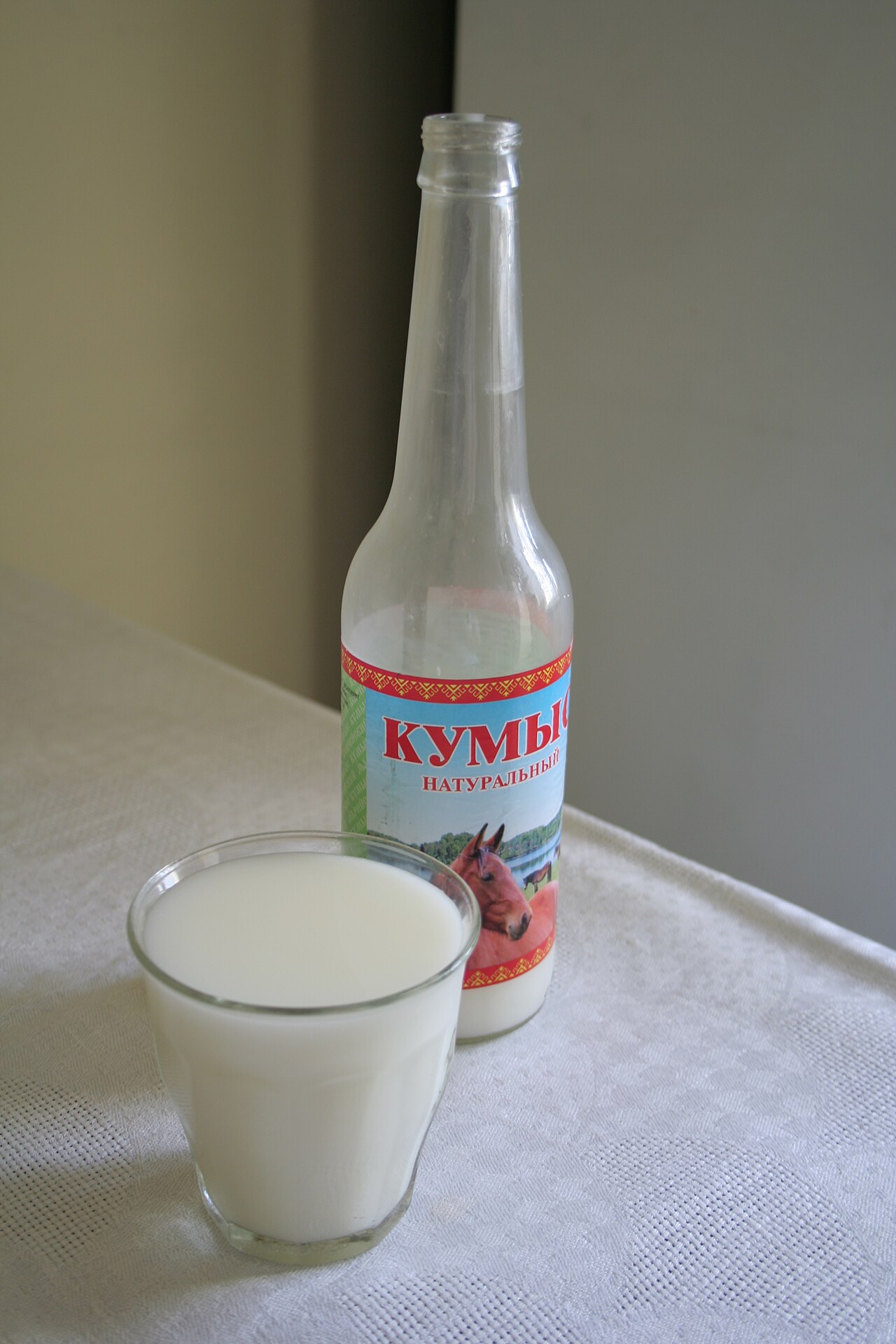
Kumis is milk from a mare, fermented until it turns sour, slightly fizzy and mildly alcoholic. You’ll see the name written many ways — kumis, kumys, kymyz (the Kazakh spelling), koumiss — and its Mongolian equivalent is airag. Whatever the spelling, it’s the same thing: the drink that fuelled the horse cultures of the steppe for thousands of years.
It matters here in a way that’s hard to overstate. Kumis isn’t a curiosity dredged up for tourists; it’s a living tradition, drunk by ordinary people, sold in supermarkets and bazaars, and offered to guests as a mark of respect. It belongs on the same table as beshbarmak and the rest of the traditional dishes you’ll meet on a trip here.
A drink older than history
The steppe was drinking fermented mare’s milk before anyone was writing things down. The ancient Botai culture of northern Kazakhstan left some of the earliest archaeological traces of horse milking and dairying anywhere. Herodotus described the Scythians processing mare’s milk in the fifth century BC. And in the 1250s the friar William of Rubruck, sent east to the Mongol court, wrote a vivid account of drinking “cosmos,” noting that it stung the tongue like new wine and left a taste of almonds. When you sip kumis, you’re joining a very long line.
Kumis and the horse in Kazakh identity
You can’t separate kumis from the horse, and you can’t separate the horse from being Kazakh. This is a culture that domesticated, rode, herded and revered horses for millennia, and the drink that comes from the mare carries all of that weight. Offering kumis to a guest is offering something that took a whole way of life to produce — the herd, the pasture, the seasonal milking, the patient churning. That’s why it’s poured with a certain ceremony, and why declining it flatly can land as a small rejection of the welcome behind it. Understanding that makes the sour first sip a lot easier to appreciate; you’re not just tasting a drink, you’re being handed a piece of the steppe. It’s the same logic that makes horse meat a food of honour rather than a novelty here.
How kumis is made
Milking the mare
Mares are milked only for part of the year — roughly the warm months, when they’ve foaled — and they don’t give much at a time, so kumis is seasonal and labour-intensive. The foal is usually kept close to encourage the mare to let down her milk, and half the yield is left for the foal. This is a big reason kumis is a spring-and-summer drink: it follows the rhythm of the herd.
The double fermentation
Mare’s milk is high in sugar, and that’s the secret. Two things go to work on it at once: lactic-acid bacteria sour the milk, while yeasts ferment the sugars into a little alcohol and carbon dioxide. Chemically it’s closer to wine-making than to yogurt — the sugars ferment directly — which is why kumis ends up faintly boozy and gently fizzy rather than just sour. Controlled modern fermentation runs a few hours at warmish temperatures, then a cooler resting period. Fresh, barely-fermented mare’s milk has its own name — saumal — and is drunk almost sweet, sometimes for its supposed health benefits, before the souring really takes hold. Leave it longer and it climbs in acidity and fizz; this is why two bowls of “kumis” can taste worlds apart.
The saba and the churning
Traditionally, the milk was fermented in a smoke-cured leather sack and churned repeatedly with a wooden plunger — sometimes hung by the yurt door so everyone coming and going gave it a stir, sometimes strapped to a saddle so a day’s riding did the churning. That constant agitation is what gives good kumis its froth, and the microflora living in the sack and the horses’ pasture give each producer’s kumis its own character — a kind of steppe terroir. Today wooden vats and plastic barrels often stand in for the leather sack, but the principle is unchanged.
What does kumis taste like — and how strong is it?
The taste
Light-bodied, sour, tangy, with a prickle of fizz and a yeasty edge — imagine a thin, sharp drinking-yogurt that someone has very lightly carbonated and lightly spiked. The flavour varies enormously by producer and by how long it’s fermented. A young, lightly fermented kumis (sometimes sweetened) can be genuinely pleasant, almost like a sparkling yogurt drink. A three-day kumis is a different beast: sharply sour, funky, with a barnyard note that not everyone loves. If you get the chance, try a young one and an aged one side by side — it’s the single best way to understand why locals speak about kumis with the same nuance a wine drinker uses for vintages.
How strong is it?
Mild. Most kumis lands somewhere between 0.7 and 2.5 percent alcohol — comparable to a very weak beer. Longer-fermented or specially prepared batches can be stronger, and historically nomads even freeze-distilled it to concentrate the alcohol, but the bowl you’re handed at a bazaar won’t get you drunk. It’s refreshment and tradition, not a night out.
An honest first taste
Here’s the truth: most first-timers pull a face, and that’s fine. It’s sour and unfamiliar and your brain expects milk to be sweet. My advice is to go in expecting something closer to kefir or a sharp yogurt drink than to milk, take a proper mouthful rather than a timid sip, and give it a second and third go across your trip. Many people who wrinkle their nose on day one are asking for another bowl by day four. And if you truly can’t stand it, taste a little to honour the offer and move on — nobody will be offended by an honest, polite try.
Shubat — fermented camel’s milk
How shubat differs from kumis
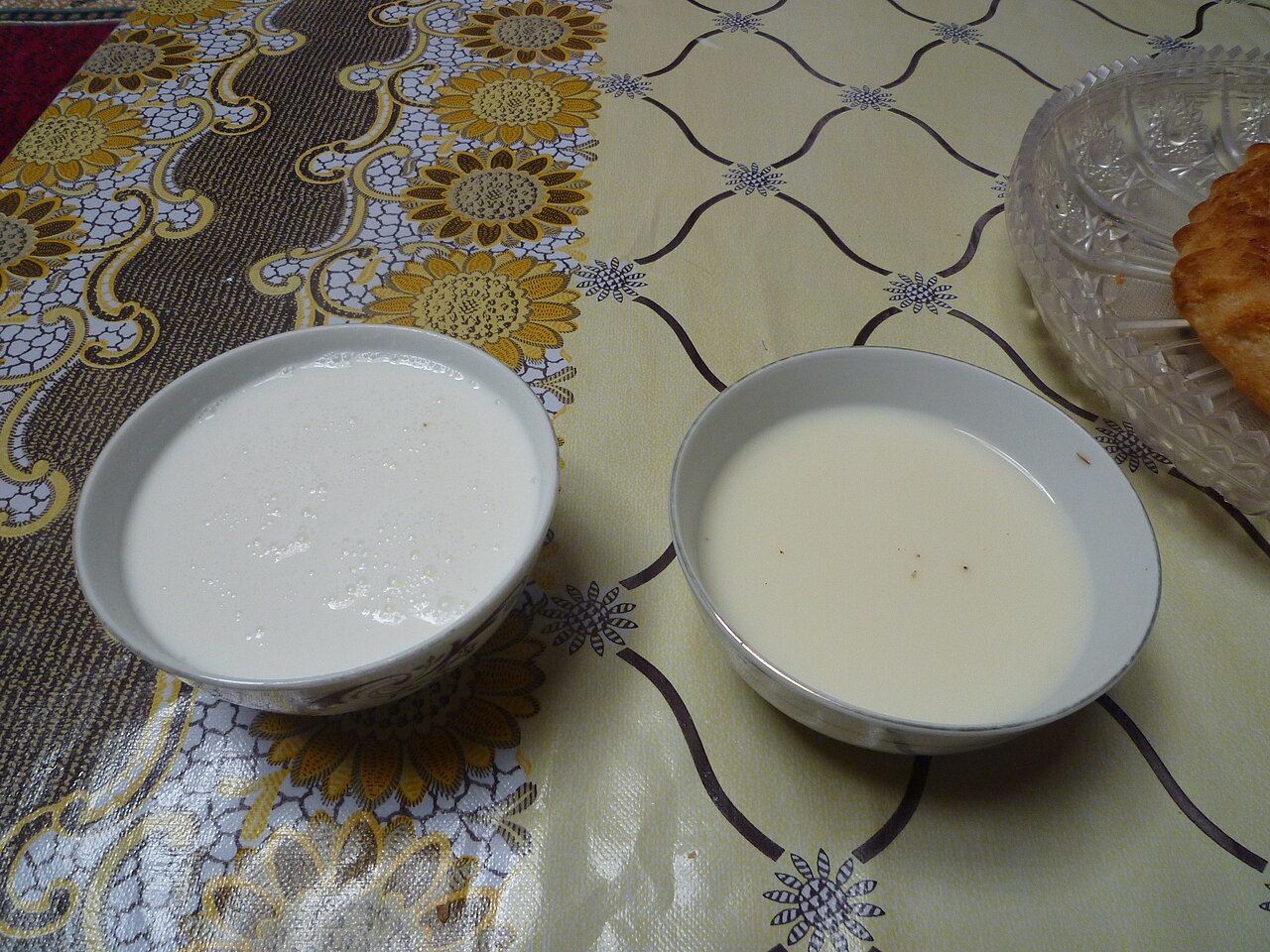
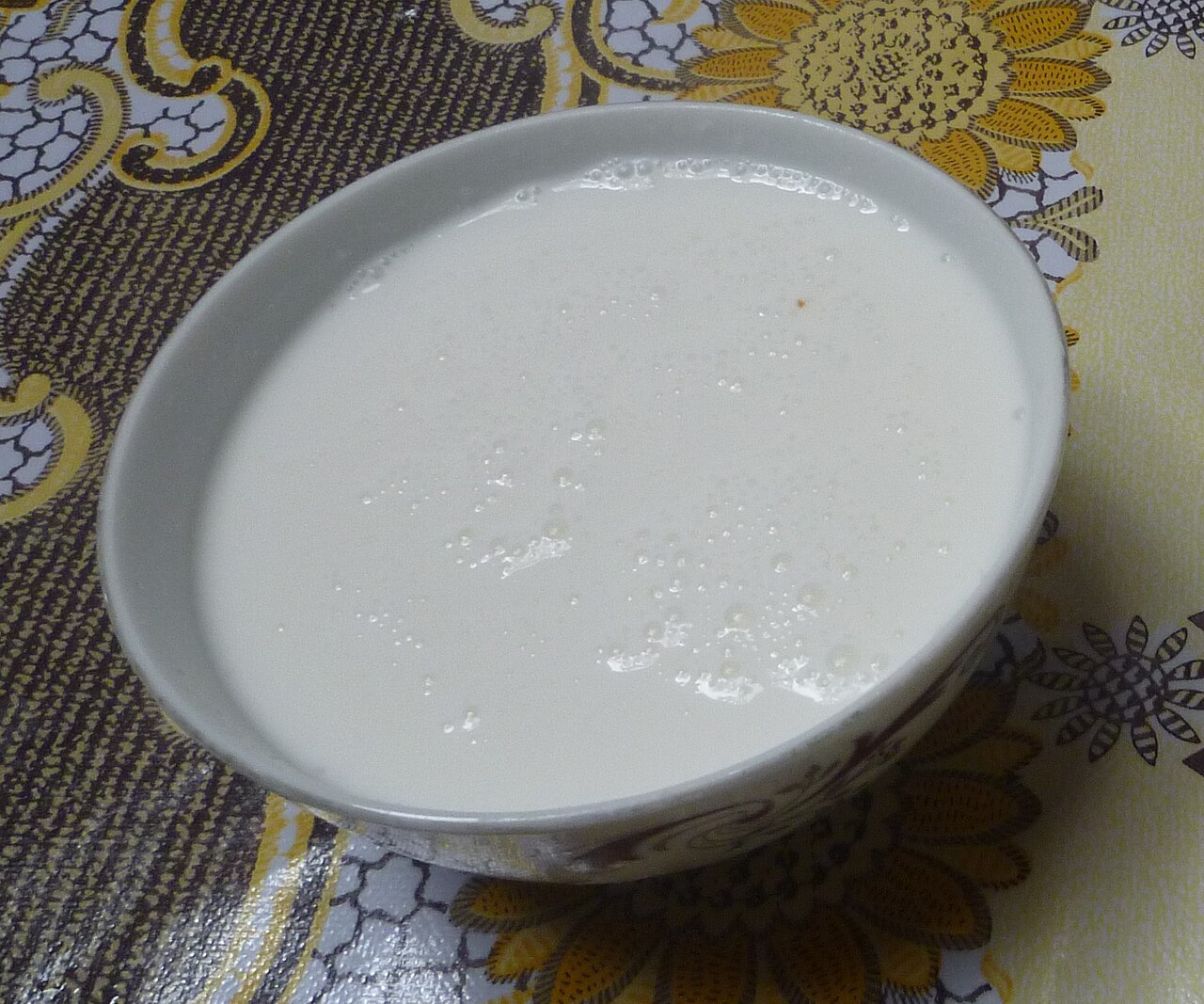
Shubat (sometimes called chal) is kumis’s richer, heavier relative, made from camel’s milk instead of mare’s. It’s thicker and fuller-bodied, often even more assertively sour, and — like kumis — mildly fermented and full of live cultures. Where kumis is light and prickly, shubat is creamy and dense. If kumis is the steppe’s sparkling wine, shubat is closer to a sour, milky ale.
Where camel’s milk rules
Shubat comes into its own in the camel-herding country of western and southern Kazakhstan — the deserts and semi-deserts of regions like Mangystau, where camels thrive and mares are scarcer. If you’re travelling out west, this is the drink to seek out, often sold alongside horse-sausage sandwiches at roadside stops.
The honest first taste of shubat
Be warned: to an unaccustomed palate, shubat can be a bigger ask than kumis — saltier-seeming, thicker, more intense. Taste it cold, in a small amount, and don’t judge the whole category by one strong bowl. Some travellers actually prefer it to kumis once they adjust; others never do. Either way, it’s a genuine taste of the desert steppe.
Ayran and the wider dairy family
Not everything is fermented and alcoholic. Ayran is the everyday cooler — soured cow’s-milk yogurt thinned with water and lightly salted, non-alcoholic and wonderfully refreshing on a hot day. You’ll also meet qurt (hard, salty dried-curd balls), irimshik (dried curd), sary mai (aged-milk butter) and qaymaq (thick clotted cream). Together with kumis and shubat, they make up a dairy larder that’s central to how Kazakhs eat, a legacy of a culture that turned milk into everything from a drink to a cheese that keeps for a year. On a hot bazaar afternoon, a cold ayran is honestly one of the most reliably enjoyable things you can order — no acquired taste required — and it’s the gentle entry point to the whole dairy world if the fermented milks feel like a leap.
Are these drinks good for you?
You’ll hear big health claims for kumis and shubat — that they aid digestion, boost immunity, even cure ailments. There’s a kernel of history here: in the nineteenth century, “kumis cure” sanatoriums treated patients with the drink, and fermented milks are indeed full of live cultures. But it’s wise to keep the claims in perspective. The rigorous science is limited, so enjoy kumis and shubat as delicious, cultural, probiotic-rich drinks rather than as medicine. If you’re pregnant, immunocompromised, or avoiding alcohol entirely, remember these are naturally fermented and mildly alcoholic, and ask how a given batch was made before drinking freely.
The Kazakh tea ritual
For all the fame of fermented milk, the drink Kazakhs actually reach for a dozen times a day is tea. Understanding the tea ritual will do more for your everyday travel than any bowl of kumis.

How tea came to the steppe
Tea arrived along the Silk Road and later poured in from Russia, and it went from luxury to daily necessity fast. Today it’s the national everyday drink — strong black tea, very often taken with milk, brewed dark and served constantly.
The piala and “tea with respect”
Kazakh tea comes in a small handle-less bowl — a piala or kese — and here’s the detail that trips up visitors: it’s poured only part-full, never to the brim. This isn’t stinginess; it’s the opposite. A little tea stays hot and means the host refills your bowl often, and each refill is a small act of care and attention. A bowl filled to the top can even hint that it’s time for the guest to leave. So don’t be surprised by the modest pours — the frequent topping-up is the whole point. The hostess, usually the woman of the house, pours, and elders and guests are served first.
The dastarkhan spread
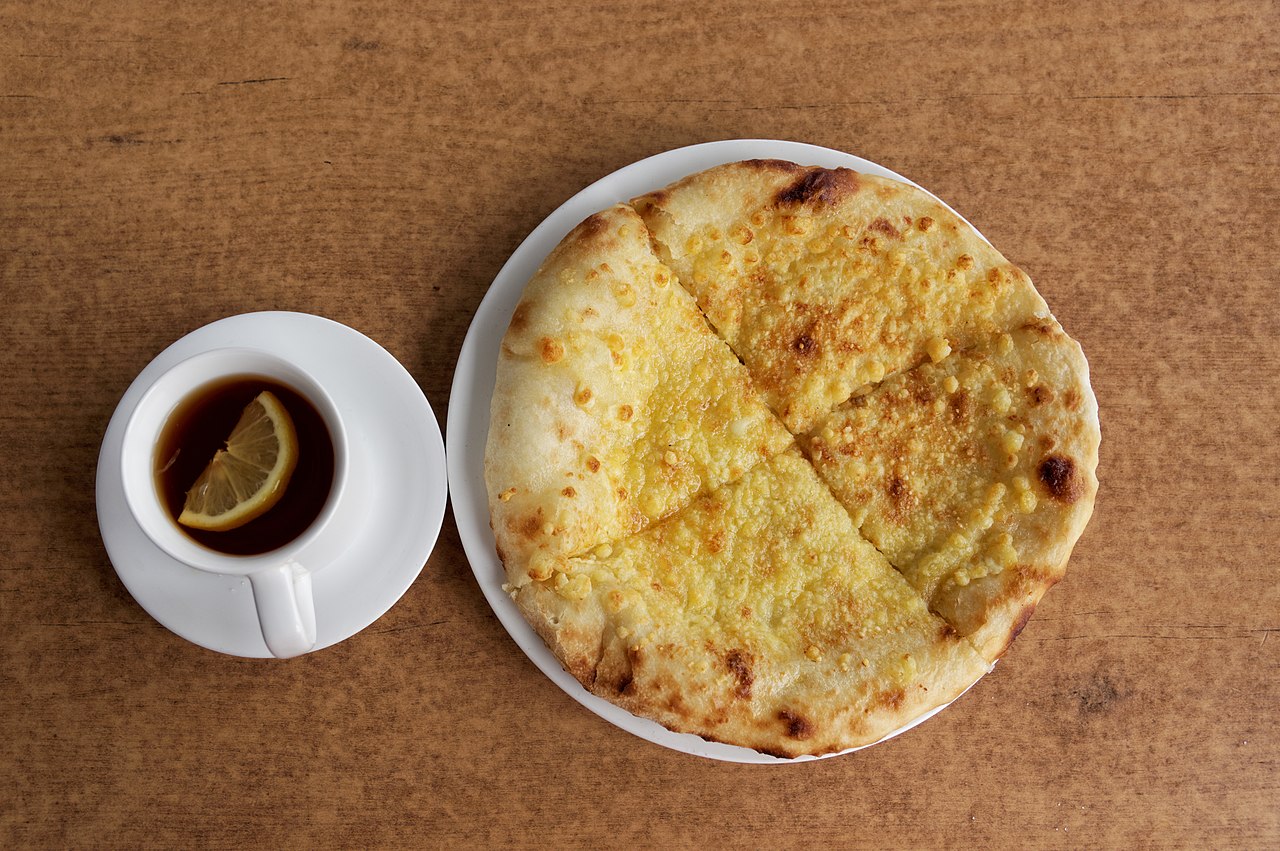
Tea is never really alone. It comes with the dastarkhan — a spread of baursak, dried fruit, qurt, sweets, jam and bread — and it bookends meals and fills the hours in between. To sit at a Kazakh tea table is to be gently, continuously fed, and it’s one of the warmest experiences the country offers. The etiquette around it is worth knowing before you’re a guest; our guide to Kazakh customs and hospitality lays it all out.
Who pours, and why it matters
Pouring tea is a role, not a chore. It usually falls to the woman of the house or the youngest married woman, who sits by the samovar and keeps everyone’s bowl topped up throughout the meal — reading the table, refilling before you have to ask. In a traditional household a new bride’s tea-pouring is even a gentle rite, the kelin chai, by which she’s welcomed into the family. As a guest you don’t have to do anything except accept your refills graciously; if you’ve truly had enough, a hand over the bowl or turning it over signals that you’re done.
Where and when travellers can try them
Seasonality
Timing matters for the milk drinks. Because mares foal and are milked in the warmer months, kumis is at its best and most abundant from spring into early autumn. You can find bottled versions year-round, but for the fresh, frothy, straight-from-the-producer experience, a warm-season trip is your friend. Tea, of course, is available every hour of every day. In Almaty you’ll even find late-night kumis bars, and bottled brands sit on every supermarket shelf — proof this is a living, everyday drink and not a museum piece. (A fun aside: Japan’s Calpis soft drink was reportedly inspired by the flavour of kumis, so its distant echo has travelled further than you’d think.)
Bazaars, roadsides and restaurants
The easiest place to try kumis and shubat is a bazaar — Almaty’s Green Bazaar has vendors ladling it out — or a roadside stall on a country drive, where farmers sell their own. Traditional restaurants list them too; see our guide to the best restaurants in Almaty for sit-down options. Buy from a refrigerated, busy, trusted seller, and start with a small cup rather than committing to a litre.
How to drink kumis like a local
A few small things make the experience better. Drink it cold — warm kumis is much harder going. Accept it with your right hand, or both hands, as a small courtesy. Don’t stir in sugar or expect it to be sweet; take it as it comes. If you’re offered a huge bowl and you’re unsure, it’s fine to ask for a little (az gana — “just a little”), taste, and go from there. And treat it as a social act rather than a transaction: kumis is almost always shared, offered as welcome, and drunk in company. Meeting it in that spirit — curious, unhurried, willing to be surprised — is the difference between a grimace and a good story.
One more thing worth knowing: kumis and heavy meat go together for a reason. After a rich beshbarmak, a sour, fizzy bowl genuinely helps cut the fat and settle the stomach — the traditional pairing isn’t an accident. If you’re already committing to the full Kazakh feast, the fermented milk is part of the design.
Frequently asked questions
What does kumis taste like?
Sour, tangy and lightly fizzy, with a yeasty, faintly alcoholic edge — closer to a sharp, thin drinking-yogurt or kefir than to fresh milk. Younger, sweeter versions are milder and quite pleasant; longer-fermented kumis is sharper and funkier. It varies a lot by producer.
Does kumis contain alcohol?
Yes, but not much — typically 0.7 to 2.5 percent, like a very weak beer, from the natural fermentation of the milk sugars. Specially prepared batches can be stronger, but an ordinary bowl won’t get you drunk. If you avoid alcohol entirely, note that it’s always mildly alcoholic.
What is the difference between kumis and shubat?
Kumis is made from fermented mare’s milk; shubat from fermented camel’s milk. Both are sour and mildly alcoholic, but shubat is thicker, richer and often more intense. Kumis is associated with horse country everywhere; shubat with the camel-herding west and south.
Is kumis good for you?
It’s a probiotic-rich fermented milk, and tradition credits it with aiding digestion and general health — there was even a nineteenth-century “kumis cure.” The hard science is limited, so it’s best enjoyed as a nourishing cultural drink rather than as medicine. Those who are pregnant or avoiding alcohol should be mindful that it ferments to a low alcohol level.
When is the best time to try kumis?
Spring through early autumn, when mares are milked and fresh kumis is abundant at bazaars and roadside stalls. Bottled kumis is sold year-round, but the fresh, frothy version is a warm-season pleasure.
Why is Kazakh tea served in a half-full bowl?
It’s a sign of hospitality, not meanness. A small pour keeps the tea hot and means your host refills your piala often, and frequent refills show care. A brim-full bowl can even signal that it’s time to go. Expect modest pours and generous topping-up.
Is kumis safe for tourists to drink?
Generally yes, if you use common sense. Buy from a busy, refrigerated, reputable seller rather than a jug left out in the sun, and start with a small amount to let your stomach adjust to the live cultures. Some travellers find their digestion needs a day or two to get used to it. If you have a compromised immune system or you’re pregnant, be cautious with unpasteurised fermented milk and its mild alcohol.
Final thoughts
Kumis, shubat and the tea bowl are the liquid heart of Kazakh culture — older than the cities, tied to the horse and the camel and the open steppe, and offered to you as a genuine welcome. Don’t come expecting to love the fermented milk on the first sip; come willing to try it properly, more than once, in the spirit it’s given. And whatever you make of the mare’s milk, say yes to the tea, settle in at the dastarkhan, and let someone refill your bowl until you’ve lost count. That’s Kazakhstan being kind to you, one small pour at a time.
Photo credits
- Kumis bottle and glass — A.Savin, CC BY-SA 3.0, via Wikimedia Commons
- Kumis and shubat with baursak — upyernoz, CC BY 2.0, via Wikimedia Commons
- Bowl of shubat — upyernoz, CC BY 2.0, via Wikimedia Commons
- Baursak with tea — Vidor, public domain, via Wikimedia Commons