Contents
- Baikonur at a glance
- Why Baikonur is unlike any other spaceport
- The permit system
- Who is actually selling Baikonur tours
- What is actually launching in 2026
- What you can see if you get in
- If you cannot get in: the honest alternatives
- Practicalities
- Is it worth it?
- Frequently asked questions
- Final thoughts
Almost everything written online about visiting Baikonur was written before 2022, and it is selling you a trip that no longer exists.
A Baikonur Cosmodrome tour is still possible in 2026, but you cannot go independently, you cannot go quickly, and if your passport is from a country on Russia’s “unfriendly states” list you will be kept out of the Russian-controlled zone — which holds the museum, the crew send-off ceremony and the Gagarin and Korolev cottages. Check your eligibility with the operator before anything else. As for launches, Soyuz MS-29 carried its crew up on 14 July 2026, and the next launch tour on operator calendars is for a cargo flight.
That is not a reason not to go. It is a reason to know what you are buying. This guide sets out the access rules as they actually stand, what is launching, what you can and cannot see, what it costs, and what to do instead if the answer turns out to be no.
Baikonur at a glance
| What it is | The world’s oldest and largest operational spaceport, leased by Russia inside Kazakhstan |
|---|---|
| Where | Kyzylorda region, southern Kazakhstan; about 200 km east of the Aral Sea, north of the Syr Darya |
| Access | Closed city and restricted area. Permit required. No independent visits |
| Lead time | Kazakhstan announced a 10-day process in June 2026; Vegitel asks for at least 35 days, Advantour 45 days, or 60 for launch tours |
| Cost, 2026 | Roughly US$1,700–3,400 per person for a 3-day non-launch tour; US$2,250–4,300 for a launch tour; up to €5,500 for the VIP Russian-side version |
| Nearest airport | Kyzylorda International, about 260 km away |
| Next launch | Cargo: Progress MS-36, advertised by Vegitel for 24 November 2026. Confirm the date with your operator |
| Best season | September to November, or April to May. Summer is fiercely hot |
Why Baikonur is unlike any other spaceport
A Russian enclave inside Kazakhstan
Baikonur is Kazakh territory operated by Russia under a lease. The original 1994 agreement set rent at US$115 million a year; in June 2005 Russia’s Federation Council ratified an extension running to 2050, with the rent unchanged — which is a long-running source of friction between the two governments.
The administrative arrangement is genuinely odd. Internally, Russia treats the city as belonging to the Odintsovsky District of Moscow Oblast; formally it remains an administrative unit of Kazakhstan, granted an unofficial status equivalent to a Russian city of federal significance for the duration of the lease. It was called Leninsk until Boris Yeltsin renamed it Baikonur on 20 December 1995.
The relationship is loosening. In 2022 Russia handed Kazakhstan a list of 234 facilities it no longer needs and wants taken out of the lease. In March 2023 Kazakhstan took control of the Baiterek launch complex and barred Russian officials from leaving over a US$29.7 million debt. In May 2025 Kazakhstan denied reports that Russia was planning an early exit. Read into that what you like; the practical effect for a visitor is that more and more of the site is Kazakh-run, which is good news for access.
Two zones, one fence — the fact that changes your trip
This is the single most important thing on this page and almost nobody publishes it.
The cosmodrome is divided into a Kazakh-administered zone and a Russian-controlled zone. Citizens of countries on Russia’s list of “unfriendly states” are not permitted to enter the Russian-controlled zone. If you hold a US, UK, EU, Canadian, Australian or Japanese passport, that means you are excluded from:
- the crew send-off ceremony
- the crew report
- the Cosmonautics Museum
- the historic cottages of Yuri Gagarin and Sergei Korolev
Those four items are exactly what every legacy blog post promises. The operators who state this at all bury it under “important information” on the product page. The list is also given as non-exhaustive — “such as” — so assume there may be more.
Everything on the Kazakh side remains open, and that is not a consolation prize: it includes Gagarin’s Start itself, the command post, the Buran assembly building and the Energia test stand. But if the museum and the cottages were your reason for going, you need to know now.
The permit system
How it works
Baikonur is a restricted area and both the city and the cosmodrome require special permits. Independent visits are not possible. In practice you buy a tour from an operator accredited to handle the paperwork, and they obtain the pass.
Who issues it is itself contested. Older sources say Roscosmos. Advantour’s current 2026 itinerary refers to “permit documents (city + KazCosmos)” and has guests met on arrival by a representative of Infrakos for document verification covering the city and the Kazakhstani part of the cosmodrome. Read together, that suggests Kazakh-side access is now processed Kazakh-side — consistent with the transfer of facilities described above.
You will be asked for a passport scan, your country of residence, contact details, and — this catches people out — your position and place of work.
How far ahead: the numbers disagree
In June 2026 Kazakhstan’s Tourism and Sports Minister Yerbol Myrzabossynov announced that the permit wait for foreign tourists had been cut to 10 days, as part of a newly approved Baikonur Tourism Development Concept running to 2030. The same announcement confirmed that historic facilities including Gagarin’s launch pad have been transferred to Kazakhstan and require modernisation and investment.
Operators still quote longer waits than the government figure. Lead times for 2026:
| Source | Stated lead time |
|---|---|
| Kazakh government, June 2026 | 10 days |
| Photosafari (Kazakhstan) | 35 days for foreigners, 20 for KZ/RU |
| Vegitel (Russia) | 35 days |
| Advantour, non-launch tour | 45 days |
| Advantour, launch tour | 60 days |
The real deadline is money, not paperwork. Advantour charges a non-refundable US$200 per person when documents are submitted. On launch-period tours the balance is due in full no later than 65 days before departure, and once you have paid in full a 100 per cent cancellation fee applies. So even if the permit now takes ten days, a launch trip commits you financially two months out.
The cancellation terms nobody reads
You are buying a trip whose central event routinely slips, on non-refundable terms. Steppe & Sky publishes a more forgiving and more revealing ladder: 90 per cent refund before Roscosmos permission is granted, 80 per cent after permission regardless of timing, nothing within 14 days, 80 per cent if Roscosmos refuses you permission, and 80 per cent if the launch is moved or cancelled — unless you switch to the between-launches package.
That last clause tells you what the failure modes are. Read the refund terms before the itinerary.
Visas
It depends entirely on your route. Vegitel’s tour enters via Moscow and requires a double-entry Russian visa, with no Kazakh visa needed. Advantour’s itinerary flies in and out of Kyzylorda and mentions no Russian visa at all. Most Western nationals do not need a visa for a short tourist stay in Kazakhstan — see our guides to the Kazakhstan visa and entry requirements.
Who is actually selling Baikonur tours
These operators all sell Baikonur tours. Prices are per person and drop steeply with group size, so confirm the figure for your group when you book.
| Operator | Product | 2026 price |
|---|---|---|
| Advantour | 3 days, private, between launches, year-round | US$3,370 solo; $2,260 for two; $1,825 for four; $1,685 for five |
| Advantour | 3 days, launch tour | US$4,290 solo; $2,935 for two; $2,335 for four; $2,245 for five |
| Steppe & Sky (Almaty) | 3 days | from US$2,800, excluding accommodation, meals and transport tickets |
| Vegitel (Russia) | 4 days / 3 nights VIP via Moscow | €5,500, including flights and the 4-star Hotel Sputnik |
| Vegitel | Budget version, Soviet-era Tsentralnaya hotel, no wi-fi | €2,150 |
Two things worth noticing. The launch premium is about US$560 per person — surprisingly modest for what is, in theory, the whole point. And Advantour’s launch tour bases guests not in Baikonur city but in Zhosaly, 85 km away, which is a long way from the legacy promise of the Hotel Sputnik.
Be alert for stale copy. One operator’s page carries live 2026 pricing and schedule beside testimonials from 2018, and still promises the crew send-off ceremony. Before you pay, ask the operator in writing which sites and ceremonies your passport will actually admit you to.
What is actually launching in 2026
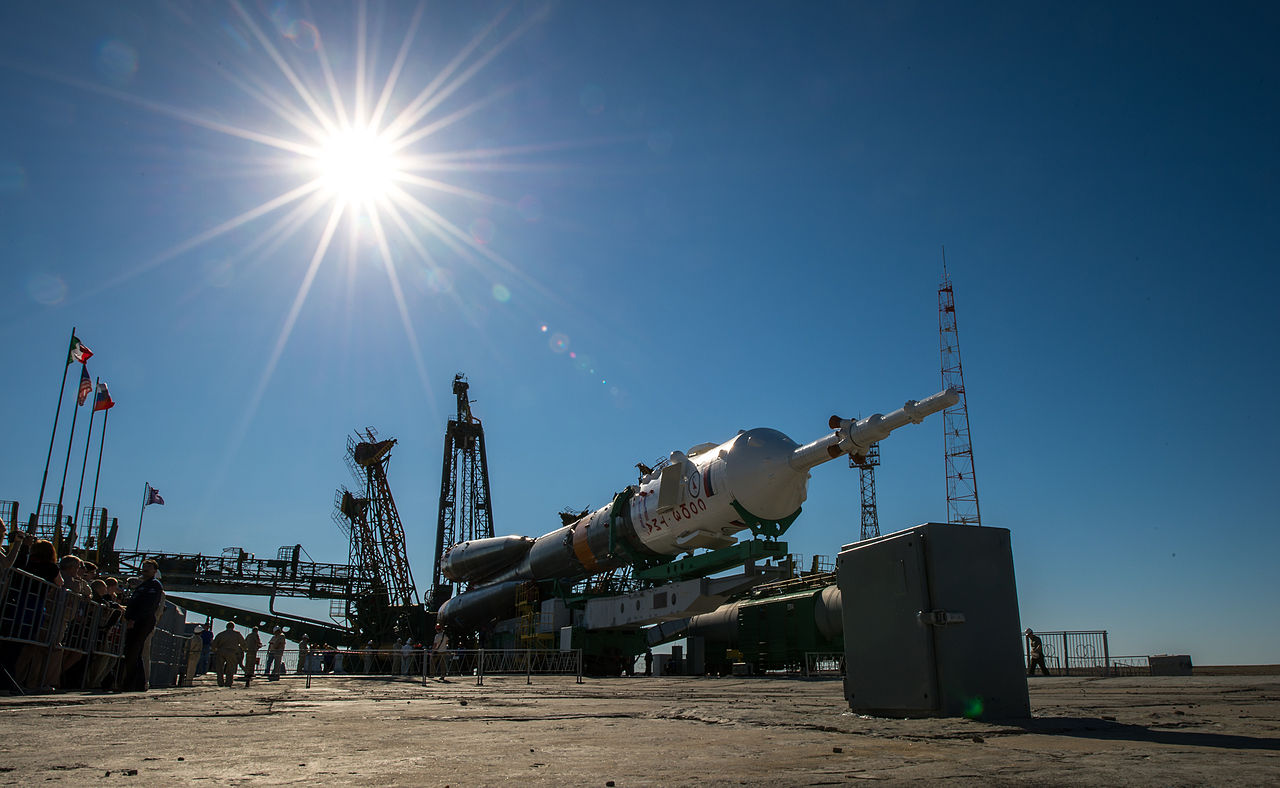
Baikonur’s crew and cargo flights to the ISS this year have gone from Site 31. The new Soyuz-5 rocket flew from a different pad, making its first test flight from Site 45 on 30 April 2026. The ISS launches so far:
- Progress MS-33, cargo — launched 22 March 2026, 11:59 UTC
- Progress MS-34, cargo — flew 25 April 2026, 22:21 UTC
- Soyuz MS-29, crewed — 14 July 2026, carrying NASA astronaut Anil Menon and Roscosmos cosmonauts Pyotr Dubrov and Anna Kikina, with a twelve-day handover with the MS-28 crew
Soyuz MS-29 lifted off with its crew on 14 July 2026, and they are due back in April 2027. If you have been reading operator pages promising a crew send-off, ask which crewed launch they mean and when it is due before that promise shapes your plans.
The next launch on operator calendars is cargo. Vegitel and Photosafari both advertise tours to watch Progress MS-36, with Vegitel giving 24 November 2026; confirm the date directly with your operator before you book. Launch dates move.
The night the launch pad broke
On 27 November 2025, during the launch of Soyuz MS-28, something happened at Site 31/6 that nearly ended Russia’s access to the International Space Station.
The pad’s mobile maintenance cabin, a 144-tonne 8U216 platform, had been retracted into its nook about 44 minutes before launch, according to early accounts reported by RTVI, which put the blame on its locks. As the rocket left, the platform collapsed into the flame trench beneath the pad. The crew reached orbit safely and nobody was hurt.
Why it mattered: Site 31/6 is the only operational launch facility for crewed Soyuz flights, and it handles the Progress cargo launches too. Plesetsk is at the wrong latitude, Vostochny is not certified for crewed flight, Kourou is unavailable because of sanctions, and Gagarin’s Start has been decommissioned. Expert recovery estimates ran from several months to three years. Roscosmos announced restoration on 3 March 2026 — the announcement specifically concerned the maintenance cabin — so the outage ran about three months. It shows how thin the margin is here.
Gagarin’s Start is to become a museum
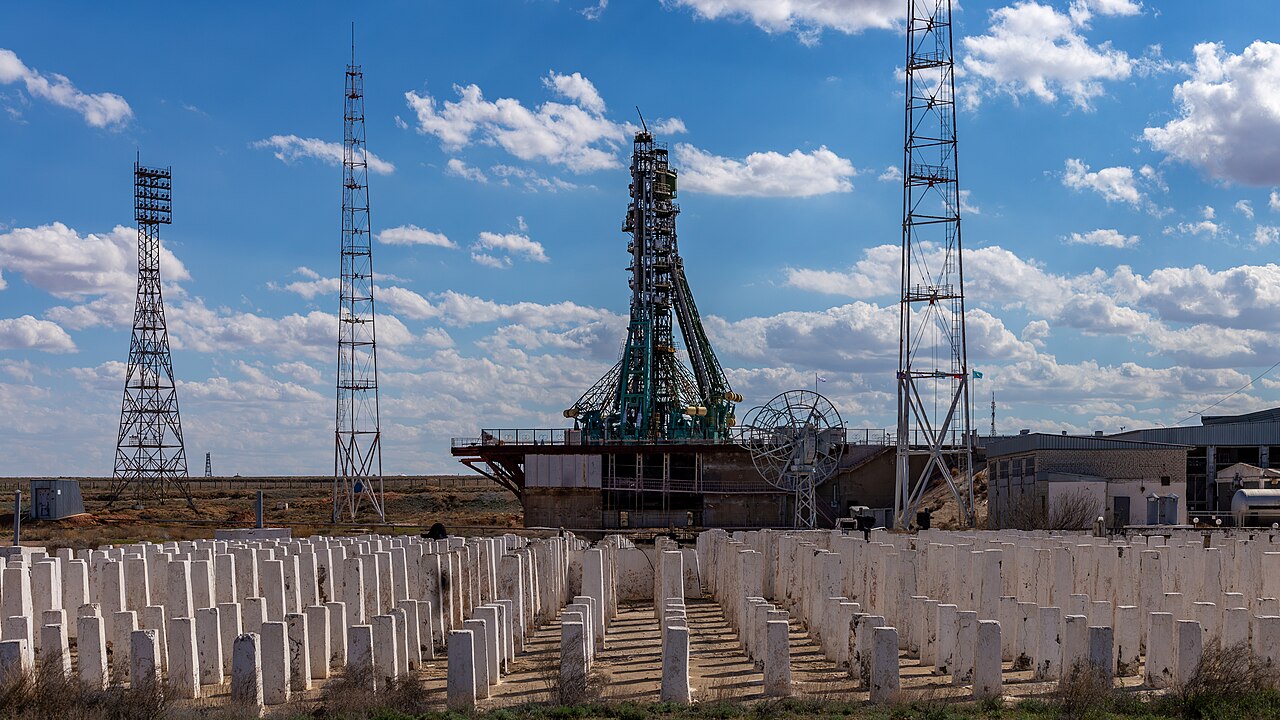
Site 1/5 — Gagarin’s Start, the pad Sputnik and Gagarin left from — launched for the last time on 25 September 2019. It never received funding to be modernised for the slightly larger Soyuz-2, and it has since been transferred to Kazakhstan, which plans to turn it into an open-air museum. In 2017 Russia proposed a joint Russian–Kazakh nomination to put it on the UNESCO World Heritage List.
Crewed Soyuz launches have flown from Site 31/6 since 2020. So the pad you will photograph is not the pad that works, and the pad that works is not the pad that is famous. Say that out loud and the whole site makes more sense.
What you can see if you get in
The current Kazakh-side itinerary, assembled from three operators, covers:
- Gagarin’s Start (Site 1/5) — retired since its final launch in September 2019. This is the pad Sputnik 1 and Yuri Gagarin’s flight left from.
- The command post — the launch control centre where engineers monitored rocket systems and made the go/no-go calls.
- The Buran assembly and fuelling building.
- The Energia dynamic test stand (SDI) — vast, brutal, Soviet.
- Cosmonauts’ Alley, the avenue of trees planted by crews before their flights.
- Site 17 Cosmonaut Hotel and the “Weightlessness” stele.
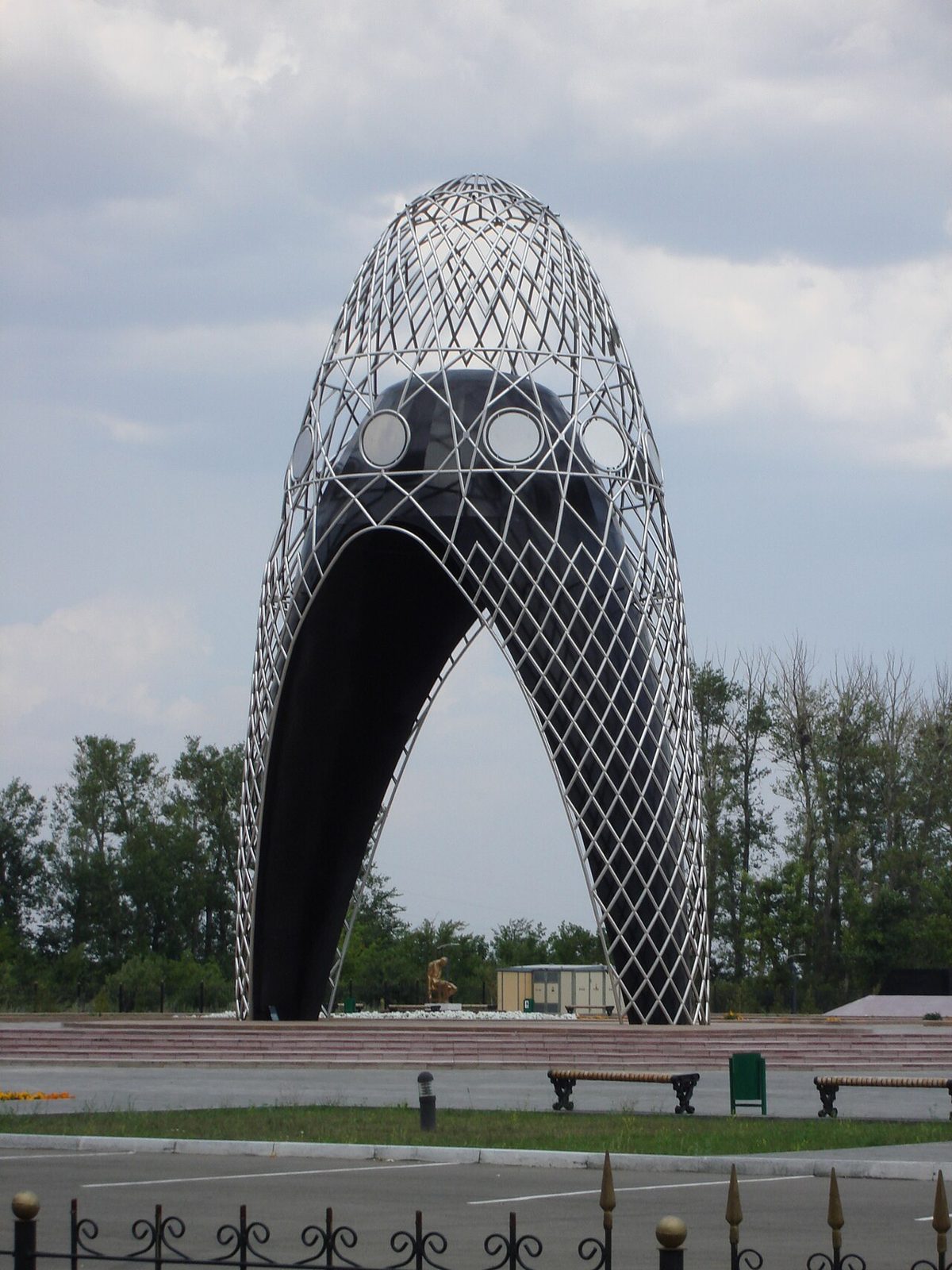
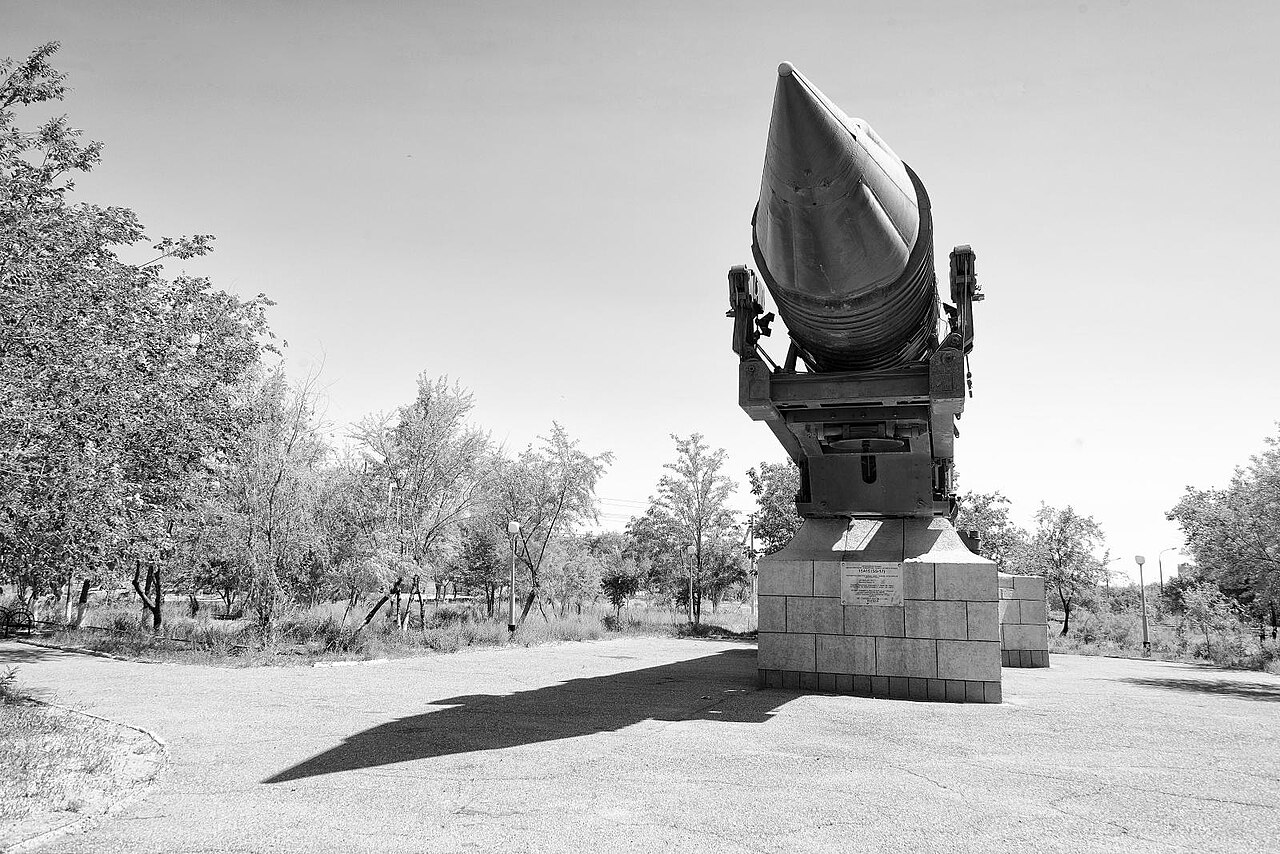
- Baikonur city — monuments, Soviet civic architecture, rocket hardware on plinths.
- The Korkyt-Ata memorial complex near Kyzylorda, usually bolted on to the transfer day.
Advantour warns that several sites in the Kazakh zone belonging to the Baiterek complex — the memorial to the testers of Site 41, the Yangel monument, an RD-0120 engine and the destroyed launch pad at Site 45/2 — are under renovation, so ask your operator which of them you will be able to visit.
The Buran question
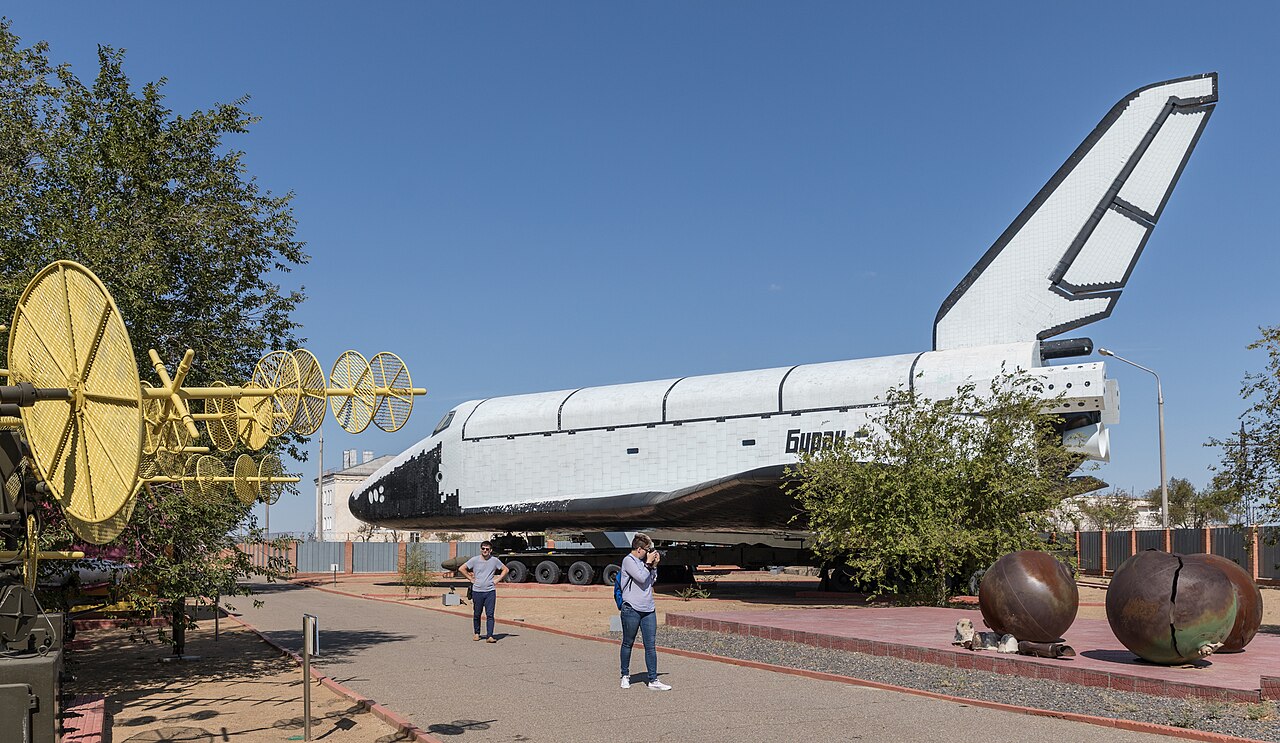
Be careful with what you are told here, because a lot of writing about Baikonur gets it wrong.
The Buran orbiter that actually flew was destroyed. It made one unmanned orbital test flight in 1988, was stored in the MIK assembly hall at Site 112 — a building originally erected for the N1 Moon rocket and converted for Energia-Buran after the N1 programme was cancelled in 1974 — and was crushed when the hangar roof collapsed in 2002.
What survives at Baikonur, and what you can photograph, is a restored test article displayed beside the museum entrance. It is a real piece of the programme and it is genuinely startling in the flesh. It is not the spacecraft that went to orbit. If a guide tells you otherwise, they are simplifying. Ask your guide which airframes are on site and where each one sits.
How close you actually get to a launch
You watch from a set viewing site well back from the pad, and operators do not all use the same one. Ask yours where it watches from before you book, and manage the expectation: this is a launch seen across the steppe, not from beside the rocket.
If you cannot get in: the honest alternatives
This section exists because for a lot of readers the answer will be no, or not this year, or not worth US$3,000.
Museums
The National Museum of Kazakhstan in Astana is the country’s flagship, with halls on national history, archaeology and art. Almaty’s museums cover the Soviet century. Our guide to things to do in Astana has the practicalities.
Kyzylorda
Kyzylorda is the nearest accessible regional capital and the gateway you would use anyway. It is a real Kazakh provincial city on the Syr Darya, with the Korkyt-Ata memorial nearby, and it sits on the same railway line as Töretam. It is not a substitute for the cosmodrome, but it is a legitimate destination in its own right and it is comfortably off the beaten path.
Can you watch a launch from outside the perimeter?
We do not know, and we are not going to guess. Not one of the pages we examined addresses it.
What we will say clearly: do not try to walk in. There is a well-known travel wiki entry that suggests hiking roughly 40 km into the cosmodrome at night to avoid the guards. That is illegal entry to a guarded military facility in a country where you have no consular leverage, across waterless steppe, in a place where things regularly fall out of the sky. Ignore it.
The other Baikonur
There is a second story here that no travel content touches: what falls back down.
Rocket stages drop into designated zones on the Kazakh steppe, and the older hardware ran on unsymmetrical dimethylhydrazine — UDMH, or heptyl — a fuel linked to cancer, birth defects and genetic damage. Proton-M rockets crashed after launch in September 2007 and July 2013. A peer-reviewed 2025 study of UDMH transformation products in Kazakhstan’s rocket crash area found that current remediation practice is often ineffective, with heptyl and nitrous compounds persisting in soil and plants years after supposed detoxification. Scrap collectors work the debris fields.
One caution if you go looking into this: a widely shared National Geographic piece on toxic rocket scrap concerns Plesetsk in northern Russia, not Baikonur. It is an easy and very visible error to make.
Practicalities
Getting to the region
By air: Kyzylorda International is the nearest airport. Almaty to Kyzylorda is a 1–2 hour flight, historically 15,000–50,000 KZT. From Kyzylorda the transfer runs by road via Zhosaly to Baikonur. See domestic flights in Kazakhstan for airlines and booking.
By train: this is the atmospheric option and, given the site’s history, the appropriate one. Töretam station is on the main line through Kyzylorda. Almaty to Töretam runs 22–27 hours at 8,000–25,000 KZT. Our guides to train travel in Kazakhstan and buying train tickets cover the mechanics.
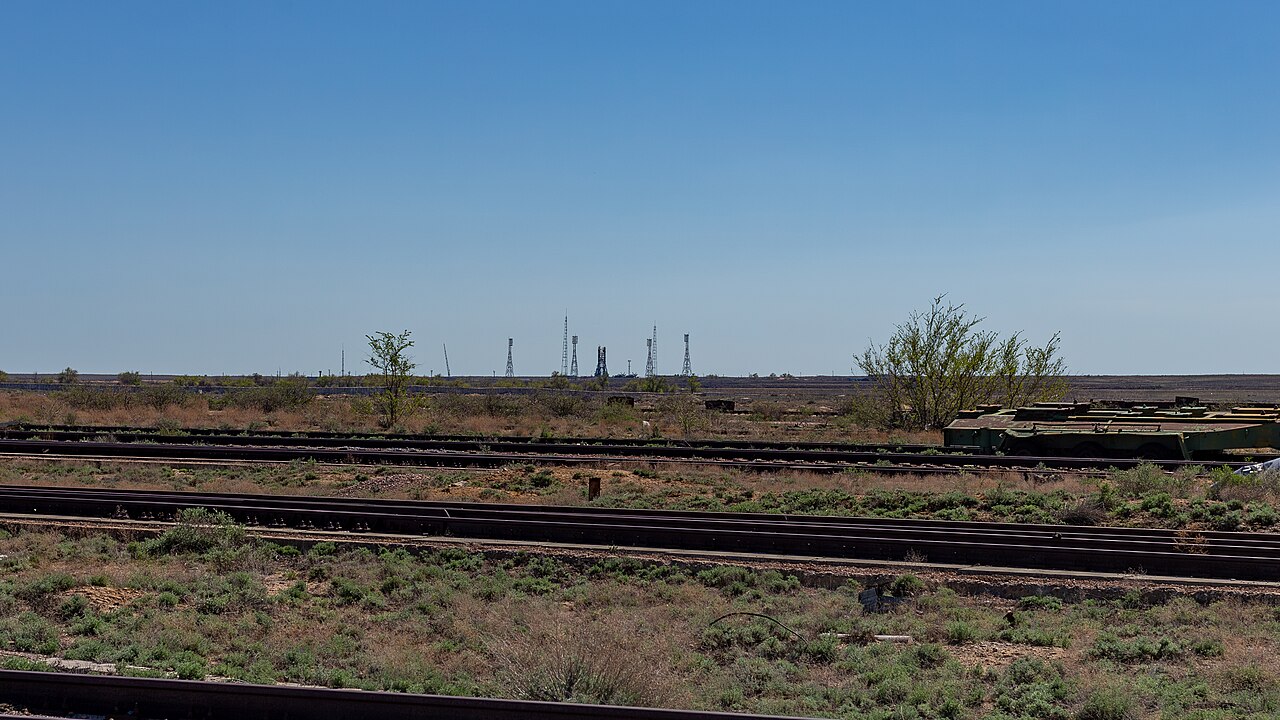
Töretam is worth a sentence of its own. It was the original railhead in this stretch of steppe, and it gave the test range its first widely used name — Tyuratam, which is what Western intelligence called the place for years before “Baikonur” stuck. The cosmodrome also runs its own internal 1,520 mm-gauge network, described as the largest industrial railway on the planet.
The two airfields on site, Krayniy (BXY) and Yubileyniy, are not an option. Yubileyniy — where the An-225 delivered Buran, with a 4,500-metre runway — was abandoned after the programme and later reopened for cargo.
When to go
| Season | Conditions |
|---|---|
| March–May | Comfortable temperatures, steppe in bloom. Good. |
| June–August | The hottest months, and hard going outdoors. Avoid if you can. |
| September–November | Optimal. This is when to come. |
| December–February | Cold winds, occasional snow. Bleak but photogenic. |
A useful signal: one operator sells its launch tour in spring, summer and autumn only, while the between-launches tour runs year-round. See the best time to visit Kazakhstan for the wider picture and Kazakhstan in summer for what 40 °C actually feels like out here.
Time zones — the gotcha
Baikonur runs on UTC+5. But launch times are often quoted in Moscow time, UTC+3 — two hours behind local. Read every time with its zone in mind.
We would like one more confirming source on the civil time zone before we state it flatly, but the practical advice holds regardless: when you see a launch time, ask which zone it is in. Getting this wrong by two hours in a place where you are on a coach schedule is not recoverable.
Money and connectivity
You cannot buy a SIM card at Kyzylorda airport — it is a small regional terminal. Arrange an eSIM or a Kazakh SIM before you arrive. Carry cash; this is not Almaty. Our trip cost guide gives the wider budget context, and a Baikonur tour will dominate whatever budget you had.
Is it worth it?
Honestly: it depends who you are.
If you want to stand at Gagarin’s Start, walk the Energia test stand and see a Buran airframe in the flesh, then yes — this is the only place on Earth that offers it, the Kazakh-side programme delivers it, and US$1,700–2,300 per person in a small group is not outrageous for a three-day escorted trip in a restricted zone.
If your mental image was a crew walkout, a close-up launch and a wander through Gagarin’s cottage, then for a passport that keeps you out of the Russian zone the answer in 2026 is no, and you should wait. The politics may change. Kazakhstan clearly wants more visitors — in June 2026 it approved a Baikonur tourism development concept running to 2030.
Frequently asked questions
Can tourists visit Baikonur Cosmodrome?
Yes, but only on an escorted tour through an accredited operator, with a permit obtained in advance. Independent visits are not possible — both the city and the cosmodrome are restricted. Nationals of countries on Russia’s “unfriendly states” list cannot enter the Russian-controlled zone either, so confirm what your passport allows with the operator.
How much does a Baikonur tour cost?
In 2026, roughly US$1,700–3,400 per person for a three-day tour between launches, depending on group size, and US$2,250–4,300 for a launch tour. A VIP package routed through Moscow runs to €5,500. Budget versions start around €2,150.
Do you need a permit, and how long does it take?
Yes. Kazakhstan announced a 10-day process for foreign tourists in June 2026, but operators set their own deadlines: Vegitel wants applications at least 35 days ahead, and Advantour asks for 60 days on launch tours, with full payment at least 65 days before departure. Plan two months ahead.
Is Baikonur in Russia or Kazakhstan?
Kazakhstan. Russia leases the site and administers the city under an agreement running to 2050, paying US$115 million a year.
When is the next launch from Baikonur?
Progress MS-36, a cargo flight, which Vegitel’s launch tour lists for 24 November 2026; check the date with your operator before booking. This year’s crewed flight, Soyuz MS-29, left on 14 July 2026.
Is Gagarin’s Start still used?
No. Its final launch was on 25 September 2019. It was never modernised for the Soyuz-2 and has been transferred to Kazakhstan to become an open-air museum, with a possible UNESCO nomination. Crewed Soyuz launches now fly from Site 31/6.
Is the Buran shuttle still at Baikonur?
A restored test article from the Buran programme is on display beside the museum. The orbiter that actually flew the 1988 unmanned mission was destroyed when the roof of its hangar at Site 112 collapsed in 2002.
How do you get to Baikonur from Almaty?
Fly to Kyzylorda in one to two hours and transfer by road via Zhosaly, or take the train to Töretam on the main line through Kyzylorda. Your operator will handle the transfers within the restricted zone.
What time zone is Baikonur in?
Local civil time is UTC+5. Launch times often appear in Moscow time, UTC+3, so always confirm which zone a stated launch time refers to.
Final thoughts
Baikonur is one of the great pieces of twentieth-century infrastructure and it is quietly coming apart. One operational crew pad, built in the 1960s, whose service cabin fell into the flame trench last November. The pad Gagarin flew from, retired for want of a modernisation budget and handed over to become a museum. Two hundred and thirty-four facilities listed for return because nobody needs them. A line through the site deciding which zone your passport lets you into.
Go if the Kazakh half is enough for you, and go in September or October when you can stand outside for more than ten minutes. Go by train if you have the time, because arriving at Töretam is the correct way to arrive. And go with the terms and conditions read, because the launch you booked may not fly and the refund policy will not care.
For the century that produced all of this, read our traveller’s history of Kazakhstan. For the practicalities of covering these distances, start with getting around Kazakhstan, and Kazakhstan tours covers what organised trips generally cost here.
Photo credits
Gagarin’s Start: Nikolai Bulykin (CC BY-SA 4.0) via Wikimedia Commons. Soyuz on the pad: Bill Ingalls / NASA (public domain) via Wikimedia Commons. Buran test article: Ninara (CC BY 2.0) via Wikimedia Commons. Launch complexes across the steppe: Nikolai Bulykin (CC BY-SA 4.0) via Wikimedia Commons. Rocket monument in Baikonur town: Christopher Michel (CC BY 2.0) via Wikimedia Commons.