Contents
- Shymkent at a glance
- Why Shymkent is Kazakhstan’s most underrated city
- A 2,200-year-old city most people have never heard of
- The best things to do in Shymkent
- Shymkent’s bazaars
- Why Shymkent is Kazakhstan’s best food city
- Day trips from Shymkent
- How to get to Shymkent
- Getting around
- When to visit: climate and seasons
- Where to stay
- Is Shymkent safe, and what to expect
- Shymkent versus Almaty and Astana
- Frequently asked questions
- Final thoughts
Almaty gets the mountains and the money. Astana gets the architecture and the government. Shymkent gets skipped — usually by people on their way to Turkestan, who stay one night, eat the best meal of their entire trip, and then leave the next morning slightly confused about why nobody told them.
Shymkent is Kazakhstan’s third-largest city, home to about 1.27 million people, sitting in the deep south roughly 690 km west of Almaty and only 120 km north of Tashkent. Since June 2018 it has been a city of republican significance, on a par administratively with Almaty and Astana. It has 2,200 years of history, the best food in the country, and almost no foreign tourists.
Shymkent at a glance
| Population | About 1.27 million (mid-2025) — Kazakhstan’s third city |
|---|---|
| Status | City of republican significance since 19 June 2018 |
| Region | Not in one. Turkestan Region surrounds it; its capital is Turkestan city |
| Time zone | UTC+5, single national zone, no daylight saving |
| Airport | Shymkent International (CIT), about 12 km northwest |
| Distances | Almaty 690 km · Astana 1,483 km · Tashkent 120 km · Turkestan 160 km |
| Climate | July mean high 34.1°C, record 44.2°C; January mean 4.5°C high |
| Best season | April–May and September–October |
| Days needed | Two, plus day trips |
Why Shymkent is Kazakhstan’s most underrated city
Three things make Shymkent different from the rest of the country, and none of them show up in a photograph.
First, it feels Central Asian in a way Almaty and Astana don’t. Almaty is a leafy Soviet-planned city with a European surface. Astana is a twenty-first-century capital built on empty steppe. Shymkent is a bazaar town that grew, with chaikhanas, tandyr ovens on the pavement, and an Uzbek population of nearly eighteen per cent that shapes how the whole place eats and talks.
Second, it’s genuinely old. Excavations in 2003–04 established a 2,200-year history, recognised by UNESCO in 2019. This was a caravan stop on the route that fed Sayram, and Genghis Khan’s armies came through.
Third, and most practically: nobody’s here. You will not queue for anything. Prices run roughly thirty to forty per cent below Almaty. And the hospitality you get as an obvious foreigner is a different order of thing from what you’ll experience in a city used to tourists.
The downsides, honestly stated: limited nightlife, thin tourist infrastructure, very little English, and July heat that makes daytime sightseeing an endurance sport.
A 2,200-year-old city most people have never heard of
What “Shymkent” means
From the Sogdian chim, meaning turf or sod, plus kent or kand, city — so literally “the city in the grass.” Locals also gloss it as “green city,” which suits it: Shymkent has more parkland than any other big Kazakh city. The spelling changed from Chimkent to Shymkent in 1993.
Caravanserai to Mongol ruin and back
Shymkent began around the eleventh or twelfth century as a caravanserai protecting Sayram, the Silk Road town ten kilometres east. It grew as a market where Turkic nomads traded with settled Sogdians, and was destroyed repeatedly — by the Mongols, by the southern khanates, by nomad raids. It fell into the Kokand Khanate in the early nineteenth century and was captured by Russia in 1864, briefly renamed Chernyaev in 1914, and back to Chimkent in 1924.
The Soviet chapter is grimmer and worth knowing. A lead smelter opened here in 1934 and supplied a substantial share of the USSR’s lead — by some accounts around three-quarters of all the bullets the Red Army fired in the Second World War. Smelting ran until 2008 and left serious lead and cadmium contamination in the soil. The industry is gone; the legacy isn’t entirely.
The 2018 decree that changed everything
On 19 June 2018 a presidential decree made Shymkent a city of republican significance. It was detached from South Kazakhstan Region, which was renamed Turkestan Region with its capital moved to Turkestan city.
That single administrative act explains a lot. It’s why Shymkent is Kazakhstan’s third city but isn’t in any region; why Turkestan — a much smaller place — is a regional capital; and why state investment since 2018 has flowed toward Turkestan rather than here. Shymkent’s millionth resident was born in May 2018, a month before the decree, and the city has added roughly 270,000 people in the seven years since.
The best things to do in Shymkent
Shym Kala — the Ancient Shymkent citadel
Start here. Shym Kala opened as a historical and cultural complex on 1 May 2021: 4.5 hectares of open-air museum on the oldest ground in the city, covering layers from the first to the nineteenth centuries — the Citadel, the Shahristan and the Rabat. Excavations turned up a Zoroastrian temple from the second to fourth centuries BC and a seventeenth- or eighteenth-century blacksmith’s workshop dug in 2020. There are “Citadel” and “Underground Fortress” exhibition halls.
It’s at Ayteke bi 30/29 in the Al-Farabi district, open Tuesday to Sunday, 09:00 to 18:00. It drew at least 40,000 visitors in 2023, almost all of them Kazakh, with tours available in Kazakh, Russian, English and Chinese.
Ordabasy Square and the Zher-Ana monument
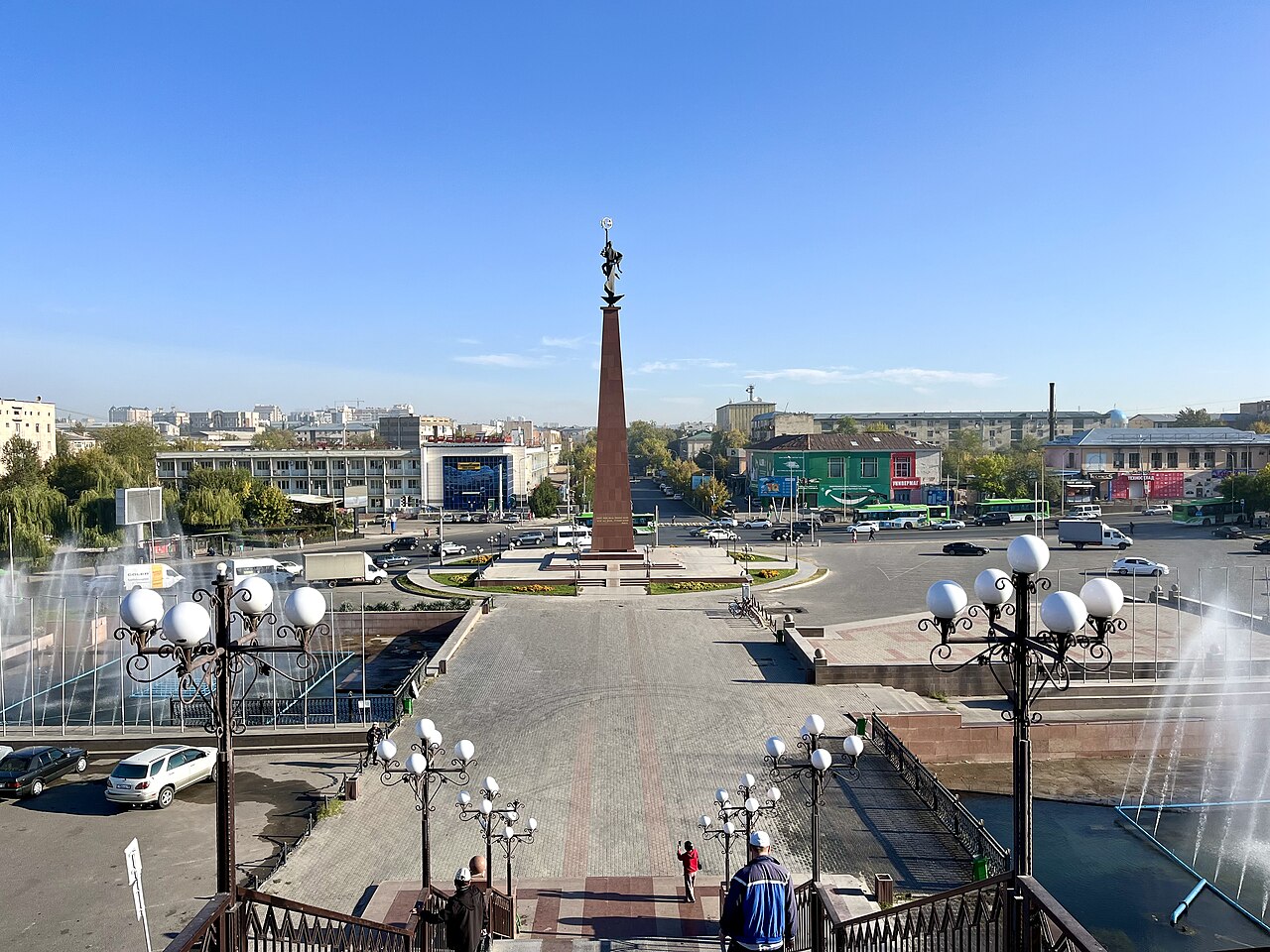
The centre of the city and the best public space in it. Ordabasy is named for the three Kazakh biys — Tole Bi, Kazybek Bi and Aiteke Bi — whose three streets converge here. The 34-metre Zher-Ana, “Mother Earth,” monument stands in the middle, each of its three faces carved with one biy’s words, topped by a young woman releasing seven swallows. The Koshkar Ata river runs beneath the square, which connects to Independence Park by a 104-metre pedestrian bridge.
Go twice: once in daylight for the scale, once after dark when the fountains and the column are lit.
Independence Park and Altyn Shanyraq
Built for the twentieth anniversary of independence in 2011, with a singing fountain, a 50-metre flagpole and the Altyn Shanyraq monument — the golden yurt crown that appears on the national emblem. Popular with families in the evenings, which is when to go.
Abay Park and the Alley of Glory
Named for Abai Qunanbaiuly, with a large Second World War memorial and eternal flame, an Abay museum and monument, an art gallery and a public pool. The adjacent Alley of Glory carries plaques for the 140,000-plus people from this region killed serving in the Soviet army, and seventeen factories were relocated here during the war. It is a heavier place than it first looks.
Museums
The Regional Museum of History and Local Lore is the main one and does a decent job on the Silk Road and the Kazakh khanates. There’s also a Museum of Political Repression, which is unusual in Kazakhstan and worth the hour if you read Russian or bring a translation app.
Ken Baba Park and the Dendropark
Ken Baba is one of the oldest parks in the city, built around St Nicholas Cathedral — a red-brick building of 1908, opened in 1914, which became a library, then the Palace of Pioneers, and is now the regional puppet theatre. Spring-fed waterfalls, ponds, swans.
The Dendropark covers 150 hectares with around half a million trees and shrubs of 1,360 species, a large boating pond, and cycling and running tracks. Dating from around 1980, it’s the single best place in Shymkent to be at six in the evening in June.
The zoo
In the north of the city, holding regional species including snow leopard, plus a newer African safari section. Note that some guides wrongly place it inside Ken Baba or the Dendropark; it’s a separate site.
Mosques
“Central Mosque” is ambiguous in Shymkent, so know which one you’re heading for. The largest is the Grand Mosque named after Seitzhan Kari Eszhanuly in Nursat, opened in 2024, clad in Greek and Turkish white marble with four 63-metre minarets and capacity for around 12,000. Second is the Shaikh Khalifa Bin Zayed Al Nahyan Mosque, known locally as Ak Meshit, the White Mosque, opened in 2013 with capacity for 6,000 — a gift from the UAE, between the centre and the airport. The oldest is the Koshkar Ata (Zhami) Mosque, built 1850–56 by Ferghana masters and rebuilt in burnt brick in the 1890s.
Shymkent’s bazaars
You have not visited Shymkent until you have spent an hour in a bazaar here.
Qyrgy Bazaar, the Central Upper Market, between Ordabasy Square and Shamshi’s World, is the biggest and the best: dried fruit, nuts, spices, sweets, felt slippers, and mountains of qurt, the dried salted cheese balls that are Kazakhstan’s national snack and an acquired taste worth acquiring.
Samal bazaar, about four kilometres out, is the jewellery market — and also where marshrutkas leave for Turkestan, so you’ll likely pass through it anyway. Bekzhan bazaar is clothes and fabric.
Go in the morning. Bargaining is expected but gentle — this isn’t Marrakesh, and a smile does more than haggling. Our Green Bazaar guide covers bazaar etiquette that applies just as well here.

Why Shymkent is Kazakhstan’s best food city
This is not a matter of opinion locally. Ask a Kazakh from anywhere in the country where the best samsa and plov are and you will get one answer.
Tandyr samsa
The signature. Dough slapped onto the inner wall of a clay tandyr, filled with lamb and onion and a great deal of fat, pulled out blistered and crisp. Eat it standing up, in the morning, with your hands, from a place with a queue of locals. Burn your mouth. Do it again the next day.
Plov and the oshxona
The Uzbek influence shows most here. Shymkent has dedicated plov houses — oshxona — cooking in cast-iron kazans over wood fires, and the plov is a different dish from what you’ll get in Almaty: richer, heavier on the fat, with whole heads of garlic and often quail eggs and horse sausage on top. It’s a lunch dish. Nobody serves good plov in the evening.
Everything else
Shashlik, lagman, manti, tandyr nan straight from the oven, and a chaikhana breakfast culture that’s stronger here than anywhere in Kazakhstan — flatbread, qurt, clotted cream, a pot of tea, and no hurry. Our Kazakh food guide and street food guide tell you what to order.
Shymkentskoe — the city’s own beer
Something no English-language guide seems to mention. Shymkent Brewery, founded in 1976, makes Shymkentskoe, which is one of Kazakhstan’s largest beer brands and a genuine local institution — exported to Russia, Uzbekistan and Kyrgyzstan. Order it in Shymkent and people will approve. Order it in Almaty and they’ll know where you’ve been.
Where to eat
Jeti Tandyr “History” on Ayteke Bi is the oldest surviving restaurant in the city, founded in 1949 as “Aral” and housed in a Soviet-classicist building. The name means “seven ovens,” which is what produces the samsa and naan. Beyond that, the honest advice in Shymkent is to eat where the queue is and not to research it too hard.
Day trips from Shymkent
Sayram — where it all started
Ten kilometres east, and undersold by every guide I’ve read. Sayram is one of Kazakhstan’s oldest continuously inhabited settlements — the Astana Times puts it at 3,000 years — and it is the birthplace of Khoja Ahmed Yasawi. Shymkent exists because Sayram needed protecting. Its mausoleums include Ibrahim Ata and Karashash Ana, Yasawi’s parents, plus Abdel-Aziz Bab, Mirali-Baba and the Kydyr minaret. City bus 71 or a marshrutka gets you there in under half an hour.
Turkestan
160 km north, the obvious day trip, and the reason most visitors are in Shymkent in the first place. Marshrutkas from Samal bus station run about 1,500 tenge and take 1.5 to 2.5 hours; the Talgo train does it in under two. The Mausoleum of Khoja Ahmed Yasawi is a UNESCO World Heritage Site and one of the great Timurid buildings; our Turkestan guide covers the whole city.
One correction while we’re here: several guides claim the Yasawi mausoleum is Kazakhstan’s only World Heritage Site. It isn’t. The country also has Tamgaly, Saryarka, the Western Tien-Shan and the Silk Roads corridor sites. See our UNESCO sites guide.
Aksu-Zhabagly and Aksu Canyon
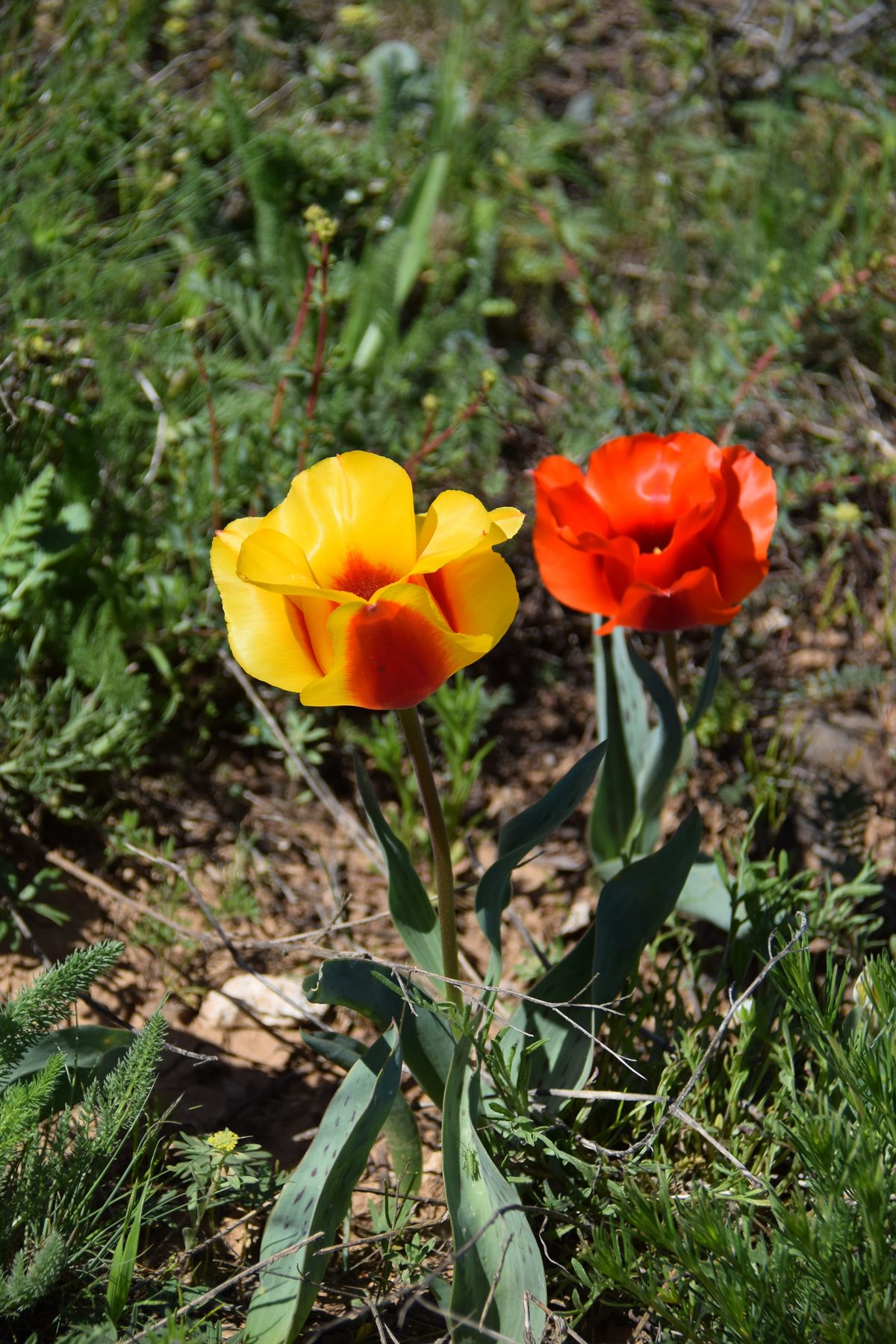
Roughly 90 to 120 km east, and Central Asia’s oldest nature reserve — established 1926, so it turns a hundred this year. 131,934 hectares, more than 1,400 plant species, snow leopard habitat, and famous for wild tulips in April and May. It’s part of the UNESCO Western Tien-Shan property. The Aksu Canyon nearby is 15 km long and up to 500 metres deep.
Important: it’s a strict reserve, so you need a permit and a ranger or guide, arranged in advance through Zhabagly village. Don’t just drive out.
Sayram-Ugam National Park
Established 2006, about 70 km south in the Western Tien Shan, with 187 km of hiking trails, 231 km of horseback routes and community homestays in Lenger, Dikankol, Kaskasu and Tonkeris. This is the underrated option if you want mountains without the permit paperwork. See Kazakhstan’s national parks.
Otrar, Arystan Bab and Sauran
Silk Road ruins between Shymkent and Turkestan. Otrar is where a governor’s decision in 1218 triggered the Mongol invasion of Central Asia, and where Timur died in 1405. Sauran, north of Turkestan, has the best-preserved medieval walls in Kazakhstan. Neither has public transport — you need a driver.
Akmeshit cave
About 80 km out, an underground cavern whose opening is said to resemble the shanyrak of a yurt. Genuinely strange and almost entirely undocumented in English.

How to get to Shymkent
By air
Shymkent International Airport (CIT) opened in 1932 and sits about 12 km northwest of the centre, with flights to all the major Kazakh cities plus Dubai, Moscow and Istanbul. Note the code is CIT — some sources give GUW, which is Atyrau. Flights from Almaty take about 1 hour 20 minutes and run roughly every three hours. See our domestic flights guide.
By train
Shymkent is a major junction on the Turkestan–Siberia Railway, served by Kazakhstan Temir Zholy including Talgo “Tulpar” express stock. Almaty trains run three or four times daily and take roughly 11 to 14 hours depending on the service, for about US$7 to 23. From Astana it’s a full night and more — 16 to 20 hours. The overnight from Almaty is a good use of a night if you’re happy in a berth; our train travel guide explains the classes.
By road from Almaty
About 670 to 700 km on the A2 highway, which is decent, taking eight and a half to nine hours. Taraz sits roughly on the way. See our road trip guide.
From Tashkent and the Uzbek border
Read this section carefully, because most published advice is out of date.
The historic main crossing is Zhibek Zholy on the Kazakh side and G’isht Ko’prik on the Uzbek side, long known as Chernyayevka, about 120 km from Shymkent. It was closed for renovation in February 2025 and traffic was rerouted to Navoi (Uzbekistan) / Kaplanbek (Kazakhstan), roughly 20 km away and about 115 km from Shymkent. It was confirmed still closed in mid-2025 and reporting suggested the diversion continued into late 2025.
I cannot confirm its status as of publication. Check before you travel. Assume you may be routed to Kaplanbek, and know that marshrutkas for it leave from Bekzhan bus terminal. Door to door, Tashkent to Shymkent runs three to four hours including one to two at the border; daily buses take around five. Our Kazakhstan to Uzbekistan guide has the detail.
Getting around
Yandex Go works throughout the city, is cheap and is how everyone gets around. City buses are frequent and cost a nominal fare, but signage is in Kazakh and Russian only. The centre is walkable between Ordabasy, Independence Park and the citadel; everything else needs a ride. See our Yandex Go guide.
When to visit: climate and seasons
Shymkent has the mildest winter and the hottest summer of any major Kazakh city, and the numbers are stark. The 1991–2020 normals give a July mean daily maximum of 34.1°C and an August mean of 33.4°C, with an all-time record of 44.2°C. January averages a high of 4.5°C and a mean of −0.4°C — noticeably gentler than Almaty, never mind Astana. Annual precipitation is 614 mm, almost all of it in winter and spring; August averages 3.5 mm and about one rainy day. There are roughly 2,735 hours of sunshine a year and snow on about 29 days.
Spring is the best season. Nauryz in late March is celebrated harder in Shymkent than anywhere else in Kazakhstan, with traditional horse games at the hippodrome, and April to May brings the wild tulips at Aksu-Zhabagly. September and October are the strong second choice. July and August are genuinely difficult for daytime sightseeing — plan those trips for early morning and late evening, which is what locals do. Our month-by-month weather guide has the rest.
Where to stay
At the top there’s Rixos Khadisha Shymkent and a DoubleTree by Hilton. Mid-range, the Makhambet Hotel near Abay Park is reliable, and the Soviet-relic Hotel Ordabasy opposite the Independence Monument has more character than comfort. Budget travellers have City Hostel Shymkent and a scatter of mini-hotels. Across the board Shymkent runs about 30 to 40 per cent cheaper than Almaty. Our where to stay guide and hostels guide cover the categories.
Is Shymkent safe, and what to expect
Yes. Crime rates are lower than Almaty’s and violent crime against visitors is very rare; normal bazaar pickpocket caution applies and that’s about it. Our safety guide covers the country.
Two things to be ready for. Shymkent is more conservative than Almaty — dress modestly at religious sites and you’ll be fine everywhere else. And Kazakh is more dominant here than Russian, with very little English outside hotels; download an offline translator. See our language guide.
One accuracy note while we’re on the subject: Kazakhstan is a secular state with no official religion. You’ll see the country described online as “an Islamic country.” It isn’t, constitutionally.
Shymkent versus Almaty and Astana
| Shymkent | Almaty | Astana | |
|---|---|---|---|
| Feel | Central Asian bazaar city | Leafy, Soviet-planned, cosmopolitan | New capital, monumental |
| Food | Best in the country | Best restaurant scene | Improving, expensive |
| Nature | Aksu-Zhabagly, Sayram-Ugam | Tien Shan on the doorstep | Steppe and Korgalzhyn |
| Cost | 30–40% below Almaty | Highest in Kazakhstan | High |
| English | Very little | Common in the centre | Common |
| Summer | 34°C+, punishing | Hot but bearable | Warm and short |
| Winter | Mild, near freezing | Cold, smoggy | Brutally cold |
Frequently asked questions
Is Shymkent worth visiting?
Yes, particularly for food and as a base for Turkestan, Sayram and Aksu-Zhabagly. It’s Kazakhstan’s most Central Asian-feeling big city, 30 to 40 per cent cheaper than Almaty, and almost free of foreign tourists. Two days plus day trips is about right.
What is Shymkent known for?
Food above all — the country’s best samsa and plov — plus its bazaars, its 2,200-year history, the Shym Kala citadel, and its own beer brand, Shymkentskoe, brewed in the city since 1976.
Is Shymkent safe for tourists?
Yes. Crime rates are lower than Almaty’s and violent crime against visitors is rare. Normal bazaar caution against pickpockets is sensible. The city is more conservative than Almaty, so modest dress at religious sites is appreciated.
How many days do you need in Shymkent?
Two for the city itself — citadel, Ordabasy, the bazaars, the parks and a great deal of eating. Add a day each for Turkestan and Aksu-Zhabagly, and half a day for Sayram.
How do I get from Almaty to Shymkent?
Fly in about 1 hour 20 minutes, take the train in roughly 11 to 14 hours (three or four services a day, from about US$7), or drive 670 to 700 km on the A2 in eight and a half to nine hours.
How far is Shymkent from Tashkent, and can I cross the border?
Tashkent is only 120 km away, three to four hours door to door including the border. The main Zhibek Zholy crossing closed for renovation in February 2025 with traffic diverted to Navoi–Kaplanbek. Check the current status before you travel.
What food should I try in Shymkent?
Tandyr samsa in the morning, plov at lunch from a dedicated oshxona, tandyr nan straight from the oven, and lagman or shashlik in the evening. Try qurt at the Qyrgy bazaar and a Shymkentskoe with dinner.
What is the best time to visit Shymkent?
April to May, when the weather is mild and the wild tulips bloom at Aksu-Zhabagly, or September to October. July and August average highs above 33°C and make midday sightseeing genuinely unpleasant.
How old is Shymkent?
Excavations in 2003–04 established a 2,200-year history, recognised by UNESCO in 2019. The city as a settlement dates from around the eleventh or twelfth century as a caravanserai protecting nearby Sayram, which is older still.
Is Shymkent bigger than Almaty?
No. Shymkent is Kazakhstan’s third city at about 1.27 million people, behind Almaty (over two million) and Astana. It became the country’s third city of republican significance in June 2018.
Final thoughts
Shymkent will not blow you away with sights. The citadel is good rather than great, the museums are modest, and the architecture is mostly Soviet. What it has instead is texture — a bazaar city that still functions as one, a food culture that is the best in the country by common consent, evening parks full of families, and a complete absence of the machinery of tourism.
Give it two days on the way to Turkestan instead of one night. Eat samsa for breakfast. Sit in the Dendropark at dusk. Then go and tell people you found Kazakhstan’s most underrated city, which is what everyone who spends a proper amount of time here ends up doing.
For the wider region see our Silk Road Kazakhstan pillar, and for how Shymkent compares with the rest of the country, our guide to the best cities in Kazakhstan.
Photo credits
Ordabasy Square: ほっきー (CC0) via Wikimedia Commons. Tandyr samsa: Fumikas Sagisavas (CC0) via Wikimedia Commons. Aksu Canyon: Tomiris (CC BY-SA 3.0) via Wikimedia Commons.