Contents
- Where to stay in Kazakhstan at a glance
- How booking accommodation in Kazakhstan actually works
- The types of accommodation you’ll find in Kazakhstan
- Where to stay in Almaty
- Where to stay in Astana
- Where to stay in Shymkent and Turkistan (the warm south)
- Where to stay in Aktau and Mangystau (the Caspian west)
- Yurt stays and sleeping on the steppe
- Where to stay in Burabay (Borovoe) — the lake country
- How much should you budget per night?
- Where to stay by type of traveler
- My honest booking tips
- Frequently asked questions
- Final thoughts
- Related Kazakhstan travel guides
The first time I went to Kazakhstan I booked a hotel because it had a swimming pool. It looked great in the photos. It was also a 40-minute taxi ride from anything I actually wanted to see in Almaty, on a six-lane road with no pavement, and I spent the whole trip feeling like I was commuting to my own holiday. I have made every accommodation mistake this country has to offer so that, ideally, you do not have to.
So here is the short version. Deciding where to stay in Kazakhstan comes down to picking the right city first and the right neighborhood second: base yourself in central Almaty for mountains, food and first-time ease, in Astana’s left bank for the futuristic capital, and add a yurt camp, a Caspian beach hotel in Aktau or a lakeside lodge in Burabay when you head out to the regions. Hotels, guesthouses, hostels and yurts are all easy to book.
This guide is the one I wish I’d had: a proper, opinionated breakdown of every kind of accommodation in Kazakhstan, which neighborhoods are worth your money in each city, real nightly prices in tenge and dollars, the registration rule that confuses everyone, and the booking quirks that will save you a chunk of cash. I’ve stayed in marble five-stars, Soviet-era guesthouses with floral wallpaper, a hostel above a vape shop and a wood-stove yurt at 2,000 metres, and I’ll tell you honestly which were worth it.
Where to stay in Kazakhstan at a glance
Kazakhstan is the ninth-biggest country on Earth, so “where to stay” really means “where to base yourself for each leg of the trip.” Most itineraries are city-hopping affairs stitched together by flights and trains, and you’ll change accommodation several times. Here’s the lay of the land before we go deep.
| Base | Best for | Typical nightly price (mid-range double) | Stay how long |
|---|---|---|---|
| Almaty | First-timers, mountains, food, nightlife | ₸25,000–45,000 ($50–90) | 3–5 nights |
| Astana | Futuristic architecture, business, EXPO sights | ₸22,000–40,000 ($45–80) | 1–2 nights |
| Shymkent | The warm south, springboard to Turkistan | ₸18,000–35,000 ($37–70) | 1–2 nights |
| Turkistan | The Silk Road mausoleum, pilgrims and history | ₸20,000–40,000 ($40–80) | 1 night |
| Aktau | Caspian beaches and the Mangystau deserts | ₸20,000–40,000 ($40–80) | 2–3 nights |
| Burabay (Borovoe) | Lakes and pine forest near Astana | ₸25,000–60,000 ($50–120) | 1–2 nights |
| Saty / Kolsai | Mountain lakes, guesthouses and yurts | ₸12,000–30,000 ($25–60) | 1–2 nights |
If you only read one line, read this one: for a first trip, sleep in central Almaty and treat everywhere else as a side quest. The country’s best things to do in Kazakhstan radiate out from there, and the city itself is the most forgiving place to land.

How booking accommodation in Kazakhstan actually works
Before we get into neighborhoods, you need to understand a few things about how the system works here, because it’s not quite like Western Europe and it’s not quite like the rest of Central Asia either. Get these right and the rest of the trip is smooth.
The registration rule, explained without the panic
This is the single most-Googled accommodation question about the country, and most of what’s written online is years out of date, so let me be precise. As of the rules in force in 2026, if you’re a tourist staying 30 days or fewer, you do not need to personally register with the migration police. Full stop. What does have to happen is that your host — the hotel, hostel or apartment owner — notifies the migration service of your arrival within three working days. In any normal hotel or hostel this is invisible: the receptionist scans your passport at check-in and the paperwork happens in the back office. You never think about it.
The one place it bites is private rentals. If you book an apartment through Airbnb or a local host and they don’t file that notification, you’re the one with an awkward conversation at the airport on the way out. So when I book an apartment, I send the host one message: “Can you confirm you’ll register my stay (миграционный учёт)?” If they say yes, relax. If they’re vague, I book a hotel instead. It costs nothing to ask and it removes the only real bureaucratic risk of the trip. For the full picture on entry rules, our Kazakhstan visa and entry guide walks through visa-free stays and the e-visa.
Where to actually book — and the local-price hack
Booking.com works in Kazakhstan and is what most foreign travelers use; it has the widest inventory of hotels and a good share of guesthouses. Airbnb is active in Almaty and Astana especially, and serviced-apartment listings there are genuinely good value. But here’s the hack the guidebooks skip: a big slice of local guesthouses, mini-hotels and apartments are listed only on 2GIS (the local maps-and-business app that every Kazakh has on their phone) and on Russian-language sites, and they’re often 20–30% cheaper than the same room on an international platform — because they’re not paying a 15% commission. The catch is they usually want cash in tenge and the listing is in Russian. If you have a few words of Russian or a translation app and you’re staying somewhere a while, it’s worth the effort. For a hotel I want guaranteed and confirmed in English, I just use Booking.
Two practical money notes. First, most established hotels take cards, but plenty of guesthouses, yurt camps and family-run places are cash-only, so never arrive in a small town with an empty wallet — and read our Kazakhstan trip cost breakdown for how far the tenge actually stretches. Second, the exchange rate sits around ₸490 to the US dollar in mid-2026, which is the rate I’ve used for every conversion in this guide; check the day’s rate, but it’s a useful anchor.
When prices spike (and when they crater)
Accommodation here is seasonal in a way that can double your bill if you’re careless. The cheapest months are deep winter, roughly February and March, when a national average room dips toward $39 a night and city hotels are practically giving rooms away. Peak season is May through September, and a summer weekend can push that same average over $80. The specific traps: Burabay and any lake resort on a summer weekend, when Astana empties out to the water and prices and availability go haywire; Aktau in July and August, when it becomes Kazakhstan’s beach holiday and the good Caspian hotels sell out; and ski-season Almaty, when Shymbulak-adjacent stays climb. If your dates are flexible, our month-by-month best time to visit Kazakhstan guide lines up nicely with where the accommodation bargains are.
The types of accommodation you’ll find in Kazakhstan
You have more choice here than people expect, and the gap between the cheapest and the most expensive bed is enormous. Here’s every category you’ll actually encounter, what it costs, and the honest case for and against each.
International and local city hotels
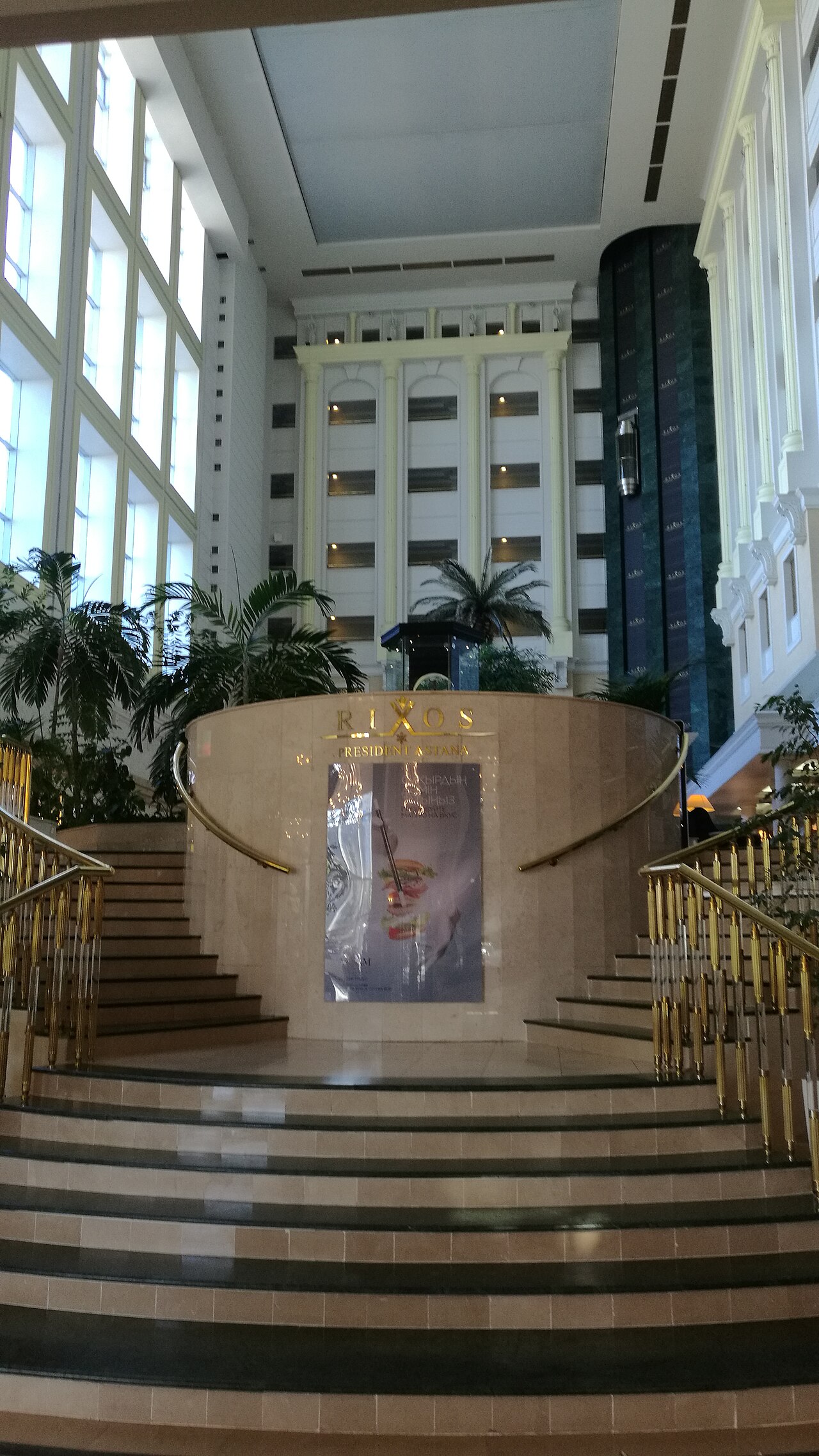
The big cities — Almaty, Astana, Shymkent, Aktau and increasingly Turkistan — have everything from Ritz-Carltons and Rixos resorts down to cheerful three-star business hotels. The international chains (Hilton, Marriott, Accor’s Novotel and Ibis, InterContinental, Wyndham) deliver exactly what you’d expect anywhere: reliable, English-speaking, card-friendly, often with the best breakfast in town. A four-star double averages around ₸26,000 ($53) and a five-star around ₸38,000 ($78), though the genuine luxury places run far higher. Local independent hotels are where it gets interesting — a well-run Kazakh three-star can be spotless, warmly staffed and half the price of a chain, and some of my favorite stays have been family-owned places with no English website at all.
Guesthouses and B&Bs
Guesthouses (often called “гостевой дом”) are the backbone of travel outside the big cities, and in mountain villages like Saty they’re basically the only option. Expect a room in a family home or a purpose-built annex, a shared or private bathroom, a home-cooked breakfast and, frequently, an offer of dinner that you should absolutely accept. Prices run ₸12,000–20,000 ($25–40) for a double. The atmosphere is the draw — I’ve learned more about Kazakh life over a guesthouse breakfast table than in any museum — but standards vary wildly and the best ones in popular spots book out, so reserve ahead in summer.
Hostels
Almaty and Astana have a genuinely good hostel scene, and you’ll find one or two in Shymkent, Aktau, Karaganda and other regional cities. A dorm bed starts around ₸5,000 ($10) and a private room in a hostel often beats a budget hotel for both price and atmosphere. They’re the easiest place to meet other travelers and to find people to split a 4×4 day-trip with — half the Mangystau and Kolsai expeditions I’ve joined were cobbled together in a hostel kitchen. The trade-off is the usual one: thin walls, variable cleanliness, and a few “hostels” that are really just subdivided apartments.
Serviced apartments and Airbnb
For anything longer than two nights, especially in Almaty and Astana, I lean toward apartments. Soviet-era cities were built with generously sized flats, many have been renovated to a high standard, and you get a kitchen, a washing machine and a local neighborhood for less than a hotel room — often ₸18,000–35,000 ($37–70) a night for a central one-bedroom. Just remember the registration conversation from earlier: confirm the host files your migration notification. Beyond Airbnb, local sites and 2GIS list apartments “посуточно” (by the day) that are cheaper still if you can navigate them.
Yurt camps and glamping
This is the one that everyone wants and the one I most want you to do — at least one night. A yurt (киіз үй) is the felt-and-lattice round tent that nomadic Kazakhs lived in for centuries, and staying in one near Kolsai, in Altyn-Emel or out on the Assy Plateau is the single most memorable night you can book in this country. The modern ones are surprisingly comfortable: raised platforms, real beds, wood stoves, and at the better camps heated floors and an attached bathroom. A typical organized yurt experience runs ₸40,000–75,000 ($80–150) for one night with meals and an activity like horse-riding or an eagle-hunting demonstration thrown in. It is not a way to save money — it’s an experience you pay for — and it’s worth every tenge. More on exactly where to do it below.
Mountain resorts, lake lodges and sanatoriums
Two more categories worth knowing. Resorts cluster where Kazakhs holiday — the pine forests and lakes of Burabay, the ski slopes above Almaty — and range from slick (Rixos) to charmingly dated. Then there are sanatoriums, a wonderfully Soviet institution: part hotel, part wellness retreat, often by a lake or a mineral spring, where you can book a room and a week of slightly mysterious “treatments.” They’re cheap, they’re an experience, and they’re full of Kazakh families doing exactly what their grandparents did. You won’t find them on Booking; you find them through local sites or a travel agent.
| Type | Price/night (double or dorm) | Where you’ll find it | Best for |
|---|---|---|---|
| 5-star hotel | ₸60,000–130,000+ ($120–260+) | Almaty, Astana, Turkistan | Luxury, business, treat nights |
| 3–4 star hotel | ₸20,000–45,000 ($40–90) | All cities | Comfort and reliability |
| Serviced apartment | ₸18,000–35,000 ($37–70) | Almaty, Astana | Stays of 3+ nights |
| Guesthouse / B&B | ₸12,000–20,000 ($25–40) | Villages, small towns | Local life, mountains |
| Hostel dorm | ₸5,000–9,000 ($10–18) | Big and regional cities | Budget, meeting people |
| Yurt camp (with meals) | ₸40,000–75,000 ($80–150) | Kolsai, Altyn-Emel, steppe | The bucket-list night |
Where to stay in Almaty
Almaty is the right base for most first trips, and it’s the city I know best. It’s leafy, walkable in its core, ringed by mountains and packed with the country’s best cafés and restaurants. But it’s also a sprawling, traffic-clogged place where the wrong address can cost you an hour a day, so the neighborhood matters more here than anywhere else in Kazakhstan. There’s a fuller picture in our guide to the best things to do in Almaty; here’s strictly where to put your head down.
The historic centre and the “Golden Quarter” — best for first-timers
If it’s your first time, stay in the central rectangle roughly bounded by Abay, Zheltoksan, Gogol and Nauryzbai Batyr — locals call the smartest part of it the “Golden Quarter,” around the Opera House and Panfilov Park. This is the most pedestrian-friendly, café-dense, tree-shaded part of the city, and you can walk to Zenkov Cathedral, the Green Bazaar, Republic Square and a dozen good restaurants. You’re on the metro line, which is clean and fast, and you’re well placed for day trips from Almaty out to the canyon and the lakes. This is where I tell every first-timer to stay, full stop. Mid-range hotels and the best serviced apartments cluster here.
Samal and Esentai — upmarket and polished
South of the centre, around the Esentai Mall and the Samal microdistricts, is Almaty’s glossiest quarter: the Ritz-Carlton sits atop the Esentai Tower here, with the city’s best mall, smart restaurants and a slightly more corporate feel. It’s a great base if you want luxury and don’t mind being a short taxi from the historic core. The higher elevation also means marginally cleaner air, which matters in winter when Almaty’s smog settles in the low centre.
Medeu and the mountain road — for nature lovers
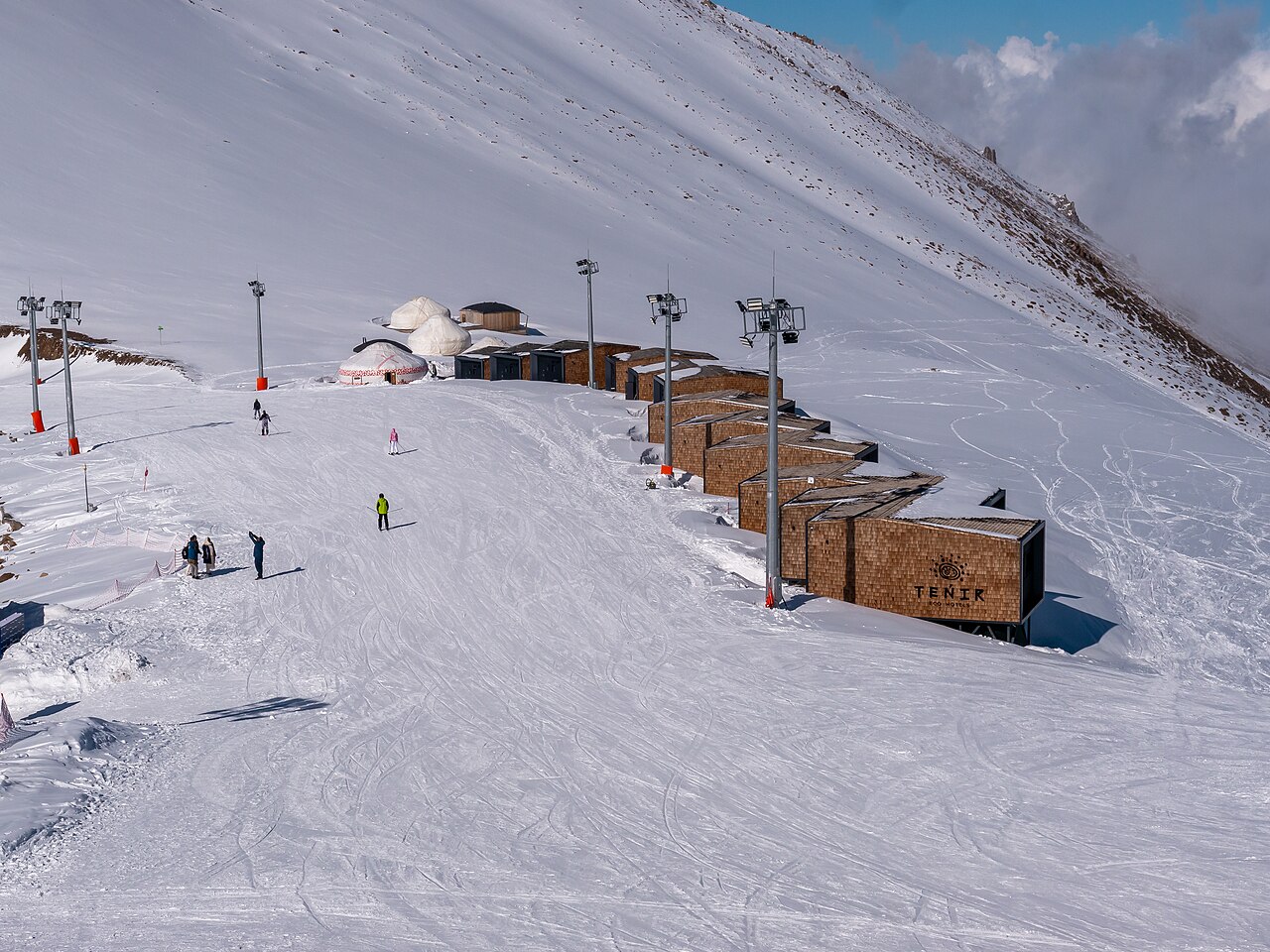
Head up toward the Medeu skating rink and the Shymbulak ski resort and you trade city convenience for mountain immediacy. Staying up here, half in the Ile-Alatau National Park, means waking up to peaks and being first on the slopes or trails — wonderful if that’s your priority and you’ve got a car or don’t mind taxis. It’s the most expensive area and the least practical for sightseeing, so I’d save it for a ski trip or a couple of nights at the end. It comes into its own in the cold months; see our Kazakhstan in winter guide for the ski logistics.
Bostandyk and Auezov — quieter and better value
West and southwest of the centre, districts like Bostandyk and Auezov are where you find modern apartment towers, green space and noticeably lower prices. You’re 15–25 minutes from the action by taxi or metro, the air is a touch better up the hill, and your money goes further. I’ll happily stay out here on a longer, slower visit when I’ve got an apartment and I’m not trying to tick off sights every day. For a first short trip, though, the time lost in traffic isn’t worth the saving.
My Almaty picks by budget
To make it concrete, here’s where I actually book. Luxury: the Ritz-Carlton at Esentai for the view and the service, or Rixos Almaty and the InterContinental for reliable five-star comfort closer to the centre. Mid-range: Novotel Almaty City Center is my default — central, dependable, good breakfast — with Ibis Almaty a half-step down in price and just as well located. Budget: the city’s hostels are excellent value, with long-running spots like Hostel Nomad offering clean dorms and the kind of front desk that helps you book a Charyn trip. Browse everything in this silo on our where to stay hub and the Almaty section.

Where to stay in Astana
Astana is a different animal: a planned capital of glass towers, wide boulevards and Norman Foster landmarks rising out of the flat steppe, much of it built in the last 25 years. It’s spectacular and a little surreal, and you typically need only a night or two to see it — read up on the things to do in Astana before you decide how long. The city splits neatly into two halves across the Ishim (Yesil) River, and which side you stay on changes the trip.
The left bank (Yesil district) — the showpiece capital
The left bank is the new, monumental Astana: Bayterek Tower, the Khan Shatyr tent-mall, the national museum, the government district and most of the four- and five-star hotels. Stay here and you can walk among the landmarks that you came to see, with the big international hotels — the Ritz-Carlton (from around ₸125,000/$254 a night), St. Regis, Hilton and Hilton Garden Inn — clustered within reach of Bayterek. It’s polished and convenient for sightseeing, if a little sterile and quiet after dark. This is where I stay in Astana, because the whole point of the city is those showpiece buildings and here you’re inside the postcard.
The right bank — older, cheaper, more lived-in
Across the river is the original city: Soviet-era blocks, the railway station, leafier streets and a more ordinary, human-scaled Astana where actual people live and eat. Hotels and apartments here are noticeably cheaper, the restaurants are less touristy, and you’re closer to the train station if you’re arriving or leaving by rail — which, given the distances, you well might; see getting around Kazakhstan for the train-versus-plane maths. The trade-off is a 10–15 minute taxi to the landmarks. For budget travelers and longer stays, it’s the smart side of the river.
My Astana picks by budget
Luxury: the Ritz-Carlton and St. Regis are the trophy stays, both left-bank and both excellent. Mid-range: Hilton Garden Inn, Best Western Plus Astana (around ₸43,000/$88) and the Diplomat Hotel (around ₸45,000/$91) all deliver reliable comfort near the sights. Budget: the Hampton by Hilton at the Triumphal Arch is a steal for the brand and location, and small places like Inn OZZ cover the cheap end. Astana’s accommodation runs slightly cheaper than Almaty’s for equivalent quality, which is a nice consolation for the weather. Everything’s gathered in our Astana section.
Where to stay in Shymkent and Turkistan (the warm south)
Down in the south, near the Uzbek border, the climate softens, the food gets better and the history gets deeper. Most people pair these two: Shymkent as the modern base, Turkistan as the Silk Road day-trip or overnight.
Shymkent
Kazakhstan’s third city is a sprawling, lively, distinctly Central Asian place that most travelers use as a launch pad. The accommodation is solid mid-range: the DoubleTree by Hilton is the safe international choice, Rixos Khadisha Shymkent brings a bit of polish, and local options like the Aidana Plaza cover the cheaper end well. Stay central, near the Independence Park and the Ordabasy area, and you’re walking distance from the bazaars and the best plov in the country. A night or two is plenty before you push on to Turkistan.
Turkistan
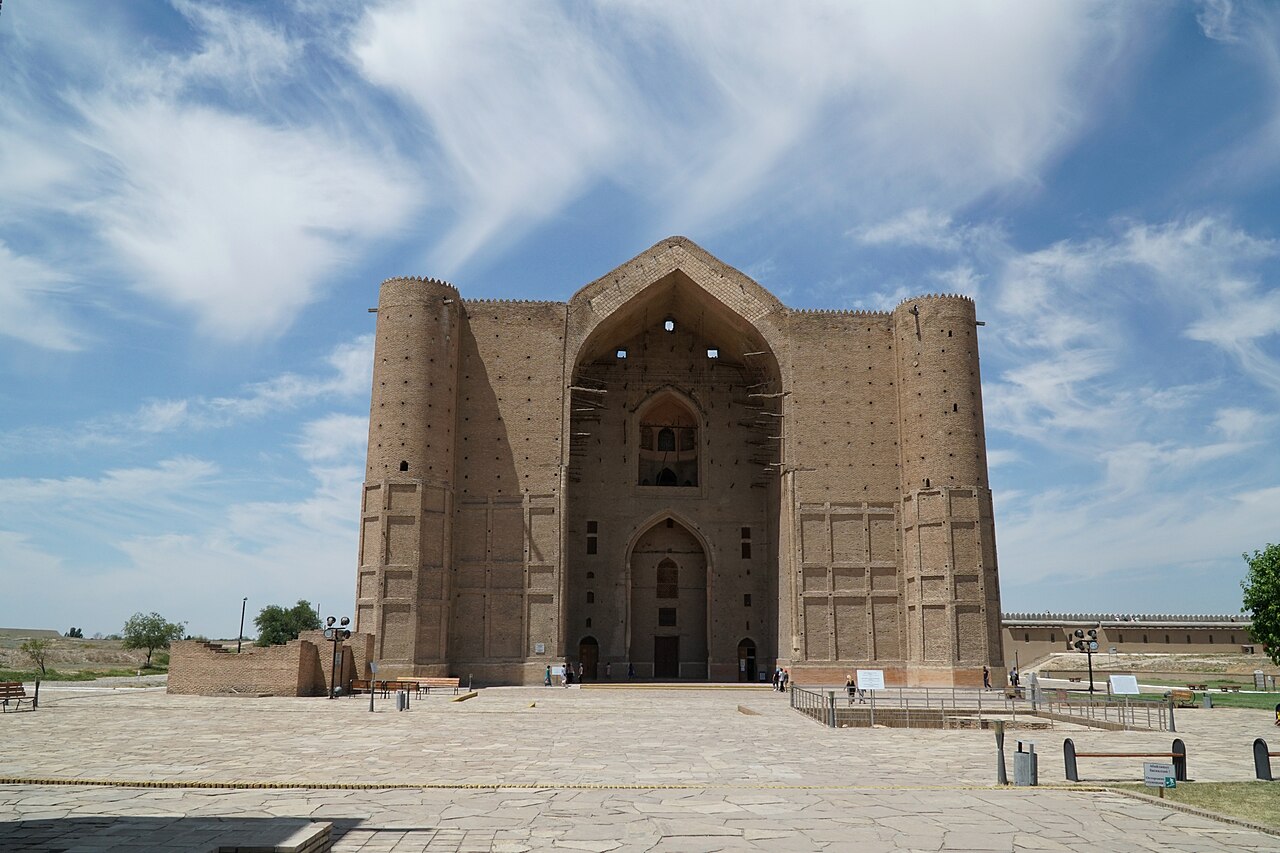
Turkistan has transformed. The town around the magnificent Mausoleum of Khoja Ahmed Yasawi — a UNESCO Silk Road monument and Kazakhstan’s most important pilgrimage site — has been rebuilt as a tourism showpiece, complete with a new “Karavansaray” complex and a clutch of brand-new hotels. The Hampton by Hilton is the smart pick: modern, clean, and a short walk from the mausoleum so you can be there at dawn before the tour buses. Rixos Turkistan covers the upper end, and family hotels like the Karavansaray cover the middle. One night is enough to see the mausoleum properly at golden hour and again early the next morning.
Where to stay in Aktau and Mangystau (the Caspian west)
Out west on the Caspian Sea, Aktau is the gateway to Mangystau — the otherworldly chalk canyons, underground mosques and Martian valleys that have become Kazakhstan’s fastest-rising bucket-list region. Aktau itself is an oddity: a Soviet-planned city with no street names, only numbered microdistricts, built on the edge of a sea-that-is-really-a-lake. You stay here for two reasons: the beaches in summer, and as the launch point for multi-day 4×4 expeditions into the desert.
Base yourself near the seafront promenade for the sunsets and the restaurants. The Rixos Water World Aktau is the resort-style anchor with pools and beach access, and there’s a healthy range of mid-range hotels and apartments across the central microdistricts. Crucially, Mangystau has almost no accommodation out in the desert itself — you sleep in tents or the occasional yurt on an organized tour — so Aktau is where your real bed is at the start and end of the trip. Book ahead hard for July and August, when domestic beach tourism fills the city. A relaxed two or three nights, bookended around a desert expedition, is the usual rhythm.

Yurt stays and sleeping on the steppe
If you do one thing differently because of this guide, make it a yurt night. It’s the most authentically Kazakh way to sleep, it puts you under some of the darkest skies you’ll ever see, and the modern camps have quietly become very comfortable. Here’s where to actually do it.
Saty, for the Kolsai and Kaindy lakes
The village of Saty, four hours east of Almaty, is the gateway to the Kolsai Lakes and the sunken-forest lake of Kaindy, and it’s the easiest yurt night to fold into a trip. Several camps near the lakes now run proper yurts on raised platforms with warm floors and modern bathrooms — Kolsai Yurt Camp is the well-known one — and the village itself is full of family guesthouses like the long-running Alatau if you’d rather a bed indoors. Prices are gentle by Kazakh standards, ₸12,000–30,000 ($25–60) for guesthouses, more for the full yurt-with-meals package. It’s a brilliant base for the lakes and an easy add-on to a Charyn Canyon run; the logistics are in our day trips from Almaty guide.
Altyn-Emel and the Basshi steppe
Altyn-Emel National Park — home of the Singing Dune and the rainbow-striped Aktau mountains (not to be confused with the Caspian city) — has yurt camps out at Basshi on the edge of the steppe. The Caravansarai campsite there runs authentic Kazakh yurts with good showers, clean bedding and proper home cooking, surrounded by nothing but grassland and the Dzhungarian mountains on the horizon. This is the real deal: vast, silent and dark. You’ll want a tour or a car to reach it, and a night here is a highlight of any eastern loop.
The Assy Plateau and closer-to-Almaty options
If you’re short on time, seasonal yurt and ger camps appear in summer on the Assy Plateau and at other spots within day-trip range of Almaty, sometimes bundled with eagle-hunting demonstrations and horse-riding. They’re less remote than Altyn-Emel but they still deliver that high-steppe, big-sky feeling, and you can be back in the city the next afternoon. Quality varies, so book through a reputable operator and check whether the price includes meals and transfers.

Where to stay in Burabay (Borovoe) — the lake country
About 260 kilometres north of Astana, Burabay — known to everyone by its lake, Borovoe — is where the steppe suddenly erupts into pine forest, granite outcrops and clear lakes. It’s the most popular domestic holiday spot in northern Kazakhstan and an easy overnight from the capital. The resort area spreads across three bases: Burabay village itself (most central, walkable, lined with guesthouses and the chain hotels along Kenesary Street), Katarkol and Shchuchinsk (quieter, better for swimming and relaxing).
Accommodation runs the full range, and prices climb fast with the star rating: three-star hotels average around ₸29,000 ($59), four-stars jump to ₸87,000 ($177), and the five-star Rixos Borovoe — set on Lake Shchuchye among the pines — sits near ₸154,000 ($314) a night. In between, places like the Wyndham Garden Burabay and lakeside boutique hotels cover the mid-to-upper range, and there are plenty of guesthouses and vacation rentals with kitchens for families. My one firm warning: avoid summer weekends if you possibly can. Astana decamps here en masse from Friday, prices spike and the good rooms vanish. Come midweek, or in the gold-and-russet shoulder of September, and it’s blissful.
How much should you budget per night?
Accommodation will be one of your two biggest costs in Kazakhstan (transport is the other, given the distances). Here’s how the three tiers shake out per night for a couple, and what each one actually buys you. Pair this with our full Kazakhstan trip cost guide to build a realistic daily budget.
| Budget tier | Per night (double) | What you get |
|---|---|---|
| Backpacker | ₸5,000–15,000 ($10–30) | Hostel dorms, basic guesthouses, cash-only village rooms. Plenty of character. |
| Mid-range | ₸20,000–45,000 ($40–90) | Three- to four-star hotels, smart central apartments, the best guesthouses. The sweet spot. |
| Top end | ₸60,000–155,000+ ($120–315+) | Five-star city hotels, the Rixos resorts, full-board yurt experiences. |
For most travelers the mid-range tier is where Kazakhstan shines: ₸25,000–35,000 ($50–70) a night gets you a genuinely comfortable, central, well-reviewed room in any city, and the same money buys a memorable guesthouse-or-yurt night in the regions. I generally budget mid-range for the cities and let myself splurge on one or two standout stays — a yurt at Kolsai, a lake hotel at Burabay — because those are the nights I remember.
Where to stay by type of traveler
First-timers and short trips
Stay central in Almaty, full stop. Three or four nights in the Golden Quarter, day trips out to Charyn and the lakes, then a quick hop to Astana for a night if the architecture appeals. You’ll never be more than a walk or a short metro ride from what you came for, and the city’s the easiest place in the country to find your feet. A sensible first route is laid out in our Kazakhstan itineraries guide.
Mountain and outdoor travelers
Split your nights between a central Almaty base for logistics and a mountain or village stay for immediacy — a guesthouse in Saty for the Kolsai lakes, a night up toward Shymbulak, or a yurt out on the steppe. In winter, base near the Medeu–Shymbulak road for ski access and check our Kazakhstan in winter guide for which lifts and lodges are worth it.
Families
Apartments win for families: a kitchen, a washing machine and separate sleeping space for far less than two hotel rooms. Central Almaty and the right bank of Astana both have excellent family-sized flats. For a holiday-within-the-holiday, the lake resorts at Burabay and the Caspian beaches at Aktau are built for kids, with pools, beaches and space to run.
Budget backpackers
The hostel scene in Almaty and Astana is your network as much as your bed — it’s where trips get organized and costs get split. Mix dorms in the cities with cheap guesthouses in the regions, pay cash in tenge wherever you can to unlock local rates, and you can sleep well in Kazakhstan for ₸8,000–12,000 ($16–25) a night.
My honest booking tips
A handful of things I’d tell a friend before they book. Location beats stars — a central three-star you can walk from will beat a flashy five-star marooned by a motorway every time; I learned that the hard way with the swimming-pool hotel. Read the transport line in reviews, not just the room photos, because Almaty and Aktau especially will eat your time in traffic. Confirm registration for any private rental, as covered above. Carry tenge cash for guesthouses, yurts and small towns. Book lake and beach resorts midweek and well ahead in summer. And on the security side, Kazakhstan is a genuinely safe and easy place to travel — our is Kazakhstan safe guide goes deep, but the short version is that picking a decent neighborhood is about convenience and comfort here, not danger. Wherever you land, you’re rarely far from the country’s best things to do and its very good food.
Frequently asked questions
Is accommodation expensive in Kazakhstan?
No — it’s one of the better-value parts of the trip. The national average hotel room runs around $43 a night, a comfortable central mid-range double is ₸25,000–35,000 ($50–70), and hostel dorms start near ₸5,000 ($10). Only the five-star city hotels and the top lake resorts climb into Western European prices.
Do I need to register with the police when I stay in a hotel?
Not personally, for tourist stays of 30 days or fewer. Your hotel, hostel or apartment host is legally required to notify the migration service of your arrival within three working days, and any normal hotel handles this automatically at check-in. The only thing to watch is private rentals — confirm your host will file the notification.
Is it better to stay in Almaty or Astana?
Almaty, for almost every first-time visitor. It’s greener, more walkable, ringed by mountains and home to the best food and nightlife, and it’s the natural base for the country’s headline day trips. Astana is worth a night or two for its astonishing architecture, but it’s more of a quick capital stopover than a place to settle in.
Can you stay in a yurt in Kazakhstan?
Yes, and you should. Organized yurt camps near the Kolsai Lakes (Saty), in Altyn-Emel National Park and out on the steppe offer comfortable felt tents with real beds, wood stoves and meals, typically ₸40,000–75,000 ($80–150) a night including food and an activity. It’s the most memorable night you can book here.
Are Booking.com and Airbnb available in Kazakhstan?
Both work. Booking.com has the widest hotel and guesthouse inventory and is what most foreign visitors use; Airbnb is strong for apartments in Almaty and Astana. For the best local prices, though, many small hotels and apartments are listed only on the 2GIS app and Russian-language sites, often 20–30% cheaper for cash in tenge.
What’s the best area to stay in Almaty for a first visit?
The central historic district around the Opera House and Panfilov Park — the “Golden Quarter.” It’s the most walkable, café-filled part of the city, on the metro, and within easy reach of the main sights and the day-trip departure points. It’s the single best first-timer base in the country.
Do hotels in Kazakhstan take cards or cash?
Established hotels and city apartments take cards without issue. Guesthouses, yurt camps, sanatoriums and family-run places in small towns are frequently cash-only and want tenge, so always carry some when you head into the regions.
Final thoughts
That swimming-pool hotel taught me the only rule that really matters here: in a country this big, where you stay is mostly about where you stay within each place — the walkable centre over the distant suburb, the right bank of the river for value, the village guesthouse over the chain on the highway. Get the neighborhood right and Kazakhstan is one of the easiest, friendliest and best-value places to travel in Asia. Sleep central in Almaty, give the capital a night, and treat yourself to one yurt under the steppe sky. You’ll book the next swimming pool on purpose. Start mapping the rest of the trip with our complete guide to Kazakhstan, and browse more area guides in the where to stay hub.
Last updated: June 2026.
Related Kazakhstan travel guides
This is one piece of a much bigger Kazakhstan trip-planning series. If it helped, these companion guides are the natural next reads:
- Hiking in Kazakhstan — the best trails, treks and trekking logistics.
- Kazakhstan Visa & Entry — who needs a visa, QazETA and the registration rules.
- Best Time to Visit Kazakhstan — what each season and month actually feels like.
Photo credits
All images via Wikimedia Commons. Mausoleum of Khoja Ahmed Yasawi in Turkestan by Adam Harangozó (CC BY-SA 4.0); Shymbulak resort lodges by Matti Blume (CC BY-SA 4.0); Almaty city skyline by Dauren Nabijan (CC0); central Astana by Ken and Nyetta (CC BY 2.0); traditional Kazakh yurt, Aktobe Region, by Danatleg122 (CC BY 4.0); Lake Borovoe in Burabay by Yevgeny Yemelyanov (CC BY-SA 4.0). Licensed under the respective Creative Commons terms; RG72 / CC BY-SA 4.0 via Wikimedia Commons.


2 comments