Author: kazakhstantourism_g52xoh

  • Northern & Eastern Kazakhstan: The Complete Guide

    Northern & Eastern Kazakhstan: The Complete Guide

    Northern Kazakhstan — and the wild east beyond it — is where the country stops performing for visitors and simply gets on with being itself. This is the land of birch-ringed lakes and granite hills in the north, the glacier-hung Altai in the far east, half-forgotten Soviet towns, the world’s most northerly flamingos, and a steppe so vast it bends your sense of scale. Few foreign travellers come here, which is precisely the point.

    I have spent years circling back to these frontier regions, long after I’d “done” Almaty and the Tian Shan, and they remain my favourite part of the country. Northern Kazakhstan gives you the resort lakes of Burabay, the migratory-bird theatre of Korgalzhyn, and the deep-north cities where the steppe shades into Siberia. The east gives you the Altai — to my mind the most beautiful wilderness in Central Asia — plus Semey’s strange double heritage of literature and the bomb. And out in the remote middle sit places that stop people in their tracks: a lake that is fresh at one end and salt at the other, ships marooned in a desert that used to be a sea, and the quiet, harrowing memorials of the Gulag.

    This guide is the one I wish someone had handed me before my first long loop up here. It covers what to actually see across the north, the east and the remote interior; how to get to places that aren’t on anyone’s standard itinerary; when to go; what the permits, trains and costs really involve; and how to travel these regions thoughtfully. If you’re still sketching the shape of a trip, read it alongside my overview of the best things to do in Kazakhstan and treat this as the frontier chapter.

    Northern & eastern Kazakhstan at a glance

    These regions divide into three broad worlds, each with its own gateway city, season and degree of difficulty. Here’s the whole sweep on one screen before we go deep.

    Region Best for Gateway city Best season How remote
    The lake country (Burabay, Kokshetau) Forested lakes, rock formations, easy weekends Astana Jun–Sep Easy — paved roads, regular buses
    The deep north (Petropavl, Pavlodar, Bayanaul) Steppe cities, granite hills, a taste of Siberia Astana / Pavlodar Jun–Sep Easy–moderate
    Korgalzhyn & the steppe lakes Flamingos, saiga, mass bird migration Astana May–Sep (birds Apr–Oct) Easy (permit + guide needed)
    The Kazakh Altai (Katon-Karagay, Markakol) Glaciated peaks, turquoise lakes, deep wilderness Oskemen Jul–early Sep Hard — long drives, some border permits
    The eastern cities (Oskemen, Semey, Ridder) River towns, dark history, ski touring Oskemen May–Sep; ski Dec–Mar Moderate
    The remote interior (Karaganda, Balkhash) Gulag memory, a two-toned lake, Soviet steppe Karaganda May–Sep Moderate
    The Aral Sea (Aralsk) Ship graveyard, an ecological parable Aralsk / Kyzylorda Apr–Jun, Sep–Oct Very remote — long train or 4×4

    If you have a few days, base in Astana and dip into the lakes and flamingos. If you have a week or two and a taste for distance, the east and the remote interior are some of the most rewarding travel anywhere in the former Soviet Union. The rest of this guide is your menu.

    Why northern Kazakhstan and the east reward the effort

    Let me make the case before the logistics. The first thing these regions give you is emptiness on a scale that’s become almost impossible to find. Kazakhstan is the ninth-largest country on earth and the largest landlocked one, and the north and east hold a tiny fraction of the few foreign visitors the country gets. On the steppe between towns you can drive for an hour and see nothing but grass, sky, a hawk on a fence post and the occasional horseman. After the relative bustle of Almaty, the silence up here is a physical thing.

    The second draw is contrast packed into one direction of travel. In a single loop you can swim in a warm northern lake ringed by pines, stand beneath a 4,500-metre glaciated peak on the Mongolian border, walk the wooden floor of the house where Dostoevsky lived out his exile, and look across a salt flat at ships that haven’t floated in forty years. The north feels almost Russian — birch forest, wooden dachas, Slavic faces and a Siberian winter. The east piles up into Altai wilderness. The interior is raw Soviet steppe. No other part of Kazakhstan switches register so completely or so often.

    And then there’s the weight of history. This is the part of the country the twentieth century fell hardest on: the Gulag’s largest camps, the women’s prison at ALZHIR, the nuclear test site near Semey, the drowned villages and the dying sea. Travelling here is not a beach holiday, and it isn’t meant to be. It’s a chance to understand modern Kazakhstan — how it was shaped, what it survived, and how it is quietly remaking itself — in a way the polished capital never quite shows you. If that mix of wild country and deep memory appeals, you’ll love it up here.

    Astana: your gateway to the north

    Almost everything in the north is reached from Astana, the gleaming capital marooned in the middle of the steppe. It has the region’s busiest airport, the rail hub, and the car-hire desks, and you’ll likely pass through it whether you mean to or not. I’d build in a day or two at the start: see the futuristic skyline, eat well, stock up, and use it as the launchpad. My guide to the best things to do in Astana covers the city itself; here, we use it as a base camp and head out.

    From Astana, three of the north’s headline trips are within easy striking distance: Burabay’s lakes (a three-to-four-hour drive north), the Korgalzhyn flamingos (a couple of hours southwest), and the sobering ALZHIR memorial (barely half an hour out of town). You can sample all three on day trips and still sleep in a comfortable city hotel each night. For the longer hauls — the east, the Altai, the remote interior — you’ll either fly onward from Astana or settle in for a proper train journey. Either way, sort out how you’ll move before you arrive; my overview of getting around Kazakhstan lays out the trains, domestic flights and taxi apps that make all of this work.

    Burabay (Borovoe): Kazakhstan’s lake district

    If the north has a single must-see, it’s Burabay — often called Borovoe, its Russian name — a national park of pine forest, granite outcrops and clear lakes about 250 kilometres north of Astana. Kazakhs call it the country’s “pearl,” and on a still summer morning, with mist lifting off the water and the strange humpbacked rocks catching the light, you understand why. It is the closest thing the flat north has to a mountain resort, and locals have holidayed here for generations.

    Zhumbaktas rock rising from Lake Borovoe in Burabay, northern Kazakhstan

    The park centres on a cluster of lakes — Burabay, Shchuchye, and the Big and Small Chebachye — rimmed by the modest but photogenic Kokshetau hills. The signature sight is Zhumbaktas (“Sphinx” or “riddle stone”), a lone rock island rising straight out of Lake Borovoe that seems to change shape as you paddle around it; you can rent a kayak or take a small boat out to it. On the shore stands Okzhetpes, a knuckle of rock wrapped in nomadic legend, and nearby Kenesary Cave, named for the nineteenth-century khan who led the last great Kazakh resistance to Russian rule. None of the walking here is hard — this is gentle, lake-and-forest country, ideal for a relaxed couple of days rather than a serious trek.

    Burabay is also where you’ll meet Kazakhstan’s Soviet holiday tradition head-on. Accommodation runs from grand old sanatoriums — wellness resorts that are a fascinating throwback, all mineral baths and brisk treatments — to modern lakeside hotels and simple guesthouses in Burabay village, the main hub where the restaurants and rental kiosks cluster. Budget travellers can get by on around $30–50 a day; the smarter resorts cost considerably more. Getting here is easy: frequent buses and shared taxis run from Astana in three to four hours, and many people simply visit on a long day trip, though the lakes deserve an overnight. It does get busy on summer weekends with Astana families, so go midweek if you can.

    The deep north: Petropavl, Pavlodar and Bayanaul

    Push beyond Burabay and you reach the true north, the belt of cities and steppe that runs up to the long Russian border. This is the least touristed part of an already untouristed country, and that’s exactly its appeal for me: it’s Kazakhstan with no performance at all. The regional capital, Kokshetau, is a pleasant, low-rise stop on the way to Burabay, with a couple of decent museums and a lakeside setting. Further north, Petropavl (Petropavlovsk) is the country’s northernmost city and feels it — tsarist-era merchant architecture, a strong Russian cultural flavour, and winters that are genuinely Siberian. Its history museum, set partly in a building once linked to Abylai Khan, tells the story of the khan who did more than anyone to unite the Kazakhs into a state.

    East along the Irtysh River lies Pavlodar, a riverside industrial city that makes a useful jumping-off point for the north’s best-kept secret: Bayanaul National Park. Set where the steppe crumples into a range of weathered granite, Bayanaul is a smaller, drier, more sculptural cousin of Burabay — think rounded boulders balanced into improbable shapes, pine-fringed lakes, and trails that almost no foreigner ever walks. The swimming lake of Jasybay is the summer favourite, with rowboats and catamarans for hire; quieter Sabyndykol sits below the park’s high point, Akbet mountain, a straightforward climb with huge steppe views. There’s even a “Holy Cave” reached by a steep wooden staircase, wrapped in local legend. Bayanaul rewards anyone willing to make the effort to reach it, and you’ll likely have the granite to yourself.

    Korgalzhyn: flamingos on the steppe

    One of the most surreal sights in all of Kazakhstan sits just a couple of hours southwest of Astana: a shimmering steppe lake fringed with pink. The Korgalzhyn Nature Reserve, a UNESCO World Heritage site, protects Lake Tengiz and its surrounding wetlands, which host the most northerly breeding colony of flamingos on the planet. In a good year, up to fourteen thousand pairs nest out on the salt lake — an improbable splash of tropical colour against the brown-and-silver steppe, hundreds of kilometres from anything you’d call warm.

    Sunset over a steppe lake in Korgalzhyn Nature Reserve, summer home of Kazakhstan's flamingos

    Flamingos are only the headline act. Korgalzhyn sits at the crossroads of the great Siberian and Central Asian bird-migration routes, and in spring and autumn millions of birds — cranes, pelicans, swans, geese, eagles and over 350 recorded species — funnel through. The reserve is also one of the last refuges of the saiga, the strange, bulbous-nosed antelope of the steppe whose herds were once nearly wiped out and are now, hearteningly, recovering fast. The best viewing runs roughly April to September, with the flamingos easiest to see in the warmer months (bring binoculars — they nest far out on the lake).

    One important practicality: you cannot just drive in and wander. Korgalzhyn is a strictly protected reserve, so you need to arrange entry permission and an accompanying guide in advance, usually through the visitor centre in Korgalzhyn village or a tour operator in Astana. Daily buses run from Astana’s Saparzhai station to the village in around two and a half hours, but a guided day tour by car is far simpler and lets you actually reach the good vantage points. It’s worth the small hassle; a local guide will find you birds and saiga you’d never spot alone.

    ALZHIR: the women’s camp at the edge of the capital

    Barely half an hour west of Astana, in the village of Akmol, stands a memorial that every visitor to the capital should make time for. ALZHIR — a grim Russian acronym for the “Akmola Camp for Wives of Traitors to the Motherland” — was a special section of the vast Karlag system where the wives, mothers and daughters of men branded enemies of the state were imprisoned, simply for their relationship to the accused. More than eighteen thousand women passed through; many arrived having had their children taken from them.

    The modern museum-memorial, opened in 2007, is quietly devastating: a black conical monument, a wall of names, a sealed Stolypin railway carriage of the kind that carried prisoners east, and personal artefacts that make the abstraction of “repression” suddenly, unbearably specific. It is an easy and important add-on to any time in Astana, and a sober, necessary counterweight to the capital’s shiny optimism. I’d pair it in your mind with the other repression sites further south, around Karaganda, which I come to below — together they tell a story modern Kazakhstan has chosen, admirably, to remember out loud.

    The Kazakh Altai: mountains at the edge of everything

    Now we go east, to my favourite corner of the entire country. In the far northeastern tip of Kazakhstan, where the borders of Russia, China and Mongolia almost touch, the steppe finally gives way to the Altai — a range of larch forest, glaciated peaks, hot springs and impossibly turquoise rivers that feels like the world running out at the edges. Eastern Kazakhstan holds something like 40% of the country’s fresh water, and you feel that abundance everywhere up here: in the great Irtysh River, in the lakes, in the sheer greenness after the dry plains.

    Glaciated Mount Belukha in the Kazakh Altai of eastern Kazakhstan

    The presiding spirit of the range is Mount Belukha (4,506m), the highest peak in all of Siberia and the Altai, a twin-summited giant straddling the Russian border. It is sacred to local belief — the supposed gateway to the mythical land of Shambhala — and some won’t climb it out of respect. Around it spreads the Katon-Karagay National Park, Kazakhstan’s largest, a wilderness of cedar forest, alpine meadow and glacier-fed valleys that is genuinely world-class and almost entirely unknown to outside visitors. If you have walked the Tian Shan above Almaty and want something wilder and lonelier, this is it; I cover the trekking itself in more depth in my guide to hiking in Kazakhstan.

    Lakes, springs and the valley of the kings

    Even if you never lace up a serious boot, the Altai’s set-pieces are extraordinary. Lake Markakol, cradled high in the mountains inside its own nature reserve, is a deep, clear, fish-filled jewel ringed by forest — one of the most beautiful lakes I’ve seen anywhere, and reachable (good news) without a border permit. Rakhmanov Springs, by contrast, is a cluster of curative hot springs near the foot of Belukha, set beside a serene lake; soaking there with snow peaks overhead is a quintessential Altai experience, but it sits in the border zone and does require a permit. The vast Bukhtarma Reservoir, a man-made inland sea on the Irtysh, draws summer crowds to its beaches, while remote Lake Zaisan sprawls toward the Chinese frontier.

    For history, the Berel burial mounds in the Bukhtarma valley — sometimes called the “Valley of the Kings” — are Scythian-era tombs that have yielded spectacularly preserved gold artefacts and even mummified horses in their permafrost. It’s a reminder that this remote-feeling corner was, two and a half thousand years ago, the heartland of a rich nomadic culture, the same Saka-Scythian world I touch on in my guide to Kazakh culture.

    Getting into the Altai (and the permit question)

    This is the catch, and it’s a real one: the Altai is hard to reach and the logistics need planning. The usual approach is to fly or train to Oskemen (Ust-Kamenogorsk), then drive several hours east and south into the mountains via the mining town of Ridder or along the so-called “Austrian Road.” Distances are large, public transport thins out fast, and most travellers either self-drive a sturdy vehicle or, more sensibly, arrange a trip through a local operator in Oskemen or the village of Katon-Karagay, who can also sort permits and accommodation.

    On border permits: the rules have eased in recent years, and you no longer need a permit for the general Katon-Karagay area, Lake Markakol, or the Austrian Road. You do still need one for the zones hard against the Russian and Chinese borders — most relevantly Belukha base camp and Rakhmanov Springs — and these take time to arrange, so apply well ahead through a local agency. Rules change; always confirm the current situation before you commit to a route. The pay-off for all this faff is solitude in some of the most beautiful mountains in Asia.

    Oskemen and Ridder: gateways to the east

    You’ll likely spend at least a night in Oskemen (Ust-Kamenogorsk), the capital of the East Kazakhstan region and the practical hub for everything Altai. It’s a workmanlike river city — a major centre of metallurgy — rather than a beauty, but it has a genuinely good ethnographic museum, a pleasant riverside, and the region’s best spread of hotels and restaurants to stock up and rest in before or after the mountains. Air Astana and others fly here daily from Astana and Almaty, and there’s a long, scenic (read: 19-hour) train from Almaty for those who prefer rails to runways.

    Ridder, a couple of hours north toward the Russian border, is a small mining town that doubles as the closest base to the western Altai’s forests and slopes. It has quietly become eastern Kazakhstan’s winter-sports secret: the “East Pole” resort offers some of the best and most affordable backcountry and freeride skiing in the country, with deep, dry, lightly-tracked snow and almost no crowds. If you’re plotting a cold-season trip, fold it into my guide to Kazakhstan in winter — the east is a serious and underrated part of that story.

    Semey: Dostoevsky, Abai and the bomb

    Few cities anywhere carry as strange a double inheritance as Semey (long known as Semipalatinsk). On one hand it is a cradle of culture: the great Kazakh poet and philosopher Abai Kunanbayev, father of modern Kazakh written literature, came from this region, and the city’s excellent Abai museum is a place of real pilgrimage. The exiled Russian novelist Fyodor Dostoevsky served part of his Siberian sentence here in the 1850s, and the modest wooden house where he lived is now a lovingly kept museum. You can, genuinely, trace the footsteps of two literary giants in a single afternoon — an experience that fits naturally with the broader story of Kazakh culture.

    The suspension bridge over the Irtysh River at Semey, eastern Kazakhstan

    On the other hand, Semey gave its old name to one of the darkest chapters of the twentieth century. About 150 kilometres west lies The Polygon, the Semipalatinsk Test Site, where the Soviet Union detonated hundreds of nuclear devices between 1947 and 1989, contaminating a swathe of steppe the size of a small country and exposing generations of local people to fallout. The grassroots Nevada-Semipalatinsk movement, led by the poet Olzhas Suleimenov, helped force the site’s closure in 1991 — a rare and remarkable popular victory. The former research town of Kurchatov, on the Polygon’s edge, has a small museum, and it is possible to visit parts of the site, but only on an organised tour with the right permissions and radiological guidance. This is dark tourism in its most literal sense; go thoughtfully, or simply absorb the story from Semey’s own moving anti-nuclear memorial. Either way, Semey is a place that lodges in you.

    Karaganda and the memory of the Gulag

    Down in the industrial heart of the steppe sits Karaganda, a coal city built, to a brutal degree, by forced labour. This was the centre of Karlag, one of the largest camps in the entire Gulag system, which processed as many as a million prisoners between 1931 and 1959. The story is told, unflinchingly, at the Karlag Memorial Museum in the village of Dolinka, set in the camp’s former administrative headquarters. Its basement reconstructions of cells and interrogation rooms are harrowing; many exhibits are captioned in English, and a guide adds enormously to the visit. Nearby, the memorial stones at Spassk mark a field of graves of prisoners of many nationalities, and the two can be combined into a single, sobering day out from Karaganda.

    Together with ALZHIR near Astana, these sites form a kind of trail of remembrance across the central steppe. I won’t pretend it’s an easy day — it isn’t — but it is, I think, an essential one for understanding what this land has been through, and a moving testament to a country determined not to forget. For the practical side of visiting somewhere this remote and emotionally heavy, my notes on whether Kazakhstan is safe cover the basics of travelling responsibly off the tourist track.

    Lake Balkhash: the lake with two personalities

    Roughly halfway between Almaty and Karaganda lies one of the planet’s true natural oddities. Lake Balkhash is the largest lake entirely within Central Asia — some 600 kilometres long — and it is, famously, half fresh and half salt. A narrow strait, the Uzunaral, splits it in two: the western half is fed by the Ili River and stays fresh enough to drink, while the eastern half, with no major inflow, turns brackish and saline. Stand on the right shore and you can, in effect, see two different lakes meeting.

    The shore of Lake Balkhash, the half-fresh, half-salt lake of central Kazakhstan

    The lakeside town of Balkhash (population around 78,000) is a half-forgotten Soviet copper-smelting outpost, and I’ll be honest: people come less for the town than for the surprise of low-key beach life in the middle of the steppe. In summer the water is warm enough to swim, the shores are sandy in places, and the fishing — pike-perch above all — is excellent. It’s an easy stop on the long road or rail journey between Almaty and the north, and a genuinely strange, memorable place to break a trip. If you’re routing up from the south, Balkhash makes an offbeat overnight that almost no foreign itinerary includes; you could even reach it as an ambitious extension of the longer day trips from Almaty, though it really deserves a night.

    The Aral Sea: ships in the desert

    No region called “remote” would be complete without the most haunting destination in the country. The Aral Sea, once the fourth-largest lake on earth, was drained to a fraction of its size within a single lifetime after Soviet planners diverted its feeder rivers to irrigate cotton. The result is one of the worst man-made environmental disasters in history — and an unforgettable, sobering place to visit. The hub is the old fishing port of Aralsk, which once sat on the water and now looks out over dry, salt-crusted plain.

    A rusting ship on the dry bed of the Aral Sea at Zhalanash near Aralsk

    The iconic sight is the ship graveyard — rusting trawlers beached on what used to be the seabed, the classic image of “ships in the desert,” most accessibly seen near the former shore at Zhalanash. Aralsk’s small but excellent museum tells the story of the sea’s collapse and the fishing culture it took with it. There is, remarkably, a sliver of hope here: the Kokaral Dam, completed in 2005, has clawed back part of the North Aral Sea, the water has risen, and the fish — and a few fishermen — have begun to return. Reaching Aralsk takes commitment: it sits on the Tashkent–Orenburg railway line (the train from Almaty is a serious haul), and a visit to the ships usually means hiring a taxi or 4×4 for around $100 return on rough tracks. Go in spring or autumn; summer is brutally hot and the wind off the flats is relentless. It is, for the right traveller, one of the most powerful places in Kazakhstan.

    Baikonur and the far southern steppe

    One more remote name deserves a mention, if only because people always ask. Baikonur, out in the Kyzylorda region’s desert steppe, is the world’s oldest and largest space launch facility — the site from which Gagarin first flew and from which crewed missions still launch. It is, however, a Russian-leased closed city, and visiting (including watching a launch) is only possible on a tightly controlled, pre-arranged and fairly expensive organised tour, booked months ahead. It’s not a casual drop-in, but for space-history buffs it’s a bucket-list pilgrimage, and it underlines just how much strange, world-significant history is scattered across these empty distances.

    When to go: seasons in the north and east

    Timing matters more up here than almost anywhere else in the country, because the continental climate is ferocious. Winters are long and brutally cold — temperatures of −30°C to −40°C are routine across the northern steppe, and Petropavl shivers through a properly Siberian deep-freeze. Summers, by contrast, are short, warm and the obvious window for almost everything: lake swimming, steppe wildlife, and access to the high Altai.

    For the lakes, the wildlife and the cities, aim for June to September. The Korgalzhyn birds are present roughly April to October, with flamingos easiest in the warm months. The high Altai only truly opens up from July to early September, when the passes are clear of snow. The desert and Aral regions are best in the shoulder seasons — April to June and September to October — because midsummer out there is punishing. Winter is for one thing only: ski touring around Ridder. Plan the fine detail with my month-by-month breakdown of the best time to visit Kazakhstan.

    Destination Best months Why
    Burabay & northern lakes Jun–Sep Warm enough to swim; forest at its greenest
    Korgalzhyn (flamingos & migration) May–Sep Birds present; flamingos visible on the lake
    Kazakh Altai (high country) Jul–early Sep Passes clear; lakes and springs accessible
    Eastern cities (Oskemen, Semey) May–Sep Mild; rivers and museums at their best
    Aral Sea & remote steppe Apr–Jun, Sep–Oct Avoids dangerous summer heat on the flats
    Ridder ski touring Dec–Mar Deep, dry, lightly-tracked powder

    Getting there and getting around

    Distances here are the whole challenge, so be realistic about how much ground you can cover. The north pivots on Astana: from the capital, Burabay, Korgalzhyn and ALZHIR are all comfortable day or overnight trips by road. For the east, the gateway is Oskemen, reached by daily flights from Astana and Almaty (the sane option) or by long-distance train. Semey, Pavlodar and Karaganda all have airports and sit on the rail network too.

    Kazakhstan’s trains are the romantic way to swallow these distances — comfortable, cheap, and a slice of local life in themselves — but they are slow: Almaty to Oskemen runs around 19 hours, and Almaty out to Aralsk is a 30-hours-plus epic. For anything in the Altai, you’ll want a hired vehicle with a driver or a local tour, because public transport evaporates once you leave the main towns and the mountain tracks demand a proper 4×4. Self-driving is viable on the paved north-and-east routes if you’re confident. All the modes, booking tricks and apps are laid out in my guide to getting around Kazakhstan, and if you’re flying in from abroad, sort your paperwork first with my Kazakhstan visa guide.

    Permits and border zones

    Two kinds of permission come up in these regions, and it pays to understand both. First, the nature-reserve permits: strictly protected areas such as Korgalzhyn (and the Markakol reserve) require advance permission and a guide — easily arranged through the visitor centres or a tour operator, but not something you can skip. Second, the border-zone permits for the Altai: you no longer need one for Katon-Karagay, Markakol or the Austrian Road, but you do for the areas right against the Russian and Chinese frontiers, notably Belukha base camp and Rakhmanov Springs. These can take a week or more to process, so arrange them through a local agency well before you travel, and always reconfirm the current rules — they change. Carry your passport everywhere up here; you will be asked for it.

    Where to stay

    Accommodation shapes a frontier trip more than it does in the cities. In Burabay you can choose between fascinating Soviet-era sanatoriums, modern lakeside hotels and simple village guesthouses. The cities — Oskemen, Semey, Karaganda, Pavlodar — all have a reliable spread of mid-range hotels and a few good ones. Out in the Altai, expect guesthouses, rustic tourist bases (turbazy) and the chance to stay in a yurt on a summer pasture, which is one of the great experiences of travel here. In the truly remote spots like Aralsk, options are basic and limited, so book ahead and keep expectations modest. My full rundown of options — hotels, guesthouses, yurt camps and sanatoriums — lives in my guide to where to stay in Kazakhstan.

    What a trip up here costs

    The north and east are, if anything, even better value than the rest of an already-affordable country, because there’s almost no tourist mark-up. Your real costs are distance — flights, fuel, train tickets and drivers — rather than sights, many of which are nearly free. Here’s a rough sense of daily spending; for the full picture, see my guide to Kazakhstan trip cost.

    Style Daily budget (per person) What it looks like
    Backpacker $30–50 Guesthouses, buses and trains, self-catering, public sights
    Midrange $70–130 Hotels, the odd domestic flight, shared day tours, restaurants
    Comfort / Altai $150–300+ Private driver-guide, permits, organised treks, better lodges

    Two line items to plan for: a guided Altai trip with a driver, permits and accommodation is the big-ticket expense (budget several hundred dollars over a few days), and the Aral Sea taxi to the ships runs around $100 return. Almost everything else — museums, park fees, food — is cheap by any standard.

    How I’d plan a trip to the north and east

    Because the distances are real, I’d resist the urge to cram and instead pick a theme. Here are the three loops I most often recommend, each of which slots neatly into the route-building in my Kazakhstan itinerary guide.

    The easy northern long-weekend (3–4 days). Base in Astana. Day one, the ALZHIR memorial and the capital itself. Day two, a guided trip to the Korgalzhyn flamingos. Days three and four, up to Burabay for the lakes, a kayak out to Zhumbaktas, and a night by the water. It’s comfortable, scenic, and a perfect first taste of the north without a single hard day.

    The eastern wilderness loop (7–10 days). Fly Astana–Oskemen. Settle in, then strike out by hired vehicle into Katon-Karagay for the Altai — Lake Markakol, the Bukhtarma valley, and, with permits arranged, a soak at Rakhmanov Springs beneath Belukha. Loop back via Ridder and finish with a day in Semey for Dostoevsky, Abai and the anti-nuclear memorial. This is the trip that converts people into Kazakhstan obsessives.

    The remote-and-reflective route (variable). For travellers drawn to history and strange landscapes: Karaganda for Karlag and Spassk, then the long haul to Balkhash for the two-toned lake, and — if you have the time and the stomach for the journey — onward to Aralsk and the ships in the desert. It’s demanding and emotionally heavy, and it’s some of the most meaningful travel in the country.

    Frequently asked questions about northern Kazakhstan

    Is northern Kazakhstan worth visiting?

    Yes, if you value emptiness, nature and history over polish. The north gives you the resort lakes of Burabay, the flamingos of Korgalzhyn, granite-hilled Bayanaul, and steppe cities that almost no foreigner sees. It isn’t a checklist of blockbuster sights so much as an immersion in the real, unperformed Kazakhstan — which, for the right traveller, is exactly the appeal.

    What is there to do in northern and eastern Kazakhstan?

    Swim and kayak among the lakes and rock formations of Burabay, watch flamingos and saiga at Korgalzhyn, trek the glaciated Kazakh Altai, soak in Rakhmanov hot springs, trace Dostoevsky and Abai in Semey, confront Gulag history at Karlag and ALZHIR, stand on the two-toned shore of Lake Balkhash, and see the rusting ships of the dying Aral Sea. It’s an enormous, varied region.

    How do you get to the Altai Mountains in Kazakhstan?

    Fly or take the train to Oskemen (Ust-Kamenogorsk), the regional capital, then continue several hours by road into the mountains via Ridder or Katon-Karagay. Air Astana flies to Oskemen daily from Astana and Almaty; the train from Almaty takes around 19 hours. Beyond the towns you’ll need a 4×4 or a local tour, as public transport is sparse.

    Do you need a permit to visit the Kazakh Altai?

    For much of it, no — the Katon-Karagay area, Lake Markakol and the Austrian Road are now permit-free. But the zones right against the Russian and Chinese borders, including Belukha base camp and Rakhmanov Springs, still require a border-zone permit that can take a week or more to arrange through a local agency. Always reconfirm current rules and carry your passport.

    What is Burabay (Borovoe) known for?

    Burabay is northern Kazakhstan’s lake district — a national park of clear lakes, pine forest and dramatic granite outcrops about 250km north of Astana. It’s famous for the Zhumbaktas “Sphinx” rock rising from Lake Borovoe, the Okzhetpes formation, and a long tradition of lakeside sanatorium holidays. Locals call it the country’s “pearl,” and it’s the north’s easiest and most popular escape.

    Can you visit the Semipalatinsk nuclear test site?

    Partly, yes. The Polygon near Semey is the only former Soviet nuclear test site open to visitors, but only on an organised tour with official permission and radiological guidance — it is not a place to wander into independently. The town of Kurchatov has a small museum, and Semey itself has a moving anti-nuclear memorial that tells the story without the radiation risk.

    Where can you see flamingos in Kazakhstan?

    At the Korgalzhyn Nature Reserve, about two hours southwest of Astana, where Lake Tengiz hosts the most northerly breeding colony of flamingos on earth — up to 14,000 pairs in a good year. They’re present roughly April to September and best seen with binoculars and a guide, since they nest far out on the salt lake. Korgalzhyn requires advance permission and an accompanying guide.

    Why is Lake Balkhash half fresh and half salt?

    Because of its shape and its rivers. A narrow strait, the Uzunaral, nearly pinches the 600km-long lake in two. The western basin is fed by the Ili River and stays fresh, while the eastern basin has almost no inflow and slowly grows saline through evaporation. The result is one of the few lakes on earth that is genuinely fresh at one end and salty at the other.

    Is it safe to visit the Aral Sea?

    Yes, the North Aral Sea around Aralsk is safe to visit; the main challenges are distance, rough roads, heat and dust rather than danger. Go in spring or autumn, carry plenty of water, and ideally arrange a taxi or 4×4 for the ship graveyard. As with all remote travel here, tell someone your plans — see my wider is Kazakhstan safe guide.

    Final thoughts

    What keeps drawing me back to northern and eastern Kazakhstan isn’t any single view — though Belukha floating above the larch forest, or flamingos shimmering on a steppe lake, come close. It’s the feeling of travelling somewhere that hasn’t been smoothed down for visitors: where the lakes are full of local families, the history is raw and honestly told, and the distances are big enough to make arriving anywhere feel earned. This is slow, demanding, deeply rewarding travel, and it won’t stay this quiet forever. Go while it’s still the frontier, eat the food, ride the trains, tip the driver, and let these enormous spaces work on you. When you’re ready to build the trip, start with my master guide to things to do in Kazakhstan, pair it with the regional contrast of Mangystau in the far west, fuel up with my guide to Kazakh food, or browse more in the North, East & Remote section.


    About the author: I’m a travel writer who has spent years exploring Kazakhstan well beyond Almaty — riding the long northern trains, trekking the Altai, soaking in Rakhmanov Springs, and standing on the dry bed of the Aral Sea. I write the guides here at KazakhstanTourism.org to help you explore this vast, surprising country with more confidence and a lot more joy.

    Last updated: June 2026. Transport schedules, permit rules, reserve-entry procedures and exchange rates change, and the weather out here is extreme — treat this as an experienced starting point, confirm current local conditions before you travel, and plan generous time for the distances.

    Photo credits

    All images are used under their respective licences via Wikimedia Commons. Thank you to the photographers who share their work freely.

    • Zhumbaktas rock rising from Lake Borovoe in Burabay, northern Kazakhstan — Photo: Alter-Ego9312 / CC BY-SA 4.0 via Wikimedia Commons (source)
    • Sunset over a steppe lake in Korgalzhyn Nature Reserve, summer home of Kazakhstan’s flamingos — Photo: Dildakhmet / CC BY-SA 4.0 via Wikimedia Commons (source)
    • Glaciated Mount Belukha in the Kazakh Altai of eastern Kazakhstan — Photo: No machine-readable author provided. Gai Sever assumed (based on copyright claims). / CC BY-SA 4.0 via Wikimedia Commons (source)
    • The suspension bridge over the Irtysh River at Semey, eastern Kazakhstan — Photo: Иван Быков / CC BY 3.0 via Wikimedia Commons (source)
    • The shore of Lake Balkhash, the half-fresh, half-salt lake of central Kazakhstan — Photo: Nikolay Yushnikov / Public domain via Wikimedia Commons (source)
    • A rusting ship on the dry bed of the Aral Sea at Zhalanash near Aralsk — Photo: Zhanat Kulenov / CC BY-SA 3.0 igo via Wikimedia Commons (source)
  • Hiking in Kazakhstan: Trails, Treks & Wild Steppe

    Hiking in Kazakhstan: Trails, Treks & Wild Steppe

    Hiking in Kazakhstan means walking into one of the last genuinely uncrowded mountain countries on earth — turquoise glacial lakes, 4,000-metre peaks rising straight out of the steppe, and trails where you can go a full day without meeting another soul. The hub for most of it is Almaty, where the Tian Shan starts at the edge of the city; from there the country opens out to the Kolsai lakes, the red canyons of the east, the wild Altai, and the chalk deserts of the west.

    I have been hiking in Kazakhstan, on and off, for years now, and I still struggle to explain to people at home just how good it is. You say “Kazakhstan” and they picture flat brown steppe and oil derricks. Then you show them a photo of a spruce-ringed alpine lake an hour from a city of two million people, with not a single other hiker in the frame, and they go quiet. This is a country the size of Western Europe with a fraction of the visitors, and the southern and eastern edges of it crumple up into some of the most spectacular — and least trodden — mountains in Asia.

    This guide is the one I wish I’d had on my first trip. It covers where to actually walk, from a half-day stroll above Almaty to a week-long trek over a 3,000-metre pass into Kyrgyzstan; when to go; what the permits and park fees really are; whether you need a guide (sometimes yes, often no); and how not to get yourself into trouble on trails that mostly aren’t signed, patrolled, or even mapped. If you’re still deciding what kind of trip to build, pair this with my overview of the best things to do in Kazakhstan and treat this as the boots-on chapter.

    Hiking in Kazakhstan at a glance

    Kazakhstan’s walking divides neatly into a handful of regions, each with its own character, season and logistics. Here’s the whole landscape on one screen before we go deep.

    Region Best for Season Difficulty Guide needed?
    Zailiysky (Trans-Ili) Alatau, above Almaty Day hikes & weekend treks straight from the city Jun–Sep (ski touring Dec–Mar) Easy to hard No for day hikes; yes off the main routes
    Kolsai & Kaindy Lakes The postcard trek; lake-to-lake walking Jun–Sep Easy to moderate Optional
    Charyn Canyon & the eastern steppe Short canyon walks, dramatic scenery Apr–Jun, Sep–Oct (brutal in midsummer) Easy No
    Aksu-Zhabagly & the Western Tian Shan (south) Wildflowers, deep canyons, reserve hiking Apr–Jun (tulips), Jul–Sep Moderate Yes (mandatory in the reserve)
    The Altai (east) Remote multi-day wilderness, Mount Belukha Jul–early Sep Moderate to hard Yes (+ border permit)
    Mangystau (west) Desert & canyon trekking, surreal rock Apr–May, Sep–Oct Moderate (heat/water) Yes (vehicle support)

    If you only have a few days, hike out of Almaty — nowhere else on the continent gives you so much mountain for so little effort. If you have a week or more, the rest of this guide is your menu.

    Why Kazakhstan is one of the great undiscovered hiking countries

    Let me make the case before the logistics, because it’s worth understanding what makes walking here different. The first thing is scale and emptiness. Kazakhstan is the ninth-largest country on the planet and the largest landlocked one, yet it sees a tiny fraction of the trekkers who pour into Nepal or the Alps. The practical result is solitude that has become almost impossible to find elsewhere: on all but the half-dozen most famous trails, you will have the mountains to yourself, sometimes for days at a stretch.

    The second thing is the sheer variety packed into one country. The southern border is pleated with the Tian Shan — the “Celestial Mountains” — a range of glaciated giants that runs on into Kyrgyzstan and China. The east rears up into the Altai, where Siberia, Mongolia and Kazakhstan meet around the snow dome of Belukha. In between and around the edges you get red sandstone canyons, the strange white moonscapes of the western deserts, and an ocean of grassland in between. You can walk through alpine meadow and glacier in the morning and stand in a desert canyon a few hours’ drive later.

    And then there’s the wildlife and the strangeness. These mountains are one of the last strongholds of the snow leopard — the irbis is the very emblem of Almaty — alongside Tian Shan brown bears, Siberian ibex, argali sheep, marmots and wolves. The foothills above Almaty are also, genuinely, the ancestral home of the domestic apple: the wild ancestor of every apple you’ve ever eaten still grows here, and Almaty’s old name, Alma-Ata, means roughly “father of apples.” You are hiking through the actual Eden of the apple. Once you know that, the wild orchards on the lower slopes feel like something out of a myth.

    Almaty: the best hiking base in Central Asia

    If you do nothing else, hike out of Almaty. No other big city I know of in Asia puts so much serious mountain so close to its tram stops. The Zailiysky Alatau — also called the Trans-Ili Alatau or simply the Ile Alatau — is the northern rampart of the Tian Shan, and it rises from the southern edge of the city to nearly 5,000 metres at Talgar Peak in a horizontal distance of about twenty kilometres. You can finish breakfast downtown and be on a forest trail with the whole city laid out below you within an hour. Use my things to do in Almaty guide for the city itself; here we head straight uphill.

    The gateway is the Medeu valley. A bus or a ten-minute taxi from the city gets you to Medeu (1,700m), home to a famous high-altitude skating rink and the great concrete mudflow dam — more on that wall of rock later, because it’s there for a deadly serious reason. Above Medeu, the road climbs to the Shymbulak (Chimbulak) ski resort at 2,200m, and the resort’s gondola will lift you to the Talgar Pass at around 3,200m if you want the high alpine without the grind. Plenty of people ride up and walk down, or use the lift to start a ridge walk with a four-hour head start.

    Snow-dusted Zailiysky Alatau peaks above the Shymbulak area near Almaty

    The best day hikes near Almaty

    These are the walks I send first-timers on, roughly in order of how hard they are. None of them needs a guide in good summer weather, but all of them climb high enough that you should respect the altitude and the speed at which the weather turns.

    Kok Zhailau (“green pasture”) is the classic introduction: a broad, flowery plateau on the ridge between the Medeu and Big Almaty valleys, reached by a well-worn 5–6 hour round-trip trail from the edge of the city or from Medeu. It’s a proper lung-opener with city views one way and snow peaks the other, and it became locally famous a few years ago when residents fought off a plan to bulldoze it for a ski resort — so the meadow you’re walking on is a small monument to people who love these mountains.

    Furmanov Peak (Pik Furmanova, ~3,050m) is the obvious next step and the acclimatisation hike of choice before anything bigger. It’s a long, steady, non-technical climb up a ridge from the Alma-Arasan gorge, typically 7–9 hours return, and the summit gives you a glorious panorama of the higher peaks behind. Butakovka, a side valley with a pretty waterfall, and Kim-Asar, a gentle forested valley right above Medeu, are the easy options for a half-day or a recovery day.

    Big Almaty Lake is the one everyone wants, and rightly — a startlingly turquoise glacial reservoir at 2,510m, cupped by three roughly 4,000-metre peaks (Sovetov, Ozerny and Tourist). You can drive or taxi most of the way and walk the last stretch, or hike the whole valley up from the city for a big day out. Two firm rules: no swimming (it’s Almaty’s drinking water and the wardens are strict), and be aware that the area beyond the lake, up toward the observatory and the passes, edges into a sensitive border zone. The lake itself sits within the Ile-Alatau National Park, and the road on from it climbs to the Tian Shan Astronomical Observatory and the so-called “Cosmostation” at around 3,300m — a fabulous, slightly eerie place to point yourself. This whole zone is the highlight of any day trip from Almaty, and most visitors fold the lake into exactly that kind of outing.

    Hiking in Kazakhstan: a rocky trail toward turquoise Big Almaty Lake in the Tian Shan
    Day hike Distance / time Difficulty Trailhead access
    Kim-Asar valley 5–8 km / 2–3 hr Easy Taxi to Medeu
    Butakovka waterfall 8 km / 3–4 hr Easy–moderate Taxi to Butakovka village
    Kok Zhailau plateau 14 km / 5–6 hr Moderate Bus/taxi to Medeu or the city trailhead
    Big Almaty Lake Varies / 2–8 hr Easy if driven, hard if walked from town Taxi up the BAO road
    Furmanov Peak (3,050m) 16 km / 7–9 hr Hard Taxi to Alma-Arasan / Prokhodnaya gorge
    Talgar Pass via Shymbulak gondola (3,200m) Lift + ridge walking Easy–moderate Bus/taxi to Shymbulak, then gondola

    Multi-day treks in the Tian Shan

    Once you’ve got your lungs and your bearings, the Zailiysky Alatau opens into serious multi-day country. This is where the “no marked trails” reality bites: a day’s walk from Almaty there are essentially no signposts, no huts, no cafés and often no phone signal, so multi-day routes here mean tents, navigation by app and map, and ideally either real experience or a local guide. The reward is wild high country almost nobody else is walking.

    A glaciated peak in the Tuyuksu high valley above Almaty

    The most accessible big objective is the Big Almaty Lake to the Cosmostation and Big Almaty Peak (3,681m) loop, a strenuous one- to two-day outing that strings together the lake, the observatory and a non-technical summit with a view deep into the range. More committing is the Left Talgar valley, a multi-day trek up the long glaciated valley beneath Talgar Peak — wild, beautiful and a genuine expedition. Northeast of the city, the Turgen gorge offers a popular 3–4 day route past the Kairak waterfalls to alpine lakes and the edge of the glaciers, and it’s one of the friendlier introductions to multi-day walking here.

    The glaciated cirque above the Tuyuksu glaciological station — one of the most-studied glacier systems in Central Asia — is the playground for those heading toward the 4,000-metre peaks and the easier mountaineering objectives like Nursultan Peak (formerly Komsomol, 4,376m). For all of these, think July to early September, carry more warm gear than feels reasonable in the valley heat, and tell someone your plan. To get yourself to the various trailheads scattered around the city’s gorges, my guide to getting around Kazakhstan covers the taxi apps and shared-transport tricks that make it cheap.

    Kolsai and Kaindy: the postcard trek

    About 300km east of Almaty, tucked into the Kungey Alatau near the village of Saty, sit the Kolsai Lakes — three of them, stepping up the valley at roughly 1,800m, 2,250m and 2,700m — and they are the most photographed walking in the country for good reason. Dark spruce forest tumbles to the water’s edge, the lakes glow green and still, and the trail between the first and second lake is a gorgeous, doable half-day each way on a real, followable path (a rarity here).

    Forested shore of the Kolsai Lakes, a classic Kazakhstan trek

    The standard trip is to base in a Saty guesthouse or a lakeside yurt, walk up to the second lake and back in a day, and push on to the wilder third lake if you’re fit and the weather holds. The third lake sits only about six kilometres from the Kyrgyz border, and herein lies one of the great walks of Central Asia: a multi-day trek over the Sary-Bulak pass (around 3,300m) and down to the shore of Lake Issyk-Kul in Kyrgyzstan. It’s a logistically serious undertaking — you need the right border formalities and ideally a guide — but it’s the kind of trip people remember for the rest of their lives. Half an hour away is Kaindy Lake, famous for the ghostly spruce trunks standing dead-straight out of its water, drowned by a 1911 earthquake. Both lakes are usually visited together and both feature heavily in the best day trips from Almaty, though honestly they deserve an overnight.

    Charyn Canyon and walking the steppe

    Two hundred kilometres east of Almaty, the Charyn River has carved a 150-metre-deep gash of red and ochre rock that people inevitably call “Kazakhstan’s Grand Canyon.” The walking here is short and easy rather than epic — the signature stroll is the roughly three-kilometre path down through the Valley of Castles, between fluted sandstone towers, to the green ribbon of the river at the bottom — but it’s some of the most dramatic scenery in the country and an easy add-on to a Kolsai trip.

    Hiking the Valley of Castles in Charyn Canyon

    A word of hard-won advice: do not hike Charyn in the middle of a summer day. The canyon is effectively a stone oven and there is no shade, so temperatures well over 35°C are normal in July and August. Go early, go late, or go in spring or autumn, and carry far more water than you think you need. The same goes for most steppe and canyon walking in Kazakhstan — the high mountains are about cold and altitude, but down on the plains the enemy is heat and sun. For when to time all of this, see my month-by-month breakdown of the best time to visit Kazakhstan.

    The south: Aksu-Zhabagly and the Western Tian Shan

    Down toward Shymkent and the Uzbek border, the Tian Shan throws up a softer, wilder, more botanical kind of mountain, and at its heart is Aksu-Zhabagly — the oldest nature reserve in Central Asia, established back in 1926. This is the place to come for spring: the slopes blaze in April and May with wild tulips, including the scarlet Greig’s tulip, ancestor of half the cultivated tulips in the world (yes, tulips are originally Central Asian, not Dutch). The reserve also holds the spectacular Aksu Canyon, a green gorge plunging hundreds of metres, plus bears, ibex, and ancient petroglyphs.

    The deep Aksu Canyon in Aksu-Zhabagly Nature Reserve

    The catch — and it’s an important one — is that Aksu-Zhabagly is a strictly protected zapovednik, so you cannot simply wander in. You must arrange a permit and a licensed guide or ranger in advance, usually through one of the long-running guesthouses in Zhabagly village, which double as the area’s trekking operators. It’s worth the small hassle; a local naturalist will show you tulips and birds you’d never find alone. Nearby, the less-restricted Sayram-Ugam National Park offers freer walking up to the Sairam-Su lakes beneath 4,238-metre Sayram Peak. This whole southern belt pairs naturally with the historic cities on my Silk Road Kazakhstan route, so a southern loop can mix mountains and Silk Road in one trip.

    The Altai: Kazakhstan’s remote east

    Far to the east, where Kazakhstan, Russia, China and Mongolia almost touch, the steppe gives way to the Altai — and to my mind this is the most beautiful wilderness in the country, precisely because it’s so hard to reach. The centrepiece is Mount Belukha (4,506m), the highest peak of the entire Altai and a mountain so sacred to local belief that some won’t climb it. Its twin summits and the great Berel and Rakhmanov glaciers anchor a trekking region of larch forest, hot springs and turquoise rivers around the Katon-Karagay National Park.

    Mount Belukha in the Kazakh Altai, a remote trekking destination

    Classic objectives here include the trek to the Belukha base camp and the high viewpoints over the glaciers, the hot-spring base at Rakhmanov Springs, the historic “Austrian Road” trekking route built by First World War prisoners, and remote, gorgeous Lake Markakol. Two practical realities shape any Altai trip. First, distance: this is a long way from Almaty, usually reached by a flight to Oskemen (Ust-Kamenogorsk) and a long drive, so budget real time. Second, permits: Belukha sits in the restricted border strip, so you need a border-zone permit arranged weeks in advance, on top of a guide. Don’t show up expecting to improvise.

    Desert trekking: Mangystau and the western plateaus

    For something completely different, point yourself at the far west, where the Mangystau region rolls out a Martian landscape of chalk-white pinnacles, flat-topped mesas and salt pans along the Caspian. This isn’t alpine walking — it’s desert trekking, usually vehicle-supported, where a 4×4 carries your water and gear between otherworldly camps at places like the cliffs of Bozzhyra, the stone spheres of Torysh (“the valley of balls”), and the lone fortress-rock of Sherkala.

    Hiking the chalk cliffs of Bozzhyra in Mangystau

    The walking is generally gentle in gradient but serious in exposure: no shade, no water, no shelter, and summer temperatures that can be genuinely dangerous, so spring and autumn are the only sensible windows. You absolutely need local logistics out here — there is nothing to hike in to, and the distances between landmarks are vast — which is why nearly everyone visits on an organised expedition. I’ve written a full Mangystau guide with the operators, routes and timing; treat the desert as a standalone adventure rather than something you tack onto a mountain trip.

    Other ranges worth knowing

    A few more pockets reward the curious. The Zhongar (Dzungarian) Alatau, northeast of Almaty toward the Chinese border, is a national park of empty valleys hiding Zhasylkol lake and Burkhan-Bulak, one of the highest waterfalls in Central Asia at around 168 metres. Karkaraly National Park, an unexpected island of granite hills and pine forest out in the central steppe near Karaganda, makes a lovely gentle detour. And up north near the capital, the lakes-and-pine resort area of Burabay (Borovoe) offers easy, family-friendly walking among bizarre granite outcrops — the short climb up Bolektau for the lake panorama is the pick. None of these are why you’d fly to Kazakhstan, but each is a fine reason to keep exploring once you’re here. (The deep north and east get their own treatment in a dedicated regional guide.)

    Mountaineering and the high peaks

    If your idea of “hiking” tops out at crampons and fixed ropes, Kazakhstan has world-class objectives too. The crown jewels sit in the Central Tian Shan on the Kyrgyz and Chinese borders: Khan Tengri (7,010m with its ice cap), a pyramid of marble that glows blood-red at sunset and is one of the most beautiful big peaks on earth, and Jengish Chokusu / Pik Pobedy (7,439m), one of the hardest and coldest of the world’s 7,000-metre peaks. These are reached via base camps in the Karkara valley, often with a helicopter hop to the North Inylchek glacier, and they are expeditions for experienced, acclimatised alpinists only — not a thing you wander up to.

    Closer to Almaty, the peaks ringing the Tuyuksu glaciers — Nursultan (4,376m), Ordzhonikidze, Molodyozhny — offer accessible alpine climbs and superb acclimatisation for higher goals. The point is simply that Kazakhstan scales smoothly from a family stroll on Kok Zhailau all the way to a Himalayan-grade expedition, and you can dip in at whatever level suits you.

    When to hike: seasons and weather

    Timing is everything in a country with such an extreme continental climate. For the high mountains — the Tian Shan and Altai — the reliable window is mid-June to mid-September. Snow lingers on the high passes well into June, and they can start to close again in late September, so July and August are the heart of the trekking season, when the passes are open and the alpine meadows are in flower. The trade-off is afternoon thunderstorms, which roll in fast; start early and aim to be off the ridges by early afternoon.

    The shoulders have their own magic. Late May and June bring wildflowers and, in the south, the famous tulips, though high routes may still be snowbound. September into early October is my favourite time of all: stable cool air, larches and leaves turning gold, and the summer crowds (such as they are) gone home. For the canyons and the western deserts, flip the logic entirely — spring and autumn are the only comfortable seasons, and midsummer is dangerously hot. And winter, December to March, turns the Almaty mountains into a ski-touring and snowshoeing playground; I cover that side of things in the Kazakhstan in winter guide.

    Permits, border zones and park fees

    This is the part that trips people up, so let me lay it out plainly. Most day hiking in Kazakhstan needs no permit at all — you just pay a small national-park entry fee and walk. The complications are specific and worth knowing in advance, because some of them take real lead time.

    Where What you need Notes
    Ile-Alatau National Park (Almaty mountains) Small entry fee, around ₸1,000–2,500 ($2–5) Paid at gates on the main valleys; no advance permit for day hikes
    Beyond Big Almaty Lake (toward the observatory / passes) Border-zone permit for the sensitive areas The lake itself is fine; arrange a permit through an agency days ahead for the zones beyond
    Kolsai & Kaindy Lakes National-park entry fee (around ₸2,000) Crossing to Kyrgyzstan needs proper border formalities
    Aksu-Zhabagly Reserve (south) Permit + licensed guide, mandatory Arrange through Zhabagly guesthouses in advance
    Belukha & the Altai border strip Border-zone permit, weeks in advance Apply early through your operator; no permit, no access

    Prices and rules shift, so treat these as a guide and confirm current figures with a local operator or the park when you arrive. Carry your passport everywhere near the mountains — border-zone checks do happen, especially near the Kyrgyz and Chinese frontiers, and a hotel registration slip is worth having on you. For the broader entry rules into the country, my Kazakhstan visa guide has the up-to-date picture.

    Guided or independent: how to actually do it

    The honest answer is “it depends, and more often than you’d expect you can do it yourself.” For the popular day hikes above Almaty and the Kolsai lake-to-lake walk in good summer weather, independent hiking is completely realistic for anyone with mountain sense: download offline maps (Organic Maps or Maps.me, which have surprisingly good user-drawn trails here), check conditions, and go. I’ve done most of the Almaty day hikes solo or with friends and never felt I needed a guide.

    Where a guide stops being optional is the multi-day and the remote: the Tian Shan high routes with no trails, the Kolsai-to-Issyk-Kul crossing, anything in Aksu-Zhabagly (where it’s the law), and the entire Altai and Mangystau, where logistics and permits make solo travel impractical anyway. A good local guide also unlocks the culture — the shepherds’ summer camps, the jailau hospitality I describe in my Kazakh culture guide — which is half the joy of walking here. Expect to pay roughly $50–100 a day for a trekking guide and $150–300 a day for a certified mountain guide on technical ground; a fully organised multi-day trek with transport, permits and food tends to land around $80–150 per person per day.

    What hiking in Kazakhstan costs

    Walking here is cheap by Western standards — the mountains are nearly free; it’s the transport and guiding that add up. Rough, current-ish figures:

    Item Typical cost (₸) Approx. USD
    National-park entry (per day) ₸1,000–2,500 $2–5
    Taxi, Almaty to a trailhead (one way) ₸6,000–15,000 $13–32
    Trekking guide (per day) ₸25,000–50,000 $50–100
    Organised multi-day trek (per person/day) ₸40,000–70,000 $80–150
    Guesthouse or yurt night near the trails ₸8,000–20,000 $17–42
    Gear rental (boots, poles, tent per day) ₸2,000–6,000 $4–13

    For the bigger picture on money — daily budgets, cash and cards, the brilliant Kaspi payment app — see my full Kazakhstan trip cost guide. The short version: a self-guided hiking week based in Almaty can be done comfortably on a modest budget, while the remote regions cost more because you’re paying for the logistics of getting somewhere genuinely wild.

    Staying safe in the Kazakh mountains

    I don’t want to scare anyone off — I feel safer on a Kazakh trail than crossing a road in most capitals — but the mountains here are genuinely wild, and a few specific hazards deserve respect. The overarching truth is that there is very little rescue infrastructure. Outside the resort fringe there are no patrols, no huts and frequently no phone signal, so self-reliance isn’t a style choice, it’s the deal.

    Altitude and weather top the list. You can be at 3,000–4,000m within hours of leaving a warm city, and the weather can swing from sunshine to sleet astonishingly fast; carry proper layers, a windproof shell and more food than you plan to eat, even on a “short” hike. Mudflows (locally seli) are the dramatic one: the gorges above Almaty are prone to sudden, catastrophic debris flows, which is exactly why that vast dam looms over Medeu — it was built after devastating mudflows and stopped a huge one in 1973. Don’t camp in the bottom of a narrow gorge after heavy rain, and take the warning signs seriously.

    Ticks are a real and under-discussed risk: tick-borne encephalitis is present in the forest zone in spring and early summer, so use repellent, cover up, and check yourself daily — some regular hikers here get vaccinated. Shepherd dogs guarding the summer pastures can be genuinely aggressive; give flocks a wide berth and don’t run. As for the famous wildlife — bears, wolves, the almost-mythical snow leopard — encounters are rare and the cats in particular are far more interested in avoiding you than meeting you, but make noise in thick brush and store food sensibly. Finally, get travel insurance that explicitly covers trekking at altitude, and read my wider is Kazakhstan safe guide for the on-the-ground basics that apply everywhere, not just the trail.

    What to pack for hiking in Kazakhstan

    The continental climate means you pack for two worlds at once — valley heat and alpine cold — often on the same day. Sturdy broken-in boots, trekking poles for the steep loose ground, and a layering system topped with a warm mid-layer and a waterproof shell are non-negotiable for the mountains. Add strong sun protection (the high-altitude UV is fierce), a wide-brimmed hat, at least two litres of water capacity plus a way to purify more, a basic first-aid kit, and offline maps loaded onto your phone with a power bank. For the deserts and canyons, swap warmth for shade and water-carrying capacity. A small gift of respect for any shepherd who waves you over for tea never hurts either.

    Getting to the trailheads

    For the Almaty hikes, the Yandex Go app is your friend — taxis are cheap and plentiful, and a ride up to Medeu, Shymbulak or the start of the Big Almaty Lake road costs very little split between a few people. For the farther afield lakes and canyons, you’re choosing between a hired car with driver for the day, a shared marshrutka to the nearest village, or simply joining a tour that handles the door-to-trailhead problem for you. Renting and self-driving is viable and increasingly popular for the Almaty–Kolsai–Charyn triangle, though the rougher mountain tracks demand a proper 4×4. All of the modes, costs and apps are laid out in my getting around Kazakhstan guide.

    Where to stay around the trails

    Your hiking base shapes the whole trip. For the Almaty mountains, simply stay in the city and day-trip up — it has everything from hostels to smart hotels, and you’re never more than an hour from a trailhead. For Kolsai and Kaindy, the village of Saty has a growing cluster of homestays and lakeside yurt camps; for Aksu-Zhabagly, the Zhabagly guesthouses are both your bed and your trekking outfitter. Sleeping in a yurt on a mountain pasture, with the felt smelling of woodsmoke, is one of the great experiences of travel here, and I cover the full range of options — hotels, guesthouses, yurt camps — in my where to stay in Kazakhstan guide.

    How I’d spend a week hiking in Kazakhstan

    If you handed me seven days and a love of walking, here’s the trip I’d build, and it’s the one I most often recommend. Days one and two: arrive in Almaty, shake off the flight with the Kok Zhailau hike, and acclimatise. Day three: a bigger Almaty day — Furmanov Peak or the Big Almaty Lake valley. Days four and five: drive east to Saty, hike the Kolsai lakes and visit Kaindy, sleeping in a lakeside yurt. Day six: the dramatic short walk through Charyn Canyon’s Valley of Castles on the way back. Day seven: a recovery day in Almaty for the bazaar, the bathhouse and the apple orchards. It’s a near-perfect first hiking week, and it slots straight into the route planning in my Kazakhstan itinerary guide if you want to extend it into the south or the Altai.

    Frequently asked questions about hiking in Kazakhstan

    Is Kazakhstan good for hiking?

    Yes — it’s one of the most underrated hiking countries in Asia. The Tian Shan rises straight above Almaty, giving world-class day hikes and treks within an hour of a major city, while the Altai, the southern reserves and the western deserts add huge variety. Best of all is the solitude: outside a few famous trails you’ll often have the mountains entirely to yourself.

    Do you need a guide to hike in Kazakhstan?

    Not for the popular day hikes around Almaty or the Kolsai lakes in summer, which independent hikers manage easily with offline maps. You do need a guide (and sometimes a permit) for multi-day Tian Shan routes with no trails, the protected Aksu-Zhabagly reserve, and the remote Altai and Mangystau regions, where logistics, navigation and border rules make going solo impractical.

    When is the best time to hike in Kazakhstan?

    Mid-June to mid-September for the high mountains, when the passes are clear and the meadows are in flower — July and August are the core season. September into October brings stable, golden-autumn walking and fewer people. For the canyons and western deserts, stick to spring and autumn, because midsummer there is dangerously hot. Winter is for ski touring above Almaty.

    Is hiking in Kazakhstan safe?

    Broadly yes, but the mountains are wild and have little rescue infrastructure, so self-reliance matters. The real hazards are altitude, fast-changing weather, summer mudflows in the Almaty gorges, ticks in the spring forest, and aggressive shepherd dogs. Dangerous wildlife encounters are rare. Carry layers, water and offline maps, get trekking-grade travel insurance, and tell someone your plan.

    Do you need a permit to hike near Almaty?

    For the standard day hikes, no — you just pay a small national-park entry fee at the valley gates. Big Almaty Lake itself is freely visitable, but the sensitive zones beyond it, up toward the observatory and the passes near the Kyrgyz border, sit in a border zone that needs a permit arranged in advance through a local agency. Always carry your passport.

    What is the best hike near Almaty?

    For a first proper hike, Kok Zhailau — a flowery plateau with city and mountain views, reachable in a half-day round trip. For scenery, the turquoise Big Almaty Lake is unbeatable. If you’re fit and acclimatised, Furmanov Peak at around 3,050m is the rewarding step up and the classic warm-up before any bigger Tian Shan objective.

    Are there bears and snow leopards in Kazakhstan’s mountains?

    Yes — the Tian Shan and Altai are home to Tian Shan brown bears, the elusive snow leopard, Siberian ibex, wolves and marmots. Encounters with the big predators are genuinely rare; snow leopards in particular are almost never seen and avoid people entirely. Make noise in thick brush, store food carefully, and enjoy the marmots, which you absolutely will see.

    How much does it cost to go trekking in Kazakhstan?

    The mountains are nearly free — park fees run about $2–5 a day — so your real costs are transport and guiding. Budget roughly $50–100 a day for a trekking guide, $80–150 per person per day for a fully organised multi-day trek, and very little for self-guided day hikes from Almaty beyond cheap taxis. It’s an affordable adventure by world standards.

    Final thoughts

    What keeps pulling me back to hiking in Kazakhstan isn’t any single view — though the first sight of Big Almaty Lake glowing turquoise under the peaks comes close — it’s the feeling of having a whole mountain range, a serious one, almost to yourself, with a city of apple orchards and good coffee waiting at the bottom of the trail. This is what the Alps must have felt like a century ago. It won’t stay this quiet forever, so I’d go now, walk gently, tip the shepherd who shares his tea, and let these extraordinary mountains do their slow work on you. When you’re ready to build the trip, start with my master guide to things to do in Kazakhstan, or browse more in the Hiking & Adventure section.


    About the author: I’m a travel writer who has spent years walking Kazakhstan’s mountains — from the day trails above Almaty to the remote valleys of the Altai — sleeping in yurts, getting rained off ridges, and slowly learning where the good paths really go. I write the guides here at KazakhstanTourism.org to help you explore this country with more confidence and a lot more joy.

    Last updated: June 2026. Trail conditions, park fees, permit rules and exchange rates change, and mountain weather is unpredictable — treat this as an experienced starting point, check current local conditions before you set out, and always hike within your limits.

    Photo credits

    All images are used under their respective Creative Commons licences via Wikimedia Commons. Thank you to the photographers who share their work freely.

    • Hiking in Kazakhstan: a rocky trail toward turquoise Big Almaty Lake in the Tian Shan — Photo: Nessi Gileva red_fox / CC0 via Wikimedia Commons (source)
    • Snow-dusted Zailiysky Alatau peaks above the Shymbulak area near Almaty — Photo: Matti Blume / CC BY-SA via Wikimedia Commons (source)
    • A glaciated peak in the Tuyuksu high valley above Almaty — Photo: On The Hidden Mountain / CC0 via Wikimedia Commons (source)
    • Forested shore of the Kolsai Lakes, a classic Kazakhstan trek — Photo: Jjm2311 / CC BY-SA 4.0 via Wikimedia Commons (source)
    • Hiking the Valley of Castles in Charyn Canyon — Photo: dmccarhty / CC BY-SA 3.0 via Wikimedia Commons (source)
    • The deep Aksu Canyon in Aksu-Zhabagly Nature Reserve — Photo: Tomiris / CC BY-SA 3.0 via Wikimedia Commons (source)
    • Mount Belukha in the Kazakh Altai, a remote trekking destination — Photo: No machine-readable author provided. Gai Sever assumed (based on copyright claim / CC BY-SA 4.0 via Wikimedia Commons (source)
    • Hiking the chalk cliffs of Bozzhyra in Mangystau — Photo: Sergio Agostinelli / CC BY 2.0 via Wikimedia Commons (source)
  • Kazakh Culture: Nomadic Traditions, Old & Alive

    Kazakh Culture: Nomadic Traditions, Old & Alive

    Kazakh culture is the living heritage of a nomadic people of the steppe — built around the horse, the felt yurt, an almost ferocious sense of hospitality, and a deep oral tradition of music and poetry. Shaped over three thousand years and layered with Islam, Russian and Soviet history, and a confident modern revival, it is old, remarkably resilient, and very much alive today.

    I have spent years travelling Kazakhstan, and the thing that took me longest to understand is also the most important: this is not a museum culture. It is easy to arrive expecting “nomads” as a finished historical exhibit and instead find a dombra being played on a city bus, a banker who can recite his seven grandfathers from memory, and a wedding where the bride is still serenaded by an unveiling song that is older than most countries. The traditions here did not survive by accident; they survived because people kept choosing them.

    This guide is for the traveller who wants to understand what they are actually seeing — why you are given tea before you have taken your coat off, why everyone stands up when an old man enters, what the strange two-stringed lute is, and how a 3,000-year-old spring festival became a public holiday with pop concerts. I have tried to write it the way I wish someone had explained it to me on my first trip: honestly, specifically, and without turning a living people into a postcard. If you are still mapping the big picture, start with my overview of the best things to do in Kazakhstan and treat this as the “why it matters” companion piece.

    Kazakh culture at a glance

    Before we go deep, here is the shape of the whole thing on one screen. Treat it as a map, not a substitute for the detail below.

    Element What it is Where you’ll meet it as a traveller
    The steppe & nomadism The grassland that shaped a mobile, horse-based way of life over 3,000 years Any overland journey; summer pastures (jailau) in the mountains
    The yurt (kiiz úı) A portable felt home; a UNESCO-listed craft and the national symbol Yurt-camp stays, festivals, museums, the national emblem
    Hospitality (qonaqjaılyq) The duty to feed and shelter any guest, lavishly Every home invitation; the dastarkhan (laden table)
    Music & oral arts The dombra, the kobyz, kúı melodies, and aitys poetry duels Concerts, weddings, TV, the philharmonic, street musicians
    The horse Transport, food, sport and status, all at once Horse games, the menu, the steppe, racetracks
    Eagle hunting (qusbegilik) Hunting with trained golden eagles, ~4,000 years old Winter festivals, demonstrations, eastern Kazakhstan
    Nauryz The spring-equinox New Year, the biggest holiday of the year 21–23 March, in every city square
    Faith Hanafi Sunni Islam over older Tengri sky-beliefs, lightly worn Mosques, Sufi shrines, sacred sites, daily etiquette

    The nomadic heart: why the steppe explains everything

    You cannot understand Kazakh culture without first understanding the land, because almost every tradition here is a clever solution to one problem: how do you live well on a vast, open grassland with brutal winters and no fixed address? Kazakhstan is the ninth-largest country on earth and most of it is steppe — that endless belt of dry grassland that runs the width of the country. For roughly three thousand years, the people of this land answered the steppe’s challenge by moving with their animals between seasonal pastures, and that single fact radiates outward into everything else.

    Mobility shaped the architecture (a home you can pack onto a camel in an hour), the diet (food on the hoof, and milk you can ferment and store), the art (portable felts and songs rather than cathedrals and oil paintings), and even the social structure. Because you could not rely on written records out on the steppe, genealogy became the filing system of an entire society: the principle of jeti ata, knowing your seven male ancestors, is partly a moral idea about belonging and partly a very practical rule that stopped distant cousins from marrying. Many Kazakhs can still rattle off those seven names without pausing.

    It helps to drop the lazy image of “wandering” nomads. This was a precise, seasonal circuit — the same winter shelters (qystau) and lush summer mountain pastures (jaılau) year after year, timed to the grass and the weather. The Kazakhs, more than any of their Central Asian neighbours, remained people of the open steppe right up until the twentieth century, when Soviet forced collectivisation in the 1930s ended large-scale nomadism in a famine that remains one of the great traumas of the national memory. That rupture is exactly why the culture you see today can feel so consciously, deliberately preserved. People are holding on to something they very nearly lost.

    A traditional Kazakh yurt pitched on the open steppe, the enduring symbol of Kazakh culture

    The yurt: a portable universe

    If Kazakh culture has a single emblem, it is the yurt — kiiz úı, literally “felt house” — and once you know how to read one, you see the whole worldview in it. The circular wooden frame is genuinely ingenious: a concertina lattice of willow (the kerege) forms the walls, slender roof poles (uyq) spring up from it, and they all socket into a wheel-like crown at the top called the shańyraq. The whole thing can be raised in under an hour, carried by camel, and survives a steppe gale that would flatten a tent.

    The shańyraq matters far beyond engineering. It is the smoke hole, the sundial and the skylight, but it is also the symbol of the family line, passed from father to youngest son, and it sits at the very centre of the national flag and emblem. When Kazakhs talk about “keeping the shańyraq” they mean keeping the family whole. Inside, the space is mapped by custom: the place opposite the door (the tór) is the seat of honour reserved for elders and important guests, the right side traditionally male and the left female, and the floor and walls are covered in patterned felt rugs (syrmaq and tekemet) and woven hangings that double as insulation and art.

    The craft of building Kazakh yurts is so central that UNESCO added it to its list of the Intangible Cultural Heritage of Humanity in 2014, jointly with Kyrgyzstan. As a traveller you will most likely sleep in one at a tourist camp — in the mountains around Almaty, at the Kolsai and Kaindy lakes, near the southern Silk Road cities, or out in the deserts of the west — and I would urge you to. A night in a yurt, with the felt smelling of woodsmoke and the shańyraq framing a circle of stars, teaches you more about this culture than any museum. For how to actually book one, see my guide to where to stay in Kazakhstan, which covers yurt camps alongside hotels.

    Interior of a Kazakh yurt with felt rugs, patterned wall hangings and a wooden lattice frame

    Hospitality: the dastarkhan and the laws of the guest

    Of everything in Kazakh culture, hospitality is the trait that will affect you most directly and the one most likely to overwhelm a first-time visitor. On the old steppe, turning away a traveller could be a death sentence, so hospitality hardened from a kindness into a sacred obligation — qonaqjaılyq. The guest is almost holy. There is a proverb to the effect that a guest brings happiness with them, and people mean it.

    In practice this means that within minutes of crossing a threshold you will be steered to the dastarkhan — the spread table, often a cloth laid on the floor — and confronted with more food than is reasonable. Tea poured with milk comes first and comes constantly; a host who likes you will keep your bowl only half full, because a full bowl is a polite signal that the visit is ending and refilling a small bowl is an excuse to keep fussing over you. There will be baursaq (puffy fried dough), bowls of dried fruit and nuts, slabs of homemade butter and jam, cheeses, and that is all before any actual meal appears.

    A few things smooth the experience enormously. Accept the tea. You can leave a little, but flatly refusing food reads as a real snub, so pace yourself and praise what you eat. If you are seated at a meal with elders, let them begin, and expect a bata — a short spoken blessing, palms open and then drawn down the face — to open or close the table. If you visit a home, bring a small gift (sweets, good tea, something from your country); flowers are lovely but must be in odd numbers, since even-numbered bouquets are for funerals. None of this is a test you can fail badly — Kazakhs are warmly forgiving of foreigners’ fumbles — but moving with the grain of it will earn you genuine delight. I have lost entire days this way and regretted none of them.

    The flip side worth naming: this generosity can be a lot, and it is not optional for your hosts in the way it might be at home. Don’t over-admire a specific object, because tradition may compel your host to give it to you. Don’t arrive empty-handed twice. And if you are invited to a major feast — a toı — understand that you are being honoured and behave accordingly. Hospitality is the single best reason to seek out a homestay or a village visit rather than staying only in hotels; it is where the culture stops being a list of facts and becomes an evening you remember for years.

    The horse and the games of the steppe

    No animal is more central to Kazakh culture than the horse. The steppe was conquered on horseback; children here are sometimes said to ride before they walk; and the horse remains transport, sport, status symbol and — to the surprise of many visitors — dinner, all at once. Some scholars place the earliest domestication of horses on these very grasslands. To understand how completely the horse saturates the culture, look at the games, which are not folklore re-enactments but living competitive sports with leagues, prize money and televised finals.

    Riders competing for the goat carcass in kokpar, the traditional Kazakh mounted game

    The big one is kókpar, the ancestor of the game Afghans call buzkashi: two teams of riders fight to haul a headless goat carcass (now sometimes a weighted dummy) into the opposing goal. It is thunderous, dusty, genuinely dangerous, and Kazakhstan takes it seriously enough to run a professional league. I will be honest about the part visitors find hardest — yes, it began with a real carcass, and at village level it still uses one. It helps to understand it as a centuries-old test of horsemanship and nerve rather than to measure it against a modern sensibility; you are welcome to find it confronting, and also to be amazed by the riding, which is extraordinary.

    Beyond kókpar there is baıge, long-distance flat racing across open country over distances that would terrify a Western jockey; tenge ilu, in which riders swoop at a gallop to snatch coins or a cloth from the ground; and kyz quu, “chase the girl,” a courtship race where a man must catch a woman on horseback before she outrides him — and, if he fails, she gets to chase him back, whip in hand. It is flirtatious theatre now, but it is also a reminder that women on the steppe rode, hunted and fought, and the modern Kazakh idea of a capable, independent woman has deep roots. You are most likely to see all of these at festivals, at Nauryz, or at the regional games that feed into the World Nomad Games; a few tourist ranches near Almaty and Nur-Sultan stage demonstrations year-round.

    Music and the spoken word

    For a people who carried their culture rather than building it in stone, music and poetry did the work that libraries and monuments did elsewhere — and they remain astonishingly central. The instrument you will see everywhere is the dombyra (dombra), a slim two-stringed lute with a warm, buzzing tone that Kazakhs call the voice of the nation. Nearly every family owns one; there is a National Dombra Day on the first Sunday of July; and the solo instrumental pieces it plays, kúı, are tiny tone-poems, each one carrying a story — a famine, a love affair, a lame horse, a historical battle — that the player or audience knows by heart. UNESCO inscribed the art of the dombra kúı in 2014, and once you have heard a master play, you understand why.

    A musician playing the dombra, the two-stringed lute at the heart of Kazakh music

    Older and stranger is the qobyz, a bowed instrument carved from a single piece of wood and strung with horsehair, with an eerie, vocal sound traditionally linked to baqsy (shamans) and to the legendary first musician, Qorqyt, who is said to have invented it in the ninth century in a doomed attempt to outplay death. His Dede Qorqut epic heritage is itself UNESCO-listed. Then there is the spoken-word tradition, which is where Kazakh culture gets genuinely thrilling: the aqyn is an improvising bard, and aıtys is a public duel between two of them, trading sung, rhyming, improvised verses — by turns funny, savage, political and philosophical — accompanied by the dombra. Imagine a rap battle that your grandmother also adores, broadcast on prime-time television, and you are close. Aıtys was added to the UNESCO list in 2015, and it remains a live, mass-audience art form, not a heritage curiosity.

    If you want to hear this properly, the State Philharmonic halls and the folk-instrument orchestras in Almaty and Astana are superb and cheap by Western standards (tickets often around ₸3,000–10,000, roughly US$6–20). Weddings and Nauryz are where you will catch it in the wild. And keep an ear out for órteke, a charming little puppet-and-dombra performance where a carved mountain-goat figure dances to the rhythm — added to the UNESCO list in 2022 and a guaranteed hit if you are travelling with kids.

    Eagle hunting: the partnership with a wild bird

    Few images capture the steppe imagination like a hunter on horseback with a golden eagle on his arm, and it is one of the rare cases where the romantic picture is essentially true. Hunting with trained birds of prey — qusbegilik — has been practised across these lands for something like four thousand years; there are rock carvings of it that old. The hunters, berkutshi, traditionally take a young female eagle (females are larger and bolder), train her over years to hunt foxes, hares and even wolves across the winter snow, and — in the most moving part of the tradition — release her back to the wild after a number of seasons so she can breed. It is a partnership, not a possession.

    A Kazakh berkutchi (eagle hunter) holding a golden eagle, an ancient steppe hunting tradition

    The most famous eagle-hunting community is actually the ethnic Kazakhs of Bayan-Ölgii in western Mongolia, whose autumn festivals draw photographers from around the world, but the tradition lives inside Kazakhstan too, especially in the east and the Almaty region, and UNESCO recognises falconry — including the Kazakh form — as a living human heritage (Kazakhstan joined that inscription in 2010, with a broader listing in 2021). As a visitor you will most likely encounter it as a demonstration: at winter festivals, at ethno-villages, and at falconry centres such as Sunkar near Almaty, where you can watch birds fly to the glove and, yes, get the photograph (expect to pay roughly ₸2,000–5,000, around US$4–10, plus a tip). I would gently steer you toward seasonal festivals and reputable centres over roadside operators, both for the birds’ welfare and because a real berkutshi explaining his bird is worth ten staged photo-ops.

    Food as culture: meat, milk and the honoured guest

    Kazakh food is steppe logic on a plate: built on the animals a herder could drive across grassland — sheep, horse, camel and cow — and on the milk those animals gave, preserved by fermenting and drying so it would last. It is hearty, meat-heavy, subtly flavoured rather than spicy, and inseparable from the rituals around it. I have written a full guide to Kazakh food if you want the deep menu; here I want to explain why the food is culture.

    Beshbarmak, the Kazakh national dish of boiled meat over flat noodles

    The national dish is beshbarmak — the name means “five fingers,” because it is traditionally eaten by hand: boiled meat (mutton or horse) laid over wide flat noodles, with an onion broth poured over the top. It is not just dinner; it is the centrepiece of every important gathering, and it comes with choreography. The most honoured guest may be presented with a boiled sheep’s head (qoı bas) and is expected to carve and distribute pieces by rank — an ear to a child so they will listen, the palate to a daughter-in-law, and so on. Watching a respected elder perform this, fingers glistening, telling a small joke with each portion, is one of those moments where you realise the meal is really a piece of theatre about respect and belonging.

    Around the beshbarmak sit the things that startle newcomers and then win them over: qazy and shujyq, sausages of horse meat that are genuinely delicious; quyrdaq, a rich fry-up of offal and potato; and the dairy. Oh, the dairy. Qymyz is fermented mare’s milk, mildly alcoholic, sour, fizzy and an acquired taste that many travellers never quite acquire; shubat is its camel-milk cousin; qurt are hard, intensely sour dried-cheese balls that locals eat like sweets and foreigners eat like a dare. Bread, especially the round nan and fried baursaq, is close to sacred — you never place it upside down, never throw it away, and never set it on the floor. Refusing the food entirely is the one real misstep; everything else is just an adventure for your palate.

    Dress, ornament and the things worth buying

    Traditional Kazakh clothing, like everything else, was engineered for the steppe — fur-lined against the cold, layered against the wind, made of wool, felt, silk and velvet — and it has lately come roaring back into fashion at weddings and festivals, often beautifully modernised. The men’s signature piece is the shapan, a quilted robe tied with a belt, worn over a shirt and often topped with a felt or fur hat; presenting an honoured guest with a fine shapan (the custom of shapan jabu) is a high compliment you may, with luck, receive.

    A performer in Kazakh national dress, including embroidered velvet and a feathered headdress

    Women’s traditional dress is where the artistry peaks. The showstopper is the saukele, a tall, conical bridal headdress dripping with silver, coral and feathers that can cost as much as a herd of horses and is, frankly, one of the great pieces of world folk costume. Married women later wore the kimeshek, a white cloth framing the face; everyday headwear includes the embroidered skullcap (takıya) and fur-trimmed hats. Across all of it runs a distinctive visual language of ornament, above all the qoshqar múıiz or “ram’s horns” motif — those curling spirals you will see on felt rugs, jewellery, gates and even modern logos.

    If you want to take a piece of this home, you have good options, and buying craft directly supports the artisans keeping it alive. Felt is the signature material: syrmaq and tekemet rugs, slippers, and toy yurts. Silver jewellery, often set with carnelian, is excellent and distinctive. And a small dombra makes a wonderful, if awkward-to-pack, souvenir. The best hunting grounds are the craft sections of the big bazaars — Almaty’s Green Bazaar above all — and museum and artisan-union shops, where prices are fairer and provenance clearer; expect a decent felt rug from around ₸15,000–40,000 (roughly US$30–80) and a tourist dombra from about ₸20,000. Haggling is normal in bazaars, expected and good-natured; in fixed-price shops it is not.

    Nauryz and the celebrations that mark a life

    If you can time a trip to one cultural event, make it Nauryz. Held at the spring equinox — the public holiday runs 21–23 March — Nauryz is the Kazakh New Year, a pre-Islamic festival of renewal with roots going back perhaps three thousand years to Zoroastrian and steppe traditions, and it is comfortably the warmest, most open-armed day in the calendar. The whole country exhales after winter. City squares fill with yurts, people put on national dress, there is music and aıtys and horse games, and strangers wish each other well. UNESCO recognises Nauryz (in its wider regional form) on the intangible heritage list, and Kazakhstan throws itself into it completely.

    Folk dancers and crowds at a spring festival in a Kazakh town square, with a yurt behind

    The dish of the day is Nauryz kóje, a soup of exactly seven ingredients — water, meat, salt, fat, a grain, milk and a cereal such as wheat — the number seven standing for the days of the week and the renewal of life. You will be handed a bowl whether or not you asked. The mood is part county fair, part family reunion, part national group hug, and if you have any choice about when to visit, building a trip around it is a wonderful idea; see how the seasons stack up in my guide to the best time to visit Kazakhstan, which flags the festival dates worth planning around.

    Beyond the national holiday, the celebrations that reveal the culture most are the family ones, the toı (feasts) that mark each turn of a life. A birth brings shildehana; laying the baby in its cradle brings besik toı; and my personal favourite, tusau kesu, marks a toddler’s first steps by tying their ankles with a black-and-white cord and having a respected, “sure-footed” person cut it, so the child will walk well through life. Weddings are vast: the bride’s farewell party (kyz uzatu) at her family home, then the groom’s betashar, the unveiling, where a singer improvises verses introducing the bride to her new in-laws as she bows to each in turn. Even funerals and the memorial feast (as) held later are major, structured communal events. If you are invited to any of these, you are being shown the very centre of the culture; go, bring a gift, and follow your hosts’ lead.

    The gift customs alone could fill a chapter: shashu (showering the celebrants with sweets and coins for good luck), suıinshi (a reward demanded for bringing good news), and kórimdik (a small gift for being shown something precious for the first time, like a new baby or a new bride). They all share a logic — joy is meant to be redistributed, not hoarded.

    Belief: Islam over an older sky

    Religion in Kazakhstan confuses a lot of visitors, so let me lay it out plainly, because getting it right is part of travelling respectfully. The great majority of Kazakhs — around seventy percent of the population — are Muslim, specifically Sunni of the Hanafi school, the tradition Islam took as it travelled the Silk Road. But Islam arrived on the steppe gradually and relatively late, carried especially by Sufi mystics, and it settled over much older beliefs rather than erasing them. The result is a faith that most Kazakhs wear lightly and pragmatically.

    Underneath it runs Tengrism, the old sky-worship of the nomads — reverence for Tengri the eternal blue sky, for the sun, for the spirits of ancestors and sacred places. You will still feel it in the small things: ribbons tied to trees at holy springs, the reverence for sacred mountains, the cult of ancestral spirits (aruaq), the way the colour blue recurs. The most important Sufi figure, Khoja Ahmed Yasawi, is buried at Turkestan in the south, and his mausoleum is the spiritual heart of the country and a UNESCO World Heritage Site — I cover it in the Silk Road Kazakhstan guide. In the western deserts you can visit extraordinary underground mosques and pilgrimage shrines, which I describe in my Mangystau guide.

    For practical purposes: Kazakhstan is a constitutionally secular state, alcohol is widely sold and drunk, headscarves are a personal choice rather than a rule, and you will not be expected to observe any of it. There is also a significant Christian minority, mostly Russian Orthodox, plus Kazakhstan’s mosaic of other peoples — Russians, Uzbeks, Uyghurs, Tatars, Koreans, Germans and more — who make the country genuinely multi-ethnic. What is asked of you is simple courtesy: dress modestly at mosques and shrines (women cover their hair, everyone removes their shoes), keep your voice down, and ask before photographing people at prayer.

    Old and alive: modern Kazakh culture

    Here is where most guides stop and where, I think, the real story starts. It is tempting to treat Kazakh culture as a fixed inheritance from the steppe, but the country I travel today is in the middle of one of the most interesting cultural reinventions anywhere — deciding, in real time, what it means to be Kazakh in the twenty-first century. The title of this guide is a promise: this culture is old and alive, and the “alive” part is genuinely exciting.

    Start with the recent past, because it explains the present. Two centuries of Russian and then Soviet rule left deep marks: the Russian language (still spoken fluently by most Kazakhs and the everyday tongue in much of the north and the cities), Cyrillic script, Soviet-built cities, and the long shadow of the 1930s famine and the closing of nomadic life. Independence in 1991 set off a slow, deliberate project of cultural recovery that has accelerated sharply in the last decade. In 2017 the government launched Ruhani Janghyru (“spiritual renewal”), a program of reviving traditions, renaming streets after Kazakh figures, and — most consequentially — shifting the Kazakh language from Cyrillic to a Latin-based alphabet. That transition has been repeatedly redesigned and is now expected to roll out gradually toward 2031, so for now you will see both scripts; it is, in miniature, the whole balancing act between heritage and modernity.

    The most fun place to watch the revival, though, is in pop culture. Around 2015 a boy band called Ninety One — named for the year of independence — launched a home-grown genre nicknamed “Q-pop,” singing almost entirely in Kazakh with a K-pop-styled look. They were initially met with boycotts and abuse from conservatives unsettled by the androgynous aesthetic, and then they won, topping the charts and, crucially, making singing in Kazakh cool again for a generation of young people. Alongside them, the astonishing vocalist Dimash Qudaibergen — six-octave range, dombra in hand, fusing Kazakh folk with opera and pop — became a genuine global star with passionate fan armies from China to Latin America. Add a confident new film industry, a literary canon anchored by the nineteenth-century poet and philosopher Abai Qunanbaiuly (whose work is so foundational that “knowing your Abai” is shorthand for being a cultured Kazakh), and you have a culture that is curating its past and producing its future at the same time.

    What does this mean for you as a visitor? It means the dombra player on the metro and the Q-pop poster above him are the same story. It means a young Almaty creative in vintage denim may also keep the fast at Nauryz and know her seven grandfathers. Don’t be disappointed to find a modern, urban, online country — that is the living culture, and the steppe traditions are threads woven through it, not a separate exhibit out in the grass.

    A traveller’s etiquette guide: do’s and don’ts

    You do not need to memorise a rulebook — Kazakhs are forgiving and delighted by any effort — but a handful of customs will save you from the most common stumbles and earn you obvious goodwill. Think of these as the grammar of everyday respect. For broader practicalities of moving through the country, my guide to whether Kazakhstan is safe covers the on-the-ground basics alongside this cultural layer.

    Do Don’t
    Greet and defer to the eldest person first; a hand on the heart adds warmth Don’t start eating, or sit in the seat of honour, before the elders
    Remove your shoes when entering a home (slippers are usually offered) Don’t whistle indoors — folk belief says it whistles your money away
    Accept tea and at least taste the food you’re offered Don’t bluntly refuse hospitality, or admire an object so hard your host feels obliged to gift it
    Give and receive things — especially money and bread — with the right hand or both hands Don’t hand money straight across in some settings; placing it down can be politer
    Treat bread as special: keep it upright, never on the floor Don’t point your foot’s sole at people, or step over someone
    Bring a small gift to a home; flowers in odd numbers only Don’t give even-numbered flowers — those are for funerals
    Dress modestly at mosques and shrines; women cover hair, all remove shoes Don’t photograph people, especially at prayer or pilgrimage, without asking
    Learn a word or two: rahmet (thank you), assalaumagaleykum (formal hello) Don’t assume everyone is ethnically Kazakh or Muslim — the country is a mosaic

    One more, because travellers ask: tipping is not deeply traditional but is now normal in city restaurants (round up or about 10%), and during Ramadan it is courteous not to eat or drink conspicuously in public during daylight, though almost nothing closes. Get these few things roughly right and you will find doors — and dastarkhans — opening everywhere.

    Where to experience Kazakh culture in 2026

    Reading about a culture is one thing; standing inside it is another. The good news is that Kazakh culture is unusually accessible to travellers if you know where to point yourself, and you can weave it through almost any route. Here is where I send people, mapped to the practical guides that get you there.

    Almaty is the cultural capital in everything but name. The Central State Museum and the Museum of Folk Musical Instruments (the Ykylas museum) are excellent primers; the Green Bazaar is a sensory crash course in food and craft; the State Philharmonic and the Abai Opera House serve world-class folk and classical performance for pocket change; and the surrounding mountains hold the yurt camps and jaılau where culture meets landscape. Build it in using my things to do in Almaty guide, and use the best day trips from Almaty to reach the lakes and gorges where the yurts are pitched.

    Astana, the futuristic capital, makes the sharpest contrast: visit the superb National Museum of Kazakhstan for the deep history and then walk out into a skyline that is the country’s bet on its future — the “old and alive” theme in a single afternoon (see things to do in Astana). For the spiritual and Silk Road dimension, head south to Turkestan and the Yasawi mausoleum and the southern cities in the Silk Road guide. To stitch these together sensibly, lean on my Kazakhstan itineraries, plan the logistics with getting around Kazakhstan, and budget it with the trip cost guide. The single best cultural splurge of the year, of course, is simply being in any Kazakh city for Nauryz.

    The UNESCO heritage shortlist

    If you like an authoritative checklist, Kazakhstan has thirteen elements on the UNESCO Representative List of the Intangible Cultural Heritage of Humanity — a useful spine for understanding what the country itself considers its cultural crown jewels. Several are shared with neighbours, which tells its own story about the connectedness of the steppe and Silk Road worlds.

    Tradition What it is Inscribed
    Kazakh yurt-making Knowledge and skills of building the felt dwelling 2014
    Dombra kúı Solo instrumental storytelling on the two-stringed lute 2014
    Aıtys / aıtysh Improvised sung poetry duels 2015
    Nauryz (Nowruz) Spring-equinox New Year (shared regionally) 2016
    Qazaqsha kúres Traditional jacket wrestling 2016
    Flatbread culture (katyrma) Making and sharing flatbread (shared) 2016
    Assyk games Children’s games played with sheep anklebones 2017
    Horse-breeders’ spring rites First-milking and herd ceremonies 2018
    Dede Qorqut / Qorqyt Ata Epic culture, folk tales and kobyz music (shared) 2018
    Togyzqumalaq The “nine pebbles” strategy board game (shared) 2020
    Falconry Hunting with birds of prey (shared widely) 2021
    Kozhanasyr anecdotes The telling of trickster-sage tales (shared) 2022
    Órteke Dombra-driven dancing-puppet performance 2022

    A note on experiencing culture respectfully

    One honest word before the practicalities. It is easy, as a visitor, to consume a culture as a series of photogenic spectacles — the eagle, the yurt, the goat game — and miss the people. Kazakhs are warm and proud and genuinely want to share, but the line between cultural exchange and a human zoo is real. The simplest guide I can offer: treat the people you meet as hosts and individuals rather than props, ask before you photograph, pay fairly and tip the musician and the eagle-keeper, choose community-run homestays and festivals over slick staged shows where you can, and stay curious about the modern country rather than only the museum version of it. Do that, and you will be the kind of guest the culture is built to welcome.

    Frequently asked questions about Kazakh culture

    What is Kazakhstan best known for culturally?

    For its nomadic steppe heritage above all: the felt yurt, a horse-centred way of life, lavish hospitality, and rich oral arts like dombra music and improvised aıtys poetry. It is also known for eagle hunting, the spring festival of Nauryz, and a distinctive cuisine built on meat and fermented milk. Thirteen Kazakh traditions sit on UNESCO’s intangible heritage list.

    What are the main traditional Kazakh customs?

    The pillars are hospitality (feeding any guest at the dastarkhan), deep respect for elders, and knowing your seven male ancestors (jeti ata). Life is marked by feasts called toı — for births, a child’s first steps, weddings and memorials — and by gift customs like shashu, the showering of sweets for luck. Many customs revolve around the yurt, the horse and shared food.

    What religion do most Kazakhs follow?

    About seventy percent are Sunni Muslims of the Hanafi school, generally practised in a relaxed, secular-friendly way. Islam arrived gradually via Sufi missionaries and settled over older Tengri sky-beliefs, so folk traditions persist alongside the faith. There is a sizeable Russian Orthodox Christian minority, and the constitution is secular — alcohol is sold freely and headscarves are optional.

    What language do Kazakhs speak?

    Kazakh, a Turkic language, is the state language, while Russian is very widely spoken and remains an everyday language in the cities and the north. The country is shifting Kazakh from the Cyrillic to a Latin-based alphabet, a gradual change now targeted toward 2031, so you will currently see both scripts in use. English is growing among young people but is far from universal.

    Is Kazakhstan a good place to experience nomadic culture?

    Yes — arguably the best in Central Asia, because the nomadic identity is so central and so consciously preserved here. You can sleep in a yurt, drink fermented mare’s milk, watch horse games and eagle hunters, and hear living oral traditions, especially around festivals like Nauryz. Just remember it is a modern country too; the nomadic culture is alive and woven into contemporary life, not frozen in the past.

    What is the national dish and the national instrument?

    The national dish is beshbarmak, boiled meat over flat noodles eaten by hand, served at every important gathering. The national instrument is the dombyra (dombra), a two-stringed lute so central that it has its own annual holiday. Both are easy for travellers to encounter — beshbarmak in any traditional restaurant, the dombra at concerts, weddings and on the street.

    Final thoughts

    What stays with me about Kazakh culture is not any single spectacle but a temperament: generous, proud, resilient, and quietly confident in a way that makes sense once you know how much was nearly lost. You can read every fact in this guide and still not be ready for the moment a family you met an hour ago insists on feeding you until you can’t move, or the first time a dombra goes quiet and the whole room is somehow holding its breath. Come with curiosity and good manners, accept the tea, and let the people show you the rest. When you’re ready to build the trip around it, start with my master guide to things to do in Kazakhstan, or browse more in the Culture & Experiences section.


    About the author: I’m a travel writer who has spent years exploring Kazakhstan from Almaty’s mountains to the western deserts — sleeping in yurts, sitting through more rounds of tea than I can count, and slowly learning to tell my kúı from my qobyz. I write the guides here at KazakhstanTourism.org to help you travel this country with more understanding and a lot more joy.

    Last updated: June 2026. Customs, prices and exchange rates change, and culture is lived differently from family to family — treat this as a respectful guide, not a rulebook, and follow your hosts’ lead.

    Photo credits

    All images are used under their respective Creative Commons licences via Wikimedia Commons. Thank you to the photographers who share their work freely.

    • A traditional Kazakh yurt pitched on the open steppe, the enduring symbol of Kazakh culture — Photo: Danatleg122 / CC BY 4.0 via Wikimedia Commons (source)
    • Interior of a Kazakh yurt with felt rugs, patterned wall hangings and a wooden lattice frame — Photo: Nurken / CC BY-SA 4.0 via Wikimedia Commons (source)
    • A musician playing the dombra, the two-stringed lute at the heart of Kazakh music — Photo: upyernoz from Haverford, USA / CC BY 2.0 via Wikimedia Commons (source)
    • A Kazakh berkutchi (eagle hunter) holding a golden eagle, an ancient steppe hunting tradition — Photo: Ceyhun Kavakci / CC BY-SA 2.0 via Wikimedia Commons (source)
    • Riders competing for the goat carcass in kokpar, the traditional Kazakh mounted game — Photo: Rustam Uzbekov / CC BY-SA 4.0 via Wikimedia Commons (source)
    • Beshbarmak, the Kazakh national dish of boiled meat over flat noodles — Photo: upyernoz from Haverford, USA / CC BY 2.0 via Wikimedia Commons (source)
    • Folk dancers and crowds at a spring festival in a Kazakh town square, with a yurt behind — Photo: Symbat Bolatova / CC BY-SA 4.0 via Wikimedia Commons (source)
    • A performer in Kazakh national dress, including embroidered velvet and a feathered headdress — Photo: Graphique38 / CC BY 4.0 via Wikimedia Commons (source)
  • Mangystau: Kazakhstan’s Otherworldly West

    Mangystau: Kazakhstan’s Otherworldly West

    Mangystau is the strangest, emptiest, most beautiful corner of Kazakhstan I have ever driven through — a far-western region on the Caspian Sea where the desert looks less like Earth and more like the floor of a drained ocean, which is exactly what it is. This is my first-hand guide to visiting Mangystau: the alien cliffs of Bozjyra, the stone spheres of Torysh, the sacred underground mosques, and every practical thing you need to get out there and back without a 4×4 swallowed by sand.

    I have made the trip out of Aktau twice now, once self-driving and once with a local guide, and the second way taught me how much the first way nearly cost me. So this guide is honest about the logistics as well as the magic. If you only know Kazakhstan from the headline things to do in Kazakhstan — Almaty’s mountains, Astana’s space-age skyline — Mangystau is the part that will genuinely surprise you.

    Mangystau in 60 seconds: a quick answer

    Mangystau is a remote desert region in far-western Kazakhstan, on the Caspian Sea, famous for surreal eroded landscapes — Bozjyra’s limestone fangs, the Torysh “valley of balls,” flat-topped Sherkala — plus centuries-old underground mosques. You reach it by flying to Aktau, then exploring by 4×4 over 3 to 7 days. Spring and autumn are the only sensible times to go.

    The limestone cliffs and peaks of Bozjyra in Mangystau, Kazakhstan

    Why Mangystau feels like another planet

    Here is the fact that reframes the whole region: about 250 million years ago, all of this was the bed of the Tethys Ocean. The chalk and limestone cliffs you stand on are compressed sea floor, stacked hundreds of metres thick and full of marine fossils. When the water drained and the wind and rare rains went to work, they carved the soft stone into cliffs, towers, balls and ridges that look engineered by something other than nature.

    Most of Mangystau sits on the western edge of the Ustyurt Plateau, a single landform of roughly 200,000 square kilometres shared between Kazakhstan, Uzbekistan and Turkmenistan. The plateau ends in dramatic escarpments the locals call chinks, and it is along these chinks — where the land simply falls away — that Mangystau’s most famous viewpoints sit. You drive for an hour across flat, featureless steppe, and then the ground drops 200 metres in front of your boots and you understand why people compare this place to Mars, the Moon, and the set of a science-fiction film all in the same breath.

    It is also genuinely empty. On my first afternoon at Bozjyra I saw three other people. Three. For a landscape this spectacular, that solitude is the rarest part of all — and the reason to go now, before the cat is fully out of the bag.

    Mangystau at a glance

    Here is the shape of a trip before we get into detail. Treat these as planning anchors, not promises — prices and schedules shift, so check current info before you book.

    Planning factor The short version
    Where it is Far-western Kazakhstan, on the Caspian Sea; borders Turkmenistan & Uzbekistan
    Gateway city Aktau (airport code SCO), the regional capital
    How to get there Fly to Aktau (~3h15 from Almaty); or the Caspian ferry from Azerbaijan
    How long to spend 3 days for the highlights; 5–7 days to do it justice
    How you explore 4×4 only — guided tour or self-drive with serious prep
    Best time to visit April–early June and September–October
    Rough budget From ~US$110/day on a group tour; more self-driving once you add a 4WD
    Don’t miss Bozjyra, Torysh, Sherkala, Tuzbair, and the Beket-Ata underground mosque

    Getting to Mangystau: flights, the Caspian ferry, and the long way

    Mangystau is about as far from Almaty as Madrid is from Warsaw — roughly 3,000 km — so forget any romantic notion of driving here from eastern Kazakhstan on a whim. Almost everyone arrives the sensible way, by air, and a small, stubborn minority arrive the adventurous way, by sea.

    Flying to Aktau (what nearly everyone does)

    Aktau International Airport (SCO) sits about 25 km north of the city and is the front door to the entire region. From Almaty it is around a 3-hour-15-minute flight; from Astana it is a little over two hours, and there are also domestic links from Shymkent and other hubs. Internationally, Aktau has seasonal and scheduled connections to places like Baku, Istanbul, Tbilisi and Moscow, which makes it an unusual back-door entry point into Kazakhstan. Budget carriers such as FlyArystan and SCAT keep domestic fares reasonable — I’ve paid somewhere in the ₸30,000–70,000 (roughly US$60–140) range one way, depending on how far ahead I booked. For more on internal connections, see my guide to getting around Kazakhstan.

    The Caspian Sea ferry from Azerbaijan

    If you are stitching together a bigger Silk Road trip, you can arrive by cargo-passenger ferry across the Caspian from Azerbaijan. The boats leave from the port of Alat, about 70 km south of Baku, and now dock at Kuryk, about 70 km south of Aktau. Be warned: there is no real timetable. Ferries sail every few days, only when full and only when the weather behaves, and the crossing takes roughly 22–30 hours. Passenger fares run around US$70 plus a cabin, with cars charged separately. It is a proper adventure and a logistical gamble in equal measure — wonderful if you have time to spare, miserable if you don’t.

    By train

    Kazakhstan’s railways do reach Mangystau (the line runs to Aktau and the nearby town of Mangyshlak), but from the east it is a multi-day haul across the steppe. It is cheap and an experience in itself, but most travellers save their stamina for the desert and fly. If you want to understand the timing trade-offs across the country, my piece on how to build a Kazakhstan itinerary puts Mangystau in the context of a wider route.

    Aktau: the gateway city with no street names

    Most guides treat Aktau as a place to land and leave. Give it a day. It is one of the more genuinely odd cities in Central Asia, and a comfortable base to organise yourself before and after the desert.

    The rocky Caspian Sea shoreline at Aktau, the gateway city to Mangystau

    Aktau was built almost from scratch in the 1960s as a closed Soviet town to house workers for the region’s uranium and oil industries, and it has a quirk that delights and infuriates visitors in equal measure: the streets have no names. Addresses are three numbers — microdistrict, building, apartment — so a hotel might live at “15-10-38” and nothing else. Do not try to navigate by asking for a street; download 2GIS (offline-capable and far more accurate here than Google Maps) and let the numbers guide you. The other piece of trivia I love: this is a desert city with no fresh water of its own — for decades it ran on a nuclear-powered desalination plant pulling drinking water straight from the Caspian.

    For a half-day on foot, walk the seafront embankment and the cliff-edge Rock Trail, a path of around 1.5 km above the Caspian; find the Melovoy lighthouse, which is bolted to the roof of an eleven-storey apartment block rather than standing on the shore; and in summer take a dip at one of the beaches such as Dostar or Manila. It is also your last chance for a proper supermarket, an ATM, a SIM card and a full tank before the emptiness begins — use it. Hungry first? Aktau is a good place to try the dishes in my guide to Kazakh food, especially fresh Caspian fish.

    The otherworldly landscapes of Mangystau

    This is what you came for. The sights below are scattered across a region the size of a small country, often an hour or more of off-road driving apart, so no one sees all of them in a single day. I’ve ordered them roughly by how unmissable they are, with honest notes on what each is actually like once you’re standing there.

    Bozjyra — the icon

    If Mangystau has a postcard, it is Bozjyra (also spelled Boszhira or Bozzhyra). On the western rim of the Ustyurt Plateau, a vast amphitheatre of white limestone falls away beneath you, studded with isolated peaks that were once islands in the Tethys Ocean. The signature view is of two sharp pinnacles known as the Fangs (Azu Tisteri) rising side by side, with a flat-topped massif behind them that everyone, the moment they see it, calls a sleeping mountain or a yurt or a ship. Reaching the best viewpoint involves a short, steep half-hour scramble up a ridge; do it for sunrise or sunset, when the low light turns the chalk gold and pink and the shadows make the whole valley three-dimensional.

    Bozjyra is enormous — the tract covers tens of millions of square metres — so “going to Bozjyra” can mean several different overlooks. Give it the better part of a day, and if you can, camp nearby so you catch both ends of the light. This is the one place I would not rush.

    Bozjyra's twin rock pinnacles, the Fangs, on the Ustyurt plateau in Mangystau

    Torysh — the Valley of Balls

    About 100 km from Aktau, the steppe is suddenly littered with thousands of stone spheres — some the size of a football, some taller than a person, up to roughly three metres across. Geologists call them concretions: mineral balls that formed around a nucleus on the ancient sea bed and were later exposed by erosion. Locals, more poetically, call Torysh the place where dinosaurs laid their eggs. It photographs like science fiction, and it is weirdly moving to wander among them.

    One hard-won tip echoed by every traveller I’ve compared notes with: leave Torysh by the same track you entered on. The “shortcut” across open ground is where people bury a wheel in soft sand far from help. I’ve seen it happen.

    Spherical stone concretions in the Torysh Valley of Balls, Mangystau

    Sherkala — the Lion Mountain

    Sherkala is a near-perfect dome of rock rising about 330 metres straight out of the flat steppe near the town of Shetpe, roughly 170 km northeast of Aktau. From one angle it looks like a reclining lion (hence the name); from another, like a giant white yurt. It is ringed by the remains of medieval fortresses and caravan stops, because this was once living country on a branch of the Great Silk Road — a thread that ties Mangystau to the southern trading cities in my Silk Road Kazakhstan guide. There’s a walking trail around the base, and adventurous visitors scramble partway up for the view.

    Airakty — the Valley of Castles

    Near Sherkala, the ridges of Airakty-Shomanay rise out of the plain like the broken ramparts of an abandoned citadel — which is why it’s nicknamed the Valley of Castles. The Ukrainian poet and painter Taras Shevchenko, exiled to this coast in the 1850s, sketched these very ridges, and standing among them at dusk you understand why an artist with nothing else to do reached for a pencil. From above, dried riverbeds branch across the desert like the roots of a tree. It’s a magnet for drone photographers and anyone who likes their scenery with a side of melancholy.

    The dome of Sherkala mountain rising from the Mangystau steppe

    Tuzbair — the salt marsh on the chink

    Tuzbair is where the Ustyurt escarpment meets a vast salt flat, and depending on the season you get two completely different experiences. After rain or snowmelt, a thin film of water turns the flats into a mirror that doubles the chalk cliffs above. In dry months it’s a cracked white pan stretching to the horizon, with chalky bluffs full of nooks to explore. Both are spectacular; both are extensive enough that finding the route down to the flats can eat an hour, so don’t arrive with the light already fading.

    Kyzylkup (“Tiramisu”) and Mount Bokty

    Close together and often visited as a pair, these are Mangystau’s most colourful formations. Kyzylkup is a hillside of layered stone in bands of white, ochre, rust and brown that has earned the inevitable nickname “Tiramisu.” A short drive away, Mount Bokty stands alone like a layered cake (its name even means something close to “pie”), about 165 metres of pastel sediment that glows at sunrise and sunset. This is photographer country — give yourself time and a low sun.

    The smaller surprises

    Mangystau keeps rewarding the patient. Watch for the Red Canyon (Krasnyy Kanon) off the A33 near Shetpe, a vivid scarlet gash you’d drive straight past if you didn’t know it was there; the Kok-kala tract; and countless unnamed overlooks where you’ll simply ask your driver to stop. Half the joy here is the unscheduled pull-over.

    The sacred underground mosques: Mangystau’s spiritual heart

    Here is what the photo-led guides tend to skip, and it’s the thing that turned Mangystau from a scenery trip into something I think about a lot: this desert is one of the holiest landscapes in the Turkic world. Scattered across it are underground mosques — prayer halls carved directly into chalk hillsides and cliffs — ringed by sprawling necropolises where pilgrims have come to pray and be buried for centuries. Adai Kazakhs traditionally hold that a pilgrimage to the greatest of these, Beket-Ata, carries spiritual weight in its own right.

    The wider world is starting to notice. In January 2026, five of these sites — Karaman-Ata, Shakpak-Ata, Sultan-Epe, Beket-Ata and Shopan-Ata — were added to UNESCO’s Tentative List of World Heritage candidates, following a field visit by a UNESCO representative, with the evaluation result expected in 2027. If you go now, you’re seeing them as working shrines rather than ticketed monuments. Treat them accordingly.

    The Beket-Ata underground mosque in the Oglandy gorge, Mangystau

    Beket-Ata — the great pilgrimage

    Beket-Ata is the spiritual climax of any Mangystau trip. The mosque is carved into chalk cliffs in the Oglandy gorge, deep in the Karakiya district southeast of Aktau — far enough that pilgrims traditionally make it an overnight journey, and the drive itself becomes part of the experience. It honours Beket Myrzagululy (1740–1813), a revered Sufi teacher, scholar, architect and warrior remembered in folk tradition as “Er-Beket” for defending his people. He is said to have built four mosques across the region and to have carved this one himself; the main chamber holds a sacred wooden pillar, and a small chamber contains his burial.

    By custom, pilgrims first stop at Shopan-Ata before continuing to Beket-Ata. At the site there’s a free pilgrims’ guesthouse and a communal kitchen serving simple meals to all comers, and many people stay the night. Whatever your beliefs, this is not a backdrop for selfies: dress modestly (women cover their heads), keep your voice down inside, ask before photographing people, and follow your driver’s lead. It’s the most human place in a region full of inhuman landscapes.

    Shakpak-Ata — the carved cross in the cliff

    About 90 km north of Aktau on the Tupkaragan peninsula, Shakpak-Ata is the most architecturally astonishing of the mosques. Cut into a chalk hillside, its interior opens into a cross-shaped hall lit by a single opening in the roof, with four pillars and walls covered in centuries of carved inscriptions and images of hands and horses — rare stone art that one geologist called a masterpiece of the Aral-Caspian region. The surrounding necropolis blends ancient Turkmen graves with later Kazakh ones, the oldest dating to around the 14th century. It’s usually paired with the dramatic coastline nearby.

    Shopan-Ata, Sultan-Epe and Karaman-Ata

    Shopan-Ata, in the Karakiya district, is one of the oldest and largest complexes, with more than 1,600 recorded monuments spread along an old caravan route to Khorezm; its namesake is remembered as a disciple of the great 12th-century Sufi Khoja Ahmed Yasawi, bridging older Tengri beliefs and Islam. Sultan-Epe, on the peninsula near the sea, is the patron of sailors and fishermen, a nine-chambered mosque beside a freshwater well. Karaman-Ata, southwest of Shetpe, was historically a place where people came to swear oaths and settle disputes. None of these are “sights” in the theme-park sense — they reward arriving quietly and lingering.

    Underground mosque Roughly where Why it matters
    Beket-Ata Oglandy gorge, Karakiya (SE; an overnight trip) The region’s most important pilgrimage site
    Shakpak-Ata ~90 km north of Aktau (Tupkaragan) Cross-shaped hall, rare carved wall art
    Shopan-Ata Karakiya district Oldest/largest; 1,600+ monuments; visited before Beket-Ata
    Sultan-Epe Tupkaragan, near the coast Patron of seafarers; nine chambers, freshwater well
    Karaman-Ata ~35 km SW of Shetpe Ancient place of oaths and judgement

    How to explore Mangystau: guided 4×4 tour vs self-drive

    There are no paved roads to the headline sights and barely any signposts. The only realistic ways to see Mangystau are with a guided 4×4 tour or by self-driving a capable vehicle yourself, and the gap between those two experiences is bigger than it sounds.

    I did it both ways. Self-driving was the more “adventurous,” which is a polite word for the afternoon I spent digging my rear axle out of a sand drift while doing maths about how much water I had left. Going guided, the same landscapes felt like a privilege instead of a survival exercise — the driver knew which tracks had washed out, where the soft sand started, and where to camp out of the wind. Unless you have real off-road and desert-navigation experience (and ideally a second vehicle), I’d point most first-timers firmly toward a guided trip.

    Guided 4×4 tour Self-drive
    Best for First-timers, photographers, anyone short on time Experienced off-roaders with time to spare
    Navigation Handled for you On you — use 2GIS, carry offline maps, expect unmarked tracks
    Safety net Local driver, often a second car, recovery gear You’re alone in soft sand with patchy phone signal
    Camp & food Tents/yurts and meals usually included You carry and cook everything
    Rough cost From ~US$110/day per person in a group 4WD rental ~₸20,000–75,000/day, plus fuel, gear, food

    A few non-negotiables either way: use 2GIS for navigation (Google Maps and Maps.me are often wrong or blank out here), carry far more water than you think you need, top up fuel at every opportunity, and never rely on a single vehicle reaching a remote site. Phone coverage disappears for long stretches.

    What a Mangystau trip costs

    Mangystau is not a budget backpacker destination — the remoteness costs money — but it’s far from unaffordable. Figures below are mid-2026 ballparks at roughly ₸490 to US$1; treat them as “around,” and always confirm current rates. For the bigger national picture, see my Kazakhstan trip cost guide.

    Expense Rough cost (₸) Rough cost (US$)
    Flight Almaty–Aktau (one way) ₸30,000–70,000 $60–140
    Group 4×4 tour, per person per day from ~₸54,000 from ~$110
    2-day group tour ~₸155,000 ~$320
    3-day private tour (pp) from ~₸280,000 from ~$575
    4WD rental (self-drive), per day ₸20,000–75,000 $40–150
    Petrol, per litre ~₸230–270 ~$0.50
    Aktau hotel (double, per night) ₸18,000–55,000+ $37–115+

    A typical organised tour bundles the 4×4 and driver, an English-speaking guide, all meals cooked at camp, tents or yurt stays, fees and insurance, which makes the per-day price easier to swallow than it first looks. Fuel, by the way, is one of Mangystau’s few bargains — Kazakhstan has some of the cheapest petrol in the region.

    The best time to visit Mangystau

    This is the one area where I’ll be blunt: go in spring or autumn, or don’t go. Mangystau has a harsh continental desert climate, and the shoulder seasons aren’t just “nicer” — they’re the difference between a great trip and a dangerous one.

    Season What it’s like Verdict
    Spring (Apr–early Jun) Mild 15–25°C days, green-tinged steppe, long daylight; cold nights Best — my pick
    Summer (Jul–Aug) Brutal heat, regularly 40°C+, no shade anywhere Avoid
    Autumn (Sep–Oct) Warm, stable, clear; comfortable days and crisp nights Excellent
    Winter (Nov–Mar) Down to -20°C with a wind that cuts like a blade; tracks impassable For experts only

    I went in mid-April and had cloudless days, zero rain, and genuinely cold nights — so layer up even in spring. If your dates are fixed for the colder months, read how the rest of the country handles the cold in my Kazakhstan in winter guide, and consider saving Mangystau for another trip. For a country-wide view of seasons, there’s also my best time to visit Kazakhstan overview.

    Where to stay in and around Mangystau

    Accommodation splits cleanly in two: comfortable hotels in Aktau, and roughing it in the desert.

    In Aktau, you’ll find everything from simple guesthouses to seafront business hotels — names that come up again and again include the Renaissance, the Caspian Riviera Grand Palace and the Turan, with plenty of mid-range options for ₸20,000–40,000. I like to bookend the trip here: one night to organise and stock up before the desert, one night to shower, eat fish by the Caspian and sleep before flying out.

    Out in the desert, real beds are rare. Near Sherkala and Airakty there are a handful of yurt camps (the Kogez ethnic village is the one most travellers mention) where you can sleep in a traditional felt yurt and eat with a Kazakh family — a highlight in its own right. Beyond those, you are camping, either with a tour’s gear or your own. Most desert yurt camps aren’t bookable online; tours arrange them, and independent travellers often just turn up. For the national overview of neighbourhoods and hotel types, see where to stay in Kazakhstan.

    Suggested Mangystau itineraries

    Because the sights are so spread out, the right itinerary depends almost entirely on how many days you have. Here’s how I’d carve up the most common trip lengths. Distances are long and tracks are slow, so build in more buffer than feels necessary.

    2 days: a fast taste

    Tight, but doable as a group jeep tour if you’re short on time. Day one heads out to Torysh, Sherkala and the Airakty castles, camping near Sherkala. Day two pushes to a Bozjyra viewpoint for that one unforgettable panorama before looping back to Aktau. You’ll see headline scenery and miss the mosques and Tuzbair — a highlight reel, not the album.

    3 days: the classic

    The sweet spot for most visitors. Add a proper sunrise or sunset at Bozjyra, fit in Tuzbair’s salt flats, and slow down at Kyzylkup and Mount Bokty for the colours. Three days lets the desert breathe a little instead of being a checklist.

    5–7 days: do it justice

    This is the version I’d choose again. A week lets you add the pilgrimage to Beket-Ata (with an overnight at the site), the carved mosque at Shakpak-Ata and the coast, more remote chinks and viewpoints, and crucially the unhurried time to chase good light and simply sit in the silence. Mangystau rewards slowness more than almost anywhere I’ve been.

    Trip length Realistically covers Good for
    2 days Torysh, Sherkala, Airakty, one Bozjyra viewpoint Tight schedules
    3 days The above + Bozjyra at golden hour, Tuzbair, Kyzylkup/Bokty Most travellers
    5–7 days Everything above + Beket-Ata, Shakpak-Ata, coast, remote viewpoints Photographers, pilgrims, slow travellers

    Mangystau pairs naturally with the southern Silk Road cities (Aktau has flights to Shymkent), so it slots neatly into a longer loop — see how I’d sequence it in the Kazakhstan itinerary guide, or browse the wider Mangystau & the West hub for more on the region.

    What to pack and how to stay safe

    The scenery is benign-looking and the environment absolutely is not. A little preparation is the entire difference between an adventure and an emergency.

    • Water, then more water. Carry several litres per person per day, plus a reserve for the vehicle and for delays. There are no shops between sites.
    • Fuel discipline. Fill up in Aktau and at any station you pass. Distances between fuel are long, and running dry out here is genuinely dangerous.
    • Sun and wind protection. There is no natural shade anywhere. Hat, high-SPF sunscreen, sunglasses, and a buff or scarf for the dust and wind.
    • Warm layers. Desert nights are cold even in spring and autumn; a proper jacket and a warm sleeping bag matter.
    • Navigation and comms. 2GIS offline, a power bank, and ideally a paper sense of the route. Tell someone your plan; signal vanishes for hours.
    • Sand-recovery basics. Traction boards, a shovel and a tow strap if self-driving — and the golden rule, return by the track you came in on.
    • Respect at sacred sites. Modest clothing, covered heads for women inside the mosques, quiet voices, and ask before photographing pilgrims.

    On the whole, Mangystau is very safe in the human sense — the risks here are environmental and logistical, not crime. Solo female travellers generally report feeling comfortable, especially on guided trips; for the national picture, see is Kazakhstan safe? And don’t forget the basics before you even fly: check you’ve sorted the right entry stamp via my Kazakhstan visa guide.

    A few honest things no one tells you about Mangystau

    After two trips, these are the things I wish someone had said to me plainly before the first one.

    • The driving is the trip. You’ll spend more hours moving between sights than standing at them. Embrace the long, hypnotic drives across empty steppe instead of resenting them — that emptiness is part of what you came to feel.
    • “One hour away” can mean three. Off-road distances are deceptive and tracks change with the weather. Pad every day’s plan, and never schedule a sight so late that you’d be navigating soft sand after dark.
    • Bring cash. Outside Aktau there are essentially no card machines and no ATMs. Tenge in hand covers yurt-camp stays, snacks and the occasional toll or donation at a sacred site.
    • Download everything in the city. Offline 2GIS maps, your itinerary, music and podcasts — once you leave Aktau, the data signal is gone for long stretches and you’ll be grateful for it on those three-hour drives.
    • It changes how you see “scenery.” Petra, the Grand Canyon, the Dolomites — Mangystau holds its own against all of them, and you’ll likely have it almost to yourself. That combination is vanishingly rare in 2026, and it won’t last forever.

    So, is Mangystau worth visiting?

    Completely — but it asks something of you. This is not a place you drift into between city breaks; it takes planning, a tolerance for long drives and basic discomfort, and ideally a guide who knows the tracks. Give it that, and you’re rewarded with landscapes most travellers will never see and a silence that’s almost physical. Of all the corners of Kazakhstan I’ve explored, Mangystau is the one that felt like a genuine frontier. Go before everyone else figures it out.

    Mangystau FAQ

    How many days do you need in Mangystau?

    Three days covers the headline landscapes — Bozjyra, Torysh, Sherkala and Tuzbair — on a fast-moving jeep tour. But five to seven days is what the region really deserves, giving you time for the Beket-Ata pilgrimage, the carved mosque at Shakpak-Ata, golden-hour photography and the slow, empty hours that are the whole point of coming here.

    How do you get to Bozjyra and the other sights?

    You fly into Aktau, then travel by 4×4 — there are no paved roads to the main sights and the tracks are often unmarked. Most visitors join a guided jeep tour from Aktau; experienced off-roaders sometimes self-drive a rented 4WD. Reaching Bozjyra’s best viewpoint also involves a short, steep half-hour hike up a ridge.

    Do you really need a 4×4 and a guide?

    A proper 4×4 is non-negotiable; a guide is strongly recommended for first-timers. The soft sand, lack of signage, huge distances between fuel and water, and patchy phone signal make independent travel genuinely risky unless you have real desert-driving experience and, ideally, a second vehicle. A guided tour usually works out simpler and not much more expensive once you factor in rental, fuel and gear.

    When is the best time to visit Mangystau?

    Spring (April to early June) and autumn (September to October), when daytime temperatures sit around a pleasant 15–25°C. Summer is dangerously hot, regularly topping 40°C with no shade, and winter brings temperatures to -20°C with a savage wind. The shoulder seasons aren’t just more comfortable — they’re the safe window.

    Can you visit the Beket-Ata mosque independently?

    Yes, pilgrims and travellers visit freely, and there’s a free guesthouse and communal kitchen at the site where many stay overnight. It is a living, sacred place rather than a tourist attraction, so dress modestly, women should cover their heads inside, keep noise down and ask before photographing people. By custom, pilgrims stop at Shopan-Ata before continuing to Beket-Ata.

    Where do you sleep out in the desert?

    Either in a tent or at one of the small yurt camps near sights like Sherkala and Airakty, where you sleep in a traditional felt yurt and eat with a local family. Most desert camps can’t be booked online — tours arrange them, and independent travellers often just arrive. Aktau, by contrast, has a full range of normal hotels.

    Is Mangystau safe?

    Yes, in the sense that matters most to nervous travellers: crime against visitors is rare and locals are welcoming. The real dangers are environmental — heat, dehydration, getting stuck in sand far from help, and running out of fuel. Manage those with water, a capable vehicle, fuel discipline and ideally a guide, and Mangystau is a very safe place to be awed.

    Final thoughts

    I’ve stood at a lot of viewpoints in a lot of countries, and very few have made me go quiet the way the edge of Bozjyra did at sunrise, with nothing but wind and 250 million years of seabed in front of me. Mangystau is hard-won and worth every kilometre of it. Plan properly, travel respectfully, carry too much water — and let Kazakhstan’s otherworldly west do the rest. When you’re ready to fit it into the bigger picture, start with my master guide to things to do in Kazakhstan.


    About the author: I’m a travel writer who has spent years exploring Kazakhstan end to end, from Almaty’s peaks to the Caspian shore, including two trips through Mangystau by 4×4. I write the guides here at KazakhstanTourism.org to help you plan the trip I wish I’d had on my first visit.

    Last updated: June 2026. Prices, schedules and exchange rates change — please double-check current details before you travel.

    Photo credits

    All images are used under their respective Creative Commons licences via Wikimedia Commons. Thank you to the photographers who make their work freely available.

    • The limestone cliffs and peaks of Bozjyra in Mangystau, Kazakhstan — Photo: Berik Aday / CC BY-SA 4.0 via Wikimedia Commons (source)
    • Bozjyra’s twin rock pinnacles, the Fangs, on the Ustyurt plateau in Mangystau — Photo: Dylanvt / CC BY-SA 4.0 via Wikimedia Commons (source)
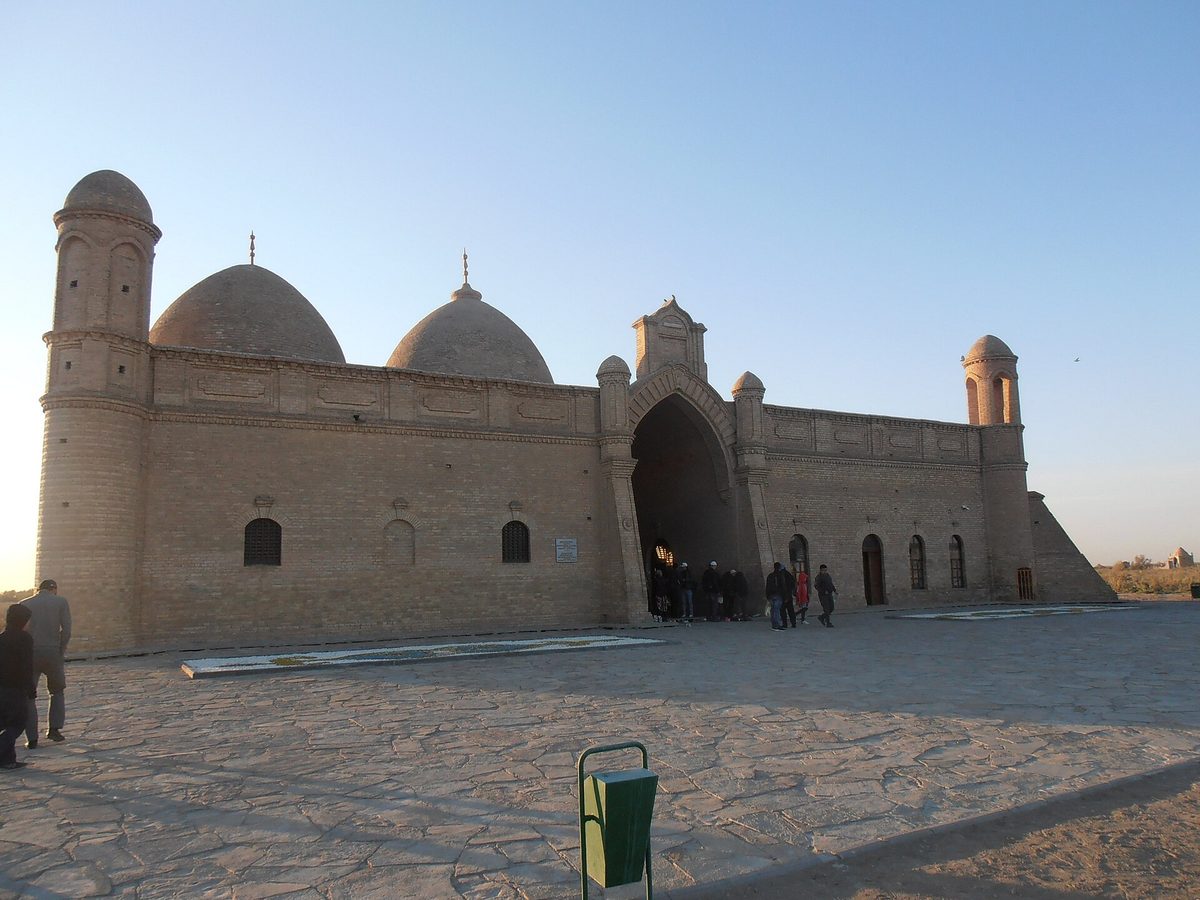
    • The rocky Caspian Sea shoreline at Aktau, the gateway city to Mangystau — Photo: Rassim / CC BY-SA 4.0 via Wikimedia Commons (source)
    • Spherical stone concretions in the Torysh Valley of Balls, Mangystau — Photo: Alexandr Babkin / CC BY-SA 4.0 via Wikimedia Commons (source)
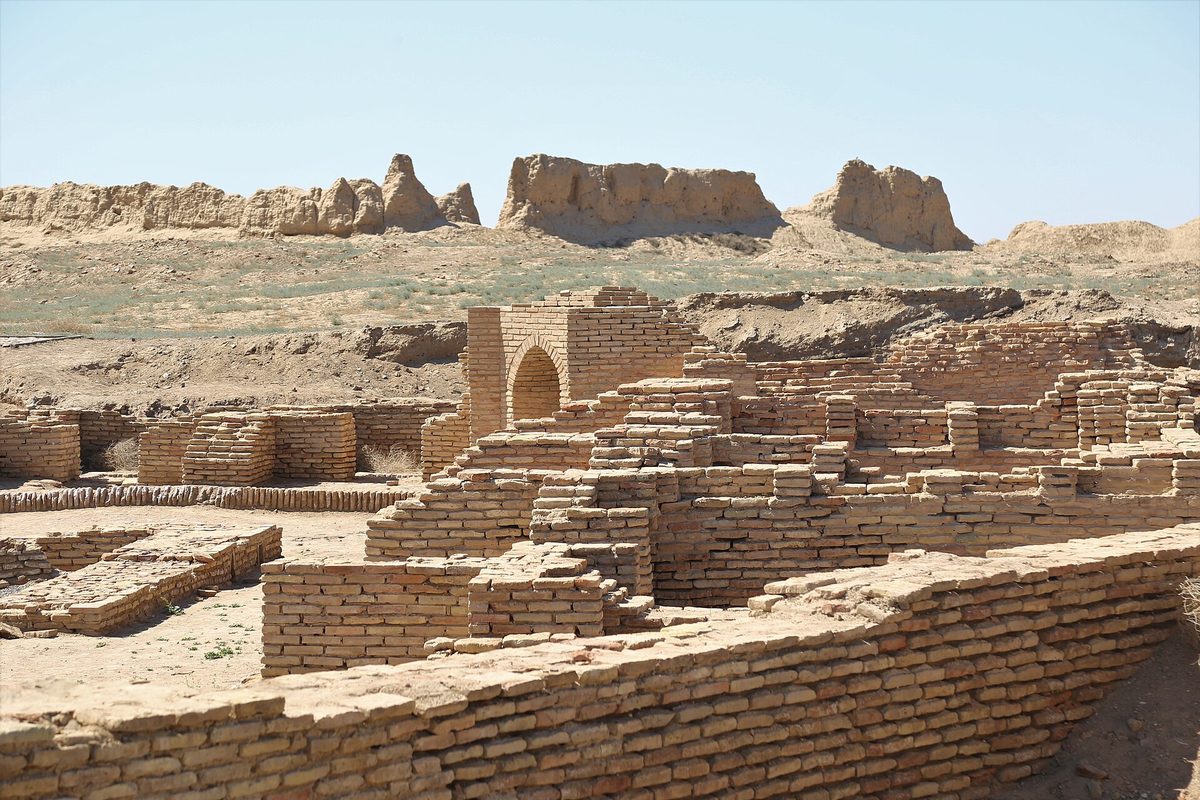
    • The dome of Sherkala mountain rising from the Mangystau steppe — Photo: Berik Aday / CC BY-SA 4.0 via Wikimedia Commons (source)
    • The Beket-Ata underground mosque in the Oglandy gorge, Mangystau — Photo: Yakov Fedorov / CC BY-SA 4.0 via Wikimedia Commons (source)
  • Silk Road Kazakhstan: Turkestan, Shymkent & the South

    Silk Road Kazakhstan: Turkestan, Shymkent & the South

    Say “Silk Road” and most people picture Uzbekistan — Samarkand, Bukhara, those postcard-perfect blue domes. But Silk Road Kazakhstan is the quieter, rawer, less-packaged half of the same story, and after three trips down south I’d argue it’s the more rewarding one to actually travel. You get a UNESCO-listed mausoleum that stops you dead, whole cities that fought Genghis Khan and lost, and almost none of the crowds.

    This is the south: Turkestan, Shymkent, Taraz, and the ghost-cities of Otrar and Sauran scattered across the steppe between them. Here’s everything I’ve learned about visiting, from which ruins are worth the dusty drive to how to get there without renting a car.

    The short answer: what is the Silk Road in southern Kazakhstan?

    Southern Kazakhstan held the main branch of the Silk Road through Central Asia, where caravans crossed between China and Persia. The highlights are Turkestan’s Khoja Ahmed Yasawi Mausoleum (a UNESCO World Heritage Site), the lost cities of Otrar and Sauran, ancient Taraz with its Aisha Bibi tomb, and Shymkent, the modern gateway to all of it.

    You can see the essentials in a long weekend from Shymkent, or string together a proper week-long loop. Below is how the main sites stack up, then a site-by-site guide and the practical planning — getting there, when to go, where to sleep, and what it actually costs.

    The southern Silk Road at a glance

    Place What it is Why go Time needed
    Turkestan Spiritual capital; Yasawi Mausoleum The single greatest monument in Kazakhstan Half to full day
    Arystan Bab Pilgrimage mausoleum near Otrar Atmosphere; the traditional first stop before Yasawi 1 hour
    Otrar (Otyrar) Ruined city that defied Genghis Khan Raw archaeology, almost no tourists 1–2 hours
    Sauran Best-preserved walled city ruins Standing walls on empty steppe — my favourite 1–2 hours
    Shymkent Third-largest city, the southern hub Base, bazaars, food, nightlife 1 day
    Sayram 3,000-year-old town outside Shymkent Yasawi’s birthplace; living pilgrimage site Half day
    Taraz 2,000-year-old Karakhanid capital Aisha Bibi tomb, Akyrtas palace, deep history 1 day
    Aksu-Zhabagly Oldest nature reserve in Central Asia Wild tulips, canyons, a break from ruins 1–2 days

    If you only have time for one thing, make it Turkestan. If you have time for two, add Sauran. Everything else is a bonus that rewards the curious. For where this region fits in a bigger trip, see our guide to the best things to do in Kazakhstan.

    A short history of the Silk Road in Kazakhstan

    The Silk Road was never one road. It was a shifting web of caravan tracks that moved silk, spices, paper, horses and — more importantly — ideas, religions and science between China and the Mediterranean for well over a thousand years. The main Central Asian artery ran straight across southern Kazakhstan: from the Chinese frontier through Sayram, Yassy (today’s Turkestan), Otrar and Taraz, then on toward Bukhara, Persia and Europe.

    These weren’t just truck-stops. Otrar minted its own coins and produced pottery traded for hundreds of miles. Taraz was a royal capital. Sayram was old when Genghis Khan rode through. They were cosmopolitan places where a Sogdian merchant, a Nestorian Christian, a Buddhist monk and a Muslim scholar might share the same caravanserai courtyard. It’s worth remembering that papermaking likely passed from China to the Islamic world after the Battle of Talas in 751 AD, fought near modern Taraz — one of those quiet hinges of history that happened right here.

    Historians usually split the old routes across Kazakhstan into four sections — Semirechye in the southeast, the Syr Darya corridor through the south, the Saryarka steppe, and the Mangyshlak branch toward the Caspian. The cities in this guide sat on the busiest of them, the Syr Darya road, which is exactly why so much survives down here. Several of these settlements are now inscribed, individually and as part of wider corridors, on UNESCO’s Silk Roads World Heritage listings — official recognition of a heritage Kazakhstan is only now learning to show off.

    Two forces shaped what you see today. First, the Mongols: in 1219 Genghis Khan’s army sacked Otrar in a massacre that triggered his entire westward invasion, and the region never fully recovered. Second, the slow death of overland trade as sea routes took over from the 1500s — cities like Sauran simply dried up and were abandoned. What’s left is more ruin than monument, which is exactly why it feels like discovery rather than a queue.

    Turkestan: the spiritual heart of the Kazakh Silk Road

    Turkestan (also spelled Turkistan) is the reason most people come south, and it earns it. Founded around the 4th century as Shavgar, it grew into the spiritual capital of the Turkic world and later the seat where Kazakh khans were crowned. Locals will tell you that three pilgrimages to Turkestan equal one hajj to Mecca — you’ll see that devotion on the faces of the pilgrims who still come from across Central Asia.

    The Mausoleum of Khoja Ahmed Yasawi

    This is it — the building that makes the whole trip worthwhile. Khoja Ahmed Yasawi was a 12th-century Sufi mystic and poet whose teachings converted huge numbers of Turkic nomads to Islam. Two centuries after his death, the conqueror Timur (Tamerlane) ordered a colossal mausoleum built over his grave, between roughly 1389 and 1405. When Timur died, work simply stopped — which is why the main entrance is still raw, unfinished brick with the wooden scaffolding-beams poking out. I find that half-finished façade more moving than any polished one.

    The numbers are staggering up close: a turquoise dome about 38 metres high, the largest brick dome in Central Asia; 35-odd interconnected rooms that doubled as a khanqah (Sufi lodge) and, later, a khans’ palace; and walls of glazed blue tile laid by Persian craftsmen, the same Timurid style that produced Samarkand. Inside sits the Tai Kazan, a two-tonne bronze cauldron cast in 1399 to hold holy water for pilgrims. It became the prototype for everything Timur later built — so in a real sense, Samarkand is Turkestan’s child, not the other way around.

    Practical notes, as of 2026 and worth double-checking on arrival: the grounds are free to wander, while entry into the mausoleum interior costs foreigners around ₸500 (about US$1), and the complex generally opens 9am–6pm. Dress modestly — this is an active shrine, not just a museum. Give yourself at least two hours.

    The unfinished front portal of the Khoja Ahmed Yasawi Mausoleum, Turkestan

    Rabia Sultan Begum, Hilvet and the rest of the complex

    Don’t bolt the moment you’ve photographed the dome. Right beside it stands the smaller Mausoleum of Rabia Sultan Begum, all blue tile and quiet proportion. A short walk away is the half-underground Hilvet Mosque, where Yasawi is said to have retreated to pray in darkness — still used by pilgrims today. There’s a 19th-century Friday Mosque, an old bathhouse, and the Turkestan Historical and Cultural Ethnographic Center, three floors of regional artefacts and costumes worth an hour if the heat is brutal.

    The “new” Turkestan: Keruen-Saray and the tourism makeover

    Here’s where I have to be honest, because the guidebooks gloss over it. Since 2018, when Turkestan became a regional capital, Kazakhstan has poured money into turning it into a flagship destination. The centrepiece is Keruen-Saray, a 20-hectare entertainment complex that opened in 2021 right across from the mausoleum: a mock Silk Road bazaar, hotels, restaurants, an equestrian amphitheatre, and a “flying theatre” ride (free, and genuinely fun) that swoops you over Kazakhstan’s landscapes while a mythical Samruk bird narrates.

    Is it Disneyfied? Absolutely. Some travellers hate the contrast between an 600-year-old shrine and a brand-new mall with musical fountains. But I’ll give the contrarian view: it’s clean, it’s air-conditioned, it gave the town hundreds of jobs, and after a dusty day at the ruins it’s a relief to have a decent coffee and a comfortable bed. Come for the mausoleum; treat Keruen-Saray as the easy, slightly kitschy bonus it is.

    A landscaped promenade in modern Turkestan, rebuilt as a tourism hub

    Arystan Bab and the lost city of Otrar

    About 50–60km southeast of Turkestan, out in flat semi-desert, sit two sites that belong together: the mausoleum of Arystan Bab and the ruins of Otrar. There’s a pilgrimage logic here that’s worth honouring even if you’re not religious — tradition says you visit Arystan Bab first, then Yasawi, because Arystan Bab was Yasawi’s teacher.

    Arystan Bab Mausoleum near Otrar, the traditional first stop for pilgrims

    The legends around Arystan Bab are wonderful. One holds that when Timur tried to build Yasawi’s mausoleum, the walls kept collapsing until Yasawi appeared in a dream and told him to build his teacher’s tomb first. Another claims Arystan Bab lived 400 years in order to deliver a date — yes, the fruit — entrusted to him by the Prophet Muhammad, meant for a saint not yet born. The current building is a 20th-century rebuild, but it hums with pilgrims, and the brackish well water in the courtyard is said to heal. It’s a humble place, and all the better for it.

    Otrar: the city that picked a fight with Genghis Khan

    A few kilometres on lies Otrar (Otyrar), and this is where Silk Road history turns dark. In 1218 the governor of Otrar seized a Mongol trade caravan and executed the merchants as spies. Genghis Khan’s response was the 1219 siege and massacre of Otrar — the spark that lit his devastating invasion of the entire Islamic world. Otrar was also the birthplace, around 870 AD, of Al-Farabi, one of the greatest philosophers of the medieval world, “the Second Teacher” after Aristotle.

    Aerial view of the ruined Silk Road city of Otrar in southern Kazakhstan

    What’s left is a vast, eroded mound — a tobe — where you can walk along excavated streets, peer into the brick footprints of bathhouses with their under-floor heating, and see a restored gate. It takes imagination; this is archaeology, not architecture. But standing on the wall of a city that changed the course of world history, with nothing but steppe wind for company, is a particular kind of thrill. Bring water and sun cover — there’s no shade and no café.

    Sauran: standing walls on an empty steppe

    If I could send you to only one ruin, it would be Sauran, about 40km northwest of Turkestan just off the Kyzylorda road. From the 13th to 16th centuries this was the biggest city in what’s now Kazakhstan, and — crucially — one of the few that survived the Mongols, partly through clever diplomacy rather than walls. The Mongol White Horde even made it a capital.

    Restored gate and mud-brick walls of the lost city of Sauran

    What makes Sauran special is how much survives. You approach across flat nothing and suddenly there are double mud-brick walls rising from the plain, a restored northern gate, and inside the outline of a central street, a mosque and a madrasah. The city was watered by an ingenious kyariz system — underground clay pipes carrying snowmelt from the distant Karatau mountains. When the trade dried up and the water with it, Sauran was abandoned around 1515 and never resettled. You’ll likely have the whole site to yourself. It’s the most atmospheric place in southern Kazakhstan, and almost nobody goes.

    Shymkent: the gateway city

    Sooner or later every southern itinerary runs through Shymkent, Kazakhstan’s third-largest city (around 1.1 million people) and the most practical base for the whole region. It began as an 11th-century caravanserai guarding older Sayram, grew into a Soviet industrial centre, and is now a green, surprisingly likeable city of leafy parks, chaotic bazaars and a real café scene.

    Downtown Shymkent, the gateway city to southern Kazakhstan

    You don’t come to Shymkent for blockbuster monuments — you come to eat, sleep and resupply between ruins. That said, give it an afternoon. Wander the reconstructed Shymkent Citadel and old-town quarter for a quick hit of the city’s Silk Road origins; lose an hour in the Ortalyk (central) bazaar, which is a working market, not a tourist set; and stroll Abay Park or the dendropark when the heat lifts. And eat the samsa — Shymkent’s are the best I’ve had anywhere, flaky and dripping. For more on regional dishes, our guide to Kazakh food covers what to order.

    Sayram: 3,000 years on the edge of the city

    On Shymkent’s eastern outskirts sits Sayram (ancient Ispidzhab), continuously inhabited for some 3,000 years and a living pilgrimage town. This is where Khoja Ahmed Yasawi was born, and you can visit the mausoleums of his parents — Ibrahim-Ata and Karashash-Ana — along with the tomb of Abdel-Aziz Bab and the leaning Hisr (Khizr) minaret. It’s modest and devout, with none of Turkestan’s polish, which is precisely its charm. Half a day, easily reached by local taxi.

    Taraz and the road west: Aisha Bibi, Akyrtas and the Karakhanids

    Three hours east of Shymkent lies Taraz, one of the oldest cities in Kazakhstan — over 2,000 years old, the medieval capital of the Karakhanids, the first dynasty to bring Islam to these steppes. For centuries nobody knew quite how much history lay underneath; then in 2011 archaeologists peeled back the Soviet-era central market and found a buried Silk Road city, 40,000 artefacts and all. Today it’s Kazakhstan’s largest archaeological park. Taraz itself is a workaday city, but its surroundings hold two of the most beautiful sights in the country.

    The Aisha Bibi Mausoleum

    Eighteen kilometres west of Taraz, in a village that now bears her name, stands the Aisha Bibi Mausoleum — an 11th–12th century tomb covered head to toe in carved terracotta tiles, more than 60 different patterns, giving the whole building an almost lace-like delicacy. It’s tied to one of Central Asia’s great love legends: Aisha Bibi, in love against her father’s wishes, travelled to marry the ruler of Taraz and died of a snakebite at the river’s edge before she arrived. Beside her tomb stands the smaller, plainer Babaji Khatun Mausoleum, dedicated to her companion and caretaker, crowned by a rare 16-sided conical dome. Together they’re achingly romantic, and UNESCO-protected.

    The carved terracotta Aisha Bibi Mausoleum near Taraz

    Akyrtas: the palace nobody can explain

    Further out, near a Karakhanid-era site, lie the ruins of Akyrtas — and they’re a genuine mystery. Someone, around the 8th–9th centuries, began an enormous palace of red sandstone blocks, some weighing several tonnes, hauled from kilometres away. Then they stopped. Nobody fully knows who built it, why, or why it was abandoned half-built. Walking among the giant rust-coloured stones, with the layout of a vanished floor plan at your feet, feels like stumbling onto an unfinished sentence from a thousand years ago.

    Red sandstone blocks of the mysterious Akyrtas palace near Taraz

    Taraz also has the restored 10th-century Karakhan Mausoleum in the city centre and the hilltop Tekturmas shrine across the river. It’s a long day-trip from Shymkent, or a logical overnight if you’re heading toward Almaty afterwards — see our Kazakhstan itineraries for how to chain it together.

    Beyond the ruins: Aksu-Zhabagly and the southern wilds

    You can’t live on brick and legend alone, and the south has a spectacular antidote. Aksu-Zhabagly, founded in 1926, is the oldest nature reserve in Central Asia, draped over the western spurs of the Tian Shan a couple of hours from Shymkent. It protects bears, ibex, the rare Greig’s tulip and golden eagles, and is laced with canyons and the Kaskabulak petroglyphs.

    Wild Greig's tulips blooming in Aksu-Zhabagly Nature Reserve

    Time it right and you’ll catch the south’s best-kept secret: in late April and May the slopes turn scarlet with wild tulips. The “Red Hill” near the reserve gets its name from densities of more than 60 wild tulips per square metre — and these are the genetic ancestors of the cultivated Dutch tulip. Homestays in the village of Zhabagly make it easy to base yourself with a local guide. Combine it with neighbouring Sayram-Ugam National Park for more serious hiking. It’s the perfect two-day decompression after the dust of the ruins, and a reminder that Almaty doesn’t have a monopoly on Kazakhstan’s mountains.

    Eating along the southern Silk Road

    Food is its own reason to come south, and it’s where the Silk Road quietly survives in everyday life. The south sits at a crossroads of Kazakh, Uzbek and Uyghur cooking, and the result is some of the best eating in the country — heartier and more spiced than the north.

    Start with samsa: flaky, tandoor-baked pastries stuffed with lamb and onion, and Shymkent’s are legendary — I’ve watched locals queue for the good ones. Then there’s plov (the rice-and-mutton pilaf that’s practically a religion across Central Asia), laghman (hand-pulled noodles in a peppery broth), and shashlik grilled over coals at every bazaar. Don’t skip the bread — the round tandyr nan here is a thing of beauty — or the mountains of dried apricots, melon and nuts piled up in the markets.

    Speaking of which, the bazaars are half the experience. They’re the direct descendants of Silk Road trade, and wandering one — sampling, haggling gently, drinking endless cups of tea pressed on you by stallholders — tells you more about the living culture than any museum. Tea (shai) is the social glue of the south; accept it when offered. For the full menu of what to order across the country, our Kazakh food guide goes deeper.

    Getting to southern Kazakhstan and around

    The good news: getting here is far easier than it was even five years ago. The not-so-good news: once you’re here, the ruins are scattered and public transport to them is thin, so you’ll want a plan.

    Getting to the region

    Most people arrive by air or rail into either Shymkent or Turkestan. Turkestan got a shiny new airport (Hazret Sultan International) in 2021, and there are direct flights from Almaty taking under two hours, plus seasonal international links. From Astana and Almaty you can also take the train — the fast Talgo services are comfortable and a genuinely scenic way to cross the steppe, though the overnight Almaty–Turkestan haul runs long. For the full breakdown of rail classes and booking, see our guide to getting around Kazakhstan.

    Route Best option Time Rough cost (2026)
    Almaty → Turkestan Flight ~1h 45m $40–120 one way
    Almaty → Shymkent/Turkestan Talgo / overnight train 12–20h ₸6,000–20,000 ($12–40)
    Shymkent → Turkestan Train or bus 2–3h ₸1,500–2,500 ($3–5)
    Shymkent → Taraz Shared taxi / bus ~3h ₸3,000–5,000 ($6–10)
    Turkestan → Tashkent (Uzbekistan) International train ~5–6h varies; needs Uzbek visa

    Reaching the ruins

    This is the catch. There’s no public transport to Otrar, Arystan Bab or Sauran — they’re out in the countryside. Your options are a hired car, a taxi for the half-day (negotiate a round trip with waiting time), or a private guided tour. I’ve done it both ways, and for the outlying sites I’d genuinely recommend a local driver-guide: they know the unmarked turn-offs, the opening quirks, and the stories the bare ruins don’t tell you. A full day with a driver out of Shymkent or Turkestan runs roughly $80–150 depending on distance and your bargaining. Within the cities, the Yandex Go app gives you cheap, honest taxi fares and saves a lot of haggling.

    If you’d rather not drive at all, base yourself in Turkestan, do the mausoleum on foot, and take one organised half-day out to Arystan Bab and Otrar. That alone is a satisfying trip. Before you go, it’s worth checking entry formalities in our Kazakhstan visa guide — many nationalities now get visa-free entry, which makes a spontaneous southern detour easy.

    Silk Road Kazakhstan itineraries: 3, 5 and 7 days

    How long do you need? Honestly, three days covers the headline sights, five lets you slow down, and a week lets you fold in the nature and Taraz without rushing. Here’s how I’d structure each.

    Trip length Route Best for
    3 days Shymkent → Turkestan (mausoleum + Keruen-Saray) → Arystan Bab + Otrar → back First-timers, long weekends
    5 days Above + Sauran + Sayram + a full Shymkent day The sweet spot
    7 days Above + Taraz (Aisha Bibi, Akyrtas) + Aksu-Zhabagly tulips/hiking History buffs and nature lovers

    The classic 3-day loop: Fly into Turkestan, spend day one at the mausoleum complex and Keruen-Saray. Day two, hire a driver for Arystan Bab and Otrar. Day three, train down to Shymkent, eat well, fly out. The 5-day version adds Sauran (easy half-day from Turkestan) and Sayram (half-day from Shymkent). The full week tacks on a Taraz overnight and two days unwinding in Aksu-Zhabagly — ideally in tulip season. From Taraz you’re well placed to continue east to Almaty and the mountains, turning this into a grand south-to-east traverse of the country.

    When to visit southern Kazakhstan

    The south is the hottest, driest corner of Kazakhstan, and timing matters more than people expect. Spring (April–May) and autumn (September–October) are ideal: warm days, cool nights, and in spring the bonus of wild tulips and green steppe. I’d pick late April if I had to choose one window in the year.

    Summer (June–August) is brutal — Shymkent and Turkestan regularly top 35–40°C, and shadeless ruins like Otrar become an endurance test. If you must come in summer, start at dawn and hide indoors at midday. Winter (November–March) is cold and quiet but has its own austere beauty, and the mausoleum looks magnificent under a dusting of snow; just know that some rural sites are bleak and homestays may be shut. For a country-wide month-by-month breakdown, see our guide to the best time to visit Kazakhstan, and if snow is your thing, our Kazakhstan in winter guide.

    Where to stay

    You’ve got two logical bases, and which you choose shapes the trip. Shymkent has the widest range of hotels, the best food and the easiest onward transport — it’s the practical HQ. Turkestan puts you walking distance from the mausoleum, which is magical at dawn and dusk before the day-trippers arrive, and its hotel stock has exploded with the tourism push.

    Budget Shymkent Turkestan Rough nightly rate
    Budget Hostels & guesthouses Turkistan Gallery-style hostels ₸6,000–12,000 ($12–25)
    Mid-range Central business hotels Karavansaray-themed hotels ₸20,000–40,000 ($40–80)
    Top end Rixos Khadisha Hampton by Hilton Turkistan ₸50,000+ ($100+)

    My move: one or two nights in Turkestan to bookend sunrise and sunset at the shrine, then the rest in Shymkent. For a wider look at accommodation styles across the country, including yurt stays, see where to stay in Kazakhstan.

    What a southern Silk Road trip costs

    Southern Kazakhstan is excellent value — cheaper than Almaty, and a fraction of what the same history costs in over-touristed neighbours. Here’s a realistic per-person daily budget (excluding the flight in), at roughly ₸490 to the US dollar in mid-2026.

    Style Daily budget (per person) What it looks like
    Backpacker ₸12,000–18,000 ($25–37) Hostels, buses/trains, bazaar food, self-guided
    Mid-range ₸30,000–55,000 ($60–110) Decent hotel, the odd private driver, restaurant meals
    Comfort ₸70,000+ ($140+) Top hotels, private guide-driver daily, flights between cities

    The big swing factor is transport to the ruins: split a driver between two to four people and the cost-per-head drops fast. Entry fees are trivial (a dollar here and there), and a feast of samsa, plov and tea rarely tops a few dollars. For a full national breakdown, see our Kazakhstan trip cost guide.

    Is it worth it? Kazakhstan vs Uzbekistan’s Silk Road

    I get asked this constantly, so let me be direct. If you want concentrated, dazzling, beautifully restored Silk Road architecture, Uzbekistan wins — Samarkand and Bukhara are in a league of their own, and nobody should pretend otherwise. Kazakhstan has exactly one monument in that class: the Yasawi Mausoleum.

    But that framing misses the point. Kazakhstan’s Silk Road is about space, rawness and solitude. Where Uzbekistan gives you polished ensembles and tour groups, Kazakhstan gives you a 600-year-old shrine you can have nearly to yourself at sunrise, ruined cities with no ticket booth, and the genuine sense of stumbling onto forgotten history. They’re complementary, not competing — and the international train from Turkestan to Tashkent means you can, and arguably should, do both. If your taste runs to atmosphere over perfection, the south of Kazakhstan will stay with you longer. And it pairs beautifully with the country’s other faces, from the canyons near Almaty to the steppe.

    Frequently asked questions

    How many days do you need for the Silk Road in southern Kazakhstan?

    Three days covers the essentials — Turkestan’s mausoleum, Arystan Bab and Otrar — based out of Turkestan or Shymkent. Five days is the sweet spot, adding Sauran, Sayram and a proper Shymkent day. A week lets you fold in Taraz and the Aksu-Zhabagly nature reserve without rushing between sites.

    Is southern Kazakhstan safe for tourists?

    Yes. The south is welcoming and low-crime, and locals are often delighted to see foreign visitors at their shrines. Normal precautions apply — watch your belongings in busy bazaars, use the Yandex Go app for taxis, and dress modestly at religious sites. For a fuller picture, see our guide on whether Kazakhstan is safe.

    Do I need a guide to visit the Silk Road cities?

    For Turkestan itself, no — it’s walkable and well-signed. For the outlying ruins of Otrar, Arystan Bab and Sauran, a driver or guide is strongly recommended because there’s no public transport and the sites are unmarked. A local guide also brings the bare ruins to life with the legends and history you’d otherwise miss.

    How do I get from Almaty to Turkestan?

    The fastest way is a direct flight (under two hours) into Turkestan’s Hazret Sultan International Airport. Alternatively, the train is scenic and cheap but long — anywhere from 12 hours on a fast service to around 20 on an overnight. Many travellers fly one way and take the train the other.

    Is the Khoja Ahmed Yasawi Mausoleum worth visiting?

    Absolutely — it’s the finest building in Kazakhstan and a UNESCO World Heritage Site, the prototype for the great Timurid monuments of Samarkand. Even if you see nothing else in the south, the mausoleum alone justifies the trip. Go early or late to beat the tour buses and catch the dome glowing in soft light.

    What’s the best time of year to go?

    Late April to May and September to October offer warm, comfortable weather. Spring has the added magic of wild tulips in Aksu-Zhabagly. Avoid high summer, when temperatures at the shadeless ruins can exceed 40°C.

    Practical tips for visiting the Silk Road sites

    A few hard-won pointers that will make the southern circuit smoother — most of these I learned by getting them slightly wrong the first time.

    • Carry cash. Cities take cards, but rural sites, village taxis, market stalls and small homestays often don’t. Keep small tenge notes for entry fees and drivers.
    • Dress modestly at shrines. Turkestan, Arystan Bab and Sayram are active pilgrimage sites. Shoulders and knees covered; women may want a light scarf. Step quietly around people who are praying — and always ask before photographing them.
    • Beat the heat and the crowds. At the ruins there’s no shade — go early morning or late afternoon, carry more water than you think you need, and use sun cover. Bonus: the light is gorgeous at the edges of the day, and tour buses arrive mid-morning.
    • Pre-book trains in spring and autumn. The popular Shymkent–Turkestan and Almaty services fill up in peak season. Book on the national railway site or app a few days ahead.
    • Hire a driver for the outlying ruins. Otrar, Arystan Bab and Sauran have no public transport. Agree a round-trip price with waiting time up front, or join a half-day tour.
    • Learn three words. “Rahmet” (thank you), “salem” (hello) and a smile open doors everywhere in the south. English is limited; Russian and Kazakh rule.
    • Mind Friday prayers and Ramadan. Shrines are busiest on Fridays and during religious holidays — atmospheric, but plan around the crowds if you want quiet photos.

    None of this is complicated, and the warmth of southern hospitality more than makes up for the rough edges. People here are genuinely pleased you came.

    Final thoughts

    The southern Silk Road is the Kazakhstan that took me most by surprise. I came for one famous dome and left thinking about empty walls at Sauran, a snakebite love story near Taraz, and a half-finished palace nobody can explain. It asks a little more of you than Uzbekistan’s headline cities — a driver here, a hot afternoon there — but it gives back something rarer: the feeling that you’ve found the Silk Road rather than queued for it. Build it into a bigger loop with our wider Kazakhstan travel guide, give the ruins the time they deserve, and go before the rest of the world catches on.

    Photo credits

    All images are used under their respective Creative Commons licences. Thank you to the photographers who share their work:

    • Khoja Ahmed Yasawi Mausoleum in Turkestan, the icon of Silk Road Kazakhstan. Photo by Adam Harangozó, licensed under CC BY-SA 4.0, via Wikimedia Commons.
    • The unfinished front portal of the Khoja Ahmed Yasawi Mausoleum, Turkestan. Photo by Petar Milošević, licensed under CC BY-SA 4.0, via Wikimedia Commons.
    • Arystan Bab Mausoleum near Otrar, the traditional first stop for pilgrims. Photo by Дмитрий Кошелев, licensed under CC BY-SA 4.0, via Wikimedia Commons.
    • Aerial view of the ruined Silk Road city of Otrar in southern Kazakhstan. Photo by Mikhail Gurulev (Михаил Гурулев), licensed under CC BY 4.0, via Wikimedia Commons.
    • Restored gate and mud-brick walls of the lost city of Sauran. Photo by Yakov Fedorov, licensed under CC BY-SA 4.0, via Wikimedia Commons.
    • Downtown Shymkent, the gateway city to southern Kazakhstan. Photo by Rassim, licensed under CC BY-SA 3.0, via Wikimedia Commons.
    • The carved terracotta Aisha Bibi Mausoleum near Taraz. Photo by Дмитрий Кошелев, licensed under CC BY-SA 4.0, via Wikimedia Commons.
    • Red sandstone blocks of the mysterious Akyrtas palace near Taraz. Photo by Yakov Fedorov, licensed under CC BY-SA 4.0, via Wikimedia Commons.
    • A landscaped promenade in modern Turkestan, rebuilt as a tourism hub. Photo by Adam Harangozó, licensed under CC BY-SA 4.0, via Wikimedia Commons.
    • Wild Greig’s tulips blooming in Aksu-Zhabagly Nature Reserve. Photo by V.A. Kovshar., licensed under CC BY-SA 4.0, via Wikimedia Commons.

    Sources and further reading


    Last updated: June 2026.

    About the author: Written by the Kazakhstan Tourism editorial team — travellers who have explored the country’s south on multiple trips, from the dawn light at the Yasawi Mausoleum to the empty walls of Sauran. We update our guides as routes, prices and openings change. Found something out of date? Tell us and we’ll fix it.

  • Where to Stay in Kazakhstan: Areas, Hotels & Yurts

    Where to Stay in Kazakhstan: Areas, Hotels & Yurts

    The first time I went to Kazakhstan I booked a hotel because it had a swimming pool. It looked great in the photos. It was also a 40-minute taxi ride from anything I actually wanted to see in Almaty, on a six-lane road with no pavement, and I spent the whole trip feeling like I was commuting to my own holiday. I have made every accommodation mistake this country has to offer so that, ideally, you do not have to.

    So here is the short version. Deciding where to stay in Kazakhstan comes down to picking the right city first and the right neighborhood second: base yourself in central Almaty for mountains, food and first-time ease, in Astana’s left bank for the futuristic capital, and add a yurt camp, a Caspian beach hotel in Aktau or a lakeside lodge in Burabay when you head out to the regions. Hotels, guesthouses, hostels and yurts are all easy to book.

    This guide is the one I wish I’d had: a proper, opinionated breakdown of every kind of accommodation in Kazakhstan, which neighborhoods are worth your money in each city, real nightly prices in tenge and dollars, the registration rule that confuses everyone, and the booking quirks that will save you a chunk of cash. I’ve stayed in marble five-stars, Soviet-era guesthouses with floral wallpaper, a hostel above a vape shop and a wood-stove yurt at 2,000 metres, and I’ll tell you honestly which were worth it.

    Where to stay in Kazakhstan at a glance

    Kazakhstan is the ninth-biggest country on Earth, so “where to stay” really means “where to base yourself for each leg of the trip.” Most itineraries are city-hopping affairs stitched together by flights and trains, and you’ll change accommodation several times. Here’s the lay of the land before we go deep.

    Base Best for Typical nightly price (mid-range double) Stay how long
    Almaty First-timers, mountains, food, nightlife ₸25,000–45,000 ($50–90) 3–5 nights
    Astana Futuristic architecture, business, EXPO sights ₸22,000–40,000 ($45–80) 1–2 nights
    Shymkent The warm south, springboard to Turkistan ₸18,000–35,000 ($37–70) 1–2 nights
    Turkistan The Silk Road mausoleum, pilgrims and history ₸20,000–40,000 ($40–80) 1 night
    Aktau Caspian beaches and the Mangystau deserts ₸20,000–40,000 ($40–80) 2–3 nights
    Burabay (Borovoe) Lakes and pine forest near Astana ₸25,000–60,000 ($50–120) 1–2 nights
    Saty / Kolsai Mountain lakes, guesthouses and yurts ₸12,000–30,000 ($25–60) 1–2 nights

    If you only read one line, read this one: for a first trip, sleep in central Almaty and treat everywhere else as a side quest. The country’s best things to do in Kazakhstan radiate out from there, and the city itself is the most forgiving place to land.

    Where to stay in Kazakhstan: the Almaty city skyline beneath the snow-capped Tian Shan mountains

    How booking accommodation in Kazakhstan actually works

    Before we get into neighborhoods, you need to understand a few things about how the system works here, because it’s not quite like Western Europe and it’s not quite like the rest of Central Asia either. Get these right and the rest of the trip is smooth.

    The registration rule, explained without the panic

    This is the single most-Googled accommodation question about the country, and most of what’s written online is years out of date, so let me be precise. As of the rules in force in 2026, if you’re a tourist staying 30 days or fewer, you do not need to personally register with the migration police. Full stop. What does have to happen is that your host — the hotel, hostel or apartment owner — notifies the migration service of your arrival within three working days. In any normal hotel or hostel this is invisible: the receptionist scans your passport at check-in and the paperwork happens in the back office. You never think about it.

    The one place it bites is private rentals. If you book an apartment through Airbnb or a local host and they don’t file that notification, you’re the one with an awkward conversation at the airport on the way out. So when I book an apartment, I send the host one message: “Can you confirm you’ll register my stay (миграционный учёт)?” If they say yes, relax. If they’re vague, I book a hotel instead. It costs nothing to ask and it removes the only real bureaucratic risk of the trip. For the full picture on entry rules, our Kazakhstan visa and entry guide walks through visa-free stays and the e-visa.

    Where to actually book — and the local-price hack

    Booking.com works in Kazakhstan and is what most foreign travelers use; it has the widest inventory of hotels and a good share of guesthouses. Airbnb is active in Almaty and Astana especially, and serviced-apartment listings there are genuinely good value. But here’s the hack the guidebooks skip: a big slice of local guesthouses, mini-hotels and apartments are listed only on 2GIS (the local maps-and-business app that every Kazakh has on their phone) and on Russian-language sites, and they’re often 20–30% cheaper than the same room on an international platform — because they’re not paying a 15% commission. The catch is they usually want cash in tenge and the listing is in Russian. If you have a few words of Russian or a translation app and you’re staying somewhere a while, it’s worth the effort. For a hotel I want guaranteed and confirmed in English, I just use Booking.

    Two practical money notes. First, most established hotels take cards, but plenty of guesthouses, yurt camps and family-run places are cash-only, so never arrive in a small town with an empty wallet — and read our Kazakhstan trip cost breakdown for how far the tenge actually stretches. Second, the exchange rate sits around ₸490 to the US dollar in mid-2026, which is the rate I’ve used for every conversion in this guide; check the day’s rate, but it’s a useful anchor.

    When prices spike (and when they crater)

    Accommodation here is seasonal in a way that can double your bill if you’re careless. The cheapest months are deep winter, roughly February and March, when a national average room dips toward $39 a night and city hotels are practically giving rooms away. Peak season is May through September, and a summer weekend can push that same average over $80. The specific traps: Burabay and any lake resort on a summer weekend, when Astana empties out to the water and prices and availability go haywire; Aktau in July and August, when it becomes Kazakhstan’s beach holiday and the good Caspian hotels sell out; and ski-season Almaty, when Shymbulak-adjacent stays climb. If your dates are flexible, our month-by-month best time to visit Kazakhstan guide lines up nicely with where the accommodation bargains are.

    The types of accommodation you’ll find in Kazakhstan

    You have more choice here than people expect, and the gap between the cheapest and the most expensive bed is enormous. Here’s every category you’ll actually encounter, what it costs, and the honest case for and against each.

    International and local city hotels

    The big cities — Almaty, Astana, Shymkent, Aktau and increasingly Turkistan — have everything from Ritz-Carltons and Rixos resorts down to cheerful three-star business hotels. The international chains (Hilton, Marriott, Accor’s Novotel and Ibis, InterContinental, Wyndham) deliver exactly what you’d expect anywhere: reliable, English-speaking, card-friendly, often with the best breakfast in town. A four-star double averages around ₸26,000 ($53) and a five-star around ₸38,000 ($78), though the genuine luxury places run far higher. Local independent hotels are where it gets interesting — a well-run Kazakh three-star can be spotless, warmly staffed and half the price of a chain, and some of my favorite stays have been family-owned places with no English website at all.

    Guesthouses and B&Bs

    Guesthouses (often called “гостевой дом”) are the backbone of travel outside the big cities, and in mountain villages like Saty they’re basically the only option. Expect a room in a family home or a purpose-built annex, a shared or private bathroom, a home-cooked breakfast and, frequently, an offer of dinner that you should absolutely accept. Prices run ₸12,000–20,000 ($25–40) for a double. The atmosphere is the draw — I’ve learned more about Kazakh life over a guesthouse breakfast table than in any museum — but standards vary wildly and the best ones in popular spots book out, so reserve ahead in summer.

    Hostels

    Almaty and Astana have a genuinely good hostel scene, and you’ll find one or two in Shymkent, Aktau, Karaganda and other regional cities. A dorm bed starts around ₸5,000 ($10) and a private room in a hostel often beats a budget hotel for both price and atmosphere. They’re the easiest place to meet other travelers and to find people to split a 4×4 day-trip with — half the Mangystau and Kolsai expeditions I’ve joined were cobbled together in a hostel kitchen. The trade-off is the usual one: thin walls, variable cleanliness, and a few “hostels” that are really just subdivided apartments.

    Serviced apartments and Airbnb

    For anything longer than two nights, especially in Almaty and Astana, I lean toward apartments. Soviet-era cities were built with generously sized flats, many have been renovated to a high standard, and you get a kitchen, a washing machine and a local neighborhood for less than a hotel room — often ₸18,000–35,000 ($37–70) a night for a central one-bedroom. Just remember the registration conversation from earlier: confirm the host files your migration notification. Beyond Airbnb, local sites and 2GIS list apartments “посуточно” (by the day) that are cheaper still if you can navigate them.

    Yurt camps and glamping

    This is the one that everyone wants and the one I most want you to do — at least one night. A yurt (киіз үй) is the felt-and-lattice round tent that nomadic Kazakhs lived in for centuries, and staying in one near Kolsai, in Altyn-Emel or out on the Assy Plateau is the single most memorable night you can book in this country. The modern ones are surprisingly comfortable: raised platforms, real beds, wood stoves, and at the better camps heated floors and an attached bathroom. A typical organized yurt experience runs ₸40,000–75,000 ($80–150) for one night with meals and an activity like horse-riding or an eagle-hunting demonstration thrown in. It is not a way to save money — it’s an experience you pay for — and it’s worth every tenge. More on exactly where to do it below.

    Mountain resorts, lake lodges and sanatoriums

    Two more categories worth knowing. Resorts cluster where Kazakhs holiday — the pine forests and lakes of Burabay, the ski slopes above Almaty — and range from slick (Rixos) to charmingly dated. Then there are sanatoriums, a wonderfully Soviet institution: part hotel, part wellness retreat, often by a lake or a mineral spring, where you can book a room and a week of slightly mysterious “treatments.” They’re cheap, they’re an experience, and they’re full of Kazakh families doing exactly what their grandparents did. You won’t find them on Booking; you find them through local sites or a travel agent.

    Type Price/night (double or dorm) Where you’ll find it Best for
    5-star hotel ₸60,000–130,000+ ($120–260+) Almaty, Astana, Turkistan Luxury, business, treat nights
    3–4 star hotel ₸20,000–45,000 ($40–90) All cities Comfort and reliability
    Serviced apartment ₸18,000–35,000 ($37–70) Almaty, Astana Stays of 3+ nights
    Guesthouse / B&B ₸12,000–20,000 ($25–40) Villages, small towns Local life, mountains
    Hostel dorm ₸5,000–9,000 ($10–18) Big and regional cities Budget, meeting people
    Yurt camp (with meals) ₸40,000–75,000 ($80–150) Kolsai, Altyn-Emel, steppe The bucket-list night

    Where to stay in Almaty

    Almaty is the right base for most first trips, and it’s the city I know best. It’s leafy, walkable in its core, ringed by mountains and packed with the country’s best cafés and restaurants. But it’s also a sprawling, traffic-clogged place where the wrong address can cost you an hour a day, so the neighborhood matters more here than anywhere else in Kazakhstan. There’s a fuller picture in our guide to the best things to do in Almaty; here’s strictly where to put your head down.

    The historic centre and the “Golden Quarter” — best for first-timers

    If it’s your first time, stay in the central rectangle roughly bounded by Abay, Zheltoksan, Gogol and Nauryzbai Batyr — locals call the smartest part of it the “Golden Quarter,” around the Opera House and Panfilov Park. This is the most pedestrian-friendly, café-dense, tree-shaded part of the city, and you can walk to Zenkov Cathedral, the Green Bazaar, Republic Square and a dozen good restaurants. You’re on the metro line, which is clean and fast, and you’re well placed for day trips from Almaty out to the canyon and the lakes. This is where I tell every first-timer to stay, full stop. Mid-range hotels and the best serviced apartments cluster here.

    Samal and Esentai — upmarket and polished

    South of the centre, around the Esentai Mall and the Samal microdistricts, is Almaty’s glossiest quarter: the Ritz-Carlton sits atop the Esentai Tower here, with the city’s best mall, smart restaurants and a slightly more corporate feel. It’s a great base if you want luxury and don’t mind being a short taxi from the historic core. The higher elevation also means marginally cleaner air, which matters in winter when Almaty’s smog settles in the low centre.

    Medeu and the mountain road — for nature lovers

    Head up toward the Medeu skating rink and the Shymbulak ski resort and you trade city convenience for mountain immediacy. Staying up here, half in the Ile-Alatau National Park, means waking up to peaks and being first on the slopes or trails — wonderful if that’s your priority and you’ve got a car or don’t mind taxis. It’s the most expensive area and the least practical for sightseeing, so I’d save it for a ski trip or a couple of nights at the end. It comes into its own in the cold months; see our Kazakhstan in winter guide for the ski logistics.

    Bostandyk and Auezov — quieter and better value

    West and southwest of the centre, districts like Bostandyk and Auezov are where you find modern apartment towers, green space and noticeably lower prices. You’re 15–25 minutes from the action by taxi or metro, the air is a touch better up the hill, and your money goes further. I’ll happily stay out here on a longer, slower visit when I’ve got an apartment and I’m not trying to tick off sights every day. For a first short trip, though, the time lost in traffic isn’t worth the saving.

    My Almaty picks by budget

    To make it concrete, here’s where I actually book. Luxury: the Ritz-Carlton at Esentai for the view and the service, or Rixos Almaty and the InterContinental for reliable five-star comfort closer to the centre. Mid-range: Novotel Almaty City Center is my default — central, dependable, good breakfast — with Ibis Almaty a half-step down in price and just as well located. Budget: the city’s hostels are excellent value, with long-running spots like Hostel Nomad offering clean dorms and the kind of front desk that helps you book a Charyn trip. Browse everything in this silo on our where to stay hub and the Almaty section.

    The golden Emerald Towers and Ak Orda Presidential Palace in central Astana

    Where to stay in Astana

    Astana is a different animal: a planned capital of glass towers, wide boulevards and Norman Foster landmarks rising out of the flat steppe, much of it built in the last 25 years. It’s spectacular and a little surreal, and you typically need only a night or two to see it — read up on the things to do in Astana before you decide how long. The city splits neatly into two halves across the Ishim (Yesil) River, and which side you stay on changes the trip.

    The left bank (Yesil district) — the showpiece capital

    The left bank is the new, monumental Astana: Bayterek Tower, the Khan Shatyr tent-mall, the national museum, the government district and most of the four- and five-star hotels. Stay here and you can walk among the landmarks that you came to see, with the big international hotels — the Ritz-Carlton (from around ₸125,000/$254 a night), St. Regis, Hilton and Hilton Garden Inn — clustered within reach of Bayterek. It’s polished and convenient for sightseeing, if a little sterile and quiet after dark. This is where I stay in Astana, because the whole point of the city is those showpiece buildings and here you’re inside the postcard.

    The right bank — older, cheaper, more lived-in

    Across the river is the original city: Soviet-era blocks, the railway station, leafier streets and a more ordinary, human-scaled Astana where actual people live and eat. Hotels and apartments here are noticeably cheaper, the restaurants are less touristy, and you’re closer to the train station if you’re arriving or leaving by rail — which, given the distances, you well might; see getting around Kazakhstan for the train-versus-plane maths. The trade-off is a 10–15 minute taxi to the landmarks. For budget travelers and longer stays, it’s the smart side of the river.

    My Astana picks by budget

    Luxury: the Ritz-Carlton and St. Regis are the trophy stays, both left-bank and both excellent. Mid-range: Hilton Garden Inn, Best Western Plus Astana (around ₸43,000/$88) and the Diplomat Hotel (around ₸45,000/$91) all deliver reliable comfort near the sights. Budget: the Hampton by Hilton at the Triumphal Arch is a steal for the brand and location, and small places like Inn OZZ cover the cheap end. Astana’s accommodation runs slightly cheaper than Almaty’s for equivalent quality, which is a nice consolation for the weather. Everything’s gathered in our Astana section.

    Where to stay in Shymkent and Turkistan (the warm south)

    Down in the south, near the Uzbek border, the climate softens, the food gets better and the history gets deeper. Most people pair these two: Shymkent as the modern base, Turkistan as the Silk Road day-trip or overnight.

    Shymkent

    Kazakhstan’s third city is a sprawling, lively, distinctly Central Asian place that most travelers use as a launch pad. The accommodation is solid mid-range: the DoubleTree by Hilton is the safe international choice, Rixos Khadisha Shymkent brings a bit of polish, and local options like the Aidana Plaza cover the cheaper end well. Stay central, near the Independence Park and the Ordabasy area, and you’re walking distance from the bazaars and the best plov in the country. A night or two is plenty before you push on to Turkistan.

    Turkistan

    Turkistan has transformed. The town around the magnificent Mausoleum of Khoja Ahmed Yasawi — a UNESCO Silk Road monument and Kazakhstan’s most important pilgrimage site — has been rebuilt as a tourism showpiece, complete with a new “Karavansaray” complex and a clutch of brand-new hotels. The Hampton by Hilton is the smart pick: modern, clean, and a short walk from the mausoleum so you can be there at dawn before the tour buses. Rixos Turkistan covers the upper end, and family hotels like the Karavansaray cover the middle. One night is enough to see the mausoleum properly at golden hour and again early the next morning.

    Where to stay in Aktau and Mangystau (the Caspian west)

    Out west on the Caspian Sea, Aktau is the gateway to Mangystau — the otherworldly chalk canyons, underground mosques and Martian valleys that have become Kazakhstan’s fastest-rising bucket-list region. Aktau itself is an oddity: a Soviet-planned city with no street names, only numbered microdistricts, built on the edge of a sea-that-is-really-a-lake. You stay here for two reasons: the beaches in summer, and as the launch point for multi-day 4×4 expeditions into the desert.

    Base yourself near the seafront promenade for the sunsets and the restaurants. The Rixos Water World Aktau is the resort-style anchor with pools and beach access, and there’s a healthy range of mid-range hotels and apartments across the central microdistricts. Crucially, Mangystau has almost no accommodation out in the desert itself — you sleep in tents or the occasional yurt on an organized tour — so Aktau is where your real bed is at the start and end of the trip. Book ahead hard for July and August, when domestic beach tourism fills the city. A relaxed two or three nights, bookended around a desert expedition, is the usual rhythm.

    A traditional Kazakh yurt with decorated felt doors in the Aktobe Region steppe

    Yurt stays and sleeping on the steppe

    If you do one thing differently because of this guide, make it a yurt night. It’s the most authentically Kazakh way to sleep, it puts you under some of the darkest skies you’ll ever see, and the modern camps have quietly become very comfortable. Here’s where to actually do it.

    Saty, for the Kolsai and Kaindy lakes

    The village of Saty, four hours east of Almaty, is the gateway to the Kolsai Lakes and the sunken-forest lake of Kaindy, and it’s the easiest yurt night to fold into a trip. Several camps near the lakes now run proper yurts on raised platforms with warm floors and modern bathrooms — Kolsai Yurt Camp is the well-known one — and the village itself is full of family guesthouses like the long-running Alatau if you’d rather a bed indoors. Prices are gentle by Kazakh standards, ₸12,000–30,000 ($25–60) for guesthouses, more for the full yurt-with-meals package. It’s a brilliant base for the lakes and an easy add-on to a Charyn Canyon run; the logistics are in our day trips from Almaty guide.

    Altyn-Emel and the Basshi steppe

    Altyn-Emel National Park — home of the Singing Dune and the rainbow-striped Aktau mountains (not to be confused with the Caspian city) — has yurt camps out at Basshi on the edge of the steppe. The Caravansarai campsite there runs authentic Kazakh yurts with good showers, clean bedding and proper home cooking, surrounded by nothing but grassland and the Dzhungarian mountains on the horizon. This is the real deal: vast, silent and dark. You’ll want a tour or a car to reach it, and a night here is a highlight of any eastern loop.

    The Assy Plateau and closer-to-Almaty options

    If you’re short on time, seasonal yurt and ger camps appear in summer on the Assy Plateau and at other spots within day-trip range of Almaty, sometimes bundled with eagle-hunting demonstrations and horse-riding. They’re less remote than Altyn-Emel but they still deliver that high-steppe, big-sky feeling, and you can be back in the city the next afternoon. Quality varies, so book through a reputable operator and check whether the price includes meals and transfers.

    Lake Borovoe and forested hills in Burabay National Park, northern Kazakhstan

    Where to stay in Burabay (Borovoe) — the lake country

    About 260 kilometres north of Astana, Burabay — known to everyone by its lake, Borovoe — is where the steppe suddenly erupts into pine forest, granite outcrops and clear lakes. It’s the most popular domestic holiday spot in northern Kazakhstan and an easy overnight from the capital. The resort area spreads across three bases: Burabay village itself (most central, walkable, lined with guesthouses and the chain hotels along Kenesary Street), Katarkol and Shchuchinsk (quieter, better for swimming and relaxing).

    Accommodation runs the full range, and prices climb fast with the star rating: three-star hotels average around ₸29,000 ($59), four-stars jump to ₸87,000 ($177), and the five-star Rixos Borovoe — set on Lake Shchuchye among the pines — sits near ₸154,000 ($314) a night. In between, places like the Wyndham Garden Burabay and lakeside boutique hotels cover the mid-to-upper range, and there are plenty of guesthouses and vacation rentals with kitchens for families. My one firm warning: avoid summer weekends if you possibly can. Astana decamps here en masse from Friday, prices spike and the good rooms vanish. Come midweek, or in the gold-and-russet shoulder of September, and it’s blissful.

    How much should you budget per night?

    Accommodation will be one of your two biggest costs in Kazakhstan (transport is the other, given the distances). Here’s how the three tiers shake out per night for a couple, and what each one actually buys you. Pair this with our full Kazakhstan trip cost guide to build a realistic daily budget.

    Budget tier Per night (double) What you get
    Backpacker ₸5,000–15,000 ($10–30) Hostel dorms, basic guesthouses, cash-only village rooms. Plenty of character.
    Mid-range ₸20,000–45,000 ($40–90) Three- to four-star hotels, smart central apartments, the best guesthouses. The sweet spot.
    Top end ₸60,000–155,000+ ($120–315+) Five-star city hotels, the Rixos resorts, full-board yurt experiences.

    For most travelers the mid-range tier is where Kazakhstan shines: ₸25,000–35,000 ($50–70) a night gets you a genuinely comfortable, central, well-reviewed room in any city, and the same money buys a memorable guesthouse-or-yurt night in the regions. I generally budget mid-range for the cities and let myself splurge on one or two standout stays — a yurt at Kolsai, a lake hotel at Burabay — because those are the nights I remember.

    Where to stay by type of traveler

    First-timers and short trips

    Stay central in Almaty, full stop. Three or four nights in the Golden Quarter, day trips out to Charyn and the lakes, then a quick hop to Astana for a night if the architecture appeals. You’ll never be more than a walk or a short metro ride from what you came for, and the city’s the easiest place in the country to find your feet. A sensible first route is laid out in our Kazakhstan itineraries guide.

    Mountain and outdoor travelers

    Split your nights between a central Almaty base for logistics and a mountain or village stay for immediacy — a guesthouse in Saty for the Kolsai lakes, a night up toward Shymbulak, or a yurt out on the steppe. In winter, base near the Medeu–Shymbulak road for ski access and check our Kazakhstan in winter guide for which lifts and lodges are worth it.

    Families

    Apartments win for families: a kitchen, a washing machine and separate sleeping space for far less than two hotel rooms. Central Almaty and the right bank of Astana both have excellent family-sized flats. For a holiday-within-the-holiday, the lake resorts at Burabay and the Caspian beaches at Aktau are built for kids, with pools, beaches and space to run.

    Budget backpackers

    The hostel scene in Almaty and Astana is your network as much as your bed — it’s where trips get organized and costs get split. Mix dorms in the cities with cheap guesthouses in the regions, pay cash in tenge wherever you can to unlock local rates, and you can sleep well in Kazakhstan for ₸8,000–12,000 ($16–25) a night.

    My honest booking tips

    A handful of things I’d tell a friend before they book. Location beats stars — a central three-star you can walk from will beat a flashy five-star marooned by a motorway every time; I learned that the hard way with the swimming-pool hotel. Read the transport line in reviews, not just the room photos, because Almaty and Aktau especially will eat your time in traffic. Confirm registration for any private rental, as covered above. Carry tenge cash for guesthouses, yurts and small towns. Book lake and beach resorts midweek and well ahead in summer. And on the security side, Kazakhstan is a genuinely safe and easy place to travel — our is Kazakhstan safe guide goes deep, but the short version is that picking a decent neighborhood is about convenience and comfort here, not danger. Wherever you land, you’re rarely far from the country’s best things to do and its very good food.

    Frequently asked questions

    Is accommodation expensive in Kazakhstan?

    No — it’s one of the better-value parts of the trip. The national average hotel room runs around $43 a night, a comfortable central mid-range double is ₸25,000–35,000 ($50–70), and hostel dorms start near ₸5,000 ($10). Only the five-star city hotels and the top lake resorts climb into Western European prices.

    Do I need to register with the police when I stay in a hotel?

    Not personally, for tourist stays of 30 days or fewer. Your hotel, hostel or apartment host is legally required to notify the migration service of your arrival within three working days, and any normal hotel handles this automatically at check-in. The only thing to watch is private rentals — confirm your host will file the notification.

    Is it better to stay in Almaty or Astana?

    Almaty, for almost every first-time visitor. It’s greener, more walkable, ringed by mountains and home to the best food and nightlife, and it’s the natural base for the country’s headline day trips. Astana is worth a night or two for its astonishing architecture, but it’s more of a quick capital stopover than a place to settle in.

    Can you stay in a yurt in Kazakhstan?

    Yes, and you should. Organized yurt camps near the Kolsai Lakes (Saty), in Altyn-Emel National Park and out on the steppe offer comfortable felt tents with real beds, wood stoves and meals, typically ₸40,000–75,000 ($80–150) a night including food and an activity. It’s the most memorable night you can book here.

    Are Booking.com and Airbnb available in Kazakhstan?

    Both work. Booking.com has the widest hotel and guesthouse inventory and is what most foreign visitors use; Airbnb is strong for apartments in Almaty and Astana. For the best local prices, though, many small hotels and apartments are listed only on the 2GIS app and Russian-language sites, often 20–30% cheaper for cash in tenge.

    What’s the best area to stay in Almaty for a first visit?

    The central historic district around the Opera House and Panfilov Park — the “Golden Quarter.” It’s the most walkable, café-filled part of the city, on the metro, and within easy reach of the main sights and the day-trip departure points. It’s the single best first-timer base in the country.

    Do hotels in Kazakhstan take cards or cash?

    Established hotels and city apartments take cards without issue. Guesthouses, yurt camps, sanatoriums and family-run places in small towns are frequently cash-only and want tenge, so always carry some when you head into the regions.

    Final thoughts

    That swimming-pool hotel taught me the only rule that really matters here: in a country this big, where you stay is mostly about where you stay within each place — the walkable centre over the distant suburb, the right bank of the river for value, the village guesthouse over the chain on the highway. Get the neighborhood right and Kazakhstan is one of the easiest, friendliest and best-value places to travel in Asia. Sleep central in Almaty, give the capital a night, and treat yourself to one yurt under the steppe sky. You’ll book the next swimming pool on purpose. Start mapping the rest of the trip with our complete guide to Kazakhstan, and browse more area guides in the where to stay hub.

    Last updated: June 2026.

    Photo credits

    All images via Wikimedia Commons. Almaty city skyline by Dauren Nabijan (CC0); central Astana by Ken and Nyetta (CC BY 2.0); traditional Kazakh yurt, Aktobe Region, by Danatleg122 (CC BY 4.0); Lake Borovoe in Burabay by Yevgeny Yemelyanov (CC BY-SA 4.0). Licensed under the respective Creative Commons terms.

  • Is Kazakhstan Safe? An Honest Guide for Travelers (2026)

    Is Kazakhstan Safe? An Honest Guide for Travelers (2026)

    Last updated: June 10, 2026 · Written by the Kazakhstan Tourism Guide editorial team

    Is Kazakhstan safe? Yes — genuinely. The U.S. State Department rates it Level 1 (“exercise normal precautions”), the same tier as Japan and Iceland, and it ranks 56th of 163 countries on the Global Peace Index, ahead of every neighbor. Your real risks are pickpockets, taxi overcharging, icy sidewalks and the occasional inflated “fine” — all manageable with the tactics below.

    I’ll be blunt about why this article needs to exist: an entire generation of Western travelers had their mental image of Kazakhstan formed by a comedy film that was actually shot in Romania. The gap between that image and the reality — espresso bars in Almaty, glass towers in Astana, families picnicking by alpine lakes — is one of the widest stereotype gaps in travel. I’ve wandered Almaty’s Green Bazaar with a camera around my neck, taken night trains across the steppe, and stood in line at provincial bus stations where I was clearly the only foreigner for a hundred kilometers. Nothing bad happened to me in any of those places. But “nothing bad happened to me” is anecdote, not analysis, so this guide leans on hard data, government advisories, and the specific, unglamorous failure modes that actually catch travelers out here.

    This is the practical-safety pillar of our Safety & Practical section. Read it once before you book, skim the scams table again the night before you fly, and you’ll be better prepared than 95% of arrivals.

    Kazakhstan Safety at a Glance

    Here’s the honest scorecard before we get into the detail. These are my ratings, cross-checked against the U.S., UK, Canadian and Australian government advisories as of June 2026:

    Risk Level The one-line truth
    Violent crime against tourists Low Rare; what exists clusters around nightlife districts after midnight.
    Pickpocketing & petty theft Medium Real in bazaars, buses and train stations. Front pockets, zipped bags.
    Scams Medium Taxi overcharging and “fines” from people in (or out of) uniform. All avoidable.
    Terrorism Low Cannot be ruled out (no country can say that), but attacks are rare and not tourist-targeted.
    Solo female travel Low–Medium Most solo women report feeling safer than expected; harassment is the exception, not the rule.
    Transport Medium Ride-hailing apps are cheap and safe; the danger is driving standards and winter roads.
    Nature & weather Medium Earthquake zone (Almaty), avalanches, -30°C winters, vast empty distances. Respect them.
    Tap water Medium Locals boil it. You should drink bottled — it costs pennies.

    And here’s how the four big English-speaking governments call it:

    Advisory Rating for Kazakhstan (June 2026)
    🇺🇸 U.S. State Department Level 1 — Exercise normal precautions (the lowest level; reissued unchanged after periodic review)
    🇬🇧 UK Foreign Office (FCDO) No travel restrictions; standard crime and terrorism awareness advice
    🇨🇦 Canada Take normal security precautions (lowest level)
    🇦🇺 Australia (Smartraveller) Exercise normal safety precautions (lowest level)

    For context: France, Germany and the UK all carry Level 2 ratings from the U.S. State Department. Kazakhstan sits a tier below them on paper. Paper isn’t everything — but it’s not nothing, either.

    Almaty city panorama with the Trans-Ili Alatau mountains — is Kazakhstan safe? Its biggest city ranks among Central Asia's safest

    So, Is Kazakhstan Safe? What the Data Actually Says

    Strip away vibes and stereotypes and the numbers are consistent across sources:

    • Global Peace Index 2025: 56th of 163 countries. That’s the best score in Central Asia — ahead of Armenia (58), Uzbekistan (67), Kyrgyzstan (78), Tajikistan (79) and Turkmenistan (87). For perspective, the United States ranks far lower on the same index.
    • U.S. State Department: Level 1. Only a few dozen countries worldwide hold the lowest advisory tier. Kazakhstan has held it for years, reaffirmed at every periodic review.
    • Numbeo crowd-sourced safety index: mid-50s out of 100 — comparable to, and in some city pairs better than, the U.S., France, Italy and Australia.
    • Crime is falling nationally but unevenly. Two western oil regions buck the trend: Mangystau recorded a roughly 12% rise and Atyrau around 8.5% in recent reporting. Tourists are rarely the victims, but I treat the western oil cities with more city-sense than Almaty.

    One piece of recent history worth knowing, because you’ll see it referenced: in January 2022, fuel-price protests escalated into the worst civil unrest in Kazakhstan’s independent history (“Qandy Qantar” — Bloody January), centered on Almaty. It was suppressed within days, it was not directed at foreigners, and nothing on that scale has recurred since. The practical lesson for travelers is the same one that applies worldwide: if you ever see a large unauthorized demonstration, walk the other way — attending one can get anyone arrested here, and the situation can change fast.

    The honest summary: Kazakhstan’s safety problem is not danger. It’s friction — small scams, language barriers, bureaucratic quirks, brutal weather and huge distances. Each has a cheap, specific fix.

    Safety City by City: Where You’re Going and What Actually Goes Wrong There

    Almaty — safe, sociable, with two specific caveats

    Almaty is where you’ll likely spend most of your trip (here’s everything worth doing in Almaty), and it generally feels like what it is: a leafy, coffee-obsessed city of two million with students, digital nomads and families out late on summer evenings. I’ve walked the central grid — roughly between Tole Bi street and Al-Farabi avenue — at 11pm without a flicker of concern.

    Caveat one: petty theft in crowded places. The Green Bazaar, the number 12 bus, the Sayran bus station — anywhere bodies press together, phones migrate out of back pockets. Wear your daypack on your front in the bazaar like the locals do and you’ve solved 90% of the problem.

    Caveat two: nightlife districts after midnight. The genuine incidents involving foreigners in Almaty cluster around bars and clubs — drink-spiking, fights spilling outside, and muggings of visibly drunk people walking home alone. The fix is boring and absolute: keep your drink in your hand, and take a Yandex Go home (a ride across the city center runs about 1,500–2,500₸, roughly $3–5). Locals will also tell you to skip peripheral districts like Shanyrak — there’s nothing there for a visitor anyway.

    One more Almaty-specific risk that has nothing to do with crime: the city sits in an active seismic zone, and in winter the sidewalks become luge tracks. More on both below.

    Astana — possibly the safest-feeling capital in Asia

    Astana's illuminated center at night, one of the safest-feeling capitals in Asia

    The purpose-built capital is wide, glassy, heavily policed and almost eerily orderly. Walking between Astana’s big-ticket sights at night, my main safety concern was the wind. The same nightlife caveat applies — late-night incidents around clubs do happen — but daytime Astana is about as low-stress as cities get. The actual hazard is the climate: this is the second-coldest capital city on Earth, and -30°C with wind is a genuine physical danger if you’re dressed for a European winter.

    Shymkent & Turkestan — the friendly, conservative south

    The Silk Road south is poorer, warmer in every sense, and more traditional. Crime against tourists is not the issue; minor hustle is — taxi drivers at Shymkent’s bus stations quote foreigners three times the going rate (agree the fare before your bag goes in the trunk, or just use the app). Dress runs more modest here, and solo women report more curious attention than in Almaty, though rarely anything threatening. The pilgrimage crowds at the Yasawi Mausoleum in Turkestan are exactly that — pilgrims.

    Atyrau & Aktau — the oil west, where I actually pay attention

    If there’s a region where the standard advice tightens, it’s the western oil cities. The UK Foreign Office specifically flags violent thefts targeting expatriate communities in Atyrau and Aktau, mostly at night around nightclubs and bars or on the way home from them, and regional crime statistics have been rising. The oil-money economy creates sharper inequality and a rougher edge than anywhere else in the country. Most travelers only pass through Aktau as the gateway to Mangystau’s canyons anyway — do that, enjoy the Caspian seafront promenade in daylight, and treat late nights out with big-city rules.

    Mangystau, the steppe and everywhere remote — the danger is emptiness

    In the desert west and the open steppe, humans are not the threat; the absence of them is. Mangystau’s moonscapes sit hours from the nearest help, often without phone signal. Vehicles break, GPS tracks vanish, weather flips. Go with a reputable local driver-guide, carry more water than feels reasonable, and tell someone your route. The same logic applies to the eastern mountains and the empty north. This is expedition country wearing a day-trip costume.

    Remote Bosjira valley in Mangystau, western Kazakhstan, hours from the nearest help

    The Scams: A Field Guide to Every Hustle You Might Meet

    Kazakhstan is not a scam-heavy country — you’ll meet less hustle here than in most of Southeast Asia or southern Europe. But the scams that do exist are well-rehearsed, so learn the five classics:

    The scam How it works The counter
    Taxi overcharge Street cabs and airport touts quote foreigners 3–10x the real fare. The worst offenders cluster at Almaty airport arrivals. Use Yandex Go (or inDrive) — fixed price shown upfront. Airport to central Almaty should be ~3,000–5,000₸ ($6–10), not the 20,000₸ a tout will try.
    Fake police “document check” Plainclothes “officers” demand your passport, then “find a problem” requiring a cash fine — sometimes asking to inspect your wallet for “counterfeit notes.” Real police wear uniforms and carry photo ID with a badge number; they don’t collect fines in cash on the street. Politely ask to see ID, offer to walk to the nearest police station, or call 102. Fakes evaporate.
    The dropped wallet A stranger “finds” a wallet and offers to split the cash; an accomplice then accuses you of stealing it and demands you show your money. Don’t touch the wallet, don’t break stride. It dies instantly without your participation.
    Airport name-sign pickup At provincial airports, someone holds a sign with your actual name (gleaned from passenger lists), poses as your transfer, then robs or massively overcharges you. Verify with your real driver in advance — agree a code word or confirm the driver’s name and plate in the app/booking before getting in.
    Street money exchange “Great rate, no commission” — sleight of hand with folded notes, or counterfeit bills. Exchange only at banks or licensed kiosks (bring your passport). Note: exchanges refuse damaged notes and U.S. dollars printed before 2013, so bring crisp, recent bills.

    On card fraud: skimming exists, as everywhere. I use ATMs inside bank branches, never standalone street machines, and I keep a backup card in the hotel. Card payments (and Kaspi QR, which locals use for everything) are near-universal in cities — see our Kazakhstan trip cost guide for how far your money goes once you stop getting scammed out of it.

    Police, Papers and the Law: The Rules That Actually Catch Tourists Out

    Almost nobody gets in trouble in Kazakhstan for what Westerners think of as “crime.” The travelers who do have a bad time trip over administrative rules they didn’t know existed. Here are the ones worth tattooing on your itinerary:

    • Carry your original passport. Always. Police can conduct random ID checks, and a photocopy is not legally sufficient. In practice, checks on obvious tourists are rare — I’ve been asked once, ever — but “rare” isn’t “never,” and the fine-or-detention downside isn’t worth it. (Your hotel will also register your stay automatically; check your visa and entry requirements before you fly — most Western passports get 30 days visa-free.)
    • Photography has invisible tripwires. Military sites, border zones, airports and some official buildings are off-limits to cameras, and warning signs are inconsistent. If a building has more flags than windows, ask before you shoot. A few closed areas — the town of Baikonur, Gvardeyskiy village, and the Karmakchi and Kazalinsk districts — require advance government permission to visit at all (organized Baikonur launch tours handle this for you).
    • Drones need a license. You can bring one in, but flying it unlicensed risks a fine and confiscation. Apply through the Civil Aviation Committee well before your trip, or leave it home.
    • Vapes are illegal. Not just frowned on — selling, importing or distributing e-cigarettes carries penalties up to two years. Don’t pack a stash for your trip.
    • Alcohol has a curfew, and public drunkenness is an offense. Shops can’t sell alcohol from 11pm to 8am (spirits over 30% have even tighter hours); bars are exempt. Visibly drunk in public can mean a night in a cell and a fine. Drink-driving tolerance is zero — not low, zero.
    • Drugs: the harshest rule in the book. Possession of even small amounts means years in prison, and airport scanners here are excellent. This includes transit passengers’ baggage.
    • Watch your social media. Posting content deemed insulting to religion, culture or national symbols — including disrespectful images of the Kazakh flag — is illegal and has produced fines and prosecutions. Save the edgy captions for home.
    • LGBT+ travelers should know the law changed. Same-sex relations remain legal, but legislation introduced on December 30, 2025 prohibits the “promotion” of non-traditional sexual orientation — perceived breaches risk fines, detention or deportation, and the practical effect is a chillier, more cautious climate. Gay travelers visit without incident every week, and Almaty has a discreet scene, but discretion is the operative word, especially outside the two big cities.

    On corruption generally: it exists, it’s a national reform priority, and the average tourist’s only plausible contact with it is a traffic stop (if driving) or the fake-fine scam above. I’ve never paid a bribe in Kazakhstan. If an official ever does solicit one, the magic words are a cheerful request for a written receipt and the offer to settle it at the station — paperwork is kryptonite.

    Getting Around Safely: Taxis, Trains, Night Buses and the Roads

    Transport is where Kazakhstan’s size stops being romantic and starts being logistical. The full breakdown lives in our getting around Kazakhstan guide; here’s the safety layer:

    Clean modern Almaty metro station, a safe way to get around the city
    • Ride-hailing apps are your default. Yandex Go works in every major city, shows a fixed fare, tracks the route, and removes both the negotiation and the “unofficial taxi” risk in one move. Cross-town rides for $3–5. The old habit of flagging down random private cars (“gypsy cabs”) still exists among locals; as a foreigner, skip it — every government advisory says the same, and overcharging is the best-case outcome.
    • Trains: lock your compartment. Kazakh sleeper trains are a genuine travel joy — chai, steppe sunsets, chatty grandmothers — and theft on them is opportunistic, not violent. Lock the compartment at night (there’s a flip-latch), stow valuables under the bench seat that your mattress sits on, and you’re fine. I sleep soundly on them.
    • City buses and metro: the Almaty metro is clean, modern, cheap (about 150₸) and safe; buses are where the pickpockets work. Standard crowded-bus protocol.
    • Driving: the real danger in the country. If one thing in Kazakhstan hurts travelers, it’s roads — aggressive overtaking, poorly maintained surfaces outside main corridors, stray animals at dusk, unsignposted roadworks, and winter ice that turns a two-lane highway into a guessing game. You need a 1968-convention International Driving Permit alongside your license. Fill up whenever you see fuel in rural areas, carry water, and do not drive at night outside cities. Honestly? Between cheap flights, good trains and affordable drivers, most visitors shouldn’t self-drive at all.
    • Winter travel is its own discipline. Roads close, flights delay, and -25°C kills phone batteries in minutes. If you’re coming for the (excellent) ski season, our Kazakhstan in winter guide covers the cold-weather playbook in detail.

    Is Kazakhstan Safe for Solo Female Travelers?

    The consensus from solo women I’ve compared notes with, and from every account I’ve read closely: Kazakhstan feels safer than expected, and notably more relaxed than its reputation-by-association suggests. Urban Kazakh society is secular and modern; women travel, drive, run businesses and sit in cafés alone without comment. Catcalling in Almaty is rarer than in Paris.

    The honest qualifiers: unwanted attention rises in the conservative south and in rural areas (curiosity more often than menace); drink-spiking in nightlife districts is a documented risk that hits women hardest; and the late-night-walk rule applies with no exceptions. Practical moves that women who travel here repeatedly swear by: dress one notch more modest outside Almaty/Astana, book the lower berth in a four-berth train kupe (or pay up for a two-berth SV), use apps for every night ride, and deploy the universal fiction of a husband who is “arriving tomorrow” if a conversation needs ending. None of this is unique to Kazakhstan — it’s the standard solo kit, deployed in an easier-than-average country.

    Nights Out: The One Context Where Incidents Actually Happen

    Read the incident reports behind the advisories and a pattern jumps out: foreigner + nightclub + 2am + alcohol accounts for the large majority of real trouble — in Almaty, Astana, Atyrau and Aktau alike. Drink-spiking happens (keep your drink in hand, accept nothing from strangers); fights start over nothing (leave when voices rise — don’t spectate); and the walk home is where wallets vanish (it’s a $4 Yandex; take it). Do those three things and you’ve neutralized the single most dangerous activity in Kazakhstan, which — let’s be honest — is the same most dangerous activity everywhere on Earth.

    What Locals Actually Worry About (and What That Tells You)

    A trick I use in every country: ignore what foreigners fear and ask what locals guard against. In Kazakhstan, the answers are revealing. Apartment-dwellers worry about phone-call fraudsters impersonating banks — a national epidemic that targets Kazakh speakers, not you. Drivers worry about other drivers and about traffic police quotas at month-end. Parents in Almaty worry about air quality in winter (the smog inversion is real — sensitive lungs should pack accordingly) and about earthquakes, abstractly. Pensioners worry about ice.

    What’s missing from that list is instructive: nobody warns you about violent street crime, kidnapping or tourist-targeted gangs, because those aren’t features of life here. When the local threat model is “scam calls, potholes and sidewalk ice,” you’ve learned more about a country’s actual safety than any index can tell you. Adjust your own model to match: spend your vigilance on traffic, weather and small hustles, and spend none of it scanning crowds for danger that isn’t there.

    Nature, Weather and Earthquakes: The Risks With No Villain

    Here’s my unpopular opinion after weighing all of it: the steppe, the mountains and the thermometer are a bigger deal for your safety in Kazakhstan than every human threat combined.

    Earthquakes

    Almaty sits in an active seismic zone — the city was flattened in 1887 and 1911, and felt a strong jolt as recently as January 2024. Modern buildings are engineered for it. Do what locals do: know that “drop, cover, hold on” beats running outside, and keep shoes and a phone by the bed. The risk on any given two-week trip is tiny; pretending it’s zero is how panic happens.

    Mountains and avalanches

    The Trans-Ili Alatau above Almaty offers world-class hiking an hour from a flat white — and real alpine hazards: avalanches, rockfall, flash weather changes, summer snow at altitude, and mudslides in the spring melt. The infrastructure is better than you’d guess: Almaty runs 24-hour mountain rescue bases at Shymbulak gorge and Big Almaty Lake, patrols on popular routes, and 18 mountain refuges with first-aid kits and SOS buttons. Still: don’t hike alone, register your route with someone, and save the rescue numbers — 109 or 112. If you’re heading up on a day trip from Almaty, going with a guide converts most of this risk into scenery.

    Cold, heat and distance

    Continental climate means -30°C winters in the north and +40°C summers in the south, sometimes with 25-degree swings in a day. Winter cold here is a safety issue, not a comfort issue: frostbite on exposed skin in minutes at the extremes, and rural breakdowns become emergencies. Summer in the west brings heatstroke and a sun with no shade for 300 km. Spring 2024’s floods in the north and west, and 2023’s forest fires in the east, are reminders that big-sky country has big-sky weather. Time your trip with our best time to visit Kazakhstan guide and half of this solves itself.

    Shymbulak mountain resort above Almaty, home to a 24-hour mountain rescue base

    Food, Water and Your Stomach

    Kazakh food safety is better than its street-food-skeptic reputation. Meat-heavy national dishes are cooked hard and served hot; food poisoning stories among travelers usually trace to summer salads at cheap canteens or kumys (fermented mare’s milk) sampled enthusiastically at a tourist yurt. Ease into the fermented dairy — it’s an experience worth having, in moderation. The bazaars’ cooked sections (fresh samsa, hot plov) are some of the safest and best eating in the country; our Kazakhstan food guide tells you what to order.

    Tap water: drink bottled. Urban tap water is treated but inconsistently trustworthy, the official U.S. guidance flags it, and locals themselves boil or filter. A 1.5-liter bottle costs 200–300₸ (under $0.60). In mountain huts and villages, assume untreated. Brushing teeth with tap water in Almaty hotels: I do it; sensitive stomachs shouldn’t.

    Health Care and Emergencies: The Part to Screenshot

    Service Number
    Universal emergency (EU-style, has English more often) 112
    Police 102
    Ambulance 103
    Fire 101
    Almaty mountain rescue 109 or 112

    Operators may not speak English — have your address written in Russian (your hotel card works), or hand the phone to any local; people genuinely help here. Private clinics in Almaty and Astana (Interteach, Medical Park and others) handle travelers well at modest prices; rural healthcare is basic, which is exactly why travel insurance with medical evacuation cover is the one non-negotiable purchase for anyone leaving the big cities — a serious injury in Mangystau or the Altai means an air transfer. Check that your policy covers altitude if you’re trekking. Kazakhstan’s official Safe Travel portal (safetravel.kz) publishes real-time alerts in English and is worth a bookmark.

    How Kazakhstan Compares to Its Neighbors (and Yours)

    Country Global Peace Index 2025 rank U.S. advisory level
    Kazakhstan 56 / 163 1 — Normal precautions
    Armenia 58
    Uzbekistan 67 1
    Kyrgyzstan 78 2
    Tajikistan 79 2
    Turkmenistan 87
    France / Germany / UK (varies) 2 — Increased caution

    The pattern travelers actually care about: Kazakhstan is the statistical safety leader of Central Asia and rates better on paper than the Western European countries most of its visitors come from. No, that doesn’t mean Almaty is “safer than Paris” in every measurable way. It means the burden of proof has flipped — if you’d happily wander Lisbon or Prague, nothing in the data says you should fear Kazakhstan.

    My 12 Actual Rules for Kazakhstan

    Everything above, compressed into what I actually do:

    • Yandex Go for every taxi, no exceptions at airports.
    • Passport on my body, photocopy in the bag, scan in the cloud.
    • Daypack worn frontward in bazaars and on buses.
    • ATMs inside banks; crisp post-2013 dollars for exchange; small bills in a separate pocket.
    • Drink stays in my hand; the 2am walk home doesn’t happen.
    • Uniform + badge number or no “fine” — and a smile while asking.
    • No drones, no vapes, nothing herbal, no flag jokes online.
    • Train compartment latched at night, valuables under the berth.
    • No self-driving at night outside cities; no winter driving at all.
    • Guide for Mangystau, the Altai and any serious hike; route registered; 112 saved.
    • Bottled water; brave with cooked food, cautious with kumys.
    • Insurance with medevac, checked for altitude cover, before wheels-up.

    Safety by Traveler Type

    Families with kids

    Kazakhstan might be Central Asia’s easiest family destination. Kids are adored openly — expect your toddler to be cooed at on every bus — and the urban infrastructure (malls, parks, the Medeu rink, cable cars) is built for family weekends because that’s who uses it. The watch-items are environmental: sun on the steppe, altitude on day trips, traffic that doesn’t yield, and pharmacies that stock different brands than home (bring your own children’s medications).

    Older travelers

    Comfortable, with two caveats: distances (break up those 12-hour drives) and ice (winter sidewalks in Almaty are legitimately treacherous — pack ice grips for your shoes, locals use them too). Train travel in a two-berth SV compartment is the civilized answer to both.

    Digital nomads and long-stayers

    Almaty’s nomad scene has grown fast for good reasons: safe, cheap, caffeinated, mountainous. Long-stayers’ incidents follow the same pattern as visitors’ — nightlife and apartment-burglary opportunism. Choose a building with an entry code or concierge, and don’t advertise your flat’s contents on Instagram with the location tagged.

    Travelers of color

    You’ll likely experience curiosity — stares, occasional selfie requests — concentrated in smaller towns where foreigners of any kind are rare. Accounts of actual hostility are uncommon; Kazakhstan is itself a visibly multiethnic state (Kazakh, Russian, Uyghur, Korean, Dungan and more), and big-city anonymity is real. The stare-to-threat conversion rate is, in my experience and most published accounts, extremely low.

    Is Kazakhstan Safe? Your Questions, Answered (FAQ)

    Is Kazakhstan safe for American tourists?

    Yes. The U.S. State Department rates Kazakhstan Level 1, its lowest advisory tier — the same as Japan. Americans need no visa for stays up to 30 days, the U.S. Embassy in Astana and Consulate in Almaty provide normal services, and Americans report no particular targeting. Enroll in the STEP program for alerts and go.

    Is Almaty safe at night?

    The central grid is lively and well-lit into the late evening, and I’ve walked it comfortably. After midnight, the standard rules apply: take a Yandex Go instead of walking, stay out of poorly lit side streets and peripheral districts, and keep nightclub exits and drink-watching discipline. Most “night in Almaty” incidents involve alcohol plus walking home alone.

    Is Kazakhstan safe for solo female travelers?

    Broadly yes — most solo women describe it as easier than expected, with low street harassment in the big cities. Use night-time taxis via apps, dress slightly more conservatively in the south and rural areas, and book lower berths or SV class on sleeper trains. The drink-spiking risk in nightlife districts is the one to take seriously.

    Can you drink tap water in Kazakhstan?

    Stick to bottled or filtered water. Urban supplies are treated but quality varies by city, building and season, and locals themselves routinely boil drinking water. Bottled water is universally available and costs 200–300₸. In villages, mountain huts and on the steppe, treat all water as untreated.

    Is Kazakhstan friendly to foreigners?

    Notably so. Hospitality is a core cultural institution on the steppe — guests are close to sacred — and tourists routinely report being invited to tea, helped with directions and defended from overcharging by bystanders. The language barrier (Kazakh and Russian dominate; English is patchy) is the main friction, and a translation app dissolves most of it.

    Is Kazakhstan affected by the war in Ukraine? Is it safe given its neighbors?

    Kazakhstan shares a long border with Russia but is a separate, neutral-leaning country that has not been drawn into the conflict; daily life is unaffected and all major advisories remain at their lowest levels. It also borders China, Kyrgyzstan, Uzbekistan and Turkmenistan, with calm, functioning crossings. Watch news around any regional flashpoint as you would anywhere.

    What should I avoid in Kazakhstan?

    Unofficial street taxis, 2am solo walks from clubs, street money-changers, drugs of any kind, vapes, unlicensed drone flying, photographing military or border sites, unauthorized demonstrations, mocking national symbols online, the Shanyrak district in Almaty, night driving on rural roads, and underestimating winter. That list sounds long; in practice it’s one evening of common sense.

    Is Kazakhstan safer than its Central Asian neighbors?

    By the numbers, yes — it leads the region on the 2025 Global Peace Index at 56th globally, ahead of Uzbekistan (67), Kyrgyzstan (78), Tajikistan (79) and Turkmenistan (87), and it holds the lowest U.S. advisory level. Uzbekistan runs it close in tourist-facing safety; both are far gentler than their post-Soviet image suggests.

    Do I need travel insurance for Kazakhstan?

    Treat it as mandatory. Urban private healthcare is decent and cheap, but rural facilities are basic and the distances are enormous — a serious injury in Mangystau, the Altai or on a trek means expensive evacuation. Make sure your policy covers medical evacuation and any altitude or winter-sports activity you’re planning.

    Is the “Borat” image of Kazakhstan accurate?

    Not even slightly — the film wasn’t even shot there. The real Kazakhstan is an upper-middle-income country with gleaming airports, a space program, specialty coffee scenes in two major cities and a Level 1 safety rating. Kazakhstan has long since stopped being offended and started selling “very nice” merch; you’ll find the joke has aged into a marketing asset.

    Are there areas tourists can’t visit?

    A few: the closed town of Baikonur (visitable only on organized launch tours with advance permits), Gvardeyskiy village near Almaty, and the Karmakchi and Kazalinsk districts in Kyzylorda region. Border zones require care with cameras. Everywhere you’d actually plan to go — Almaty, Astana, Turkestan, Mangystau, the lakes and canyons — is fully open.

    When is the safest time to visit?

    Late May–June and September: mild weather, stable roads, no avalanche season, no ice underfoot, and the steppe at its kindest. July–August is safe but hot in the south and west. Winter is wonderful and entirely manageable — it just demands real cold-weather clothing and flexible plans. Spring melt (April) brings mud, mudslides in the foothills and the occasional flood.

    Final Thoughts: The Stereotype Gap Is Your Opportunity

    After everything — the data, the scams, the laws, the ice — here’s the honest bottom line on whether Kazakhstan is safe: it’s one of the easiest “adventurous-sounding” destinations on the planet right now. The country’s reputation lags its reality by about two decades, which means you get Level 1 safety, world-class landscapes and steppe hospitality at pre-discovery prices and crowd levels. Take the precautions in this guide seriously, especially the boring ones about taxis and tap water and nightclub exits, and then relax — the scariest thing that happened to me in Kazakhstan was the airport tout’s opening price, and the warmest things outnumbered it a hundred to one.

    Ready to plan? Start with the best things to do in Kazakhstan, sketch your route with our Kazakhstan itinerary guide, and check the best time to visit before you book anything.

    Photo Credits & Sources

    Photos via Wikimedia Commons, used with thanks: Almaty skyline by Rok muncher (CC0); Astana at night and Shymbulak resort by Matti Blume (CC BY-SA 4.0); Bosjira valley in spring by Ezra Sheyner (CC BY-SA 4.0); Almaly metro station by A.Burgermeister (CC BY-SA 3.0).

    Key facts checked June 2026 against the U.S. State Department travel advisory (travel.state.gov), UK FCDO travel advice (gov.uk), Canadian and Australian government advisories, the Institute for Economics & Peace Global Peace Index 2025, Kazakhstan’s official Safe Travel portal (safetravel.kz) and kazakhstan.travel. Laws, prices and advisory levels change — treat specifics as orientation and re-check anything critical before you fly.

  • Kazakhstan Food: The Honest Guide to Eating in Kazakhstan

    Kazakhstan Food: The Honest Guide to Eating in Kazakhstan

    The first time someone in Kazakhstan handed me a bowl of warm, slightly fizzy, faintly sour mare’s milk and watched my face expectantly, I understood that eating here is never just about the food. It’s a test, a welcome, and a history lesson in one cup. I drank it. I’m still here.

    Here’s the honest version of Kazakhstan food: it is meat-heavy, dairy-rich, deeply hospitable, and far more varied than the “they eat horse” headline suggests. Expect boiled meat over flat noodles, hand-pulled noodle dishes, steamed dumplings, fried dough, smoky kebabs, fermented milk, and an entire culture built around tea. It is rarely spicy, almost always filling, and best understood at someone’s table.

    This guide is the one I wish I’d had before my first trip. I’ll walk you through the dishes that matter, the ones worth being brave for, what everything costs in 2026, where to actually eat, and how not to embarrass yourself at a Kazakh table. If you’re still mapping out the rest of your trip, it pairs well with our guide to things to do in Kazakhstan and the full Kazakhstan itinerary planner.

    Beshbarmak, the national dish and the must-try Kazakhstan food, with boiled meat over flat noodles

    Kazakhstan food at a glance

    If you only have ten seconds before your first meal, here’s the orientation. Order beshbarmak at least once (it’s the national dish and a whole ritual). Eat lagman and manti when you want something quicker. Snack on samsa from a bakery. Try the fermented mare’s milk, kumys, if it’s summer. Finish everything with tea. Be brave about horse meat at least once — it’s a point of pride, not a prank.

    If you want… Order this Rough 2026 price
    The national dish Beshbarmak (boiled meat + noodles) ₸2,500–4,500 ($5–9)
    A quick, filling lunch Lagman or plov ₸1,800–3,500 ($4–7)
    Comfort dumplings Manti (3–5 pieces) ₸1,500–3,000 ($3–6)
    Street food on the go Samsa from a tandyr bakery ₸400–800 ($1–2)
    Smoky and shareable Shashlik (per skewer) ₸700–1,500 ($1.50–3)
    To drink like a nomad Kumys or shubat (a cup) ₸300–700 ($0.60–1.50)
    Something sweet Chak-chak or baursak with tea ₸500–1,200 ($1–2.50)

    Prices are what I’d expect in cafes and bazaars in 2026 at roughly 500 tenge to the US dollar; smart restaurants in central Almaty run higher. Always treat these as “around” figures and check the menu. For a full trip budget, see what a Kazakhstan trip costs.

    What makes Kazakh cuisine what it is

    You can’t understand Kazakh cuisine without picturing the steppe. For centuries Kazakhs were nomadic herders who moved with the seasons, and everything on the modern table still echoes that life. The old framework is tört tülik mal — the “four kinds of livestock”: sheep, horses, camels, and cattle. Those four animals gave transport, clothing, and almost all the food. When people tell you Kazakh food is “just meat and milk,” they’re not entirely wrong; they’re describing a survival system that happens to be delicious.

    Three principles shaped the whole cuisine. First, preservation: on the move with no refrigeration, you salt, dry, smoke, and ferment. That’s why horse sausage is cured, why milk is soured into a dozen products, and why hardened cheese can rattle around a saddlebag for a season. Second, boiling over frying: the most prestigious dishes are boiled in a single cauldron, the kazan, because it’s efficient and travels well. Third, nothing is wasted: from offal to the fat under a horse’s mane, every part of the animal has a name and a use. Once you see those three ideas, the menu stops being exotic and starts making sense.

    Kazakhstan is also a genuine crossroads, so “Kazakhstan food” today means more than ethnic-Kazakh dishes. Russian, Uyghur, Dungan, Korean, Uzbek, Tatar, and German communities have all left a permanent mark, which is why you’ll eat borscht, hand-pulled noodles, spicy carrot salad, and pilaf in the same week. We’ll get to all of them.

    Beshbarmak and the meat dishes you came for

    Meat is the main event in Kazakhstan, and the centrepiece is beshbarmak. The name means “five fingers,” because it was traditionally eaten by hand. Picture a wide communal platter: sheets of boiled pasta laid down like soft tiles, topped with chunks of slow-boiled meat — usually mutton or beef, horse on special occasions — and crowned with sweet, broth-soaked onions called tuzdyk. Alongside comes a bowl of the cooking broth, sorpa, which you sip at the end. It is plain in the best way: the flavour is the meat and the broth, not spice.

    What makes beshbarmak unforgettable isn’t the recipe, it’s the choreography. When an animal is slaughtered for guests, the cuts are shared out by status. Elders and honoured guests get the best pieces; the most distinguished guest may be handed the boiled sheep’s head, bas, and is expected to carve it and pass slices around the table — a cheek to one person, an ear to a child so they “listen well.” If a head ever lands in front of you, don’t panic: smile, cut a few token slices, pass it on, and you’ve passed the test. I’ve watched this quiet little ceremony hush an entire noisy table. It is the heart of Kazakh hospitality.

    Kazy horse-meat sausage rounds served on a platter of beshbarmak

    Beyond beshbarmak, a handful of meat dishes deserve a spot on your list. Kuurdak is the dish nomads made on slaughter day: meat and offal — liver, heart, kidney, lung — fried hard with onions and potatoes until rich and a little chewy. It’s the original nose-to-tail cooking, and a good version is wonderful. Plov (called palau here) is the Central Asian pilaf: rice cooked in a kazan with lamb, onions, and shredded carrots until every grain is glossy with fat. It’s the go-to feast food when there are many mouths to feed, and you’ll find it everywhere from weddings to bus-station canteens.

    Plov being served from a giant kazan at a celebration

    Then there’s shashlik, the smoky thread that ties the whole region together. Skewers of marinated lamb, beef, or chicken — and sometimes cubes of pure fat that you should absolutely try at least once — grilled over charcoal and served with raw onion, flatbread, and a sharp tomato salad. In summer the smell of shashlik smoke drifts out of every courtyard and park. A couple of skewers, bread, and a salad is the easiest, most reliably delicious meal in the country, and one of the best things to seek out on day trips from Almaty when you stop at a roadside cafe.

    Shashlik skewers of grilled marinated meat

    Horse meat: yes, really, and here’s what to try

    Let’s address the question every visitor arrives with: do Kazakhs eat horse? Yes, proudly, and it is not a novelty laid on for tourists. Horse meat is festive, prestigious, and historically a marker of respect — it was the meat you served to people who mattered. If you eat meat at all, I’d gently encourage you to try it with an open mind rather than treating it as a dare. It’s lean, faintly sweet, and genuinely good.

    The thing to seek out is kazy, a cured sausage made from horse rib meat and fat, seasoned, stuffed into the cleaned intestine, then smoked or air-dried. It’s boiled and sliced into glistening rounds, often laid over beshbarmak (those neat coins on the platter above). Shuzhuk is the broader word for these horse sausages; zhaya is salted, smoked meat from the hip; zhal is the prized smoked fat from under the mane, served in thin slices to honoured guests; and sur et is salt-cured horse smoked over elm or juniper. Order a “horse meat assortment” ( assorti) in a national restaurant and you’ll get a tasting plate of several at once. Camel features too, though less often — its sausage and the fermented milk are mostly a western-Kazakhstan and desert specialty.

    Noodles, dumplings and pastries

    This is the category you’ll eat most often, because it’s quick, cheap, and on every menu. Lagman is the star: long, hand-pulled wheat noodles tossed or simmered with stir-fried meat, peppers, tomatoes, onions, and garlic. It comes two main ways — guiru (saucy, almost a stew over noodles) and fried (boso, drier and wok-tossed). It’s a Uyghur and Dungan dish by origin, and the best bowls are still found in cafes run by those communities; if you see a menu board crammed with lagman, manti, plov, and pelmeni, you’re in the right place.

    A plate of lagman with tea at a Dungan cafe in Central Asia

    Manti are the dumplings to know — big, juicy, steamed parcels of minced lamb or beef (sometimes pumpkin), pleated shut and served with sour cream, butter, or a garlicky onion sauce. They’re a two-hands, watch-the-juice-run situation. Don’t confuse them with pelmeni, the smaller boiled dumplings that arrived with Russian settlers and now turn up in every supermarket freezer and home kitchen. Both are comfort food; manti feel like an occasion, pelmeni feel like a Tuesday.

    Samsa is the snack that will save you on travel days. It’s a flaky or bread-dough pastry stuffed with minced meat and onion (or pumpkin), traditionally slapped onto the inside wall of a clay tandyr oven and baked until blistered and golden. You buy one hot from a bakery window, burn your fingers a little, and keep walking. They’re sold at every bazaar and bus station, which makes them the perfect fuel when you’re getting around Kazakhstan on long road and rail journeys.

    Samsa, tandoor-baked meat pastries

    Don’t overlook the soups, either. Sorpa (the beshbarmak broth) is a restorative in its own right. Shurpa is a clear, fatty mutton-and-vegetable soup that locals swear by after a heavy night or a cold day. Kespe is a homely noodle soup with hand-cut egg noodles. In a country where winter is a serious season, a bowl of hot soup is rarely a bad decision — something you’ll appreciate if you visit Kazakhstan in winter.

    Bread, and the magic of fried dough

    Bread is sacred here, treated with real reverence — you don’t put it upside down, and you don’t waste it. The everyday loaf is tandyr nan (or just nan/lepyoshka): a round, dense, chewy bread the size of a dinner plate, with a stamped, dimpled centre and a puffy rim, baked against the wall of a tandyr. Warm, torn by hand, with a smear of butter or a bowl of soup, it’s perfect. You’ll see bakers shaping and stamping these discs at markets all over the country.

    Tandyr nan, round Central Asian tandoor bread

    Then there’s baursak, and I will not be objective about it. These are puffy, golden pillows of fried dough, somewhere between a doughnut and a dinner roll, piled high on the table at every celebration and funeral and Sunday. They’re eaten with tea, sometimes torn open and dabbed with butter, jam, or honey, sometimes just inhaled by the handful. There’s a tradition that the aroma of frying baursak rises to the heavens so that departed loved ones can share in the feast — which tells you everything about how central they are. Its flatter cousin, shelpek, is fried and given out on Fridays in memory of the dead. Bread, even fried bread, is never just bread here.

    Golden baursak, traditional Kazakh fried dough

    Dairy, the nomad way

    If meat is the headline, soured milk is the soul of Kazakh cuisine — the other half of that herder’s pantry. It is also where the most adventurous flavours hide. The one everybody meets is kurt: hard, intensely salty balls of dried, strained sour-milk curd. Nomads made them to last for seasons, drying them in the sun until rock-hard (you’ll see them spread out on racks at high pasture, like the photo below). They’re a shock at first — think the saltiest, tangiest cheese you’ve had — but they grow on you, and crumbled into soup or nibbled with beer they make sense fast.

    Kurt, dried salted curd balls eaten as a nomadic snack

    Softer and friendlier are irimshik (a mild, slightly sweet curd cheese), qaimak (thick clotted cream, glorious on bread), suzbe (strained sour milk, like a tangy quark), and ayran — drinkable salted yogurt that doubles as the region’s best hangover cure and hot-weather refresher. None of these will frighten anyone; all of them are worth a try with breakfast.

    What Kazakhs drink (and the tea that rules them all)

    Now for the drinks that define the place. Kumys (also written qymyz) is fermented mare’s milk: cloudy, sour, gently sparkling, and slightly alcoholic — usually around 1–2% once fermented. It’s the signature drink of the steppe summer, traditionally celebrated at the start and end of the milking season. People credit it with all kinds of health benefits, and whatever the science, drinking a bowl of it on a hot day in a village feels like tasting the country’s history. Its camel-milk cousin, shubat, is richer, even more sour, and a staple in the western deserts. Both are seasonal and best in summer; if you’re timing a trip around them, our guide to the best time to visit Kazakhstan explains when the milking season peaks. Shalap (kurt or yogurt whisked with cold, often fizzy, water and salt) is the everyday cooling drink.

    But the drink you’ll actually have most is tea — strong black tea, usually with milk, served constantly, from morning until you leave. Tea here is a ritual, not a beverage. The single most important thing to know: a host pours your tea only half full, and refills it again and again. This is not stinginess. A nearly empty cup means the host has to keep attending to you, keeping your tea hot and showing care; a brimming cup is practically a hint that you should drink up and go. Hold your kese (the little handleless bowl) with a small nod of thanks each time, and you’ll be fine. Modern Kazakhstan has also fallen hard for coffee — Almaty’s third-wave cafe scene is genuinely excellent — and alcohol is widely available, with cheap, good local beer, vodka, and a surprising domestic wine and brandy industry around the southern foothills.

    Sweets and the tea table

    Kazakh sweets are simple and tied to that endless tea. The famous one is chak-chak (also shek-shek): little nuggets of fried dough bound together with hot honey syrup into a sticky mound, cut into squares or piled on a plate. It’s Tatar in origin but beloved across the country, and modern versions get dressed up with chocolate or nuts. Alongside it you’ll find zhent (a pressed sweet of ground millet, butter, sugar, and sometimes raisins), the ever-present baursak with honey, and — thanks to the Soviet century — an entire universe of layered honey cakes (medovik), Napoleon cake, and chocolate-glazed pastries in every cafe. Sugar is a love language at the dastarkhan; expect bowls of sweets, dried fruit, and nuts to appear the moment you sit down.

    Chak-chak, crisp fried dough pieces, here drizzled with chocolate

    It’s not all Kazakh: the other cuisines you’ll eat

    One of the real surprises of eating here is how multicultural the everyday menu is. Kazakhstan spent the 20th century absorbing peoples from across the USSR and the Silk Road, and the food never forgot. Knowing these threads makes you a much smarter orderer.

    Uyghur and Dungan cuisine gave the country its noodle obsession. Beyond lagman, look for ashlyamfu (a cold, spicy, jellied noodle dish that’s a revelation in summer) and suiru rice dishes. These are also the kitchens most likely to bring real chilli heat. Korean food is everywhere, thanks to the Koryo-saram — Koreans deported to Kazakhstan in 1937 who became part of the national fabric. Their legacy is the bazaar institution of morkovcha, the spicy “Korean carrot” salad you’ll see in glistening heaps at every market, plus kuksi (cold noodle soup) and an array of pickled salads. Don’t skip the Korean salad row at the bazaar; it’s some of the best-value eating in the country.

    Dried fruit and nuts on display at a Central Asian bazaar

    Uzbek influence shows up in the best plov and samsa, especially in the south near the Silk Road cities. Russian, Ukrainian, and Tatar settlers brought borscht, pelmeni, pirozhki (stuffed buns), blini, and a whole repertoire of salads and pickles that now feel completely local. German deportees left a baking tradition you can still taste in the north. And in the big cities, a confident new-wave Kazakh scene has emerged: young chefs reinterpreting beshbarmak, horse meat, and steppe ingredients in tasting-menu form. The most exciting eating in the country right now is in the modern restaurants of Almaty and the polished dining rooms of Astana — proof that this cuisine is very much alive, not preserved under glass.

    Kazakh food by region: it changes as you travel

    Kazakhstan is the ninth-largest country on earth, and the food shifts noticeably as you cross it. Knowing the regional accents helps you order the right thing in the right place.

    Almaty and the southeast are the most cosmopolitan plate in the country. This is the heartland of Korean salads and Uyghur lagman, the best modern restaurants, the deepest coffee culture, and easy access to mountain honey, apples (the city’s name comes from the word for apple), and orchard fruit. If you only eat in one city, eat here — and our guide to things to do in Almaty doubles as a loose map of where to do it.

    The south and the Silk Road cities — Shymkent, Turkestan, Taraz — lean closest to Uzbek cooking: serious plov, blistered tandyr samsa, more bread, more melons and apricots in season. It’s warmer, the bazaars are bigger, and the hospitality is, if anything, even more relentless. Astana and the north show more Russian influence: expect more pelmeni, borscht, fish, potatoes, and hearty cold-weather food, fitting for a capital that endures brutal winters — see things to do in Astana for the dining side of the capital.

    The west and Mangystau, out by the Caspian, are camel country: this is where shubat (camel’s milk) is most at home, where you’ll find Caspian fish like sturgeon and the prized (and pricey) caviar, and where desert-cured meats shine. Wherever you roam, winter changes the menu everywhere — the soups get richer and the meat heavier, which is exactly what you want when it’s −20°C, as our guide to Kazakhstan in winter explains. Long distances also mean you’ll eat a lot at roadside cafes and on trains; planning that out is part of getting around Kazakhstan.

    Where to eat: bazaars, canteens and restaurants

    Knowing where to eat matters as much as knowing what. Kazakhstan has a clear ladder of places, and each has its moment.

    Bazaars are where I’d send anyone on day one. Almaty’s Green Bazaar is the classic — a covered hall where you can graze on samsa and fresh bread, taste your way down the Korean-salad row, sample kurt and dried fruit and horse sausage from vendors who’ll happily cut you a slice, and buy a bag of apricots for the road. Markets are cheap, social, and the fastest way to understand the food. Stolovayas — Soviet-style self-service canteens — are the budget traveller’s secret weapon: point at trays of plov, salads, soups, and cutlets, pay by weight or plate, and eat a full lunch for a few dollars. National restaurants (look for the word asханa or “Kazakh cuisine”) are where you go for a proper beshbarmak, horse-meat platters, and kumys served the way it should be. Cafes and modern restaurants, concentrated in Almaty and Astana, cover everything from third-wave coffee to ambitious tasting menus.

    A few ordering tips I learned the hard way: beshbarmak is often sold by weight and meant for sharing, so don’t each order one. Many dishes take a while because they’re cooked fresh — that’s a good sign, not a slow kitchen. And menus are frequently in Russian and Kazakh only outside the big cities, so a translation app and the willingness to point at someone else’s table go a long way.

    What food costs in Kazakhstan in 2026

    The happy headline: eating in Kazakhstan is cheap by Western standards, and you can eat very well on a modest budget. Here’s roughly what to expect per person in 2026, at around 500 tenge to the US dollar. Treat these as ballpark figures and always check the menu, since prices have been climbing with inflation.

    Where you eat Per person (2026) What you get
    Bazaar / street stall ₸500–1,500 ($1–3) Samsa, baursak, salads, a snack on the go
    Stolovaya / local canteen ₸1,500–3,500 ($3–7) Plov or lagman, salad, bread, tea
    Mid-range restaurant ₸4,000–7,000 ($8–14) A proper main, nicer room, often an English menu
    National (Kazakh) restaurant ₸5,000–9,000 ($10–18) Beshbarmak to share, horse-meat platter, kumys
    Trendy / modern restaurant ₸8,000–18,000 ($16–36) Tasting plates, cocktails, the new-wave scene

    Realistically, a traveller mixing bazaars, canteens, and the occasional sit-down dinner can eat happily on ₸6,000–12,000 ($12–24) a day. Push the boat out for one big national-restaurant feast — it’s worth it. For how food fits into the bigger picture, see our full breakdown of what a trip to Kazakhstan costs, and remember that the Kaspi QR app is so ubiquitous that even bazaar vendors take it — though cash is still king at the smallest stalls.

    A typical day of eating in Kazakhstan

    To pull it all together, here’s how a day at the table tends to flow. Breakfast is dairy-forward and unhurried: tea with bread, butter, jam, and qaimak, maybe eggs, sliced cheese and sausage, and leftover baursak from the day before. If you’re in a hotel, expect a generous buffet; if you’re with a family, expect to be fed until you protest.

    Lunch is the big meal, and the best-value one. This is when stolovayas and cafes do brisk business and set menus are cheapest, usually between 1 and 3pm. A bowl of lagman or a plate of plov, a salad, bread, and tea is the classic working lunch, and it’ll keep you going for hours. Dinner is more relaxed and social, the time for shashlik in a courtyard, a long restaurant meal, or — if you’re lucky — an invitation to a dastarkhan where beshbarmak is the late, ceremonial centrepiece.

    Snacking runs all day, mostly from bazaars: a hot samsa here, a handful of kurt or nuts there, a wedge of melon in summer. And tea is the constant thread, appearing at the start, middle, and end of nearly every encounter. Build your sightseeing around long, lingering meals rather than fighting them, and you’ll travel the way the country actually lives. It slots neatly into almost any Kazakhstan itinerary you put together.

    The dastarkhan: how Kazakhs actually eat

    Sooner or later — and in Kazakhstan it’s usually sooner — you’ll be invited to someone’s table, and you’ll meet the dastarkhan. The word means the spread itself: the low table (or cloth on the floor) groaning with baursak, sweets, dried fruit, salads, cold sliced sausage, and bowls of cream and jam, all laid out before the hot dishes even arrive. Hospitality here isn’t a nicety; it’s a deep-rooted obligation. There’s even a tiered tradition behind it: konakasy, the duty to feed any guest who turns up; and konakkade, the honour of slaughtering a sheep for a respected visitor.

    A few things make you a gracious guest. Arrive hungry and pace yourself — the dastarkhan is a marathon, and beshbarmak, the main event, comes late, after rounds of tea and snacks. Accept tea even if you’ve had ten cups (just leave the cup empty when you’re truly done, and lay your hand over it with thanks). If an elder offers you a choice cut, take it; refusing the honour is worse than struggling through it. Expect toasts — heartfelt, surprisingly long ones — and know that the youngest or the host often pours for everyone. And do compliment the cook, loudly. You will leave overfed and slightly overwhelmed by generosity. That’s the point. To understand more of the customs behind the table, our wider look at Kazakh culture and experiences is a good next read.

    Halal, vegetarian, spice and other practical questions

    A quick run through the things travellers actually worry about. Is it halal? Largely, yes — Kazakhstan is a Muslim-majority country, most traditional meat is halal, and pork mainly appears in Russian, Korean, and international spots. Look for the “халал” sign or just ask. Is it spicy? Traditional Kazakh food is not — it leans savoury and salty, letting the meat and broth speak. The heat you do find comes from the Uyghur, Dungan, and Korean kitchens, so steer toward those if you like chilli.

    Can vegetarians and vegans cope? Honestly, it takes planning. The traditional cuisine is built on meat and dairy, so rural options are thin. But Almaty and Astana have a growing crop of vegetarian and vegan cafes, Indian restaurants, and modern spots; meat-free lagman, plov, and pumpkin manti exist if you ask; and the bazaars are a vegetarian’s friend, piled with salads, breads, nuts, and fruit. Vegans should learn a couple of phrases (butter and sour cream sneak into everything) and lean on the big cities. Is the food safe? Generally yes — stick to busy places with high turnover, eat shashlik and meat cooked through, be a little cautious with raw dairy if your stomach is sensitive, and drink bottled or filtered water. When do people eat, and should I tip? Lunch is the big midday meal (often the best-value set menus run 1–3pm), dinner is relaxed, and a 5–10% tip in sit-down restaurants is appreciated though not obligatory; nobody tips at a bazaar stall.

    My quick hits: what to try first

    If you’re short on time or nerve, here’s the order I’d tackle it in:

    • Day one: a samsa from a bazaar bakery and a bowl of lagman at a Dungan cafe — easy wins that show you the range.
    • Be brave: a slice of kazy (horse sausage) and a cup of kumys in summer. You came this far; do it once.
    • The big one: a proper beshbarmak at a national restaurant, ideally shared with locals who’ll show you the ritual.
    • Comfort: manti with sour cream, or plov from a busy canteen.
    • Sweet finish: chak-chak and baursak with endless cups of milky tea.
    • Don’t miss: the Korean carrot-salad row at any bazaar — cheap, addictive, and very Kazakhstani in its own way.

    Kazakhstan food: frequently asked questions

    What is the national dish of Kazakhstan?

    Beshbarmak — “five fingers” — is the national dish. It’s slow-boiled meat (mutton, beef, or horse) served over wide sheets of flat noodles, topped with onions in broth (tuzdyk), with a side bowl of the meat broth, sorpa. It’s a communal, ceremonial dish traditionally eaten by hand and shared from one big platter.

    What food is Kazakhstan known for?

    Kazakhstan is best known for beshbarmak, horse-meat specialties like kazy sausage, hand-pulled lagman noodles, steamed manti dumplings, baked samsa, fried baursak dough, and fermented milk drinks such as kumys (mare’s milk) and shubat (camel’s milk). It’s a hearty, meat-and-dairy cuisine rooted in nomadic life.

    Is Kazakh food spicy?

    No, traditional Kazakh food is savoury and mild rather than spicy — the focus is on the natural flavour of meat, broth, and dough. If you want heat, head for the Uyghur, Dungan, or Korean dishes (like ashlyamfu or Korean carrot salad), which carry real chilli.

    Is food in Kazakhstan halal?

    Mostly, yes. Kazakhstan is a Muslim-majority country and most traditional meat is halal; pork appears mainly in Russian, Korean, and international restaurants. Look for a “халал” sign or simply ask “Халал ма?” Horse and beef are far more common than pork in Kazakh cooking.

    Do people in Kazakhstan really eat horse meat?

    Yes, and it’s a source of pride, not a tourist gimmick. Horse meat is festive and historically prestigious, eaten as cured sausage (kazy, shuzhuk), smoked cuts (zhaya, zhal), and in beshbarmak. It’s lean and faintly sweet. If you eat meat, it’s well worth trying with an open mind.

    What do Kazakhs drink?

    Tea above all — strong, milky black tea served constantly and poured only half full as a sign of respect. Traditional drinks include kumys (fermented mare’s milk) and shubat (camel’s milk), both seasonal summer staples, plus ayran and shalap. Cities also have an excellent modern coffee scene and cheap local beer.

    How much does food cost in Kazakhstan?

    Eating is inexpensive. In 2026, bazaar snacks run ₸500–1,500 ($1–3), a canteen meal ₸1,500–3,500 ($3–7), and a mid-range restaurant main ₸4,000–7,000 ($8–14). Most travellers eat well on around ₸6,000–12,000 ($12–24) a day, mixing markets, canteens, and the odd sit-down dinner.

    What should I eat for breakfast in Kazakhstan?

    A typical spread is tea with bread, butter, jam, and qaimak (clotted cream), often with eggs, cheese, sausage, and leftover baursak. Hotels lay on big buffets; bazaars sell fresh samsa and pastries. It’s hearty and dairy-forward rather than sweet — fuel for a long day on the steppe.

    Can vegetarians and vegans eat well in Kazakhstan?

    Vegetarians manage in cities with planning — meat-free lagman and plov, pumpkin manti, salads, breads, and Indian or modern cafes in Almaty and Astana. Bazaars are a great fallback. Vegans need more care, as butter and sour cream are everywhere, so learn a few phrases and lean on the big cities.

    Is street food in Kazakhstan safe?

    Generally yes. Choose busy stalls with high turnover, eat things freshly cooked and hot (samsa, shashlik), go easy on raw dairy if your stomach is sensitive, and drink bottled or filtered water. The bazaars and bakeries in major cities are a reliable, delicious, and cheap way to eat.

    Final thoughts

    Kazakhstan won’t dazzle you with a hundred spices or a Michelin row of restaurants. What it offers instead is food with a story in every bite — a cuisine engineered for survival on the open steppe and softened over centuries into one of the world’s great expressions of hospitality. Eat the beshbarmak, drink the half-full cup of tea, be brave about the horse meat, and say yes when someone invites you in. You’ll leave full, and you’ll leave understanding the country far better than any monument could teach you. For more ways to build your trip around it, browse our Kazakhstan food and drink guides and the master list of things to do in Kazakhstan.


    About the author: I’ve travelled across Kazakhstan from Almaty’s bazaars to the western deserts, eating at dastarkhans, roadside cafes, and a few too many stolovayas along the way. This guide reflects what I’ve learned at the table — prices and details are accurate as of writing, but menus and costs change, so always check locally.

    Last updated: June 2026.

    Photo credits

    All images are used under their respective free licenses via Wikimedia Commons. Thanks to the photographers who share their work:

  • Kazakhstan in Winter: Skiing, Ice & Steppe Magic

    Kazakhstan in Winter: Skiing, Ice & Steppe Magic

    Last updated: June 2026 · Written by the Kazakhstan Tourism Guide editorial team

    The first time I rode the gondola up from Medeu on a January morning — blue sky, minus twelve, the whole Tian Shan range lit up like a postcard nobody would believe — I remember thinking: why does nobody talk about this? Everyone asks me about Kazakhstan in summer. Almost nobody asks about Kazakhstan in winter, and that’s exactly why you should consider it.

    Kazakhstan in winter means real cold — around −10°C in Almaty, −25°C in Astana — but it buys you a lot: ski passes at Shymbulak for about $30, the highest skating rink on Earth, frozen lakes with nobody around, and steaming outdoor hot springs. The season runs December through March, and Almaty is the base most travelers should pick.

    This guide is the winter half of my brain dumped onto a page: where to ski and what it costs in tenge, which day trips still work when the snow comes, where Kazakhs go to thaw out, what the cities feel like in deep January, and the honest list of who should not book a winter trip. If you’re still weighing seasons, my guide to the best time to visit Kazakhstan covers the whole year; this one goes deep on the cold months.

    Kazakhstan in Winter at a Glance

    Kazakhstan is the size of Western Europe, and winter doesn’t treat it evenly. The south is surprisingly manageable; the north is genuinely Siberian. Here’s the map in table form:

    Region Winter personality Typical Dec–Feb daytime Go for
    Almaty & the southeast Cold but sunny; the mountains soften everything −2 to −10°C Skiing, Medeu, frozen lakes, hot springs
    Astana & the north Brutal, windswept, weirdly beautiful −12 to −22°C Architecture under snow, museums, bragging rights
    East (Altai, Ridder) Deep powder, taiga forest, Siberian snow −10 to −20°C Freeride skiing, snowshoeing, silence
    South (Shymkent, Turkestan) The mild corner; snow comes and goes 0 to −6°C Silk Road sites without crowds, family ski hills
    West (Mangystau) Windy steppe-desert; raw but snow-light −2 to −8°C Canyons without the summer heat (hardy travelers only)

    If it’s your first winter trip, do what I’d tell a friend: base yourself in Almaty, take the day trips the season allows, and bolt on two or three days in Astana only if the architecture genuinely calls to you. The full menu of things to do in Kazakhstan shrinks in winter — but what survives the frost is some of the best of it.

    Kazakhstan in winter: skiers and lodges on the snowy slopes of Shymbulak ski resort above Almaty

    How Cold Does Winter in Kazakhstan Actually Get?

    Kazakhstan has an extreme continental climate — no ocean for a thousand-plus kilometers in any direction, so nothing moderates the temperature swings. Summers bake; winters bite. But “extreme continental” also means something travel brochures never mention: dry air and a lot of clear, sunny days. A sunny −10°C in Almaty feels nicer than a damp +2°C in London. I mean that literally.

    Here’s what to expect month by month, using rough daytime highs / nighttime lows. Treat these as planning numbers, not promises — cold snaps can knock 10–15 degrees off any of them for a week at a time.

    Month Almaty Astana Notes
    November +4 / −4°C −5 / −12°C Season warm-up; Shymbulak usually opens late Nov
    December −2 / −9°C −10 / −18°C Festive lights, New Year markets, reliable snow
    January −4 / −12°C −14 / −22°C Coldest month; best ice at Medeu; deepest snow
    February −2 / −10°C −12 / −20°C Still full winter; eagle-hunting championships
    March +6 / −3°C −4 / −12°C Spring skiing on top, slush below; Nauryz on Mar 21–23

    Three honest footnotes to that table. First, Astana is the second-coldest capital city on the planet (only Ulaanbaatar beats it), and the steppe wind is the real enemy — a −18°C day with wind feels like −30. Locals dress for it and so will you. Second, Almaty gets winter smog. The city sits in a bowl, temperature inversions trap coal smoke, and on bad weeks the air down in the city is grim — which is one more reason to spend your days up at 2,000 meters where the air is alpine-clean. Third, days are short: mid-December gives you roughly nine hours of usable light, so plan day trips to start early.

    One more thing nobody tells you: the cold is the dry kind. Bring lip balm and moisturizer and you’ll cope far better than you expect. My nose has suffered more in Scottish drizzle than in a Kazakh January.

    Skiing in Kazakhstan: Shymbulak and the Resorts Worth Your Time

    Here’s the pitch in one sentence: lift-served skiing on real Tian Shan mountains, 25 minutes from a city of two million, for about a third of what you’d pay in the Alps. Kazakhstan’s ski scene is the anchor of its winter tourism, and it deserves to be.

    Shymbulak: The Flagship

    Shymbulak is where everyone starts, and for good reason. The base village sits at 2,260 meters in the upper Medeu valley above Almaty, and the lift system climbs to the Talgar Pass viewpoint at around 3,200 meters. You get close to 20 kilometers of groomed pistes: wide cruisey blues in the middle, a couple of leg-burning blacks up top, and controlled off-piste zones when the snow cooperates. The season typically runs late November to April — high altitude plus snowmaking keeps it honest even in lean years.

    The approach is half the fun. You park (or take the city bus, or a ₸1,500–2,500 Yandex Go ride) at Medeu, then ride the gondola up the valley in under 20 minutes. On a clear morning the view down the gorge to the smog-line over Almaty is a geography lesson in itself.

    What it costs, using the 2025–26 season’s published tariffs as the baseline (check shymbulak.com before you go — prices move every season):

    Shymbulak ticket Price (₸) Roughly ($)
    Adult full-day pass, regular season 15,500 $31
    Adult full-day, peak holiday weeks up to 20,000 $40
    Half-day pass (morning or afternoon) 11,500 $23
    Children 6–14 3,000–6,000 $6–12
    Under 6 free
    Night skiing (Tue/Thu/Sat, 17:00–23:00) about a third off day rates ~$20

    My take after multiple seasons: weekday mornings are bliss, weekends are Almaty’s living room — go early or go up high. The night skiing is criminally underrated; floodlit pistes, empty lifts, and the city lights spread out 1,500 meters below you. Rental gear is fine mid-range stuff (₸8,000–12,000 for a full kit), and the ski school teaches in English at reasonable rates. A full deep-dive on the resort is coming to the winter & skiing section soon.

    Oi-Qaragai Lesnaya Skazka: Take the Kids

    About an hour east of Almaty in a spruce-forest gorge, Oi-Qaragai is less a ski resort than a winter resort that happens to have lifts. The slopes are gentle and confidence-building — perfect first-timer terrain — and the supporting cast is the point: husky sledding, ziplines, a rope park, pony rides, winter hiking trails through the forest. Adult passes run ₸14,000–19,500 with peak-season full-day passes reaching ₸33,000, which makes it pricier than Shymbulak at the top end; you’re paying for the family infrastructure. Season is roughly December to early March.

    Ak-Bulak and Tabagan: The Locals’ Hills

    Ak-Bulak, near Talgar about 40 minutes from the city, is where Almaty residents go when they want wide, quiet, mostly-red slopes without Shymbulak’s scene — about 10 kilometers of pistes and a pleasantly unfashionable vibe. Weekday tickets start around ₸5,000–10,500 depending on duration, with full equipment rental around ₸16,000. Tabagan, even closer to town, is smaller again: short runs, tubing, a lively weekend family atmosphere. Neither is worth flying across the world for; both are great value if you’re here anyway and want a low-pressure day on snow.

    The Altai: Powder Without the Crowds

    East Kazakhstan is the connoisseur’s choice. The Altai Mountains around Ridder catch Siberian weather systems and hold cold, dry powder the way the Almaty resorts only manage after a lucky storm. Altai Alps, the main resort near Ridder, has about 15 kilometers of slopes aimed at intermediates and better, with taiga forest runs and a serious freeride and backcountry scene growing around it — guided routes above Ridder and in the Ulba valley with proper couloirs and long tree lines. A full-day pass cost around ₸11,000 (about $22) in the 2024–25 season, which is absurd value. Nearby Nurtau, outside Oskemen, runs about ₸10,000 a day and suits beginners and intermediates.

    Getting there is the catch: fly Almaty or Astana to Oskemen (Ust-Kamenogorsk), then drive about two and a half hours to Ridder. It’s a commitment. It’s also the closest thing Central Asia has to Japan-style powder culture, minus the queues, and the broader region is covered in my north and east Kazakhstan section.

    The Wildcards: Bayanaul and Tau Samaly

    Two more for completeness. Myrzashoky, inside Bayanaul National Park in the Pavlodar region, is a small local hill (day pass around ₸6,000) in a landscape of granite domes and frozen lakes that looks spectacular under snow — more a scenic winter outing than a ski destination. And Tau Samaly, 25 kilometers from Shymkent at 1,200 meters, is the south’s family hill: three kilometers of easy trails, rentals from ₸3,000–6,000, snowmobile laps for ₸1,500. If your winter trip leans Silk Road rather than ski, it’s a fun half-day.

    Resort Where Pistes Day pass (approx.) Best for
    Shymbulak 25 min from Almaty ~20 km, blue–black ₸15,500–20,000 Everyone; the essential one
    Oi-Qaragai 1 hr from Almaty Gentle, beginner ₸14,000–33,000 Families, first-timers
    Ak-Bulak 40 min from Almaty ~10 km, mostly red ₸5,000–10,500 Confident beginners, quiet days
    Altai Alps (Ridder) 2.5 hrs from Oskemen ~15 km + freeride ~₸11,000 Powder hunters
    Nurtau Near Oskemen Beginner–intermediate ~₸10,000 East-route stopovers
    Tau Samaly 25 km from Shymkent ~3 km, easy budget Silk Road side trip

    Medeu: Skating at 1,691 Meters

    Medeu high-mountain ice skating rink near Almaty with winter ice

    Halfway up the gorge to Shymbulak sits Medeu, the highest major ice rink in the world and one of my favorite places in the country, full stop. It opened in 1972, and Soviet speed skaters set so many records on its thin-air, glacier-fed ice that people called it the “factory of records.” Over 200 of them, by the usual count.

    Today it’s 10,500 square meters of outdoor ice with mountains on three sides, and on a winter evening — floodlights on, teenagers wobbling, old men in fur hats carving laps like it’s 1975 — it might be the most atmospheric thing you do in Kazakhstan. Entry runs around ₸3,500 for adults with skate rental about ₸2,000 (recent-season prices; sessions run into the late evening, typically until 23:00). Weekday sessions are blissfully uncrowded. Combine it with Shymbulak — ski the morning, skate the afternoon — and you’ve had one of the great winter days anywhere, which is why it tops my list of things to do in Almaty between November and March.

    Frozen Lakes and Snow-Dusted Canyons

    Summer’s famous day trips don’t all die in winter — they change character, and some of them improve. The rule of thumb: paved-road destinations stay doable all winter; dirt-road destinations need a local driver, a 4×4, or a different season.

    Charyn Canyon in Winter

    Snow-dusted red rock formations of Charyn Canyon, Kazakhstan, in winter

    Charyn — the 90-meter red-rock canyon three hours east of Almaty — is better in winter than in summer, and I’ll defend that take. The summer problem at Charyn is heat and tour buses. In January you get snow dusted over rust-colored hoodoos, low golden light all day, and the Valley of Castles to yourself. The access road is paved and kept open; the walk down into the valley is easy enough in decent boots. Tours run year-round at winter prices. Dress for wind and bring a thermos — the viewpoint plateau is exposed.

    Kolsai Lakes and Kaindy: The Honest Version

    Frozen Kolsai Lake and frosted spruce forest in southeast Kazakhstan

    The Kolsai Lakes freeze into white amphitheaters ringed by snowy spruce, and frozen Lake Kaindy — its drowned forest poking through the ice like masts of a ghost fleet — is one of the most otherworldly sights in Central Asia. Now the honest part: this is a long winter outing. Saty village is four to five hours’ drive from Almaty on a paved but wintry road; the final stretch to Kaindy is unpaved and snowed in, which means hiring a local UAZ 4×4 driver in Saty (a few thousand tenge well spent) or hiking in. The first Kolsai lake is reachable by car; the upper lakes are a serious snow hike. Do it as an overnight in a Saty guesthouse rather than a day trip, ideally bundled with Charyn and the hot springs below. Several Almaty operators run exactly that 2–3 day winter combo.

    Big Almaty Lake

    The turquoise lake at 2,511 meters freezes white and the road up is often icy, but on a clear day the bowl of peaks around it is magnificent. Go with a driver who knows the road, don’t walk on the ice (it’s a protected water source and the rule is enforced), and check conditions — after heavy snow the road sometimes closes. Full details live in my Almaty day trips guide.

    Burabay: The North’s Winter Park

    Snow-covered rocks and pine forest at Burabay National Park in winter

    Three hours north of Astana, Burabay National Park is what northern Kazakhs mean when they say winter wonderland without irony: granite cliffs and pine forest around frozen lakes, with ice fishing, snowshoe trails and sleigh rides. If you’re doing Astana in winter anyway, it’s the obvious nature add-on — far better than staring at the steppe from a hotel window.

    Turgen Gorge: Frozen Waterfalls an Hour from Town

    The sleeper hit of the Almaty winter season. Turgen Gorge, about 90 minutes east of the city, holds a string of waterfalls that freeze into blue-white organ pipes by deep winter — the 30-meter Kairak falls being the showpiece. The walk in is a snow-packed forest trail of about an hour each way, popular with local families on weekends, and microspikes turn it from treacherous to easy. There’s a trout farm near the entrance that grills its own fish; lunch there with frozen hair after the hike is a small, perfect Almaty-region ritual. No park drama, no long drive, no crowds midweek — it’s the day trip I recommend when someone has exactly one spare winter day and has already done the Shymbulak-Medeu circuit.

    Ice Fishing: The Steppe’s Quiet Religion

    Drive past Kapshagai reservoir or Lake Balkhash between December and March and you’ll see them: hundreds of dots scattered across the white ice, each one a fisherman hunched over a hand-drilled hole, thermos at his feet. Ice fishing is the great silent pastime of the Kazakh winter, and joining it is easier than you’d think — Almaty agencies and guesthouse owners around Kapshagai (an hour north of the city) arrange half-day outings with drills, rods, bait and the crucial hot tea included. You’ll catch perch or roach if you’re lucky and a sunburn off the ice glare if you’re not careful. Up north, Burabay’s lakes host the same scene with pine-forest scenery. It’s not adrenaline — it’s the opposite, a meditative window into how locals actually spend their winters, and it costs next to nothing.

    Hot Springs: The Best Cold-Weather Trick in Kazakhstan

    Kazakhs have perfected a specific pleasure: sitting in 40-degree water outdoors while your hair freezes. Steam rising into black winter air, snow piled on the pool edge, somebody’s grandfather telling you the water cures everything from arthritis to heartbreak. I’m not certain about the medical claims. I am certain it’s the best thing to do with a −15°C evening.

    Chundzha, 240 kilometers east of Almaty in the Uighur district, is the capital of this. Dozens of resorts — from creaky Soviet-era to genuinely modern spa complexes like Kara Dala — pump hot mineral water into outdoor pools that never freeze. A daily bus leaves Almaty around 8:00 for about ₸3,500 one-way, or any tour agency will package it with Charyn Canyon, which is 50 minutes away. That combination — red canyon at noon, hot spring at dusk — is my single favorite winter day trip in the country.

    Arasan Baths in central Almaty is the urban version: a grand 1982 Soviet bathhouse where you rotate between Russian parilka, Finnish sauna and Turkish hammam, get beaten with birch branches (ask for the venik treatment, thank me later), and emerge two hours later as a new person. Budget ₸6,000–10,000 depending on hall and day. And Alma-Arasan, in a gorge just above the city, offers small thermal pools without the long drive east.

    City Winters: Almaty vs Astana

    Almaty: The Obvious Base

    Snow-covered Tian Shan mountains above Almaty in winter, with the Medeu road winding below

    Almaty in winter works because the city never stops being a city. Cafes go full hygge, the Opera House season peaks (tickets from a few thousand tenge — among the world’s great culture bargains), the Green Bazaar keeps selling horse sausage and pyramid-stacked dried apricots, and the mountains hang over every south-facing street like a screensaver. Kok Tobe hill still runs its cable car; Panfilov Park’s wooden cathedral looks its absolute best with snow on the domes.

    The rhythm I recommend: mountains by day, city by night. Ride up to Medeu or Shymbulak in the morning sun, come down for laghman noodles, a museum, the baths, then dinner. Two caveats from experience: the smog weeks are real (check the air-quality index, plan altitude days accordingly), and the sidewalks turn into luge tracks after a thaw-freeze cycle — locals walk like penguins for a reason.

    Astana: Pick Your Week, Embrace the Madness

    Ice sculptures of Ded Moroz and Snegurochka beside a frosted New Year tree in Astana

    Astana in January is an experience I’d file under “type two fun, worth having.” The capital was planted on open steppe, the wind owns it, and −20°C weeks are routine. But there’s a payoff: Norman Foster’s glass tent and the golden Bayterek tower rising out of ice mist look like science fiction in a way no summer photo captures. The city leans in — an ice town of carved slides and sculptures appears near Khan Shatyr, rinks pop up along the river, and the whole place glitters through the long nights.

    The deep secret is that Astana winter tourism is mostly an indoor sport. Khan Shatyr’s Sky Beach Club keeps an artificial beach at +25°C with sand flown in from the Maldives — swimming under a tent roof while it’s −25 outside is peak Kazakhstan absurdity and I love it. The National Museum (home of the Golden Man), the Nur-Alem future-energy sphere from Expo 2017, Hazrat Sultan Mosque and the Astana Opera fill the cold hours easily. My full Astana guide has the complete list; in winter, just sequence it so you’re never outside longer than 30 minutes at a stretch.

    Eagle Hunters, Kansonar and Winter Festivals

    The Berkutchi Season

    Winter is when Kazakhstan’s oldest tradition comes alive. Hunting with golden eagles — berkutchi is the hunter, and the art is UNESCO-listed intangible heritage — has always been a cold-season craft: the first snowfall after which tracks show clean is called kansonar, and it’s prime hunting time, celebrated in Kazakh poetry for centuries. Competitive eagle-hunting tournaments run from autumn into late winter, with the national championship traditionally held in February — eagles stooping onto lures at full speed in front of judges, riders in fox-fur hats, the whole spectacle. Dates and venues shift year to year (events happen near Almaty, in the Zhambyl region and elsewhere), so ask agencies in Almaty about the current season’s calendar, or book a winter visit to an eagle-hunting family through a reputable operator. More on the living traditions in the culture & experiences section.

    The Festive Calendar

    New Year — not Christmas — is the big winter holiday, a Soviet inheritance celebrated with trees, present-giving, corporate parties and fireworks; the lights go up in early December and the week from December 31 is peak domestic-travel season (book Shymbulak accommodation ahead). Independence Day lands on December 16. Orthodox Christmas follows on January 7 for the Russian community. And Nauryz, the Persian-rooted spring new year on March 21–23, is winter’s grand finale — yurts on city squares, free concerts, and vats of nauryz-kozhe soup that officially close the season.

    What to Eat When It’s −15 Outside

    Kazakh cuisine is winter food by design — it was engineered by people who lived outdoors on the steppe in felt tents. This is the season when beshbarmak (boiled meat over wide noodles, the national dish) makes complete sense, when kuyrdak (fried offal and potato, better than it sounds) becomes a craving, and when a bowl of sorpa broth after skiing borders on religious experience. Order shubat (fermented camel milk) if you’re brave, stick to endless black tea with raspberry jam if you’re not, and seek out the tandyr bread sold hot from clay ovens at the bazaars. I’ve mapped the whole scene in the food & drink section.

    What Kazakhstan Winter Activities Cost

    Winter is low season everywhere except the ski hill, and Kazakhstan is cheap to begin with — see my full Kazakhstan trip cost breakdown for the year-round picture. Rough winter day-rates in 2026 terms:

    Item Tenge USD (approx.)
    Shymbulak day pass + rental kit ₸24,000–28,000 $48–56
    Medeu skating + skate hire ₸5,500 $11
    Group day tour, Charyn in winter ₸15,000–25,000 $30–50
    2-day Kolsai/Kaindy/hot springs combo ₸60,000–90,000 $120–180
    Arasan Baths session (2 hrs) ₸6,000–10,000 $12–20
    Mid-range Almaty hotel, winter weeknight ₸25,000–40,000 $50–80
    Hearty restaurant dinner for two ₸12,000–20,000 $24–40

    City hotels discount hard between mid-January and March — I’ve seen four-star rooms in Almaty for under $60 — and flight prices into Almaty dip outside the New Year window. The expensive exception is the December 31–January 7 stretch, when half the country is on holiday and Shymbulak hotels charge whatever they like.

    Getting Around Kazakhstan in Winter

    The country keeps moving all winter — it has to — but each mode has a winter personality. The full national logistics picture is in my getting around Kazakhstan guide; the seasonal version goes like this.

    Fly between cities. Almaty–Astana is a thousand kilometers; in winter, the two-hour flight (often $40–70 on FlyArystan or SCAT) beats every alternative. Airports handle snow competently — this is a country with Soviet-grade winter infrastructure — though January fog and storms cause occasional delay days. Build slack around tight connections.

    Trains are the cozy option. Kazakh long-distance trains are heated to roughly sauna level — the platzkart-car experience of stripping to a t-shirt while the window shows −25°C steppe is a national rite. The Talgo expresses between Almaty and Astana run overnight and arrive on time in almost any weather. It’s my favorite way to move in winter: safe, warm, sociable, and you wake up where you need to be.

    Roads are the weak link. Within Almaty, Yandex Go taxis stay cheap and plentiful (a cross-town ride rarely tops ₸2,500). Intercity is another story: black ice is standard, rural roads drift over, and the northern steppe produces buran — ground blizzards that close highways outright for a day or two. Winter self-driving to Charyn or Saty is for confident winter drivers in proper vehicles; everyone else should book a tour or hire a local driver, which costs little and removes the single biggest risk of a Kazakh winter trip.

    What to Pack (Trust Me on the Microspikes)

    The packing list that’s kept me comfortable through multiple Kazakh winters, in rough priority order: a real insulated parka (rated to −20°C for Almaty-only trips, −30°C if Astana is involved); merino base layers, top and bottom — the single best upgrade; insulated waterproof boots with aggressive tread; slip-on microspikes, the ₸4,000 bazaar purchase that saves your coccyx on Almaty’s glazed sidewalks; a proper hat that covers ears, plus liner gloves under mittens for Astana; sunglasses — snow glare at altitude on a sunny day is fierce; lip balm, heavy moisturizer, and a power bank kept in an inside pocket, because the cold murders phone batteries at the exact moment you need a taxi app. Ski gear itself you can rent; specialist clothing in your size is worth bringing from home, though Almaty’s bazaars and sport shops can fill most gaps cheaply.

    My One-Week Kazakhstan Winter Itinerary

    The shape I recommend to first-timers, tested on visiting friends (longer variants live in my Kazakhstan itineraries guide):

    • Day 1 — Almaty arrival. Panfilov Park and the cathedral in snow, Green Bazaar for supplies, plov dinner, early night.
    • Day 2 — Shymbulak. Ski or ride the gondola up for the views; Medeu skating session on the way down; Arasan Baths to finish. The perfect day.
    • Day 3 — Big Almaty Lake with a driver, afternoon museums or Kok Tobe, opera or nightlife in the evening.
    • Days 4–5 — East combo overnight: Charyn Canyon in the snow, evening in a Chundzha hot-spring pool, night in a resort or Saty guesthouse; frozen Kaindy or the first Kolsai lake next day, back to Almaty late.
    • Day 6 — Fly to Astana. Bayterek and the ice town before dark, then the indoor circuit: Khan Shatyr, maybe that absurd beach.
    • Day 7 — Astana. National Museum, Hazrat Sultan Mosque, Nur-Alem sphere; evening flight out, or sleep and fly in the morning.

    Visa logistics are mercifully simple for most nationalities — 30 days visa-free for much of the West and beyond, details in my Kazakhstan visa guide — so a spontaneous winter booking is entirely realistic.

    Who Shouldn’t Visit Kazakhstan in Winter

    Fair is fair. Skip the winter trip if: you want to hike high trails (the serious routes in the hiking & adventure section are under meters of snow and avalanche risk is real); Mangystau’s desert canyons are your main goal (doable but bleak and wind-scoured — it’s a spring/autumn region); you hate cold so much that one bad-weather day ruins a trip; or you’re a photographer chasing the turquoise-lake postcard shots, which are summer images — winter gives you white minimalism instead, take it or leave it. Everyone else: the season is shorter on daylight, longer on atmosphere, and dramatically lighter on tourists.

    Five Winter Rules I Follow in Kazakhstan

    Lessons priced in frostbitten fingers, so you don’t have to repeat them. One: check the air-quality index in Almaty each morning and flip your plan accordingly — smoggy day below means clear day above at Shymbulak, where you’ll be over the inversion layer. Two: start day trips by 8:00; December light dies before 17:30 and the best winter photographs happen in the long golden morning. Three: carry cash in small notes outside the cities — card terminals are everywhere in Almaty but a Saty guesthouse or a hot-spring entrance booth wants tenge. Four: book the New Year week (December 28–January 7) months ahead or dodge it entirely; the rest of the winter you can improvise freely. Five: never schedule anything important for the same day as an intercity drive — buran blizzards and black ice write their own timetables, and the traveler who builds in a buffer day is the one who flies home on time.

    Kazakhstan in Winter: FAQ

    Is Kazakhstan worth visiting in winter?

    Yes — if you pick the right targets. Almaty plus the mountains is a world-class winter city break: $30 ski days, the Medeu rink, hot springs and serious food culture with almost no foreign tourists. Winter is the wrong season for high-altitude trekking and for Mangystau, so match the trip to the season and you’ll leave a convert.

    How cold does Kazakhstan get in winter?

    It depends enormously on region. Almaty winters average a manageable −2 to −12°C with sunny spells; Astana and the northern steppe run −12 to −22°C with wind, and cold snaps below −30°C happen every year. The dry continental air makes any given temperature feel less raw than damp maritime cold — but the north demands real winter clothing.

    What is the coldest month in Kazakhstan?

    January, almost everywhere. Almaty typically sees daytime highs around −4°C and nights near −12°C, while Astana averages around −14°C by day and −22°C at night, with occasional plunges far below that. February runs it close; by March the south is already thawing while the north stays solidly frozen.

    Does it snow a lot in Kazakhstan?

    Yes — reliable snow cover from November to March across the north, east and the mountains. Almaty city gets regular snowfalls that alternate with sunny melts, while the Tian Shan slopes above it hold deep snow all season, topped up by snowmaking at Shymbulak. The flat southern steppe sees lighter, patchier cover.

    Can you visit Charyn Canyon and the Kolsai Lakes in winter?

    Charyn: absolutely, and it’s arguably better — paved access, empty viewpoints, red rock under snow. Kolsai and Kaindy: yes with planning — the drive is long, the Kaindy track needs a local 4×4, and the upper lakes become snow hikes. Book a 2–3 day tour that bundles them with the Chundzha hot springs.

    Is Almaty or Astana better for a winter trip?

    Almaty, for nine travelers out of ten — milder weather, the ski hills, Medeu, day trips and a better cafe-and-restaurant scene. Astana in winter is a striking two-day add-on for architecture fans who want the full second-coldest-capital experience. If you only have a week, weight it heavily toward Almaty.

    What should I wear in Kazakhstan in winter?

    Layers built around merino bases, a parka rated for −20°C (−30°C for the north), insulated waterproof boots, and accessories that seal the gaps: warm hat, scarf or buff, mittens, wool socks. Add microspikes for icy city sidewalks, sunglasses for snow glare, and lip balm — the dry cold is harder on skin than on spirits.

    Is winter a cheap time to visit Kazakhstan?

    Mostly yes. It’s low season for everything except skiing: city hotels discount 20–40% from mid-January, flights outside the New Year window drop, and tours run at winter rates. The exception is roughly December 28–January 7, when domestic holidays fill Shymbulak and prices spike — book that window early or avoid it.

    Final Thoughts

    Kazakhstan in winter asks more of you than a beach holiday — better boots, earlier starts, a tolerance for the number minus twenty. What it gives back is a version of the country most visitors never meet: floodlit pistes above a glittering city, eagle hunters working the first clean snow, steam rising off a desert hot spring, a train rolling warm and slow across a white planet of steppe. I’ve come to think the cold months are when this country is most itself. Pack the merino, book the gondola, and see if you don’t agree.

    Photo Credits & Sources

    Key facts checked June 2026 against the resorts’ published tariffs (shymbulak.com), The Astana Times’ winter-season reporting, and official tourism sources. Prices and hours change — treat all figures as planning estimates and confirm before you travel.

  • Getting Around Kazakhstan: Trains, Planes & Steppe Roads

    Getting Around Kazakhstan: Trains, Planes & Steppe Roads

    The first time I looked at a map of Kazakhstan and tried to plan a route, I laughed out loud. Almaty to Aktau — two cities in the same country — is roughly 3,000 kilometers by road. That’s London to Moscow. So let’s get one thing straight before we talk about anything else: getting around Kazakhstan is not a detail you sort out after booking your flights. It IS the trip.

    Getting around Kazakhstan comes down to four tools: overnight trains for the classic long hauls, cheap domestic flights (FlyArystan from around $30–50) for the monster distances, Yandex Go for every city ride, and a rented 4×4 or driver for the canyons, lakes and deserts that public transport simply doesn’t reach. Most trips combine at least three of them.

    I’ve crossed this country by platzkart bunk, by Talgo sleeper, by budget A320, by marshrutka with a goat-adjacent cargo situation, and by rented Land Cruiser on washboard steppe tracks. This guide is everything I know about transport in Kazakhstan — real prices in tenge and dollars, the booking sites that actually accept foreign cards, and the honest trade-offs nobody mentions, written for travelers planning their first or second visit.

    Passenger train crossing the empty Kazakh steppe

    First, a Distance Reality Check

    Kazakhstan is the ninth-largest country on Earth — five times the size of France with under 20 million people in it. The emptiness is the attraction, but it punishes lazy route planning. A “quick side trip” between two dots on the map can mean 14 hours of steppe.

    Here’s the comparison table I wish someone had handed me before my first visit. Prices are approximate one-way figures as of mid-2026; always check current fares before you book.

    Route Distance (road) Flight Train Bus / shared taxi
    Almaty → Astana ~1,250 km 1h 40m, ₸20,000–45,000 ($40–90) Talgo ~16h, ₸16,000–35,000; night train 19–24h from ~₸5,000 16–18h, ~₸8,000 (don’t)
    Almaty → Shymkent ~700 km 1h 30m, from ~₸18,000 10–14h overnight, ₸4,000–12,000 10–12h, ₸4,000–7,000
    Almaty → Turkistan ~870 km 1h 40m (via Shymkent for choice) 12–17h overnight, ₸5,000–14,000 12h+, similar to train money
    Almaty → Aktau (Mangystau) ~3,000 km ~3h, ₸30,000–65,000 2.5–3 days, multiple trains genuinely, no
    Astana → Burabay (Borovoe) ~255 km 2.5–4h, from ~₸2,000 4–5h marshrutka/bus, ~₸2,500

    The pattern you should steal: fly the monster legs, train the overnight legs, and save road transport for the last 100 kilometers — the day trips, the national parks, the border hops. That’s the formula my favorite Kazakhstan itineraries are built around, and it’s why this guide is organized the way it is.

    Trains in Kazakhstan: The Heart of the Whole System

    If you only take one piece of advice from this page, make it this: book at least one overnight train. Kazakhstan inherited a sprawling Soviet rail network — over 16,000 km of broad-gauge track operated by Kazakhstan Temir Zholy (KTZh) — and riding it is one of the best things to do in Kazakhstan, full stop. Not transport that happens to be scenic. An actual highlight.

    Locals treat long train rides as social events. On my last Almaty–Turkistan run, the grandmother on the bunk opposite fed me apples and smoked cheese for six hours, a conductor lectured me about marriage, and a table of oil workers taught me a card game I still don’t understand the rules of. You will not get that on FlyArystan.

    Tulpar-Talgo express train, the fast way between Kazakh cities

    The two kinds of train

    Kazakhstan effectively runs two parallel systems, and they feel like different decades:

    • Classic (Soviet-era, much of it refurbished) trains. Slow — think 50–60 km/h average — but cheap, atmospheric and surprisingly well-kept. Many carriages have been modernized in recent years with air-conditioning and vacuum toilets, which matters enormously in July.
    • Tulpar-Talgo trains. Modern Spanish-designed trainsets on the trunk routes — Almaty, Astana, Shymkent, Atyrau, Aktobe, Kyzylorda, Petropavl, Oskemen. They cut the Almaty–Astana run by roughly eight hours versus the old service. Comfortable, air-conditioned, with a dining car — and noticeably pricier.

    Classes, decoded

    On classic trains, you’ll choose between four classes:

    • Platzkart — the famous open-plan dormitory carriage: 54 bunks, zero privacy, maximum Kazakhstan. This is where the apples and life advice happen. Fine for solo travelers and anyone on a budget; bring earplugs and a sense of humor.
    • Kupe — lockable 4-berth compartments. The sensible middle: privacy, security for your bags, and still cheap by Western standards. My default for anything over 12 hours.
    • Lyux (SV) — 2-berth compartments at roughly double kupe money. Worth it for couples on long hauls.
    • Obshhiy — seats only. Avoid for anything overnight.

    Talgo trains use their own three-tier system: Tourist (4-berth), Business (2-berth), and Grand (2-berth with a private shower and toilet — the closest thing Kazakhstan has to a rolling hotel room).

    Getting to Kazakhstan in the First Place

    Quick context before the domestic detail, because your arrival point shapes your whole route. Kazakhstan has two main international gateways, and they sit 1,000 km apart:

    • Almaty (ALA) — the busiest hub, with the widest fan of connections via Istanbul, Dubai, Abu Dhabi, Doha, Frankfurt and most of Asia. If your trip is about mountains, canyons and the south, land here. Most travelers should: the highest concentration of Kazakhstan’s headline sights orbits Almaty.
    • Astana (NQZ) — the capital’s modern airport, well connected through Istanbul and the Gulf, and the logical entry for northern itineraries or winter city breaks.

    Shymkent, Aktau and a few regional airports take international flights too — mostly via Istanbul — which enables one of my favorite tricks: fly into Almaty, exit from Aktau (or vice versa) and never backtrack across those 3,000 kilometers.

    Overlanders have options the airlines can’t match: comfortable direct trains from Tashkent, the Bishkek bus, road crossings from everywhere, and the gloriously unpredictable Caspian ferry from Baku. More on those in the borders section below. Either way, check entry rules first — most Western, and many Asian, passports get 14–30 days visa-free, with the specifics in our Kazakhstan visa guide.

    Lower-bunk view on a long-distance sleeper train

    How to buy train tickets (without a Cyrillic keyboard)

    Two online options, one of which actually works smoothly for foreigners:

    • Tickets.kz — my recommendation. English interface, accepts foreign Visa/Mastercard, issues a PDF e-ticket you just show on your phone. There’s a small service fee. Refunds work.
    • bilet.railways.kz — the official KTZh shop. Slightly cheaper, but the English version has a habit of failing at the exact moment you reach payment. Use it if you enjoy suspense.

    You can also buy at any station ticket window, where prices are lowest and English is rarest. Write your destination, date and class on paper (or show the Cyrillic on your phone) and you’ll be fine — I’ve done it dozens of times with terrible Russian.

    Three booking rules that save real pain:

    • Summer sells out. June–August trains on popular routes fill one to two weeks ahead, sometimes faster. Book as soon as your dates firm up — especially around the July holidays. (Winter is far looser; more on seasons in our guide to the best time to visit Kazakhstan.)
    • Lower bunks beat upper bunks. You sit on them by day; choose your berth number at booking. Odd numbers are lower in platzkart and kupe.
    • Check which station. Almaty has two: Almaty-2 is the central one where most long-distance trains depart; Almaty-1 sits about 20 minutes north by taxi. Astana’s gleaming main station is Nurly Zhol. Your ticket says which — read it twice.

    The time-zone trap that no longer exists

    Here’s a fun way to spot an outdated Kazakhstan guide: it will warn you that train tickets are sold on “Astana time” while western Kazakhstan runs an hour behind. Since March 2024, the whole country runs on a single time zone (UTC+5) — the ticket time is simply the local time, everywhere. One less thing to think about, and several page-one guides still get it wrong.

    What riding a Kazakh train is actually like

    Every carriage has a samovar of boiling water — bring instant noodles, tea bags and a mug and you’re catered for. Clean bed linen is included in your ticket. The dining car serves decent plov, lagman and cold beer at fair prices, and provodnitsas (carriage attendants) sell snacks and coffee. KTZh has recently tightened the rules on platform vendors hopping aboard mid-journey, but at longer stops you’ll still find sellers on the platform with smoked fish, fruit and bread — the Aralsk dried-fish ladies are an institution. Power sockets exist but are scarce and temperamental outside Talgo and refurbished cars: a power bank is non-negotiable. Toilets range from “fine” to “character-building”; pack tissues and hand sanitizer and you’ll cope.

    One quirk worth knowing: a handful of legacy lines in the far north and west briefly cross Russian territory (the Soviet engineers weren’t thinking about future borders). On those specific routings you’d need a Russian transit visa, so double-check your train’s path when booking northern or far-western routes — and sort your own paperwork with our Kazakhstan visa guide before you worry about Russia’s.

    Two oddities for train romantics: Turan Express, a small private operator running a few comfortable services out of Almaty, and the Keruen Express, a seasonal tourist train that loops Almaty–Turkistan–Samarkand–Bukhara–Tashkent–Almaty over six days with guided stops — a lazy, brilliant way to do the Silk Road if your dates line up with its handful of annual departures.

    Almaty-2 railway station from above, departure point for most long-distance trains

    Domestic Flights: How You Beat the Distances

    Here’s my honest position: I love Kazakh trains, and I still fly roughly half my long legs. When the alternative is 60+ hours of rail to reach Mangystau’s canyons and the Caspian coast, a three-hour flight for the price of a nice dinner is not a hard decision.

    The domestic market is genuinely good now:

    • FlyArystan — Air Astana’s low-cost arm and the workhorse of budget travel here, flying A320s to 13–14 domestic cities including Almaty, Astana, Shymkent, Aktau, Atyrau, Oskemen, Kyzylorda and Turkistan. Booked a few weeks out, fares from roughly ₸15,000–25,000 ($30–50). It’s a proper no-frills carrier: pay for bags, pay for seat selection, read the hand-luggage rules or pay at the gate like everyone who didn’t.
    • Air Astana — the full-service flag carrier, consistently one of the best airlines in the region. Worth the premium on longer routes for the baggage allowance alone.
    • SCAT and Qazaq Air — regional carriers filling the gaps, useful for smaller cities and odd routings.

    Between them, the big three operate the overwhelming majority of domestic flights, and the Almaty–Astana corridor runs all day long at 1h 40m. Typical domestic fares land between ₸20,000 and ₸65,000 depending on route, season and how late you book.

    Air Astana Airbus A320 - flights shrink Kazakhstan's huge distances

    Flying tips specific to Kazakhstan: book FlyArystan directly at flyarystan.com (the booking flow takes foreign cards happily); weigh your cabin bag at home because they do check; and if you’re connecting onward the same day, leave generous buffers in winter — fog and snow delays at Astana are a January tradition. Almaty’s airport got a shiny new international terminal in 2024, but domestic flights still use the older building next door — allow a few extra minutes if you’re transferring between them.

    What train tickets actually cost

    Approximate one-way fares I’d budget as of mid-2026 — treat them as ballpark, not gospel:

    Route Platzkart Kupe Talgo (Tourist/Business) Time
    Almaty → Astana from ~₸5,000 ₸10,000–16,000 ₸16,000–35,000 15–24h
    Almaty → Shymkent ₸4,000–6,000 ₸7,000–12,000 ₸12,000–20,000 10–14h
    Astana → Karaganda ~₸2,000 ~₸4,000 ~₸6,000+ 3–4h
    Almaty → Aktau ₸12,000–18,000 ₸20,000–30,000 2.5–3 days

    Children ride at deep discounts, lower berths sometimes cost slightly more than uppers, and dynamic pricing means the same berth can vary by thousands of tenge between a Tuesday in October and a Friday in July. If the fare you see looks oddly cheap or oddly dear, that’s why.

    Platzkart etiquette for first-timers

    A few unwritten rules make the open carriage pleasant: change into slippers and comfortable clothes immediately (everyone does — jeans mark you as a rookie), accept offered food at least once, offer something back, keep your shoes out of the aisle, and climb to your upper bunk from the designated footholds rather than your neighbor’s mattress. Solo women travel platzkart constantly and the carriage looks after its own; if you’d simply rather have a lockable door, kupe costs only a few dollars more. Families take note: a four-berth kupe booked entirely for your own crew is the single best family transport hack in the country.

    Buses, Marshrutkas and Shared Taxis: The Budget Layer

    I’ll be candid: intercity buses are my least favorite way of getting around Kazakhstan, and I say that as someone who has taken a lot of them. The seats are tired, the films are loud, and on a 12-hour run the novelty dies around hour three. But they’re cheap, they go everywhere trains don’t, and on a few corridors they’re honestly the rational choice.

    When the bus actually wins

    • Short-to-medium hops (under 6 hours). Almaty–Taraz, Astana–Karaganda, Shymkent–Turkistan: buses and marshrutkas run constantly and often beat the slow trains on time.
    • Mountain and lake country with no rails. Much of the territory covered in our Almaty day-trips silo — and the wider hiking regions — is bus, marshrutka or private-driver territory.
    • Border runs. The Almaty–Bishkek international bus is the classic, around 4–5 hours including the Korday border shuffle for roughly ₸2,500–4,000.

    Marshrutkas — the minivans that depart when full — are the folk transport of Central Asia. No timetable, no website, no seatbelts in any meaningful sense. You find them at bus stations and informal lots, you pay the driver around ₸1,500–3,000 for a medium hop, and you experience Kazakhstan at its most local. I have great affection for them in doses of two hours or less.

    Shared taxis work the same routes faster: four passengers, fixed price per seat (typically 1.5–2x the bus fare), departure when the car fills. At every bus station, drivers will find you before you find them. Agree the price and whether it’s per seat or the whole car before your bag enters the boot — this single sentence has saved me more money than any other in this guide.

    Booking intercity buses online is patchy — local sites exist but mostly want local payment methods. In practice: turn up at the bus station (avtovokzal) a day ahead for long routes, or same-day for shorter ones. Almaty’s main long-distance terminal is Sairan, a gloriously chaotic place that also functions as an accidental museum of Soviet logistics.

    Yandex Go, InDrive and Taxis: City Movement Solved

    This is the easiest section to write, because one app solves 90% of it. Yandex Go (the regional Uber) works brilliantly in every major Kazakh city: type the destination, see the fixed fare, pay cash or card. Short city rides run ₸500–1,000 ($1–2), cross-town maybe ₸1,500–2,500, and the airport run in Almaty or Astana lands around ₸2,000–4,500 depending on traffic and tariff. Cars arrive in minutes. It is, frankly, one of the great quality-of-life features of traveling here.

    • InDrive is the haggler’s alternative — you propose a price, drivers counter. It sometimes beats Yandex on long or surge-priced rides, and it’s strong in smaller cities.
    • Street taxis and “gypsy cabs” still exist — locals stick out a hand and negotiate through the window. As a visitor you’ll pay the optimism tax; I only bother where the apps thin out, like small towns and trailheads.
    • Private drivers for the day are the unsung heroes of Kazakh travel: for roughly ₸25,000–45,000 ($50–90) split between a group, a driver will run you to Charyn Canyon or the Kolsai Lakes and wait while you hike. Hotels and tour offices arrange them, or negotiate directly via Yandex drivers who freelance. For the full logistics of those routes, see our dedicated guide to day trips from Almaty.

    One cultural note: Kazakh urban driving is assertive. Lanes are a suggestion, the horn is punctuation. Sit back and let the professionals handle it — statistically you’re fine, even when it feels like an audition for a stunt team.

    City Public Transport: Cheap, Cheerful, QR-Coded

    Vaulted, chandeliered platform of the Almaty metro at Zhibek Zholy

    City transport in Kazakhstan costs next to nothing and has quietly gone digital. A bus ride in Almaty or Astana costs roughly ₸100–200 — pennies — with the catch that cash is being squeezed out: you pay by transport card, QR code or transit app, and paying cash (where it’s possible at all) costs more.

    • Almaty runs the country’s only metro — one line, around a dozen stations, immaculate marble-and-chandelier platforms that double as an attraction (Baikonur and Zhibek Zholy stations are legitimately worth a look between sights from our Almaty guide). Buy an Onay card at kiosks (a few hundred tenge, then load credit) or use the Onay app’s QR — though the plastic card wins underground where there’s no signal. The same card covers buses and trolleybuses.
    • Astana is bus-only but the network is dense and modern; pay by QR or transport card, and expect to use it constantly because the capital’s distances defeat walking — sights are spread out, as you’ll see in our Astana guide.
    • Shymkent, Aktobe, Karaganda and the rest run cheap bus networks where Yandex Go is so inexpensive you’ll mostly skip them.

    Download 2GIS before you arrive: it’s the offline map-and-routing app the whole region runs on, with bus numbers, exits and building entrances that Google Maps simply doesn’t know. Between 2GIS for routing, Onay for payment and Yandex for everything else, the cities are trivially easy.

    Renting a Car in Kazakhstan: Freedom, With Asterisks

    Getting around Kazakhstan by 4x4: the access road winding into Charyn Canyon

    Now for the question I get most: should you self-drive Kazakhstan? My answer is a firm “yes, but” — yes for the nature, but only with your eyes open about the conditions.

    The case for renting: the best landscapes in the country — Charyn Canyon’s quieter rims, the Assy Plateau, Altyn-Emel’s singing dune, the Bartogai reservoir backroads — sit beyond the last bus stop. With your own wheels, the steppe opens up: eagle-on-a-fencepost, horizon-to-horizon emptiness, stopping wherever the light is good. Some of my happiest hours in Kazakhstan have been behind a wheel with nothing ahead but sky.

    The realities to respect:

    • Costs. A compact sedan from local agencies or the airport internationals runs around ₸18,000–28,000/day ($35–55); a proper 4×4 more like ₸45,000–70,000 ($90–140). Petrol is mercifully cheap — roughly ₸230–280 per liter for 95 — so a long trip costs less than you’d fear. Budget detail lives in our Kazakhstan trip-cost guide.
    • Roads are a lottery. The main intercity highways are mostly decent (some, like Almaty–Shymkent, genuinely good); secondary roads deteriorate fast, and “road” on a map can mean graded gravel, washboard or wishful thinking. Around 90% of the network is nominally paved; the other 10% is where you want to go. For Altyn-Emel, the Assy Plateau and anything in Mangystau, take the 4×4 — not for status, for clearance.
    • Police and cameras. Speed cameras (the “Sergek” system) blanket the cities, and highway patrol spot-checks are routine. Carry passport, license and rental papers; stay polite; insist on official paperwork if fined. A dashcam — standard equipment in every local car for good reason — keeps interactions wonderfully professional. Speed limits are enforced in earnest: typically 60 km/h urban, 110 on highways unless signed otherwise.
    • You need an International Driving Permit alongside your license (rental desks ask; police occasionally do). Drive on the right; zero-tolerance drink-driving — and they mean zero.
    • Distances and fuel planning are real. Outside cities, fill up whenever you see a station; gaps of 150+ km are normal in the west. Carry water, snacks and a charged power bank — assistance can be hours away.
    • Winter changes everything. November–March means ice, ground blizzards (буран) and road closures on the steppe. Unless you have genuine winter-driving experience, take the train or fly in the cold months and read our winter travel guides first.

    If you want the landscapes without the liability, hiring a car with driver costs surprisingly little more than self-drive once you factor insurance and nerves — most tour agencies in Almaty quote day rates around ₸50,000–70,000 for a 4×4 with a driver who knows where the potholes live. For one-day nature hits from Almaty, that’s usually the smart money.

    Crossing Borders: Kazakhstan as a Hub

    Kazakhstan borders five countries, and using it as a Central Asia hub is half its charm. The short version of the classic crossings:

    • To Kyrgyzstan: Almaty–Bishkek by international bus or shared taxi via the Korday crossing, 4–5 hours all-in. The single most-traveled border hop in Central Asia.
    • To Uzbekistan: comfortable direct trains link Almaty and Shymkent/Turkistan with Tashkent — the overnight Almaty–Tashkent run is one of the region’s great sleeps — plus a short land crossing from Shymkent.
    • To China: the Khorgos crossing east of Almaty (the famous Almaty–Urumqi train remains suspended; buses and a freight-heavy rail line do the work).
    • To Russia: multiple road and rail crossings in the north — check the sanctions-era practicalities and your own visa needs carefully.
    • Across the Caspian: the Aktau–Baku ferry, a legendary exercise in patience with no fixed schedule. An adventure, not a transfer.

    Whatever you’re crossing, confirm your re-entry rules first — most nationalities get visa-free re-entry but day-counting rules apply; details in the visa and entry guide.

    Which Transport for Which Traveler?

    • First-timers with 7–10 days: fly the Almaty–Astana leg one way, take the Talgo back overnight, use Yandex Go and one hired driver day for Charyn/Kolsai. Zero stress, maximum range.
    • Budget backpackers: platzkart everything, marshrutkas for the gaps, FlyArystan only when a sale beats two days of rail. You can cross the whole country for the price of a European taxi ride.
    • Couples and comfort-seekers: Talgo Business or Grand class, Air Astana for long legs, drivers over self-driving.
    • Photographers and nature-obsessives: a 4×4 (with or without driver) is non-negotiable — the shots that made you book the flight live down dirt tracks in Mangystau and the south.
    • Winter travelers: trains and planes, full stop — and the city-to-ski-resort logistics are easy regardless.

    The Apps That Run Your Trip

    Install these five before wheels-down, in order of importance: Yandex Go (city rides), 2GIS (offline maps and bus routing), Tickets.kz (train booking that takes foreign cards), Onay (Almaty transit payment), and InDrive (taxi haggling, smaller cities). A local eSIM makes them all sing — data is cheap and coverage along main corridors is far better than the emptiness suggests. One honest warning: Kazakhstan’s beloved superapp Kaspi powers half the QR codes you’ll see, but it effectively requires local ID — you’ll watch locals breeze through payments you can’t make. Visa/Mastercard and a little cash cover the difference fine.

    A Worked Example: Ten Days of Transport, Costed

    Abstract advice is cheap, so here’s the actual transport spine of a classic first-timer route — Almaty, the canyon-and-lakes country, then the capital — with realistic mid-2026 money:

    Leg Mode Cost (per person)
    Almaty airport → city Yandex Go ~₸3,000
    3 days around Almaty Metro/buses + Yandex ~₸5,000 total
    Charyn Canyon + Kolsai day tours Shared 4×4 with driver (group of 4) ~₸15,000 each, per day
    Almaty → Astana Overnight Talgo, Tourist class ~₸20,000
    2 days in Astana Buses + Yandex ~₸6,000 total
    Astana → Almaty (or onward) FlyArystan, booked early ~₸18,000

    Call it roughly ₸80,000–90,000 ($160–180) of transport for ten days, including two long-haul legs and two private-driver nature days. Try assembling that itinerary in Switzerland for the price. The full daily-budget picture — sleeps, food, entrance fees — is broken down in our Kazakhstan trip cost guide.

    Five Mistakes I See Travelers Make

    • Underestimating distances, then overcorrecting into flights-only. You’ll move efficiently and feel nothing. At least one overnight train belongs in every itinerary — it’s where the country talks to you.
    • Booking summer trains “tomorrow.” By July, tomorrow’s kupe berths to anywhere good were sold last week. The moment your dates are fixed, book — Tickets.kz takes two minutes and foreign cards.
    • Renting a sedan for 4×4 country. The rental agent will happily hand you a low-slung Toyota for the Assy Plateau. The plateau will win. Match the vehicle to the terrain, or hire the driver who already owns the right one.
    • Ignoring winter on the roads. A dry November morning in Almaty can be a whiteout 200 km north by lunch. From November to March, the steppe belongs to trains and planes; check conditions obsessively if you must drive, and read up on safety and practicalities first.
    • Treating buses as the default because they’re cheapest. Platzkart is usually within pocket change of the bus fare, runs overnight so you save a hotel night, and lets you lie flat. The bus wins under six hours; beyond that, rail every time.

    Luggage, Money and the Small Print

    A few practical fragments that don’t fit anywhere else but will save you friction on the ground:

    • Luggage on trains is gloriously unregulated in practice — under the lower bunks and on the shelf above the door, first come, best stowed. Board early on busy summer services to claim space. On FlyArystan, the opposite applies: the cabin-bag limits are real and enforced with low-cost-carrier zeal.
    • Cash vs card: cards work almost everywhere in cities, but keep ₸10,000–20,000 in small notes for marshrutkas, bazaars, platform snack-sellers and the occasional rural fuel station whose terminal is “broken.” ATMs are everywhere in cities, rare on the steppe.
    • Left-luggage rooms (камера хранения) at train stations cost a few hundred tenge and unlock day-long city visits between night trains — the backpacker’s hotel-free Kazakhstan circuit runs on them.
    • Accessibility: Talgo trains, the Almaty metro and newer airports are reasonably step-free; classic trains and most buses are not. Travelers with limited mobility should weight flights and Talgo heavily and budget for Yandex over city buses.
    • And yes, horses. In the mountain villages and around the lakes you can still cover real ground the pre-railway way; multi-day horse treks in the hiking and adventure regions remain one of the most memorable ways of getting around Kazakhstan that no transit app will ever show you.

    FAQ: Getting Around Kazakhstan

    Is it easy to get around Kazakhstan without a car?

    Yes — between cities, easily. Trains and flights connect every major city, Yandex Go handles urban transport, and buses fill the gaps. The exception is nature: canyons, lakes and national parks generally require a hired driver, tour or rental car for the final stretch. City-hopping travelers never need a car; landscape-hunters almost always do.

    What’s the best way to travel between Almaty and Astana?

    Flying wins on pure logistics: 1h 40m and from around ₸20,000 ($40) booked ahead, with departures all day. The overnight Talgo (~16 hours) wins on experience — board in the evening, sleep in a proper berth, wake in the capital having paid one night less for a hotel. I alternate; first-timers should try the train at least one way.

    How long does the train from Almaty to Astana take?

    The fast Talgo services take roughly 15–17 hours; older trains take 19–24 hours over the same 1,300 rail kilometers. All the sensible departures are overnight, which converts the duration from a cost into a feature — you sleep through the empty middle of the steppe and arrive rested.

    Are trains in Kazakhstan comfortable?

    More comfortable than their reputation. Much of the fleet has been refurbished with air-conditioning and clean vacuum toilets, linen is included everywhere, and Talgo Business/Grand class approaches European sleeper standards. Platzkart is basic but perfectly survivable — and the social experience is the entire point. Pack earplugs, slippers and a power bank and you’re set.

    How much do trains in Kazakhstan cost?

    Cheap by any Western measure. As rough mid-2026 figures: Almaty–Astana from around ₸5,000 ($10) in platzkart on slower trains, ₸10,000–16,000 for kupe, and ₸16,000–35,000 for Talgo berths depending on class. Booking early matters — Talgo fares can run up to 30% cheaper in advance, and summer berths sell out.

    Is Yandex Go available in Kazakhstan?

    Yes, in every major city, and it’s excellent — fixed upfront fares, card or cash payment, English interface, cars in minutes. Short rides cost ₸500–1,000. InDrive is the popular alternative where you negotiate the price. Between them, you’ll rarely touch a street taxi in urban Kazakhstan.

    Should I rent a car in Kazakhstan?

    Rent if your trip is about landscapes — Charyn, Kolsai, Altyn-Emel, Mangystau — and you’re comfortable with patchy secondary roads, police checkpoints and serious distances. Skip it for city-to-city trips, where trains and flights are cheaper and easier. The compromise most travelers land on: hire a car with a local driver for nature days at ₸50,000–70,000 per vehicle.

    Do I need Russian or Kazakh to use public transport?

    No, but a little Cyrillic literacy goes a long way. Apps remove most friction — Yandex Go, 2GIS and Tickets.kz all work in English — and younger urban Kazakhs increasingly speak some English. At station ticket windows and in marshrutkas, pointing, patience and Google Translate carry you through. Learning to sound out station names in Cyrillic pays for itself daily.

    Is FlyArystan reliable?

    Broadly yes — it’s Air Astana’s low-cost subsidiary, flies a young A320 fleet, and runs the lion’s share of domestic departures. Delays cluster in winter weather, and the ancillary fees (bags, seats, check-in slips) are classic low-cost — read the fare rules before clicking buy. For tight same-day connections, build in buffer or pay for the flexibility of Air Astana mainline.

    Final Thoughts: The Distances Are the Destination

    Every country has a transport system; Kazakhstan has a transport experience. The night train across the steppe, the absurdly cheap flight over a desert the size of Germany, the Yandex driver giving you an unsolicited tour of Almaty’s best shashlik — moving around this country stopped feeling like logistics to me years ago. Plan with the table above, book the summer trains early, put the right apps on your phone, and the ninth-biggest country on Earth shrinks to something you can hold.

    For what to actually do once you’ve mastered moving around, start with our complete guide to things to do in Kazakhstan, then build your route with the itinerary planner. And for deeper dives on every mode — trains, FlyArystan, car rental, Yandex and the border runs — the whole Getting Around section is yours.

    Last updated: June 14, 2026 · Written by the Kazakhstan Tourism Guide editorial team. Prices were checked at the time of writing; fares and rules change — always verify current schedules and prices before booking.

    Photo Credits

    • Photo: Kabelleger / David Gubler (bahnbilder.ch), CC BY-SA 3.0, via Wikimedia Commons (source)
    • Photo: Matti Blume, CC BY-SA 4.0, via Wikimedia Commons (source)
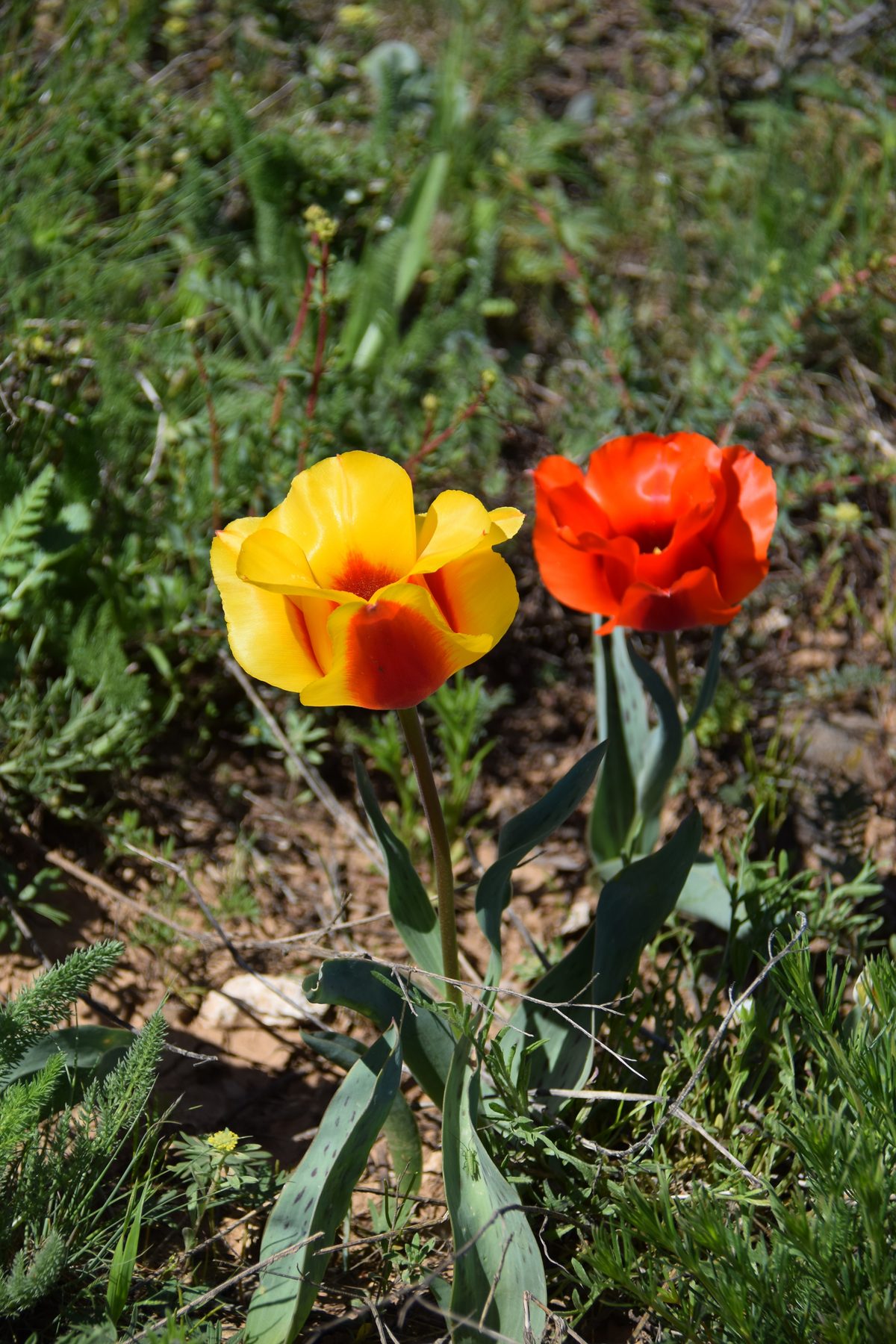
    • Photo: Kalegin Michail (Unsplash/CC0), via Wikimedia Commons (source)
    • Photo: Nikolai Bulykin, CC BY-SA 4.0, via Wikimedia Commons (source)
    • Photo: Aeroprints.com, CC BY-SA 3.0, via Wikimedia Commons (source)
    • Photo: Alex J. Butler, CC BY 2.0, via Wikimedia Commons (source)
    • Photo: Dmitry Savelyev, public domain, via Wikimedia Commons (source)