Category: Safety & Practical

  • Is Kazakhstan Safe? An Honest Guide for Travelers (2026)

    Is Kazakhstan Safe? An Honest Guide for Travelers (2026)

    Last updated: June 10, 2026 · Written by the Kazakhstan Tourism Guide editorial team

    Is Kazakhstan safe? Yes — genuinely. The U.S. State Department rates it Level 1 (“exercise normal precautions”), the same tier as Japan and Iceland, and it ranks 56th of 163 countries on the Global Peace Index, ahead of every neighbor. Your real risks are pickpockets, taxi overcharging, icy sidewalks and the occasional inflated “fine” — all manageable with the tactics below.

    I’ll be blunt about why this article needs to exist: an entire generation of Western travelers had their mental image of Kazakhstan formed by a comedy film that was actually shot in Romania. The gap between that image and the reality — espresso bars in Almaty, glass towers in Astana, families picnicking by alpine lakes — is one of the widest stereotype gaps in travel. I’ve wandered Almaty’s Green Bazaar with a camera around my neck, taken night trains across the steppe, and stood in line at provincial bus stations where I was clearly the only foreigner for a hundred kilometers. Nothing bad happened to me in any of those places. But “nothing bad happened to me” is anecdote, not analysis, so this guide leans on hard data, government advisories, and the specific, unglamorous failure modes that actually catch travelers out here.

    This is the practical-safety pillar of our Safety & Practical section. Read it once before you book, skim the scams table again the night before you fly, and you’ll be better prepared than 95% of arrivals.

    Kazakhstan Safety at a Glance

    Here’s the honest scorecard before we get into the detail. These are my ratings, cross-checked against the U.S., UK, Canadian and Australian government advisories as of June 2026:

    Risk Level The one-line truth
    Violent crime against tourists Low Rare; what exists clusters around nightlife districts after midnight.
    Pickpocketing & petty theft Medium Real in bazaars, buses and train stations. Front pockets, zipped bags.
    Scams Medium Taxi overcharging and “fines” from people in (or out of) uniform. All avoidable.
    Terrorism Low Cannot be ruled out (no country can say that), but attacks are rare and not tourist-targeted.
    Solo female travel Low–Medium Most solo women report feeling safer than expected; harassment is the exception, not the rule.
    Transport Medium Ride-hailing apps are cheap and safe; the danger is driving standards and winter roads.
    Nature & weather Medium Earthquake zone (Almaty), avalanches, -30°C winters, vast empty distances. Respect them.
    Tap water Medium Locals boil it. You should drink bottled — it costs pennies.

    And here’s how the four big English-speaking governments call it:

    Advisory Rating for Kazakhstan (June 2026)
    🇺🇸 U.S. State Department Level 1 — Exercise normal precautions (the lowest level; reissued unchanged after periodic review)
    🇬🇧 UK Foreign Office (FCDO) No travel restrictions; standard crime and terrorism awareness advice
    🇨🇦 Canada Take normal security precautions (lowest level)
    🇦🇺 Australia (Smartraveller) Exercise normal safety precautions (lowest level)

    For context: France, Germany and the UK all carry Level 2 ratings from the U.S. State Department. Kazakhstan sits a tier below them on paper. Paper isn’t everything — but it’s not nothing, either.

    Almaty city panorama with the Trans-Ili Alatau mountains — is Kazakhstan safe? Its biggest city ranks among Central Asia's safest

    So, Is Kazakhstan Safe? What the Data Actually Says

    Strip away vibes and stereotypes and the numbers are consistent across sources:

    • Global Peace Index 2025: 56th of 163 countries. That’s the best score in Central Asia — ahead of Armenia (58), Uzbekistan (67), Kyrgyzstan (78), Tajikistan (79) and Turkmenistan (87). For perspective, the United States ranks far lower on the same index.
    • U.S. State Department: Level 1. Only a few dozen countries worldwide hold the lowest advisory tier. Kazakhstan has held it for years, reaffirmed at every periodic review.
    • Numbeo crowd-sourced safety index: mid-50s out of 100 — comparable to, and in some city pairs better than, the U.S., France, Italy and Australia.
    • Crime is falling nationally but unevenly. Two western oil regions buck the trend: Mangystau recorded a roughly 12% rise and Atyrau around 8.5% in recent reporting. Tourists are rarely the victims, but I treat the western oil cities with more city-sense than Almaty.

    One piece of recent history worth knowing, because you’ll see it referenced: in January 2022, fuel-price protests escalated into the worst civil unrest in Kazakhstan’s independent history (“Qandy Qantar” — Bloody January), centered on Almaty. It was suppressed within days, it was not directed at foreigners, and nothing on that scale has recurred since. The practical lesson for travelers is the same one that applies worldwide: if you ever see a large unauthorized demonstration, walk the other way — attending one can get anyone arrested here, and the situation can change fast.

    The honest summary: Kazakhstan’s safety problem is not danger. It’s friction — small scams, language barriers, bureaucratic quirks, brutal weather and huge distances. Each has a cheap, specific fix.

    Safety City by City: Where You’re Going and What Actually Goes Wrong There

    Almaty — safe, sociable, with two specific caveats

    Almaty is where you’ll likely spend most of your trip (here’s everything worth doing in Almaty), and it generally feels like what it is: a leafy, coffee-obsessed city of two million with students, digital nomads and families out late on summer evenings. I’ve walked the central grid — roughly between Tole Bi street and Al-Farabi avenue — at 11pm without a flicker of concern.

    Caveat one: petty theft in crowded places. The Green Bazaar, the number 12 bus, the Sayran bus station — anywhere bodies press together, phones migrate out of back pockets. Wear your daypack on your front in the bazaar like the locals do and you’ve solved 90% of the problem.

    Caveat two: nightlife districts after midnight. The genuine incidents involving foreigners in Almaty cluster around bars and clubs — drink-spiking, fights spilling outside, and muggings of visibly drunk people walking home alone. The fix is boring and absolute: keep your drink in your hand, and take a Yandex Go home (a ride across the city center runs about 1,500–2,500₸, roughly $3–5). Locals will also tell you to skip peripheral districts like Shanyrak — there’s nothing there for a visitor anyway.

    One more Almaty-specific risk that has nothing to do with crime: the city sits in an active seismic zone, and in winter the sidewalks become luge tracks. More on both below.

    Astana — possibly the safest-feeling capital in Asia

    Astana's illuminated center at night, one of the safest-feeling capitals in Asia

    The purpose-built capital is wide, glassy, heavily policed and almost eerily orderly. Walking between Astana’s big-ticket sights at night, my main safety concern was the wind. The same nightlife caveat applies — late-night incidents around clubs do happen — but daytime Astana is about as low-stress as cities get. The actual hazard is the climate: this is the second-coldest capital city on Earth, and -30°C with wind is a genuine physical danger if you’re dressed for a European winter.

    Shymkent & Turkestan — the friendly, conservative south

    The Silk Road south is poorer, warmer in every sense, and more traditional. Crime against tourists is not the issue; minor hustle is — taxi drivers at Shymkent’s bus stations quote foreigners three times the going rate (agree the fare before your bag goes in the trunk, or just use the app). Dress runs more modest here, and solo women report more curious attention than in Almaty, though rarely anything threatening. The pilgrimage crowds at the Yasawi Mausoleum in Turkestan are exactly that — pilgrims.

    Atyrau & Aktau — the oil west, where I actually pay attention

    If there’s a region where the standard advice tightens, it’s the western oil cities. The UK Foreign Office specifically flags violent thefts targeting expatriate communities in Atyrau and Aktau, mostly at night around nightclubs and bars or on the way home from them, and regional crime statistics have been rising. The oil-money economy creates sharper inequality and a rougher edge than anywhere else in the country. Most travelers only pass through Aktau as the gateway to Mangystau’s canyons anyway — do that, enjoy the Caspian seafront promenade in daylight, and treat late nights out with big-city rules.

    Mangystau, the steppe and everywhere remote — the danger is emptiness

    In the desert west and the open steppe, humans are not the threat; the absence of them is. Mangystau’s moonscapes sit hours from the nearest help, often without phone signal. Vehicles break, GPS tracks vanish, weather flips. Go with a reputable local driver-guide, carry more water than feels reasonable, and tell someone your route. The same logic applies to the eastern mountains and the empty north. This is expedition country wearing a day-trip costume.

    Remote Bosjira valley in Mangystau, western Kazakhstan, hours from the nearest help

    The Scams: A Field Guide to Every Hustle You Might Meet

    Kazakhstan is not a scam-heavy country — you’ll meet less hustle here than in most of Southeast Asia or southern Europe. But the scams that do exist are well-rehearsed, so learn the five classics:

    The scam How it works The counter
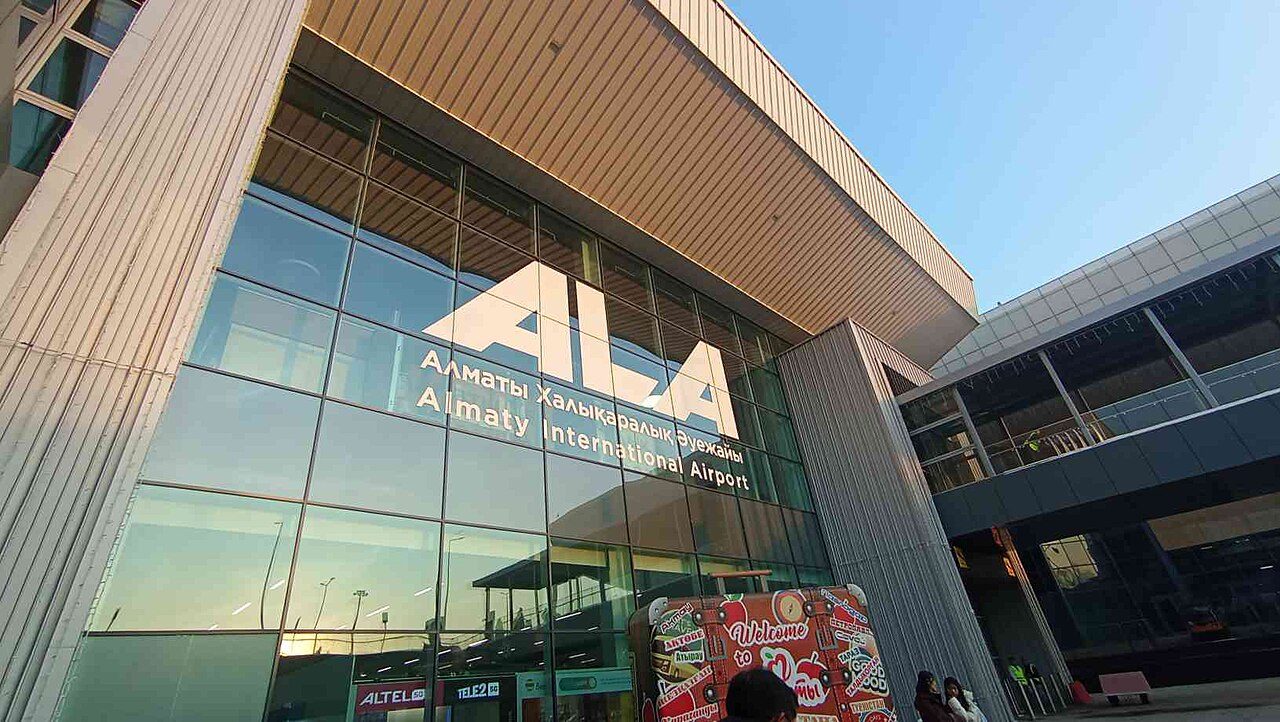
    Taxi overcharge Street cabs and airport touts quote foreigners 3–10x the real fare. The worst offenders cluster at Almaty airport arrivals. Use Yandex Go (or inDrive) — fixed price shown upfront. Airport to central Almaty should be ~3,000–5,000₸ ($6–10), not the 20,000₸ a tout will try.
    Fake police “document check” Plainclothes “officers” demand your passport, then “find a problem” requiring a cash fine — sometimes asking to inspect your wallet for “counterfeit notes.” Real police wear uniforms and carry photo ID with a badge number; they don’t collect fines in cash on the street. Politely ask to see ID, offer to walk to the nearest police station, or call 102. Fakes evaporate.
    The dropped wallet A stranger “finds” a wallet and offers to split the cash; an accomplice then accuses you of stealing it and demands you show your money. Don’t touch the wallet, don’t break stride. It dies instantly without your participation.
    Airport name-sign pickup At provincial airports, someone holds a sign with your actual name (gleaned from passenger lists), poses as your transfer, then robs or massively overcharges you. Verify with your real driver in advance — agree a code word or confirm the driver’s name and plate in the app/booking before getting in.
    Street money exchange “Great rate, no commission” — sleight of hand with folded notes, or counterfeit bills. Exchange only at banks or licensed kiosks (bring your passport). Note: exchanges refuse damaged notes and U.S. dollars printed before 2013, so bring crisp, recent bills.

    On card fraud: skimming exists, as everywhere. I use ATMs inside bank branches, never standalone street machines, and I keep a backup card in the hotel. Card payments (and Kaspi QR, which locals use for everything) are near-universal in cities — see our Kazakhstan trip cost guide for how far your money goes once you stop getting scammed out of it.

    Police, Papers and the Law: The Rules That Actually Catch Tourists Out

    Almost nobody gets in trouble in Kazakhstan for what Westerners think of as “crime.” The travelers who do have a bad time trip over administrative rules they didn’t know existed. Here are the ones worth tattooing on your itinerary:

    • Carry your original passport. Always. Police can conduct random ID checks, and a photocopy is not legally sufficient. In practice, checks on obvious tourists are rare — I’ve been asked once, ever — but “rare” isn’t “never,” and the fine-or-detention downside isn’t worth it. (Your hotel will also register your stay automatically; check your visa and entry requirements before you fly — most Western passports get 30 days visa-free.)
    • Photography has invisible tripwires. Military sites, border zones, airports and some official buildings are off-limits to cameras, and warning signs are inconsistent. If a building has more flags than windows, ask before you shoot. A few closed areas — the town of Baikonur, Gvardeyskiy village, and the Karmakchi and Kazalinsk districts — require advance government permission to visit at all (organized Baikonur launch tours handle this for you).
    • Drones need a license. You can bring one in, but flying it unlicensed risks a fine and confiscation. Apply through the Civil Aviation Committee well before your trip, or leave it home.
    • Vapes are illegal. Not just frowned on — selling, importing or distributing e-cigarettes carries penalties up to two years. Don’t pack a stash for your trip.
    • Alcohol has a curfew, and public drunkenness is an offense. Shops can’t sell alcohol from 11pm to 8am (spirits over 30% have even tighter hours); bars are exempt. Visibly drunk in public can mean a night in a cell and a fine. Drink-driving tolerance is zero — not low, zero.
    • Drugs: the harshest rule in the book. Possession of even small amounts means years in prison, and airport scanners here are excellent. This includes transit passengers’ baggage.
    • Watch your social media. Posting content deemed insulting to religion, culture or national symbols — including disrespectful images of the Kazakh flag — is illegal and has produced fines and prosecutions. Save the edgy captions for home.
    • LGBT+ travelers should know the law changed. Same-sex relations remain legal, but legislation introduced on December 30, 2025 prohibits the “promotion” of non-traditional sexual orientation — perceived breaches risk fines, detention or deportation, and the practical effect is a chillier, more cautious climate. Gay travelers visit without incident every week, and Almaty has a discreet scene, but discretion is the operative word, especially outside the two big cities.

    On corruption generally: it exists, it’s a national reform priority, and the average tourist’s only plausible contact with it is a traffic stop (if driving) or the fake-fine scam above. I’ve never paid a bribe in Kazakhstan. If an official ever does solicit one, the magic words are a cheerful request for a written receipt and the offer to settle it at the station — paperwork is kryptonite.

    Getting Around Safely: Taxis, Trains, Night Buses and the Roads

    Transport is where Kazakhstan’s size stops being romantic and starts being logistical. The full breakdown lives in our getting around Kazakhstan guide; here’s the safety layer:

    Clean modern Almaty metro station, a safe way to get around the city
    • Ride-hailing apps are your default. Yandex Go works in every major city, shows a fixed fare, tracks the route, and removes both the negotiation and the “unofficial taxi” risk in one move. Cross-town rides for $3–5. The old habit of flagging down random private cars (“gypsy cabs”) still exists among locals; as a foreigner, skip it — every government advisory says the same, and overcharging is the best-case outcome.
    • Trains: lock your compartment. Kazakh sleeper trains are a genuine travel joy — chai, steppe sunsets, chatty grandmothers — and theft on them is opportunistic, not violent. Lock the compartment at night (there’s a flip-latch), stow valuables under the bench seat that your mattress sits on, and you’re fine. I sleep soundly on them.
    • City buses and metro: the Almaty metro is clean, modern, cheap (about 150₸) and safe; buses are where the pickpockets work. Standard crowded-bus protocol.
    • Driving: the real danger in the country. If one thing in Kazakhstan hurts travelers, it’s roads — aggressive overtaking, poorly maintained surfaces outside main corridors, stray animals at dusk, unsignposted roadworks, and winter ice that turns a two-lane highway into a guessing game. You need a 1968-convention International Driving Permit alongside your license. Fill up whenever you see fuel in rural areas, carry water, and do not drive at night outside cities. Honestly? Between cheap flights, good trains and affordable drivers, most visitors shouldn’t self-drive at all.
    • Winter travel is its own discipline. Roads close, flights delay, and -25°C kills phone batteries in minutes. If you’re coming for the (excellent) ski season, our Kazakhstan in winter guide covers the cold-weather playbook in detail.

    Is Kazakhstan Safe for Solo Female Travelers?

    The consensus from solo women I’ve compared notes with, and from every account I’ve read closely: Kazakhstan feels safer than expected, and notably more relaxed than its reputation-by-association suggests. Urban Kazakh society is secular and modern; women travel, drive, run businesses and sit in cafés alone without comment. Catcalling in Almaty is rarer than in Paris.

    The honest qualifiers: unwanted attention rises in the conservative south and in rural areas (curiosity more often than menace); drink-spiking in nightlife districts is a documented risk that hits women hardest; and the late-night-walk rule applies with no exceptions. Practical moves that women who travel here repeatedly swear by: dress one notch more modest outside Almaty/Astana, book the lower berth in a four-berth train kupe (or pay up for a two-berth SV), use apps for every night ride, and deploy the universal fiction of a husband who is “arriving tomorrow” if a conversation needs ending. None of this is unique to Kazakhstan — it’s the standard solo kit, deployed in an easier-than-average country.

    Nights Out: The One Context Where Incidents Actually Happen

    Read the incident reports behind the advisories and a pattern jumps out: foreigner + nightclub + 2am + alcohol accounts for the large majority of real trouble — in Almaty, Astana, Atyrau and Aktau alike. Drink-spiking happens (keep your drink in hand, accept nothing from strangers); fights start over nothing (leave when voices rise — don’t spectate); and the walk home is where wallets vanish (it’s a $4 Yandex; take it). Do those three things and you’ve neutralized the single most dangerous activity in Kazakhstan, which — let’s be honest — is the same most dangerous activity everywhere on Earth.

    What Locals Actually Worry About (and What That Tells You)

    A trick I use in every country: ignore what foreigners fear and ask what locals guard against. In Kazakhstan, the answers are revealing. Apartment-dwellers worry about phone-call fraudsters impersonating banks — a national epidemic that targets Kazakh speakers, not you. Drivers worry about other drivers and about traffic police quotas at month-end. Parents in Almaty worry about air quality in winter (the smog inversion is real — sensitive lungs should pack accordingly) and about earthquakes, abstractly. Pensioners worry about ice.

    What’s missing from that list is instructive: nobody warns you about violent street crime, kidnapping or tourist-targeted gangs, because those aren’t features of life here. When the local threat model is “scam calls, potholes and sidewalk ice,” you’ve learned more about a country’s actual safety than any index can tell you. Adjust your own model to match: spend your vigilance on traffic, weather and small hustles, and spend none of it scanning crowds for danger that isn’t there.

    Nature, Weather and Earthquakes: The Risks With No Villain

    Here’s my unpopular opinion after weighing all of it: the steppe, the mountains and the thermometer are a bigger deal for your safety in Kazakhstan than every human threat combined.

    Earthquakes

    Almaty sits in an active seismic zone — the city was flattened in 1887 and 1911, and felt a strong jolt as recently as January 2024. Modern buildings are engineered for it. Do what locals do: know that “drop, cover, hold on” beats running outside, and keep shoes and a phone by the bed. The risk on any given two-week trip is tiny; pretending it’s zero is how panic happens.

    Mountains and avalanches

    The Trans-Ili Alatau above Almaty offers world-class hiking an hour from a flat white — and real alpine hazards: avalanches, rockfall, flash weather changes, summer snow at altitude, and mudslides in the spring melt. The infrastructure is better than you’d guess: Almaty runs 24-hour mountain rescue bases at Shymbulak gorge and Big Almaty Lake, patrols on popular routes, and 18 mountain refuges with first-aid kits and SOS buttons. Still: don’t hike alone, register your route with someone, and save the rescue numbers — 109 or 112. If you’re heading up on a day trip from Almaty, going with a guide converts most of this risk into scenery.

    Cold, heat and distance

    Continental climate means -30°C winters in the north and +40°C summers in the south, sometimes with 25-degree swings in a day. Winter cold here is a safety issue, not a comfort issue: frostbite on exposed skin in minutes at the extremes, and rural breakdowns become emergencies. Summer in the west brings heatstroke and a sun with no shade for 300 km. Spring 2024’s floods in the north and west, and 2023’s forest fires in the east, are reminders that big-sky country has big-sky weather. Time your trip with our best time to visit Kazakhstan guide and half of this solves itself.

    Shymbulak mountain resort above Almaty, home to a 24-hour mountain rescue base

    Food, Water and Your Stomach

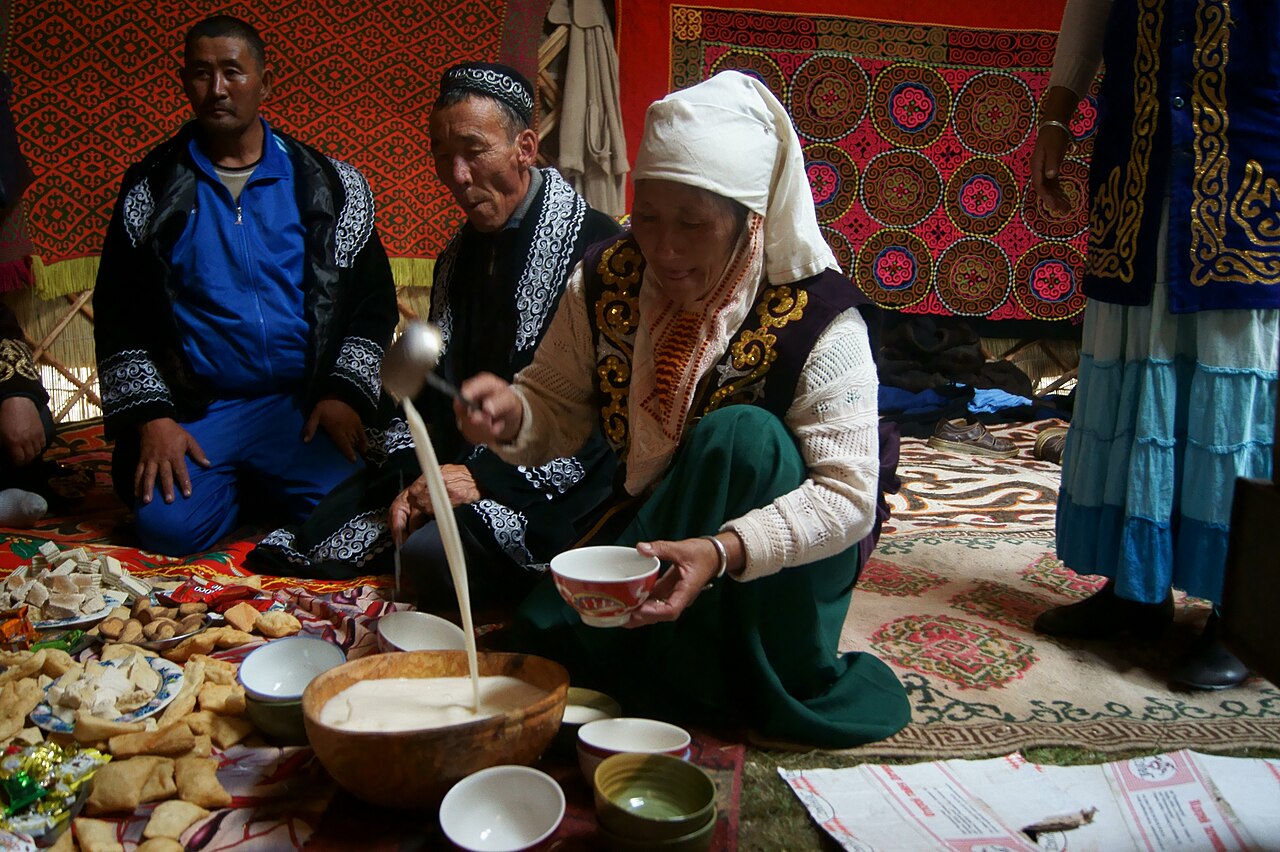
    Kazakh food safety is better than its street-food-skeptic reputation. Meat-heavy national dishes are cooked hard and served hot; food poisoning stories among travelers usually trace to summer salads at cheap canteens or kumys (fermented mare’s milk) sampled enthusiastically at a tourist yurt. Ease into the fermented dairy — it’s an experience worth having, in moderation. The bazaars’ cooked sections (fresh samsa, hot plov) are some of the safest and best eating in the country; our Kazakhstan food guide tells you what to order.

    Tap water: drink bottled. Urban tap water is treated but inconsistently trustworthy, the official U.S. guidance flags it, and locals themselves boil or filter. A 1.5-liter bottle costs 200–300₸ (under $0.60). In mountain huts and villages, assume untreated. Brushing teeth with tap water in Almaty hotels: I do it; sensitive stomachs shouldn’t.

    Health Care and Emergencies: The Part to Screenshot

    Service Number
    Universal emergency (EU-style, has English more often) 112
    Police 102
    Ambulance 103
    Fire 101
    Almaty mountain rescue 109 or 112

    Operators may not speak English — have your address written in Russian (your hotel card works), or hand the phone to any local; people genuinely help here. Private clinics in Almaty and Astana (Interteach, Medical Park and others) handle travelers well at modest prices; rural healthcare is basic, which is exactly why travel insurance with medical evacuation cover is the one non-negotiable purchase for anyone leaving the big cities — a serious injury in Mangystau or the Altai means an air transfer. Check that your policy covers altitude if you’re trekking. Kazakhstan’s official Safe Travel portal (safetravel.kz) publishes real-time alerts in English and is worth a bookmark.

    How Kazakhstan Compares to Its Neighbors (and Yours)

    Country Global Peace Index 2025 rank U.S. advisory level
    Kazakhstan 56 / 163 1 — Normal precautions
    Armenia 58
    Uzbekistan 67 1
    Kyrgyzstan 78 2
    Tajikistan 79 2
    Turkmenistan 87
    France / Germany / UK (varies) 2 — Increased caution

    The pattern travelers actually care about: Kazakhstan is the statistical safety leader of Central Asia and rates better on paper than the Western European countries most of its visitors come from. No, that doesn’t mean Almaty is “safer than Paris” in every measurable way. It means the burden of proof has flipped — if you’d happily wander Lisbon or Prague, nothing in the data says you should fear Kazakhstan.

    My 12 Actual Rules for Kazakhstan

    Everything above, compressed into what I actually do:

    • Yandex Go for every taxi, no exceptions at airports.
    • Passport on my body, photocopy in the bag, scan in the cloud.
    • Daypack worn frontward in bazaars and on buses.
    • ATMs inside banks; crisp post-2013 dollars for exchange; small bills in a separate pocket.
    • Drink stays in my hand; the 2am walk home doesn’t happen.
    • Uniform + badge number or no “fine” — and a smile while asking.
    • No drones, no vapes, nothing herbal, no flag jokes online.
    • Train compartment latched at night, valuables under the berth.
    • No self-driving at night outside cities; no winter driving at all.
    • Guide for Mangystau, the Altai and any serious hike; route registered; 112 saved.
    • Bottled water; brave with cooked food, cautious with kumys.
    • Insurance with medevac, checked for altitude cover, before wheels-up.

    Safety by Traveler Type

    Families with kids

    Kazakhstan might be Central Asia’s easiest family destination. Kids are adored openly — expect your toddler to be cooed at on every bus — and the urban infrastructure (malls, parks, the Medeu rink, cable cars) is built for family weekends because that’s who uses it. The watch-items are environmental: sun on the steppe, altitude on day trips, traffic that doesn’t yield, and pharmacies that stock different brands than home (bring your own children’s medications).

    Older travelers

    Comfortable, with two caveats: distances (break up those 12-hour drives) and ice (winter sidewalks in Almaty are legitimately treacherous — pack ice grips for your shoes, locals use them too). Train travel in a two-berth SV compartment is the civilized answer to both.

    Digital nomads and long-stayers

    Almaty’s nomad scene has grown fast for good reasons: safe, cheap, caffeinated, mountainous. Long-stayers’ incidents follow the same pattern as visitors’ — nightlife and apartment-burglary opportunism. Choose a building with an entry code or concierge, and don’t advertise your flat’s contents on Instagram with the location tagged.

    Travelers of color

    You’ll likely experience curiosity — stares, occasional selfie requests — concentrated in smaller towns where foreigners of any kind are rare. Accounts of actual hostility are uncommon; Kazakhstan is itself a visibly multiethnic state (Kazakh, Russian, Uyghur, Korean, Dungan and more), and big-city anonymity is real. The stare-to-threat conversion rate is, in my experience and most published accounts, extremely low.

    Is Kazakhstan Safe? Your Questions, Answered (FAQ)

    Is Kazakhstan safe for American tourists?

    Yes. The U.S. State Department rates Kazakhstan Level 1, its lowest advisory tier — the same as Japan. Americans need no visa for stays up to 30 days, the U.S. Embassy in Astana and Consulate in Almaty provide normal services, and Americans report no particular targeting. Enroll in the STEP program for alerts and go.

    Is Almaty safe at night?

    The central grid is lively and well-lit into the late evening, and I’ve walked it comfortably. After midnight, the standard rules apply: take a Yandex Go instead of walking, stay out of poorly lit side streets and peripheral districts, and keep nightclub exits and drink-watching discipline. Most “night in Almaty” incidents involve alcohol plus walking home alone.

    Is Kazakhstan safe for solo female travelers?

    Broadly yes — most solo women describe it as easier than expected, with low street harassment in the big cities. Use night-time taxis via apps, dress slightly more conservatively in the south and rural areas, and book lower berths or SV class on sleeper trains. The drink-spiking risk in nightlife districts is the one to take seriously.

    Can you drink tap water in Kazakhstan?

    Stick to bottled or filtered water. Urban supplies are treated but quality varies by city, building and season, and locals themselves routinely boil drinking water. Bottled water is universally available and costs 200–300₸. In villages, mountain huts and on the steppe, treat all water as untreated.

    Is Kazakhstan friendly to foreigners?

    Notably so. Hospitality is a core cultural institution on the steppe — guests are close to sacred — and tourists routinely report being invited to tea, helped with directions and defended from overcharging by bystanders. The language barrier (Kazakh and Russian dominate; English is patchy) is the main friction, and a translation app dissolves most of it.

    Is Kazakhstan affected by the war in Ukraine? Is it safe given its neighbors?

    Kazakhstan shares a long border with Russia but is a separate, neutral-leaning country that has not been drawn into the conflict; daily life is unaffected and all major advisories remain at their lowest levels. It also borders China, Kyrgyzstan, Uzbekistan and Turkmenistan, with calm, functioning crossings. Watch news around any regional flashpoint as you would anywhere.

    What should I avoid in Kazakhstan?

    Unofficial street taxis, 2am solo walks from clubs, street money-changers, drugs of any kind, vapes, unlicensed drone flying, photographing military or border sites, unauthorized demonstrations, mocking national symbols online, the Shanyrak district in Almaty, night driving on rural roads, and underestimating winter. That list sounds long; in practice it’s one evening of common sense.

    Is Kazakhstan safer than its Central Asian neighbors?

    By the numbers, yes — it leads the region on the 2025 Global Peace Index at 56th globally, ahead of Uzbekistan (67), Kyrgyzstan (78), Tajikistan (79) and Turkmenistan (87), and it holds the lowest U.S. advisory level. Uzbekistan runs it close in tourist-facing safety; both are far gentler than their post-Soviet image suggests.

    Do I need travel insurance for Kazakhstan?

    Treat it as mandatory. Urban private healthcare is decent and cheap, but rural facilities are basic and the distances are enormous — a serious injury in Mangystau, the Altai or on a trek means expensive evacuation. Make sure your policy covers medical evacuation and any altitude or winter-sports activity you’re planning.

    Is the “Borat” image of Kazakhstan accurate?

    Not even slightly — the film wasn’t even shot there. The real Kazakhstan is an upper-middle-income country with gleaming airports, a space program, specialty coffee scenes in two major cities and a Level 1 safety rating. Kazakhstan has long since stopped being offended and started selling “very nice” merch; you’ll find the joke has aged into a marketing asset.

    Are there areas tourists can’t visit?

    A few: the closed town of Baikonur (visitable only on organized launch tours with advance permits), Gvardeyskiy village near Almaty, and the Karmakchi and Kazalinsk districts in Kyzylorda region. Border zones require care with cameras. Everywhere you’d actually plan to go — Almaty, Astana, Turkestan, Mangystau, the lakes and canyons — is fully open.

    When is the safest time to visit?

    Late May–June and September: mild weather, stable roads, no avalanche season, no ice underfoot, and the steppe at its kindest. July–August is safe but hot in the south and west. Winter is wonderful and entirely manageable — it just demands real cold-weather clothing and flexible plans. Spring melt (April) brings mud, mudslides in the foothills and the occasional flood.

    Final Thoughts: The Stereotype Gap Is Your Opportunity

    After everything — the data, the scams, the laws, the ice — here’s the honest bottom line on whether Kazakhstan is safe: it’s one of the easiest “adventurous-sounding” destinations on the planet right now. The country’s reputation lags its reality by about two decades, which means you get Level 1 safety, world-class landscapes and steppe hospitality at pre-discovery prices and crowd levels. Take the precautions in this guide seriously, especially the boring ones about taxis and tap water and nightclub exits, and then relax — the scariest thing that happened to me in Kazakhstan was the airport tout’s opening price, and the warmest things outnumbered it a hundred to one.

    Ready to plan? Start with the best things to do in Kazakhstan, sketch your route with our Kazakhstan itinerary guide, and check the best time to visit before you book anything.

    Photo Credits & Sources

    Photos via Wikimedia Commons, used with thanks: Almaty skyline by Rok muncher (CC0); Astana at night and Shymbulak resort by Matti Blume (CC BY-SA 4.0); Bosjira valley in spring by Ezra Sheyner (CC BY-SA 4.0); Almaly metro station by A.Burgermeister (CC BY-SA 3.0).

    Key facts checked June 2026 against the U.S. State Department travel advisory (travel.state.gov), UK FCDO travel advice (gov.uk), Canadian and Australian government advisories, the Institute for Economics & Peace Global Peace Index 2025, Kazakhstan’s official Safe Travel portal (safetravel.kz) and kazakhstan.travel. Laws, prices and advisory levels change — treat specifics as orientation and re-check anything critical before you fly.