Contents
- Kazakhstan to Uzbekistan at a glance
- Do you need a visa? Entry essentials
- The main route: Shymkent to Tashkent by road
- By train: the sleeper that clears the border for you
- By bus and shared taxi from Almaty
- By air, when land travel is too much
- The western route: Beyneu to Nukus for Khiva and the Aral Sea
- Silk Road stopovers on the Kazakh side
- Practical tips for a smooth crossing
- Doing it in reverse: Uzbekistan to Kazakhstan
- Building the journey: a Silk Road route south
- When to make the trip
- What’s waiting on the other side
- Costs and times summary
- Frequently asked questions
- Final thoughts
This is the classic Silk Road hop — the overland leg that links the steppe and the mountains of Kazakhstan with the turquoise domes of Samarkand and Bukhara. Done right, it is one of the most rewarding border days in Central Asia.
Travelling from Kazakhstan to Uzbekistan overland means one of three things: an overnight sleeper train that clears the border while you doze, a bus or shared taxi through the Shymkent–Tashkent corridor, or the remote western route from Beyneu toward Nukus for Khiva and the Aral Sea. Most nationalities cross visa-free, and if you build in a Turkestan stop you turn a transit day into a highlight.
Important status note (check before you travel): the busiest road crossing near Tashkent — Zhibek Zholy on the Kazakh side, Gisht-Kuprik on the Uzbek side, the one older guides call the “main” crossing — was closed for a major reconstruction from early 2025, with reopening planned for around September 2026. During the works, road travellers were diverted to the nearby Kaplanbek/Navoi crossing by Saryagash, while cross-border trains were unaffected because they clear formalities at Saryagash station. Border infrastructure changes fast, so always confirm the current situation before you set out.
Kazakhstan to Uzbekistan at a glance
Prices below are approximate 2026 figures in Kazakh tenge (around 470 to the dollar) and Uzbek som; treat train and shared-taxi fares as ballpark and confirm live before booking.
| Option | Route | Time | Rough cost | Best for |
|---|---|---|---|---|
| Overnight train | Almaty → Tashkent | ~16–18 h | US$15–100 by class | Comfort, sleeping through the border |
| Bus / shared taxi | Shymkent → Tashkent | ~3–5 h + border | ~2,000 KZT + som leg | Flexibility, day travel |
| Fly | Almaty → Tashkent | ~1 h 20 in air | From ~US$100 | Speed over land |
| Western overland | Beyneu → Nukus/Kungrad | ~8–10 h | Varies | Khiva, the Aral Sea, Karakalpakstan |
The short version of my advice: if you are coming from Almaty and want ease, take the overnight train; if you are already down in the south around Shymkent or Turkestan, cross by road; and if you are chasing Khiva and the Aral Sea from the Caspian side, use the western route. For the bigger picture of moving around the country, see our getting around Kazakhstan guide.
Do you need a visa? Entry essentials
Good news for most travellers: Uzbekistan is visa-free for 30 days for citizens of the EU, UK, Canada, Australia, New Zealand, the UAE and many more, with the United States added to the visa-free list from the start of 2026. A large number of other nationalities can use the simple online e-visa. Kazakhstan reciprocates with 30-day visa-free entry for most Western passports, so the crossing is usually stamp-in, stamp-out for both directions.
A few practical notes. Keep your currencies straight — Kazakh tenge and Uzbek som are separate, and you cannot spend one in the other country. Carry small-denomination cash for the border and onward transport. And a real warning: drones are effectively banned from entering Uzbekistan without a permit and can be confiscated at the border, so leave yours behind unless you have arranged paperwork. For the Kazakh side of the paperwork, our Kazakhstan visa guide has the detail, and always double-check your own nationality’s current rules.
The main route: Shymkent to Tashkent by road
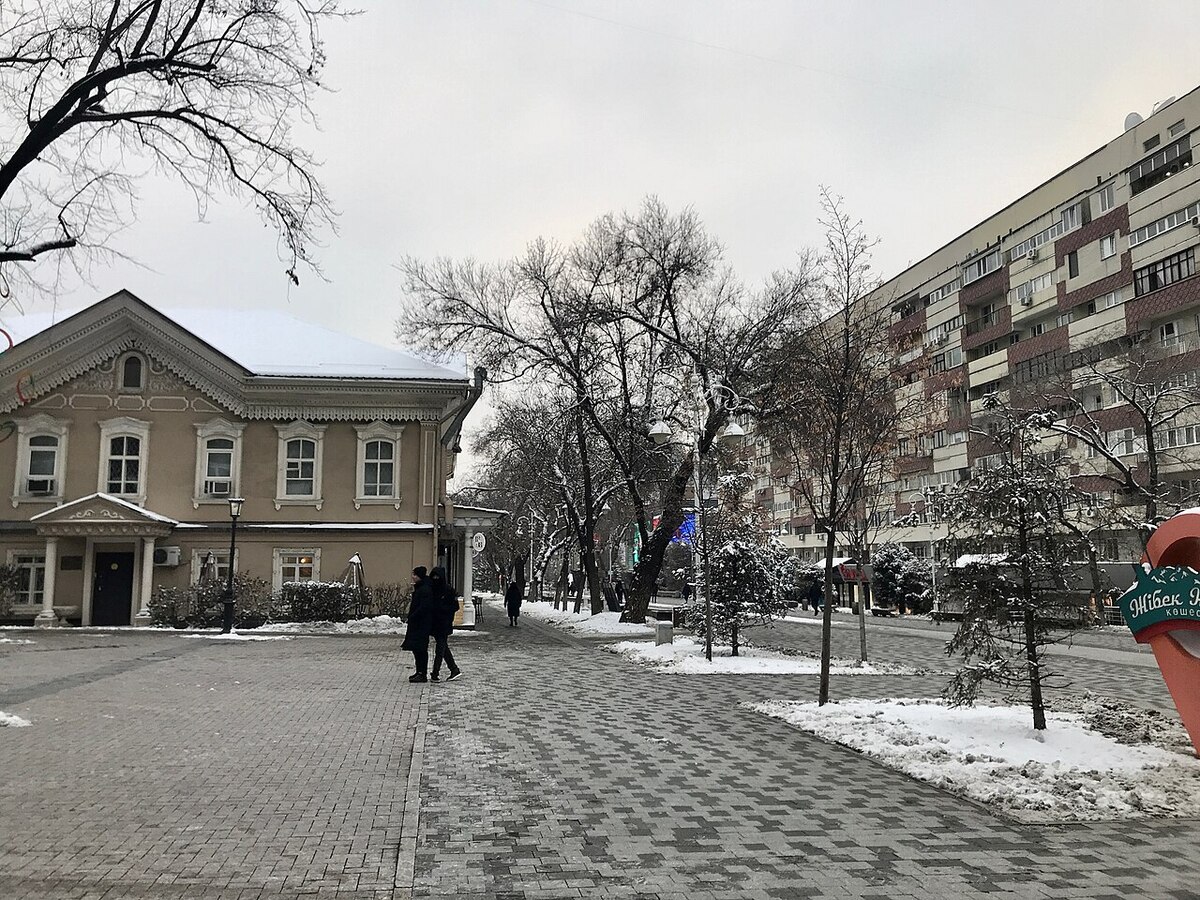
The overland heart of this journey is the short corridor between Shymkent, Kazakhstan’s big southern city, and Tashkent, the Uzbek capital — barely 120 km apart, roughly three hours of driving plus the border. Shymkent is the natural staging point, well connected by train and plane to the rest of Kazakhstan.

Getting to the border from Shymkent
From Shymkent, marshrutkas and shared taxis run to the border for around 2,000 KZT, leaving from stations such as Samal, Kolos or Bekjan. Ask locally which crossing is currently in use — during the Gisht-Kuprik reconstruction that meant heading for Kaplanbek/Navoi rather than the traditional Zhibek Zholy point. It is a short ride either way.
The crossings explained
Several crossings sit near Tashkent. The historic main one is Zhibek Zholy (Gisht-Kuprik), once open 24 hours and closest to the capital. Kaplanbek/Navoi nearby has served as the diversion during works. A third, Yallama, is sometimes used to dodge congestion. Because which one is “best” depends on current openings, the golden rule is to check on the day rather than trust a year-old blog.
Crossing on foot, step by step
The mechanics are familiar if you have done any Central Asian land border. You leave your vehicle, clear Kazakh exit control, walk a couple of hundred metres across a no-man’s-land carrying your own bags, then clear Uzbek entry — where you will usually be fingerprinted and occasionally asked about cash or electronics. On a quiet morning the whole thing can take 45 minutes; on a busy weekend it can stretch to two, three or even four hours. Go early in the day and mid-week if you possibly can.
From the border into Tashkent
On the Uzbek side, shared taxis run into central Tashkent for around 50,000–55,000 som, taking 30 to 45 minutes; marshrutkas are cheaper. Yandex Go works in Tashkent and takes the guesswork out of fares. Change just a little money at the border and get better rates in the city.
By train: the sleeper that clears the border for you
My favourite way to do this trip is the direct overnight train from Almaty to Tashkent. You board at Almaty-2 in the evening — departures have run around 19:20 — settle into your berth, and somewhere in the small hours the train pauses at Saryagash, where Kazakh and Uzbek officers board to check passports while you stay in your compartment. You wake up in Uzbekistan. Total journey time is roughly 16 to 18 hours.

Classes range from a reclining seat (cheapest) through a kupe sleeper up to a private luxury cabin with its own shower, so there is something for every budget — reckon on anything from around US$15 to US$100 depending on class. Book ahead on the Kazakh railways site or an app like tickets.kz, especially in the busy season, since these cross-border services fill up. Frequency varies and has been quoted as anything from daily to a few times a week, so confirm current schedules. Our full guide to train travel in Kazakhstan explains the classes and booking system.
A common mistake: the Afrosiyob does not cross the border
One thing trips people up. Uzbekistan’s sleek Afrosiyob high-speed train is famous, but it runs only inside Uzbekistan — Tashkent to Samarkand to Bukhara — and does not come across the Kazakh border. To get from Kazakhstan into Uzbekistan by rail you take a classic sleeper; you then switch to the Afrosiyob once you are in the country and want to zip between the Silk Road cities. Do not plan a single high-speed hop from Almaty to Samarkand, because it does not exist.
By bus and shared taxi from Almaty
If you would rather stay on the road the whole way, direct buses run from Almaty’s Sayran station to Tashkent, taking around 14 hours for roughly 5,000 KZT (about US$12), with money-changers hopping aboard near the border. It is cheap and doable, but 14 hours on a bus is a big ask when the train offers a flat bed for a similar price. Shared taxis cover shorter legs and are handy once you are further south.
By air, when land travel is too much
There are direct flights between Almaty and Tashkent of about 1 hour 20 minutes, with fares often from around US$100. If your time is tight or an overland border feels like more adventure than you want, flying is a perfectly sensible choice — though you will miss the slow Silk Road build-up that makes the overland trip special. For getting into and around the country by air, see our notes on rail and regional transport in the pillar guide.
The western route: Beyneu to Nukus for Khiva and the Aral Sea
There is a whole other way into Uzbekistan that most guides bury, and it matters if your itinerary runs through western Kazakhstan. From Beyneu, out in the Mangystau region, you can cross at Tazhen (Daut-Ata on the Uzbek side) toward Kungrad and Nukus in Karakalpakstan — the gateway to Khiva and the eerie ships-in-the-desert of the former Aral Sea. Trains link Kungrad and Nukus with Beyneu in roughly 8 to 10 hours, and shared taxis grind across the Ustyurt Plateau on an improving but lonely road. This is remote, big-country travel; come prepared, but the payoff for reaching Khiva and the Aral overland is immense. It pairs naturally with the wilds of Mangystau.
Silk Road stopovers on the Kazakh side
Do not blow through southern Kazakhstan on your way south — it holds some of the country’s greatest Silk Road sights, and breaking your journey here is what turns a transit into a trip. Top of the list is Turkestan and the magnificent Mausoleum of Khoja Ahmed Yasawi, a UNESCO World Heritage site built for Timur and one of the finest pieces of Timurid architecture anywhere.

Nearby lie the ruined caravan cities of Sauran, with its restored walls, and Otrar, the ghost town where the Silk Road’s fate turned. Together they make Turkestan a worthy overnight before you cross. Our guides to the Silk Road in Kazakhstan and the country’s UNESCO sites map out the whole southern corridor, and once across you can weave it all together with our Kazakhstan and Uzbekistan itinerary.
Practical tips for a smooth crossing
A handful of habits make this journey easy. Cross early in the morning to beat the queues and leave daylight on the far side. Carry small-denomination cash in both currencies and change only a little at the border. Keep a screenshot of your first hotel booking, as Uzbekistan appreciates registration and it smooths any questions. Keep your Kazakh SIM active until you have crossed, then buy an Uzbek one in Tashkent. Book cross-border trains well ahead in high season. And, once more, leave the drone at home. Deciding whether the two countries are worth pairing at all? Our honest Kazakhstan vs Uzbekistan comparison and the regional Central Asia itinerary will help you decide.
Doing it in reverse: Uzbekistan to Kazakhstan
Coming the other way works the same in mirror image. Shared taxis and marshrutkas run from Tashkent to the border and on to Shymkent (reckon around 3,000–5,000 KZT for the Kazakh leg), and the overnight train reverses the Almaty run. Kazakhstan’s visa-free welcome for most Western passports makes entry easy, and from Shymkent you have fast onward trains and flights north to Turkestan, Almaty or Astana. If you are heading up to the capital next, our Almaty to Astana guide covers that leg.
Building the journey: a Silk Road route south
The most satisfying way to do this crossing is to treat it as one movement in a longer Silk Road symphony rather than a single leap. A natural flow runs Almaty to Turkestan (by fast train or a short flight), a night at the Yasawi Mausoleum, then down through Shymkent to the border and into Tashkent. From the Uzbek capital the internal Afrosiyob high-speed line whisks you on to Samarkand and Bukhara, and the intrepid carry on to Khiva. Sequenced this way, each stop raises the stakes a little, and the border becomes a threshold rather than an obstacle. Our Kazakhstan itinerary sets up the northern half of that route before you head south.
If you only have a few days, the compressed version still works beautifully: Shymkent or Turkestan for a night, cross to Tashkent, then two nights in Samarkand. Even that gives you the essential arc from Kazakh steppe city to Timurid masterpiece.
When to make the trip
Southern Kazakhstan and Uzbekistan share a similar climate rhythm, and it should shape your timing. Spring (April to early June) and autumn (September to October) are the sweet spots — warm, clear and comfortable for both the border day and the sightseeing that bookends it. High summer is genuinely hot down here, with Tashkent and the desert cities baking well into the high thirties Celsius, so an early-morning border crossing is doubly welcome. Winter is quiet and cold but perfectly workable, and the Silk Road monuments look wonderful with a dusting of snow and no crowds. Line your dates up with our best time to visit Kazakhstan guide, and remember that the desert west around Beyneu is brutal in July and August.
What’s waiting on the other side
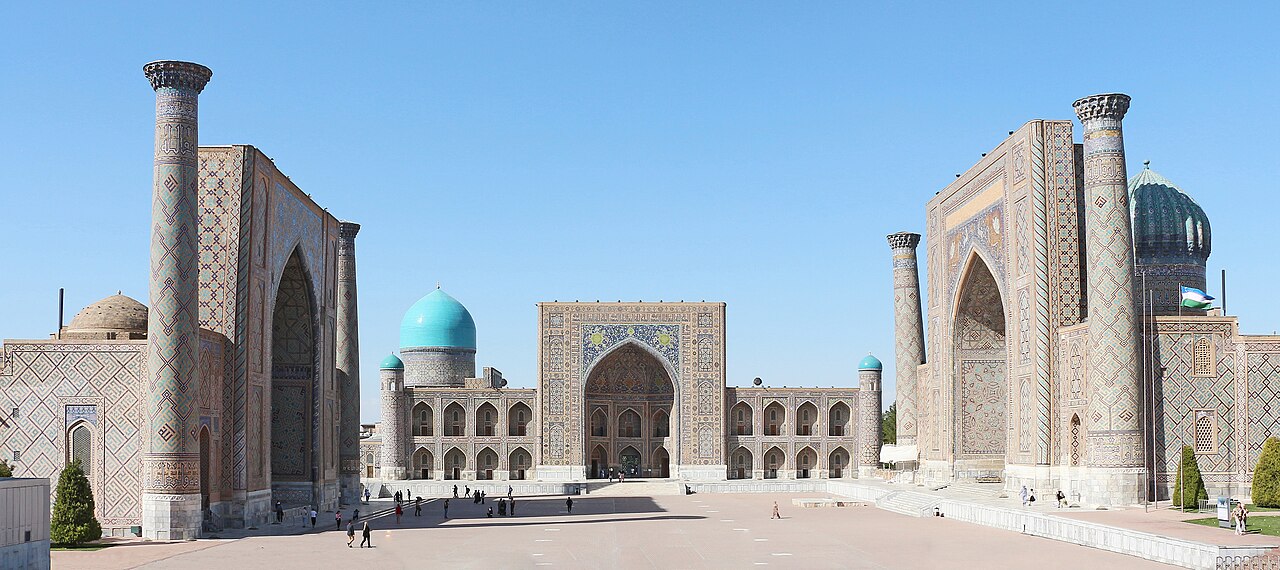
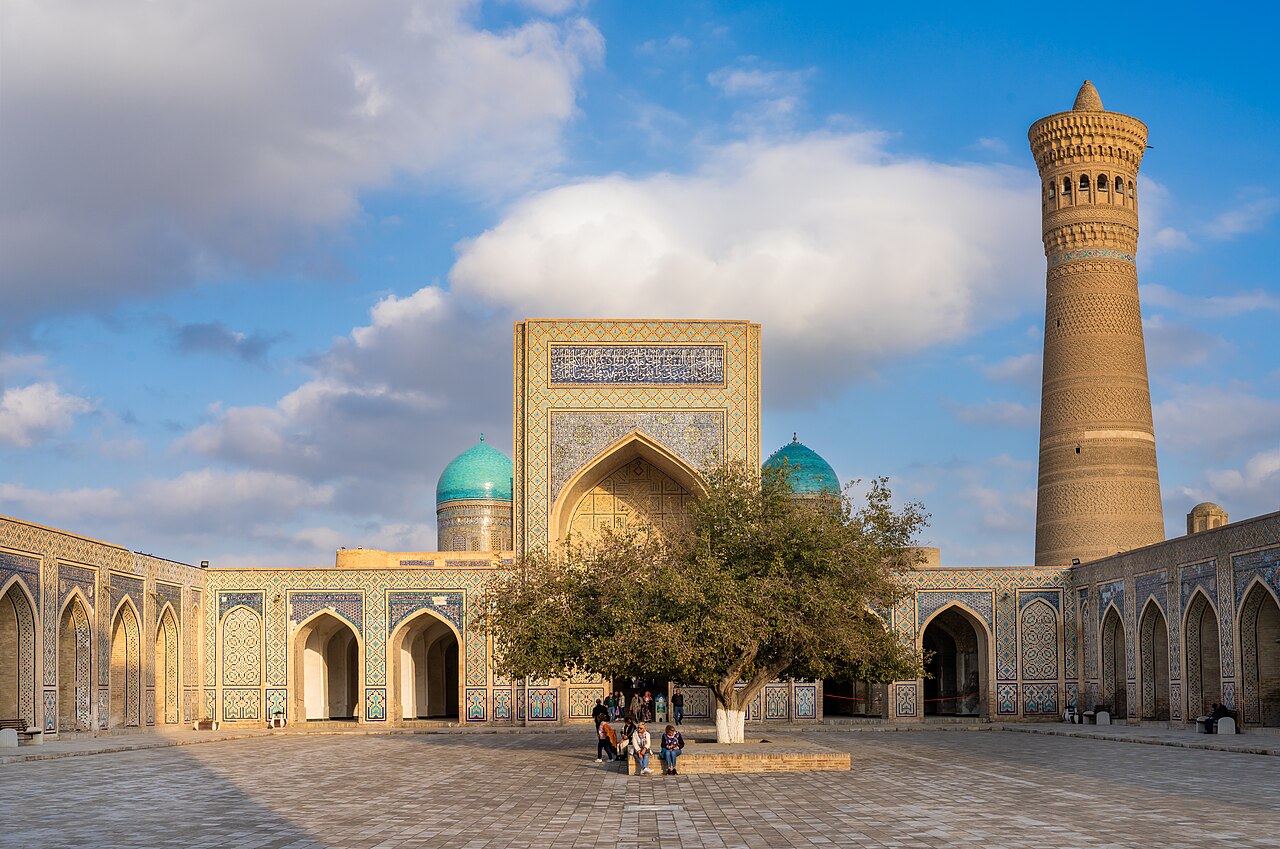
It helps to remember why you are doing this at all. Just beyond the border, Tashkent rewards you with leafy boulevards, a jaw-dropping metro of chandeliered stations, and the old town’s Hazrat Imam complex. Then the real prizes: Samarkand, where the Registan’s three madrasas form perhaps the single most photographed square on the Silk Road, and Bukhara, a living medieval city of minarets, trading domes and madrasas you can wander for days. Further west, walled Khiva feels like an open-air museum frozen in time. None of these are in Kazakhstan, of course, but they are the reason the crossing exists in the traveller’s imagination — and knowing they are close makes even a four-hour border queue feel worthwhile.
Coming the reverse way, the same logic applies in Kazakhstan: Turkestan’s Yasawi Mausoleum stands comfortably alongside its Uzbek cousins, and the empty desert drama of Mangystau is unlike anything across the border. The two countries complement rather than repeat each other, which is exactly why pairing them is such a classic trip.
Costs and times summary
To pull the numbers together: the overnight Almaty–Tashkent train runs roughly 16 to 18 hours and costs anywhere from about US$15 for a seat to US$100 for a private cabin; the Shymkent–Tashkent road corridor is around three hours plus the border, with the Kazakh marshrutka leg near 2,000 KZT and the Uzbek taxi leg into Tashkent about 50,000–55,000 som; the direct Almaty–Tashkent bus is around 14 hours for roughly 5,000 KZT; and flights take about 1 hour 20 in the air from around US$100. The western Beyneu–Nukus route runs 8 to 10 hours by train. Whichever you choose, budget a buffer for the border and confirm live prices, because both fares and crossing points shift.
Frequently asked questions
Do I need a visa to cross between Kazakhstan and Uzbekistan?
For most Western nationalities, no. Uzbekistan offers 30-day visa-free entry to citizens of the EU, UK, US, Canada, Australia and many more, with an easy e-visa for others, and Kazakhstan reciprocates for most Western passports. You are typically just stamped in and out at each side. Always confirm your own passport’s current rules before travelling.
How long does the Kazakhstan–Uzbekistan border crossing take?
On a quiet weekday morning the on-foot crossing can take as little as 45 minutes. On busy weekends or holidays it can stretch to two to four hours. Trains clear the border differently — officers board at Saryagash and check passports while you stay in your compartment, adding a couple of hours to the journey.
Is there a direct train from Almaty to Tashkent?
Yes. An overnight sleeper links Almaty-2 with Tashkent in roughly 16 to 18 hours, with the border handled onboard at Saryagash. Classes run from a reclining seat to a private cabin with a shower. Frequency has varied between daily and a few times a week, so check current schedules and book ahead in high season.
Can I take the Afrosiyob high-speed train from Tashkent into Kazakhstan?
No. The Afrosiyob runs only within Uzbekistan, linking Tashkent, Samarkand and Bukhara. To cross the border by rail you take a classic sleeper, then switch to the Afrosiyob once inside Uzbekistan for the fast hops between Silk Road cities.
How do I get from Kazakhstan to Khiva and the Aral Sea?
Use the western route. From Beyneu in the Mangystau region, cross at Tazhen toward Kungrad and Nukus in Karakalpakstan, the gateway to Khiva and the former Aral Sea. Trains link the towns in around 8 to 10 hours and shared taxis cross the Ustyurt Plateau. It is remote travel, so plan carefully.
Is the main crossing near Tashkent open?
The historic Zhibek Zholy/Gisht-Kuprik crossing was closed for reconstruction from early 2025 with reopening planned around September 2026, and traffic was diverted to the nearby Kaplanbek/Navoi crossing during the works. Trains were unaffected. Because this changes, check the current status close to your travel date.
How far is the border from Tashkent?
The main crossings sit only about 20 to 30 km from central Tashkent, and the Kazakh border town of Saryagash is roughly 25 km away. That is why the Uzbek capital is such an easy first stop — a shared taxi covers the final leg into the city in half an hour or so once you are through passport control.
How much is a shared taxi from the border to Tashkent?
Reckon on around 50,000 to 55,000 Uzbek som for a seat in a shared taxi into central Tashkent, with cheaper marshrutkas also running the route. Change only a small amount of money at the border for this leg, then use ATMs or exchange booths in the city for better rates, and Yandex Go for onward taxis.
Final thoughts
Crossing from Kazakhstan to Uzbekistan is more than a transfer — it is the moment the Silk Road stops being an idea and becomes a road under your feet. Take the overnight train if you value comfort, cross by road from Shymkent if you are already in the south, and give Turkestan a night on the way. Check which border point is open before you go, keep your cash and currencies in order, and leave the drone behind. Do that, and you will step off the train into Tashkent — or wake up bound for Samarkand — with the easiest of Central Asia’s great crossings behind you. Plan the rest with our Kazakhstan and Uzbekistan itinerary and getting around Kazakhstan guide.
Photo credits
Images via the Kazakhstan Tourism Guide media library, sourced from Wikimedia Commons: Registan, Samarkand — Bernard Gagnon, CC0; Shymkent — Rassim, CC BY-SA 3.0; Kazakh steppe train — Kabelleger / David Gubler (bahnbilder.ch), CC BY-SA 3.0; Khoja Ahmed Yasawi Mausoleum, Turkestan — Adam Harangozó, CC BY-SA 4.0; Kalyan minaret, Bukhara — Maksimsokolov, CC BY-SA 4.0. All via Wikimedia Commons.