Contents
- The five stans at a glance
- Why Central Asia — and why Almaty is the smart place to start
- How long do you really need?
- The classic overland route (Kazakhstan gateway)
- Reverse and alternative routes
- Visas for the five stans in 2026
- The regional highlights you shouldn’t miss
- Where to stay across the region
- What to pack for a month on the road
- Best time to go
- How to get around
- How much it costs
- Common mistakes to avoid
- Is Central Asia safe?
- Connectivity, apps and staying in touch
- Frequently asked questions
- Final thoughts
Central Asia is the last great overland adventure — five countries stitched together by Silk Road cities, glacier-fed lakes, high desert passes and some of the warmest hospitality on the planet. It’s also, thanks to a wave of visa reforms, easier to travel now than at any point in living memory. If you have a month or more and a taste for the road less taken, this is the trip.
Here’s the short version. The classic Central Asia itinerary is an overland loop through the five “stans” — Kazakhstan, Kyrgyzstan, Uzbekistan, Tajikistan and Turkmenistan — most naturally begun in Almaty, the region’s best-connected hub. Four to six weeks lets you do all five at a decent pace; three weeks covers three stans well; two weeks means picking your favourites. Below I’ll show you the route, the visas, the seasons and the real costs.
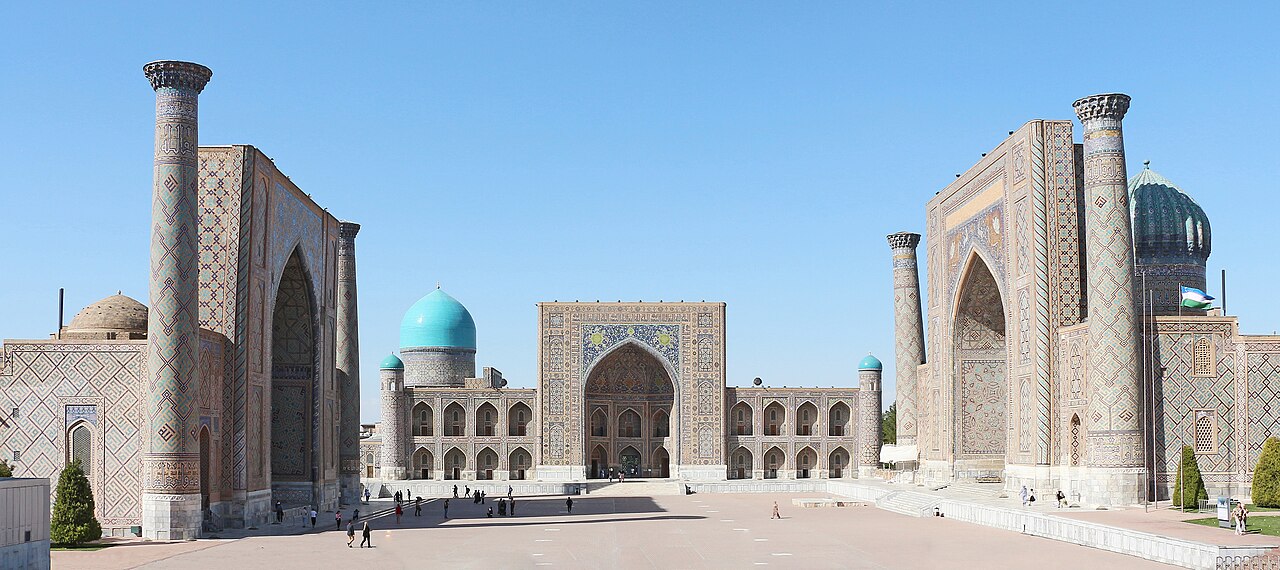
Most guides bury Kazakhstan as a quick Almaty stopover. I’d flip that: Almaty is the smart place to start, both because it’s the region’s cheapest and best-connected gateway and because Kazakhstan eases you into Central Asia gently before the wilder countries. From there the road runs logically south and west. Let’s map it out.
The five stans at a glance
Before the route, here’s the lay of the land. Times “to allot” assume you’re doing the highlights, not rushing.
| Country | Capital | Days to allot | Visa (Western passports) | One-line highlight |
|---|---|---|---|---|
| Kazakhstan | Astana | 5–7 | Visa-free ~30 days | Almaty, Charyn Canyon, the steppe |
| Kyrgyzstan | Bishkek | 7–10 | Visa-free ~30–60 days | Song-Kul yurts, Ala-Kul trek |
| Uzbekistan | Tashkent | 7–10 | Visa-free 30 days / e-visa | Samarkand, Bukhara, Khiva |
| Tajikistan | Dushanbe | 7 | e-visa + GBAO permit | The Pamir Highway |
| Turkmenistan | Ashgabat | 3–7 | Visa hard (tour/LOI) | Darvaza gas crater, marble Ashgabat |
Why Central Asia — and why Almaty is the smart place to start
Central Asia rewards travellers who like their adventures with texture: shared taxis crammed with grandmothers and watermelons, homestays where you’re fed until you protest, borders where the guards want to practise their English. It’s affordable, genuinely safe, and still uncrowded compared with almost anywhere else with sights this good. And Almaty is the natural front door: it has the region’s most frequent and affordable long-haul flights, it’s comfortable enough to shake off jet lag in style, and it sits within a short hop of both Kyrgyzstan (a five-hour bus to Bishkek) and Uzbekistan (a short flight or train to Tashkent). Start here, acclimatise to the rhythms of the region, then push into the wilder countries. My guide to things to do in Almaty will get your first days sorted.
How long do you really need?
The full loop — 4 to 6 weeks, all five stans
To do all five countries justice you want a month at the absolute minimum, and six weeks is more comfortable — the distances are huge and the Pamir and Turkmenistan legs eat time. Four weeks is a brisk “everything,” five to six a relaxed one. This is the trip for people with a sabbatical, a long summer, or the good sense to take their time.
Three stans in three weeks
The most popular version skips the two hardest countries — Tajikistan’s Pamir (which needs a week and a permit) and Turkmenistan (which needs a tour and a tricky visa) — and links Kazakhstan, Kyrgyzstan and Uzbekistan in three weeks. It’s the sweet spot for most travellers: mountains, yurts and Silk Road cities, all visa-free, all overland. My detailed Kazakhstan and Kyrgyzstan itinerary and Kazakhstan and Uzbekistan itinerary together more or less build this trip.
Only two weeks? Which stans to pick
With two weeks, don’t try to do everything. Pick a theme: mountains (Kazakhstan + Kyrgyzstan) for Almaty, Charyn, the Ala-Kul trek and Song-Kul; or Silk Road (Kazakhstan + Uzbekistan) for Almaty, Turkestan and the blue cities. Trying to cram three countries into two weeks means spending the trip at borders. Two countries, done well, beats five countries glimpsed.
The classic overland route (Kazakhstan gateway)
Here’s how the full loop flows if you start in Almaty and travel roughly clockwise, saving Turkmenistan for the end.
Week 1 — Kazakhstan
Begin in Almaty: the city, Charyn Canyon, and the Kolsai and Kaindy lakes. If you have extra days, add a flight to the sci-fi capital Astana or the Silk Road city of Turkestan. Kazakhstan is the comfortable, confidence-building opener.


Week 2 — Kyrgyzstan
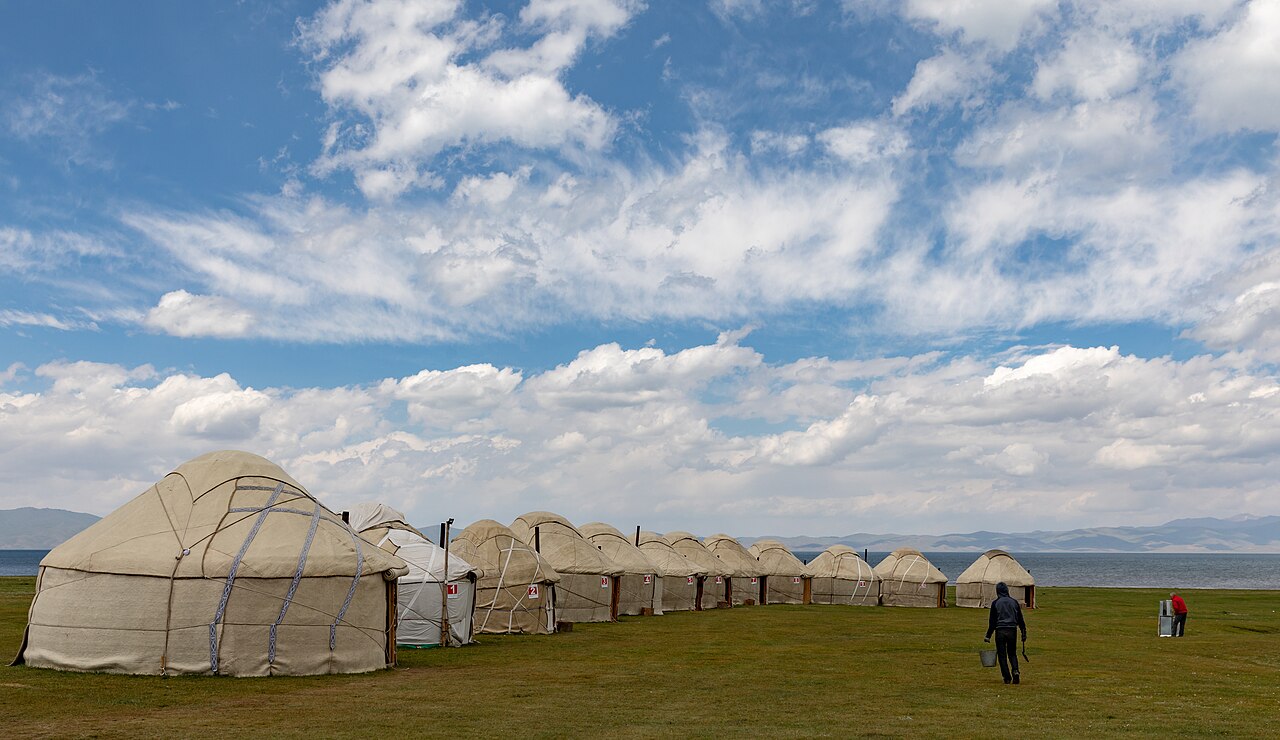
Cross to Bishkek, then head to the mountains: Karakol and the Ala-Kul trek, the great lake of Issyk-Kul, and the yurt camps of Song-Kul at 3,000 metres. Kyrgyzstan is the region’s alpine heart, all horses, pastures and community homestays.
Week 3 — Tajikistan and the Pamir Highway
From southern Kyrgyzstan (Osh), tackle the legendary Pamir Highway — the M41, the second-highest international road on earth — south through Sary-Tash and over the 4,655-metre Ak-Baital pass to Khorog, the Wakhan Valley along the Afghan border, and down to Dushanbe. Reckon on about seven days in a shared 4×4. It’s the adventure centrepiece of the whole trip, and it needs a Tajik e-visa plus a GBAO permit.
Week 4 — Uzbekistan
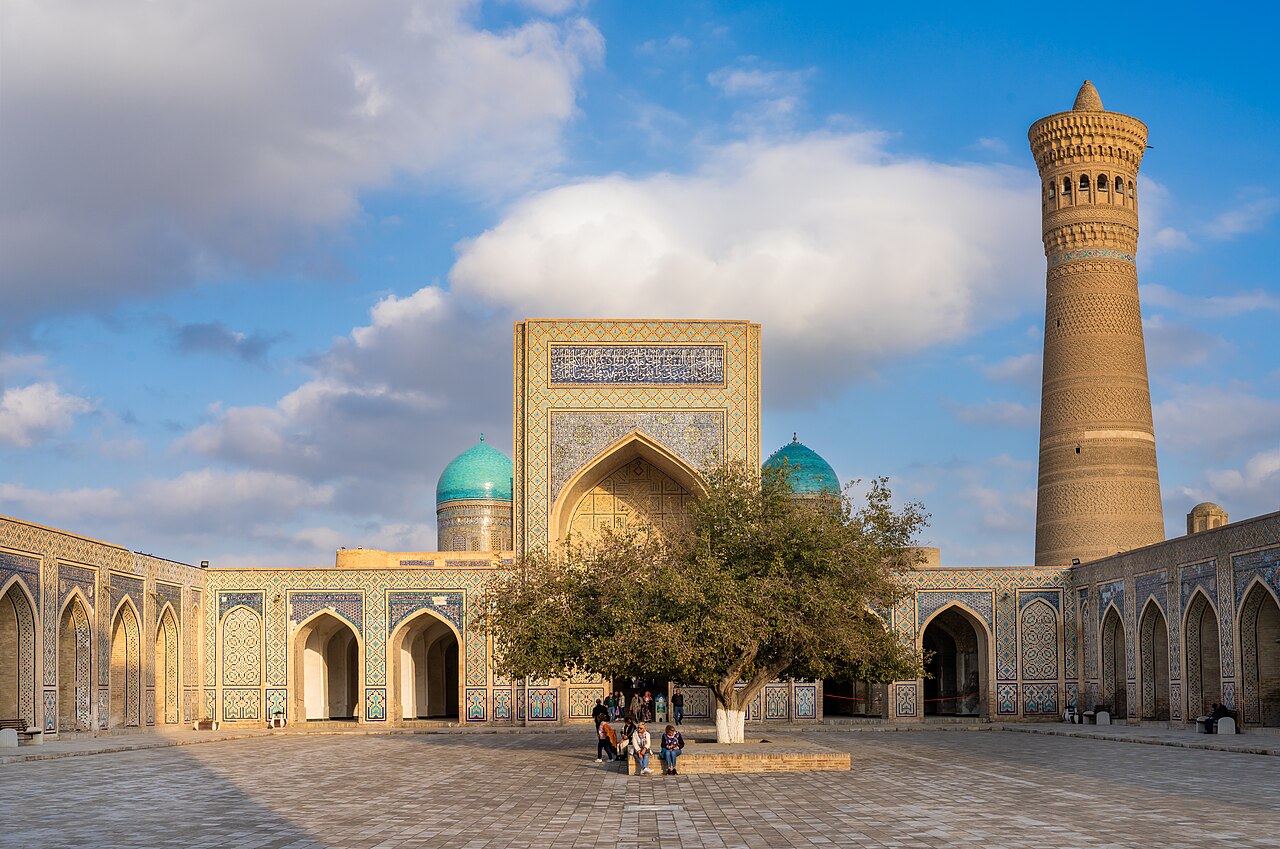
From Dushanbe, cross to Samarkand and immerse yourself in the Silk Road: the Registan, then Bukhara and Khiva by fast train. After weeks of mountains, the blue-tiled cities feel like stepping into a storybook.
Uzbekistan is also where the trip gets easy again after the rigours of the Pamir: fast trains, comfortable guesthouses, and cities built for wandering. It’s the natural place to slow your pace, do laundry, eat well, and simply soak up the tilework before the final push. My full Kazakhstan and Uzbekistan itinerary covers these cities in depth.
Weeks 5–6 (optional) — Turkmenistan
The hardest and strangest country to finish: marble-white, tightly-controlled Ashgabat, and the flaming Darvaza gas crater in the Karakum desert. Turkmenistan requires a licensed tour and a visa that’s genuinely difficult to arrange, so most travellers either commit to it well in advance or skip it — and a great many skip it. If you do include it, it’s an unforgettable, surreal coda.
Reverse and alternative routes
The loop works in reverse too — many organised tours run Ashgabat to Almaty, tackling the hard Turkmenistan visa first and finishing with Kazakhstan’s mountains. And there’s a spectacular way to extend the trip beyond the region: from Aktau on Kazakhstan’s Caspian coast, a cargo ferry crosses to Baku in Azerbaijan, linking Central Asia to the Caucasus without flying. It’s unscheduled and rough around the edges, but it’s a legendary overlander’s move — reachable via Kazakhstan’s western desert region of Mangystau. If you’d rather not do the full loop, cherry-pick: Kazakhstan and Kyrgyzstan for mountains, or Uzbekistan and Tajikistan for Silk Road plus the Pamir.
Visas for the five stans in 2026
Visa rules in this region change often — treat the below as a starting point and verify each against official sources before you travel.
Visa-free (for now): Kazakhstan, Kyrgyzstan, Uzbekistan
The three easiest countries are visa-free for most Western passports: Kazakhstan for around 30 days, Kyrgyzstan for roughly 30 to 60 days, and Uzbekistan for 30 days (with the US added to the visa-free list at the start of 2026, and a cheap e-visa covering many other nationalities). This trio is what makes a three-week, three-stan trip so painless. My Kazakhstan visa guide keeps the Kazakh details current.
Tajikistan — e-visa plus a GBAO permit
Tajikistan needs an e-visa (applied for online, roughly 50–70 US dollars depending on options) and, crucially, a GBAO permit if you’re driving the Pamir — that’s the Gorno-Badakhshan region, which covers everything beyond Khorog. You can usually add the GBAO permit during the e-visa application, so do it in the same sitting. Without it, you can’t legally travel the high Pamir.
Turkmenistan — the hard one
Turkmenistan is the region’s tough nut. Every visitor needs a pre-approved visa, and the realistic path is a tourist visa backed by a letter of invitation from a licensed tour operator, with whom you must travel — independent tourism isn’t permitted. There’s also a short transit visa, though its availability comes and goes. Start the process months ahead if Turkmenistan is a must; otherwise, plan the trip around the other four.
The regional highlights you shouldn’t miss
If this trip has a bucket list, it’s this. In Kazakhstan: Charyn Canyon’s Valley of Castles and the turquoise Kolsai and Kaindy lakes. In Kyrgyzstan: a yurt night at Song-Kul and the Ala-Kul trek above Karakol. In Uzbekistan: the Registan in Samarkand, the old town of Bukhara, and walled Khiva at sunset. In Tajikistan: the Pamir Highway itself, and the Wakhan Valley with Afghanistan across the river. And in Turkmenistan, if you make it: the Darvaza gas crater burning in the desert night. Hit even half of these and you’ve had the trip of a lifetime. The beauty of the region is how different each highlight is from the last — you never feel like you’re seeing the same thing twice.
Where to stay across the region
Accommodation is part of the adventure and rarely needs booking far ahead outside peak season. Expect comfortable hotels and hostels in the big cities (Almaty, Bishkek, Tashkent), atmospheric restored guesthouses in the Uzbek old towns, community-run homestays and yurt camps in the Kyrgyz mountains and the Pamir, and simple family guesthouses everywhere in between. The homestays are often the highlight — you’re fed home cooking, shown genuine hospitality, and your money goes straight to local families. The main things worth reserving ahead are Song-Kul yurts in July and August and the Uzbek old-town guesthouses in the shoulder seasons. Elsewhere, you can turn up and find a bed the same day, which is part of what makes independent travel here so freeing.
What to pack for a month on the road
Pack for range, because you’ll swing from 40°C deserts to freezing mountain passes on the same trip. The essentials: proper layering (a warm mid-layer and a rain shell even in summer, for the Pamir and Song-Kul), sturdy footwear, sun protection for the deserts and the altitude, a modest outfit and scarf for mosques and conservative towns, a power bank and offline maps for the off-grid stretches, a basic first-aid and altitude kit, and a way to carry cash securely since ATMs are scarce outside cities. Travel light — you’ll be hauling your bag on and off shared taxis constantly — but don’t skimp on the warm layer or the water-purification, the two things the region will punish you for forgetting.
Best time to go
Timing a multi-country trip means reconciling two different climates. The lowland Silk Road cities (Uzbekistan, southern Kazakhstan, Turkmenistan) are best in spring and autumn — April to early June, and September to October — and brutally hot in midsummer. The mountains (Kyrgyzstan’s Song-Kul and passes, the Pamir) only really open in summer, roughly June to September, when the yurt camps are up and the high roads are clear. The classic compromise is a late-spring start that catches the desert cities before the heat and the mountains as they open, or an early-autumn version that does the reverse. Whatever you choose, the Pamir and Song-Kul are summer-only, so a winter or early-spring trip has to skip them.
How to get around
Overland is the whole point, and it’s easier than it sounds. Shared taxis and marshrutkas (minibuses) connect everything, cheaply, if not always comfortably. Kazakhstan and Uzbekistan add fast, modern trains — Kazakhstan’s Talgo services and Uzbekistan’s 250 km/h Afrosiyob — and cheap domestic flights (Almaty and Tashkent are the main hubs) can save you a brutal drive when time is short. The key border crossings to know are Korday (Kazakhstan–Kyrgyzstan), Chernyaevka (Kazakhstan–Uzbekistan near Tashkent), the Kyzylart pass (Kyrgyzstan–Tajikistan on the Pamir), Penjikent (Tajikistan–Uzbekistan) and Farap (Turkmenistan–Uzbekistan). My guide to getting around Kazakhstan covers the Kazakh side; elsewhere, the overland community site Caravanistan is the traveller’s bible for current border status.
How much it costs
Central Asia is a bargain by Western standards, though the distances add up. Independent travellers typically spend 25 to 45 US dollars a day on the ground — homestays, shared transport, market food — with mid-range comfort more like 40 to 70. Budget a few hundred dollars a month on top for the long-distance transport (buses, shared 4x4s, the odd flight), because the region is vast. Kazakhstan is the most expensive country of the five, especially in Almaty and Astana; Kyrgyzstan and Tajikistan are the cheapest. The Pamir 4×4 and any Turkmenistan tour are the big-ticket items. Over four weeks, a careful traveller might spend 1,500–2,500 US dollars all in excluding international flights; add more for the Pamir and Turkmenistan. My Kazakhstan trip cost guide details the priciest leg.
Common mistakes to avoid
A few pitfalls trip up first-time Central Asia travellers, and they’re all avoidable. Underestimating the distances is the big one — this is a region the size of Western Europe, and a line on the map that looks short can be a ten-hour shared-taxi day, so build in more transit time than you think. Trying to see all five stans in too little time turns a dream trip into a blur of borders; better to do three well. Ignoring the seasons catches people out too: arrive too early and the Pamir and Song-Kul are still snowbound; arrive in July and the desert cities are an oven. Leaving the Tajik and Turkmen visas too late can derail a whole route, so sort those first. And changing too much money at borders, where rates are poor, is an easy waste — carry a little to get moving and change the rest in town. Get these right and the region is one of the most rewarding places on earth to travel.
Is Central Asia safe?
Yes — reassuringly so. All five countries are generally very safe for travellers, with violent crime against tourists rare and hospitality the default. The main day-to-day risks are ordinary: petty theft in crowded bazaars, the occasional overcharging taxi, and the natural hazards of high-altitude travel on the Pamir. Solo travellers, including women, generally report feeling welcome and secure. The sensible cautions are practical rather than fearful: respect local customs and dress modestly at religious sites, keep an eye on your documents, check your government’s current advisories (especially for any border regions), and take altitude seriously in the mountains. Kazakhstan itself rates as low-risk; see my guide to whether planning a Kazakhstan trip is right for you for more on the anchor country.
Connectivity, apps and staying in touch
Staying connected across five countries is easier than you’d expect, with a few quirks worth knowing. Local SIM cards are cheap and widely sold — pick one up in each country’s first city (Beeline, O!, Ucell and the like) — or use a regional eSIM to skip the paperwork. Coverage is good in and around towns and along main roads, but expect to go offline on the Pamir, at Song-Kul, and on remote steppe stretches, so download offline maps (Maps.me and Google Maps offline both work well) before you set out. For getting around, Yandex Go handles taxis in the bigger cities and spares you haggling. Messaging apps like Telegram and WhatsApp are how locals and guesthouses communicate, so have both installed. And carry a power bank — long transit days and patchy village electricity make it essential. A little digital prep goes a long way toward making a month on the road feel manageable rather than daunting.
Frequently asked questions
What are the five stans of Central Asia?
Kazakhstan, Kyrgyzstan, Uzbekistan, Tajikistan and Turkmenistan. Kazakhstan is the largest and the usual gateway; Kyrgyzstan and Tajikistan are the mountain countries; Uzbekistan holds the classic Silk Road cities; and Turkmenistan is the most closed and hardest to visit. Together they make up the historic heart of the old Silk Road.
How many days do you need to travel Central Asia?
To see all five stans properly, four to six weeks. Three weeks comfortably covers three (Kazakhstan, Kyrgyzstan and Uzbekistan, all visa-free). Two weeks is enough for two countries done well. Because the distances are continental, trying to rush more than that means spending your trip in transit rather than at the sights.
Which Central Asian countries are visa-free?
For most Western passports, Kazakhstan, Kyrgyzstan and Uzbekistan are visa-free (around 30 days each, with the US added to Uzbekistan’s list in 2026). Tajikistan needs an e-visa plus a GBAO permit for the Pamir, and Turkmenistan needs a difficult tour-backed visa. Always confirm your nationality’s current status, as rules change frequently.
In what order should you visit the stans?
The most logical overland flow starts in Almaty (Kazakhstan), crosses to Kyrgyzstan, drops south into Tajikistan for the Pamir, continues to Uzbekistan, and finishes with Turkmenistan — roughly a clockwise loop that follows the geography and saves the hardest visa (Turkmenistan) for a committed finale. Tour groups often run it in reverse, Ashgabat to Almaty. Either way, starting or ending in well-connected Almaty makes the international flights easiest.
Do you need a permit for the Pamir Highway?
Yes — a GBAO permit, on top of your Tajik e-visa, to travel anywhere beyond Khorog in the Gorno-Badakhshan region. You can usually add it during the online visa application, so arrange both together. The Pamir is also strictly a summer route (roughly June to September); the high passes are dangerous or closed the rest of the year.
Can you travel Central Asia independently?
Absolutely — four of the five stans are straightforward to travel independently by shared taxi, train and bus, and the visa reforms have made it easier than ever. The exception is Turkmenistan, which requires a licensed tour. Many travellers do the whole region independently and only join a group or hire a driver for the Pamir Highway and any Turkmenistan leg.
Final thoughts
A Central Asia itinerary is one of the last truly epic overland journeys left — a month or more of Silk Road cities, mountain passes, yurt camps and border-post adventures, through countries that still feel genuinely off the beaten track. Start in Almaty, travel south and west, and let the region unfold at its own unhurried pace. If a full loop is too much, the three-stan version through Kazakhstan, Kyrgyzstan and Uzbekistan is the perfect first taste. However far you go, you’ll come home with the best stories of anyone you know. Build the Kazakh foundation with my Kazakhstan itineraries, then let the rest of Central Asia pull you onward.
Photo credits
Images via Wikimedia Commons: Registan, Samarkand by Bernard Gagnon (CC0); Charyn Canyon by Bgag (CC0); Song-Kol yurts by Ninara (CC BY 2.0); Po-i-Kalyan, Bukhara by Maksimsokolov (CC BY-SA 4.0). Reused under their respective CC0 / CC BY / CC BY-SA licences.


1 comment