Contents
- The route at a glance
- Why pair Kazakhstan and Uzbekistan?
- How long do you need?
- Best time to go
- Visas and entry in 2026
- Getting between the two countries
- The 2-week itinerary: Almaty to Khiva
- The 3-week itinerary: the slow Silk Road
- Where to stay along the route
- What this trip costs
- What to eat along the Silk Road
- Getting around: trains, fares and booking
- Money, SIMs and registration
- How to run the route in reverse
- Don’t skip the Kazakh Silk Road
- Frequently asked questions
- Final thoughts
Some trips write themselves, and this is one of them. Kazakhstan gives you the wide, modern, mountain-backed steppe; Uzbekistan gives you the blue-tiled Silk Road cities that launched a thousand daydreams. String them together and you follow the old caravan road in the right order — north to south, steppe to oasis — with a single land border or a short flight in between. It is, for my money, the best introduction to Central Asia there is.
Here’s the short version. The ideal Kazakhstan and Uzbekistan itinerary starts in Almaty, takes in Kazakhstan’s own Silk Road city of Turkestan, crosses to Tashkent, then rolls west by high-speed train through Samarkand, Bukhara and Khiva. Two weeks covers the essentials; three weeks lets you slow down and add the Aral Sea, Shahrisabz and the Fergana Valley. It’s a surprisingly easy trip to run independently.

Most guides treat Kazakhstan as just an Almaty stopover on the way to the Uzbek cities. I’d argue the Kazakh leg deserves more — starting with Turkestan and its extraordinary Timurid mausoleum sets up everything you’ll see in Samarkand and Bukhara, because the same builders, the same dynasty and the same tilework connect them. Below is the full route, the border and train logistics that actually work in 2026, and honest advice on how long to give each city.
The route at a glance
Here’s the two-week Kazakhstan Uzbekistan itinerary in one view, running Almaty to Khiva so you never backtrack.
| Days | Where | Country | Highlights |
|---|---|---|---|
| 1–3 | Almaty | Kazakhstan | City, Kok Tobe, Charyn Canyon day trip |
| 4–5 | Turkestan | Kazakhstan | Khoja Ahmed Yasawi Mausoleum, Silk Road old town |
| 6 | Cross to Tashkent | Border → Uzbekistan | Shymkent–Tashkent border or short flight |
| 7 | Tashkent | Uzbekistan | Chorsu Bazaar, Khast Imam, the metro |
| 8–9 | Samarkand | Uzbekistan | Registan, Shah-i-Zinda, Gur-e-Amir |
| 10–11 | Bukhara | Uzbekistan | Poi Kalyan, the Ark, Lyab-i-Hauz |
| 12–13 | Khiva | Uzbekistan | Itchan Kala walled old town |
| 14 | Fly out via Tashkent | Uzbekistan | Urgench–Tashkent, then home |
Why pair Kazakhstan and Uzbekistan?
Because together they tell the whole Silk Road story. Uzbekistan has the headline cities — Samarkand, Bukhara, Khiva — but Kazakhstan holds the northern anchor of that same world: the Mausoleum of Khoja Ahmed Yasawi in Turkestan, built by the very same Timur whose dynasty raised Samarkand. Starting in Kazakhstan also means starting in Almaty, the region’s most comfortable and best-connected city, and easing into Central Asia before the intensity of the Uzbek old towns. The contrast is the appeal: Kazakhstan is big, modern and mountain-backed; Uzbekistan is ancient, dense and gloriously tiled. My guide to Kazakhstan versus Uzbekistan compares them in depth, but the honest answer to “which?” is often “both, in one trip.”
How long do you need?
Two weeks is the sweet spot for the highlights: three days in the Almaty region, a day or two at Turkestan, and then Tashkent, Samarkand, Bukhara and Khiva with roughly two days each. That’s a full but not frantic pace, especially now that fast trains link the Uzbek cities. Three weeks lets you breathe — add the Aral Sea and the ship graveyard at Moynaq, a day trip to Shahrisabz (Timur’s birthplace), the ceramics-and-silk towns of the Fergana Valley, and more of Kazakhstan’s south. If you only have ten days, cut the trip to Almaty, Tashkent, Samarkand and Bukhara, and save Khiva for another time. This route also pairs beautifully with my 10-day Kazakhstan itinerary as its first half.
Best time to go
Aim for spring or autumn — April to early June, or mid-September to late October. These shoulder seasons give you warm, dry days for wandering the old towns without the ferocious summer heat, which regularly tops 38°C in the Uzbek cities and the Kazakh south in July and August. Spring brings green landscapes and, briefly, desert wildflowers; autumn brings harvest markets and softer light on the tilework. Winter is cold but clear and crowd-free, and the monuments look magical under a dusting of snow, though some days are bitter. Avoid high summer if you can — sightseeing a shadeless Registan at 40°C is nobody’s idea of fun.
Visas and entry in 2026
The paperwork has become refreshingly light. Kazakhstan is visa-free for up to 30 days for most Western passports. Uzbekistan is visa-free for 30 days for the EU, UK, Canada, Australia, and — new since the start of 2026 — the United States, with a cheap e-visa for many other nationalities. One thing to know about Uzbekistan is the registration rule: you’re expected to be registered within three days of arrival, which hotels do automatically when you check in (keep the little slips they give you). As always, confirm the current rules for your nationality before booking — my Kazakhstan visa guide covers the Kazakh side, and Uzbekistan’s official channels the other. Given how much has changed recently, don’t rely on older blog posts for visa facts.
Getting between the two countries
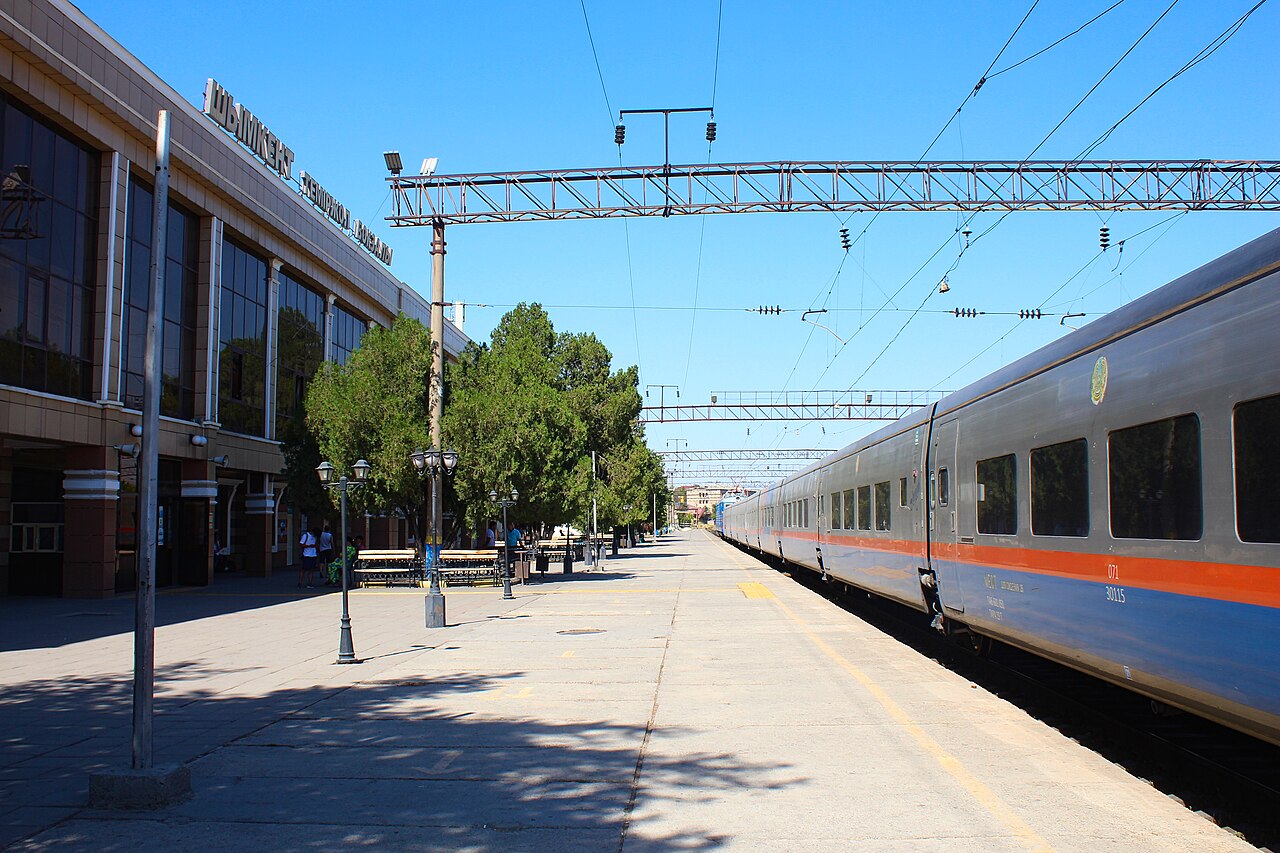
You have three good options for the Kazakhstan-to-Uzbekistan leg. The fastest is to fly Almaty to Tashkent — about one hour forty, with several daily flights on Air Astana, Uzbekistan Airways and others. The classic overland route is the Chernayevka / Zhibek-Joly border between Shymkent and Tashkent: a cross-border bus runs the roughly five-hour trip for a modest fare, or you can chain shared taxis on each side. There’s also a direct through-train from Almaty to Tashkent — around 16 hours on the newer Talgo service, with immigration handled at Saryagash while you stay aboard. Because this itinerary already takes you south to Turkestan, the overland crossing from nearby Shymkent flows naturally; but if time is tight, the flight from Almaty is painless.
Once you’re in Uzbekistan, the Afrosiyob high-speed trains are the joy of the trip. They hit 250 km/h and link the cities fast: Tashkent to Samarkand in a little over two hours, Tashkent to Bukhara in about four, and — new since May 2026 — a high-speed line all the way to Khiva in around seven hours, a route that used to take fourteen. Book these ahead at the official railway site or through an agency; the Afrosiyob sells out, especially in the shoulder seasons.
The 2-week itinerary: Almaty to Khiva
Days 1–3, Almaty (Kazakhstan). Start in the country’s most likeable city — Panfilov Park, the Green Bazaar, Kok Tobe — with a day trip out to Charyn Canyon or up to Big Almaty Lake to stretch your legs before the city-heavy days ahead. See things to do in Almaty for the detail.
Days 4–5, Turkestan (Kazakhstan). Fly or take the fast train south to Turkestan and give the Mausoleum of Khoja Ahmed Yasawi the time it deserves. Kazakhstan’s first UNESCO World Heritage Site, built by Timur between 1389 and 1405 and left deliberately unfinished, it’s the northern jewel of the Silk Road and the perfect primer for what’s coming in Uzbekistan. The rebuilt old town makes a pleasant overnight, and the ruined caravan cities of Sauran and Otrar are nearby for anyone with an extra half-day. This is the heart of my guide to Silk Road Kazakhstan.
Day 6, cross to Tashkent (Uzbekistan). From nearby Shymkent, cross the border to Tashkent by bus or shared taxi (or fly if you prefer). Day 7, Tashkent: Uzbekistan’s big, green capital rewards a day — the sprawling Chorsu Bazaar under its turquoise dome, the Khast Imam complex with one of the world’s oldest Qurans, and the Soviet-era metro stations that are attractions in themselves.
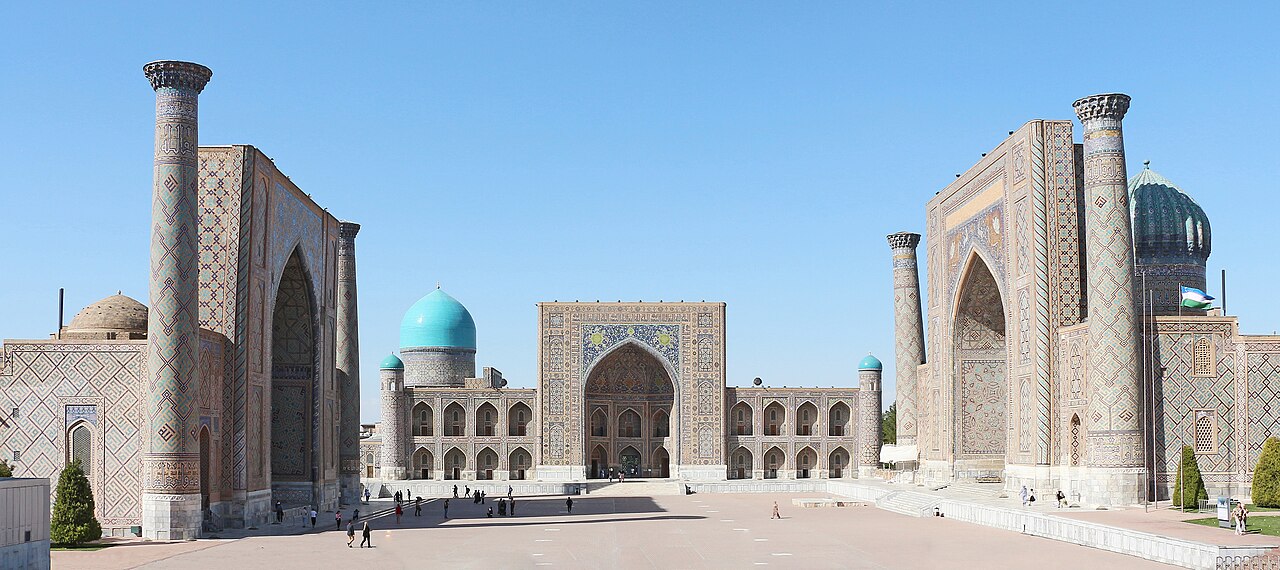
Days 8–9, Samarkand (Uzbekistan). The showstopper. The Registan — three madrasas facing a single square, their portals a riot of blue tile — is one of the great sights of the world, and Samarkand backs it up with the Shah-i-Zinda avenue of tombs, Timur’s own mausoleum at Gur-e-Amir, and the vast Bibi-Khanym mosque. Give it two full days.
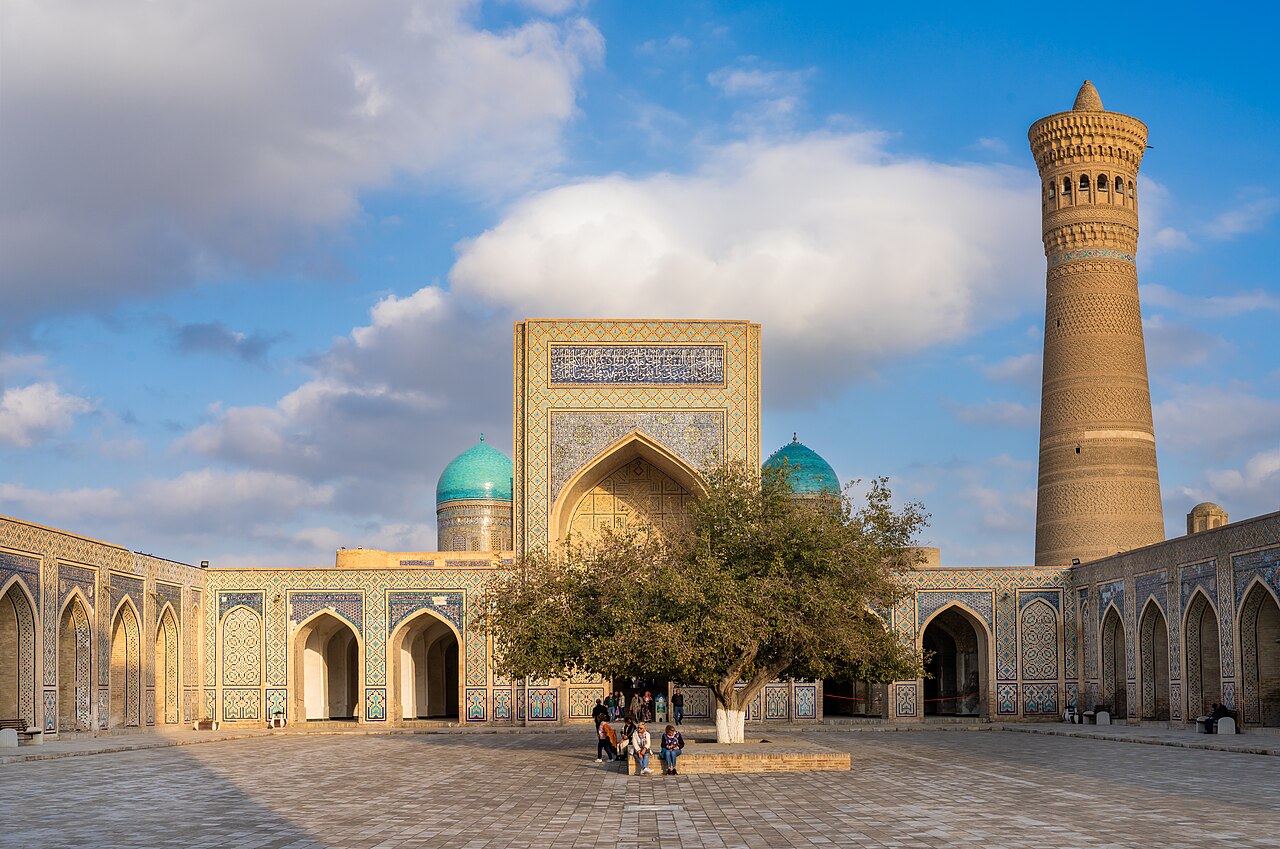
Days 10–11, Bukhara (Uzbekistan). More intimate and more medieval than Samarkand, Bukhara is a living old town you can wander for hours: the towering Kalyan Minaret and its mosque, the ancient Ark fortress, and the shaded Lyab-i-Hauz pool where locals still gather. Two days lets you slow right down.
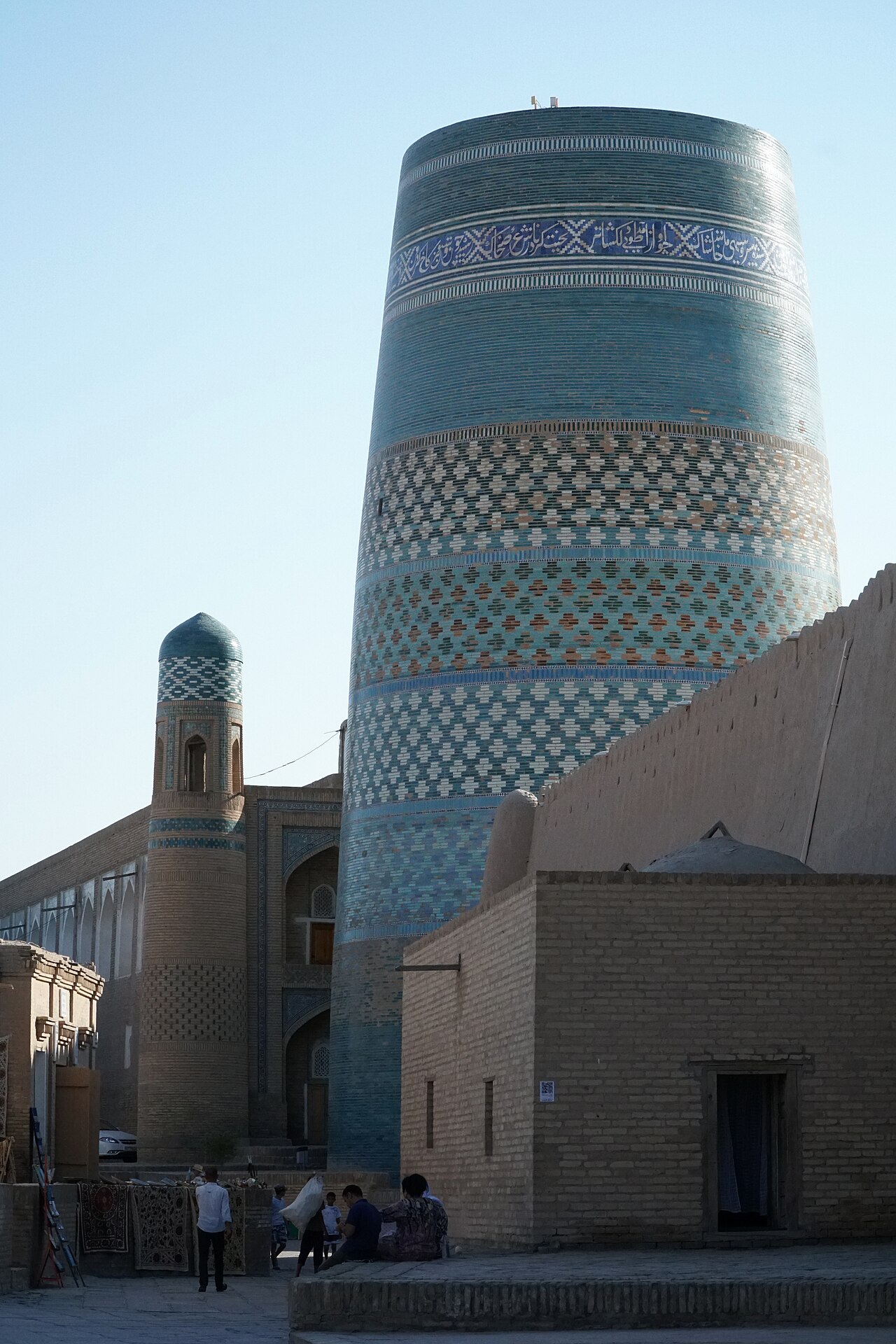
Days 12–13, Khiva (Uzbekistan). The walled old city of Itchan Kala feels like an open-air museum — a compact maze of minarets, madrasas and mud-brick walls that glows at sunset. It’s the most complete Silk Road city of them all, and the new fast train makes it far easier to reach than it used to be. Day 14, fly out via Tashkent (from nearby Urgench) for your journey home.
The 3-week itinerary: the slow Silk Road
With three weeks you stop ticking off cities and start living in them. On the Kazakh side, give Turkestan a second day for Sauran and Otrar, and add a night in Shymkent. In Uzbekistan, take a day trip from Samarkand to Shahrisabz, Timur’s birthplace, with the ruins of his colossal summer palace; from Khiva or Nukus, venture to the Aral Sea and the surreal ship graveyard at Moynaq; and before flying home, loop through the Fergana Valley for Rishtan’s ceramics and Margilan’s silk. Three weeks also gives you room to simply linger — an extra evening in Bukhara, a slow morning over green tea, the kind of unstructured time that these old cities reward more than any checklist.
Where to stay along the route
This trip runs on atmospheric old-town stays, which are half the fun. In Almaty, base yourself centrally near Panfilov Park. In Turkestan, the newer hotels around the mausoleum complex are comfortable and well-placed. In Uzbekistan, sleep inside the historic cores wherever you can: Samarkand and especially Bukhara have gorgeous restored-madrasa and merchant-house guesthouses within walking distance of the monuments, and staying inside Khiva’s walled Itchan Kala means you get the old city to yourself once the day-trippers leave. Tashkent, being a modern capital, is more about convenient business hotels near a metro stop. Book the Uzbek old-town guesthouses ahead in spring and autumn — the best ones are small and fill quickly. My guide to where to stay in Kazakhstan covers the Kazakh nights.
What this trip costs
This is an affordable two weeks by any measure. Uzbekistan is very cheap for food and lodging, and Kazakhstan is mid-range. Independent travellers can do the whole loop on around 50–70 US dollars a day — old-town guesthouses, fast trains, market meals — while a comfortable version with better hotels, guided city tours and business-class Afrosiyob seats runs more like 100–160 a day. The larger fixed costs are the Almaty region day trips, the Kazakhstan-to-Uzbekistan transport, and any internal Uzbek flight (Khiva to Tashkent, say, if you skip the train back). Two weeks all in, excluding international flights, commonly lands between 900 and 2,200 US dollars per person. See what a Kazakhstan trip costs for the Kazakh side.
What to eat along the Silk Road
The food tracks the journey. In Kazakhstan you’ll eat beshbarmak (meat and flat noodles), plov and grilled meats; cross into Uzbekistan and plov becomes a religion — every region has its own version, and Tashkent’s plov centres are an event in themselves. Along the way you’ll find shashlik, tandoor samsa, fresh non bread stamped with patterns, and, in the Uzbek cities, sweet melons, dried apricots and endless green tea. Bukhara and Samarkand have lovely courtyard restaurants set in old caravanserais. Vegetarians will find it more limited than the Kazakh cities but manageable with salads, bread and dairy. Come hungry — this is one of the underrated food trips of Asia.
Getting around: trains, fares and booking
Uzbekistan is one of the easiest countries in the region to travel, largely thanks to its trains. The Afrosiyob high-speed services are comfortable, punctual and cheap by Western standards, with economy, business and VIP classes and a café car. Book them in advance — 30 to 60 days out for peak season — through the official railway.uz site or an agent like 12go; the popular departures sell out. Slower Sharq trains cover the same routes for less if the fast ones are full. Within cities, Tashkent has a metro and the historic cores are walkable; Yandex Go and local ride apps handle taxis. On the Kazakh side, the comfortable Tulpar-Talgo trains link Almaty, Shymkent and Turkestan; my guide to getting around Kazakhstan has the detail.
Money, SIMs and registration
Two countries means two currencies: the Kazakhstan tenge and the Uzbekistan som. Uzbekistan has modernised fast — cards now work in most city hotels and restaurants, and ATMs dispense som and sometimes dollars — but carry cash for bazaars, taxis and smaller towns. Local SIMs or an eSIM keep you online cheaply in both countries. And remember Uzbekistan’s registration requirement: hotels register you automatically, so keep the paper slips they give you in case you’re asked on departure, and if you camp or stay somewhere informal, understand how to register yourself. None of this is onerous — Uzbekistan has gone out of its way to make tourism easy — but it’s worth knowing before you go.
How to run the route in reverse
Plenty of travellers do this trip the other way, flying into Tashkent and finishing in Almaty, and it works just as well — you’d start with the Silk Road cities and end with Kazakhstan’s mountains and steppe as a spacious, modern coda. The main reason to choose a direction is your international flights: fly into whichever of Almaty or Tashkent is cheaper and out of the other, or in and out of the same city if a loop suits your ticket. If you run it Uzbekistan-first, do Khiva–Bukhara–Samarkand–Tashkent, cross to Shymkent and Turkestan, then finish in Almaty. One tip either way: don’t put a border crossing or a long train on the same day as an international flight — leave a buffer night in your departure city. This route is designed as the natural extension of my 7-day Kazakhstan itinerary, so you can bolt the two together if you’re building from scratch.
Don’t skip the Kazakh Silk Road
If there’s one piece of advice that sets this itinerary apart, it’s this: give Kazakhstan’s own Silk Road its due rather than treating the country as a mere gateway to Uzbekistan. Turkestan’s Mausoleum of Khoja Ahmed Yasawi isn’t a lesser warm-up act — it’s a direct ancestor of everything you’ll admire in Samarkand. Timur built it near the end of the fourteenth century, and the Persian craftsmen who worked its soaring portal and ribbed dome went on to shape the Timurid masterpieces further south. Stand beneath its unfinished front, still scarred with the wooden scaffolding poles Timur’s death left in place, and you’re looking at the moment this whole style was being invented. Add the ghostly ruined caravan cities of Sauran, with its double walls rising from empty steppe, and Otrar, where Timur himself died, and you have a Kazakh Silk Road chapter that most travellers miss entirely. It costs you only a day or two, and it makes the Uzbek cities that follow read like the next page of the same story rather than a separate book. That through-line — one dynasty, one artistic language, one trade road, two modern countries — is the real reward of doing Kazakhstan and Uzbekistan together.
Frequently asked questions
How many days do you need for Kazakhstan and Uzbekistan?
Two weeks covers the highlights: three days in the Almaty region, one or two at Turkestan, and roughly two days each in Tashkent, Samarkand, Bukhara and Khiva. Three weeks lets you add the Aral Sea, Shahrisabz and the Fergana Valley at a slower pace. Ten days is enough if you cut Khiva and focus on Almaty, Tashkent, Samarkand and Bukhara.
Can you travel from Kazakhstan to Uzbekistan by train?
Yes. A direct Talgo train runs Almaty to Tashkent in about 16 hours, with immigration handled at the Saryagash border while you stay aboard. Alternatively, take the fast train to Shymkent and cross the nearby land border to Tashkent by bus or shared taxi. Once in Uzbekistan, the Afrosiyob high-speed network links Tashkent, Samarkand, Bukhara and now Khiva.
Do US and UK citizens need a visa for these countries?
Not for tourism. Both Kazakhstan and Uzbekistan are visa-free for UK citizens, and Uzbekistan became visa-free for US citizens at the start of 2026 (Kazakhstan already was). Stays are typically up to 30 days. Uzbekistan also requires you to be registered within three days of arrival, which hotels handle automatically. Always confirm the current rules for your passport before travelling.
Which is better, Samarkand or Bukhara?
They’re different pleasures. Samarkand has the single most spectacular sight — the Registan — and grand, monumental scale. Bukhara is smaller, older-feeling and more atmospheric, a living old town you wander rather than a set of monuments you visit. Most travellers love both and are glad they gave each two days; if forced to choose, pick Samarkand for wow-factor, Bukhara for atmosphere.
How do you get from Almaty to Tashkent?
The quickest way is a direct flight of about one hour forty, with several daily. Overland, take the train or bus south to Shymkent and cross the Chernayevka/Zhibek-Joly border to Tashkent, roughly five hours in total. There’s also a direct Almaty–Tashkent Talgo train of around 16 hours. This itinerary uses the southern crossing, since you’re already heading that way for Turkestan.
Is it safe to travel in Kazakhstan and Uzbekistan?
Yes — both are calm, welcoming and rate as low-risk for travellers, including solo and female travellers. Violent crime against tourists is rare; the usual sense about crowded markets, taxis and looking after your documents is all that’s needed. Uzbekistan in particular has invested heavily in tourism and feels very easy to travel. Check your government’s current advisory before you go, but neither country should give you pause.
Final thoughts
Kazakhstan and Uzbekistan are the two ends of the same Silk Road, and travelling them in one trip — steppe to oasis, Turkestan to Samarkand — is as satisfying as Central Asia gets. Start in comfortable Almaty, let Turkestan set the scene, then ride the fast trains west through the blue cities. Two weeks will fill your camera and your imagination; three will let you fall properly under the spell. Come in spring or autumn, book the Afrosiyob ahead, and keep those Uzbek registration slips. For more on the Kazakh half, see my Silk Road Kazakhstan guide and the broader Kazakhstan itineraries.
Photo credits
Images via Wikimedia Commons: Khoja Ahmed Yasawi Mausoleum by Adam Harangozó (CC BY-SA 4.0); Tulpar-Talgo train by (Kazakhstan Tourism media library); Registan, Samarkand by Bernard Gagnon (CC0); Po-i-Kalyan, Bukhara by Maksimsokolov (CC BY-SA 4.0); Kalta Minor, Khiva by Adam Harangozó (CC BY-SA 4.0). Reused under their respective CC0 / CC BY-SA licences.

