Contents
- The route at a glance
- Why combine Kazakhstan and Kyrgyzstan?
- Visas and entry
- Getting between the two countries
- The 2-week route, day by day
- The 3-week route: what to add
- The treks and the yurts
- Where to stay along the way
- What this trip costs
- How to reverse or adapt this route
- Best time to go
- Altitude and staying healthy
- Money, SIMs and practicalities
- Flying out: loop back to Almaty or exit Bishkek?
- Frequently asked questions
- Final thoughts
If you’re flying all the way to Central Asia, it would be a shame to stop at one country — and no two neighbours pair as naturally as Kazakhstan and Kyrgyzstan. They share a border, a mountain range and an easy land crossing, but they feel wonderfully different: Kazakhstan’s polished, café-filled Almaty and its canyon country, Kyrgyzstan’s raw, horse-and-yurt highlands. Put them together and you get one of the great mountain trips on earth.
Here’s the short version. The ideal Kazakhstan and Kyrgyzstan itinerary uses Almaty as your gateway: two or three days in the city and at Charyn Canyon, then a land crossing into Kyrgyzstan for Karakol, the Ala-Kul trek, Lake Issyk-Kul and the yurt camps of Song-Kul, before looping back to fly out of Almaty. Two weeks covers the highlights; three weeks lets you slow down and add the wilder corners.
I’ve done this loop more than once, and the logic that makes it sing is simple: fly into well-connected Almaty, travel overland through the mountains, and come back to Almaty for a cheaper flight home. Below is the full route, both the two-week and three-week versions, the border crossings that save you backtracking, and honest advice on the treks, the yurts and juggling two currencies.
The route at a glance
Here’s the two-week spine of this Kazakhstan Kyrgyzstan itinerary in one view. The three-week additions come further down.
| Days | Where | Country | Highlights |
|---|---|---|---|
| 1–2 | Almaty | Kazakhstan | City, Kok Tobe, Green Bazaar, Medeu |
| 3–4 | Charyn & Kolsai | Kazakhstan | Canyon, Kaindy & Kolsai lakes |
| 5 | Karkara → Karakol | Border → Kyrgyzstan | Cross without backtracking |
| 6–8 | Karakol | Kyrgyzstan | Ala-Kul trek, Altyn Arashan hot springs |
| 9 | South Issyk-Kul | Kyrgyzstan | Jeti-Oguz, Skazka Canyon |
| 10–12 | Song-Kul | Kyrgyzstan | Yurt stay, horses, stargazing |
| 13 | Bishkek | Kyrgyzstan | Capital, Burana Tower en route |
| 14 | Almaty | Kazakhstan | Transfer back, fly home |
Why combine Kazakhstan and Kyrgyzstan?
The two countries are complementary in the best way. Kazakhstan gives you the comfortable end of Central Asia — a sophisticated base city in Almaty, good roads, the drama of Charyn Canyon and the Kolsai and Kaindy lakes — while Kyrgyzstan delivers the raw, high-mountain experience: community yurt camps at 3,000 metres, multi-day treks over glacial passes, and a herding culture that’s still very much alive. They’re divided by the Tian Shan but linked by a short, straightforward border, and both are visa-free for most Western travellers, so hopping between them is genuinely easy. If Kazakhstan is the polished introduction, Kyrgyzstan is the wild heart — and doing them back to back tells a fuller story than either alone. My comparison of Kazakhstan versus Kyrgyzstan digs into how they differ.
There’s also a neat logistical truth behind the pairing: Almaty is the best-connected air hub in the region, so it’s usually the cheapest and easiest place to fly into and out of, while the mountains you most want to trek happen to be just over the border in Kyrgyzstan. Combining the two lets you fly smart and travel wild. And because the border is a simple overland crossing rather than another flight, you feel the transition — the roads get rougher, the villages smaller, the horses more numerous — in a way that a hop between airports never gives you.
Visas and entry
This is one of the easiest two-country trips in Asia on paper. Kazakhstan is visa-free for up to 30 days per visit for citizens of most Western countries — the US, UK, EU, Canada, Australia and many more — and Kyrgyzstan is likewise visa-free for around 30 days for a similar list, with an official e-visa for other nationalities. Because you’ll cross the border and come back, do check that your Kazakhstan allowance covers the total time you’ll spend there across both entries. Visa rules do shift, so confirm the current position for your passport before you book; my Kazakhstan visa guide keeps the details, and Kyrgyzstan’s official tourism portal is the place to check the other side.
Getting between the two countries
There are two ways across, and choosing the right one saves you a wasted day. The standard route is Almaty to Bishkek via the Korday crossing (called Ak-Zhol on the Kyrgyz side): about 235 kilometres and four to five hours. Buses leave several times a day from Almaty’s Sayran station for around 3,300 tenge; shared taxis and private cars are faster but dearer. You walk through the border yourself and pick up onward transport on the far side.
But if your plan runs through Charyn and the Kolsai lakes first — as this one does — there’s a smarter option: the Karkara (Kegen) crossing, which links the Kolsai area directly to Karakol on Kyrgyzstan’s side of Issyk-Kul, so you don’t backtrack all the way to Almaty and Bishkek. It’s a smaller, seasonal post with little transport waiting on the Kyrgyz side, so arrange a Karakol guesthouse pickup in advance, and confirm it’s open before you rely on it. Used well, it turns two long travel days into one and drops you straight at the foot of the Ala-Kul trek.
The 2-week route, day by day
Days 1–2, Almaty (Kazakhstan). Ease in with the country’s most likeable city: Panfilov Park and the wooden Ascension Cathedral, the Green Bazaar, a sunset up Kok Tobe, and the mountains at Medeu. It’s the gentle, comfortable start before the wild stuff — see things to do in Almaty for the detail.

Days 3–4, Charyn and the lakes (Kazakhstan). Drive east to Charyn Canyon and its Valley of Castles, then continue to the Kolsai and Kaindy lakes, overnighting near Saty. This positions you perfectly for the Karkara crossing.

Day 5, cross to Karakol (Kyrgyzstan). Take the Karkara/Kegen border into Kyrgyzstan and transfer to Karakol, the scruffy, likeable trekking hub at the east end of Lake Issyk-Kul.
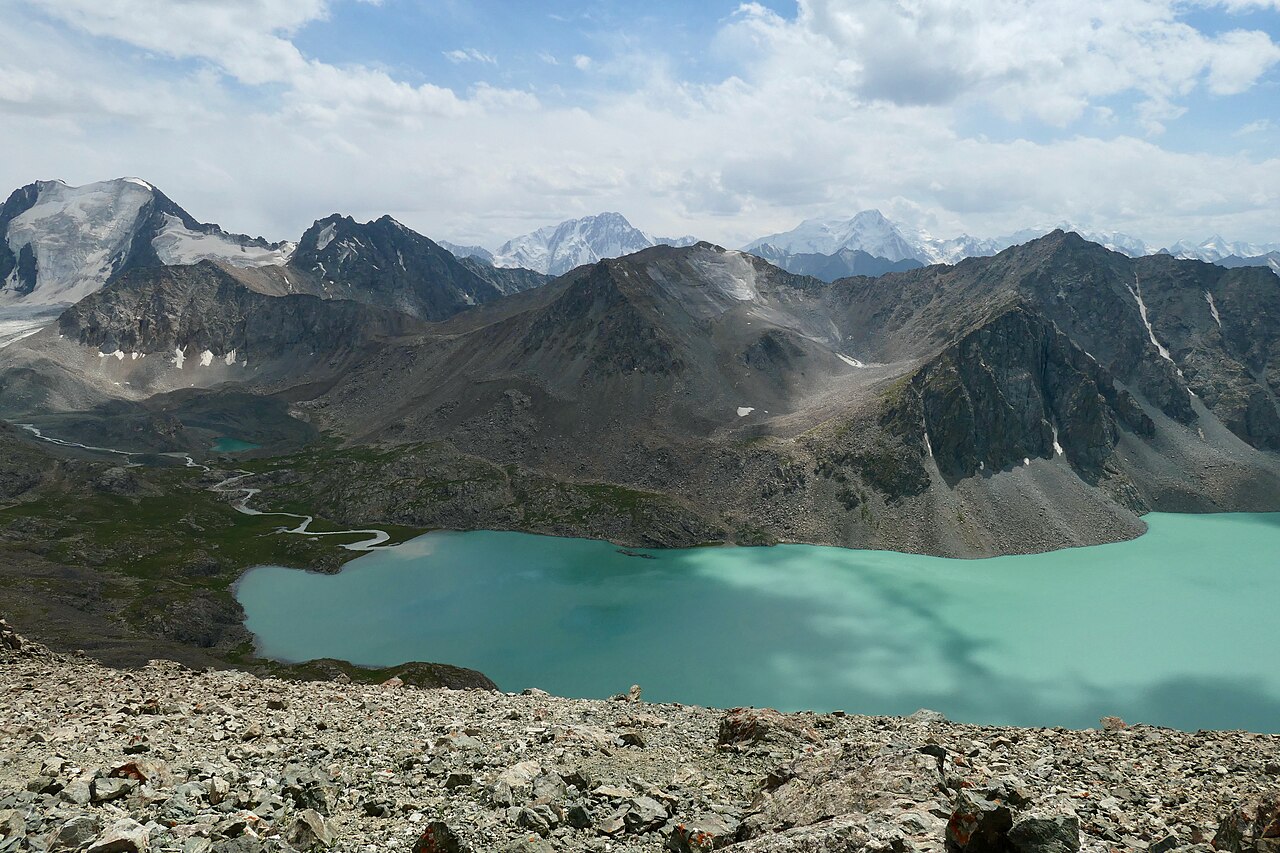
Days 6–8, the Ala-Kul trek (Kyrgyzstan). The trip’s mountain centrepiece: a classic three-day trek from the Karakol valley up to the astonishing turquoise Ala-Kul lake at around 3,500 metres, over a 3,900-metre pass, and down to the Altyn Arashan hot springs. It’s a medium-to-hard walk with real altitude, but it’s the memory you’ll carry home.
Day 9, south Issyk-Kul (Kyrgyzstan). Recover with an easy day along the lake’s southern shore: the red sandstone cliffs of Jeti-Oguz (“Seven Bulls”) and the eroded badlands of Skazka (Fairy-Tale) Canyon.
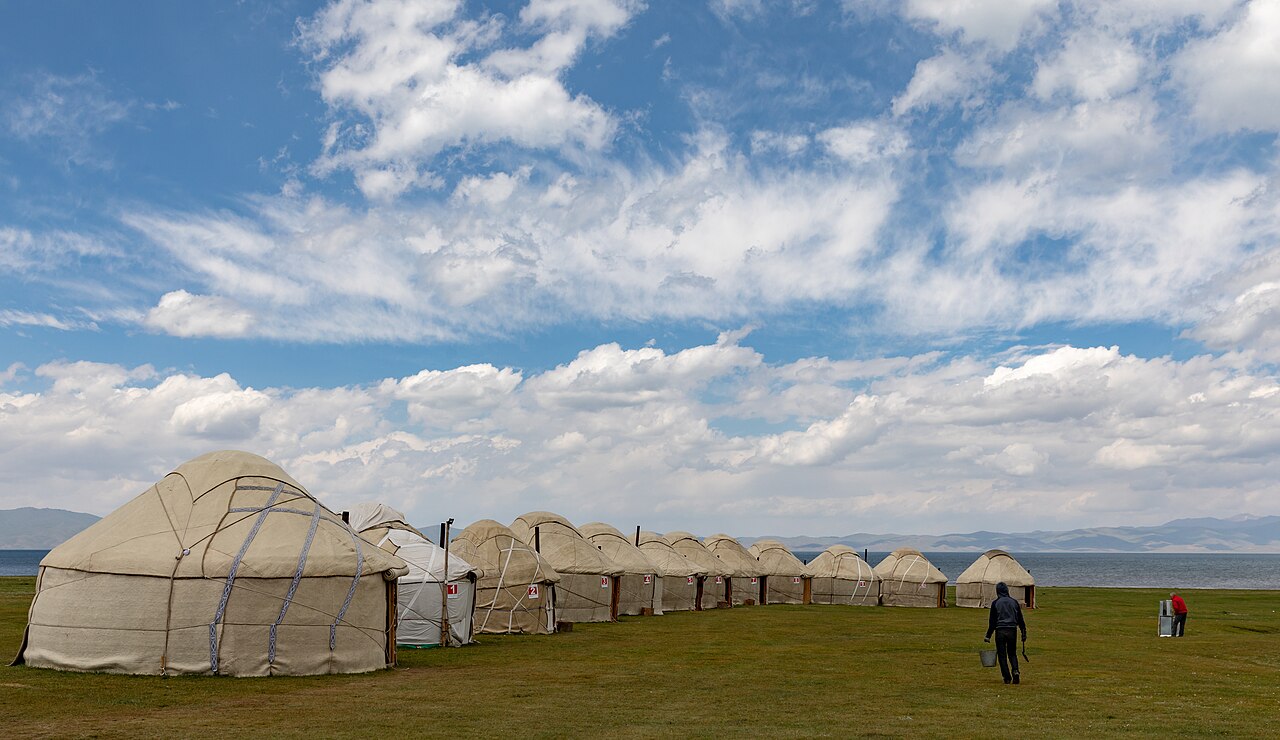
Days 10–12, Song-Kul (Kyrgyzstan). The other side of Kyrgyzstan: a high summer pasture at 3,016 metres ringed by yurt camps, where herders still bring their flocks up for the season. Sleep in a yurt, ride a horse across the jailoo, and watch a night sky with no light for a hundred miles. It’s basic — shared facilities, often no shower — and utterly unforgettable.
Day 13, Bishkek (Kyrgyzstan). Descend to the leafy capital, stopping at the Burana Tower, a Silk Road minaret on the way. Day 14, transfer back to Almaty (or fly out of Bishkek) for your journey home.
The 3-week route: what to add
With a third week you can stop rushing and let Kyrgyzstan breathe. Add a slower two days on Issyk-Kul — the world’s second-largest alpine lake, slightly saline and warm enough to swim in summer — with an eagle-hunting demonstration at Bokonbaevo on the south shore. Give the Jyrgalan valley two days for gentler day hikes without the Ala-Kul crowds. Add Naryn and Tash Rabat, a stone caravanserai deep in the mountains near the Chinese border, or the remote alpine lake of Kel-Suu. And if you want the country’s south, fly Bishkek to Osh to save a long road day and explore Arslanbob’s walnut forests. Three weeks is also the version I’d choose if trekking is your main aim, since it leaves room to acclimatise properly before the high passes.
The treks and the yurts
Two experiences define the Kyrgyz half of this trip. The Ala-Kul trek is the headline: three days (splittable to four), starting from Karakol, over a pass near 3,900 metres to a glacial lake that glows an improbable turquoise, finishing at the Altyn Arashan hot springs. It’s not technical, but it is a genuine mountain trek with altitude, cold nights and fast-changing weather — hail in July is normal up high — so come with layers and a reasonable level of fitness. You can hire a guide and horses in Karakol, or walk it independently with a good map.
The Song-Kul yurt stay is the softer counterpart, and just as memorable. Book through the community-based tourism (CBT) offices in Kochkor or directly with a camp: expect around 25–45 US dollars a night including meals, basic shared facilities, and a share of the money going straight to local herding families. The lake is only reachable roughly June to September — the passes are snowbound the rest of the year — and yurts book up in July and August, so reserve a week or two ahead in peak season. For more on Kazakhstan’s own trekking, see hiking in Kazakhstan.
Where to stay along the way
Accommodation shifts from comfortable to characterful as you go. In Almaty, stay central near Panfilov Park — hotels and hostels to suit any budget. Near the Kazakh lakes, a family guesthouse in Saty is the move. In Karakol, cosy guesthouses cater to trekkers and can arrange guides, horses and transport. On the Ala-Kul trek you’ll overnight in a basic yurt camp and, gloriously, the Altyn Arashan hot springs. At Song-Kul it’s yurts on the pasture, booked through CBT or your host. And in Bishkek, leafy guesthouses and mid-range hotels abound. Book the Song-Kul yurts and Karakol guesthouses ahead in July and August; elsewhere you can wing it.
What this trip costs
Central Asia is kind to your wallet, and Kyrgyzstan especially so. As a rough guide, independent travellers can do this loop on around 40–60 US dollars a day — guesthouses, shared transport, yurt stays with meals included — while a more comfortable version with private drivers, guided treks and better hotels runs 80–130 a day. The big variable costs are the guided Ala-Kul trek (a few days with a guide and horses) and any private transfers across the border and to Song-Kul, where shared 4x4s are the norm. Two weeks all in, excluding international flights, commonly lands somewhere between 900 and 2,000 US dollars per person depending on style. My guide to Kazakhstan trip costs covers the Kazakh side; Kyrgyzstan tends to run a touch cheaper.
How to reverse or adapt this route
The loop works in either direction. If your flight lands in Bishkek instead of Almaty, simply run it in reverse — Bishkek and Song-Kul first, the treks in the middle, then cross to Charyn and finish in Almaty. If you’re short on trekking legs or travelling with kids, you can swap the demanding Ala-Kul trek for gentler day hikes around Karakol and Jyrgalan and still get the mountain feel. And if you have only ten days rather than two weeks, cut the trip to Almaty, Charyn, Karakol with a day hike, and Song-Kul, skipping the multi-day trek — a lighter but still wonderful version of this Kazakhstan-Kyrgyzstan itinerary. The one rule I’d hold to is to acclimatise on the lower ground before the high passes, so sequence Almaty and Issyk-Kul before Ala-Kul and Song-Kul.
If you would rather keep the trip inside one country, our Kazakhstan itinerary guide has single-country routes and the two-week Grand Loop fills the same fortnight without a border crossing. Heading west instead? Our Kazakhstan–Uzbekistan route is the Silk Road alternative.
Best time to go
This is a summer trip, full stop. The window is June to September, with July and August the only reliable months for the Song-Kul yurts and the high passes. June brings wildflowers and thinner crowds but lingering snow on the highest routes; September is beautiful and quieter but the nights turn bitterly cold above 3,000 metres, and by October many mountain roads and camps close. Outside summer the high country is effectively shut. If your dates are fixed to, say, May or October, weight the trip toward the lower Kazakh side — Almaty, Charyn and Issyk-Kul’s shore — and skip the high treks and yurts. My guide to the best time to visit Almaty covers the Kazakh season in detail.
Altitude and staying healthy
This route climbs high, and altitude is the health issue to respect. You start low — Almaty and Bishkek sit under 900 metres — but within days you’re sleeping at 3,000 metres at Song-Kul and crossing a 3,900-metre pass on the Ala-Kul trek. That’s enough to bring on altitude headaches or worse if you go up too fast. The fix is built into the sequence: spend your first days low (Almaty, Charyn, the Issyk-Kul shore) before the high passes and yurt camps, drink far more water than feels necessary, and don’t push through severe symptoms — descend if in doubt. Beyond altitude, the practical health notes are simple: the tap water isn’t reliably drinkable, so filter or buy it; the sun at altitude is fierce, so cover up; and mountain weather is genuinely dangerous when it turns, so never start a high trek in a bad forecast. None of this should put you off — thousands walk Ala-Kul every summer — but a little respect for the mountains goes a long way.
Money, SIMs and practicalities
The one wrinkle of a two-country trip is two currencies: Kazakhstan uses the tenge and Kyrgyzstan the som, and they’re not interchangeable. Don’t over-exchange at the border, where rates are poor — change just enough to get moving and get better rates in Karakol or Bishkek. Cards work in Almaty and Bishkek but rural Kyrgyzstan and the yurt camps are cash-only, so carry som for the mountains. A local SIM (O! or Megacom in Kyrgyzstan) or an eSIM keeps you online across most of the route, though don’t expect signal at Song-Kul or on the Ala-Kul trek. Both countries are safe and welcoming for travellers, including solo and female travellers; the usual sense about markets and taxis applies. Download maps offline before the mountain sections.
Flying out: loop back to Almaty or exit Bishkek?
A practical call worth making early. Almaty generally has more and cheaper long-haul flights than Bishkek, so many travellers deliberately loop back to Almaty to fly home — the transfer from Bishkek is only about four hours, and it often pays for itself in a cheaper ticket. If you’re carrying on elsewhere or a one-way Bishkek fare stacks up, flying out of the Kyrgyz capital is perfectly fine too. Either way, build the border logistics into your plan: crossing back to Almaty on the day of an international flight is cutting it fine, so give yourself a night in Almaty at the end. This is exactly the kind of routing my guide to getting around Kazakhstan is built to help with.
Frequently asked questions
How do you get from Almaty to Bishkek?
It’s about 235 kilometres and four to five hours by road via the Korday border crossing. Buses run several times daily from Almaty’s Sayran station for around 3,300 tenge; shared taxis and private cars are quicker but pricier. You clear the border on foot and pick up onward transport on the Kyrgyz side. If you’re coming from Charyn and the Kolsai lakes, the Karkara/Kegen crossing to Karakol saves backtracking.
Do I need a visa for Kazakhstan and Kyrgyzstan?
Most Western travellers get visa-free entry to both — around 30 days each for the US, UK, EU, Canada, Australia and similar passports, with e-visas for other nationalities. Because you enter Kazakhstan twice on this loop, check your total days there stay within the allowance. Confirm the current rules for your nationality before booking, as they change periodically.
Is two weeks enough for Kazakhstan and Kyrgyzstan?
Two weeks covers the highlights — Almaty and Charyn on the Kazakh side, then Karakol, the Ala-Kul trek, Issyk-Kul and Song-Kul in Kyrgyzstan. It’s a good, full trip. Three weeks lets you slow down, add more of Issyk-Kul and the Jyrgalan or Naryn regions, and acclimatise properly if trekking is your focus.
How hard is the Ala-Kul trek?
It’s a medium-to-hard three-day trek with real altitude — a pass near 3,900 metres — and cold, changeable weather even in summer. You don’t need technical skills, but you do need reasonable fitness and proper gear. Many people hire a guide and horses in Karakol; it can also be walked independently with a good map. Allow a day to recover afterwards.
Can you swim in Issyk-Kul?
Yes. Issyk-Kul is a large, slightly saline alpine lake at around 1,600 metres that never freezes — its name means “warm lake” — and it’s pleasant for swimming through the summer, especially along the developed north and south shores. It’s a relaxing counterpoint to the high treks and yurt camps elsewhere on the route.
Which border crossing is best, Korday or Karkara?
It depends on your route. Korday is the main, year-round crossing between Almaty and Bishkek — busy but reliable. Karkara (Kegen) is a smaller, seasonal crossing that links the Charyn and Kolsai area directly to Karakol, saving a big backtrack if you’re doing the Kazakh nature first. For this itinerary, Karkara is the efficient choice in summer; just confirm it’s open and pre-arrange a pickup on the Kyrgyz side.
Should I fly into Almaty or Bishkek?
Almaty usually has more frequent and cheaper long-haul connections, so it’s the natural gateway, and looping back to fly out of Almaty often saves money. Fly into Bishkek if it’s cheaper for your route or you’re running the loop in reverse. Either way, give yourself a buffer night in your departure city so a slow border day doesn’t threaten your flight.
Final thoughts
Kazakhstan and Kyrgyzstan are two halves of the same mountain world, and doing them together is one of the smartest trips you can plan in Central Asia. Use comfortable Almaty as your gateway, cross the mountains overland, and let the contrast do the work — polished city and red canyon on one side, glacial passes and yurt-dotted pastures on the other. Two weeks will thrill you; three will let you breathe. Whichever you choose, come in summer, carry both currencies, and don’t rush the border days. For more on how the two countries stack up before you go, see my guide to Kazakhstan versus Kyrgyzstan, and for building out the Kazakh half, my 7-day Kazakhstan itinerary.
Photo credits
Images via Wikimedia Commons: Song-Kol yurts by Ninara (CC BY 2.0); Ala-Kol lake by Bruno Rijsman (CC BY-SA 2.0). Kazakhstan images elsewhere on the site are credited on their own pages. Reused under their respective CC BY / CC BY-SA licences.