Contents
- Kazakhstan’s climate in a nutshell
- Kazakhstan’s record extremes
- Kazakhstan weather by season
- Almaty weather by month
- Astana weather by month
- Shymkent and the hot south by month
- Aktau and the Caspian coast by month
- Rain, snow and wind across the country
- Same month, different country
- A note on recent heat
- The mountains have their own weather
- The best month to visit Kazakhstan
- What to pack for Kazakhstan’s weather
- Frequently asked questions
- Final thoughts
Kazakhstan is the ninth-largest country on earth, and its weather behaves accordingly — there is no single answer to “what is it like?” On the same March day, the south can be greening at fifteen degrees while the capital sits under snow at minus ten. If you are trying to pick when to go, you need the numbers for the specific place you are heading, not a national average that hides everything interesting. So this guide gives you exactly that: month-by-month temperatures for four very different cities, plus a plain-English explanation of why the climate swings so hard.
Kazakhstan weather by month varies enormously across the country because of its extreme continental climate: hot, dry summers and long, bitterly cold winters, with big day-to-night swings. Almaty in the southeast is milder and wetter; Astana in the north is one of the world’s coldest capitals; the southern cities bake in summer; and the Caspian coast at Aktau is a mild desert. Below you will find average highs and lows for all twelve months in each.

Kazakhstan’s climate in a nutshell
Kazakhstan has an extreme continental climate, and the reason is geography. The country is landlocked, sits in the mid-latitudes, and lies thousands of kilometres from any ocean, so there is no large body of water to moderate the temperature. In winter, frigid Siberian air pours down over the northern steppe; in summer, hot dry air bakes the land. The result is one of the largest annual temperature ranges anywhere on the planet — the gap between record cold and record heat across the country spans roughly 100°C.
Why it’s so extreme
Water heats and cools slowly, which is why coastal places have mild, steady climates. Kazakhstan has almost none of that buffering. Its huge landmass heats rapidly in summer and loses that heat just as fast in winter, and without maritime moisture the air is dry, the skies often clear, and the difference between a summer afternoon and a winter night is staggering. Days and nights swing widely too, especially in spring and autumn.
The four weather worlds
For planning, think of Kazakhstan as four broad zones. The northern steppe around Astana has the harshest winters. The southeastern foothills around Almaty are milder and wetter, cooled by altitude in summer. The hot south around Shymkent and Turkestan has the mildest winters but scorching summers. And the western Caspian coast around Aktau is a mild, sunny desert. Match your trip to the zone, not the country.
Kazakhstan’s record extremes
The averages above are only part of the picture; the records show just how wide the swings can be. The hottest temperature ever recorded in the country is around 49°C, at Turkestan in the south, while the coldest is a scarcely believable minus 57°C, at Atbasar in the north. That gives Kazakhstan an annual temperature range of roughly 100°C between its records — one of the largest of any country on earth, and a direct consequence of its landlocked, mid-latitude position. Even in a normal year, the northern steppe can range from around minus 45°C in the depths of winter to plus 40°C at the height of summer. Southern lowlands swing from about minus 30°C to plus 45°C. These are the outer limits rather than what you will typically experience, but they explain why locals treat both a summer afternoon and a winter night with respect.
Kazakhstan weather by season
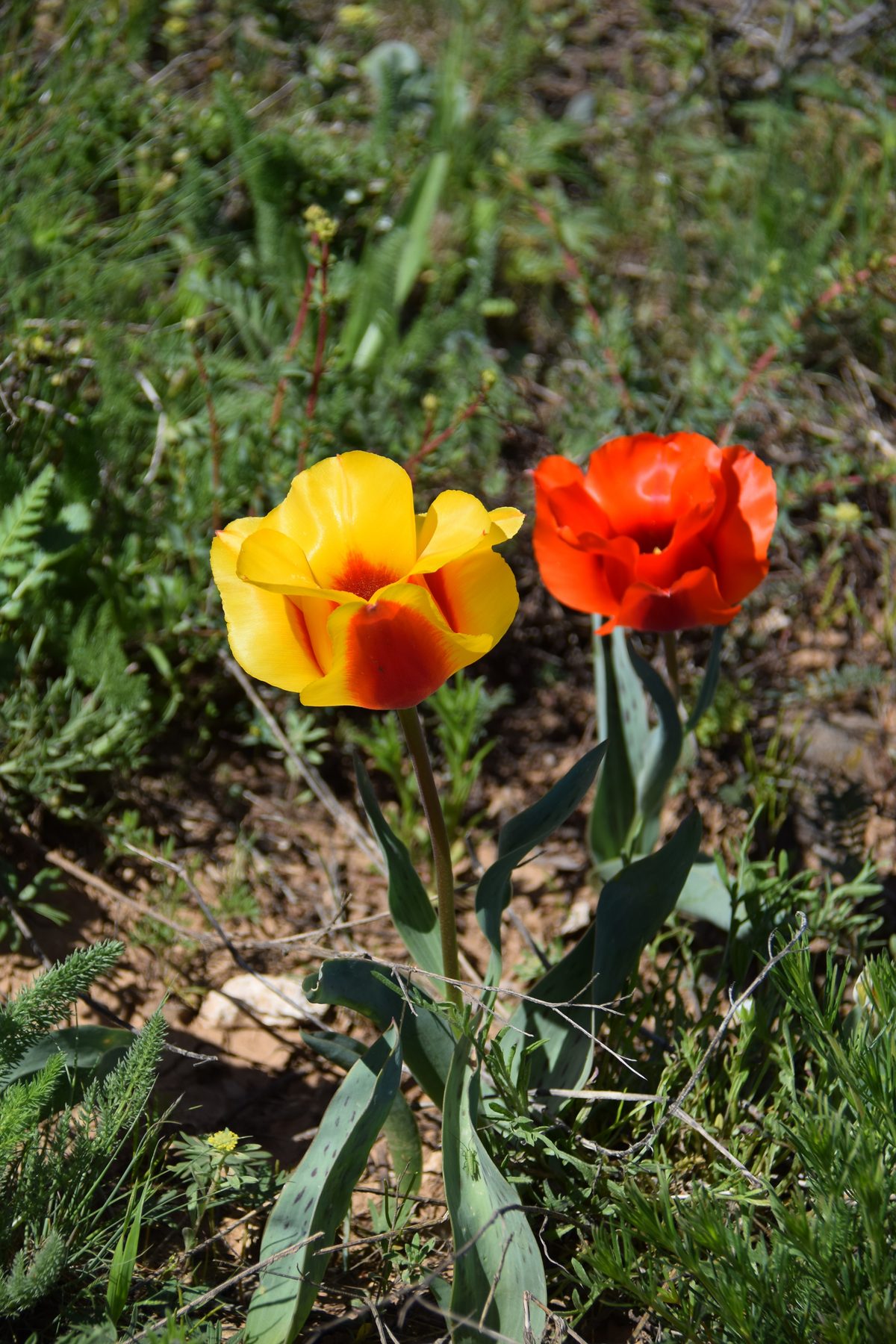
Winter (November–March) is long and severe in the north, milder in the south; expect snow, fog, and occasional blizzards, and superb skiing in the mountains above Almaty. Spring (April–May) is short, green, and unstable, with windy days, the famous wild tulips, and the south warming first. Summer (June–August) is hot and dry, topping 40°C in the south, while the mountains stay pleasantly cool. Autumn (September–October) is crisp, golden, and stable — many travellers’ favourite. The two best all-round windows for a countrywide trip are mid-April to mid-May and the second half of September.
Almaty weather by month
Almaty, the largest city and the base for most trips, sits at around 800 metres in the foothills of the Trans-Ili Alatau. That altitude gives it cold, snowy winters, a big day-to-night range, and summers a touch cooler than the low-lying south. It is also the wettest of the major cities, with a distinct spring rainfall peak, and it gets around a metre of snow across a typical winter.
| Month | Avg high | Avg low |
|---|---|---|
| January | 0°C | -8°C |
| February | 3°C | -6°C |
| March | 10°C | 0°C |
| April | 18°C | 7°C |
| May | 23°C | 12°C |
| June | 28°C | 16°C |
| July | 30°C | 19°C |
| August | 30°C | 17°C |
| September | 24°C | 12°C |
| October | 17°C | 5°C |
| November | 8°C | -1°C |
| December | 2°C | -6°C |
In practice: December through February are cold and snowy, ideal for the ski resorts at Shymbulak and Medeu just above the city; April and May are green and showery; July and August are hot but never as brutal as the southern lowlands; and September and October are golden and comfortable. Our guide to Kazakhstan in winter covers the cold-season side in depth.
Astana weather by month
Astana, the capital, sits on the open northern steppe and has a fearsome reputation: it is often cited as the second-coldest capital city in the world, after Ulaanbaatar. Its January daily mean is around minus fourteen, and five months of the year average below freezing. Summers, by contrast, are short and pleasantly warm.
| Month | Avg high | Avg low |
|---|---|---|
| January | -10°C | -19°C |
| February | -9°C | -18°C |
| March | -1°C | -10°C |
| April | 12°C | 1°C |
| May | 21°C | 8°C |
| June | 26°C | 14°C |
| July | 27°C | 15°C |
| August | 26°C | 13°C |
| September | 19°C | 7°C |
| October | 10°C | 1°C |
| November | -1°C | -9°C |
| December | -8°C | -16°C |
The numbers only tell half the story. Astana sits on flat, shelterless steppe, and near-constant wind drives the “feels-like” temperature far below the thermometer reading — a minus-eighteen day can feel like minus thirty or worse. If you visit in winter, dress as if for a polar expedition. In summer, June and July are actually the rainiest months, bringing afternoon thunderstorms to an otherwise dry city.

Shymkent and the hot south by month
Shymkent, gateway to the Silk Road south, has the mildest winters in the country — its January mean hovers near freezing — but pays for it with searing summers. It sits at around 500 metres, which tempers the heat slightly; the lower-lying towns nearby, such as Turkestan and Kyzylorda, run hotter still.
| Month | Avg high | Avg low |
|---|---|---|
| January | 5°C | -4°C |
| February | 8°C | -2°C |
| March | 14°C | 3°C |
| April | 20°C | 8°C |
| May | 26°C | 13°C |
| June | 32°C | 17°C |
| July | 34°C | 18°C |
| August | 34°C | 18°C |
| September | 28°C | 13°C |
| October | 20°C | 7°C |
| November | 12°C | 2°C |
| December | 6°C | -3°C |
Summer highs in the south routinely reach the high 30s, and the lowland records are extreme: Kyzylorda hit 46.5°C in July 2021, and Turkestan holds the national record near 49°C. This is why spring and autumn, not summer, are the seasons to explore the southern heritage sites — midday in July and August is genuinely punishing. Winters, however, are gentle enough that the south is a reasonable cold-season base.
Aktau and the Caspian coast by month
Out west on the Caspian Sea, Aktau and the Mangystau region have a mild desert climate moderated by the water. Rainfall is almost negligible — around 170 mm a year — and it is one of the sunniest parts of the country. The sea keeps winters milder than the interior and summers a shade less extreme than the inland deserts.
| Month | Avg high | Avg low |
|---|---|---|
| January | 3°C | -3°C |
| February | 5°C | -3°C |
| March | 10°C | 2°C |
| April | 17°C | 8°C |
| May | 24°C | 14°C |
| June | 29°C | 19°C |
| July | 32°C | 21°C |
| August | 32°C | 21°C |
| September | 26°C | 16°C |
| October | 19°C | 9°C |
| November | 10°C | 3°C |
| December | 5°C | -2°C |
The Caspian is warm enough to swim from roughly June to September, peaking around 24°C in August, which makes Aktau Kazakhstan’s low-key beach option. Inland, though, the Mangystau deserts and their surreal chalk formations bake well above 40°C in summer with no shade — so, as with the south, target spring or autumn for exploring the Mangystau backcountry.
Rain, snow and wind across the country
Temperature gets the attention, but precipitation and wind shape a trip just as much. Rainfall is modest and unevenly spread: the northern steppe and Caspian coast get roughly 300 to 500 millimetres a year, the southern semi-deserts as little as 100, and the southeastern mountains considerably more. Almaty is the wettest of the big cities at around 675 millimetres, with a pronounced spring peak — April is comfortably its rainiest month — so a spring visit there should include a waterproof.
Snow follows a strong north-south gradient. The far northern plains see around a hundred days of snowfall a year, the centre about sixty, and the far south only twenty or so. Snow generally lies from November to March, arriving earliest and lingering longest in the north, where low winter evaporation keeps the ground white for months even though total snowfall is light. Wind is the other underrated factor: the open steppe, especially around Astana, is exposed and often windy, which drives winter wind chill far below the thermometer and kicks up dust storms in the dry south in spring. Pack a windproof outer layer whatever the season.
Same month, different country
To see how much the region matters, look at a single month. In April, Shymkent is enjoying 20°C afternoons while Astana is barely into double figures by day and still freezing at night. In October, Almaty is a crisp and golden 17°C while Astana is heading for its first snow. The lesson is that “Kazakhstan in [month]” is almost meaningless without a place attached — a spring trip to the south is a different climate entirely from the same-week trip to the capital. Build your itinerary and your packing around the specific cities on your route.

A note on recent heat
It is worth flagging that Kazakhstan’s summers have been trending hotter. In July 2026, a severe heatwave pushed temperatures across the south and southeast to around 45–48°C, and even the notoriously cold capital drew headlines for record warmth. The long-term averages in this guide remain the best planning baseline, but treat them as a floor rather than a ceiling in high summer: build in extra tolerance for heat if you are travelling to the south or the deserts in July and August, and lean toward the shoulder seasons if extreme heat is a concern. Conversely, winter cold snaps in the north remain as fierce as ever, so the extremes are widening at both ends.
The mountains have their own weather
None of the city tables above apply to the high country, which runs by its own rules. Kazakhstan’s southeast rises into the Tian Shan, crowned by Khan Tengri at just over 7,000 metres, and up there conditions are a separate regime entirely: snow lingers on the high passes into early summer, nights are cold even in July and August, and afternoon thunderstorms build over the peaks in the warm months. As a rough guide, expect the temperature to drop by about six degrees for every thousand metres you climb, so a 30°C afternoon in Almaty translates to something far cooler at a 2,500-metre lake and near-freezing on a 3,500-metre ridge at night. If your trip involves hiking in Kazakhstan, plan around the mountain calendar — mid-June to mid-September for the high routes — rather than the city forecast.
The best month to visit Kazakhstan
If you want a single, safe recommendation, aim for May or September, and specifically the sweet spots around mid-April to mid-May and the second half of September, when you can usually find pleasant weather across most of the country at once.
Best month by goal
It depends on what you have come for. For the wild tulips, late April to early May. For hiking and the high lakes, June to September, when the snow has cleared the passes. For skiing, January and February at Shymbulak. For a Caspian beach, July and August at Aktau. For golden foliage and comfortable sightseeing, September into October. And to avoid both crowds and heat, the September–October shoulder is hard to beat.
Month-by-month verdict
| Month | Verdict |
|---|---|
| January–February | Deep winter; skiing and frozen scenery, brutal in the north |
| March | Late winter north, thaw south; Nauryz festival |
| April | Green, showery, good value; south best |
| May | Excellent all-round; tulips and wildflowers |
| June | Warm, green mountains open up; great for hiking |
| July–August | Hot cities and deserts; head for the mountains and lakes |
| September | Arguably the best month; warm, golden, harvest |
| October | Crisp, peak foliage; mountains start closing |
| November | Late autumn to early winter; cold in the north |
| December | Winter; ski season and festive cities |
What to pack for Kazakhstan’s weather
Whatever the month, layering is the key to Kazakhstan’s continental swings. In summer, pack light, breathable clothing plus a fleece and waterproof for cool mountain nights and steppe thunderstorms. In winter, especially in the north, you need serious cold-weather kit — thermal base layers, an insulated coat, and a hat, scarf, and gloves that can handle wind chill well below the thermometer reading. Spring and autumn call for versatile layers and a waterproof, because a single day can swing from near-freezing dawns to warm afternoons. Sun protection matters year-round at altitude, where the UV is strong even when the air is cold. Our guides to getting around Kazakhstan and building a Kazakhstan itinerary help with the logistics once you have packed for the weather.
Frequently asked questions
What is the best month to visit Kazakhstan?
For a countrywide trip, May or September are the safest bets, offering pleasant weather across most regions at once. The precise sweet spots are mid-April to mid-May and the second half of September. Your ideal month shifts with your goal, though — tulips in late April, high-mountain hiking from June to September, and skiing in January and February.
What is the coldest month in Kazakhstan?
January, by a clear margin. In the northern capital, Astana, the January daily mean is around minus fourteen, with lows below minus twenty and cold snaps far colder, made worse by relentless steppe wind. Almaty is milder but still below freezing, while the southern city of Shymkent hovers near zero — the mildest winter option in the country.
Is Astana really one of the coldest capital cities in the world?
Yes. Astana is widely cited as the second-coldest capital on earth, after Ulaanbaatar in Mongolia. Its winters are long and severe, with January means near minus fourteen and five months of the year averaging below freezing, and the wind on the open steppe makes it feel dramatically colder still. Pack accordingly if you visit between November and March.
How hot does Kazakhstan get in summer?
Very hot in the south and on the steppe. Southern lowland cities regularly exceed the high 30s, and records approach 49°C at Turkestan and reached 46.5°C at Kyzylorda in 2021. Almaty is warm at around 30°C in July, while the capital Astana is milder near 27°C. The mountains, however, stay pleasantly cool, which is where travellers head in high summer.
Does it snow in Kazakhstan, and when?
Yes, extensively. The northern plains see roughly a hundred days of snowfall a year, the centre around sixty, and the far south only about twenty. Snow generally falls from November to March, arriving earliest and lasting longest in the north; Astana usually gets its first snow by mid-October. Almaty averages around a metre of snow across a winter, feeding its ski resorts.
When is the rainy season in Kazakhstan?
There is no tropical-style rainy season, but the wettest time in the southeast, including Almaty, is spring — April is the rainiest month there. The northern capital Astana sees its heaviest rain in June and July, when afternoon thunderstorms roll across the steppe. The south and the Caspian coast are dry for most of the year, with the west receiving almost no rain at all.
Is the Caspian Sea warm enough to swim at Aktau?
Yes, in summer. The sea off Aktau warms to comfortable swimming temperatures from roughly June to September, peaking around 24°C in August, which makes the Mangystau coast Kazakhstan’s understated beach destination. Outside those months the water is cold, and the inland deserts nearby are best avoided in high summer because of extreme heat.
What kind of climate does Kazakhstan have?
An extreme continental climate: hot, dry summers and long, cold winters, with large swings between day and night and between seasons. Because the country is landlocked and far from any ocean, nothing moderates the temperature, so the northern steppe in particular endures fierce winters and warm summers. The south is milder in winter but hotter in summer, and the Caspian coast is a mild desert.
Final thoughts
The single most useful thing to know about Kazakhstan’s weather is that the country is too big and too continental for one forecast to cover it. Pick your cities first, read their monthly numbers above, and pack for the swings — warm days and cold nights, especially in spring and autumn, and genuinely severe winters in the north. For most first-time visitors, May and September hit the sweet spot of comfortable weather almost everywhere at once. Get the timing right for your particular route, and Kazakhstan’s climate becomes an asset rather than an obstacle.
Photo credits
Almaty panorama with the Trans-Ili Alatau: Rok muncher (CC0) via Wikimedia Commons. Wild tulips, Aksu-Zhabagly: V.A. Kovshar (CC BY-SA 4.0) via Wikimedia Commons. Big Almaty Lake in summer: Nessi Gileva red_fox (CC0) via Wikimedia Commons. Snowy Tian Shan above Almaty: Nikolai Bulykin (CC BY-SA 4.0) via Wikimedia Commons.

