Contents
- Is Kazakhstan safe for solo female travellers? The honest overview
- What solo female travellers actually report
- Cultural context: attitudes to women
- What to wear
- Getting around safely
- Where to stay
- Nightlife and alcohol — the one area to be cautious
- Harassment: the reality and how to handle it
- Hiking, nature and tours
- Health and emergencies
- Staying connected
- Visa, entry and registration made simple
- Useful Russian and Kazakh phrases
- Best places for solo women
- Hospitality and homestays
- Packing checklist for solo women
- Frequently asked questions
- Final thoughts
Kazakhstan doesn’t get nearly enough credit as a solo female destination. It’s safe, welcoming and wildly beautiful, and yet so few Western women think to come that you’ll often feel like a pleasant novelty rather than a target. That said, I don’t believe in glossy “you’ll be totally fine!” guides, so this is the honest version: overwhelmingly positive, with the real caveats included, and the practical detail you actually need.
Solo female travel in Kazakhstan is generally safe and rewarding. Most women report feeling welcomed and rarely harassed, especially in Almaty and Astana; violent crime against tourists is rare, and the main issues are petty theft, unregistered taxis, and occasional staring or unwanted attention. Use ride-hailing apps, dress with light awareness of context, and the usual traveller sense, and it’s a superb place to explore alone.

Is Kazakhstan safe for solo female travellers? The honest overview
The short answer
Yes — with normal precautions. Kazakhstan is widely considered one of the more comfortable Central Asian countries for women travelling alone. The overwhelming majority of solo female travellers describe feeling safe, and often specifically mention that catcalling and street harassment are far less common than in many other places. It’s not a place where you’ll spend your days on high alert. That’s worth saying plainly, because Kazakhstan’s unfamiliarity to Western travellers sometimes gets mistaken for danger. In practice it’s the obscurity, not any real risk, that keeps the numbers low — and that obscurity is exactly what makes travelling here as a woman feel so refreshingly hassle-free.
What the data and advisories say
The broad picture is reassuring: major government advisories generally place Kazakhstan at their lowest risk tier (“exercise normal precautions”), and traveller-safety platforms that aggregate women’s reviews rate it moderately-to-well for solo women. As always, check your own government’s current advice before you travel, since ratings can change — but the baseline is a country considered safe for tourists, including women on their own. Our pillar guide, is Kazakhstan safe?, covers the wider security picture.
What solo female travellers actually report
The common experience
Read enough first-hand accounts and a clear pattern emerges: women describe being welcomed warmly, invited into homes, helped by strangers, and walking around cities in the evening without trouble. Many say Kazakh men are notably reserved and respectful toward foreign women, and that the attention they do get is curiosity — you may be one of very few foreign tourists people have seen — rather than menace. Solo women often single out the hospitality as the highlight of the whole trip — being fed, guided, and looked after by families and strangers in a way that can feel almost overwhelming at first. It’s one of the reasons a lot of women who come alone leave saying it was among the friendliest countries they’ve travelled.
The other side
In the interest of honesty: it isn’t universal. Some women do report staring, the occasional unwanted comment or someone being too persistent, particularly around nightlife or from men who’ve been drinking. A minority have felt uncomfortable enough to advise caution. This is a normal range for almost any country, and it doesn’t contradict the overall picture — it just means you should travel switched-on rather than complacent, exactly as you would elsewhere. The useful takeaway isn’t fear; it’s calibration. Expect a warm, low-hassle experience, keep the same instincts you’d use in any unfamiliar city at night, and you’ll be well within the range of what almost everyone reports.
Cultural context: attitudes to women
Kazakhstan is a majority-Muslim country, but a secular and moderate one, shaped by its nomadic heritage and its Soviet century. Women here work, study, drive, run businesses and move freely; you won’t be expected to cover up in daily life or behave differently because you’re female. You may get friendly, slightly nosy questions — “Are you travelling alone? Where’s your husband?” — which are almost always curiosity rather than a come-on. A relaxed, good-humoured answer (some women invent a husband “meeting me later,” others just say they’re happily solo) handles it fine, and often leads to a warm conversation and an offer of tea rather than anything to worry about. Understanding the local culture and etiquette helps you read these moments correctly.
What to wear
In the cities
In Almaty and Astana, dress as you would in any European city. Jeans, dresses, shorts in summer, no head covering — all completely normal, and local women dress stylishly and often quite fashionably. You will not stand out for showing your hair or your arms.

In the conservative south
The southern cities — Shymkent, Turkestan — are more traditional. You’re not required to change how you dress, but you’ll attract less attention with a bit more coverage (shoulders and knees), and many local women there wear longer skirts and headscarves. It’s about blending in comfortably, not obligation.
Mosques and mausoleums
At religious sites like the Khoja Ahmed Yasawi Mausoleum in Turkestan, cover your shoulders and knees and bring a light scarf for your head; it’s appreciated, and sometimes required. Keeping a scarf in your day bag means you’re never caught out. The same scarf doubles as sun cover on a hot canyon day and a warm layer on a chilly mountain evening, so it’s one of the most useful things in the bag.
Getting around safely
Ride-hailing apps are your friend
The single best safety habit in Kazakhstan is to use ride-hailing apps — Yandex Go above all, with inDrive and Bolt also operating. They show the price upfront, log the car and driver, and remove the haggling and guesswork of street taxis. Download Yandex Go before you arrive and you’ve solved most transport-safety questions in one move. Our guide to taxis and Yandex Go walks through it.
Avoid unregistered street cabs
Old-school “just get in a random car” taxi culture still exists, and while usually fine, it’s exactly the situation to skip as a solo woman — no record, negotiated price, unknown driver. The app is safer, cheaper and clearer. If you must take a street taxi, agree the fare first and avoid sharing with strangers.
Trains and domestic flights
Kazakhstan is huge, so you’ll likely take an overnight train or a domestic flight between cities. Trains are generally safe and a wonderful way to see the steppe; solo women who want privacy often book a two-berth compartment (kupe) rather than the open-plan platskart. For getting around cities, see our guide to getting around Almaty.
Where to stay
Stick to well-reviewed places in central, walkable areas, and read recent reviews from other solo travellers where you can. Hostels (Almaty has a good backpacker scene) are great for meeting people and getting local advice, while mid-range hotels and guesthouses offer more privacy. A useful bonus: your hotel handles your registration automatically (more on that below), so choosing registered, reputable accommodation keeps the paperwork invisible. Our where to stay in Kazakhstan guide has the regional rundown. Wherever you land, a few universals help: pick somewhere central so you’re not reliant on late-night taxis to get home, note the exact address in Russian for drivers, and keep your valuables in the room safe or well hidden — petty theft, not personal danger, is the realistic risk.
Nightlife and alcohol — the one area to be cautious
If there’s a single situation that calls for extra care, it’s nightlife. Alcohol-related incidents are the most-cited real concern for travellers here, so the standard rules apply with a little more emphasis: keep your drink in sight, don’t accept drinks from strangers, watch how much you drink when you’re alone, and plan your ride home (in the app) before you head out. Almaty and Astana have lively, fun bar and club scenes — enjoy them, just with the same sensible boundaries you’d keep anywhere. If you’d rather have company, hostels and group tours are an easy way to find other travellers to go out with, which makes a night out both more fun and more relaxed.
Harassment: the reality and how to handle it
Serious harassment is uncommon, but if you do get unwanted attention — persistent questions, someone who won’t take the hint, staring that tips into intrusive — a firm, unsmiling “no,” walking into a shop or cafe, or simply moving toward other people usually ends it. The “fictional husband” line (“my husband is meeting me here”) works for some women and feels unnecessary to others; use it or skip it as you prefer. Trust your instincts: if a situation feels off, leave it. Kazakh public spaces are generally busy and safe, and bystanders and staff are typically helpful if you need to peel away from someone. Confidence and clear body language do most of the work; genuine trouble is rare enough that most women finish their trip without ever needing more than a polite brush-off.
Hiking, nature and tours
So much of Kazakhstan’s appeal is outdoors — Charyn Canyon, the Kolsai Lakes, Big Almaty Lake, the ski slopes — and these are very doable solo, usually via a group day tour or shared transport from Almaty, which is also a nice way to meet other travellers. For remote or winter trips, go with a reputable operator rather than heading into the mountains alone; conditions can be serious. Booking through established tour companies gives you safety in numbers and local knowledge — and the shared day trips out of Almaty to the canyons and lakes are some of the easiest places to fall in with other solo travellers heading the same way.

Health and emergencies
Know the numbers: 112 is the general emergency line, 102 police, 103 ambulance, 101 fire — free from any phone. English is limited, so having a translation app and the address of your accommodation in Russian helps. Tap water isn’t reliably drinkable outside Almaty, so use filtered or bottled water. Carry travel insurance that covers any hiking or adventure activities you plan, and note that good private clinics exist in the big cities if you need care, some with English-speaking doctors and international standards.
Staying connected
Get a local SIM or an eSIM on arrival — the main networks (Kcell, Beeline, Tele2) sell cheap data at the airport and in city shops, and staying connected is a real safety asset for maps, translation and ride-hailing. Download offline maps and an offline translation pack before you go, since coverage thins out in the mountains and on the steppe.
Visa, entry and registration made simple
For most Western nationalities, Kazakhstan is refreshingly easy: visa-free entry for stays of up to 30 days, with a cap of 90 days in any 180-day period, and a passport valid at least six months. Registration, which used to be a hassle, is now handled automatically for you when you check into a hotel. Rules do evolve, so confirm the current details for your nationality before you fly — our Kazakhstan visa guide keeps track. Money-wise, the country is card-friendly in cities but cash-first in the regions; see our currency and money guide.
Useful Russian and Kazakh phrases
Russian is the everyday lingua franca and Kazakh the official language; English is limited outside the big cities, so a few words earn a lot of goodwill and smooth most situations. Worth learning: “sälemetsiz be” (Kazakh) or “zdravstvuyte” (Russian) for hello; “rakhmet” (Kazakh) or “spasibo” (Russian) for thank you; “iä/joq” or “da/nyet” for yes/no; and “skolko?” for “how much?” Learn to recognise the Cyrillic alphabet even roughly — it unlocks signs, menus and station boards — and keep an offline translation app on your phone. Most people are patient and genuinely pleased when a foreigner tries, so don’t be shy about mangling a word or two.
Best places for solo women
Almaty
The easy, obvious base: green, walkable, full of cafes, culture and mountains on the doorstep, with the country’s best transport and nightlife and a real traveller scene. Most solo trips start here, and many happily never need to leave the southeast. From here you can day-trip to canyons, lakes and the mountains, dip into a great cafe and museum scene, and always find a hostel common room or group tour full of other travellers when you want company. For first-timers, basing yourself in Almaty and radiating outward is the low-stress way to see a lot.
Astana
The futuristic capital is safe, modern and spread out, with striking architecture and good infrastructure. It’s more about the built spectacle than street life, and very manageable alone — expect wide boulevards and grand architecture rather than a walkable old town, and plan on ride-hailing between the sights.
The Silk Road south
Turkestan and Shymkent offer the country’s deepest history — the magnificent Yasawi Mausoleum above all — with a more traditional feel. Entirely visitable solo; just travel with slightly more cultural awareness, as noted above.

Hospitality and homestays
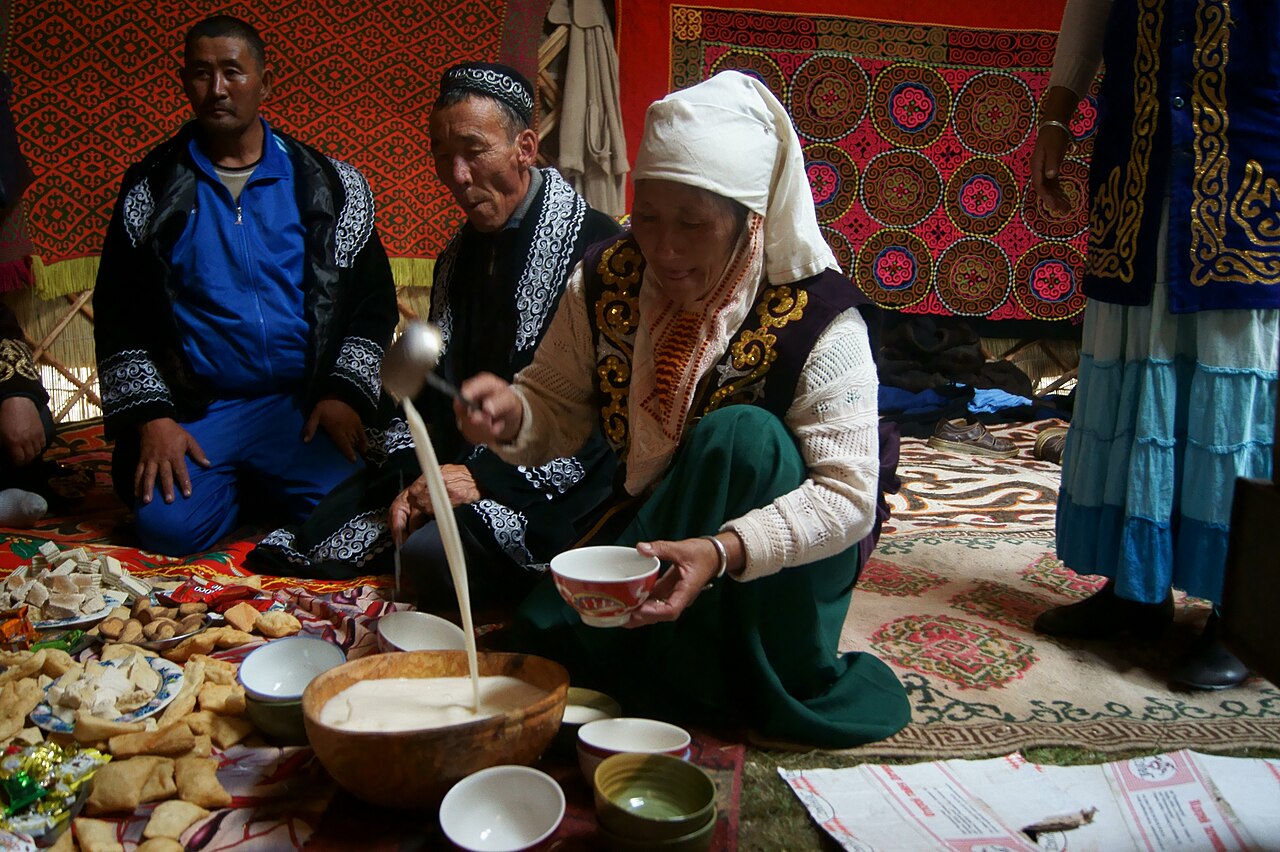
One of the joys of solo travel here is Kazakh hospitality — you may well be invited for tea or a meal, and homestays and yurt stays are wonderful, safe ways to connect. Accept warmly, bring a small gift, remove your shoes, and enjoy it; our Kazakh customs guide helps you navigate the etiquette. As with anywhere, use judgment about accepting invitations from lone individuals versus families or in public settings, and keep someone informed of your plans back home. The overwhelming majority of these invitations are exactly what they seem — genuine steppe generosity — and saying yes to a family tea is often the memory travellers treasure most.
Packing checklist for solo women
A few things earn their place in the bag for a solo trip here:
- A light scarf — for mosques and mausoleums, and handy in the conservative south.
- Layers for the climate: summers are hot, winters genuinely cold, and the mountains chilly year-round. See our what to pack for Kazakhstan guide.
- A power bank, a local SIM or eSIM, and offline maps and translation downloaded before you go.
- Comfortable, sturdy shoes for city walking and light hikes.
- A card and a cash buffer in tenge for the regions, plus a doorstop or portable lock if extra peace of mind helps you sleep.
- Travel insurance that covers any hiking, skiing or adventure activities.
Timing matters too: late spring and autumn are the sweet spots for comfortable weather and beautiful landscapes, while winter opens up skiing and frozen scenery for the well-prepared. Our best time to visit guide breaks down the seasons.
Frequently asked questions
Is Kazakhstan safe for solo female travellers?
Generally yes. Most solo women report feeling welcomed and rarely harassed, especially in Almaty and Astana, and violent crime against tourists is rare. The main issues are petty theft, unregistered taxis, and occasional staring or unwanted attention. With normal precautions and ride-hailing apps, it’s a rewarding and comfortable place to travel alone.
What should female travellers wear in Kazakhstan?
In Almaty and Astana, ordinary Western clothing is completely fine — no head covering needed. In the more conservative south (Shymkent, Turkestan) a little more coverage draws less attention, and at mosques and mausoleums you should cover shoulders and knees and bring a scarf for your head. Carry a light scarf and you’re set.
Is it safe to use taxis in Kazakhstan as a woman?
Use ride-hailing apps — Yandex Go, inDrive or Bolt — which show the price upfront and log the driver and car. Avoid unregistered street taxis where you negotiate with an unknown driver. The apps are cheap, clear and much safer, and they’re the standard way locals and travellers get around.
Do I need to cover my hair in Kazakhstan?
No, not in daily life. Kazakhstan is secular and moderate, and women go about bare-headed everywhere in the cities. The exception is inside mosques and some mausoleums, where women should cover their hair with a scarf and dress modestly. A scarf in your bag covers those occasions.
What are the emergency numbers in Kazakhstan?
112 is the general emergency number, 102 is police, 103 is ambulance and 101 is fire, all free from any phone. English is limited, so keep a translation app handy and your accommodation’s address written in Russian. Save these before you travel.
Is Almaty or Astana better for a solo female traveller?
Almaty is the easier, more rewarding base for most — walkable, green, sociable, with mountains and day trips nearby and the best traveller scene. Astana is safe and modern but more spread out and spectacle-focused. Many solo itineraries centre on Almaty and the southeast, adding Astana or the Silk Road south as extensions.
Final thoughts
Kazakhstan rewards the solo female traveller who comes curious and sensible. You’ll get canyons and alpine lakes and a futuristic capital and some of the warmest hospitality on earth, in a country still quiet enough that you’ll feel like you found it first. Travel switched-on — apps not street cabs, sensible nights out, instincts trusted — but don’t let anyone talk you out of coming. This is one of the great under-the-radar destinations for women exploring alone, and I suspect it won’t stay under the radar for long. Come while it still feels like a discovery — you’ll have the canyons half to yourself and the welcome all to yourself.
This article touches on personal safety. It reflects general traveller experience and public advisories, not a guarantee; always check your government’s current travel advice and use your own judgment.
Photo credits
- Charyn Canyon — Bgag, CC0, via Wikimedia Commons
- Almaty skyline — Rok muncher, CC0, via Wikimedia Commons
- Kolsai Lakes — Katariyakartikey, CC0, via Wikimedia Commons