Contents
- Almaty public transport at a glance
- The Almaty metro — the basics
- The Almaty metro as an attraction — the stations worth seeing
- The Onay transport card — the key to everything
- Buses & trolleybuses
- Yandex Go — ride-hailing in Almaty
- Trains & the Almaty-2 railway station
- Walking & cycling
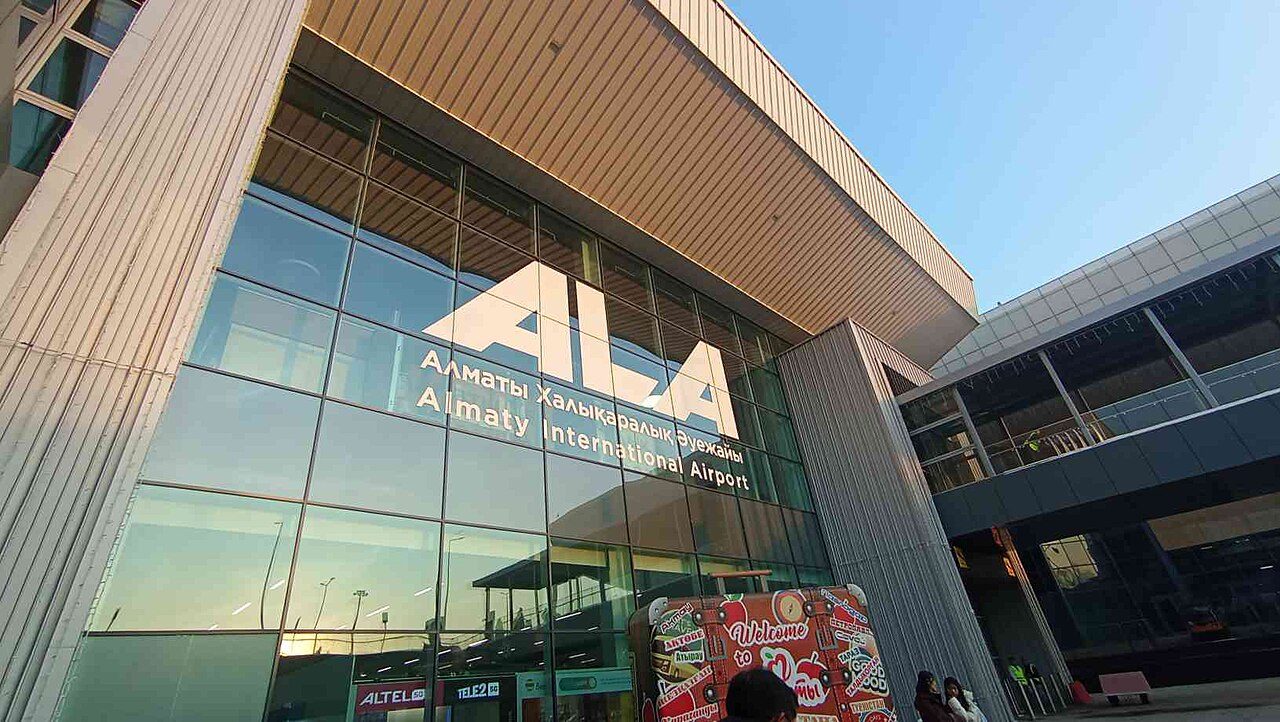
- Getting to and from the airport
- Practical tips
- Frequently asked questions
- Final thoughts
The first thing I did on my first morning here was get on the metro for no reason at all. I’d read the stations were pretty, bought a plastic card at a kiosk, and rode the line to the end and back before breakfast, grinning at the mosaics like a lost tourist. Then I did what everyone does — trains, buses and a taxi app.
The Almaty metro is a single, spotless line of 11 stations that opened in 2011 and doubles as the city’s best free-ish art gallery. But it doesn’t reach everywhere, so most days you’ll pair it with buses, trolleybuses and the Yandex Go ride-hailing app — all tapped through one rechargeable Onay card. Rides cost pennies, and the whole system is cheap, safe and easy once you have the card.
Almaty is Kazakhstan’s largest city and its former capital — the political capital is Astana, up north — but it’s the country’s real centre of gravity, and it moves at a pace that rewards knowing the system. This guide slots in beside the wider list of things to do in Almaty, and if you’re travelling further afield later, our overview of getting around Kazakhstan covers the trains and flights between cities.

Almaty public transport at a glance
Here’s the whole system on one screen. If you read nothing else, read this table, get an Onay card, and download Yandex Go — that combination will handle 95% of your trips.
| Mode | Fare (approx) | How to pay | Best for |
|---|---|---|---|
| Metro (1 line, 11 stations) | ~120 KZT (US$0.25) | Onay card, token or QR | Fast east–west trips along the centre; sightseeing the stations |
| Bus & trolleybus | ~120 KZT by card / ~200 KZT cash | Onay card or QR (cash being phased out) | Reaching anywhere the metro doesn’t — most of the city |
| Yandex Go (ride-hailing) | From ~400 KZT; short ride ~700–1,200 KZT | Cash or card in the app | Door-to-door, late nights, the airport, Medeu/Shymbulak |
| Suburban / intercity train | Varies | Ticket office or app at Almaty-2 | Astana, Shymkent, day trips, international routes |
| AlmatyBike (bike-share) | Subscription-based | App | Short hops in the flat central grid in warm months |
| Walking | Free | — | The central core around the Arbat and Panfilov Park |
A quick note on money before we go further: roughly 475 KZT makes US$1, so almost everything on this list is astonishingly cheap by Western standards. Fares change, so treat every number here as “around” and check the current rate when you arrive. If you’re building a budget, our breakdown of Kazakhstan trip costs puts transport in context against food and hotels.
The Almaty metro — the basics
Let’s start with the star of the show. The Almaty metro is a single line — just one — running roughly east to west under the city over about 13.4 km, with 11 stations. It’s the only metro in Central Asia besides Tashkent’s, and locals are quietly, justifiably proud of it.
It had a long road here. Construction began back in the Soviet era, in 1988, then stalled through the collapse of the USSR and the lean years that followed. After around 23 years of on-again, off-again work, the first stretch finally opened on 1 December 2011, with extensions added in 2015 and again in 2022. When you’re gliding through it today, that history is worth a thought — this line was a very long time coming.
The practical details you actually need:
- Hours: trains run roughly from 06:20 to around midnight. Check the current timetable, but you’re safe for any normal day out.
- Frequency: about every 8 minutes at peak, stretching to roughly 10–15 minutes off-peak. You rarely wait long.
- Speed: end to end is only about 16–20 minutes. It’s genuinely quick.
- Trains: air-conditioned Hyundai Rotem stock — clean, cool and smooth, a blessing in an Almaty summer.
- Fare: a single ride is around 120 KZT (about US$0.25), paid with an Onay card, a token, or a QR code. Kids under 7 ride free.
Getting in works like most metros: buy a token or tap your Onay card at the gate, ride the escalator down — and these are deep, proper Soviet-depth escalators — and follow the platform signs. Announcements and signage come in Kazakh, Russian and usually English, so you won’t get lost. With only one line and 11 stops, you honestly can’t.
One thing that surprises people: it’s spotless. No litter, no graffiti, no sense of neglect. Staff in uniform keep an eye on the stations, and it feels safe at any hour it’s running. If you’re weighing up general safety in the country, our guide on whether Kazakhstan is safe goes deeper, but the metro is about as reassuring as public transport gets.
The Almaty metro as an attraction — the stations worth seeing
Here’s the part the guidebooks undersell. The Almaty metro isn’t just transport — several of its stations are attractions in their own right, decked out in mosaics, murals and themed lighting in a way that makes riding the line a legitimate sightseeing activity. In a city where a lot of the “sights” are mountains outside town, this is one you can do underground, in the warm, for the price of a fare.
You can ride the entire line to the far end and back in under an hour, hopping off wherever a station catches your eye. I think of it as a self-guided “metro art” tour, and it’s my go-to recommendation for a grey afternoon or a smoggy winter day when you don’t fancy being outside. Here are the ones I’d get off for.

Abay
My favourite. Abay station is a tribute to Abai Qunanbaiuly, the 19th-century poet and philosopher who’s a genuine national hero here. It’s decorated with Florentine-style mosaics and bronze reliefs depicting the poet and scenes from his work — warm, golden, and far grander than a subway stop has any right to be. Stand on the platform a moment and let a train leave so you can actually look.
Baikonur
A love letter to Kazakhstan’s space heritage — the Baikonur Cosmodrome, on the country’s steppe, is where Yuri Gagarin launched and where crews still fly to the ISS. The station runs a space and cosmodrome theme, complete with a big LED screen and a futuristic feel that leans into the country’s outsized role in spaceflight. Kids love it, and honestly so do I.
Zhibek Zholy
Named for the Silk Road (“Zhibek Zholy” means Silk Way), and decorated to match, with yurt-lattice motifs and a striking shanyrak mural — the shanyrak being the wooden crown of a nomad’s yurt and a symbol you’ll see on the national flag. Conveniently, this station drops you right by the Arbat pedestrian street and a short walk from the Green Bazaar, so it’s a natural place to surface and start exploring.
The others
Don’t overlook Almaly, Auezov Theatre (named for the writer Mukhtar Auezov) and Raiymbek Batyr, each with its own character and design flourishes. Raiymbek Batyr is also the handiest stop for the Almaty-2 railway station, which I’ll come to. None of them will take long, and that’s rather the point — a whole gallery you can browse in an afternoon, one platform at a time.
The Onay transport card — the key to everything
If there’s one thing to sort out early, it’s this. Onay is the unified transport card for Almaty — one card that works on the metro, the buses and the trolleybuses alike. Tap it, ride, done. Without it you’re stuck fumbling for cash or tokens, and cash is slowly being pushed out of the system, so getting an Onay card is the single best move you can make on arrival.
What it is, and the tourist catch
There are two versions: a physical plastic card, and a virtual card inside the Onay mobile app. For most visitors, I strongly recommend the physical card, and here’s the catch — the app’s virtual card usually needs a Kazakh (+7) phone number to register, and it often won’t accept a foreign bank card for top-ups. That trips up a lot of tourists who assume they can just download an app and go. Unless you’ve picked up a local SIM and have a way to load it, the physical card (or exact cash on buses) is simply less hassle.
Where to buy and top up
You buy a physical Onay card at kiosks, newsstands (look for the Onay logo) and dedicated service centres around the city, as well as at some metro stations. The card itself costs somewhere around 400–800 KZT depending on the seller — hedge on that, it varies — and then you load credit onto it. You top up at the same kiosks, at green Onay terminals dotted around, at metro station counters, and via the app if you’ve managed to register it. Load a few hundred tenge to start; you’ll be amazed how far it goes.
Transfer ticket and monthly pass
Two features worth knowing. There’s a roughly 90-minute transfer ticket, which lets you change between vehicles within that window without paying full fare again — a real saving if your trip involves a bus then the metro. And if you’re staying a while, there’s a monthly pass at around 7,200 KZT that gives you unlimited rides. For a week-long visit the pay-as-you-go card is plenty; for a longer stay, do the maths on the monthly.
Buses & trolleybuses
The metro is lovely but it’s one line, so the buses and electric trolleybuses are what actually knit the city together. There are hundreds of routes, and they reach the corners the metro never will — up to the foothills, out to the suburbs, across to neighbourhoods no train serves. Once you’re comfortable with them, the whole city opens up.
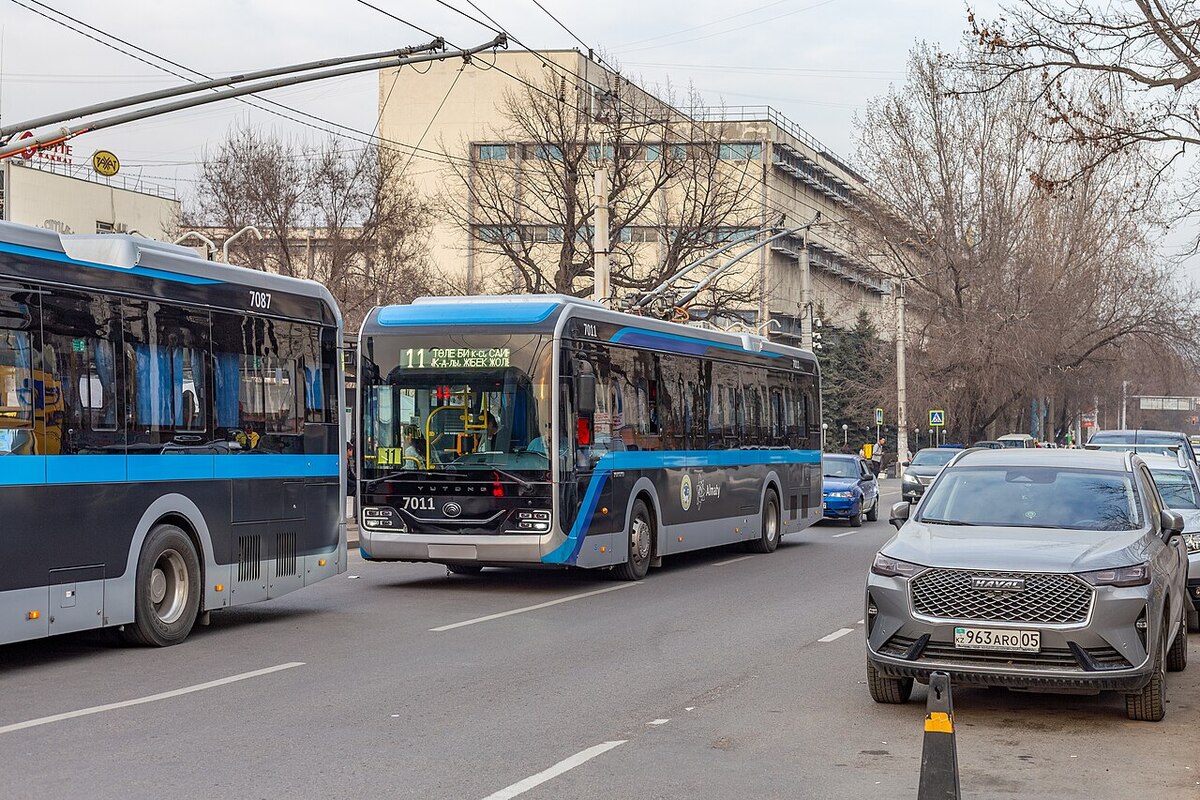
The trick is planning the route, because the network is dense and not intuitive to a newcomer. Don’t try to read a paper map. Instead, use 2GIS or Yandex Maps — 2GIS in particular is the local favourite and works brilliantly offline once downloaded. Type in your destination and it’ll tell you which bus, where to stand, and when the next one’s due. I lean on 2GIS constantly here; it’s more accurate for Almaty than Google Maps.
On fares, the split matters. Pay with your Onay card or a QR code and a ride is about 120 KZT. Pay the driver in cash and it jumps to around 200 KZT — a deliberate nudge, and a reason the card pays for itself fast. Cash is being phased out anyway, so tap on where you can. Board, tap your card on the reader (or show your QR), and you’re set; there’s a conductor on some routes but it’s mostly self-service now.
Two habits to adopt: keep a little Onay credit in reserve so you’re never caught short, and signal clearly for your stop, because drivers won’t always halt if nobody moves. Buses can get crowded at rush hour and the driving is, let’s say, spirited — hold on.
Yandex Go — ride-hailing in Almaty
When you don’t want to wait for a bus or the metro won’t get you there, this is the answer. Yandex Go is the dominant ride-hailing app in Almaty — the local equivalent of Uber, and the one everyone actually uses. Worth stating plainly: Uber, Bolt and Grab do not operate here, so Yandex Go (with inDrive as a common second option) is what you want on your phone.
Why bother instead of flagging a car on the street? Because it’s cheaper, clearer and much safer. Almaty has a long tradition of “gypsy cabs” — ordinary drivers who’ll stop and haggle — and while plenty are harmless, the app removes the negotiation, shows you the price up front, tracks the route, and records the driver. For a visitor who doesn’t speak Russian or Kazakh, that’s an enormous relief. You just type the destination, watch the fixed fare, and get in.
On cost, it’s a bargain. The minimum fare is around 400 KZT, then roughly 58 KZT per kilometre and about 27 KZT per minute on top. In practice a short central ride runs about 700–1,200 KZT — a couple of dollars — so it’s the kind of thing you use without thinking twice. You can pay cash to the driver or link a card in the app, though as with everything here it’s smoothest with a local SIM so you have data and can register a Kazakh number.
Yandex Go is also how you’ll reach the places the metro pointedly ignores. Heading up to the Kok-Tobe cable car, or out to the Medeu skating rink and Shymbulak? A taxi is the sane choice, and the app makes it painless. For airport runs it works too, which brings me to the next bit.
Trains & the Almaty-2 railway station
For getting into and out of the city by rail, the hub you want is Almaty-2 — the main, central railway station, and the one most travellers use. It’s reachable via the Raiymbek Batyr metro stop, which is one more reason to have your Onay card sorted. (There’s also a more distant Almaty-1 station to the north, used by some services, so double-check which one your ticket names.)

From Almaty-2, the network fans out impressively for a country this size. Domestically, trains run to the capital Astana and to Shymkent, among others, including comfortable overnight sleepers that save you a hotel night. Internationally, there are long-haul services to Tashkent in Uzbekistan, Ürümqi in China, and even Moscow — proper old-school train journeys across the steppe.
There are also suburban elektrichka trains — cheap local commuter services that trundle out to nearby towns and are handy for the occasional day trip. Buy tickets at the station counters or through the railway app; the intercity trains in particular can sell out in summer, so book ahead if you can. For how the rail network stitches the wider country together, our guide to getting around Kazakhstan has the full picture.
Walking & cycling
Not everything needs a vehicle. The central core of Almaty is genuinely walkable, and often walking is the nicest way to see it. The area around the Arbat (the Zhibek Zholy pedestrian street) and Panfilov Park is compact, leafy and flat enough, and half the pleasure of the city centre is just ambling between its cafés, its Soviet mosaics and that green canopy of street trees. The city is laid out on a grid, so you rarely get properly lost.
For slightly longer hops there’s AlmatyBike, the city’s bike-share scheme, with 200-plus docking stations dotted around the central and southern districts. You subscribe through the app, grab a bike from one stand and drop it at another. Almaty gently slopes — it climbs towards the mountains in the south — so you’ll notice the gradient, but the northern grid is flat and easy. In the warm months it’s a lovely, cheap way to cover ground.
Cyclists get a proper protected cycle lane along Abay Avenue, one of the main east–west arteries, which makes crossing the middle of the city on two wheels far less hair-raising than the traffic would suggest. Bike infrastructure is still growing here, so stick to the lanes where they exist. Winter, needless to say, is another matter — when the snow and ice arrive, most people put the bikes away and go back underground.
Getting to and from the airport
This is where a lot of arriving travellers get caught out, so let me be blunt: there is no metro link to Almaty airport. None. The line doesn’t go there, and no amount of hoping will change that. You have three realistic options.
By bus: the cheapest route is bus 92, which connects the airport to the city and costs the usual ~120 KZT with your Onay card. There’s also a night bus, route 3, covering the late hours when 92 isn’t running — useful given how many flights land here at antisocial times. Buses are slow and you’ll be juggling luggage, but for a few cents they’re hard to argue with if you’re travelling light.
By taxi / Yandex Go: far easier with bags, and still cheap by international standards. Order through the app rather than accepting the offers from drivers who’ll approach you in the arrivals hall — the app price will be lower and there’s no haggling. Give it a little extra time at peak traffic, and be ready for the drivers-touting gauntlet at the doors; just keep walking to where your app-booked car is waiting.
The catch to remember: whatever you choose, don’t build an itinerary that assumes the metro reaches the airport, because it doesn’t. Budget for a bus or a taxi, and if you’re landing late, have Yandex Go set up before you fly so you’re not fumbling with a new app at 3am.
Practical tips
A handful of things I wish someone had told me, gathered in one place.
- Winter smog and the metro. Almaty sits in a bowl against the mountains, and in winter an inversion can trap pollution over the city for days — the air gets genuinely grimy. On those days the metro is a real asset: it’s a clean, breathable, warm way to move around without gulping the haze on the street. Locals know this; now you do too.
- What the metro doesn’t reach. Manage your expectations. The line is one east–west spine through the centre. It does not reach the airport, and it does not reach the big mountain attractions — Medeu, Shymbulak, the Kok-Tobe base. For all of those, it’s a bus or a taxi. Plan accordingly.
- Get the Onay card first. I’ll say it once more because it’s that important. Before you try any bus, buy the card. It saves money, saves fumbling, and cash is on the way out.
- Download the right apps. 2GIS for routes and offline maps, Yandex Go for taxis, and Yandex Maps as a backup. Google Maps is weaker here.
- Get a local SIM. Data makes everything above work — apps, taxis, top-ups, the lot. Kcell, Beeline and Tele2 kiosks are everywhere, including at the airport.
- Rush hour is real. Buses and the metro fill up around 8–9am and 6–7pm. Nothing dangerous, just squeezy; nudge your timing if you can.
Put all that together and Almaty is one of the easier big cities I’ve navigated as a visitor — cheap, safe and logical once the card’s in your pocket. If you want to see how these pieces fit into a few days on the ground, our Almaty itinerary maps the routes between the sights, and the broader list of things to do in Kazakhstan shows where the trains from Almaty-2 can take you next.
Frequently asked questions
How much does the Almaty Metro cost?
A single ride is around 120 KZT — roughly US$0.25 — which makes it one of the cheapest metros you’ll ever use. You pay with an Onay transport card, a purchased token, or a QR code at the gate. Children under 7 travel free. Fares were last set in 2024, so treat the figure as approximate and check the current rate on arrival.
What are the Almaty Metro’s operating hours?
The Almaty metro runs roughly from 06:20 in the morning until around midnight, seven days a week. Trains come about every 8 minutes at peak times and every 10–15 minutes off-peak, so you’re rarely waiting long. Hours can shift slightly, so glance at the posted timetable, but for any normal day out you’re comfortably covered.
Does the Almaty Metro go to the airport?
No. There is no metro connection to Almaty airport — the single line runs east to west through the city centre and does not extend out to the terminal. To reach the airport, take bus 92 (or the night bus, route 3, in the late hours) with your Onay card, or order a Yandex Go taxi, which is easier if you have luggage.
How many stations does the Almaty Metro have?
The Almaty metro has 11 stations on a single line covering about 13.4 km. It opened in December 2011 and was extended in 2015 and 2022. Several stations are worth visiting for their design alone — Abay, Baikonur and Zhibek Zholy especially — and you can ride the whole line end to end and back in under an hour as a mini sightseeing trip.
Is the Almaty Metro safe?
Yes, very. The Almaty metro is clean, well-lit, staffed and monitored, and it feels safe at any hour it operates, including for solo travellers. Serious crime is rare; the usual advice about watching your belongings in a crowd is all you really need. It’s arguably the most reassuring way to get around the city, particularly after dark.
Where can I buy an Onay card in Almaty?
You can buy a physical Onay card at kiosks and newsstands showing the Onay logo, at dedicated Onay service centres, and at some metro stations. The card costs roughly 400–800 KZT depending on the seller, then you load credit at the same kiosks, green Onay terminals, station counters, or the app. For most visitors the physical card beats the app, which usually needs a Kazakh phone number.
How does Yandex Go work in Almaty?
Download the Yandex Go app, set your pickup and destination, and it shows a fixed fare before you confirm. A driver accepts, you track them to you, and you pay cash or by linked card. The minimum fare is around 400 KZT and short central rides run about 700–1,200 KZT. It’s cheaper and safer than street taxis, and works best with a local SIM for data.
Can I pay by card on Almaty public transport?
On buses, trolleybuses and the metro you pay with an Onay transport card or a QR code rather than tapping a bank card directly, and card payment is cheaper than cash (about 120 versus 200 KZT on buses). In Yandex Go you can link a foreign or local bank card in the app. Note the Onay virtual card often rejects foreign cards, so a physical Onay is simplest.
Final thoughts
Almaty won me over on that first aimless metro ride, and I think it’ll do the same for you. This is a city that quietly rewards the traveller who bothers to learn its system — a spotless little metro that moonlights as an art gallery, a dense bus network you can crack with one app, and taxis so cheap you’ll stop converting the fares in your head. None of it is complicated. It just asks that you get the Onay card and download 2GIS and Yandex Go before you need them.
So do that first, ride the whole metro line before breakfast one day for the mosaics, and let the buses and the app fill in everything the train can’t reach — remembering the two things it never will, the airport and the mountains. When you’ve got the moving-around part sorted, the city’s real pleasures are all in easy reach, and our list of things to do in Almaty is the natural next stop. Get the card, keep it topped up, and Almaty is yours.
Photo credits
Images via Wikimedia Commons: Almaty metro by Alex J. Butler, CC BY 2.0; Almaty metro station by A.Burgermeister / CC BY-SA 3.0; Almaty-2 railway station by Nikolai Bulykin, CC BY-SA 4.0; Almaty trolleybus by Nikolai Bulykin / CC BY-SA 4.0. Reused under their respective CC0/CC BY/CC BY-SA licences.