Contents
- What are the Arasan Baths?
- A grand Soviet-modernist bathhouse: the history of the Arasan Baths
- The different sections and baths
- Prices, hours & how payment works
- What to bring (and what you can rent)
- The venik & platza treatment explained
- Scrubs & massages
- First-timer etiquette: a step-by-step walkthrough
- Nudity norms — what to expect and how to feel comfortable
- How long should you allow?
- How to get there
- Frequently asked questions
- Final thoughts
The first time I walked into Arasan I was nervous. I didn’t know where to put my shoes, whether I was supposed to be naked, or what the man swinging a bundle of wet leaves was about to do to the person lying on the marble bench. Three hours later I walked out pink, loose-limbed and slightly evangelical about the whole thing. That’s the effect this place has.
The Arasan Baths are a huge Soviet-modernist bathhouse in central Almaty, opened in 1982 on the western edge of Panfilov Park. Men’s and women’s sections mirror each other, each with a Russian steam banya, a Finnish dry sauna, a Turkish hammam and a cold plunge pool. You walk in, pay by the hour, and stay as long as you like.
If you only do one distinctly local thing on a trip here, I’d make it this. It costs less than a cinema ticket, it’s woven into how people in this city actually relax, and it’s one of the best entries on any list of things to do in Almaty. Let me walk you through all of it, including the part where you’re not sure whether to keep your swimsuit on.

| At a glance | Details |
|---|---|
| Opened | 1982 (built 1979–1982) |
| Sections | Separate men’s & women’s floors; each with Russian banya, Finnish sauna, Turkish hammam, cold plunge; plus a separate Eastern/Moroccan bath |
| Location / metro | West side of Panfilov Park, central Almaty; nearest metro Zhibek Zholy (roughly around Tole Bi / Kunaev streets — confirm on arrival) |
| Hours | Roughly 7am–11pm daily (some sources say to about 10:40pm) — confirm before you go |
| Rough price | Entry per hour, from around 2,500 KZT (weekday morning) up to around 4,700 KZT (weekend evening) — about US$5–10; treatments extra |
| Booking | None needed — walk in |
Prices below are 2024 figures and shift, so treat everything as approximate and check the official list at arasan-spa.kz before you plan a budget. Roughly 475 KZT to the US dollar as I write this.
What are the Arasan Baths?
“Arasan” means a warm or thermal spring in Kazakh, and that’s the promise: heat, water, and the slow business of feeling human again. In practice it’s a public bathhouse complex — the biggest and grandest in the country — where you cycle between hot rooms and cold water, get scrubbed and pummelled by people who are very good at it, and lie around between rounds drinking tea.
Locals love it because it’s genuinely theirs. This isn’t a hotel spa built for tourists. It’s where friends come on a Saturday, where fathers bring sons, where businessmen sweat out the week and where grandmothers have been coming for forty years. You’ll hear Russian and Kazakh, see every age and body type, and feel, pretty quickly, that you’ve stumbled into something real rather than staged.
The scale is part of the appeal. This is a serious building, designed to move around 2,500 people a day through its pavilions without ever feeling like a crush. Even on a busy evening you can find a quiet bench. It’s a great counterweight to a day at the Green Bazaar, which sits in the same part of town — market in the morning, banya in the afternoon is a very Almaty kind of day.
A grand Soviet-modernist bathhouse: the history of the Arasan Baths
Arasan was built between 1979 and 1982 and opened in 1982, and it was meant to impress. This was the late-Soviet era, when the state built public bathhouses as showpieces rather than utilities, and Arasan was the flagship for what was then the Kazakh SSR.
You can read that ambition in the materials. There’s marble and granite everywhere, cool underfoot even in high summer. The roofline is a run of domes, and the layout spreads across roughly a dozen linked pavilions rather than one hall. It has the confident, slightly monumental feel of a lot of buildings from that period — heavy, symmetrical, built to last.
It’s a listed heritage building now, which is part of why it still stands more or less as designed rather than being knocked down for apartments. It was reconstructed in 2012 and again in 2016, so what you use today is a maintained, updated version of the original — the bones are 1982, the plumbing and finishes are newer.
If you’re the sort of traveller who likes to understand a place through what it built, Arasan belongs on the same mental shelf as the metro and the old cinemas: architecture that tells you what the city valued. For more on that thread of the country’s identity, our guide to Kazakh culture is a good companion read.
The different sections and baths
Here’s the thing that confuses first-timers: Arasan isn’t one room, it’s a set of different heat experiences, and part of the fun is moving between them. Each side — men’s and women’s — has the same core set, and then there’s a separate Eastern bath with its own entrance. Let me break them down.
The Russian banya
This is the heart of it. The Russian banya is a wet steam room, hot and humid, with tiered wooden benches — the higher you sit, the hotter it gets. This is where the venik comes in: the leafy bundle of twigs people whisk over the body (more on that below). Attendants periodically throw water, sometimes with essential oils, onto the hot stones to release a wall of steam. Newcomers should start low and short. You can always go higher.
The Finnish sauna
Dry heat, higher temperature, no steam. The Finnish sauna feels sharper and more intense on the skin than the banya, but because the air is dry it’s oddly more tolerable for some people. It’s a good place to start your first cycle if the wet steam feels overwhelming. A few minutes in here, then out to cool down.
The Turkish hammam
The Turkish-style hammam is gentler and more humid, built around a heated marble slab. It’s warm rather than punishing, which makes it the room where you can actually sit and talk without gasping. It’s also the traditional setting for a scrub, though at Arasan scrubs happen in a few different spots depending on the day.
The cold plunge pool
Non-negotiable, and the part that scares people most. After the heat you drop into a cold pool — properly cold — and it is glorious. Do not skip it thinking you’ll just cool down slowly; the contrast is the whole point, and the rush afterwards is why the banya is addictive. Swimsuits are not worn in the cold pool. Just do it. Ten seconds and you’ll be a convert.
The Eastern / Moroccan bath
Separate from the main sections, with its own reception, the Eastern (sometimes called Moroccan) bath is the pretty one — lighter, more decorative, a bit calmer. The treatment menu is smaller here, so if you want the full range of scrubs and beatings, the main sections are your place; if you want something a little softer and more aesthetic, this is worth the extra ticket.
Men’s vs women’s floors
The men’s and women’s sections are entirely separate and mirror each other, so you get the same facilities either way. This matters for how you plan a visit as a couple or family: you won’t be together inside. Agree a meeting time and a spot in the entrance hall before you split up, because reception English is limited and you can’t exactly text each other from a steam room. Children from about age four can come in with an adult of the same section.
Prices, hours & how payment works
Entry is charged by the hour, and the rate slides with demand. On a quiet weekday morning you might pay from around 2,500 KZT; on a busy weekend evening it can climb to around 4,700 KZT. That’s roughly US$5–10 for the hour. Treatments are extra: a massage of around 45 minutes runs about 12,000 KZT (~US$25), and a few minutes of professional venik “platza” is around 4,000 KZT.
Here’s the useful trick: buying a one-hour entry plus one treatment often lets you stay the rest of the day. So the smart move isn’t to pay for four hours of entry — it’s to pay for one hour, book a scrub or a massage, and then linger. Confirm the current rules at the desk, but this is how regulars do it.
Now the part that trips everyone up — the wristband tab. When you pay at the desk you get a locker wristband, and that band is also a running tab. Everything you use inside — treatments, a plate of food, a drink — goes onto the band, not paid for in cash on the spot. At the end you take the band to the barrier on the way out and settle the whole bill there. Lose the band and you’ll have a slow, awkward conversation, so keep it on your wrist.
You usually get about 20 minutes free at the start to change and get sorted. Overstay your paid time and there’s a small per-minute charge added at the barrier — nothing alarming, but it’s why the clock quietly matters.
Opening hours are roughly 7am to about 11pm daily, though some sources say last entry closer to 10:40pm. Hedge it and check before you go, especially if you’re aiming for a late soak. There’s no booking — you simply walk in — which makes Arasan an easy thing to slot into a loose day. It drops neatly into a relaxed slot on our Almaty itinerary if you’re building your days around it.
What to bring (and what you can rent)
You can turn up with nothing and rent your way through — towels, sheets and slippers are all available on site — but a little kit makes the visit smoother and cheaper. Here’s what I’d pack:
- A towel — or two. You’ll want one to sit on and one to dry with.
- Grippy flip-flops or sandals — the floors are wet marble and you’ll be walking on them constantly.
- A water bottle — you sweat a lot; rehydrate between rounds.
- A sarong or wrap — optional, for cover if you’d rather not be fully nude (more on that below).
- A swim cap — women often need one for the pool; worth having.
- A felt banya hat — protects your head and hair in the hot rooms; you can buy or rent one at the door.
Soap and shampoo are usually provided in the showers, so you don’t need to lug those. What you can’t easily replace is comfortable footwear and your own towel, so prioritise those. If you forget something, don’t stress — the rental desk exists for exactly this.
The venik & platza treatment explained
This is the ritual that makes a Russian banya a Russian banya, and it’s the thing newcomers most often watch with alarm before trying it and loving it. So let me demystify it.
A venik is a leafy bundle of twigs — usually oak or birch, sometimes eucalyptus for the smell. You soak it in warm water until the leaves go soft and fragrant. Then, in the hot steam of the banya, the venik is used to whisk, wave and gently beat the body. The word “beat” sounds violent; it isn’t. Most of the motion is fanning hot air over your skin and light tapping. It boosts circulation, opens the pores and leaves you tingling.
Platza is the professional version — you lie on a bench and an attendant works you over with the venik for a few minutes, methodically, with real technique. It’s more vigorous than doing it yourself, and it feels fantastic: the closest thing I can compare it to is a very warm, very thorough massage delivered with leaves and steam. At around 4,000 KZT it’s the single most memorable few minutes in the building. If you try one thing beyond the basic sauna cycle, make it this.
You can also just buy a venik and do it yourself, or ask a friend to. Either way, keep your felt hat on — the beating stirs up the hottest air near the ceiling and you want your head protected.
Scrubs & massages
Manage your expectations here: the scrubs and massages at Arasan are vigorous and thorough, not the whispering, aromatherapy-candle sort of spa treatment. This is functional, and it’s brilliant.
The classic scrub uses salt or coffee and a coarse mitt, and the attendant will not be shy about it — you’ll leave with skin like a newborn. A massage of around 45 minutes (about 12,000 KZT, ~US$25) is deep and no-nonsense. If you have injuries or you like a truly gentle touch, say so up front, and use a translation app if the language gap is wide, because these treatments are firm by default.
My advice: book one treatment when you arrive so it’s slotted into your visit, then build your sauna cycles around the appointment. Getting scrubbed after you’ve had a couple of hot rounds — when your skin is soft and open — is far better than doing it cold.
First-timer etiquette: a step-by-step walkthrough
If you’ve never done this, the sequence below is the whole visit from door to door. Follow it and you’ll pass as someone who’s done it a hundred times.
1. Arrive and pay
Go to the reception for your section (men’s or women’s), or the separate desk for the Eastern bath. Pay for one hour of entry and, if you want one, add a treatment now. You’ll be handed a locker wristband — this is your key and your tab. English is limited, so a smile and a couple of Russian words go a long way.
2. Rent and stash
If you need a towel, sheet, slippers or a felt hat, get them from the rental desk. Then find your locker, change, and stash everything. You have about 20 minutes free to do this before your paid hour really starts ticking, so don’t dawdle but don’t panic either.
3. Shower first — always
Before you enter any sauna or the pool, shower. This is the one rule nobody bends. It’s about hygiene for everyone sharing the water and steam, and soap and shampoo are provided. Rinse off, then head in.
4. Confirm your treatment time
If you booked a scrub, platza or massage, check in about when it’ll happen. Ideally you want it after a couple of hot cycles, when your skin is soft — so pace your first rounds accordingly.
5. The core cycle: hot → cold → rest
Now the actual ritual. Sit in the sauna or banya for a few minutes — start low and short, especially in the wet steam. When you’ve had enough, get out and plunge into the cold pool (yes, really). Then rest on a bench, drink water or tea, and let your body settle. That’s one cycle. Repeat it three or four times. The hot-cold-rest loop is the entire magic; the contrast is what leaves you floating.
6. Your treatment
Somewhere in the middle of your cycles, have your scrub, platza or massage. Lie back, let them work, keep your felt hat on for the venik. Afterwards, one more gentle sauna round to seal it in feels wonderful.
7. Eat, final shower, pay on exit
When you’re done, have a final shower, get a plate of food or a drink if you like — it goes on the band — then dress. Take your wristband to the barrier and settle the whole bill there, entry plus everything you added. Walk out glowing.
Nudity norms — what to expect and how to feel comfortable
Let’s address the thing you’re actually worried about, because I was too. Inside the same-sex sections, full nudity is completely normal. People walk around, sit, shower and sweat without swimsuits, and absolutely nobody is looking at you. Genuinely — the culture here is matter-of-fact about bodies, and self-consciousness evaporates within about ten minutes.
That said, you have options. Swimsuits are tolerated in the saunas, so if being fully nude in the hot rooms is a bridge too far on day one, wear one there. A sarong or wrap is even easier — you can cover up while walking around and drop it when you sit. Plenty of people do exactly this, locals included, so you won’t stand out.
The one place where the swimsuit rule flips: the cold plunge pool. You don’t wear a swimsuit in the cold pool. So the practical rhythm is often sarong or suit while moving and in the saunas, then nothing for the plunge. If the idea still makes you tense, remember it’s single-sex, it’s dimly lit and steamy, and every single person in there was a nervous first-timer once.
My honest advice: bring the sarong so you have a security blanket, then notice how fast you stop needing it. The relaxation is the point, and you can’t relax while gripping a towel and worrying. Let it go.
How long should you allow?
Bare minimum, give it an hour — that’s one entry ticket and enough time for two or three cycles and a quick shower. But an hour is a snack, not a meal.
For the full ritual — several cycles, a treatment, tea and lounging between rounds — allow three to four hours. That’s when the banya does its real work and you leave properly reset. Because a single hour of entry plus one treatment often buys you the rest of the day, there’s rarely a reason to rush. Settle in.
This unhurried quality is why a banya is such a good thing to have in your back pocket in the colder months. Coming in from the snow into all that heat is one of life’s great pleasures, and our guide to Kazakhstan in winter makes the case for building a whole trip around exactly this feeling.
How to get there
Arasan sits right beside Panfilov Park on its western side, which makes it easy to find and easy to combine with other sights. The park itself, with Zenkov Cathedral, is worth a wander before or after.
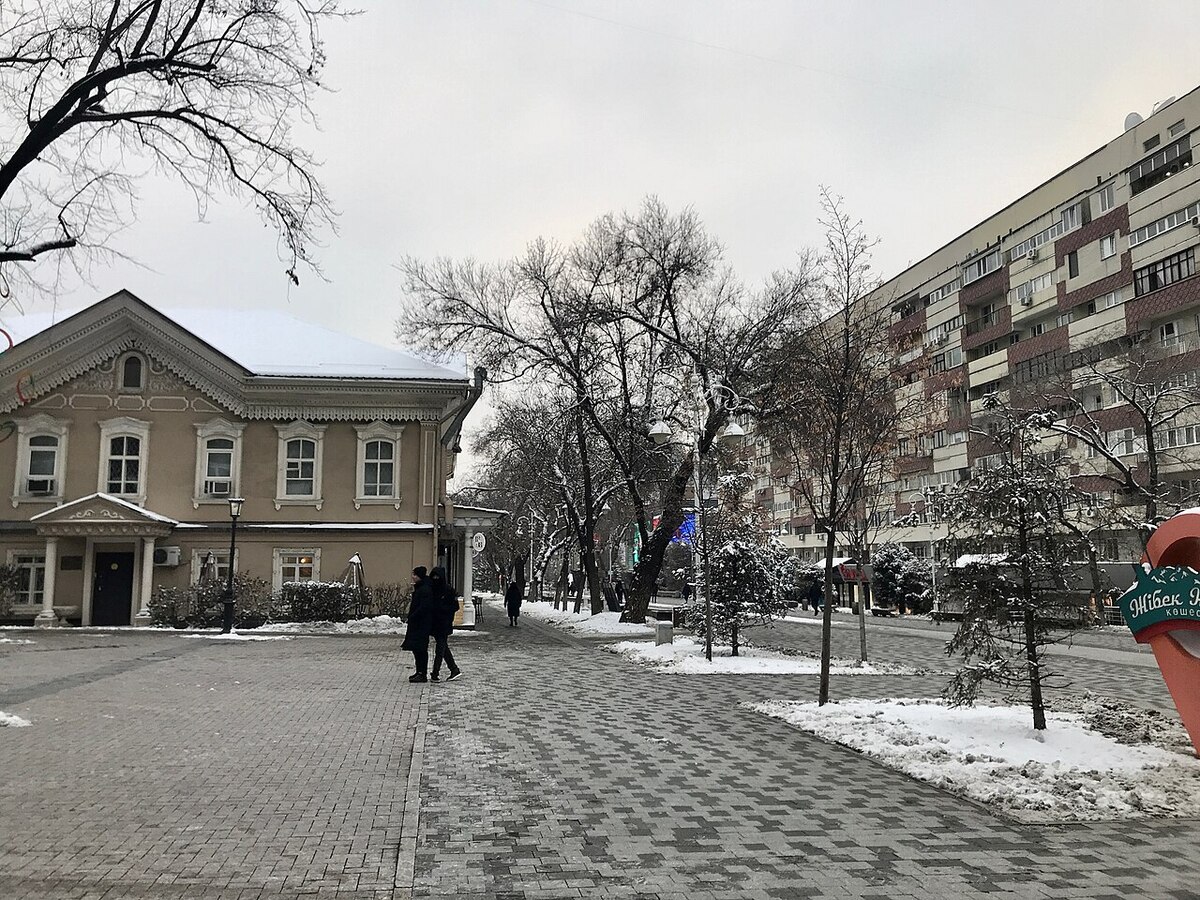
The simplest route is the metro: ride to Zhibek Zholy and walk over — it’s a short stroll from the station, roughly around the Tole Bi and Kunaev streets area (confirm the exact cross-street on the day, as I’d rather you check than trust me to the metre). If you’d rather not walk, a Yandex taxi from the city centre is around 1,500 KZT and takes minutes.
Almaty’s metro is clean, cheap and genuinely useful, and pairing it with Yandex covers almost everything. For the full picture on moving around the city and country, our guides to getting around Kazakhstan and the broader list of things to do in Kazakhstan will fill in the gaps. If you’re still sorting logistics, our notes on where to stay in Kazakhstan can help you base yourself somewhere close to the action.
Frequently asked questions
What are the Arasan Baths?
The Arasan Baths are Almaty’s grand Soviet-modernist bathhouse, opened in 1982 beside Panfilov Park. “Arasan” means a warm or thermal spring in Kazakh. Separate men’s and women’s sections each offer a Russian steam banya, a Finnish dry sauna, a Turkish hammam and a cold plunge pool, plus scrubs, massages and the leafy-venik platza treatment.
Can you wear a swimsuit in the Arasan baths?
You can wear one in the saunas — swimsuits are tolerated there — but not in the cold plunge pool. Inside the single-sex sections full nudity is completely normal and nobody minds either way. If you’d like some cover, bring a sarong or wrap you can drop when you sit down. Most first-timers stop worrying within minutes.
What do you need to bring to Arasan?
Pack a towel, grippy flip-flops or sandals, a water bottle, and a sarong if you’d like cover. Women may want a swim cap for the pool, and a felt hat protects your head in the hot rooms. Soap and shampoo are usually provided. Anything you forget — towels, sheets, slippers — can be rented on site.
Does Arasan have separate facilities for men and women?
Yes. The men’s and women’s sections are entirely separate and mirror each other, so both get the same banya, sauna, hammam and cold pool. You won’t be together inside, so if you’re visiting as a couple or family, agree a meeting time and spot in the entrance hall first. Children from about age four can join an adult in the same section.
Do I need to book the Arasan baths?
No booking is needed — you simply walk in and pay by the hour at reception. That makes Arasan easy to slot into a loose day. If you want a specific massage or scrub, it’s worth arranging that treatment at the desk when you arrive so a time is set aside, but entry itself never requires a reservation.
What are the prices at the Arasan baths?
Entry is per hour, from around 2,500 KZT on a weekday morning up to around 4,700 KZT on a weekend evening (about US$5–10). A roughly 45-minute massage is around 12,000 KZT (~US$25) and a few minutes of professional venik platza around 4,000 KZT. These are 2024 figures, so check the official list at arasan-spa.kz.
What are the opening hours of Arasan?
Arasan is open roughly 7am to about 11pm daily, though some sources put the last entry closer to 10:40pm. Hours can shift, so confirm before you go, especially for a late-evening visit. There’s no need to book — walk in whenever suits you within opening hours and pay at reception for the hour.
How do you get to the Arasan baths?
Arasan is on the western side of Panfilov Park in central Almaty. The easiest way is the metro: ride to Zhibek Zholy and walk the short distance over, roughly around the Tole Bi and Kunaev streets area. Prefer not to walk? A Yandex taxi from the city centre costs around 1,500 KZT and takes only a few minutes.
Final thoughts
Arasan is my favourite kind of travel experience: cheap, local, slightly intimidating on paper, and completely wonderful once you’re in it. You don’t need to speak the language, you don’t need to book, and you don’t need to be brave — the nervousness lasts about ten minutes and then you’re just another person cycling between hot and cold with a leafy branch and a felt hat.
Go in the afternoon, allow more time than you think, and let the wristband handle the money so you can stop thinking about it. Come out pink and reset, and I suspect you’ll do what I did — start planning your next visit before you’ve even left Panfilov Park. It’s one of the truly great things this city offers, and it’s waiting a short metro ride away.
Photo credits
Images via Wikimedia Commons: Panfilov Park memorial by Pauperunet (CC0); Zhibek Zholy street by ShadZ01 / CC BY 4.0. Reused under their respective CC0/CC BY/CC BY-SA licences.