Contents
Most people do southern Kazakhstan wrong, and it’s not their fault. Every guide out there covers one piece — three days in Shymkent, or a Turkestan day trip — and none of them string the pieces together. So travellers fly to Shymkent, day-trip to Turkestan, fly back, and never learn that Taraz sits on the road home, that the best-preserved medieval city in the country is forty minutes past Turkestan, or that the hillsides an hour east turn scarlet with wild tulips in April.
A southern Kazakhstan itinerary works best as a loop rather than an out-and-back: Almaty to Shymkent, north to Turkestan and the ruins, then back east through Taraz. Three days covers Shymkent and Turkestan; five adds Otrar, Sauran, Aksu-Zhabagly and Taraz. April–May and September–October are the two clean weather windows.
Southern Kazakhstan at a glance
| Leg | Distance | Time | How |
|---|---|---|---|
| Almaty → Shymkent | ~690 km | 1h20 flying · 11–14 h train · 8.5 h drive | Fly or overnight train |
| Almaty → Turkestan | direct | ~1h25 flying · 15–19 h train | FlyArystan into HSA |
| Astana → Turkestan | direct | ~1h40 flying | FlyArystan |
| Shymkent ↔ Turkestan | ~165–170 km | 1.5–2.5 h | Marshrutka ~1,500 ₸ from Samal |
| Shymkent ↔ Taraz | ~175–180 km | 2.5–3 h road · 3.5 h train | Train from US$4 |
| Taraz ↔ Almaty | ~495 km | ~6 h drive · 7h19 train | Overnight train from US$8 |
| Turkestan → Otrar / Sauran | 40–70 km | Half day each | Driver only — no public transport |
| Shymkent → Aksu-Zhabagly | ~100–120 km | 1.5–2 h | Marshrutka via Tulkibas; permit needed |
| Shymkent → Tashkent | ~120 km | 3–4 h door to door | Marshrutka + border |

Which order should you do it in?
This is the question nobody answers, and it changes the whole trip. There are three sensible entry points.
Starting from Almaty — the default
Fly to Shymkent in about an hour and twenty, or take the overnight train and save a hotel night. Work north to Turkestan, then come back east through Taraz and finish with the overnight train or a six-hour drive to Almaty.
This is the loop, and it’s the right answer for most people, because Taraz sits almost exactly on the Shymkent–Almaty road. Going out one way and back another costs you nothing and adds a two-thousand-year-old city.
Starting from Astana
Fly straight into Turkestan — FlyArystan does Astana to Hazret Sultan in about an hour forty, and Astana accounts for a large share of that airport’s traffic. Do Turkestan and the ruins first, work south to Shymkent, then either fly home from Shymkent or continue east to Taraz and Almaty.
Fly in, train out is the elegant version of this.
Starting from Tashkent
Underrated, and the historically correct direction. Tashkent is only 120 km from Shymkent — closer than any Kazakh city. Cross the border, do the loop north and east, and finish in Almaty. If you’re already doing Uzbekistan, this turns southern Kazakhstan from a separate trip into a continuation of the same Silk Road. Our Kazakhstan and Uzbekistan itinerary covers the combination.
The loop-versus-line decision, and why Taraz settles it
If you fly in and out of Shymkent, you are doing a line, and you will backtrack. If you enter at one end and leave at the other — Shymkent in, Almaty out, or the reverse — you are doing a loop, and Taraz comes free.
Take the loop. Almaty to Shymkent by air is cheap and frequent; Taraz to Almaty by overnight train is US$8. The only thing you lose is the convenience of a return ticket.
The 3-day core: Shymkent and Turkestan
Day 1 — Arrive Shymkent, old town, Sayram
Fly in from Almaty in the morning or arrive off the overnight train. Shymkent International is about 12 km northwest of the centre; take a Yandex Go.
Spend the morning at Shym Kala, the reconstructed citadel that opened on 1 May 2021 — 4.5 hectares of open-air museum over layers from the first to the nineteenth centuries, including a Zoroastrian temple. Then lunch, which in this city is the main event: find an oshxona and eat plov from a wood-fired kazan.
Afternoon out to Sayram, ten kilometres east — one of Kazakhstan’s oldest continuously inhabited settlements and the birthplace of Khoja Ahmed Yasawi. City bus 71 or a marshrutka does it in under half an hour. It’s the reason Shymkent exists, and going before Turkestan gives the mausoleum context.
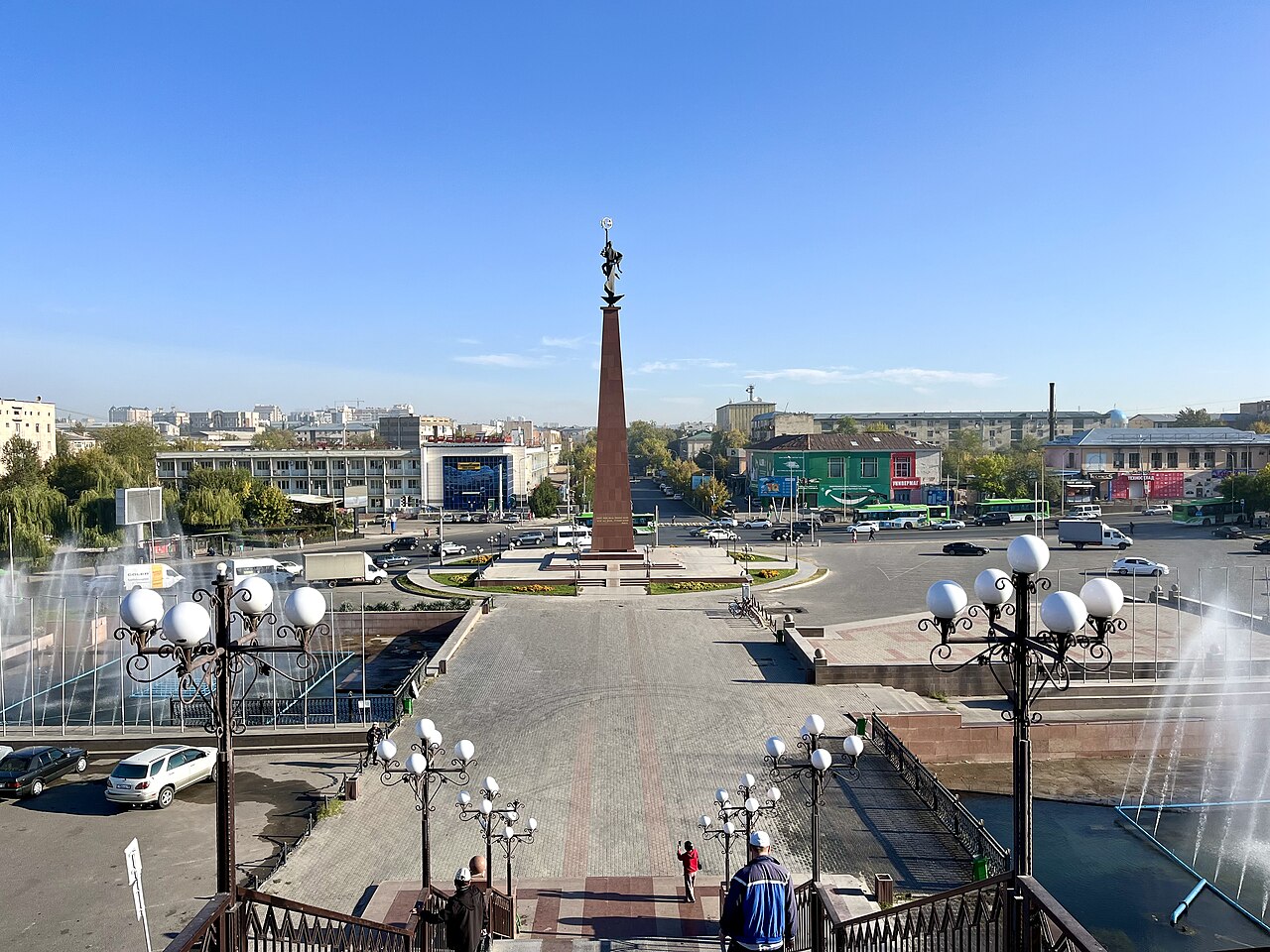
Evening on Ordabasy Square for the lit Zher-Ana monument and the fountains. Our Shymkent guide has the full rundown.
Day 2 — Turkestan
Get to Samal bus station early and take a marshrutka north — about 1,500 tenge, an hour and a half to two and a half hours, departing when full. Tell the driver you want the mausoleum, or you’ll be dropped at Merey bus station four kilometres out.
Give the Mausoleum of Khoja Ahmed Yasawi two hours. Walk round to the south portal and look at the bare brick and the two truncated minaret stumps — that’s where Timur’s death in 1405 stopped the work. Then round the back for the finished turquoise brickwork. Inside, the Tai Kazan cauldron. The ticket is nominal; the complex opens roughly 09:00 to 18:00.
Then Hilvet, the semi-underground mosque, and Rabia Sultan Begim’s mausoleum next door. Both are minutes away and both are covered by nominal tickets.
Late afternoon at the Karavansaray complex for the flying theatre in the golden Samruk egg, which is the best thing in the modern development by common consent. Then decide: return to Shymkent on the last marshrutka, which stops around seven, or stay the night in Turkestan to see the mausoleum illuminated.
Stay the night. It’s the single best decision in this itinerary. Our Turkestan guide covers hotels.
Day 3 — Otrar and Arystan Bab, or straight back
With a driver from Turkestan, spend the morning at Arystan Bab — Yasawi’s teacher, whose tomb pilgrims traditionally visit first — and the ruined city of Otrar two kilometres away, where a governor’s decision in 1218 triggered the Mongol invasion and where Timur died in 1405. Visit the Otyrar museum in Shauldir before the ruins; it turns a field of foundations into a city. Our Otrar and Sauran guide tells the whole story.
Then back to Shymkent and out. That’s the three-day core.
The 5-day extended itinerary
Day 4 — Sauran, or Aksu-Zhabagly
Two very different options, and which you pick should depend on the month.
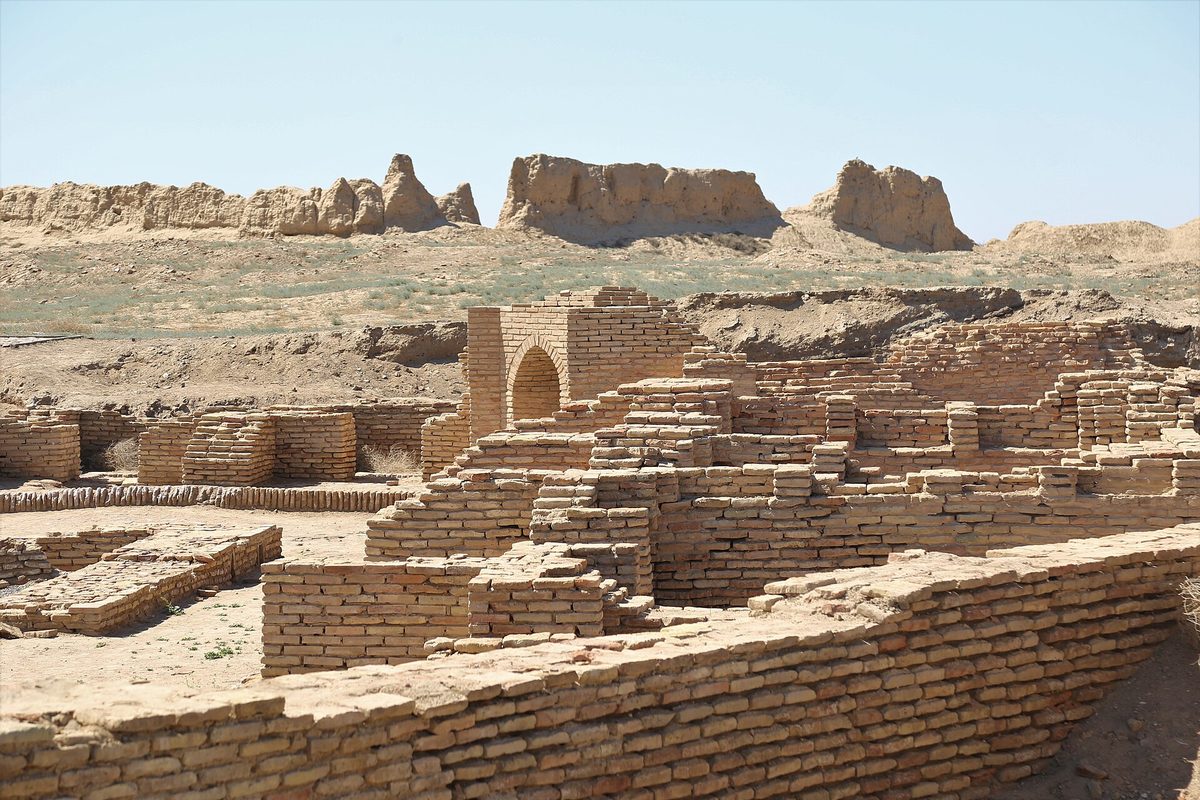
Sauran if you want ruins. Forty to forty-eight kilometres north of Turkestan, unstaffed, free, and the best-preserved medieval walled city in Kazakhstan: 2,360 metres of wall standing three to six metres high, a twin-towered gate, and 110 kilometres of hand-dug underground kariz tunnels beneath the surrounding ground. Half a day with a driver. Specify “Krepost Sauran,” the fortress — there’s a Sauran village ten kilometres away that drivers will take you to instead.
Aksu-Zhabagly if it’s April or May. Central Asia’s oldest nature reserve, founded 1926, where wild Greig’s tulips carpet the hillsides in the last two weeks of April. Roughly 1.5 to 2 hours from Shymkent via Tulkibas. Critically, it’s a strict reserve — you need a permit and a ranger or guide, arranged in advance through the village guesthouses, and it’s cash only. Don’t just drive out. Our Aksu-Zhabagly guide explains how to arrange it.
Day 5 — Taraz and the road back
Shymkent to Taraz is 175 to 180 km, two and a half to three hours by road or three and a half by train at US$4 to 6, with four services daily.
In Taraz: the Ancient Taraz archaeological park, where the city moved its central bazaar in 2011 so archaeologists could dig and found 40,000 artefacts from the sixth to twelfth centuries; the Karakhan mausoleum in the centre; and then out to Aisha Bibi, 18 km west, in the late afternoon when low sun rakes across sixty kinds of carved terracotta. The adjacent Babaji Khatun with its sixteen-faceted cone is the deliberate opposite — plain brick, no ornament at all.
Then the overnight train to Almaty: 7 hours 19 minutes, three services daily, from US$8. You wake up in Almaty. Our Taraz and Aisha Bibi guide has the detail, including why your map might say Dzhambul.
Swapping days: mountains versus ruins
If you have five days and have to choose, be honest about what you enjoy. Ruins people should do Otrar, Sauran and Taraz and skip the reserve. Landscape people should do Aksu-Zhabagly and Aksu Canyon and skip Sauran. Trying to do all of it in five days means a lot of car and not much looking.
Onward to Uzbekistan
The border
Shymkent to Tashkent is the easiest international hop in Kazakhstan — just under three hours of overland travel for a 120 km journey.
The main crossing is Zhibek Zholy on the Kazakh side and G’isht Kuprik on the Uzbek side, historically known as Chernyayevka. Marshrutkas and shared taxis leave Shymkent’s Samal bus station for around 2,000 tenge; go before noon. On the Uzbek side, shared taxis into central Tashkent take 30 to 45 minutes.
Important and time-sensitive: Zhibek Zholy was closed for renovation from early 2025, with traffic diverted to the nearby Navoi–Kaplanbek crossing. Marshrutkas for Kaplanbek leave from Shymkent’s Bekzhan terminal, also around 2,000 tenge. Reporting through late 2025 indicated the diversion was still in place, and I cannot confirm the position as of your travel date. Check before you go, and be ready to be routed to Kaplanbek.
Crossing takes 45 minutes on a quiet day and two hours on a busy one; go between seven and nine in the morning. Most Western nationals get 30 days visa-free in Uzbekistan and should expect fingerprinting on entry. Do not carry a drone into Uzbekistan — the protocol is destruction on the spot.
Without backtracking
If you’re ending in Uzbekistan, run the loop in reverse: Almaty to Taraz by overnight train, Taraz to Shymkent, north to Turkestan and the ruins, back to Shymkent and out across the border. You never repeat a road. Our Kazakhstan to Uzbekistan guide covers the crossings in detail.
Getting between the towns
Almaty to Shymkent and Turkestan
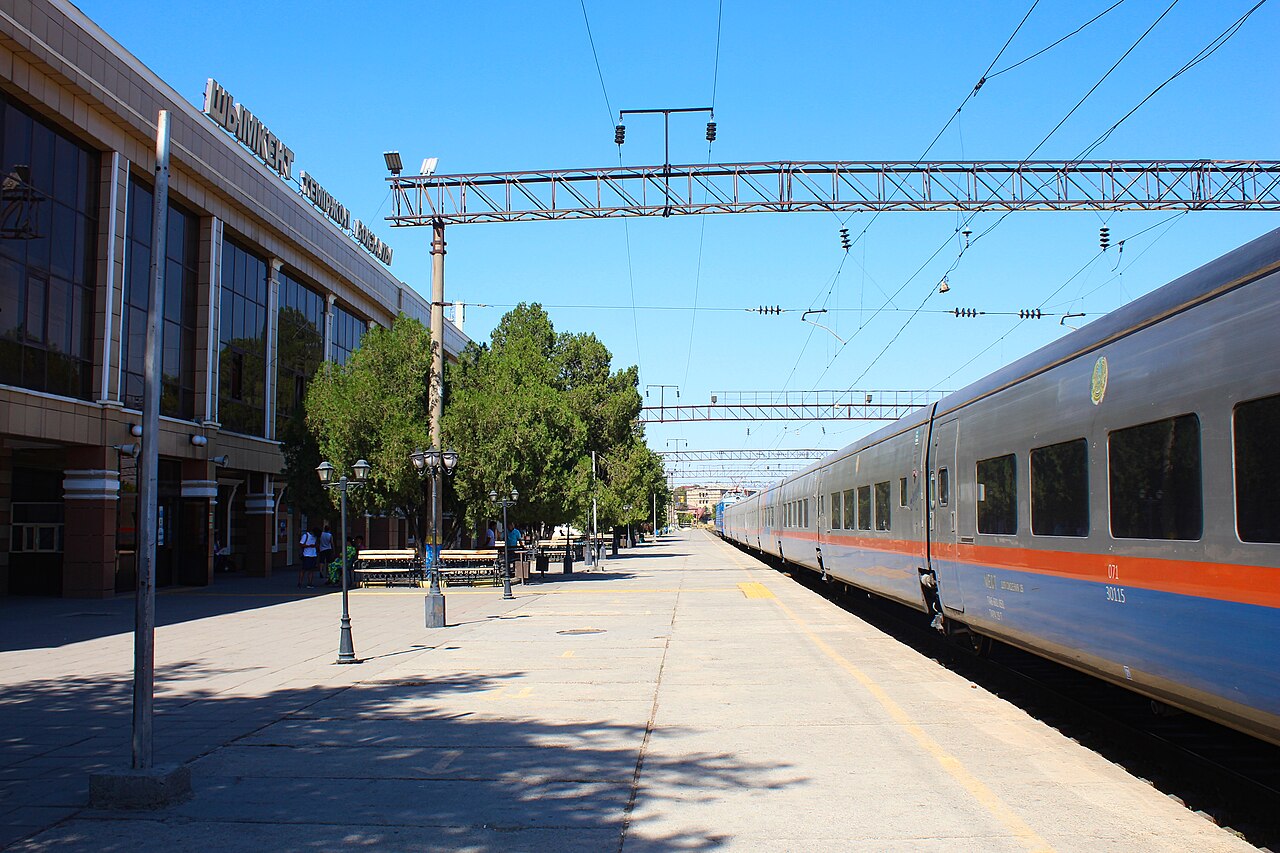
SCAT, Air Astana and others fly Almaty–Shymkent roughly every three hours; door to door about three hours, airborne about eighty minutes, at around US$43 to 77. The train runs three times a day, 36 services a week, in just under eleven hours from US$11 to 16, departing Almaty-2. A first-class berth with en-suite on the overnight runs around 15,475 tenge (US$33). Book at tickets.kz.
Almaty to Turkestan direct: one train a day, averaging fifteen and a half hours and up to eighteen, from US$13 to 24 — or FlyArystan in about an hour twenty-five, with eighteen flights in a typical July month.
Shymkent to Turkestan
Marshrutkas from Samal bus station: air-conditioned, about 1,500 tenge, roughly half an hour’s wait to fill, then 1.5 to 2 hours. Buses run from Samal every fifteen minutes for around US$4. Returning, use Merey bus station in Turkestan for 1,200 tenge or less. There is also a train four times daily at US$6 to 9, but at 2 hours 36 minutes it’s slower than the road. A second marshrutka rank operates from Bekzhan.
Marshrutkas back to Shymkent stop running around 19:00. Plan accordingly or stay the night.
Taraz connections
Taraz to Shymkent: 3 hours 27 minutes by train, US$4 to 6, four daily and 73 trains a week. Taraz to Almaty: 7 hours 19 minutes, US$8 to 12, three daily. Flying Taraz to Almaty exists but at US$162 to 272 against a US$8 train it makes no sense.
Otrar, Sauran and Zhabagly
None of these have public transport. Your options are a hired driver for the day at roughly US$80 to 150 out of Shymkent or Turkestan, or a packaged tour. One established operator prices a nine-hour Shymkent-based Arystan Bab, Otrar and Turkestan day with driver, guide and entry fees at US$230 for one person, US$125 each for two or three, and US$110 each for four.
Aksu-Zhabagly is the exception — one marshrutka a day leaves Shymkent’s Aina bazaar around nine in the morning, about two hours — but you still need the permit and guide arranged in advance.
Driver versus shared taxi versus rental car
My honest recommendation: hire a driver for the days you need one and use marshrutkas and trains for everything else.
A driver at US$80 to 150 a day, split between two people, beats a rental car on cost once you factor fuel and the risk of not finding Sauran, which is unsigned from the road. He’ll also handle the language, which matters more here than in Almaty. Shared taxis and marshrutkas are cheap, frequent and entirely adequate for the Shymkent–Turkestan–Taraz axis.
International car rental in Shymkent exists but is thin; check with a local agency directly rather than assuming. Yandex Go works in Shymkent, Turkestan and Taraz and takes card in-app, which makes moving around within each city trivial. See our guides to renting a car, Yandex Go and buses and marshrutkas.
When to go
This trip lives and dies on the month you pick, because southern Kazakhstan gets genuinely hot and almost none of the sites have shade.
Reanalysis data for 2025 gives Shymkent an April average high of 24.3°C, May 30.2°C, July 37.0°C with a peak of 42.5°C, September 28.5°C and October 22.9°C. Turkestan runs warmer still: April 27.2°C, May 32.6°C, July 37.8°C with a peak of 43.1°C.
What that means in practice:
- Early to mid April is the sweet spot. Comfortable in both cities, and the tulips are out at Aksu-Zhabagly in the last two weeks.
- May works in Shymkent but Turkestan is already averaging 32.6°C, so the northern half of the trip gets uncomfortable earlier.
- July and August are punishing. Otrar and Sauran have zero shade and the Yasawi courtyard has almost none. If you must go, sightsee from six to ten in the morning and after five, and rest in between. That’s what locals do.
- Late September to October is the second clean window and arguably the better one — stable, warm rather than hot, quiet.
- Winter is cold but perfectly workable for Turkestan specifically: daytime highs near freezing, the complex is compact, and Karavansaray is heated. It’s the ruins that suffer.
Our best time to visit guide and weather by month have the wider picture.
What it costs
Figures below use 470 tenge to the US dollar, as of late July 2026.
The verified transport-and-entry subtotal — the part I can stand behind with sources — comes to roughly US$70 per person for three days and US$120 for five, travelling as a pair:
- Shymkent–Turkestan shared taxi return: 2,700 ₸ (US$5.75)
- Local Yandex Go taxis: 5,000–8,000 ₸ (US$10–17)
- Yasawi plus Hilvet entrance: 1,000 ₸ (US$2.13)
- Otrar and Arystan Bab with a driver, split two ways: ~23,500 ₸ (US$50)
- Sauran half-day driver, split two ways: ~14,000 ₸ (US$30)
- Shymkent–Taraz–Almaty by train: ~7,500 ₸ (US$16)
On top of that you need accommodation and food, which vary too much to quote responsibly. Shymkent runs 30 to 40 per cent below Almaty; Turkestan’s Karavansaray hotel was around US$84 to 109 a night in recent reporting; hostels and mini-hotels exist in both. Aksu-Zhabagly permit-and-guide costs are genuinely disputed across sources and should be confirmed when you book. Check current rates rather than trusting any published figure, including mine.
A DIY Turkestan day trip from Shymkent, done entirely by marshrutka, costs about 5,000 tenge all in — roughly US$10.64. That’s the benchmark for how cheap this region can be if you’re willing to use local transport. Our trip cost guide and budget breakdown put it in context.
Practical notes
- Cash. Cards work in city hotels and the Turkestan complex. Everything else — marshrutkas, drivers, entrance huts, Aksu-Zhabagly — is cash. There is no ATM at Zhabagly.
- Language. Kazakh dominates in the south, Russian is widely understood, English is rare outside hotels. Download an offline translator. See our language guide.
- Dress. The south is more conservative than Almaty. Cover shoulders and skip shorts at religious sites; women should carry a scarf for the mausoleums.
- SIM card. Buy one on arrival at Almaty or Shymkent airport — see our SIM guide.
- Visas. Many nationalities enter Kazakhstan visa-free; check our visa guide.
Frequently asked questions
How many days do you need in southern Kazakhstan?
Three covers Shymkent and Turkestan properly. Five adds Otrar, Sauran or Aksu-Zhabagly, plus Taraz on the way back to Almaty. Seven lets you do all of it without rushing and add the Uzbek border.
Can you do Turkestan as a day trip from Shymkent?
Yes — marshrutkas from Samal bus station take 1.5 to 2.5 hours for about 1,500 tenge and the core sights need three to five hours. But staying the night lets you see the mausoleum and the Karavansaray illuminated, which is worth the extra hotel.
How do you get from Shymkent to Turkestan?
Marshrutkas and shared taxis from Samal bus station, roughly 1,500 tenge and 1.5 to 2 hours, departing when full. Buses run every fifteen minutes for around US$4. Tell the driver you want the mausoleum or you’ll be dropped 4 km out at Merey station.
Is there a direct train from Almaty to Turkestan?
Yes, once daily, averaging about fifteen and a half hours and up to eighteen, from US$13 to 24. Most travellers prefer the 85-minute FlyArystan flight, or take the train to Shymkent and a marshrutka north.
Does Turkestan have an airport?
Yes — Hazret Sultan International (HSA), 16 km northeast of the city, opened in 2021. FlyArystan flies from Almaty in about 1 hour 25 minutes and from Astana in about 1 hour 40. SCAT serves Aktau and Aktobe, and there have been seasonal Istanbul flights.
What is the best time of year to visit Turkestan and Shymkent?
Early to mid April, or late September to October. July and August average highs of 37°C in both cities, with peaks above 42°C, and the ruins have no shade at all. Winter is cold but workable for Turkestan itself.
How do you get from Shymkent to Tashkent?
Marshrutka or shared taxi from Samal bus station for around 2,000 tenge, then the border, then a shared taxi into central Tashkent. Three to four hours door to door. Note that the main Zhibek Zholy crossing was closed for renovation with traffic diverted to Navoi–Kaplanbek — check the current status.
How do you visit the Otrar ruins and Arystan Bab?
By hired driver or organised tour only — there is no public transport. From Turkestan it’s a half to full day. A driver runs roughly US$80 to 150 for the day; a guided tour from Shymkent costs about US$110 to 230 per person depending on group size.
Do you need a permit for Aksu-Zhabagly?
Yes. It’s a strict reserve, so you need a permit and a ranger or guide, arranged in advance through the guesthouses in Zhabagly village. There are no marked trails and you cannot enter alone. Bring cash — there’s no ATM nearby.
How much does a trip to southern Kazakhstan cost?
Transport and entrance fees come to roughly US$70 per person for three days and US$120 for five, travelling as a pair. Accommodation and food are extra and vary widely; Shymkent runs 30 to 40 per cent below Almaty prices. A DIY Turkestan day trip by marshrutka costs about US$11 all in.
Final thoughts
Southern Kazakhstan is the part of the country that most resembles the Central Asia people imagine before they arrive: bazaars, tandyr ovens, mud-brick walls in the heat haze, a turquoise dome over a saint’s grave. It’s also the part that almost nobody strings together properly, which means five days here will show you things that the vast majority of visitors to Kazakhstan never see.
Do it as a loop. Sleep in Turkestan. Take a driver for the ruins and a train for everything else. Go in April, when the tulips are out and it isn’t yet 37 degrees. And when you’re standing at the front of the Yasawi mausoleum looking at that unfinished brick, remember that the reason it stopped is a mound in the desert seventy kilometres away, and that you can be there before lunch.
For the wider region see our Silk Road Kazakhstan pillar, and for how this slots into a longer trip, our Kazakhstan itineraries and 10-day itinerary.
Photo credits
Yasawi Mausoleum: Adam Harangozó (CC BY-SA 4.0) via Wikimedia Commons. Ordabasy Square: ほっきー (CC0) via Wikimedia Commons. Sauran: Yakov Fedorov (CC BY-SA 4.0) via Wikimedia Commons. Tulpar-Talgo at Shymkent station: Kazakhstan Tourism Guide.

