Contents
- New Year in Almaty and Astana at a glance
- Why is New Year, not Christmas, the big holiday in Kazakhstan?
- How do families see in the New Year?
- Where should you be at midnight in Almaty?
- Shymbulak and the mountains over New Year
- New Year in Astana: colder, grander and mostly indoors
- Which days are off, and what’s open on 1 and 2 January?
- What does New Year cost, and how should you plan it?
- Frequently asked questions about New Year in Kazakhstan
- Final thoughts
New Year is the one night when the whole of Kazakhstan stops at once, and visitors tend to arrive with the same few questions. Where should you be at midnight: on a city square, at a family table or up in the mountains? Is anything open on 1 January? Does anyone celebrate Christmas? And how early is early enough to book?
New Year in Almaty is the big night of Kazakhstan’s winter, far bigger than Christmas: families gather round a long, laden table, the city puts up giant New Year trees, crowds fill the central squares at midnight and skiers head up to Shymbulak. 1 and 2 January are public holidays; 25 December is a normal working day.
This page covers the night itself and the holidays straight after it, in Almaty and Astana; December as a whole has its own page on what Kazakhstan is like in December. Holiday dates, fares and entry rules below were checked in November 2026 against the government’s holiday law, the operators’ own tariffs and the UK Foreign Office’s entry advice.
New Year in Almaty and Astana at a glance
| What | Details |
|---|---|
| The night | Thursday 31 December 2026 into Friday 1 January 2027 |
| Public holidays | 1, 2 and 7 January (Orthodox Christmas); 2 January 2027 is a Saturday, so check gov.kz for the transferred day off |
| 25 December | A normal working day |
| Midnight | Arrives everywhere at once: the whole country has been on UTC+5 since 1 March 2024 |
| December weather (1991-2020 averages) | Almaty: high 2°C (36°F), low −6°C (21°F). Astana: high −8°C (18°F), low −16°C (3°F) |
| Where the crowds go | The central squares and each city’s main New Year tree; the akimats (city halls) publish their programmes in December |
| The mountains | Shymbulak, by gondola from Medeu: ₸12,000 adult sightseeing return (autumn 2026 tariff) |
| What closes | Government offices and bank branches on the holidays |
| Book early | Mountain hotels, Almaty–Astana trains, New Year’s Eve banquet tables |
| Entry | QazETA checks begin at Almaty and Astana airports on 1 January 2027; nobody is refused for lacking one before 1 July 2027 |
| Best for | Families, skiers who don’t mind queues, anyone who likes a big night out in the cold |
Why is New Year, not Christmas, the big holiday in Kazakhstan?
Blame, or thank, the Soviet Union. Religious festivals were pushed out of public life, and everything a Western visitor files under Christmas migrated to a holiday with no religion attached: the decorated tree, the presents, the bearded gift-bringer, the long family dinner. Independence didn’t move any of it back. In a mostly Muslim country with a sizeable Orthodox Christian community, that suits nearly everyone: New Year belongs to nobody’s faith, so it belongs to everybody.
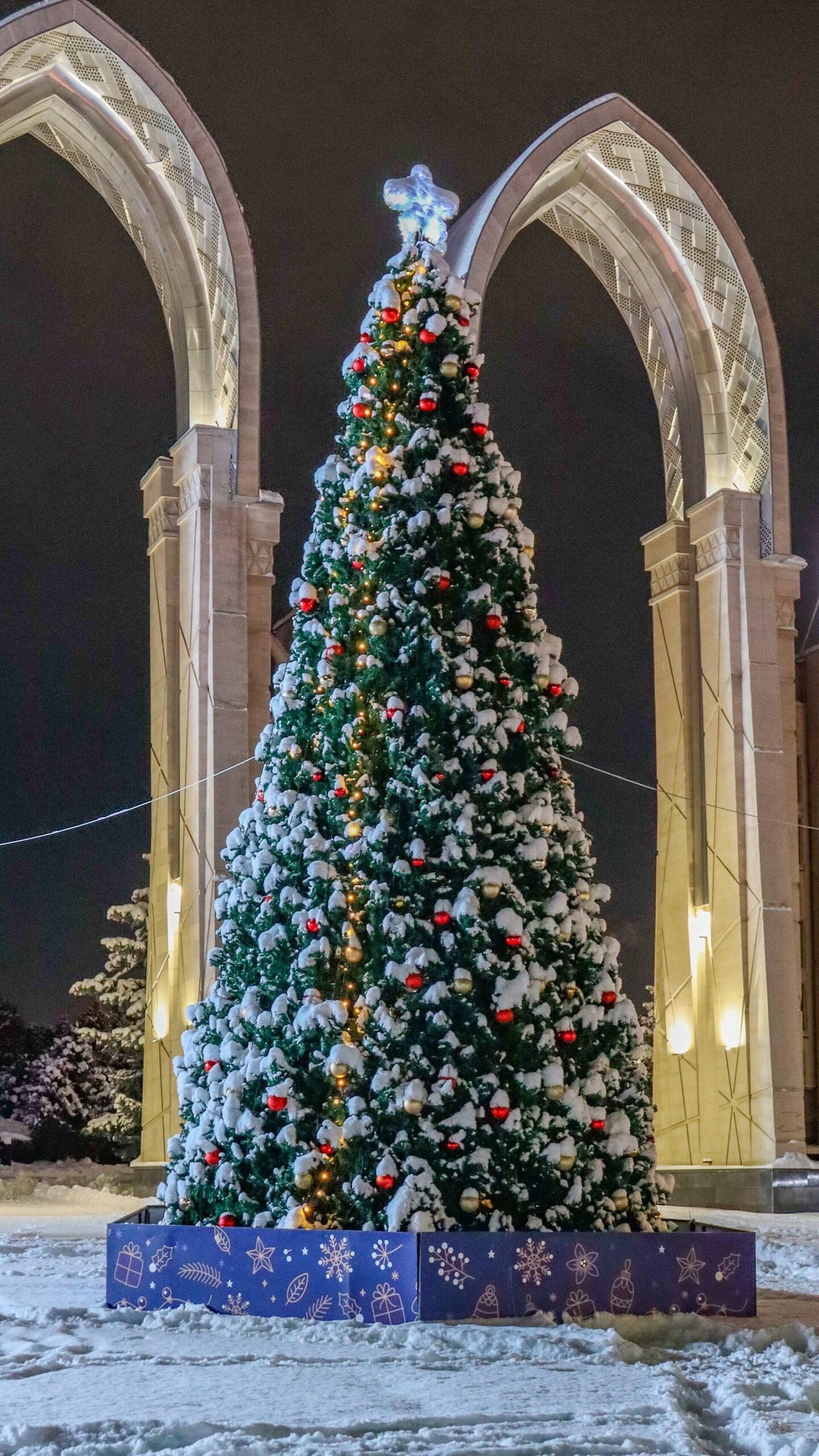
Hence the tree is a yolka (Russian for a fir; shyrsha in Kazakh), a New Year tree and never a Christmas tree, and plenty are still standing well into January. The presents come from Ded Moroz, Grandfather Frost, whom Kazakh speakers call Ayaz Ata, and his granddaughter Snegurochka, the Snow Maiden. Small children meet the pair at end-of-term parties in kindergartens and schools, where the going rate for a present is a poem recited from memory.
December is also the season of the korporativ, the office party, when restaurant banquet halls fill up at weekends. Christmas on 25 December is an ordinary working day. Orthodox Christmas on 7 January is a public holiday, a quieter occasion of church services and family meals that arrives once the New Year rush has passed.
Kazakhstan has a second new year, too. Nauryz, the spring festival around the equinox, brings public holidays on 21-23 March and much deeper roots; for Kazakh traditions rather than Soviet ones, plan around the Nauryz celebrations in March. To wish someone a happy New Year, say Zhana zhylynyzben in Kazakh or S Novym godom in Russian.
How do families see in the New Year?
At home, around a table that takes all day to cook. On 31 December the dastarkhan, the laid table, mixes Soviet classics with Kazakh ones: Olivier salad (potato, peas, pickles and a great deal of mayonnaise), herring under a “fur coat” of beetroot, mandarins by the kilo and sparkling wine, alongside kazy horse-meat sausage, baursak fried dough and, in many families, beshbarmak as the centrepiece. Learn the traditional Kazakh dishes by name before you sit down to one of these tables.
The evening follows a script. The old year is seen off with toasts well before midnight. Just before twelve the television carries the president’s New Year address, then the clock strikes, glasses go up and the first fireworks crack over the courtyards. The young head out to the squares; their parents stay at the table, with New Year concerts and old Soviet films on the television into the small hours. 1 January is for sleeping late, leftovers and visiting relatives.
If you’re invited to a family New Year, say yes. Bring something for the table (sweets, fruit, or a good bottle if the family drinks), take your shoes off at the door and pace yourself, because the food keeps coming long after midnight. The basics of Kazakh table manners, from toasts to who sits where, are worth five minutes beforehand.
Verdict: this version of the night can’t be bought. A restaurant banquet is a different animal, louder, pricier and run by a hired host, and good fun in its own way, but only the family table shows you how the country actually celebrates.
Where should you be at midnight in Almaty?
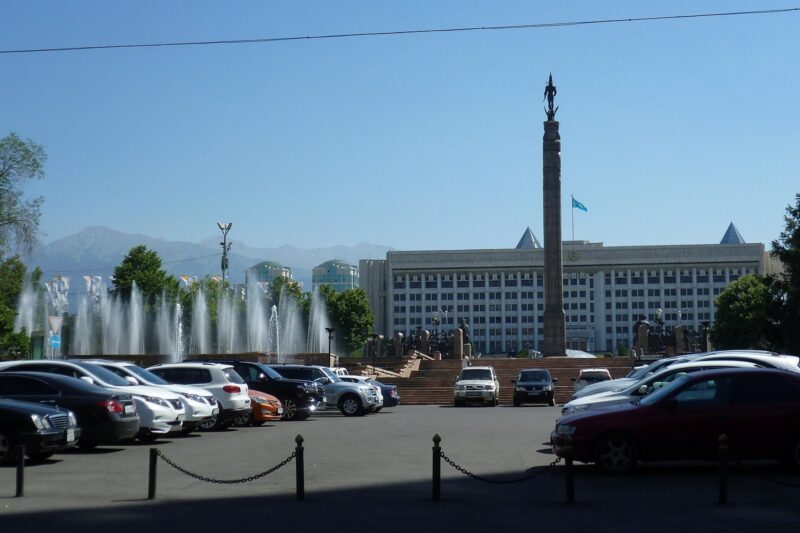
The central squares. Almaty’s public celebration happens in the middle of town, around the main New Year tree, with a stage, a concert and sometimes official fireworks. Astana Square and Abai Square are among the squares the city uses for big public events, but the venue, the programme and whether there are fireworks at all are decided each year and published on the Almaty akimat’s news pages in December. Wear shoes with real grip: packed snow on the pavements turns to ice after dark.
Kok Tobe. The hill above the centre is the place to see the city’s lights spread out below you. The operator runs the Kok Tobe cable car until 22:00 on most days and until 23:00 on Fridays, Saturdays and holidays, which covers 1 and 2 January 2027; an adult return costs 10,000 tenge (about US$22) on its autumn 2026 price list. Check Kok Tobe’s opening hours for any change on 31 December.
A New Year’s Eve banquet. Many restaurants sell 31 December as a ticketed banquet: set menu, host, live music and a midnight toast, priced per person and paid in advance. Ask which language the host works in, because five hours of party games in Russian is a long night if you don’t speak it. Staying central means you can walk home afterwards; see which Almaty districts to stay in.
Getting home. Buses and the metro cost 120 tenge a ride, cashless only (an Onay card, a QR code or a bank app); check the akimat’s announcements for any late running. Taxi apps price dynamically and rise with demand at mass events, so expect high fares and long waits in the first hour after midnight. Yandex Go and taxis in Kazakhstan explains how the apps work.
Plan it: 31 December, late evening; free; allow a couple of hours plus the trip home; best for groups of friends and anyone who wants the city at full volume.
Shymbulak and the mountains over New Year
Shymbulak, the ski resort above Almaty, is the obvious escape from the city over the holidays, so expect queues on 1 and 2 January. The gondola starts at Medeu, about 1,691 m above sea level, and climbs to the resort at about 2,260 m; further lifts reach Talgar Pass at roughly 3,200 m, with about 20 km of pistes in between. An adult sightseeing return from Medeu costs 12,000 tenge (about US$27), or 15,000 tenge (about US$33) including the top lift to Talgar Pass, sold at the ticket office only (autumn 2026 tariff).
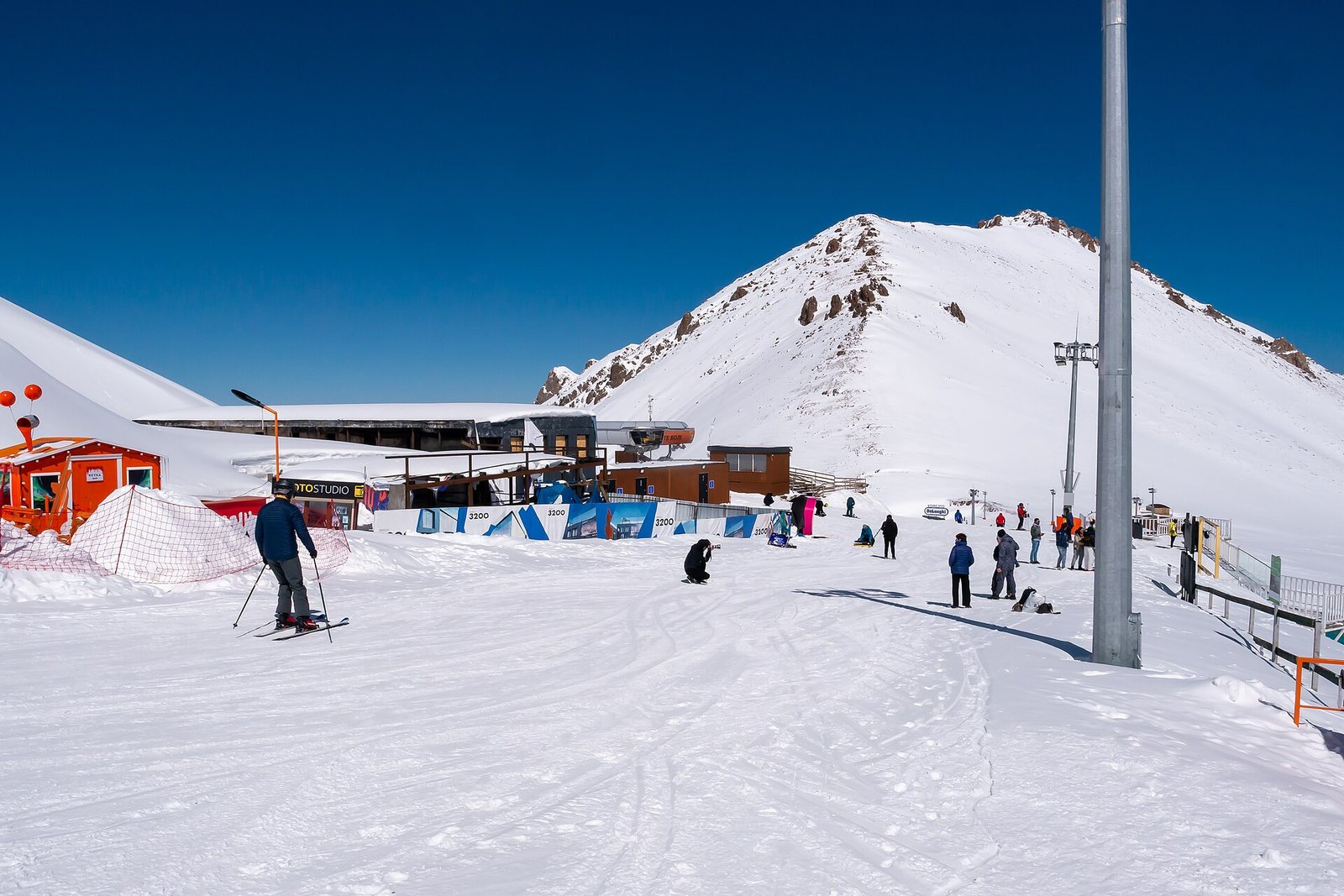
Will the slopes be open? Usually, but not by rule. Visit Almaty describes the season as running from December to April; the opening depends on snow, and the resort announces it, along with any New Year events, on the Shymbulak news page and its social channels. Ski passes are cheaper online than at the window, Visit Almaty notes, which matters most on the busiest days.
About Medeu. The high-mountain rink there is under reconstruction until the fourth quarter of 2027, but Medeu still works as the gondola’s base: Bus 12 runs there from Almaty-2 station, a taxi from the centre takes 20-30 minutes without traffic, and open-air parking costs 500 tenge an hour.
Staying up the mountain. Hotels and chalets around Shymbulak and in the gorges below it sell New Year as a package, often with a minimum stay and a compulsory New Year’s Eve dinner, at peak-season prices. To wake up on the slopes on 1 January, book as soon as your dates are fixed; the choices are compared in where to stay in the mountains above Almaty. The Shymbulak ski resort page covers lifts, passes and pistes.
Verdict: go up over New Year for the views and the atmosphere, not for empty pistes. If you’re there to ski rather than to celebrate, the weeks after the holidays are calmer.
New Year in Astana: colder, grander and mostly indoors
Astana does New Year at a temperature that sorts the committed from the curious. December averages a high of −8°C (18°F) and a low of −16°C (3°F), and January is colder again at −10.3°C (13°F) and −18.7°C (−2°F) on the 1991-2020 normals, so outdoor celebrations are short. The main tree, the stage and any fireworks are announced by the Astana akimat in December, and ice sculptures of Ded Moroz and Snegurochka are a familiar part of the capital’s New Year.
Bayterek after dark. The 105 m tower on Nurzhol Boulevard is lit up at night, the obvious backdrop for a New Year photo. Its observation level is at 97 m, and the operator lists adult admission at 2,500 tenge (about US$5.50); check its holiday hours before you plan an evening around it, and see the Bayterek tower page for the rest.
Khan Shatyr. When −16°C stops being fun, Norman Foster’s 150 m transparent tent, opened in 2010, keeps shops, restaurants and an indoor beach club under one roof, and its operator bills the beach as summer all year round. It is the capital’s warm room.
Getting around. The LRT line that opened in May 2026 links the airport with Nurly Zhol railway station and stops by Bayterek, at about 200 tenge a ride (check the Astana akimat’s announcements for current fares); city buses cost 110 tenge, cashless. The capital’s main sights fill a day either side of the holiday.

Verdict: choose Astana for polished architecture lit up at night, if you can take the cold; choose Almaty for atmosphere, milder weather and mountains on the doorstep.
Which days are off, and what’s open on 1 and 2 January?
By law, 1 and 2 January are public holidays and non-working days, and 7 January, Orthodox Christmas, is a day off too. When a holiday falls on a weekend, the day off moves to the next working day. In 2027, 1 January is a Friday and 2 January a Saturday, which under that rule would normally make Monday 4 January a day off as well. The government confirms each year’s days off, and any extra transfers, by decree: check the government’s public holidays page before you plan around a long weekend.
On the ground, government offices, including the public service centres, and bank branches close on the holidays, while cash machines and card payments carry on as normal. If anything on your trip depends on a bank branch or a government office, get it done before 31 December. Big supermarkets and malls generally keep trading, sometimes opening later on 1 January. Smaller cafés, shops and some museums set their own holiday hours: check 2GIS, the local maps and directory app, or the venue’s own page the day before.
The morning of 1 January is spectacularly quiet. The streets empty, the snow stays clean, and a walk through the centre before lunch is one of the nicer hours of the holiday. Things wake up through the afternoon, and by 2 January the shops and cafés are busy again.
Plan it: keep 1 January for a late start and an easy afternoon; check holiday hours the day before; save museums and any official business for after the holidays.
What does New Year cost, and how should you plan it?
Very little of New Year is expensive in itself: the squares are free and a metro ride is 120 tenge (dollar figures here use about 450 tenge to US$1, the late-2026 rate). What costs more is everything that runs out. Demand peaks from about 30 December into the first days of January, and school winter holidays fall in the same stretch.
Hotels. In the mountains, the tightest market of all, a New Year package’s price turns on how close the hotel is to the lifts, whether the dinner is a buffet or a full banquet with a show, and how many nights you must buy. City hotels are easier, though the central ones go first.
Trains and flights. The Talgo services between Almaty and Astana (trains 3/4 and 9/10 on KTZ’s 2026 list) go quickly around the holidays. In Almaty they use Almaty-2, because Almaty-1 stopped boarding on 15 July 2026 for reconstruction, so check the station printed on your ticket, and book on KTZ’s ticket site as soon as sales open for your date. The Almaty to Astana options compare train and plane. From the Gulf or India, direct routes change with the season, so check each airline’s own winter timetable before paying for a package built around one flight.
Packages. Kazakhstan New Year vacation packages are worth taking apart before you pay: count the nights, and check whether transfers, the New Year’s Eve dinner and a lift pass are in the price or extras. The flight and the hotel nights over 31 December are most of the cost, so compare those first and read the cancellation terms.
Entry. Visa-free visitors should apply for QazETA, the free electronic travel authorisation, at least 72 hours before travel; checks begin at Almaty and Astana airports on 1 January 2027, and nobody is refused for lacking one before 1 July 2027. Most visa-free nationals get 30 days per visit, while Indian citizens get 14 days per visit and 42 in any 180: see the visa rules for Indian passport holders and Kazakhstan’s entry requirements.
A four-day outline. Arrive on 30 December and see the lights and the main tree after dark, before the midnight crowd. Spend the daylight of 31 December up at Shymbulak and be back in town by mid-afternoon, before the roads fill, then go to your banquet, your hosts’ table or the squares. Keep 1 January slow: Zhibek Zholy, the pedestrian street, around midday, then Kok Tobe before dusk to watch the city’s lights come on. On 2 January, take a second mountain day or a long afternoon at the Arasan baths, the domed Soviet-era bathhouse built in 1979-1982. With a fifth day, head for Astana, or explore what Almaty offers in winter once the holiday crowds have gone.
Plan it: mountain hotels as soon as your dates are fixed; trains the day sales open; banquet tables by early December; QazETA at least 72 hours before you fly.
Frequently asked questions about New Year in Kazakhstan
Is New Year a public holiday in Kazakhstan?
Yes. 1 and 2 January are public holidays and non-working days, and 7 January, Orthodox Christmas, is another. When a holiday falls on a weekend, the day off moves to the next working day. In 2027, 2 January is a Saturday, so check the government’s holiday calendar on gov.kz for the transferred day and any other changes made by decree.
Do people celebrate Christmas in Kazakhstan?
Not on 25 December, which is a normal working day. The tree, the presents and the big family dinner all belong to New Year’s Eve, a Soviet-era shift that outlasted the Soviet Union. Orthodox Christians mark Christmas on 7 January, a public holiday, with church services and a family meal.
Are there fireworks in Almaty on New Year’s Eve?
Private fireworks go off from courtyards and balconies around midnight. Whether the city stages an official display, and where, is decided each year along with the rest of the programme, which the Almaty akimat publishes in December. If you’d rather avoid the smoke, which can hang in the valley on still nights, see the year in from a mountain hotel.
How cold is Almaty at New Year?
Cold but manageable. On the 1991-2020 normals, December averages a high of 2°C (36°F) and a low of −6°C (21°F), and January is a degree or two colder. Dress in layers and wear boots with grip; Astana, far to the north, is in another league altogether.
Is Almaty or Astana better for New Year?
Almaty, for most visitors. It’s milder, the mountains are 20-30 minutes from the centre by taxi without traffic, and the squares, Kok Tobe and Shymbulak give you very different ways to spend the holiday. Astana suits travellers who want the capital’s architecture lit up at night and don’t mind a December low of −16°C (3°F).
How do you say Happy New Year in Kazakh?
Zhana zhylynyzben (Жаңа жылыңызбен) is the polite form. In Russian, which you’ll hear at least as often in Almaty and Astana, it’s S Novym godom (С Новым годом). Either one earns a smile, and the usual reply is the same greeting back, often with a toast attached.
Final thoughts
New Year is the best time to see Kazakhstan celebrate and one of the worst to see it at work. If you want the squares, a family table and the mountains in one trip, come for it, book early and accept the prices. If you came for the slopes or the sights, wait a week: the snow will still be there, the queues will be shorter and everything will be open again.
Staying on into the new year? Kazakhstan in January and February covers the deep-winter weeks after the holidays, and the season-wide look at Kazakhstan in winter puts both cities alongside the rest of the country.
Sources and further reading
- Government of Kazakhstan: public holidays: the holiday law, the days off and the weekend transfer rule
- Almaty akimat: news and announcements: the city’s New Year programme and any transport changes, published in December
- Astana akimat: news and announcements: the capital’s New Year programme
- Shymbulak Mountain Resort: news: the season opening, lift notices and any New Year events
- Kok Tobe: operating hours: cable car hours, including holidays
- Visit Almaty: Almaty in winter: the city’s official winter guide, including the ski season
- KTZ: train tickets: Almaty–Astana timetables, fares and the station on your ticket
- UK FCDO: Kazakhstan entry requirements: QazETA dates and visa-free stays
Photo credits
All images via Wikimedia Commons, used under their stated licences: Chalets at Shymbulak above Almaty in winter — Matti Blume (CC BY-SA 4.0); The New Year tree at the entrance to Atakent, Almaty — Nikolai Bulykin (CC BY-SA 4.0); Skiers at Shymbulak ski resort above Almaty — Matti Blume (CC BY-SA 4.0); Ice sculptures of Ded Moroz and Snegurochka in Astana — Ken and Nyetta (CC BY 2.0).