Contents
- What January and February are really like
- Weather region by region
- What to do in January and February
- Winter events: Orthodox Christmas and New Year
- Where to go — and where to skip
- Staying warm and getting around
- January vs February: which should you choose?
- The frozen lakes experience
- Astana in deep winter
- Winter safety in extreme cold
- Daylight and sunlight hours
- What to pack for deep winter
- Is it worth braving the deep-winter cold?
- Frequently asked questions
- Final thoughts
This is winter at full volume. January and February are among the coldest months in Kazakhstan, when Astana can drop to -30 to -35°C — and, if you come prepared, some of the most spectacular. The ski season is under way, the northern lakes freeze over, and the steppe lies silent under snow.
Kazakhstan in January and February means serious cold: the capital Astana, one of the coldest on earth, sits around minus fifteen with nights past minus thirty, while Almaty in the south is far milder at around freezing by day. These are the peak ski months, the season of frozen lakes and dazzling snow, with the short days slowly lengthening and brightening through February. It is a niche but deeply rewarding time to visit — squarely for winter sports and frozen scenery rather than steppe touring or relaxed hiking.
Below I set out the deep-winter weather region by region, what is genuinely worth doing, the one big winter holiday to know about, and where to go and where to stay away from.
What January and February are really like
Make no mistake: this is proper winter, the kind that closes schools and freezes rivers solid. January is the coldest month nationwide, and February is not far behind, though it brings noticeably longer, brighter days as the season turns. The cold here is largely a dry, continental cold — clear, crisp and snowy rather than damp — which is more bearable than the raw number suggests, but the north’s wind chill is no joke. Come for the winter, respect it, and it rewards you with some of the very finest snow scenery anywhere in Central Asia. This guide sits within our wider Kazakhstan in winter overview.
Weather region by region
| Region | January | February |
|---|---|---|
| Astana & the north | ~-10°C day / -19°C night; lows of -30 to -35°C can occur | ~-9°C day / -18°C night |
| Almaty & the south-east | ~+1°C day / -8°C night | ~+3°C day / -6°C night |
| Deep south (Shymkent, Taraz) | Mildest; Shymkent averages -5 to +5°C | Milder, brightening; Shymkent averages -3 to +7°C |
| Mountains (Tian Shan, Altai) | Ski season | Ski season; check snow reports |
Astana and the north: one of Earth’s coldest capitals
Astana is, after Ulaanbaatar, the coldest capital city in the world, and January is when it earns that title. Daytime highs hover around minus eleven, nights routinely fall past minus thirty, and the open-steppe wind drives the felt temperature lower still. It is genuinely extreme, and it demands real cold-weather clothing and a between-buildings, dash-for-warmth approach. February eases only slightly. The upside is that Astana is built for it, with heated malls, museums and the enormous Khan Shatyr tent to duck into.
Almaty and the south: milder and snowier
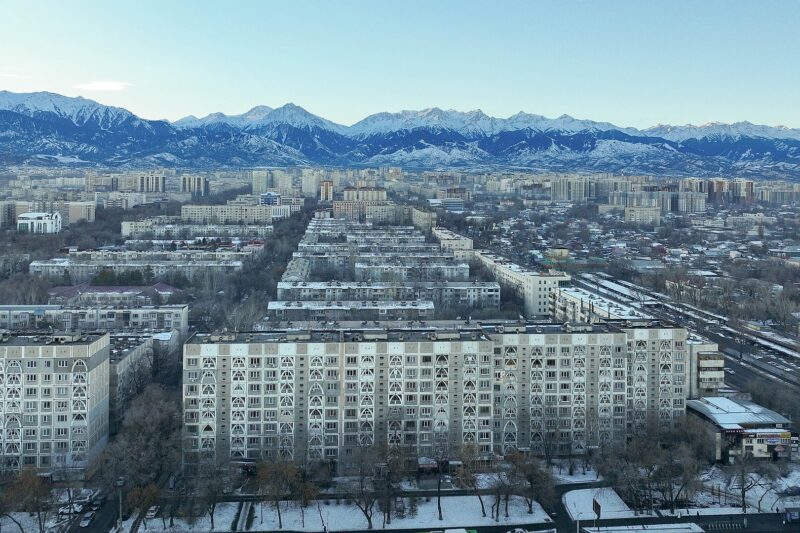
Almaty is the sensible winter base. January days hover around freezing and nights dip to around minus ten — cold, but a world away from the north — and February is milder still, with the most snow days of the year and the best conditions of the ski season. The mountains shelter the city, the snow is deep up high, and you can ski, skate and sightsee in relative comfort. Our Almaty in winter guide goes deep on the city.

The deep south and the mountains
For the mildest cold, the deep south around Shymkent and Taraz stays gentlest, if grey. But the real winter magic is up high: the Tian Shan above Almaty and the Altai in the east are in ski season and stunning to look at. Conditions vary with each winter’s snow, so check snow reports before you go.
What to do in January and February
Peak-season skiing and snowboarding
This is the heart of the ski season. How good the snow is at Shymbulak above Almaty and the country’s other ski resorts — from Ak-Bulak to the Altai backcountry — depends on each winter’s snowfall, so check the resorts’ snow and opening reports before you book. If skiing is why you are coming to Kazakhstan in winter, January and February are the months to do it.

Medeu and the gondola
The ice rink at Medeu is closed for reconstruction, with completion planned for the fourth quarter of 2027, so there is no skating there this winter. Medeu is still where you board the gondola up to the slopes above, and in deep winter the whole valley is a snow-globe.
Frozen lakes
This is the season for one of Kazakhstan’s great winter spectacles: frozen lakes. The Kolsai Lakes and, closer to Almaty, Big Almaty Lake freeze into sheets of turquoise ice ringed by snow-laden spruce. Up north, the lakes of Burabay freeze thick enough to walk on, with ice skating, ice fishing, horse-drawn sleigh rides and the chance to stroll across to the famous Zhumbaktas rock — all covered in our northern and eastern Kazakhstan guide.
Charyn Canyon and winter photography
The red rock of Charyn Canyon streaked with snow is one of the country’s most striking winter sights. Check the weather, the road conditions and which tours are running before you set off, and go with a good driver. For photographers, January and February offer that magical combination of low golden light, pristine snow and dramatic frozen landscapes.

Cities indoors
When the cold is fierce, the cities offer warm refuge: Astana’s Khan Shatyr and museums, Almaty’s bathhouses, galleries and cafes, and everywhere the hearty comfort food of a Kazakh winter. There is no shame in building your deep-winter days around warm interiors and short, sharp bursts outside.
Winter events: Orthodox Christmas and New Year
The calendar’s highlight in this window is Orthodox Christmas on 7 January, a public holiday marked by candle-lit church services — a beautiful, atmospheric thing to witness, especially at Almaty’s wooden Ascension Cathedral. It follows hard on the heels of New Year, the country’s big winter celebration, so the very start of January still has decorated trees and lights before the country settles into the quiet depths of winter. Ice festivals and ice towns linger in the cities, and Astana’s frozen Ishim River becomes a playground of skating and ice slides.
Where to go — and where to skip
Base yourself in Almaty. It is the mildest major city, the ski capital, and the gateway to frozen lakes and canyons — everything that makes a Kazakh deep winter worthwhile is within reach. Add Astana and Burabay if you actively want the extreme-cold, frozen-lake experience and are equipped for it. What to skip is clear: the deserts of Mangystau and long steppe road trips are bleak, bitter and difficult now, and ambitious independent mountain hiking is genuinely dangerous. Save those for the shoulder seasons, which our best time to visit Kazakhstan guide covers.
Staying warm and getting around
Deep-winter travel here is safe and enjoyable if you respect the cold. Dress in a proper layered system with a serious insulated coat, and never underestimate the north — this is minus-thirty territory where exposed skin can suffer quickly. Use taxis, metros and buses rather than long walks on ice, keep excursions to stable, clear days with experienced drivers, and keep phones and batteries warm. Build flexibility into your plans, because a cold snap or heavy snow can reshape a day. For a fuller climate picture across the year, see our Kazakhstan weather by month guide.
January vs February: which should you choose?
Both are deep winter, but they have distinct personalities. January is the coldest, darkest heart of the season — the ski snow is superb, the frozen lakes are locked solid, and the festive tail of New Year and Orthodox Christmas gives the first week a glow, but the days are short and the north is at its most brutal. February is my pick for most visitors: the ski season is still running, and the daylight lengthens noticeably as the month goes on, taking some of the grimness out of the cold. If you want skiing with a little more light and a touch less gloom, aim for February; if you want the full deep-freeze drama and the festive afterglow, come in January.
The frozen lakes experience
If there is one thing that defines a Kazakh deep winter, it is the frozen lakes, and they are worth planning a trip around. In the mountains south of Almaty, the Kolsai Lakes and Big Almaty Lake freeze into sheets of pale turquoise and white, ringed by frosted spruce — utterly silent, utterly beautiful, and reachable on a clear-day excursion with a capable driver. Far to the north, the resort lakes of Burabay (Borovoe) freeze thick enough to become a winter playground: locals skate and fish through holes in the ice, horse-drawn sleighs and even dog sleds cross the snow, and you can walk out across the frozen surface toward the iconic Zhumbaktas rock rising from the ice. Bundle up, tread carefully on marked areas, and you will have the kind of winter day that stays with you for years.

Astana in deep winter
Visiting the capital in January or February is not for the faint-hearted, but it is a genuine experience. Astana in the depths of winter is a study in extremes: futuristic towers rising from a frozen plain, the Ishim River locked in ice and turned into a skating and ice-slide park, and a city that has learned to live indoors when the mercury drops. The trick is to embrace the between-buildings rhythm — the giant Khan Shatyr tent with its indoor beach, the museums, galleries and warm restaurants — and to venture out in short, well-wrapped bursts for the photographs. Our things to do in Astana guide leans into the indoor-friendly sights that make a deep-winter visit workable. For most travellers, though, Astana is a striking two-day add-on to an Almaty-based trip rather than the main event.
Winter safety in extreme cold
The one thing I will not soft-pedal is the cold in the north, which is serious enough to be dangerous if you are careless. In minus-thirty conditions, exposed skin can suffer frostbite in minutes, so cover your face, hands and ears, and do not stand around outside for long. Dress in a proper layered system topped by a genuinely warm insulated coat rather than a fashion jacket, keep spare warmth in your day bag, and keep phones and power banks in an inner pocket where your body heat protects the battery. For any out-of-town excursion, use experienced local drivers and well-equipped vehicles, travel on clear stable days, and never set off into the mountains alone. Treated with respect, deep winter here is safe and thrilling; treated casually, the north in particular can turn a lovely trip sour fast.
Daylight and sunlight hours
Daylight is short but lengthening. In Almaty, January gives you around nine hours of daylight, stretching past ten by late February, with the sun low and the light beautifully golden when it breaks through. Astana, further north, has shorter days still in January, brightening as February advances. The practical upshot is the same across the country: plan your outdoor activities — skiing, lake trips, canyon excursions — for the middle of the day, and enjoy the long evenings in the warmth of a cafe, a bathhouse or a festive city square. By late February the returning light is genuinely uplifting, one of the quiet pleasures of travelling as deep winter begins to loosen its grip.
What to pack for deep winter
Pack for the coldest scenario your route includes, not the average. If you are staying in Almaty, warm layers, a good insulated coat, hat, gloves and grippy waterproof boots will see you through comfortably. If you are heading north to Astana or Burabay, step it up: a heavyweight down parka, a proper base-layer system, a balaclava or face covering, insulated gloves with liners, and thick thermal socks are non-negotiable in minus-thirty cold. Add sunglasses for the intense glare off the snow, lip balm and moisturiser for the dry air, and hand warmers for lake trips and ski days. Because indoor heating runs hot, choose layers you can shed the moment you step inside. Our general what to pack for Kazakhstan guide has a full checklist to build from.
Is it worth braving the deep-winter cold?
Here is my honest verdict. If your idea of a good trip is long days of steppe touring, canyon hiking and warm evenings on a terrace, then no — come in spring or autumn instead, when the country is at its gentlest and greenest. But if you are drawn to winter itself — to carving fresh tracks on empty pistes, to standing on a frozen turquoise lake in absolute silence, to watching a futuristic city steam in the sub-zero air, to having world-class sights almost entirely to yourself — then January and February are genuinely special, and among the best-value winter-sports travel anywhere. The cold is the price of admission, and for the right traveller it is a bargain. Go in with the right expectations and the right clothing, base yourself sensibly, and you will come home with a set of memories, and photographs, that few other visitors to Central Asia can match.
The season also has a rhythm worth working with. Ski and explore the frozen landscapes on the clear, stable days; retreat to bathhouses, museums, galleries and long warming meals when the weather closes in or the cold bites hardest. Managed like that, deep winter stops being something to endure and becomes the whole point of the trip.
Spending some of these weeks in the capital? Astana’s January averages run from −10.3°C by day to −18.7°C at night (1991-2020 normals), and the guide to Astana in winter covers the warm indoor sights, the Wonderland winter town and the rinks, what to wear and how to get around in the cold.
Frequently asked questions
What is the coldest month in Kazakhstan?
January is the coldest month across the country, with February close behind. The north, around Astana, is hardest hit, with average January temperatures near minus fourteen and nights past minus thirty, while Almaty in the south is much milder at around freezing by day. February brings the same deep cold but longer, brighter days.
How cold does Astana get in January?
Very cold. Astana averages around minus fourteen in January, with daytime highs near minus eleven and nights routinely past minus thirty, plus a biting steppe wind. It is, after Ulaanbaatar, the coldest capital city in the world. If you visit, dress for genuine extreme cold and plan to move quickly between heated interiors.
Is Almaty or Astana colder in winter?
Astana is dramatically colder. It sits on the open northern steppe and endures January nights past minus thirty, while Almaty, sheltered in the mountainous south-east, hovers around freezing by day. For a milder deep-winter base with skiing and frozen lakes on the doorstep, Almaty is the clear choice.
Can you ski in Kazakhstan in January and February?
Yes — this is the heart of the ski season at Shymbulak above Almaty, the other resorts and the Altai backcountry, though conditions vary with each winter’s snow, so look at current snow reports before you go. Add the frozen mountain lakes and it is a fine window for winter sports in Kazakhstan. The one gap is Medeu: its rink is shut for reconstruction until late 2027.
Does it snow in Kazakhstan in February?
Yes, heavily in many regions. February actually brings the most snow days of the year to Almaty, and the mountains reach their peak snow depth. The north and east stay deep in snow throughout. February also brings noticeably longer, brighter days than January, making it a favourite month for combining skiing with winter scenery.
Is Kazakhstan worth visiting in winter?
For winter sports and frozen scenery, absolutely — skiing in the heart of the season, frozen lakes and snow-streaked canyons, all cheap and uncrowded. Medeu, the world’s highest large skating rink, will be back once its reconstruction is finished, planned for late 2027. It is not the season for steppe touring or relaxed hiking, and the north is seriously cold, but for a deliberate winter trip, January and February are magnificent.
Is January a good time to visit Kazakhstan?
It is a good time for a very specific kind of trip: peak-season skiing, frozen lakes, snowbound scenery and quiet, cheap cities. It is the coldest, darkest month, so it is not the time for steppe touring or relaxed hiking, and the north is extreme. But for a deliberate winter-sports and frozen-landscape trip based in Almaty, January is excellent.
What is there to do in Kazakhstan in winter?
Plenty for those who embrace the cold: ski at Shymbulak and the other resorts, take in the winter scenery at Kolsai, Big Almaty Lake and Burabay when mountain access allows, photograph snow-streaked Charyn Canyon after checking the park and road conditions, and explore the warm interiors of Almaty and futuristic Astana. Winter festivals, ice parks and the hearty comfort food of the season round it out. Skating at Medeu has to wait: the rink is closed for reconstruction, due to be finished in late 2027.
Is Kazakhstan safe to travel in winter?
Yes, with sensible precautions. The main hazards are the cold itself and icy roads rather than any danger from people. Dress properly for the temperature, especially in the north, use experienced drivers for out-of-town trips, keep to stable clear days for excursions, and do not hike alone in the mountains. Managed with common sense, winter travel in Kazakhstan is safe and hugely rewarding.
Final thoughts
January and February show you Kazakhstan at its wildest and whitest. If you come for the right reasons — peak skiing, frozen lakes, snowbound scenery and the crisp beauty of deep winter — and pack for genuine cold, these months deliver experiences the summer crowds never see. Base in Almaty, venture north only if you are ready for the extreme, and let the mountains and frozen lakes take your breath away. Pack for genuine cold, travel on the clear days, and keep the warm interiors close for when the weather turns. Keep planning with our Kazakhstan in winter guide, and if you are here as the season begins, our guide to Kazakhstan in December covers the earlier weeks.
Photo credits
Images via the Kazakhstan Tourism Guide media library, sourced from Wikimedia Commons: frozen Ishim River, Astana — Anton Yefimov, CC BY 3.0; Almaty winter mountains — Nikolai Bulykin, CC BY-SA 4.0; Shymbulak pistes — Matti Blume, CC BY-SA 4.0; frozen Kolsai Lake — Smallishfish, CC BY-SA 4.0. All via Wikimedia Commons.
Charyn Canyon in snow: Maria Simonova, CC BY-SA 4.0, via Wikimedia Commons.