Contents
- Did Kazakhstan invent horse riding? The honest answer
- The horses you will actually be sitting on
- Where to ride: the Almaty region
- Multi-day horse treks
- Ethno-villages and horse shows near Almaty
- Beyond Almaty
- What it costs: the table
- Tack, kit and what nobody tells you
- How to tell if an outfit treats its horses well
- Horses on the plate: reverence and horsemeat, side by side
- Safety and insurance
- When to go
- Frequently asked questions
- Final thoughts
Kazakhstan counted around 4.7 million horses on 1 April 2026, and a 2024 research review puts its natural pasture at roughly 185 million hectares. Few of its horse-tourism outfits publish their prices or their welfare standards, and the national cuisine is built partly on horsemeat — a combination that catches Western visitors out.
Horse riding in Kazakhstan ranges from a hire of about 8,000 tenge to carry you between the Kolsai lakes, to day rides in the Turgen and Assy highlands, to multi-day treks and ethno-village shows near Almaty from about 40,000 tenge. Mountain riding is mainly a summer activity, helmet provision varies by operator, and the horses are shorter and heavier-built than you may expect.
This guide gives you the prices, plain advice on tack and safety, and a five-minute check for whether an outfit looks after its animals. It also tells you what happened to the story about Kazakhstan inventing horse riding, because the science moved and the travel writing did not.
Did Kazakhstan invent horse riding? The honest answer
The Botai hypothesis holds that horse domestication began here, in northern Kazakhstan, around 3500 BC. That was the archaeological consensus and it is now two-thirds wrong.
What was found at Botai
The Botai culture of northern Kazakhstan, dated to around 3500 BC, left early evidence that archaeologists have read as horse husbandry: possible bridling, milking and corralling. How domesticated those horses were is still argued over, and later work questions the milking. A landmark 2009 paper on “the earliest horse harnessing and milking” made Botai the presumed birthplace of horse domestication, resting substantially on what looked like bit wear on a Botai horse’s tooth.
The 2018 twist
Then genomics arrived. A 2018 study sequenced 42 ancient horse genomes, 20 of them from Botai, and concluded that Przewalski’s horses are the feral descendants of the horses herded at Botai — and not truly wild horses at all. Botai animals are a sister taxon to the modern domestic horse, not its ancestor. Domestic horses from about 4,000 years ago to the present carry only about 2.7 per cent Botai-related ancestry, indicating a near-total genomic turnover.
A 2021 paper went further and re-examined the famous bit-wear tooth, showing a comparable Pleistocene wild-horse tooth from North America with the same enamel pits and cementum banding. So even the horse-transport evidence at Botai is now contested.
So where were modern horses domesticated?
A major 2021 study of 273 ancient horse genomes pinpointed the Western Eurasian steppes, especially the lower Volga-Don region, as the homeland of modern domestic horses. Those horses replaced almost all other local populations as they spread rapidly across Eurasia from about 2000 BC, moving in step with spoke-wheeled chariots. The same paper explicitly rejected the popular idea that horseback riding drove the Yamnaya expansion into Europe around 3000 BC.
Why Kazakhstan is still a horse culture
Because none of that is what actually matters when you are here. Kazakhstan has around 4.7 million horses as of April 2026, up 7.1 per cent in a year. Horses are milked for kumis. They are eaten. They are raced, wrestled from, and used for a national sport. Purebred stock is under one per cent of the herd — of roughly 4.2 million horses counted when the state horse-breeding institute was announced, only about 40,000 belong to recognised breeding lines. This is a working horse country, not a heritage one, and that is far more interesting than a disputed origin story.
For the sport, see our guide to kokpar and the horse games of the steppe.
The horses you will actually be sitting on
Get this right and your expectations calibrate properly. There are two traditional Kazakh native types and several modern breeds.
| Breed / type | Withers height | Live weight | What it’s for |
|---|---|---|---|
| Jabe (Dzhabe) | 141–143 cm (stallions) | Up to 503 kg; mares to 440 | Meat and dairy; hardy; also used for riding tours |
| Adai (Adaev) | Taller, lighter build | ~442 kg stallions, ~413 mares | Racing; desert-adapted, Mangystau and Aral region |
| Mugalzhar | — | To 560 kg stallions, 520 mares | Meat and milk; approved as a breed in 1998 |
| Kostanay | ~155 cm stallions | — | The riding breed; recognised 1951; noticeably taller |
| Kushum | — | To 577 kg mares, 640 stallions | Meat and milk; heavy |
The practical point: at 141–143 cm at the withers, the standard Kazakh trek horse is pony-height by Western measure and heavily built. If you are used to a 16-hand warmblood, this will feel small underneath you and surprisingly solid. It will also go all day.
The Jabe’s toughness is not marketing. These horses can be kept on the same pasture year-round in frosts reaching −40 to −50 °C, and on good pasture they lay down 30 to 50 kg of fat under the skin and around the internal organs as reserve. The Adai copes with Mangystau conditions where relative humidity drops to 7 per cent. Summer on the open steppe is the other extreme: hot, dry, and a long way between grazing and water.
A 2024 research review, drawing on earlier statistics, counts 51,100 productive breeding horses in Almaty region and 2,500 in Mangystau. That is a specialised breeding category, not every horse in either region.
Where to ride: the Almaty region
Kolsai Lakes — the classic
This is the one most visitors end up doing, and it is a good introduction.
Lower Kolsai to Kolsai 2 is about eight kilometres and three to four hours on foot, and the second lake sits at roughly 2,250–2,400 m. If you are not fit, or simply want to ride, hiring a horse for the return trip from lake 1 to lake 2 has been quoted at about 8,000 tenge. On an organised Charyn–Kolsai–Kaindy tour, a horse-riding upgrade to lake 2 has been quoted at around US$40 extra. Either way, agree the price and what it covers before you set off.
Park entry has been reported at 750 tenge per person plus 1,000 per car. Saty village is the base, with guesthouse B&B from 3,000 tenge and a lakeside yurt at 7,000 without food or 10,000 with three meals a day. Almaty to Saty is about five hours by car. See the Kolsai Lakes and where to stay at Kolsai and Saty.
One thing to read carefully in the terms and conditions. The same operator states that extras like horseback riding are “organized independently by local providers on the spot” and are “at your own risk.” That is the clearest published statement of the liability position anywhere in Kazakh horse tourism, and it applies whether or not anyone tells you.
Kaindy Lake
Access to the drowned forest at Kaindy from the car park is by three means: on foot, by marshrutka taxi, or on horseback — with the horse trail visible on the opposite slope, running lower than the walking route. It is the most photogenic short ride in the country.
For the Kaindy horse, ask the price at the car park and expect to negotiate. For context, a budget group day tour covering both Kaindy and Kolsai from Almaty was 14,000 tenge in early 2025, with the day-trip range running 14,000 to 70,000 and private tours starting around $100. See Kaindy Lake and the Kolsai–Kaindy–Charyn tour.

Turgen, Assy and the highlands
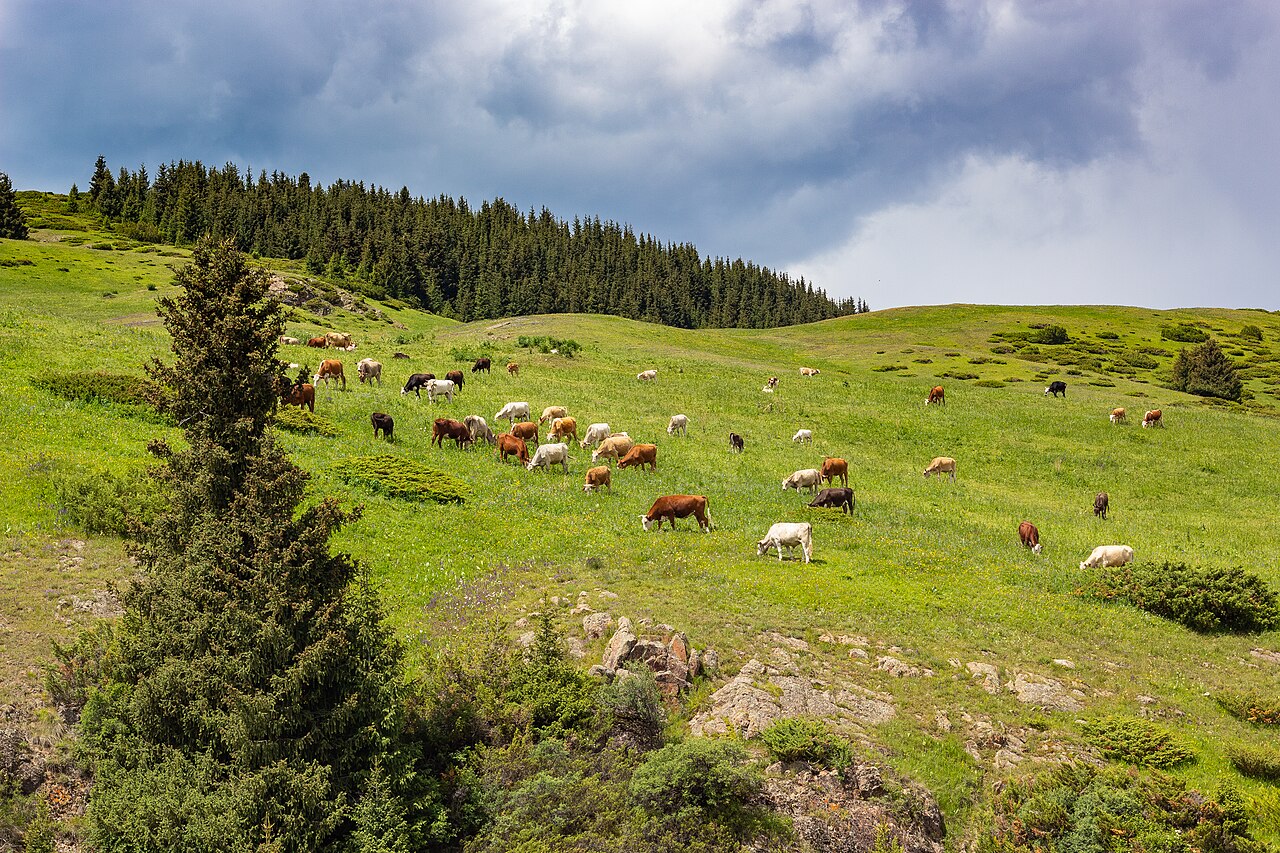
The Turgen gorge and the high grassland of the Assy plateau above it are within easy reach of Almaty, and this is open mountain country where a full day in the saddle makes sense. Rates vary, so agree one when you arrange the ride through an Almaty operator or a guesthouse in Turgen.
Aksu-Zhabagly
Worth knowing about because it is the one place in the country where you can ride essentially on demand: park rangers at Aksu-Zhabagly can usually supply a horse and an itinerary — anything from an hour to a couple of days — without advance notice. That is unusual and useful. See Aksu-Zhabagly.
Almaty city: lessons and arena riding
If you want instruction rather than a trek, the Almaty Horse & Polo Club is the named option for beginners wanting controlled arena riding with trainers on hand against the Ile-Alatau backdrop. That reference comes from a source last updated in 2022, so confirm it still trades before making a plan around it.
Multi-day horse treks
The honest position, from the most authoritative regional travel source: “Compared to horse riding in Kyrgyzstan, though, Kazakhstan is far behind. Horse riding tours are still difficult to organise.”
That is worth taking seriously, and it does not mean nothing exists. Named operators and products:
- Ecotour Kazakhstan — a four-day trek from Charyn Canyon National Park via the Ketmen ridge and the Dardamty petroglyphs.
- Tian Shan Expeditions — a ten-hour day trip through the Kolsai Lakes on horseback.
- Specialist marketplaces list a ten-day trek in Bayanaul National Park and a twelve-day riding retreat; confirm the details with the operator before you book.
On price, the main published figures come from a Kazakh tourism source last updated in 2022, so read them as historical anchors rather than current quotes: “expect to pay about $350 for day trips, and up to $1,700 for longer tours,” with independent horse rental “from about $60 a day.” Those are four to six years old. Treat them as the shape of the market, not the price list. OTAs advertise Kazakhstan horseback experiences “from $58.”
What a trek day actually looks like
Five to six hours in the saddle at a walk with occasional trotting, a long midday stop, camp or a shepherd’s yurt at night, and your gear on a pack horse or in a support vehicle. The pace is set by the terrain and the terrain is rarely flat. On a multi-day, day two is the hard one — see the saddle-soreness note below.
Ethno-villages and horse shows near Almaty
If you want a taste rather than a trek, this is the reliable option and it runs year-round.
The Huns (Hunns) ethno-village in the Talgar district, 35 to 40 km from Almaty, bills itself as Kazakhstan’s first ethnographic village. A tour of about five hours includes a rider show, horseback riding, a walk round the site, a baursak master class, archery and a buffet lunch; confirm departure and return times with Kazia Tour when you book.
| Group size | 2026 price per group | Per person |
|---|---|---|
| Group departure | from 40,000 KZT | — |
| 1 person, private | 115,000 KZT / $245 | 115,000 |
| 2 people | 145,000 KZT / $310 | 72,500 |
| 3 people | 185,000 KZT / $374 | 61,700 |
| 4 people | 205,000 KZT / $437 | 51,250 |
| 5 people | 230,000 KZT / $491 | 46,000 |
| 6 people | 275,000 KZT / $587 | 45,800 |
Price includes transport, guide, the show, master classes and lunch, with free cancellation up to 24 hours before.
The games demonstrated include kyz kuu — a man chasing a woman on horseback to kiss her before the finish, and being whipped back to the start if he fails — and atpen audaryspak, wrestling in the saddle, alongside felt craft and yurt-building.
Set your expectations properly: this is a demonstration for an audience, not a match or a working day. It is still a chance to watch riders do things you did not know were possible, on a Tuesday in October. Consider it among the other day trips from Almaty.

Beyond Almaty
Burabay, the Kazakh Altai and Katon-Karagay. All three are good horse country on paper — lakes and pine forest in the north, high valleys in the east. Ask locally for operators and prices. See northern and eastern Kazakhstan.
Mangystau. The desert west is a trip for its landscape rather than its riding, and the local Adai type is a desert survivor rather than a trekking horse. Go to Mangystau for the landscape and take a vehicle.
Astana. Kazakhstan is building a state Research Institute of Horse Breeding in Aktobe region; an October 2025 report expected it to be fully operational in 2026, with five genetics and breeding laboratories, aimed at horsemeat and kumis exports and at building sport-horse breeding. A law on preserving and reproducing domestic riding and riding-draft horse breeds was adopted on 9 July 2024. For riding in or around Astana itself, ask your hotel or a local tour operator what runs that season.
What it costs: the table
| What | Price | Period |
|---|---|---|
| Horse, Kolsai 1 to Kolsai 2 return | 8,000 KZT | Recent |
| Horse-riding upgrade on a group tour | US$40 | Current |
| Ethno-village day, group departure | from 40,000 KZT | 2026 |
| Ethno-village day, private, per person at 4–6 | ~46,000–51,000 KZT | 2026 |
| Independent horse rental, per day | ~US$60 | 2020–22 — historical |
| Guided day trip | ~US$350 | 2020–22 — historical |
| Longer tours | up to US$1,700 | 2020–22 — historical |
| OTA “from” price, riding experiences | US$58 | Current |
Kolsai park entry (750 KZT per person plus 1,000 per car) and national park fees generally sit on top. See Kazakhstan tours for how these prices compare to other organised trips here.
Tack, kit and what nobody tells you
The saddle you will be handed
Expect a Kazakh or Russian-style working saddle: a raised pommel and cantle, a broad seat, often a sheepskin or blanket over the top, with long stirrup leathers. It is closer to a Western saddle than an English one in feel. It is comfortable at a walk for hours and it does not encourage a forward seat.
Helmets: bring your own
Helmet provision varies by operator. Haqqi Tours gives everyone a helmet, after a safety briefing, on its Ile-Alatau horseback tour from Almaty; elsewhere, confirm the equipment when you book. Next door, a Central Asian riding guide says of Kyrgyzstan: “Helmet: this is optional if you choose to bring one, people in Kyrgyzstan don’t use them.”
So: ask whether a helmet is supplied when you book, and bring your own if you want one. The insurance implications are yours to carry; see below.
What to wear
Long trousers, always. High hiking boots to protect your ankles in the stirrups — the regional guides are specific about this, and it is good advice with an unfamiliar saddle. Layers, because mountain weather here turns fast. Sun protection: you will be out in it for six hours at 2,000 metres and up.
Riding technique for this terrain
Two things from the regional practice that genuinely help. Rest the ball of the foot on the stirrup — if your foot goes too deep, it can get stuck. And on gradients: uphill, reins in one hand and the front of the saddle in the other, lean forward; downhill, hold the back of the saddle and lean back. That is not how you would ride in an English arena and it is how you should ride here.
Beginners, weight and soreness
You do not need experience — the horses are calm, a horseman accompanies you, and beginners should simply start with an easy day rather than a multi-day. Weight limits vary: Haqqi Tours does not take riders over 113 kg on its Ile-Alatau tour, for the horses’ safety, so ask your operator about its own limit. If you are a large rider, say so when booking so they can put you on the right animal.
On soreness: day one is fine, day two is not, day three is fine again. Two things help — real riding trousers or at least seamless leggings under your trousers, and getting off and walking for twenty minutes every couple of hours. Nobody warns you and everybody needs to know.
How to tell if an outfit treats its horses well
Not one page-one result for Kazakh horse riding mentions welfare. Here is the check, adapted from the regional framing that is honest about the problem: horses are so integral to life here that most are well cared for, but tourism and the prospect of money mean some are exploited. It is worth checking your horse is healthy before you agree to the trip, especially when arranging directly with herders.
The five-minute check
- Body condition. You should not see ribs or a sharp spine. A working Kazakh horse is stocky; a thin one is a warning.
- The girth area and behind the elbow. Look for galls — bald patches, scabs or raw skin where the girth sits.
- The withers and the back. Saddle sores show as swelling, white hairs or open sores under where the saddle goes. Lift the blanket and look.
- The mouth. Check for cuts at the corners from a harsh bit or heavy hands.
- Feet. Overgrown or cracked hooves mean nobody is maintaining them.
- Attitude. A horse that flinches when the saddle comes near it is telling you something.
Water, rest and the all-day problem
The single most useful welfare question you can ask is “when did this horse last drink, and when will it drink again?” A tourism horse doing consecutive short rides in 35 °C without a water stop is being worked badly. A good operator will build watering into the route and will happily tell you where.
Also watch how the horses are secured at stops — hobbled or tied long enough to lower their heads and graze is normal and fine; tied short in full sun for hours is not.
Green flags and red flags
Green: the horseman knows each animal’s name and temperament; saddles come off at long stops; there is a water plan; someone matches rider weight to horse; the horses are not all working every day.
Red: visible sores; no water stop on a long ride; the same horse taken out again the moment you get off; a rider who whips to start rather than using legs and voice; nobody asks about your experience.
How to say no
Politely and without a lecture. “I don’t think this horse is right for me today, is there another one?” gets you a different animal without an argument. If the whole string looks bad, pay for the guide’s time, decline the ride and walk instead. You are not obliged to sit on an animal you think is suffering, and making a scene about it in a village where you are a guest achieves nothing for the horse.
Horses on the plate: reverence and horsemeat, side by side
This will be jarring if nobody prepares you, so here it is.
Kazakhstan is a horse-riding culture and a horse-eating culture, and the two are not in tension locally. A 2024 research review, citing earlier figures, credits private farms with 78 per cent of the country’s horsemeat. Kazy — horsemeat sausage — is a celebration food and sits at the centre of the platter at beshbarmak, the national dish. Kumis is fermented mare’s milk; selected Kazakh mares give around 2,200 litres over a lactation.
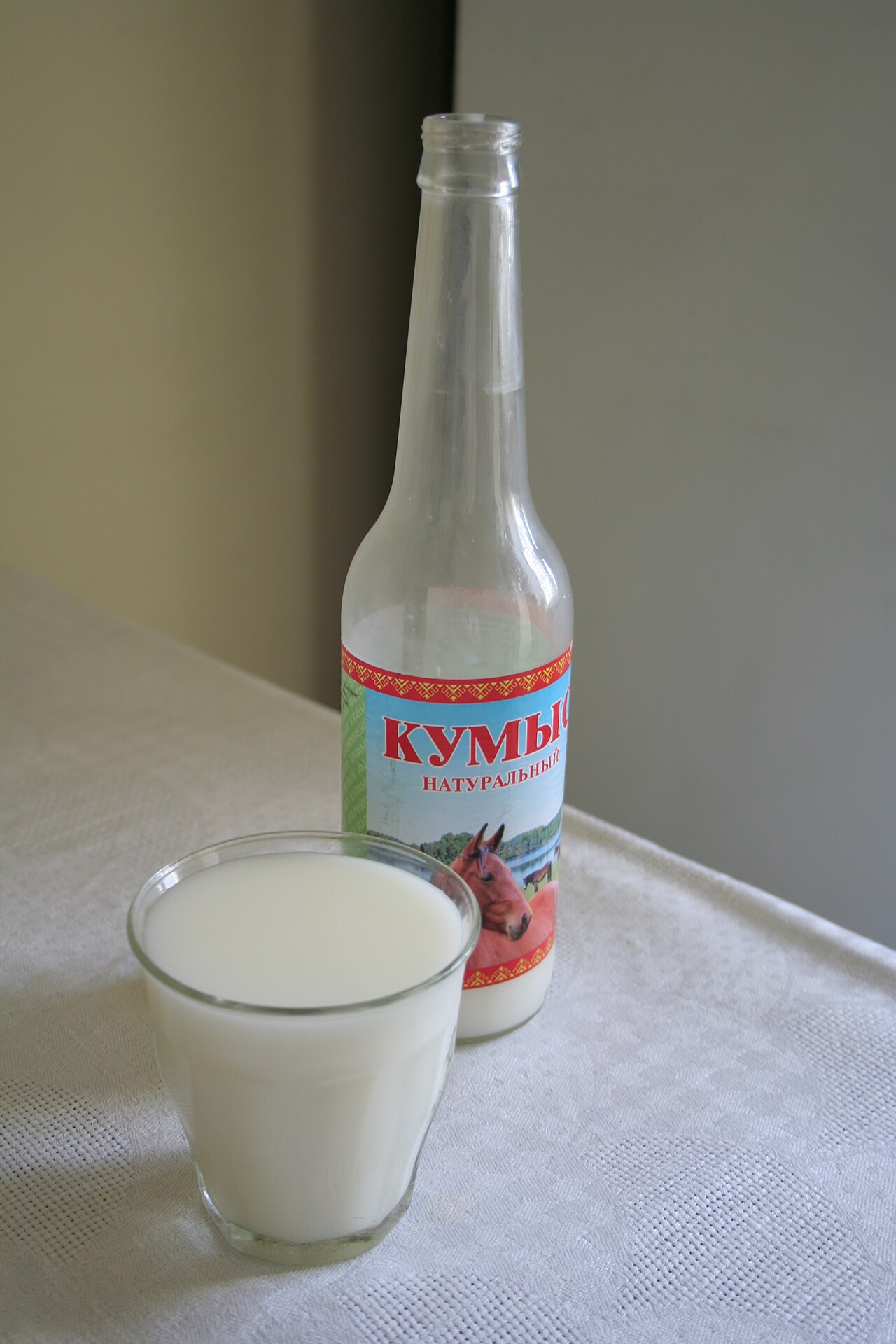
If you ride in the morning and are offered kazy at dinner, you have not stumbled into hypocrisy. The horse is a working animal, a food animal and a cultural symbol simultaneously, and the reverence is real in all three registers — a herding family will tell you the horse is the noblest of animals and then serve you its cousin, and mean both.
You can decline politely. Say you do not eat horse; nobody will be offended, and there will be mutton. What will not go well is delivering an opinion about it at somebody’s table. Our guides to horsemeat in Kazakhstan and kumis handle this in full.
Safety and insurance
Standard travel policies commonly exclude horse riding. Insurers typically offer it as an adventurous-activity add-on where you select the sport and pay extra — and even when riding is covered as a hazardous activity, personal accident and legal liability are frequently excluded.
Two further points to check in your policy: some require a helmet while riding, and cover may not apply to a head injury if you chose not to wear one. High-altitude riding may need to be declared separately. If the outfit does not supply a helmet, that matters, so read your policy and consider bringing one purely for the insurance.
Then the evacuation question. On the Assy plateau or in the upper Kolsai valley there is no phone coverage, rescue response in these mountains can take 24 to 48 hours, and helicopter evacuation is quoted at $2,000–5,000 out of pocket if uninsured. And remember the liability wording: horse-riding extras are “organized independently by local providers on the spot” and “at your own risk.” That is what it says and that is what it means.
See health insurance for Kazakhstan.
When to go
| Season | Riding conditions |
|---|---|
| May–June | Mountain pastures green, wildflowers, rivers high. Excellent |
| July–August | Best in the mountains. Brutal on the open steppe — July averages 20–28 °C but reaches 45, with soil surfaces at 68–70 °C in the south |
| September | Arguably the best month: cool, stable, gold, empty |
| October | Fine low down, closing higher up |
| November–April | Underrated. One regional guide is emphatic: unlike trekking, riding is possible — and beautiful — in winter |
That winter note is worth taking seriously. The Jabe lives on its pasture year-round, through frosts of −40 °C and below, and a cold clear day in the foothills is one of the better riding experiences available here. Ask your operator whether it runs winter rides, and in what conditions, before you plan one. See Kazakhstan in winter and the best time to visit.
Frequently asked questions
How much does horse riding cost in Kazakhstan?
A horse to carry you between Kolsai lakes 1 and 2 has been quoted at about 8,000 tenge, or around US$40 as a tour upgrade; agree the price before you set off. An ethno-village day near Almaty with a rider show, riding and lunch runs from 40,000 tenge on a group departure, or about 46,000–51,000 per person in a private group of four to six. Older sources give roughly US$60 a day for independent rental and $350 for a guided day trip; those figures are four to six years old.
Where can I go horse riding near Almaty?
The Kolsai lakes and Kaindy for scenery, Turgen and the Assy plateau for high pasture, and the Huns ethno-village in the Talgar district, 35–40 km out, for a show plus a short ride. Aksu-Zhabagly in the south is the one place where rangers can usually supply a horse without notice.
Do you need experience to ride in Kazakhstan?
No. The horses are calm and relatively small, a horseman accompanies you, and beginners should start with an easy day before committing to a multi-day trek.
Can you ride a horse to Kaindy Lake?
Yes — horseback is one of three ways up from the car park, alongside walking and a marshrutka taxi, with the horse trail running lower on the opposite slope. Agree the price at the car park before you set off.
Are helmets provided on horse riding tours in Kazakhstan?
It depends on the operator. Haqqi Tours provides helmets for everyone on its Ile-Alatau ride, so ask yours before booking. Bring your own if you want one — and check whether your insurance requires it.
What kind of saddle will I get?
A working Kazakh or Russian-style saddle with a raised pommel and cantle, a broad seat, usually a sheepskin or blanket on top and long stirrups. Closer to Western than English in feel.
What is the best month for horse trekking in Kazakhstan?
September in the mountains — cool, stable, gold and quiet. May and June for wildflowers. July and August are excellent at altitude and punishing on the open steppe.
Can you ride horses in Kazakhstan in winter?
Yes, and it is underrated. The Jabe is bred to live on pasture year-round through severe frosts, but that does not mean every outfit runs winter rides: confirm dates and conditions with your operator.
Do Kazakhs eat horses?
Yes. Kazy horsemeat sausage is a celebration food, and kumis is made from mare’s milk. Riding culture and eating culture coexist here without contradiction. You can decline politely and there will be mutton.
Does travel insurance cover horse riding?
Often not by default. Many policies treat riding as an adventurous activity requiring a paid add-on, and even then personal accident and legal liability may be excluded. Riding-specific guidance suggests cover can be void for a head injury sustained without a helmet. Read your policy.
Final thoughts
Kazakhstan is not the easy country to organise a horse trek in. Kyrgyzstan next door has a developed network and Kazakhstan, by its own regional guidebook’s assessment, is far behind. What Kazakhstan has instead is a herd counted at about 4.7 million in April 2026, an enormous amount of empty high pasture within a few hours of a real city, and a culture in which nobody is performing horsemanship for you because everyone can already ride.
Book the ethno-village if you want the show, hire a horse at Kolsai if you want the scenery, and go to Assy or Turgen with a local outfit if you want an actual day in the saddle. Whichever you pick: look at the horse before you get on it, ask when it last drank, and bring your own helmet.
Then read our guides to kokpar and the horse games, eagle hunting, and yurt stays — the three other things that come out of the same pastoral world. For walking instead, see hiking in Kazakhstan and Tien Shan trekking.
Photo credits
Berkutchi on horseback: Rudolph.A.furtado (CC0) via Wikimedia Commons. Assy plateau pasture: Gaziz Sadykov (CC BY-SA 4.0) via Wikimedia Commons. Lake Kaindy: Jonas Satkauskas (Attribution) via Wikimedia Commons. Kokpar: Rustam Uzbekov (CC BY-SA 4.0) via Wikimedia Commons. Kumis: A.Savin (CC BY-SA 3.0) via Wikimedia Commons.