Contents
- Yurt stays in Kazakhstan at a glance
- A real nomad yurt versus a tourist glamping dome
- What a night in a Kazakh yurt is actually like
- Where yurt stays cluster, region by region
- What it costs, honestly
- How to actually book a yurt in Kazakhstan
- When to go
- How a yurt is built, and what the parts are called
- Yurt etiquette: how not to embarrass yourself
- What to pack for a yurt night
- Is a yurt stay worth it?
- Frequently asked questions
- Final thoughts
The first time I slept in a yurt in Kazakhstan I did it wrong. I turned up at a camp above the Kolsai Lakes in a fleece, assumed “summer” meant warm, and spent the small hours awake at 1,800 metres listening to my own teeth. The second time I brought a proper sleeping bag, learned which side of the door to sit on, and had one of the best nights of the whole trip. This guide is the difference between those two nights.
A yurt stay in Kazakhstan means sleeping in a felt-covered nomadic tent — a kiyiz ui — usually at a tourist camp rather than with an actual nomadic family. Expect roughly ₸7,000–10,000 per person at a simple lakeside camp and ₸40,000–75,000 for a full-board organised experience with meals and horses. The main season runs May to September.
Yurt stays in Kazakhstan at a glance
| Region | What you get | Season | Rough price / night | How to book |
|---|---|---|---|---|
| Kolsai Lakes & Saty | Simple lakeside and garden yurts, shared facilities | May–Oct | ₸7,000–12,000 pp | Walk-in, WhatsApp, some on Booking |
| Assy Plateau | Shepherds’ working yurts, no facilities at all | Jun–Sep | Tea and kymyz, not a bed | Turn up; go with a tour |
| Turgen & Almaty foothills | Rentable private yurts, long-drop toilets | Apr–Oct | Whole-yurt rentals | Airbnb, Instagram |
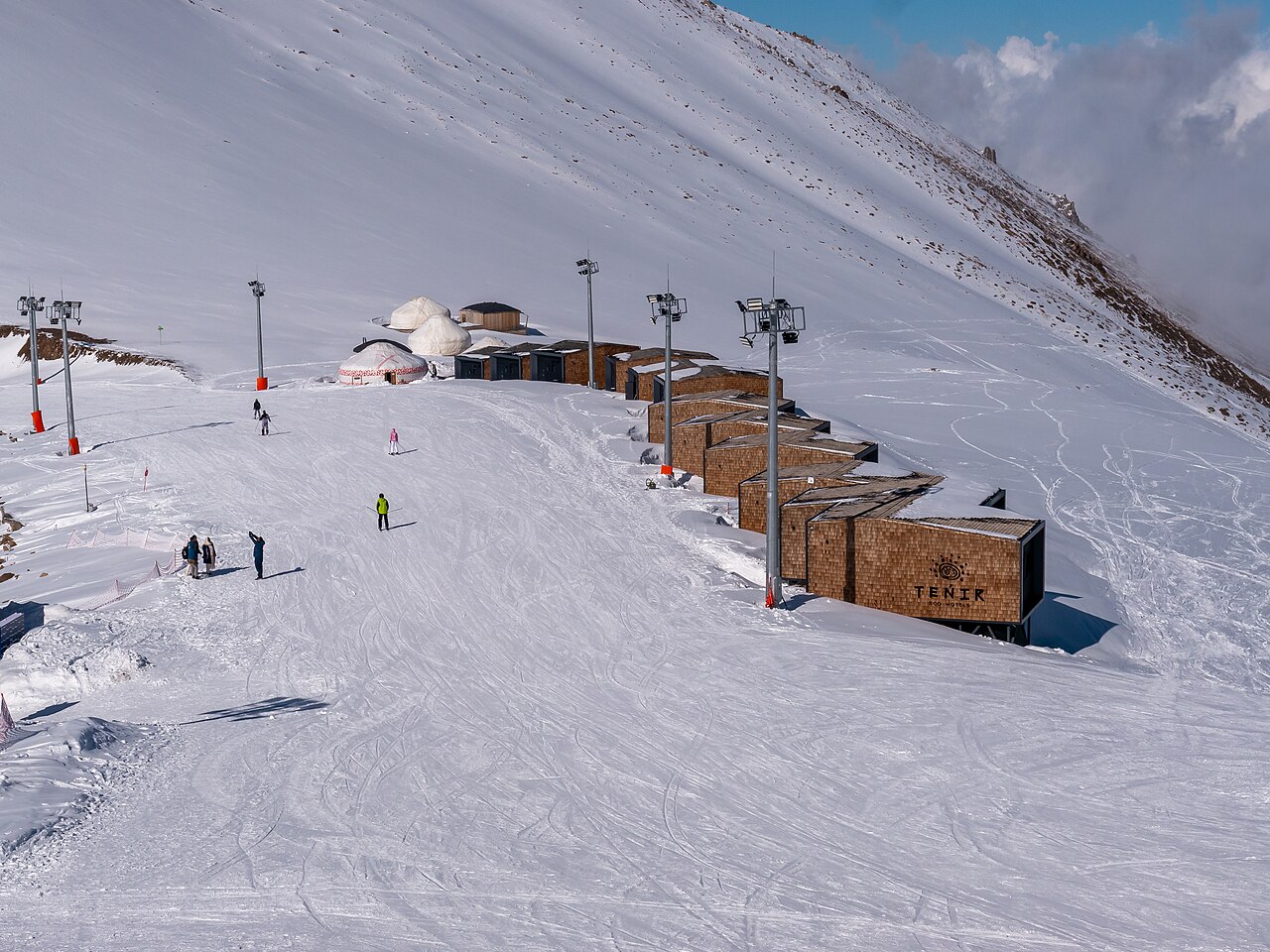
| Talgar / Ile-Alatau | Designer glamping yurts with private bathrooms | Year-round | Mid-to-high range | Direct via the site |
| Altyn-Emel & Basshi | Camp yurts on the park approach | Apr–Oct | Mid-range, often full board | Through tour operators |
| Mangystau | Yurt nights bundled into desert jeep tours | Apr–Jun, Sep–Oct | From ~US$840 per group, 2 days | Tour only — no standalone beds |
| Kazakh Altai | Insulated winter yurts with banya and heated washrooms | Nov–Mar | Ski-touring packages | Email or WhatsApp direct |

A real nomad yurt versus a tourist glamping dome
Let me be honest with you about something the brochures skate over, because it will save you a lot of disappointment.
You are almost certainly not going to sleep in a working nomad’s home. Most Kazakhs have never spent a night in a yurt themselves. The nomadic economy was broken in the 1930s and never came back in the form the marketing implies. What survives is real but narrow: a handful of camel herders in the Kyzylkum, some shepherds in the Altai, and the seasonal zhailau (summer pasture) camps where families still pitch a yurt for three or four months while the animals are up high.
Everything else you will be offered is a holiday rental, a pop-up restaurant, or a shop selling local honey. That isn’t a scam. A yurt built by hand from willow and felt is a yurt whether a shepherd or a guesthouse owner pitched it. But go in knowing that “authentic nomad experience” is a marketing phrase, not a description.
The four things sold as a “yurt stay”
The shepherd’s yurt. Genuinely lived in, up on the summer pastures. You don’t book these — you encounter them. Stop, and you’ll usually be handed a bowl of kymyz (fermented mare’s milk) whether you asked for one or not. Take it with both hands or your right hand, drink at least a little, and don’t pull a face. Nobody expects you to like it.
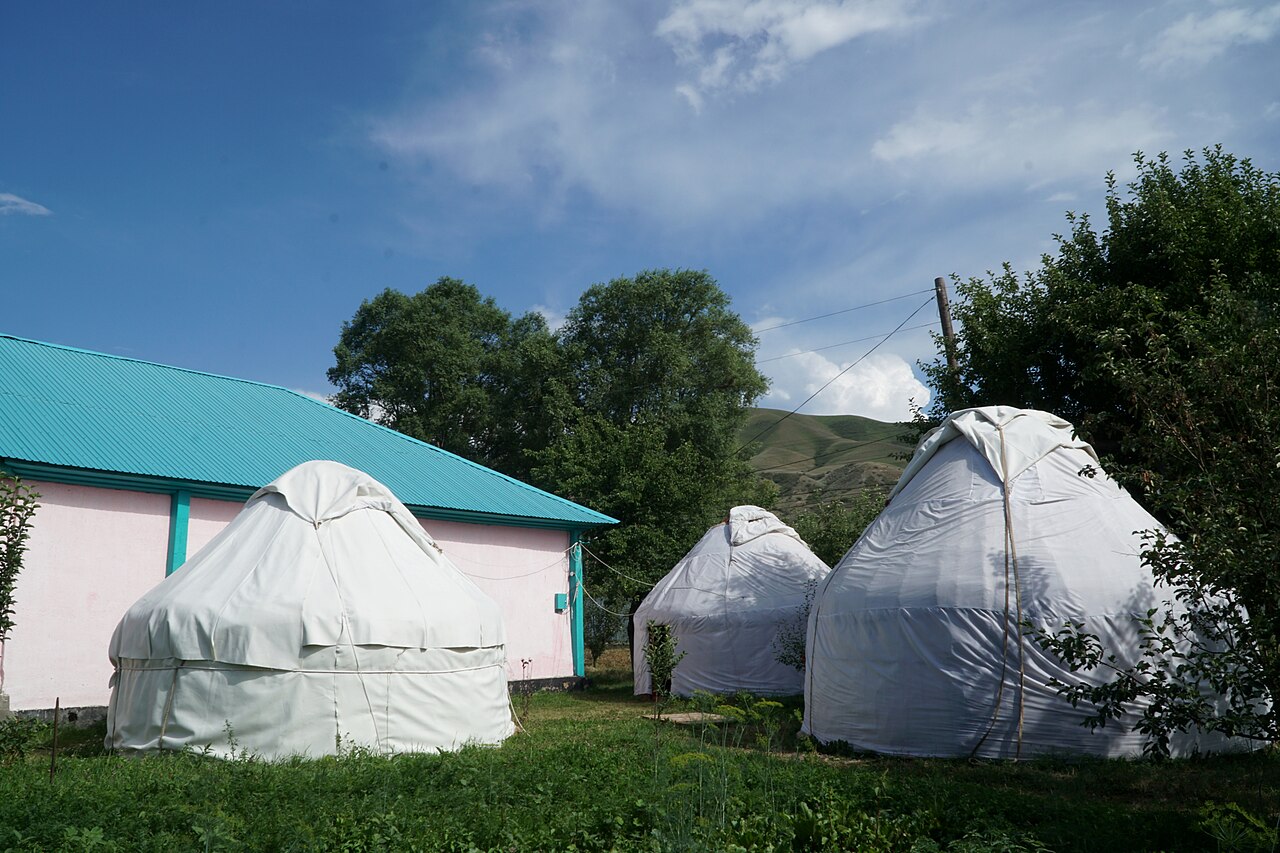
The lakeside tourist yurt. The bread and butter of yurt tourism in Kazakhstan. A cluster of white yurts in a guesthouse garden or on a slope above a lake, with mattresses on the floor, a shared washblock or a long-drop, and dinner cooked by the family who own the plot. This is what most people mean.
The designer glamping yurt. Raised timber platform, a proper double bed, wood stove, a picture window cut into the felt, and an attached bathroom with hot water. Beautiful, comfortable, and about as nomadic as a boutique hotel. There is nothing wrong with that as long as you know what you’re paying for.
The thing that isn’t a yurt at all. Watch out for this one. A great deal of Kazakh “glamping” is safari tents, geodesic domes, A-frames and sphere houses. Kazakhstan’s best-known glamping site, in the Turgen gorge two hours from Almaty, has fifteen two-person safari tents and no yurts at all. If the yurt matters to you, ask for a photograph before you pay.
What a night in a Kazakh yurt is actually like
Sleeping
At the simpler camps you sleep on the floor. Not on bare felt — on stacked korpe, thick quilted mattresses laid out in a row, with more quilts over the top. It is genuinely comfortable if your back is used to firm surfaces and genuinely unpleasant if it isn’t. A typical six-panel yurt about five metres across sleeps four to six people this way, and “sleeps six” usually means six people who know each other well.
Glamping yurts have real beds, sometimes on heated floors. That’s the main thing your extra money buys.
How cold it gets
This is the part people underestimate. Kolsai Lake 1 sits at about 1,800 metres, the second lake at 2,250, and the Assy Plateau at 2,600. In July the days are 20–25°C and the nights are not. Felt is a superb insulator when the stove is lit and a mediocre one at four in the morning when it isn’t. Bring a sleeping bag rated to around 0°C, or at minimum thermals and thick socks, even in high summer. Ask whether the yurt has a stove and whether anyone will be feeding it overnight. Usually the answer to the second question is no.
Toilets, showers and water
Assume a long-drop unless told otherwise, and assume no toilet paper. A wooden outhouse at the edge of the plot is standard at the cheaper camps. Some places have a washbasin and a jug outside; some have a banya instead of a shower, which is a Russian-style steam bath and, once you get over the surprise, considerably better. Drinking water is often not provided at private rentals — carry your own.
Wifi and phone signal
Village-based camps in places like Saty generally have wifi. Up on the Assy Plateau there is no mobile signal whatsoever, which is precisely why Almaty’s main observatory is up there and why the stargazing is the best in the country. Download your maps before you leave tarmac. Our guide to getting a Kazakh SIM card covers which operator to pick before you head out of the city.
Food
Dinner is served on a dastarkhan — a low cloth-covered table — and there will be far more of it than you can eat. Flatbread, salads, baursak (fried dough puffs), a mutton or beef main from the kazan, endless tea from a samovar. Beshbarmak if you’re lucky and someone has time. If you have dietary requirements, say so when you book, not when you sit down; the concept of a vegetarian guest is understood but not assumed. Our Kazakh food guide explains what you’re likely to be handed.

Where yurt stays cluster, region by region
Kolsai Lakes and Saty — the easiest first yurt night
If you only do one yurt night in Kazakhstan, do it here. Saty village and the slopes above the first Kolsai lake have the densest concentration of yurt beds in the country, they are reachable in a long day from Almaty, and the setting — spruce forest running down to green water — does a lot of the work. Reckon on ₸7,000 per person without meals and ₸10,000 with three meals at the lakeside camps; yurts pitched above the car park rather than on the water go for roughly half. We cover the village properly in our Kolsai Lakes guide.
One practical warning that catches people out: there is a police checkpoint before Saty and foreigners must show a physical passport. A photocopy will not do and you will be turned back.
The Assy Plateau — shepherds and the darkest sky in Kazakhstan
Assy is a 2,600-metre grassland that may be the largest summer pasture in the whole Tien Shan. In July and August shepherds pitch yurts up there while the herds graze. You cannot book a bed. What you can do is drive or tour up, stop at a yurt, drink kymyz, and camp nearby. The road over the plateau is likely impassable by car from October to April and the Turgen descent wants high clearance in any month. Go with someone who has done it.
Turgen and the Almaty foothills
An hour or so east of Almaty there are private yurts you can rent whole, typically on family land near Esik and Turgen. Expect a genuine six-panel yurt, floor mattresses, a wooden long-drop, an outdoor washbasin, and add-ons like archery, horse riding and a golden-eagle demonstration for extra. Bring your own drinking water. This is the closest you’ll get to a yurt night without leaving Almaty’s orbit — good if you’re short on time. See our day trips from Almaty for how the area fits together.
Talgar and Ile-Alatau — the comfortable end
At the mouth of Ile-Alatau National Park, about an hour from the city, you’ll find wooden yurts with double beds, private bathrooms with hot showers, kitchenettes and terraces facing the mountains. This is the register to book if you want the shape of a yurt and none of the hardship, or if you’re travelling with someone who will not enjoy a long-drop. Our guide to where to stay in Almaty covers the wider area.
Charyn Canyon — and why the obvious option is gone
For years the standard advice was to sleep in a yurt at Charyn Canyon. That camp no longer operates there, and its owners now redirect guests to a site near Talgar instead. Several travel articles published as recently as mid-2026 still recommend it, so if you see it listed, check before you drive four hours. You can still camp at Charyn’s own eco-park and there are cabins in the canyon; see our Charyn Canyon guide.
Altyn-Emel and the Basshi steppe
The approach village of Basshi has a campsite with yurts, and it’s the natural overnight if you’re doing the Singing Dune and the Aktau Mountains properly rather than as a rushed day trip. Read our Altyn-Emel guide before you commit — the park is big and the driving distances inside it surprise people.
Mangystau — yurts come with the jeep
Out west there is essentially no standalone accommodation in the desert. Every yurt night in Mangystau is a component of a tour: two-day trips from Aktau with a yurt stay and meals start around US$840 for a group of up to three, and four-day nomad itineraries run to US$1,650 per group. Given there is nothing else out there, that’s fair. Our Mangystau guide explains why you don’t want to freelance it.
Astana, Burabay and the north
The north is thinner on yurts and heavier on domes and sphere houses. There are sunset horse-riding and stargazing yurt evenings along the Nura river out of Astana, and glamping sites near Burabay’s pine forests, but if a felt yurt is the point, the south and southeast are where to spend your nights. See northern and eastern Kazakhstan for what the region does better.
The Kazakh Altai — the winter exception
Almost everything in this guide is a summer proposition. The exception is the southwestern Altai in East Kazakhstan, where purpose-built insulated yurts run November to March for ski touring and splitboarding, with a banya, heated washrooms, electricity and a chef. Snowfall up there runs to several metres. If you want a yurt night in winter, this is the credible option rather than trying to make a summer camp work in February. Our Kazakhstan in winter guide has the wider picture.
What it costs, honestly
The price spread on “yurt stay Kazakhstan” is enormous and nobody explains it, so here is the ladder.
Tier one: lakeside and village yurts, ₸7,000–12,000 per person
Floor mattresses, shared or outdoor facilities, usually meals included or available for another ₸1,000 or so. Cash only, tenge, no card machine. This is the bulk of yurt beds in Kazakhstan and it is very good value.
Tier two: designer glamping yurts
Private bathroom, real bed, kitchenette, sometimes a shared kitchen and a firepit. Rates are usually not published — you enquire. Budget in the same band as a decent city hotel room.
Tier three: organised full-board experiences, ₸40,000–75,000
One night with all meals plus an activity — horse riding, an eagle-hunting demonstration, a music evening. Sold as an experience rather than a bed. Worth it if you want the cultural programme; poor value if you just want somewhere to sleep.
Tier four: tours with a yurt night bundled in, US$99–1,650
Two-day Kolsai and Charyn trips with a yurt stay start around US$140. Assy Plateau stargazing camps run about US$127–159. Private VIP yurt itineraries reach US$518. Multi-day Mangystau expeditions are priced per group and run into four figures. For a full picture of what things cost in Kazakhstan, see our trip cost breakdown.
What isn’t included
National park entry is separate almost everywhere — Kolsai charges per person per day plus a vehicle fee. Horse hire, boat hire and eagle demonstrations are extras. And the cash-only rule is close to absolute at family-run places, so draw money in Almaty or a district town before you go. Our money guide covers the practicalities.
How to actually book a yurt in Kazakhstan
The advice you’ll read online is contradictory, because it changed and nobody updated it. Here is the current state of play.
Booking platforms
A handful of yurt properties around Saty and the Almaty region now appear on Booking.com and Airbnb, which was not true a few years ago. Tour marketplaces sell yurt-inclusive trips reliably. But the majority of yurt beds in Kazakhstan are still not on any platform.
WhatsApp, Instagram and 2GIS — how locals do it
This is the real answer. Find the place on Google Maps or 2GIS, get the phone number, and message it on WhatsApp. Translate your message into Russian — most hosts don’t read English, and a machine translation is fine. A day’s notice is usually enough outside weekends.
Turning up
Still works, midweek. In Saty you can generally find a bed by driving in and asking. On summer weekends, when domestic tourists arrive in numbers, don’t risk it.
When to go
May to September, the main window
Most camps operate May to October and everything is open in July and August. Those are also the crowded months — weekends at Kolsai draw hundreds of domestic visitors. Go midweek if you can.
September is the sweet spot
Warm days, cold nights, thin crowds, and the spruce and birch turning. If I were planning one yurt night in Kazakhstan I would plan it for the second week of September. See our autumn guide.
Winter
Almost all summer camps close. The Altai ski yurts are the exception. Don’t assume a lakeside yurt is a winter option because the website is still up.
How a yurt is built, and what the parts are called
Knowing four words will change how you look at the thing you’re sleeping in.
Kerege, uyk and shanyrak
The kerege are the concertina lattice wall sections, made of wild willow, that form the drum of the yurt. The uyk are the bent roof poles that spring from the top of the lattice. Where they all converge is the shanyrak, the wooden crown that serves at once as chimney, skylight and structural keystone. A skilled team can put the whole thing up in about an hour.
An average yurt runs seven to nine metres across. The largest historical “khan’s yurts” reached sixteen to eighteen. Men and boys made the frames; women made the felt and everything inside it.
Kiyiz ui — the felt house
The Kazakh name for a yurt is kiyiz ui, literally “felt house.” (Kyrgyz say boz ui, Turkmen ak oy, Mongolians ger.) Kazakh yurts are round; the Kalmyk type narrows toward the top. Once you’ve noticed the difference you’ll spot mislabelled photographs everywhere.
Tekemet, syrmak and the inside
Floor felts are tekemet; the decorated felt panels on the walls are syrmak. The hearth sits in the centre. Traditionally the owners’ bed was to the right of it and unmarried daughters to the left.
Why the shanyrak is on the national emblem
The shanyrak was a family heirloom passed down the generations, and a married man with his own household is a shanyrak iesi — an owner of the shanyrak. It sits at the centre of Kazakhstan’s state emblem against a blue field. When elders bless a household they say shanyragyn shaikalmasyn: may the dome of your yurt never be shaken. Our Kazakh culture guide goes further into all of this.
The UNESCO listing — and why most articles get it wrong
Yurt-making was inscribed on UNESCO’s intangible heritage list in 2014 as a joint Kazakh–Kyrgyz element. Nearly every travel page still cites that year. At its December 2025 session the committee inscribed an extended element covering Kyrgyz, Kazakh and Karakalpak yurts, adding Uzbekistan, and the decision states plainly that the new inscription replaces the 2014 one. If you want to sound like you know what you’re talking about, that’s the detail to have.
Yurt etiquette: how not to embarrass yourself
None of this is difficult and all of it is noticed.
The threshold
Don’t step on the doorsill and don’t stand in the doorway talking. Step over, move in.
The tör — where guests sit
Guests are seated at the far end of the yurt, directly opposite the entrance, on cushions at a low table. This is the place of honour. Wait to be shown where to sit rather than choosing; the seating is not random and older guests outrank you.
Shoes, hearth, bread and hands
Take your shoes off where others have. Don’t put rubbish in the fire or step over the hearth. Bread is treated with respect — don’t put a loaf face down or leave it on the floor. Accept and pass tea bowls with the right hand, or with both. And when the bowl of kymyz comes, take it. You do not have to finish it.
Photographs
Ask before photographing people, especially inside a family’s yurt. Almost everyone says yes. Asking is the point.

What to pack for a yurt night
- A sleeping bag or liner rated to around 0°C, even in July
- Thermals, thick socks and a hat for sleeping
- A head torch — the walk to the long-drop is unlit
- Toilet paper and hand sanitiser
- Cash in tenge, in small notes
- Drinking water, if you’re renting a yurt privately
- Earplugs, if you’re sharing
- Offline maps downloaded before you leave signal
- A small gift for a host family — tea, sweets for children — which is never expected and always well received
Our full Kazakhstan packing list covers the rest of the trip.
Is a yurt stay worth it?
Yes, with one condition: pick the tier that matches what you actually want. If you want a night that feels different from a hotel and you don’t mind a mattress on the floor and a walk to an outhouse, the ₸7,000–10,000 lakeside yurts are one of the best-value experiences in Kazakhstan. If you want the aesthetic without the discomfort, pay for a glamping yurt and enjoy it without apology. What produces disappointment is booking tier one while expecting tier two, or booking tier three expecting to meet nomads.
One night is usually enough. Two is lovely if the setting is good. Three and you will start to think fondly about plumbing.
Frequently asked questions
Can you stay in a yurt in Kazakhstan?
Yes. Bookable yurt stays exist across the Almaty region, Altyn-Emel, Mangystau, Turkestan and the Altai. Most operate May to September. The easiest first yurt night is around Saty and the Kolsai Lakes, a long day’s drive southeast of Almaty.
How much does it cost to stay in a yurt in Kazakhstan?
Simple lakeside and village yurts run about ₸7,000–12,000 per person per night, often with meals. Designer glamping yurts and full-board cultural experiences run ₸25,000–75,000. Tours that bundle a yurt night start around US$140 for two days.
Are yurts warm at night?
Only while the stove is going. Felt insulates well but most camps don’t tend the fire overnight, and at 1,800–2,600 metres the temperature drops sharply after dark even in July. Bring a sleeping bag rated to around 0°C.
Do yurts have toilets and showers?
At the cheaper camps, no. Expect a wooden long-drop and an outdoor washbasin, and sometimes a banya rather than a shower. Bring your own toilet paper. Glamping yurts have private bathrooms with hot water — that’s the main thing you pay extra for.
What is a shanyrak?
The wooden crown at the top of a yurt where all the roof poles meet. It works as chimney and skylight, it was passed down through families as an heirloom, and it appears at the centre of Kazakhstan’s national emblem.
Do Kazakhs still live in yurts?
Very few, and only seasonally. Some shepherds pitch yurts on the summer pastures and a small number of herders in the deserts still use them. The yurts you’ll see as a visitor are almost all holiday rentals, restaurants or market stalls.
What is the difference between a yurt camp and glamping in Kazakhstan?
A yurt camp uses actual felt yurts with basic shared facilities. Kazakh “glamping” often means safari tents, geodesic domes or A-frames with no yurt involved at all. If the yurt matters, ask for a photograph before booking.
When is the best time for a yurt stay in Kazakhstan?
Late May to late September, with the second half of September the best combination of warm days, thin crowds and autumn colour. Winter yurt stays are essentially limited to the purpose-built ski yurts in the Altai.
Do I need to book a yurt in advance?
Midweek, no — turning up in Saty usually works. On summer weekends, yes. The most reliable booking method is WhatsApp in Russian to a number found on Google Maps or 2GIS, since most yurt properties are not on booking platforms.
Final thoughts
A yurt night is not the deepest cultural experience Kazakhstan offers — a long conversation over tea in someone’s kitchen in a small town will beat it every time. What it is, reliably, is a very good night in a very good place, in a structure that is genuinely beautiful engineering and genuinely Kazakh. Sleep under the shanyrak, look up through it at three in the morning, and you’ll understand why it ended up on the flag.
Bring the sleeping bag. Learn the word tör. Take the kymyz. For where else to sleep in the country, our complete guide to where to stay in Kazakhstan covers hotels, guesthouses and everything between.
Photo credits
Yurt on the steppe: Danatleg122 (CC BY 4.0) via Wikimedia Commons. Yurt interior: Nurken (CC BY-SA 4.0) via Wikimedia Commons. Yurts at a Saty guesthouse: Adam Harangozó (CC BY-SA 4.0) via Wikimedia Commons. Eagle hunter: Altaihunters (CC BY-SA 3.0) via Wikimedia Commons.