Contents
- Kazakhstan for cyclists at a glance
- Why cycle Kazakhstan — and why so few people do
- When to go
- The Almaty mountain climbs
- The four-day loop east of Almaty
- Almaty to Bishkek and the Kyrgyz link-ups
- The long crossings
- Water, food and resupply
- Camping, wind and dogs
- Bikes, spares and shops
- Getting your bike there and around
- Visas, registration and SIM cards
- Races, gran fondos and organised tours
- Frequently asked questions
- Final thoughts
Kazakhstan is the ninth largest country on earth and has about eight people per square kilometre. Those two numbers explain both the appeal and the problem of cycling here. There is more empty road than you could ride in a lifetime, and a great deal of it is empty in a way that will bore you senseless and then dehydrate you.
Cycling Kazakhstan works best when you treat the country as three separate destinations: the paved mountain climbs above Almaty, a compact loop of gravel and canyon roads east of the city, and the long steppe and desert crossings that reward endurance riders and punish everyone else. Pick one. Do not try to ride the whole thing.
We have put this guide together because nothing on page one does it. You will find one excellent four-day route, one beautiful travelogue with no logistics, and a set of tour listings. What is missing is the thing a rider actually needs: which rides are worth it, how far apart the water is, and how to get a bicycle onto a Kazakh train.
Kazakhstan for cyclists at a glance
| Best months | Late May to mid-June, and September. July–August is brutal in the lowlands |
| Best single ride | Almaty to Big Almaty Lake — a long climb into the mountains; check access rules before you ride |
| Best multi-day | The four-day “Kazakh Corner” loop: Assy plateau, Bartogay, Charyn |
| Desert classic | Aktau to Beyneu on the main highway, or an off-road variant from Kuryk |
| Bike choice | Gravel or touring bike, 40–50 mm tyres. A road bike only works around Almaty |
| Water to carry | Much more than usual for a dry camp; on the western desert, confirm resupply points before each stage |
| Wild camping | Legal in practice and genuinely unproblematic almost everywhere |
| Visa-free stay | 30 days per entry, 90 days per 180, for most Western passports |
| Trains | Bikes accepted dismantled and packed; the single most useful tool in the country |
| Population density | ~7.6 people per km². Plan accordingly |
Why cycle Kazakhstan — and why so few people do
The honest case for riding here is not that Kazakhstan is a great cycling country in the way that, say, Slovenia is. It is that Kazakhstan contains a handful of genuinely world-class rides sitting inside an enormous amount of nothing, and almost nobody is on them.
The Big Almaty Lake road climbs hard into the mountains with a glacial lake at the top. The Assy plateau is a high grassland the size of a small county with a working observatory on it, the Assy-Turgen, where observations began in 1981. Charyn Canyon is a red-rock gorge that would have a national park visitor centre and a queue if it were in Utah.
The reason so few people ride here is the scale problem. Almaty to Astana is around 1,200 kilometres of steppe with a truck-heavy highway down the middle. It is not a bad ride so much as a pointless one — you will see the same view for eight days. Riders who love Kazakhstan are the ones who worked out early which sections to skip on a train.
Who this suits
Self-sufficient tourers who like emptiness and can carry six litres of water without complaining. Gravel riders who want big days with no traffic. Climbers who want a fortnight of Almaty ascents from a single apartment. Round-the-world riders crossing from the Caspian, for whom Kazakhstan is a necessary and surprisingly memorable transit.
It suits credit-card tourers and anyone who needs a café every forty kilometres considerably less well.
When to go
Between May and October essentially the whole country is accessible. Within that window the differences matter enormously.
Month by month
- April: steppe tulips, green grass, cold nights, snow still on the passes. Good for the south and the western desert, too early for the mountains.
- May: the sweet spot in the lowlands. The Assy plateau road may still be blocked into early June.
- June: the best all-round month. High routes open, lowlands not yet unbearable. Late June starts getting hot.
- July–August: searing in the lower steppe, and Mangystau can reach 45 °C with little shade. Fine at 2,000 metres, punishing everywhere else. This is mountain-only season.
- September: the other sweet spot. Warm days, cold nights, larches turning in the Altai, fewer people.
- October: lovely in the south, closing down in the mountains. Snow can arrive on high ground at any point.
Our best time to visit Kazakhstan and Kazakhstan in summer guides go into the weather in more detail. The short version for cyclists: the shoulder seasons are not a compromise here, they are the answer.
The Almaty mountain climbs
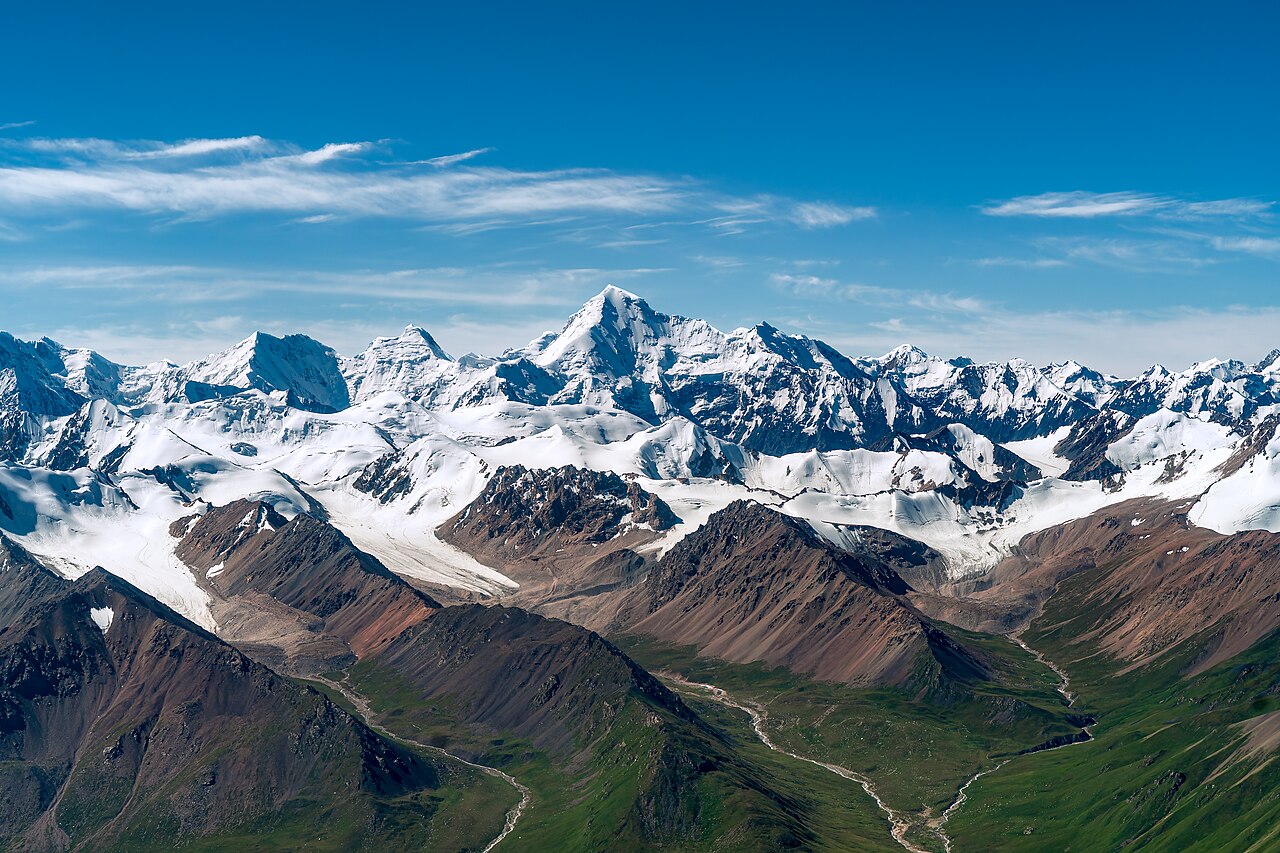
If you only have a week, stay in Almaty and ride up things. The Trans-Ili Alatau rises straight out of the city’s southern suburbs, which means a ride heading south starts climbing almost as soon as you leave your front door.
Almaty to Medeu and Shymbulak
The default. Almaty to Medeu is a paved climb that riders describe as a wide, well-surfaced road. Medeu itself sits at 1,691 metres. Its Soviet high-altitude speed-skating oval, where a startling number of world records were set because thin air is fast, is closed for reconstruction, with completion planned for the fourth quarter of 2027.
Carry on to Shymbulak and the climb finishes at the resort base around 2,260 metres. Published figures for the full climb vary a good deal depending on where the timing starts. One published rider account picks out a 500-metre switchback after the river that averages about 20 per cent, with more climbing still to come beyond it. A 34×28 is not enough gear. Take a 32 or a 34 on the back and your dignity survives.
There is a gondola from Medeu for the return if the descent worries you. See our guides to Medeu and Shymbulak.
Big Almaty Lake and the observatory road
This is the ride to do. A long, sustained climb finishes at a turquoise reservoir under the high peaks. Then thirty kilometres of descent back into the city.
Two things to know. You cannot camp at the lake — it is a working reservoir supplying Almaty, border guards patrol above it, and passport checks happen. And access rules there change: private cars and scooters have been restricted on the lake road before, and the rules can shift again at short notice. Ask at your accommodation the day before rather than trusting anything you read, including this. Full detail in our Big Almaty Lake guide.
The other gorges
Tuyuksu, above Shymbulak, continues to a glacier and a hydrological station. The Talgar and Ozerny passes are for people with bikes they do not mind carrying. Kok-Zhailau is a walking plateau rather than a ride — see the Kok-Zhailau hike — and Turgen gorge, an hour east, gives you waterfalls and a quieter road.
The four-day loop east of Almaty
This is the best multi-day ride in Kazakhstan and the one route on the internet with a published GPX track, thanks to the Australian rider Matthew Crompton, who named it the Kazakh Corner. It links high grassland, a river gorge, an abandoned observatory and a red-rock canyon in about four days from the city.
The Assy plateau
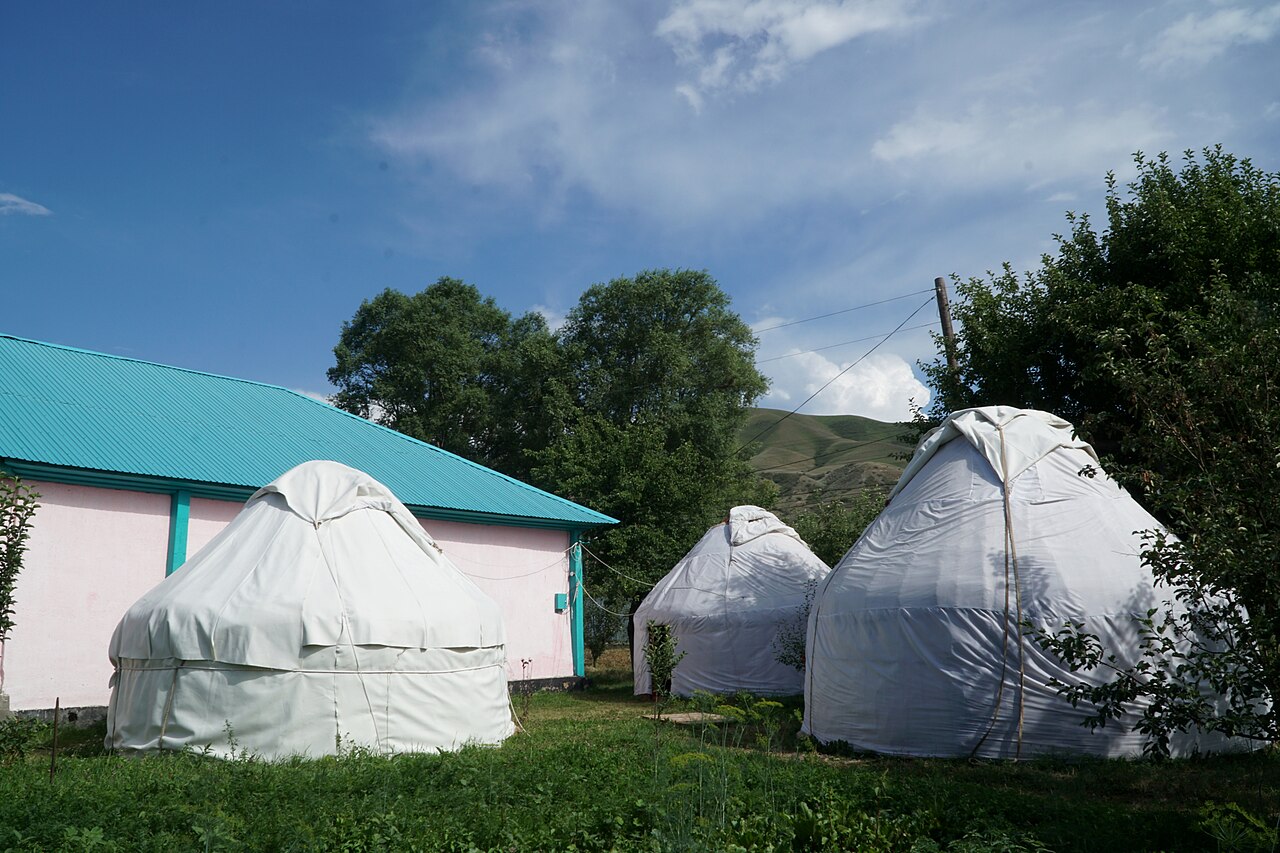
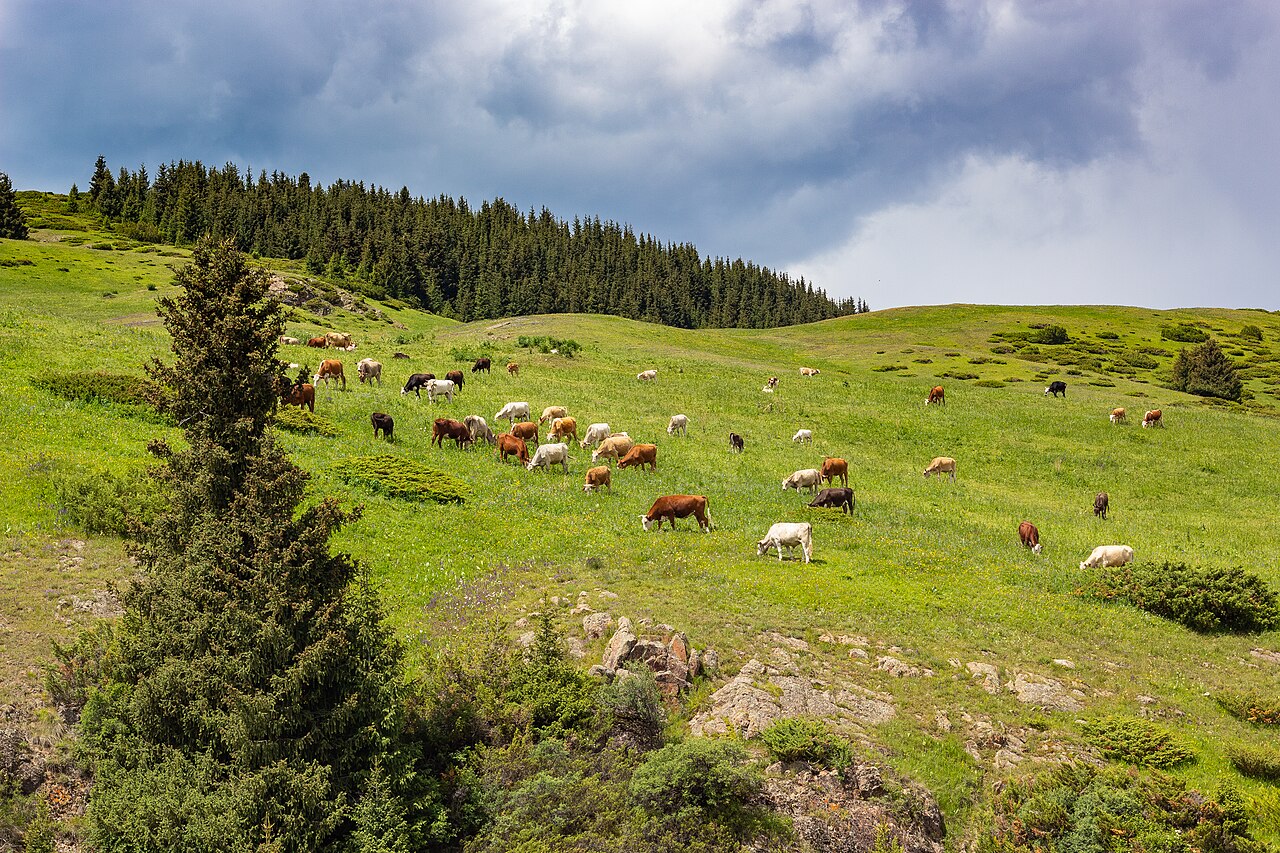
You climb east of Almaty onto a long, high plateau. In summer it is shepherds’ country — yurts, horses, thousands of sheep, and an astrophysical observatory whose telescopes are still in use. The riding is rough, the wind is constant, and it is the single most memorable thing you can do on a bicycle in this country. Do not attempt it before June; the access road holds snow.
Bartogay and the Asy descent
From the plateau you drop to the Bartogay reservoir on the Chilik river. Water is available but silty and the banks are muddy — filter it or plan to fill elsewhere. The descent off the plateau is long, loose and fast.
Charyn Canyon
The finish. The Valley of Castles runs about four kilometres before dead-ending at the Charyn river, and the access track down into it is a steep rutted defile that will test your brakes. Riders have dry-camped at the canyon, filling up at the town faucet in Kokpek on the way. High summer down there is fierce, so carry more water than seems sensible. In May and September it is close to perfect. See Charyn Canyon.
The Kolsai extension
If you have more time, continue east to Kegen and Saty for the Kolsai Lakes. From Saty the road climbs to the lower lake at 1,818 metres; the second lake is at 2,252 and the third at 2,850. Lake Kaindy, at about 2,000 metres, is reached on an unpaved track. On paperwork: the lower and middle lakes need no border permit, but Upper Kolsai does. Our guide to border zone permits explains why.
Almaty to Bishkek and the Kyrgyz link-ups
Plenty of riders arrive from or leave for Kyrgyzstan, and it is an easy connection. The Korday crossing is a short drive from Bishkek. The catch is the A2 west of Almaty, which is effectively a freeway; one rider who did the whole thing described riding the gravel shoulder for nearly all of it. Legal, unpleasant, survivable.
The better option is the Karkara valley crossing further east — a quiet, high, beautiful border post that puts you straight into the Kyrgyz mountains. There is no Almaty–Bishkek train; the minivan takes five hours if you want to skip the corridor. See Almaty to Bishkek.
The long crossings
The western desert: Kuryk or Aktau to Beyneu
This is the classic, ridden by round-the-world cyclists coming off the Caspian ferry, and it is the hardest thing in this article. Aktau to Beyneu follows a long desert highway, and the off-road variants are rougher going. Food, water and shade are sparse, so plan every stage before you set out. Beyneu itself has mini-markets and not much else.
The Kuryk variant, from the ferry terminal outside Kuryk town, heads inland via Zhanaozen and the Ustyurt plateau, passing the Beket-Ata underground mosque, before it joins the Beyneu highway. Ride it from a recent mapped track and ask locally about surfaces before you commit. There is at least one bike shop in Aktau capable of replacing spokes.
Surfaces on this route change, and the main highway and the off-road variants are very different rides. Do not assume it is as rough as older trip reports describe; equally, do not assume it is paved. See Aktau and Mangystau, and if you are arriving by sea, the Baku–Aktau ferry guide.
Almaty to Astana
1,200-odd kilometres of steppe on a highway that now includes tolled sections. It is rideable and people do it. We would put your bike on the train instead and spend the week you save in the mountains. If you want the road-trip version with an engine, our Kazakhstan road trip guide covers it.
The Silk Road south and the Altai
Southern Kazakhstan — Shymkent, Turkestan, Taraz — gives you flatter riding, actual towns, mausoleums and melons, and heat that arrives in May and stays. The Kazakh Altai is spectacular and largely unridden, but access is a genuine expedition and the roads deteriorate to dirt quickly.
Water, food and resupply
Everyone writes that Kazakhstan is empty. Almost nobody puts numbers on it, so here are the ones we can stand behind.
- Dry camping in the Charyn/Assy area: work out each night’s water from the day’s distance and the heat, and carry it from the last village. Fill at village faucets — Kokpek is a known one.
- The western desert: plan water stage by stage against resupply points you have confirmed, and allow extra for a day lost to headwind.
- Surface water: the Bartogay reservoir and steppe rivers are silty. Carry a filter and expect to use it.
- Livestock troughs and wells exist across the steppe but are not reliable and not clean.
Food comes from the magazin — the village shop. Expect bread, sausage, biscuits, instant noodles, chocolate, bottled water, sometimes tomatoes. Not much else. Kazakhstan is still substantially a cash economy; ATMs are straightforward in mid-sized towns but at least one rider found Visa and Mastercard failing in Almaty itself, so carry tenge. See currency and money.
Camping gas is a real problem. Screw-on isobutane canisters are sold in Bishkek and probably in Almaty outdoor shops, but do not count on finding them anywhere else in the country. A multi-fuel stove burning petrol is the sane choice for a long tour.
Camping, wind and dogs
Wild camping
Genuinely easy. Overlanders and cyclists alike describe wild camping in Kazakhstan as no problem at all, and our own camping guide goes into where the exceptions are — national park core zones, the border strip, and anywhere with a fence and a soldier. Otherwise: ride a few hundred metres off the road, pitch, and nobody will trouble you. Shepherds may well invite you in for tea instead.
Wind
The steppe wind is the thing riders complain about most, more than heat and far more than traffic. A strong headwind can cut a day’s distance to a fraction of what you planned. Check the forecast for the days you will ride, and build slack into your schedule whichever way you are heading.
Dogs and livestock
Shepherds’ dogs guard flocks across the steppe and mountain pastures. Standard practice applies: dismount, keep the bike between you and the dog, walk out of the territory, do not sprint.
Border zones
If you are riding within 25 kilometres of the Kyrgyz border or in a district touching the Chinese one, you are in the border zone, so carry your passport on your person. The upper Kolsai lake also needs a border-zone permit. Details in our border zone permit guide.
Bikes, spares and shops
Bring a gravel or light touring bike with clearance for 40 to 50 millimetre tyres. A road bike is fine if you are only doing the Almaty climbs and nothing else. A rigid mountain bike is the right tool for the Assy plateau and the western piste. Bring spare spokes for your specific wheels, a spare tyre if you are going west, and more tubes than feels reasonable.
Shops we can name:
- Almaty: Urban Athletic on Abay Avenue 105B; Sport Status; plus VeloPro, CrankMaster and Limpopo Outdoor for camping gear.
- Astana: BikeS, Musrepova Street 4/2; call ahead for opening hours.
- Aktau: at least one shop able to rebuild a wheel, which matters if you are coming off the ferry.
Outside those three cities, assume nothing. A bike shop in a Kazakh regional town will have children’s bikes and tubes in one size.
Getting your bike there and around
Flying in
Air Astana carries bikes as special baggage, so arrange it with the airline in advance and confirm the current packing rules and charges before you fly. Nothing over 32 kilograms is accepted as checked baggage at all. Fly into Almaty (ALA) for the mountains, Astana (NQZ) for the north, Aktau for the Caspian crossing. See flights to Kazakhstan and the Almaty airport guide.
Trains — the single best tool in the country
Kazakhstan’s railways are the reason a bike tour here can be good rather than merely long. Dismantled and properly packed bikes are accepted in principle, and luggage goes in the space under the bottom bunk. A few hard-won details:
- Book platzkart or kupe thinking about storage. The under-bunk space on a bottom berth is what you are actually paying for.
- Talgo “fast” trains are the quicker option. Check KTZ’s current baggage conditions before you count on fitting a bike aboard one.
- Two stations in both big cities. Almaty-1 has been closed to boarding and alighting passengers since 15 July 2026 for reconstruction, so for now Almaty trains use Almaty-2. Astana has two stations as well. Check which one your ticket says.
- Soviet station names persist. Book Aktau as “Mangyshlak” or you will not find it.
- Summer trains sell out days ahead. Book as soon as you know.
Our guides to train travel and buying train tickets cover the booking mechanics.
Buses and marshrutkas
Largely useless with a bike. Marshrutkas simply do not have the capacity, and you will be dismantling the bike and negotiating with a driver who has no reason to say yes. Long-distance coaches sometimes have luggage bays. Use the train. See buses in Kazakhstan.

Visas, registration and SIM cards
Most Western passport holders get 30 days visa-free per entry, capped at 90 days in any 180 — which is a real constraint on a long tour and catches people out. From 1 November 2026, visa-free visitors should also apply for the free QazETA electronic travel authorisation before they travel; it becomes mandatory on 1 July 2027. Your hotel or private host must notify the migration authorities within three working days of your arrival, short visits included; a long-stay cyclist should confirm each place has done it.
See visa-free countries and the 90/180 rule, which is the one that will bite you on a two-country tour. Get a local SIM card at the airport — mobile data is cheap and good, and 2GIS is the map that actually knows Kazakh roads.
Races, gran fondos and organised tours
Kazakhstan has more of a road-racing culture than you would expect, largely thanks to the Astana professional team.
- Gran Fondo Kazakhstan, Almaty. The 2026 edition was held on 16 August; dates and routes for the next one appear on the organiser’s site, granfondo.com.kz. 2026 was the second year Almaty hosted the Gran Fondo World Championship.
- Gran Fondo Tour of Zhetysu, Taldykorgan. Dates and route lengths are on the organiser’s site, athletex.kz.
- Tour of Almaty ran as a UCI one-day race from 2013 to 2016 — 186 km in 2015 — and became a two-day stage race from 2017.
For guided riding, SpiceRoads runs a thirteen-day Kazakhstan–Kyrgyzstan trip whose centrepiece is a Soviet helicopter lift to a 3,500-metre ridge, which is either the best or worst idea in Central Asian cycling depending on temperament. See Kazakhstan tours.
Frequently asked questions
Is Kazakhstan good for cycle touring?
In parts, yes — the Almaty mountains and the Assy–Charyn loop are excellent. As a country to cross end to end it is monotonous. Ride the good bits and train through the rest.
Is it safe to cycle in Kazakhstan?
Yes. Drivers on secondary roads are generally courteous and curious, theft is not a significant worry, and wild camping is safe. The real hazards are heat, wind, distance between water, and truck traffic on the main highways. See is Kazakhstan safe.
Can you take a bicycle on a train in Kazakhstan?
Yes, dismantled and packed, stored under the bottom bunk. Book a bottom berth deliberately for the storage space.
Can I wild camp in Kazakhstan?
Almost everywhere, and easily. Avoid national park core zones and anywhere near the border strip.
How far apart are water and food?
On the western desert route it varies, so plan each stage against resupply points you have confirmed. In the Almaty region, villages are frequent enough that you rarely carry more than three litres — except for a dry camp, when you need a good deal more.
What is the best month to cycle in Kazakhstan?
June for the mountains and everything else, September as a close second. Avoid July and August below 1,500 metres.
Are the headwinds really that bad?
On the steppe and in the western desert, yes — a strong headwind can slow you to a crawl. Watch the forecast and plan slack rather than a strategy.
Can you cycle up to Big Almaty Lake?
Yes. The road climbs a long way into the mountains to reach the lake. Access rules at the gate change, so check locally. You cannot camp at the lake.
Where can I buy bike parts in Almaty?
Urban Athletic on Abay Avenue, Sport Status, and a handful of others. Bring your own spokes and a spare tyre regardless.
Gravel bike or touring bike?
Either, with 40–50 mm tyres. A rigid mountain bike if the Assy plateau or western piste is your focus. Not a road bike unless you are staying on Almaty tarmac.
Do I need a border permit to cycle near the Kyrgyz or Chinese border?
Not on most routes, but Upper Kolsai needs a border-zone permit, and the narrow border strip itself is off-limits without a specific pass. Carry your passport with you.
How many days do I get on a visa?
Thirty per entry for most Western passports, capped at 90 days in any 180-day period. From 1 November 2026, visa-free visitors should also apply for the free QazETA electronic travel authorisation before travelling; it becomes mandatory on 1 July 2027.
Final thoughts
The mistake almost everyone makes when planning a Kazakhstan bike trip is treating the map as a challenge. It is not. It is a country with three or four superb rides and an ocean of filler between them, and the railway exists precisely so you do not have to pedal the filler.
Fly into Almaty, spend a week climbing out of the city, load up and ride the Assy plateau to Charyn, then put the bike on a train and go and see something else. That is a genuinely great fortnight on a bicycle, and it costs less than a week in the Alps.
For the wider context, our hiking and adventure guide covers what to do when you get off the bike, getting around Kazakhstan handles the transport in general, and what to pack deals with the big day-to-night temperature swings that can catch out first-time campers.
Photo credits
Assy plateau summer pasture: Gaziz Sadykov, CC BY-SA 4.0, via Wikimedia Commons.
Coaches at an Almaty bus station: Nikolai Bulykin, CC BY-SA 4.0, via Wikimedia Commons.
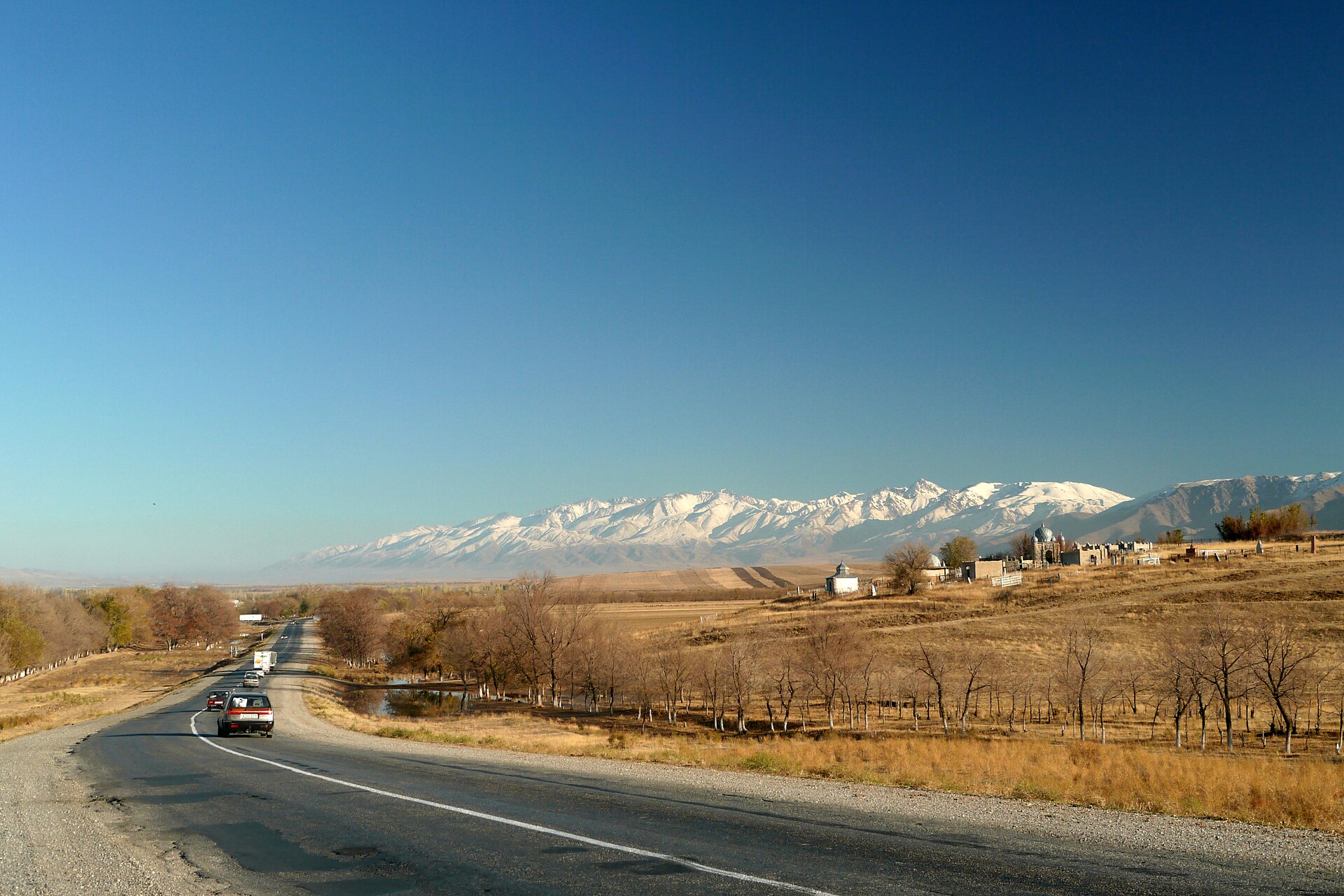
A road below the Tian Shan: Kazakhstan in autumn (9720298344) by likeablerodent, CC BY-SA 2.0, via Wikimedia Commons.