Contents
- Day trips from Astana at a glance
- How to get out of the city
- Burabay (Borovoe) National Park — the big one
- ALZHIR Memorial Museum — a sober half-day
- Korgalzhyn Nature Reserve — flamingos on the steppe
- Karaganda, KarLag and Spassk — further into the dark
- Quicker escapes close to the city
- Practical tips for day trips from Astana
- Frequently asked questions
- Final thoughts
Astana dazzles with its glass towers and wide boulevards, but some of the region’s best experiences sit out on the steppe beyond the ring road — pine-forest lakes, salt flats full of birds, and a Soviet history that runs deep. I’ve made most of these runs myself over the years, and I’ll tell you honestly which ones are worth every hour behind the wheel and which you can safely skip.
The best day trips from Astana range from Burabay National Park’s lakes and granite peaks, about 3 hours north, to the sombre ALZHIR women’s gulag memorial 45 minutes west, the flamingo lakes of Korgalzhyn to the southwest, and the Soviet-history sites around Karaganda to the south. A few are easy half-days; the finest reward a dawn start.
Below I’ve laid out the trips I think are actually worth your time, with honest drive times, how to reach each one without your own car, and which ones deserve a full day versus a quick escape. If you’re still filling in your in-city plans, my guide to things to do in Astana pairs naturally with everything here — treat this as the “now get out of town” chapter.
Day trips from Astana at a glance
| Destination | Distance | Drive time | Best for / season |
|---|---|---|---|
| Burabay (Borovoe) National Park | ~230–260 km north | ~3–3.5 hr | Lakes, forest, granite peaks; summer and golden autumn |
| ALZHIR Memorial Museum | ~40 km west | ~45 min | Sober gulag history; year-round half-day |
| Korgalzhyn Nature Reserve | ~130 km southwest | ~2–2.5 hr | Flamingos and birdlife; late April/May–October |
| Karaganda, KarLag & Spassk | ~200–230 km south | ~2.5 hr | Deep Soviet dark tourism; year-round, long day |
| Vyacheslav (Astana) reservoir | ~60 km | ~1 hr | Beaches and fishing; summer |
| Ereymentau hills | ~150 km east | ~2 hr | Hiking and low ridges; summer and early autumn |

How to get out of the city
Astana sits at the centre of a decent web of roads and one very useful railway line, but the steppe is vast and distances are longer than they look on a map. Before you pick a destination, it helps to be honest with yourself about how you’ll cover the ground.
Self-drive
Renting a car gives you the most freedom, and the main roads toward Burabay, Korgalzhyn and Karaganda are paved and generally in fair shape. That said, Kazakh highway driving takes a little nerve — expect fast overtaking, the odd horse or cow near the verge, and long empty stretches with no fuel and no phone signal. Fill the tank before you leave, carry water and snacks, and download your maps offline. A small rental runs roughly 8,000–15,000 tenge a day plus fuel, but prices move around, so take that as approximate.
Organised tours
For Korgalzhyn and the Karaganda gulag sites, a tour is honestly the sensible choice, and for one of them close to the only practical one. A guide handles the reserve permits, the jeep, the long driving, and fills the day with context you’d otherwise drive straight past. Day tours from Astana are easy to arrange through local operators or your hotel. They cost more than doing it yourself, but for those two trips the value is real and I’d pay it again.
Train, bus and shared taxi
Trains run north to Burabay and are cheap, warm and comfortable — my favourite way to reach the lakes. For most other destinations you’re looking at a marshrutka (a shared minibus) or a shared taxi from the Saparzhai bus station. These are inexpensive and used by everyone, but they leave on their own schedules and rarely drop you at the actual sight — you’ll often need a local taxi for the final few kilometres. Fares are low, on the order of a couple of thousand tenge, but budget extra time and patience.
When you genuinely need a guide
One rule worth knowing up front: Korgalzhyn’s core zone can only be entered with a reserve inspector, and the Karaganda dark-tourism sites are scattered and thin on signage. For those two, go with a guide. Everywhere else on this list you can manage independently if you like a bit of logistics. If you’re mapping several days around the capital, my Astana itinerary shows how to slot a couple of these excursions around your city time without burning yourself out.
Burabay (Borovoe) National Park — the big one
If you do only a single day trip from Astana, make it Burabay. People love to call it the “Switzerland of Kazakhstan,” which oversells the scale but gets the spirit right: after hours of flat, pale steppe, you round a bend and suddenly there are pine forests, granite peaks and clear blue lakes, all at once. It’s the green heart of northern and eastern Kazakhstan and the capital’s favourite weekend escape, so you won’t be alone — but the scenery earns the crowds.
Burabay lies roughly 230–260 km north of the city, about a 3 to 3.5 hour drive on paved highway. The park holds around 14 lakes and a scatter of strange granite outcrops, and the honest truth is that it’s really an overnight destination. But a long day absolutely works if you start at dawn and accept that you’ll skim the highlights rather than linger over them.

What to see
Lake Borovoe is the star, and its signature sight is Zhumbaktas — the “riddle stone,” widely nicknamed the Sphinx — a jagged islet rising straight out of the water that genuinely seems to change shape as you walk around the shore. From one angle it reads as a sphinx; from another, an old woman; from a third, a young girl. Locals will happily argue about it.
Close by looms Okzhetpes, a mushroom-shaped rock with a folk legend attached about an arrow that couldn’t reach the top, standing guard over Blue Bay. And the view I always send people toward is from Bolektau, a modest hill you can climb in about 20 minutes. From the top you get the classic panorama — lakes on both sides, dark pine forest, and the granite poking up out of it all. It’s the photograph everyone brings home, and it earns the short scramble many times over.
Beyond the marquee sights there are pleasant lakeside promenades, boat rentals in summer, a small resort strip with cafés and shashlik smoke, and quiet forest trails if you want to escape the day-trippers for an hour.
How to get there
The train is the easy answer. Services run from Astana to Shchuchinsk or the Kurort-Borovoye halt, and tickets are cheap — around 2,000 tenge, give or take. From the station you’ll grab a taxi or a local bus for the final stretch to the lakes. Alternatively, shared taxis and marshrutkas leave from the Saparzhai bus station for roughly 1,600–2,000 tenge. Plenty of visitors simply book a tour and let someone else do the driving and the parking.
When to go
Summer is peak season: the beaches fill up, the water warms just enough for a bracing swim, and yes, there are mosquitoes near the shore, so pack repellent. Golden autumn is my personal favourite — the birches turn, the light softens and the crowds thin out. Under snow the park is quiet and genuinely beautiful, if bitterly cold; if a frozen-lake landscape appeals to you, read my notes on Kazakhstan in winter before you commit to the drive, because the cold here is not to be underestimated.
ALZHIR Memorial Museum — a sober half-day
Not every trip out of the capital is about scenery. About 40 km west of Astana, in the village of Akmol (once called Malinovka), stands one of the most affecting places anywhere in the region. It’s a 45-minute drive and an easy there-and-back half-day, and I’d argue it belongs on any thoughtful visitor’s list, uncomfortable as it is.
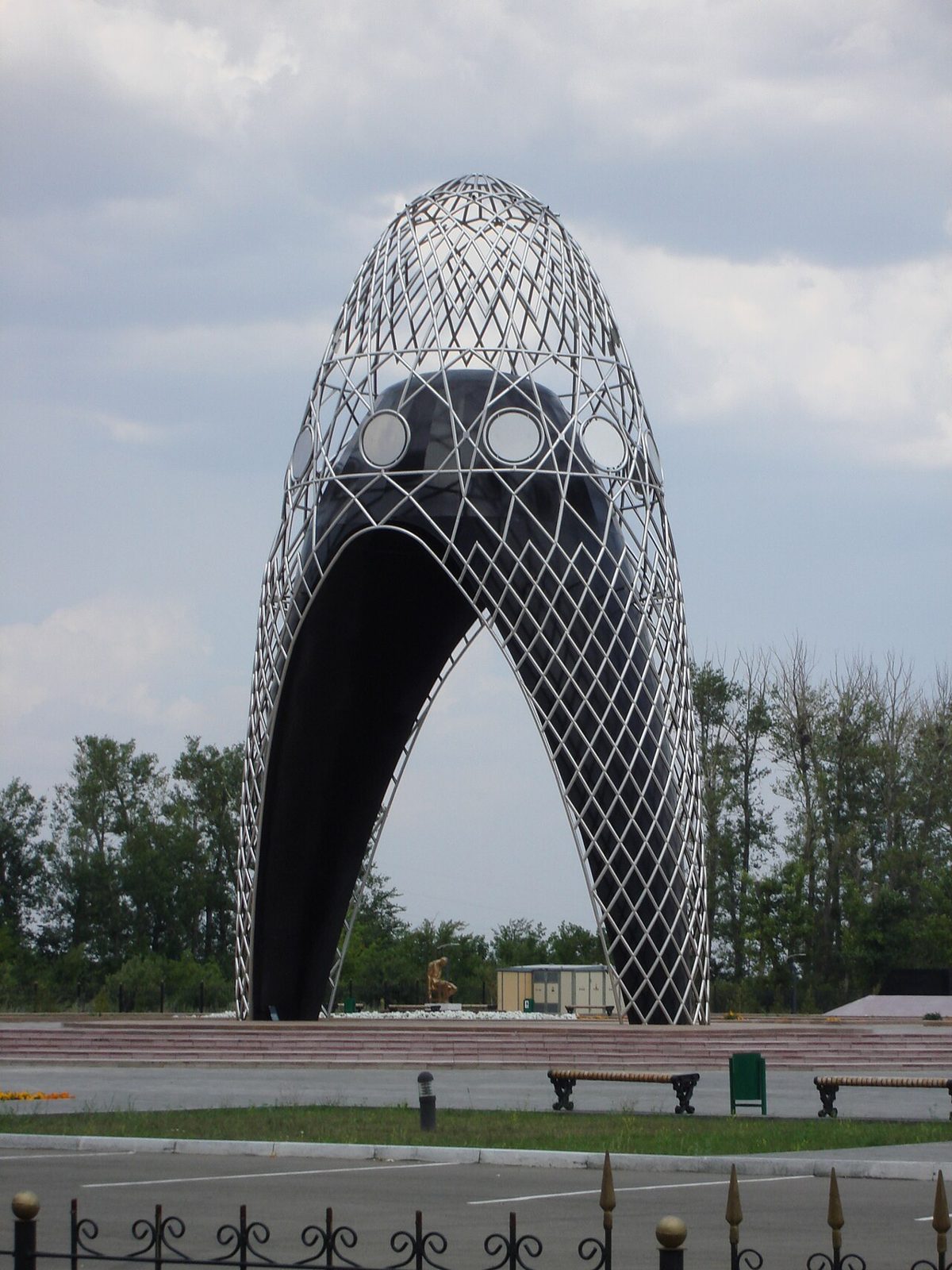
ALZHIR is a Russian acronym for the “Akmola Camp for Wives of Traitors of the Motherland.” It was the largest women’s camp in the Soviet Gulag system, operating from 1938 to 1953. More than 18,000 women were held here across those years, many of them imprisoned for nothing more than being married or related to a man the state had branded an enemy. A number arrived carrying small children, and some gave birth inside the wire.
The memorial complex opened in 2007. You approach through the Arch of Sorrow, a tall stone gateway that sets the tone before you’ve read a single placard. Inside the grounds you’ll find a preserved Stalin-era prisoner-transport wagon — the kind of cattle car women were shipped here in — along with reconstructed watchtowers and memorial stones inscribed with names and nations. The museum building lays out the personal stories through photographs, letters and everyday belongings. It is very quiet, and it should be.
Go with respect. This is a place of mourning as much as a museum, and Kazakh families still come to remember relatives who were sent here. Give yourself an hour or two inside, keep your voice down, and don’t rush it for the sake of ticking a box.
How to get there
By car it’s a straightforward 45-minute run west of the city. Without a car, public bus No. 300 is said to run from central Astana toward Akmol — worth confirming the current route and stop before you set out, since these things change. A taxi there and back, with the driver waiting while you visit, is the fuss-free option and not ruinous if you can share the cost with a couple of other travellers.
Korgalzhyn Nature Reserve — flamingos on the steppe
Here’s the trip that surprises people most: yes, there are wild flamingos within a few hours of Astana. Korgalzhyn (sometimes written Kurgalzhino) State Nature Reserve lies about 130 km southwest of the city, a 2 to 2.5 hour drive across open, birdsong-filled steppe.

The reserve is part of the UNESCO “Saryarka – Steppe and Lakes of Northern Kazakhstan” World Heritage site and a protected Ramsar wetland. Its heart is Tengiz, an enormous salt lake, and its claim to fame is hosting the world’s northernmost breeding colony of pink (greater) flamingos. More than 350 bird species have been recorded here across the seasons, so even setting the flamingos aside it’s a birdwatcher’s dream — pelicans, swans, waders and raptors all pass through.
The important part: permits and guides
You cannot simply drive in and wander around. You must register and pay a fee at the reserve administration, and you’re only allowed into the protected core zone accompanied by a reserve inspector or guide. Trips start at the “Bird’s Paradise” visitor centre in Korgalzhyn village, where the paperwork gets sorted, the fees are settled, and the jeep excursion begins. Treat the fees as approximate and bring cash to cover them.
Realistic expectations
I’ll be straight with you, because I wish someone had been straight with me: this is not a walk-up-and-see-flamingos experience. The birds are viewed on a guided jeep excursion, and often from a fair distance across shallow water, because they spook easily and lift off en masse if you push too close. Bring binoculars or a long lens, and manage your hopes accordingly. Independent flamingo-spotting really isn’t practical here, which is exactly why the guided trip makes sense rather than feeling like a tax.
The workable season runs roughly from late April or May through October, when the birds are present and the dirt tracks are passable. Come outside that window and you’ll have earned yourself a long drive to look at an empty grey lake. If you’re timing a broader trip around wildlife and weather, my overview of the best time to visit Kazakhstan is worth a look.
Karaganda, KarLag and Spassk — further into the dark
South of Astana, roughly 200–230 km and about 2.5 hours away, the industrial city of Karaganda anchors another heavy chapter of Soviet history. This one is a full, sombre day — usually 9 to 10 hours door to door on an organised tour — and it isn’t for everyone. But if the history at ALZHIR moved you, this goes deeper still.
The KarLag museum sits in the village of Dolinka, housed in the former headquarters of one of the largest labour-camp complexes in the USSR. The building itself is chilling, basement cells and interrogation rooms included, and the displays don’t flinch from what happened here. Not far away, the Spassk memorial marks a KarLag cemetery where prisoners of many nationalities are buried; today it’s ringed with monuments raised by the various countries whose citizens died in the camps, from Japan to Poland to Germany.
This is dark tourism in the fullest sense of the phrase, and it asks something of you. Go with a guide who can carry the context, because the sites are spread out and sparsely labelled, and give the day the seriousness it deserves rather than treating it as a curiosity. If you’re weaving the wider country into a longer trip, my broader Kazakhstan itinerary can help you judge whether Karaganda earns a place on your route.
Quicker escapes close to the city
Not every free day needs a three-hour drive each way. A few places sit close enough to Astana for a relaxed half-day or an unhurried full one, and they’re where locals go when they just want air and open sky.
Vyacheslav reservoir
Around 60 km out, the Vyacheslav reservoir — also called the Astana reservoir — is the go-to beach day for city residents. In summer you’ll find swimming, sunbathing, fishing and a handful of spots to eat by the water. It’s nothing dramatic, and I wouldn’t cross the country for it, but it’s an easy hour’s drive and a genuinely pleasant way to feel water and sand under your feet without committing to a major expedition.
Ereymentau
About 150 km east, the Ereymentau hills break up the flatness with low rocky ridges and proper walking country. It’s a good choice if you want to stretch your legs on a real hike rather than a stroll, best tackled in summer and early autumn when the weather is on your side and the ground is dry. Bring everything you need, because services out here are thin.
Horse-riding and other steppe adventures
Several ranches around the capital offer steppe horse-riding, which is arguably the most fitting way to experience this particular landscape — it is, after all, how people crossed these grasslands for thousands of years. For the adrenaline crowd there’s even skydiving on offer near the city, floating down over that endless patchwork of steppe. Ask around locally, because these outfits come and go, and the best of them are usually found by word of mouth rather than a slick website.
Practical tips for day trips from Astana
- Start early. The rewarding trips are long, and the steppe swallows daylight faster than you expect. A dawn departure buys you the whole day and saves you a stressful drive home in the dark.
- Carry cash. Reserve fees, roadside cafés, shared taxis and small museums often want tenge in hand rather than a card, and ATMs thin out fast once you leave the city.
- Pack for the steppe. Strong sun, sharp wind and sudden temperature swings are the norm out here. Bring layers, water, sunscreen and — in summer near the lakes — mosquito repellent you’ll be grateful for.
- Confirm times. Train, bus and museum schedules shift with the season. Double-check the day before you travel, and treat every fare and drive time I’ve quoted as approximate rather than gospel.
- Match the season to the sight. Flamingos and lake beaches are firmly summer affairs; the gulag memorials are moving and open year-round, which makes them a reliable choice even in the depths of winter.
Frequently asked questions
How far is Burabay (Borovoe) from Astana?
Burabay National Park is roughly 230–260 km north of Astana, which works out to about a 3 to 3.5 hour drive on paved highway. It’s far enough that an overnight is the relaxed way to do it, though a long day trip is perfectly doable if you leave early and don’t mind a full schedule.
How do you get from Astana to Burabay?
The easiest way is the train to Shchuchinsk or Kurort-Borovoye, with tickets around 2,000 tenge, followed by a short taxi or bus to the lakes. Shared taxis and marshrutkas also run from the Saparzhai bus station for roughly 1,600–2,000 tenge, or you can book an organised tour and skip the logistics entirely. Prices are approximate and change with the season.
Can you see flamingos near Astana?
Yes. The Korgalzhyn Nature Reserve, about 130 km southwest of the city, holds the world’s northernmost breeding colony of pink flamingos. You’ll need to join a guided jeep trip from the reserve’s “Bird’s Paradise” visitor centre, and you’ll usually see the birds at a distance, so pack binoculars. The season runs roughly late April or May through October.
Do you need a permit to visit Korgalzhyn?
You do. You must register and pay a fee at the reserve administration, and entry to the protected core zone is only permitted with a reserve inspector or guide. Tours begin at the “Bird’s Paradise” visitor centre in Korgalzhyn village. Independent access to the flamingo areas isn’t allowed, which is why nearly everyone visits on a guided trip.
What is the ALZHIR memorial and how do you get there?
ALZHIR is the memorial museum on the site of the “Akmola Camp for Wives of Traitors of the Motherland,” the largest women’s camp in the Soviet Gulag, active from 1938 to 1953. It stands in Akmol village, about 40 km and a 45-minute drive west of Astana. You can reach it by car or taxi, or reportedly by public bus No. 300 — confirm the current route before you rely on it.
How far is Karaganda from Astana?
Karaganda is about 200–230 km south of Astana, roughly a 2.5 hour drive. Most visitors come for the Soviet-history sites — the KarLag museum in Dolinka and the Spassk memorial — which are usually done as a long 9 to 10 hour guided day trip rather than independently, since the sites are spread out and hard to interpret alone.
What is the best time of year for day trips from Astana?
Late spring through early autumn, roughly May to September, is the sweet spot: the flamingos are in, Burabay’s lakes are swimmable, and the roads are clear and dry. Autumn adds golden forests and thinner crowds. Winter is cold but starkly beautiful, and the indoor memorials remain rewarding all year, so there’s really no dead season if you dress for it.
Final thoughts
What struck me most, doing these trips one by one, is how much the region asks you to slow down and look. The capital dazzles fast; the steppe reveals itself slowly — a rock that changes shape across a lake, a distant smudge of pink birds shimmering over the water, a stone arch that makes a whole busload go silent. Each of these day trips from Astana pulls back a different layer of the same big, quiet country.
If you have only one free day, take the train to Burabay. If you have two, add ALZHIR for the history and Korgalzhyn for the wildlife. And if the Soviet past grips you the way it grips me, give Karaganda the full day it needs. However you plan it, leave early, keep your expectations honest, and let the sheer scale of the place do its work on you. You’ll come back to the city seeing it differently.
For the bigger picture, browse beautiful places in Kazakhstan and the country’s best cities.
Photo credits
Zhumbaktas rock, Lake Borovoe: Alter-Ego9312 (CC BY-SA 4.0). Korgalzhyn steppe lake: Dildakhmet (CC BY-SA 4.0). ALZHIR Arch of Sorrow: Tosa1 (CC BY-SA 3.0). Lake Borovoe: Evgeny Emelyanov (CC BY-SA 4.0). All via Wikimedia Commons.


