Contents
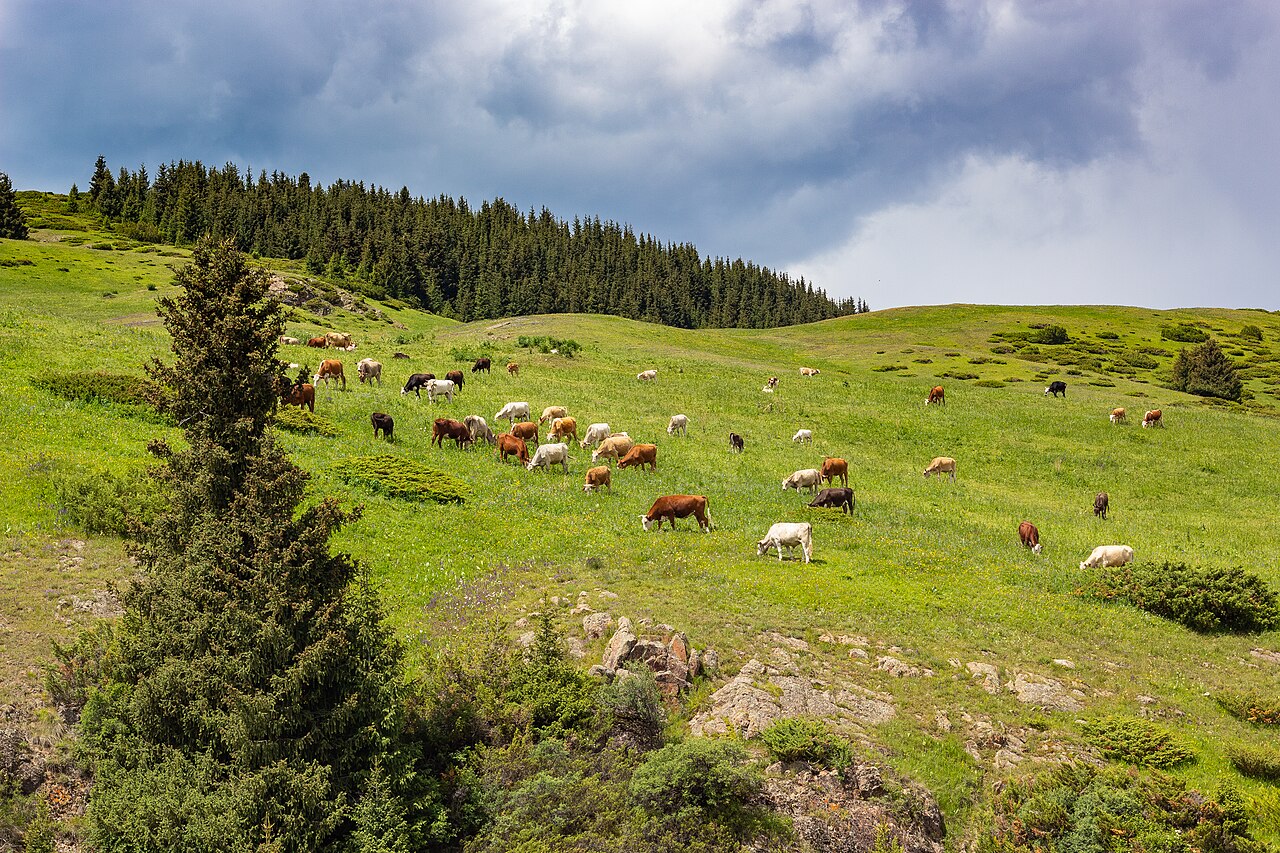
There are two Kazakhstans for a camper. On the open steppe and in the deserts of the west, you pitch where you like and nobody comes. Inside the national parks, each park sets its own camping rules and charges, so ask the park where its designated sites are before you pitch.
Wild camping in Kazakhstan is unrestricted in practice on unenclosed land away from protected areas. Inside national parks such as Ile-Alatau, Kolsai-Kaindy and Altyn-Emel you must camp in designated spots, pay per person per day, and ask whether a per-tent charge applies. Most places in this guide need no border-zone permit for foreigners, but Upper Kolsai does. The real dangers are the steppe wind, the temperature drop at altitude, ticks, and the fact that there is no water in Altyn-Emel.
Is wild camping legal in Kazakhstan? The short answer
Open, unenclosed land
In practice, yes, and nobody will bother you. Overlanders who have driven the country describe being able to wild camp essentially anywhere away from settlements and protected areas, and the number of people who might object per hundred square kilometres of steppe is approximately zero.
Treat this as custom rather than a right you can cite from a statute: the practical convention among Kazakh and foreign travellers alike is that it is fine. Common-sense limits apply: not in someone’s grazing, not next to a herder’s camp without asking, not inside a fence.
Protected areas: where the freedom stops
Inside a national park, camping becomes a service you buy. The clearest evidence is Altyn-Emel’s official price list, approved by order No. 232 of the Forestry and Wildlife Committee of the Ministry of Ecology and Natural Resources on 2 October 2024, which contains this line item: “Provision of tent camps, lookouts, bivouac glades per person per day (without services) — 0.04.”
That is not a prohibition, and it is not a free-for-all. It is a tariff for camping in a designated place. Kolsai-Kaindy’s published rules say the same thing in words: “Camp only in designated areas and obtain permits.”
Strict nature reserves
A Kazakh zapovednik — a strict nature reserve, as distinct from a national park — is a more tightly protected category, and camping in one is very likely prohibited outright. If you are heading for a reserve rather than a park, ask the administration first.
How the fees work
All Kazakh protected-area tariffs are denominated in MRP — the monthly calculation index — rather than in tenge, which is why published figures go stale every January. MRP rose to 4,325 tenge on 1 January 2026.
Multiplying the Altyn-Emel tariff by that figure gives the approximate tenge below. Treat it as a guide and expect the booth to have its own number:
| Service (Altyn-Emel tariff) | MRP | Approx. 2026 tenge |
|---|---|---|
| Tent camp / bivouac glade, per person per day (no services) | 0.04 | ~173 |
| Sanitary cleaning and landscaping, per person per day | 0.2 | ~865 |
| Vehicle parking, per space per day | 0.06 | ~260 |
| Passenger car entry | 0.9 | ~3,893 |
| Motorcycle, moped, quad | 0.6 | ~2,595 |
| Minibus up to 16 seats, and trucks | 3.5 | ~15,138 |
| Inspector-guide, per day per group of up to 20 | 0.4 | ~1,730 |
| Tour guide, per day per group of up to 20 | 1.0 | ~4,325 |
| Photo shoot / film shoot | 6.8 / 15.3 | ~29,400 / ~66,200 |
The park’s visitor page lists passenger-car entry at 0.9 MRP per day, with the index at 4,325 tenge in 2026. A visitor in March 2026 reported paying 800–1,050 KZT per person per day; the 200–300 KZT a car that also gets quoted matches the parking charge (0.06 MRP), not entry. Carry enough cash for the full entry charge.
Altyn-Emel’s headline entry fees as published on the visitor side: 1,145 KZT per person per day, 945 for higher-school students, 745 for high-school students, and free for pre-schoolers.
Accommodation inside the park is also tariffed per person per day by site: “Kyzyl auyz” at 4.3 MRP, “Altyn Emel” at 3.2, “Taigak,” “Taigak-2” and “Serik tas” at 2.8, and “Zhantogai,” “Kishi Kalkan,” “Shygan” and “Mynbulak” at 2.4.
How passes actually work at Altyn-Emel
This park is the strictest and the most instructive. You cannot drive across the central territory — it is a conservation area. Visitors follow Route 1 and Route 3 (the Singing Dune and the Aktau Mountains, which coincide) or Route 2 (Besshatyr) separately.
- Routes 1 and 3: entry via Basshi village, with a pass from the park’s central office at 2 Mametova Street, Basshi.
- Route 2 (Besshatyr): entry via Shengeldy village to Checkpoint 1, with a permit arranged in advance.
- You must hold a valid pass with a payment receipt — a photo of the pass sent by WhatsApp or email is accepted — and you may be asked to show your Kaspi Bank payment receipts.
See Altyn-Emel National Park and Kazakhstan’s national parks.
Campfires and the seasonal ban
This is not covered anywhere else and it will affect your trip.
An operator running a licensed camp inside Ile-Alatau states it plainly: “In recent years, due to forest fires, National Parks have often banned campfires and open flames. If such a ban is in effect during your stay, campfires will not be available.” The same operator does not sell wood or coal and does not allow firewood collection — “It is a National Park.”
Plan on cooking with gas and treat a fire as a bonus. Do not collect deadwood inside a park. If you want a fire, ask the ranger at the gate whether a ban is currently in force; nobody will publish it in English.
Border zones
Good news, and it corrects a lot of published advice.
Foreigners no longer need a general border-zone permit. The requirement was repealed in October 2020, and entry into the border zone is now on the basis of identity documents alone. The lower and middle Kolsai lakes need no permit; Upper Kolsai does, as below.
Three caveats:
- Carry your passport. It will be checked at the Kolsai park gate, which is a border-area check rather than a permit inspection.
- Kolsai 3 (Upper Kolsai) needs a border-zone permit: it sits close to the Kyrgyz frontier. Ask in Saty about access before setting out.
- A narrow border strip still needs a free pass from the National Security Committee: 2,000 m along the Chinese border, 100 m along the Kyrgyz. That is not relevant to any of the campsites in this guide.
The best places to camp
Kolsai Lakes
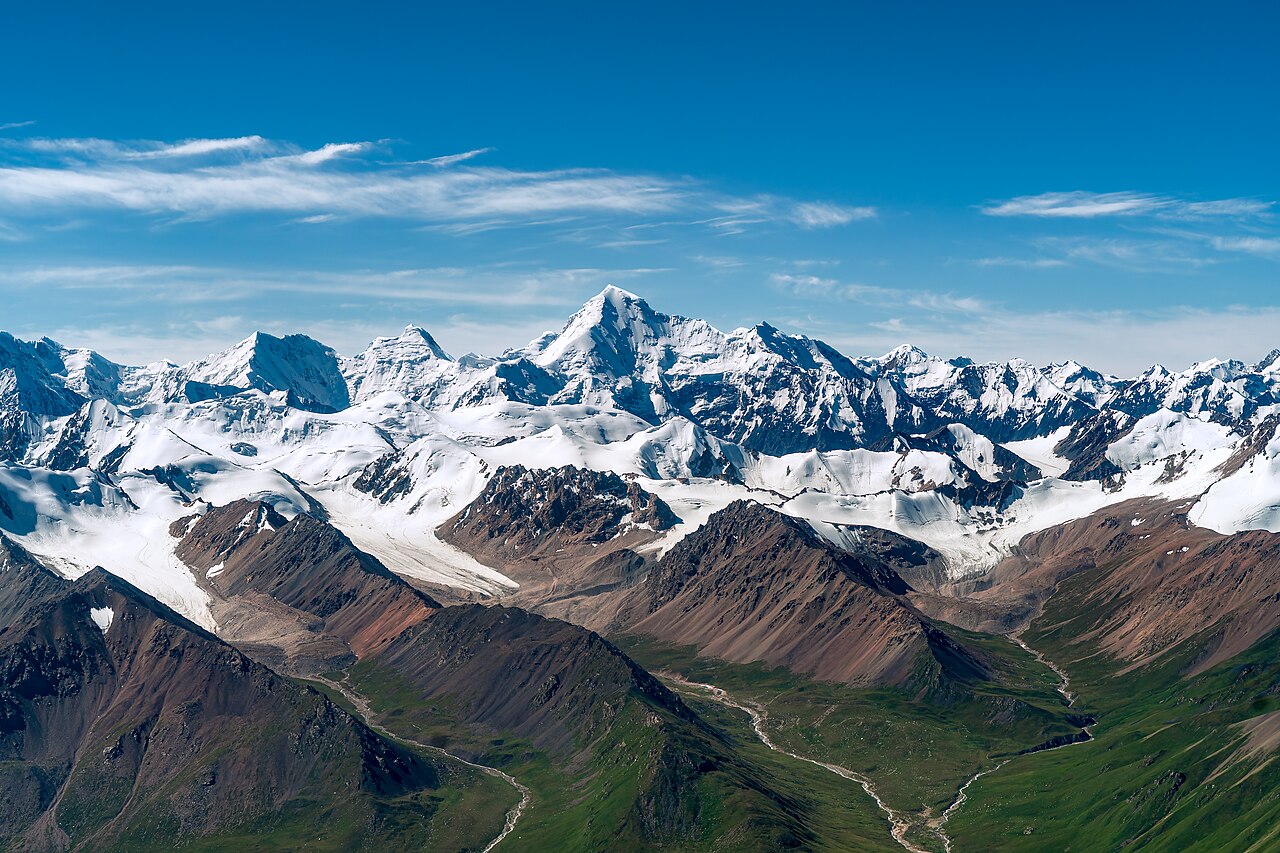
Kolsai-Kaindy National Park was established in 2007. Kolsai 1 sits at 1,818 m, Kolsai 2 at 2,252 m and Kolsai 3 at 2,850 m, and the whole area is part of UNESCO’s World Network of Biosphere Reserves.
Camping is permitted in designated areas near the lakes with your own gear. The published park rules are worth reading before you go: camp only in designated areas and obtain permits; pack out all trash — there are no waste collection services on the trails; do not swim in the lakes; stay on marked trails.
On fees, there is no single reusable total, so ask at the park gate or the Saty office for the current tariff. Figures of 450 KZT per person plus 750 per vehicle plus an additional 750 per tent if camping have been quoted, with the entrance component fluctuating between 550 and 750. Take that as the structure — per person, per vehicle, per tent — and expect the amounts to have moved.
Flying a drone at Kolsai requires advance permission from the park administration, applied for through the office in Saty village.

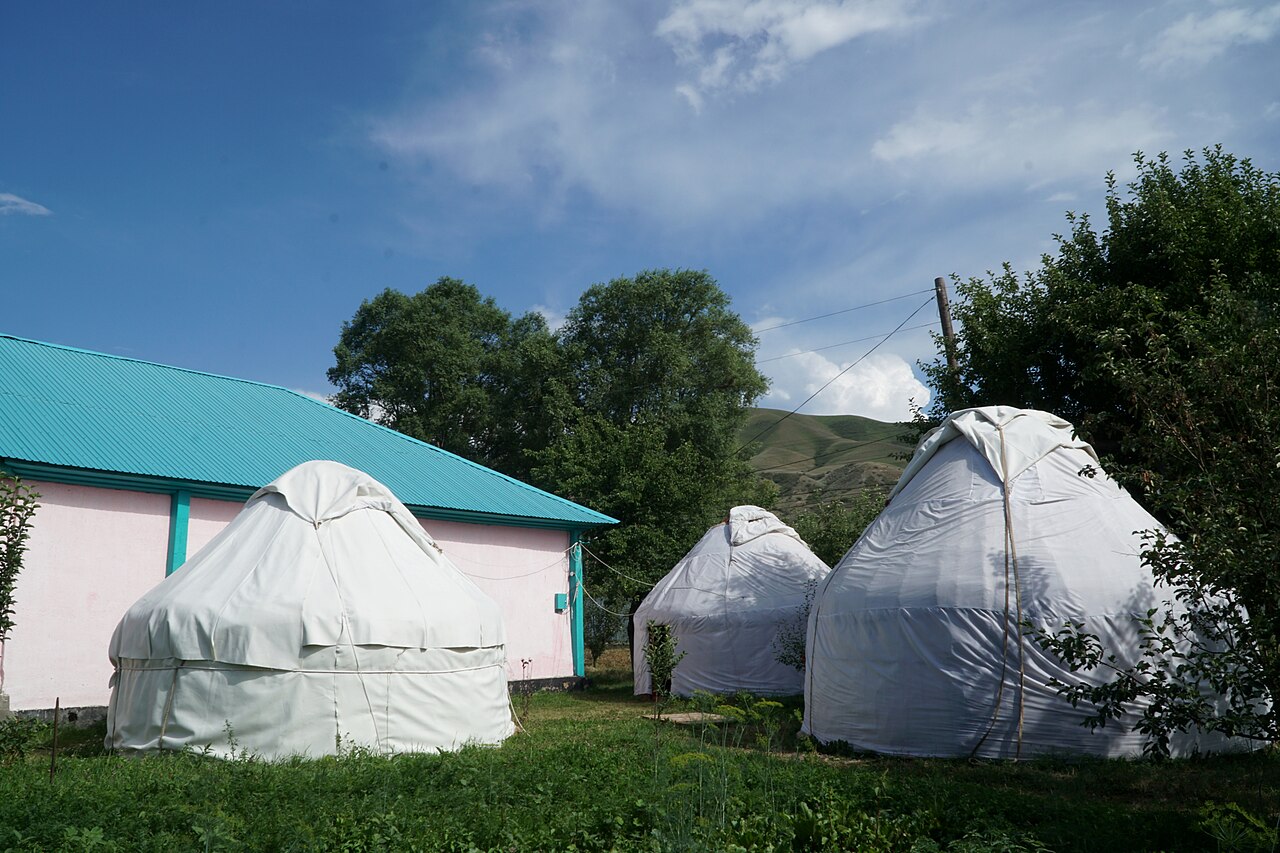
The alternative to a tent: a yurt on the shore of Kolsai 1 at 7,000 KZT per person per night, or 10,000 with three meals a day. Yurts behind the parking lot run about half the lakefront price. Guesthouses in Saty were 6,000–12,000 tenge a night in 2026, often with dinner and breakfast. See where to stay at Kolsai and Saty and yurt stays in Kazakhstan.
Getting there: a marshrutka from Almaty’s Sayakhat bus station has historically left around 06:00 daily for Saty at about 3,000 tenge a seat, with a taxi at around 30,000 for the car — but a July 2026 update warns explicitly not to rely on that 06:00 departure any more. Saty to Kolsai 1 by taxi is about 2,000 tenge; make sure the driver takes you to the lake and not just to the park gate, which is 8 km short.
Cash: there are no ATMs in Saty, card acceptance is unreliable, and there is no phone signal at the lakes. Bring tenge. See currency and money.
Lake Kaindy
About 12 kilometres from Saty in a separate gorge of the same park, dammed by a landslide from the 1911 earthquake. The road needs a 4×4 or a proper SUV; a 4×4 taxi from Saty runs 10,000–15,000 tenge (about $20–30) round trip per car, or it is roughly 12 km and two to three hours on foot each way. See Kaindy Lake.
Big Almaty Lake — treat this one as a day visit
You will read that camping is forbidden at Big Almaty Lake. The rules the official tourism guides set out are about the water: swimming is prohibited, and so is going down to the water’s edge. Whatever you carry up, carry back down.
What is solid: the lake sits at about 2,511 metres, inside Ile-Alatau National Park, and it is an alpine reservoir fed by glacial water that supplies Almaty’s drinking water, with its highest level normally in August. Private vehicles are restricted: the road reopened in August 2023 and closed to them again that September, with the road authority citing safety and the need to keep order. Sanctioned access is on foot, a five- to seven-hour round trip following the water pipe, or by e-bike hired for 25,000 tenge (about $51). Russian-language reports in February 2026 described a planned 5.3 km pedestrian trail with completion targeted for winter 2026.
Our advice: treat Big Almaty Lake as a day visit, not a campsite. It is the city’s drinking water and swimming is prohibited. The road was closed to private vehicles again in September 2023, so check current access before you set off. If you want to camp anywhere in Ile-Alatau, ask the park. See Big Almaty Lake.

Charyn Canyon
The best formal-and-informal mix in the country. Entrance to the Valley of Castles is 0.1 MRP plus 500 tenge per adult for sanitation and maintenance, with additional services charged on top.
The ecopark is a walk down from the rim to the river, and it has real infrastructure: a wooden bungalow by the water at around 16,000 tenge for two, and a whole yurt sleeping up to ten at around 45,000. Crucially — “You can even camp on your own at Charyn Canyon for free.”
The yurt has also been quoted at 40,000 for eight and bungalows at 14,000 for two or 20,000 for three, so confirm the current rates and whether the lodging is open with the park before you go, and ask at the gate whether a per-tent charge applies. Do not swim in the Charyn river — it is described as incredibly rapid, and that is not a formality.
See Charyn Canyon.

Altyn-Emel: Mynbulak, Kosbastau, Shygan and Aktau
The park’s named designated camping spots:
- Shygan, near Basshi village — the closest to the gate.
- Mynbulak, near the Singing Dune. Overnight camping in Altyn-Emel is allowed only in designated zones, and you register your stay when you buy your permits.
- Kosbastau — the oasis with an old willow and a warm radon spring. Pitch only where the park marks a camping zone.
- The Aktau mountains rest area — and the critical caveat: there is no water here.
Take that last point seriously as a system, not a footnote. There are no water sources in the park, no ATMs in or near it, and no general stores outside Basshi. The main Singing Dune is 150 metres high and 3 kilometres long. There is almost no shade anywhere: you can burn badly even in spring or autumn. Heavy rain increases mudflow risk in the Aktau mountains and makes the trails slippery. And the park’s own guidance says to watch for venomous snakes and scorpions.

Turgen: the licensed-camp model
Worth describing because it shows what organised camping looks like here. Trekking Club runs a seasonal camp at 1,600 m on a riverbank inside Ile-Alatau National Park. Its 2026 terms: 26,000 tenge per adult per night including three meals, minimum one night, season 1 June to 31 August, booked at least three working days ahead, cash only on site, with park entry not included. Bikes are 500 tenge an hour and a Scythian sauna is 14,000 for two hours.
The catch, and it matters: “Setting of own tents on our territory is not allowed.” This is a camp you stay at, not a campsite you use.
Their leave-no-trace practice is genuinely impressive and worth knowing as a benchmark: solar-powered, gas only for cooking and hot water, garbage handed to a dedicated national park service, greywater filtered, and all infrastructure — including the suspension bridge — carried in each May and removed each September so the forest regenerates untouched over winter.
Practicalities for the gorge: the entry fee is collected at the park gate, mobile coverage is patchy, so download offline maps, and arrange your own transport there and back. See Turgen Gorge and Lake Issyk.
Mangystau: wild camping as the norm
The desert west is where Kazakhstan’s camping actually feels like freedom. Overlanders’ logged waypoints, with coordinates, because there is nothing else to navigate by:
| Site | Approx. coordinates | Notes |
|---|---|---|
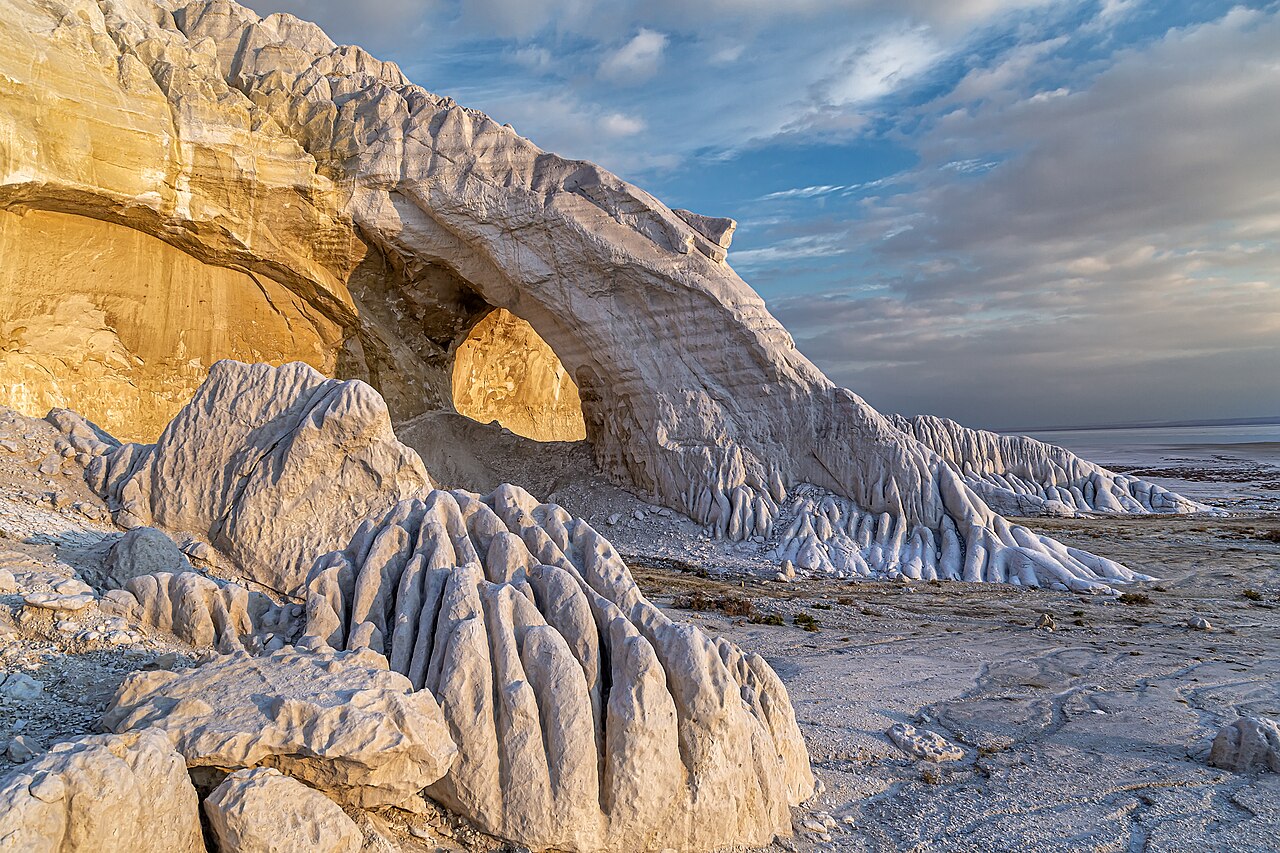
| Tuzbair salt flat | 44.039064, 53.158669 | Limestone canyon. No signal, no facilities |
| Sultan Epe | 44.474159, 51.023837 | Canyon and Caspian view. Drinking water from a well near the underground mosque |
| Valley of Balls (Torysh) | 44.323693, 51.596119 | Stone concretions on open plain |
| Castle Valley | 44.27853, 52.088476 | Buttes and badlands |
Water is the constraint out here, not permission. There is a well near the underground mosque at Sultan Epe, but bring your own supply regardless. Summer heat can reach 45 °C at the exposed desert sights, and shops and fuel may be hundreds of kilometres away, so carry ample water and food.
One thing to check before you plan: the rock-cut mosques of the Mangystau peninsula were inscribed as UNESCO World Heritage in July 2026, and Sultan Epe is one of that group. Inscription can bring new access and camping restrictions around inscribed sites. Ask locally before pitching next to one. See Mangystau, Tuzbair, Torysh and Bozzhyra.
Elsewhere
Burabay, Katon-Karagay and the Rakhmanov Springs, Balkhash, Korgalzhyn, Aksu-Zhabagly and the Assy plateau are all plausible and several are wonderful, but rules, fees and designated sites differ by park, so ask the administration. See northern and eastern Kazakhstan and Aksu-Zhabagly.
The real hazards
Steppe wind — the thing that actually breaks trips
Not bears. Wind. Read what experienced overlanders do about it: on the open plains they have preferred to sleep in the vehicle rather than deploy a rooftop tent because of the fierce wind; they deliberately use walled roadside restaurant compounds on the Shymkent–Aralsk highway because “the walls around the parking lot offer good protection against the fierce (cold and/or dusty) winds from the steppe”; and one camp near Bozoy was chosen because it “was a bit hidden in the dunes, which gave some protection from the fierce wind of the plains.”
The practical translation:
- Pitch behind something. A dune, a rock band, a canyon lip, a wall. Choosing your pitch matters more than your tent.
- Guy out every line, every night, including the ones you never normally use. A wind that arrives at 3 a.m. on flat steppe has 400 kilometres of run-up.
- Weight your pegs. Sand and gravel hold badly. Rocks on the pegs, or sand bags.
- Pitch the low end into the wind and never leave a tent up unoccupied and unweighted.
The temperature drop at altitude
This catches more people out than any wildlife. From the guidance for the Kolsai lakes: “Even in summer, nighttime temperatures at 1,800–2,700 m drop significantly. A warm sleeping bag rated to 0 °C is essential.” Mountain weather can turn within a day, so carry a waterproof shell and a warm layer even when the morning is sunny.
The Turgen camp, at only 1,600 m, tells guests plainly that nights are colder than in the city and recommends trekking trousers, long and short layers, a warm jacket, a wind and waterproof shell, a peaked cap, a hat, sunglasses — and thermal underwear, in June to August.
You are camping at the same latitude as Madrid in a continental climate with no maritime moderation. Pack for that.
Tien Shan brown bear
Real, and specifically relevant at Kolsai-Kaindy: the Tien Shan brown bear is among the rare mammals recorded in the park. Keep noise levels up while walking and store food properly if camping. Encounters are rare but real.
Snow leopard and lynx are also recorded in the park, though a camper is very unlikely to see either.
Snakes and scorpions
Altyn-Emel’s own guidance says to watch out for venomous snakes and scorpions — that is the desert parks. In the mountain forest at Turgen, the operator lists foxes, rabbits, deer, bees and snakes described as non-venomous. So the risk is regional: desert and steppe yes, Tien Shan forest much less so. Shake out boots, do not put hands into rock crevices, and use a torch at night.
Ticks — and the one you should actually read about
Ticks are the most likely thing to cause you real harm. The Turgen camp warns that “in early June there can be ticks in bushes” and asks guests to bring repellent and pre-treat shoes and clothing.
More seriously, Crimean-Congo haemorrhagic fever has established natural foci in Kazakhstan’s southern regions — Kyzylorda, Turkestan and Zhambyl — where active foci have been identified. CCHF has been reported in the country since 1948, and the WHO puts its case fatality rate at 10–40 per cent. Transmission is by tick bite, by handling infected ticks, by contact with infected livestock blood or tissue, and by contact with an infected person’s blood or body fluids. Documented risk factors include finding ticks on your body or clothing. A significant outbreak occurred in Kyzylorda region between March and July 2022.
If you are camping in the south — around Turkestan, Kyzylorda or Zhambyl — treat tick prevention as a health measure rather than an annoyance: permethrin-treated clothing, trousers tucked into socks, repellent, and a full body check every evening. Do not crush a tick with your fingers. See health insurance for Kazakhstan.
Sun, UV and mudflow
UV is intense at altitude and there is essentially no shade in the desert parks. Sunburn in spring and autumn at Altyn-Emel is normal. In the mountain gorges, heavy rain brings mudflow risk and slippery trails — if a stream suddenly turns cloudy or speeds up, get to higher ground and move sideways rather than running downstream.
Water
Tap-water potability is inconsistent across the country and locally disputed. The overlanders’ approach is the right one: skip bottled water and carry a stainless bottle plus a filter or purifier — a pump filter, a UV pen, a squeeze filter, or purification tablets where weight matters. Minimum two litres per person for a day at altitude, and far more in the west.
Expect long-drop toilets in the countryside and bring your own paper.
Gear for a continental climate
- Tent: a three-season tent with a full guy-line set and a low profile. Prioritise wind-worthiness over weight — this is a country where you will more often be driven to a trailhead than carry your kit twenty kilometres.
- Sleeping bag: rated comfortable to 0 °C for summer camping at 1,800–2,700 m, and to −10 °C if you are going higher or into shoulder season.
- Thermals, even in July, at altitude.
- Stove: gas, because fires are frequently banned. You cannot fly with canisters, so plan a shopping stop and a backup: ask at an Almaty outdoor shop on arrival whether it stocks screw-thread canisters.
- Water capacity: for Mangystau and Altyn-Emel, plan on carrying all of it. There are no water sources in Altyn-Emel and one well in the Mangystau list above.
- Pegs and weights suitable for sand and gravel.
- Offline maps. Download them before you leave: mobile coverage in the mountains and in Mangystau is patchy.
For gear rental, ask a hiking club or your guesthouse in Almaty who hires out kit and at what rate. See what to pack for Kazakhstan.
When to go
| Region | Best window | Notes |
|---|---|---|
| Mangystau and the west | April–May | Overlanders’ consensus. July–August is very hot, often above 40 °C, with little shade |
| Almaty mountains | Summer, June–September | September is the best all-round month at Kolsai |
| Altyn-Emel and the deserts | Spring and autumn | Little shade; sand gets very hot |
| Southern Kazakhstan | November–December is workable | Nights can drop below freezing; frozen ground beats mud |
| Eastern Kazakhstan | Not in winter | Severe winter cold and steppe wind |
Kolsai season detail, which is a useful proxy for the mountains generally: June to September is the warm, dry season, and September adds autumn colour and the best overall conditions; October brings cold mornings and the first snow on the peaks; in winter the roads become difficult; and May means snowmelt, mud and high rivers. See the best time to visit Kazakhstan and Kazakhstan in summer.
Leave no trace — and Kazakhstan’s rubbish problem
This is worth a section because it is a documented, specific, consequential problem rather than a moral lecture.
- Overlanders report “significant trash in touristy areas around Almaty.”
- The road to Big Almaty Lake reopened to vehicles in August 2023 and closed to private cars again that September; the road authority cited safety and keeping order. Whatever you take up to the lake, bring back down.
- Kolsai-Kaindy has no waste collection services on the trails and its published rules require you to pack out all trash.
If you want camping to stay permitted at Kolsai, carry your rubbish out. That includes fruit peel and cigarette ends, and it includes other people’s rubbish if you have room.
The licensed Turgen camp is the model — it hands its waste to a dedicated park service, filters its greywater, and dismantles its entire infrastructure every September. If a commercial operation can carry a suspension bridge out of the forest each autumn, you can carry a bag of rubbish out of a gorge.
Frequently asked questions
Is wild camping legal in Kazakhstan?
On open, unenclosed land away from protected areas, it is unrestricted in practice and nobody will bother you. Inside national parks, camping is only permitted in designated places and is charged per person per day; some parks add a per-tent charge, so ask when you pay.
Do you need a permit to camp in a Kazakh national park?
Effectively yes. Kolsai-Kaindy’s published rules say to camp only in designated areas and obtain permits, and Altyn-Emel operates a formal pass system with route-specific entry points and payment receipts. Altyn-Emel’s ministerial tariff includes a specific line for bivouac glades at 0.04 MRP per person per day.
Can you camp at Kolsai Lakes, and how much is it?
Yes, in designated areas near the lakes. The fee structure is per person plus per vehicle plus per tent — figures around 450 tenge per person, 750 per vehicle and 750 per tent have been quoted, though the amounts move, so ask at the gate for the current tariff. A lakeside yurt is 7,000 tenge per person, or 10,000 with three meals.
Can you camp at Big Almaty Lake?
Treat it as a day visit. It is Almaty’s drinking-water reservoir inside a national park, and swimming is prohibited. Ask Ile-Alatau National Park whether you may camp there, and check current road access before you go.
Can you have a campfire in Kazakhstan?
Often not. National parks have frequently banned campfires and open flames in recent years because of wildfire risk, and collecting firewood inside a park is prohibited. Cook on gas and ask the ranger at the gate whether a ban is currently in force.
Do you need a border permit to camp near Kolsai or Charyn?
Only for the top lake at Kolsai. Kolsai 3 (Upper Kolsai), close to the Kyrgyz frontier, needs a border-zone permit; the lower and middle lakes do not. Carry your passport for the gate check.
How cold does it get camping in Kazakhstan in summer?
Cold enough that a sleeping bag rated to 0 °C is described as essential between 1,800 and 2,700 metres, and that a licensed camp at only 1,600 metres recommends thermal underwear for a June-to-August season. Pack for rain and cold even on a fine summer day.
Are there bears in Kazakhstan’s mountains?
Yes. The Tien Shan brown bear is recorded in Kolsai-Kaindy National Park. Make noise as you walk and store food properly. Encounters are rare.
Do I need a tick-borne disease vaccine for Kazakhstan?
That is a question for a travel clinic, not for us. What we can tell you is that ticks in the Almaty mountains may carry encephalitis and Lyme disease, and that Crimean-Congo haemorrhagic fever — for which there is no widely available vaccine — has established natural foci in Kyzylorda, Turkestan and Zhambyl regions, with a case fatality rate around 30 per cent. Prevention is clothing, repellent and daily checks.
Where can I buy camping gas in Almaty?
You cannot fly with canisters, so plan an outdoor-shop stop in Almaty on arrival and ask at your accommodation or a local hiking club where to buy them.
Final thoughts
Camping in Kazakhstan is one of the great remaining travel freedoms and it comes with almost no guardrails. There is nobody to book with, nobody to check on you, no hut to retreat to and no phone signal to call for help. In Mangystau you can drive to a set of coordinates in a landscape that looks like another planet and be entirely alone by nightfall.
The two things that will actually go wrong are the wind and the cold. Pitch behind something, guy everything out, and bring a warmer bag than the daytime temperature suggests. Then, in the national parks, pay the fee, camp where they tell you, cook on gas, and carry every scrap of rubbish out — because access to the best places depends on visitors who leave nothing behind.
For the walking, see our guides to hiking in Kazakhstan, hikes near Almaty and Tien Shan trekking. For the driving, a Kazakhstan road trip and renting a car. And if the wind wins, hostels in Kazakhstan are cheap.
Photo credits
Saty village yurts: Adam Harangozó (CC BY-SA 4.0) via Wikimedia Commons. Lower Kolsai Lake: Lfvelynis (CC BY-SA 4.0) via Wikimedia Commons. Big Almaty Lake: Nessi Gileva red_fox (CC0) via Wikimedia Commons. Charyn Canyon: Bgag (CC0) via Wikimedia Commons. Singing Dune: Jjm2311 (CC BY-SA 4.0) via Wikimedia Commons. Tuzbair arch: Astrobond (CC BY-SA 4.0) via Wikimedia Commons.