Contents
- The e-visa at a glance
- First, do you even need an e-visa?
- Visa-free, e-visa or visa-on-arrival?
- The types of e-visa
- The invitation: the part that trips people up
- What you need before you start
- Step by step: applying on the portal
- Fees, timing and validity
- Arriving in Kazakhstan with your e-visa
- Tips for a smooth application
- Why e-visas get rejected (and how to avoid it)
- How the e-visa fits your trip planning
- Frequently asked questions
- Final thoughts
If you’ve landed on this page, there’s a decent chance you don’t actually need an e-visa — a lot of people apply for one when their country is already visa-free. So the first job of this guide is to make sure you’re on the right track, and the second is to walk you through the application step by step if you do need one. It’s more straightforward than the official pages make it look, with one part — the invitation — that trips almost everyone up.
The Kazakhstan e-visa is an online visa applied for through the official migration portal (vmp.gov.kz) by travellers whose nationality is not visa-free. It covers tourist, business and medical visits, is single-entry for up to 30 days, and — importantly — every type, including tourist, requires a valid invitation registered on the Kazakh side. E-visa holders may only enter through Astana or Almaty airports, not land borders. Always confirm the current rules on the official portal before applying.

The e-visa at a glance
| Detail | What to expect |
|---|---|
| Where to apply | The official migration portal, vmp.gov.kz |
| Types | Tourist, business, medical (and investor) |
| Invitation | Required for all types, including tourist |
| Fee | ~US$60 tourist; ~US$80 business/medical (card only) |
| Validity | Single entry, stay up to 30 days |
| Entry points | Astana and Almaty international airports only — no land borders |
| Passport | Valid well beyond your stay, with blank pages |
Visa rules changed repeatedly in 2024–2026. Treat this as a guide and confirm every detail on vmp.gov.kz before you apply and pay.
First, do you even need an e-visa?
Before anything else, work out which of three tracks you’re on. Getting this wrong is the most common — and most expensive — mistake people make.
Track 1: visa-free (many travellers)
Citizens of around 54–56 countries — the US, UK, all EU and Schengen states, Canada, Australia, Japan, South Korea, the Gulf states and many more — can enter visa-free for 30 days and need no e-visa at all. If that’s you, stop here and read our guide to Kazakhstan visa-free countries instead. Applying for an e-visa you don’t need just costs you time and money.
Track 2: the e-visa (nationalities not visa-free)
If your country isn’t on the visa-free list — this includes many travellers from South Asia, much of Africa, and elsewhere — the e-visa is your route. Note the India nuance: Indian citizens are actually visa-free for up to 14 days, and only need an e-visa for longer stays. Check your own nationality carefully.
Who typically needs an e-visa
Because the visa-free list is long, the travellers who actually need an e-visa are a more specific group. It commonly includes citizens of many countries in South Asia (for stays beyond the short visa-free windows some enjoy), much of sub-Saharan Africa, and various others not covered by the unilateral or bilateral visa-free arrangements. If you’re unsure, the safest approach is to check the government’s country-by-country reference: if your nationality isn’t granted visa-free entry, and isn’t on the embassy-only list, the e-visa is your route.
Track 3: embassy-only nationalities
A short list of nationalities can’t use the e-visa system at all and must apply through a Kazakh embassy — this includes countries such as Afghanistan, Iraq, Pakistan and Syria, among others. If you hold one of these passports, the online route isn’t available to you.
A note on the new travel authorisation
Separately, from 2025 Kazakhstan began rolling out an electronic travel authorisation (sometimes branded QazETA) aimed at visa-exempt travellers — a lightweight online pre-registration, distinct from the e-visa. It’s been introduced gradually rather than made strictly mandatory for everyone, so check whether it applies to you at the time you travel. Don’t confuse it with the e-visa: the ETA is for people who are already visa-free, the e-visa is for those who aren’t.
Visa-free, e-visa or visa-on-arrival?
It’s worth pinning down how the e-visa relates to the other two ways into Kazakhstan, because they get muddled constantly. Visa-free means you apply for nothing and simply arrive — the situation for most Western, Gulf and East Asian travellers. The e-visa is an online visa you obtain in advance, for nationalities that aren’t visa-free, and it comes with the invitation requirement and airport-only entry described here. Visa-on-arrival is a narrow, discretionary option essentially limited to travellers from countries that have no Kazakh embassy, and it too requires an invitation and prior approval — it is not something to plan around. For the vast majority of applicants, the real choice is simply “am I visa-free, or do I need the e-visa?”
The types of e-visa
Kazakhstan issues several categories of e-visa, and you choose the one that matches your trip: tourist (for holidays and visiting), business (for meetings and commercial activity), and medical (for treatment), with an investor category as well. For an ordinary holiday you’ll want the tourist e-visa. All of them are single-entry and allow a stay of up to 30 days, and all of them require an invitation — which brings us to the part people find most confusing.
Kazakhstan launched its e-visa system as a pilot in 2019, and it has been refined steadily since, part of the same drive to open the country to visitors that produced the long visa-free list. The upshot for you is a system that mostly works well, but whose fine print — fees, timelines, eligible nationalities, and the newer travel-authorisation rollout — has shifted more than once, which is exactly why every figure here comes with the same advice: confirm it on the official portal before you rely on it.
The invitation: the part that trips people up
Here’s the crucial thing the glossy guides gloss over: a Kazakhstan tourist e-visa still requires an invitation. This is different from the visa-free track, where you need nothing at all. For the e-visa, someone on the Kazakh side — typically a licensed tour operator or hotel — must issue an invitation (sometimes called a letter of invitation, or LOI) and register it with the migration authorities, giving you an invitation number to enter on your application.
How to get your invitation
In practice, tourists arrange the invitation through a Kazakh tour operator or a specialised visa service. Expect it to cost in the region of US$200 per person and to take around five to six working days to be approved, and note that it generally needs to be submitted to the migration authorities a set number of days — often at least fifteen — before your intended entry date. So this is not a last-minute step: start it a few weeks before you travel. The inviting party handles the registration; you receive the invitation number to use in the portal.
What you need before you start
Gather these before you open the portal, because the application goes smoothly only if everything matches:
- Your passport, valid well beyond your stay (at least three months beyond the visa’s expiry is the official minimum, but six months is the safe standard) and with at least two blank pages.
- Your invitation number from the inviting operator or hotel.
- A digital passport photo to the required specification (typically 3.5 × 4.5 cm) and a scan of your passport bio page.
- A bank card for the fee (payment is by card only).
- A working email address, where your e-visa will be sent.
A word on the photo and scan, since these cause the most rejections: the photo should be recent, sharp, and correctly sized against a plain light background, and the passport scan should be clear and complete with no glare cutting off details. If either is blurry or wrongly cropped, the application can bounce back, so it’s worth taking a couple of minutes to get them right rather than rushing.
Step by step: applying on the portal
With your invitation number and documents ready, the application itself is quick. The official flow on vmp.gov.kz runs roughly like this:
Step 1 — Create your account
Register on the Visa and Migration Portal (vmp.gov.kz) with your email and set up your personal cabinet.
Step 2 — Open the e-visa section and check requirements
Select the visa service and confirm you have what you need, including your invitation number.
Step 3 — Enter your invitation and passport details
Type in the invitation number and your passport information exactly as they appear on the documents. Accuracy here is everything — a single mismatched digit can invalidate the visa later.
Step 4 — Upload your photo and passport scan
Add your digital photo and the scan of your passport bio page, meeting the format and size rules.
Step 5 — Review everything
Check every field against your passport. Names, numbers and dates must match precisely; the border officer will compare the visa to your passport, and any discrepancy can mean refused entry.
Step 6 — Pay the fee
Pay the consular fee by bank card. It’s non-refundable, so only pay once you’re sure the details are correct.
Step 7 — Receive and print your e-visa
Once approved, download your e-visa from your cabinet or email — and print it. You must present the printed e-visa with your passport on arrival.
Fees, timing and validity
The tourist e-visa fee is around US$60, with business and medical visas closer to US$80; payment is by card and non-refundable. On timing, the portal itself suggests the online step can be quick once you have a valid invitation, but the official issuance limit is up to five working days, so apply with time to spare rather than assuming it’s instant. Remember that the invitation is a separate, earlier step that takes several working days of its own. The visa is single-entry and allows a stay of up to 30 days; it isn’t extendable, and if you get a new passport you’ll need a new e-visa. Budget the fees into your wider costs with our trip cost guide.
Arriving in Kazakhstan with your e-visa
Airports only — no land borders
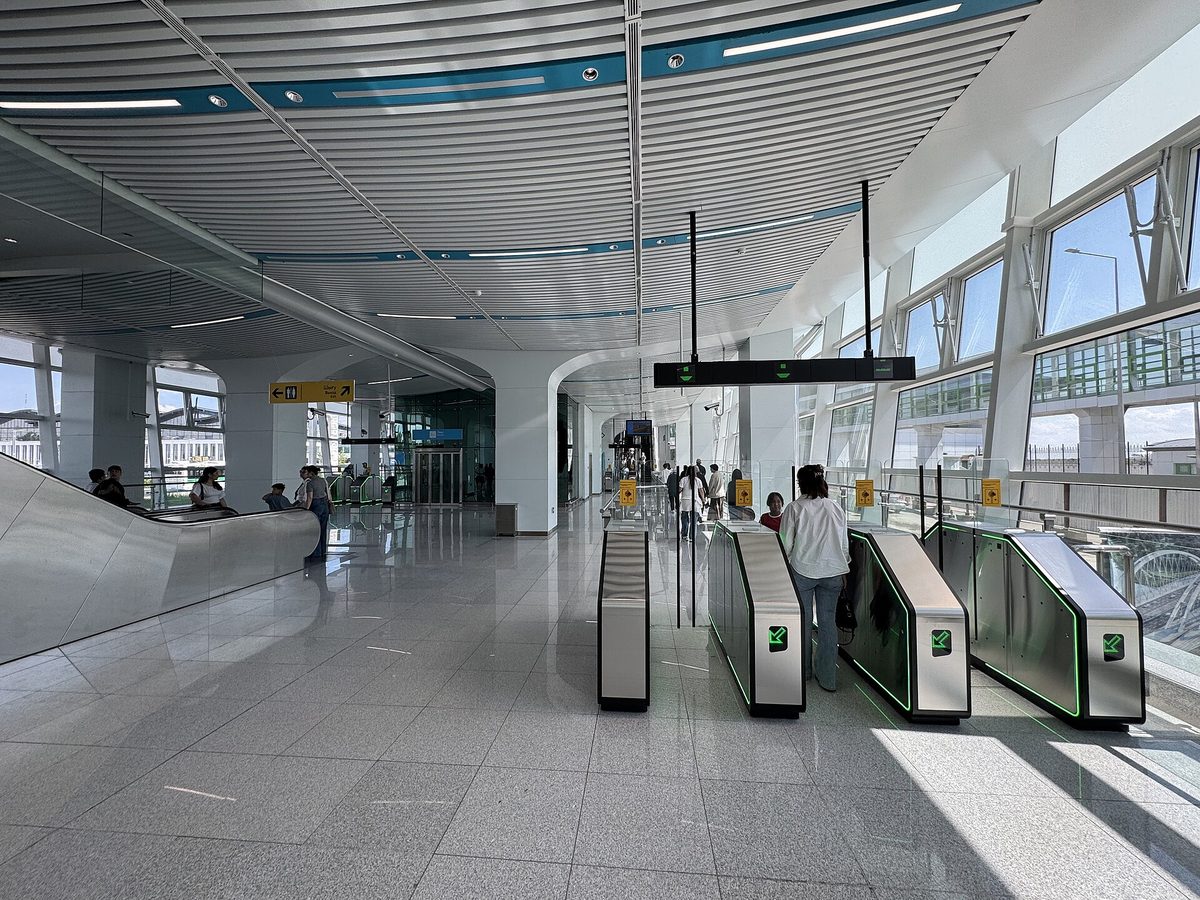
This catches people out, so underline it: an e-visa is valid for entry only through Kazakhstan’s international airports — in practice Astana (Nursultan Nazarbayev International) and Almaty. You cannot use an e-visa to cross a land border. If your plan involves arriving overland from a neighbour, an e-visa won’t work, and you’ll need a different visa type. (Visa-free travellers, by contrast, can use land borders — another reason to be sure which track you’re on.) Our note on whether Kazakhstan is safe touches on what to expect at borders and checkpoints.

At passport control
Bring your printed e-visa and your passport to the immigration desk. As long as the details match, entry is routine. E-visa holders are exempt from separate migration registration — the inviting party notifies the authorities of your arrival, within three working days — so you don’t file anything yourself. Once you’re through, the capital is right there; see our guide to things to do in Astana to start, and our roundup of where to stay in Kazakhstan to sort your first night — where, conveniently, the reception desk takes care of notifying the authorities for you.
Tips for a smooth application
A few habits make the difference between a clean approval and a stressful re-do. Apply from a laptop rather than a phone, where it’s easier to check long strings of passport data. Copy your name and passport number directly from the document rather than typing from memory. Use a properly cropped, recent photo against a plain background. Keep a screenshot or PDF of your invitation and every confirmation. And leave a comfortable buffer before your flight: with the invitation lead time plus the issuance window, a few weeks is sensible, not a few days. If anything on the portal is unclear, the migration service publishes an official instruction and a contact line — use them rather than guessing.
Why e-visas get rejected (and how to avoid it)
Refusals are usually avoidable and come down to a handful of causes. Guard against them:
- Mismatched or incomplete details — the commonest problem; a name or passport number that doesn’t match exactly can invalidate the visa.
- A poor-quality or wrong-format photo.
- An expired or nearly expired passport, or too few blank pages.
- Unclear travel purpose — vague plans or an obviously fake booking.
- Insufficient proof of funds for your stay, if requested.
- A prior overstay or immigration breach on your record.
The fixes are simple: enter everything exactly as it appears on your passport, use a compliant photo, make sure your passport has plenty of validity and blank pages, and keep your trip details honest and consistent. Double-check before you pay, since the fee doesn’t come back.
If, despite your care, there’s a discrepancy between your e-visa and your passport at the desk, don’t panic, but be prepared: a mismatch can lead to secondary checks or, in the worst case, refused boarding or entry, which is why it’s far better to catch errors before you pay and travel. It’s also why you should never let a third party enter your details carelessly on your behalf — review everything yourself before paying.
How the e-visa fits your trip planning
Because the e-visa needs an invitation and some lead time, sort it early in your planning — ideally once your dates and a tour operator or hotel are locked in. That done, the rest of the trip falls into place: our itinerary guide helps you shape the route, the best time to visit guide picks your season, getting around Kazakhstan covers domestic travel, and our overview of things to do in Kazakhstan gives you the highlights to build around. The full visa picture, including other visa types, sits in our Kazakhstan visa pillar guide.
Frequently asked questions
Do I need an invitation for a Kazakhstan tourist e-visa?
Yes. Contrary to a lot of online advice, every Kazakhstan e-visa type — including tourist — requires a valid invitation registered on the Kazakh side, usually arranged through a tour operator or hotel. This is the key difference from visa-free entry, which needs nothing at all.
How much does the Kazakhstan e-visa cost?
Around US$60 for a tourist e-visa and about US$80 for business or medical, paid by card and non-refundable. Remember the separate invitation/letter of invitation typically costs extra — often around US$200 through an operator.
How long does the e-visa take to process?
The official issuance limit is up to five working days once you apply with a valid invitation, though the online step can be quicker. The invitation itself takes several working days beforehand, so start the whole process a few weeks ahead of your trip.
Can I enter Kazakhstan by land with an e-visa?
No. E-visa holders may only enter through the international airports at Astana and Almaty — land borders are not permitted. If you plan to arrive overland, you’ll need a different visa, or you may be visa-free.
How long can I stay on an e-visa?
The e-visa is single-entry and allows a stay of up to 30 days. It isn’t extendable, so if you need longer you’ll need to apply for an appropriate visa or permit instead.
Do I have to print my e-visa?
Yes. You must present a printed copy of your e-visa along with your passport at the airport. Make sure the details on the visa exactly match your passport, as a mismatch can lead to denied entry.
Which airports accept the Kazakhstan e-visa?
The international airports at Astana (Nursultan Nazarbayev International) and Almaty are the approved e-visa entry points. Land borders and other airports are not valid for e-visa entry, so plan your arrival accordingly.
Is the Kazakhstan e-visa single or multiple entry?
Single entry. It allows one entry and a stay of up to 30 days. If you need to leave and re-enter, you’d need a new e-visa or a different visa type.
What is QazETA, and is it the same as the e-visa?
No. QazETA is an electronic travel authorisation system introduced from 2025 for visa-exempt travellers — a light online pre-registration, not a visa. The e-visa is a separate document for nationalities that aren’t visa-free. Check which, if either, applies to you before you travel.
Do e-visa holders need to register with the migration police?
No separate registration is needed from you. As with visa-free visitors, the inviting party or your accommodation notifies the migration authorities of your arrival within three working days. Staying in a registered hotel means this is handled automatically.
Can I work or study on a tourist e-visa?
No. The tourist e-visa is for tourism and visiting. Work, study, long-term stays and similar purposes require the appropriate visa category or permit — don’t rely on a tourist e-visa for anything beyond a short visit.
Final thoughts
The Kazakhstan e-visa sounds daunting and mostly isn’t — provided you get two things right. First, confirm you actually need one, because many travellers are visa-free and can skip the whole process. Second, start the invitation early, since that, not the online form, is the slow part. After that it’s simply a matter of careful data entry: match your passport exactly, use a good clear photo, pay the fee, print the visa, and present it at Astana or Almaty airport. Because these rules keep shifting, make the official migration portal, vmp.gov.kz, your final check before you apply and pay. Get those basics right and the paperwork becomes a formality — leaving you free to look forward to the trip itself.
Photo credits
Almaty airport check-in: DS28 / CC BY-SA 4.0 via Wikimedia Commons. Astana airport arrivals: Kristianmusic (CC0) via Wikimedia Commons. Khorgos border crossing: Purplepumpkins / CC BY-SA 3.0 via Wikimedia Commons.


