Contents
- Is travel insurance required to enter Kazakhstan?
- What Kazakhstan travel insurance should actually cover
- Healthcare in Kazakhstan: what to expect
- Can you drink the tap water in Kazakhstan?
- Vaccinations and travel-health preparation
- Pharmacies in Kazakhstan
- The health realities travellers underestimate
- Frequently asked questions
- Final thoughts
Half the pages about Kazakhstan travel insurance tell you it is legally required. It is not. The other half tell you it is “strongly recommended” and then sell you a policy without ever explaining the one clause that actually matters here — the altitude limit. This page tries to be the version I wanted when I first looked into it: what the rules genuinely say, what the water is really like, and what to do when you need a pharmacy in a town where nothing is written in an alphabet you read.
The direct answer: Kazakhstan travel insurance is not a legal condition of entry for visa-free visitors, but it is close to essential in practice, because private treatment is billed in cash and international medical evacuation from remote regions runs into tens of thousands of dollars. Kazakhstan’s new electronic travel authorisation also asks for policy details in its health declaration.
| Question | Short answer |
|---|---|
| Is insurance required to enter? | No — not listed in entry requirements |
| But the ETA asks for it? | Yes — the QazETA health declaration requests policy details |
| Ambulance number | 103 (or 112 for all emergencies) |
| Tap water | Treated to national standard in the big cities; most people still filter or buy bottled |
| Vaccines legally required | None, unless arriving from a yellow-fever risk country |
| The one most travellers miss | Tick-borne encephalitis, if you are hiking near Almaty in spring or summer |
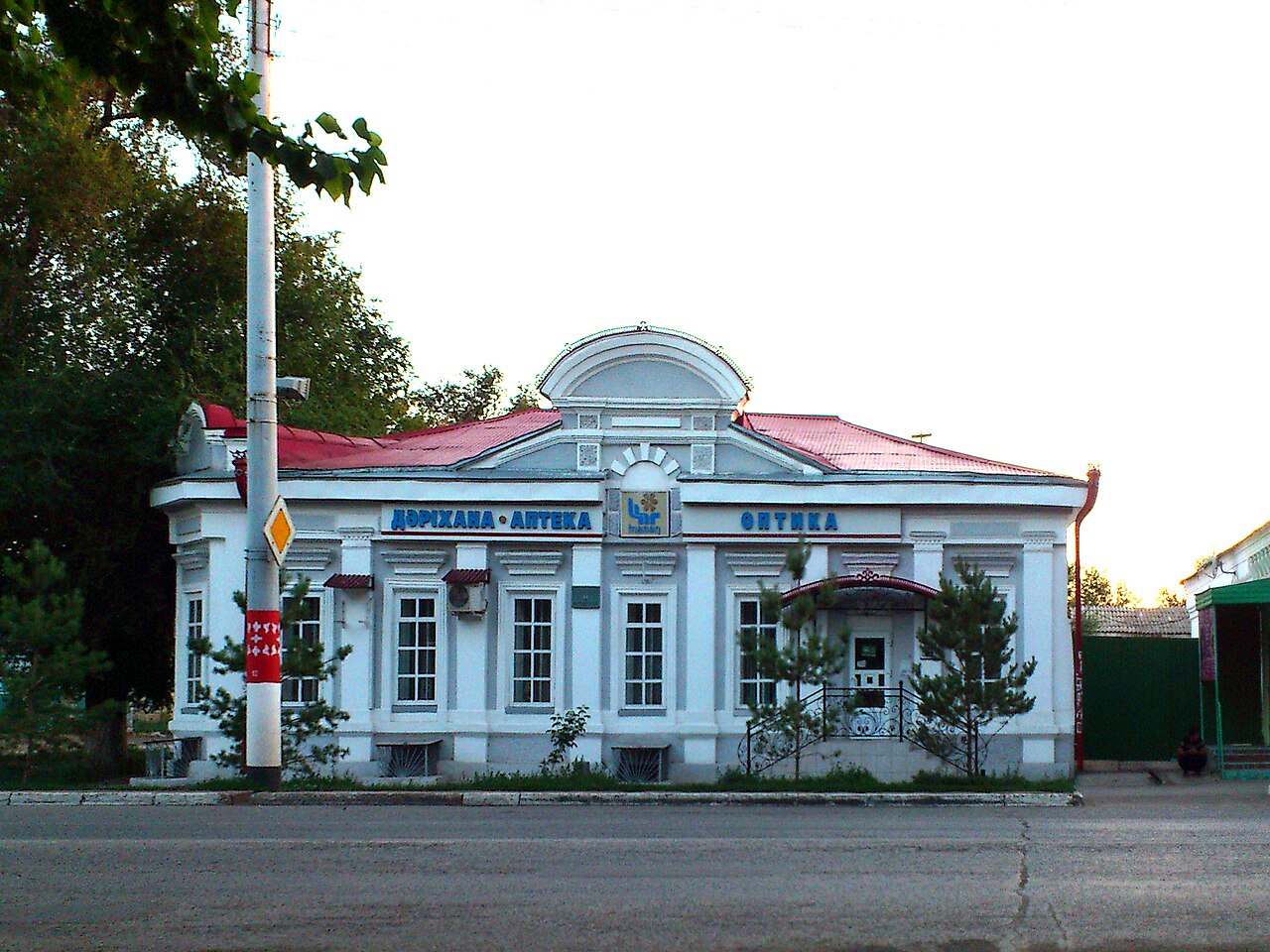
| Pharmacy sign | Дәріхана (Kazakh) / Аптека (Russian) |
| Policy clause to check | Altitude limit — many stop at 3,000 m |
A note before we start: this is general travel-health information, not medical advice. Vaccination decisions, altitude medication and anything involving a pre-existing condition are conversations for a travel clinic, a pharmacist or your own doctor — ideally six to eight weeks before you fly.
Is travel insurance required to enter Kazakhstan?
What the official entry requirements say
They do not mention it. The UK Foreign Office’s Kazakhstan entry requirements page — updated in July 2026 — lists passport validity, visa rules, host registration, yellow fever certificates, customs and IMEI registration. Insurance is absent. The US State Department’s Kazakhstan page lists “vaccinations: none” and no insurance requirement, only a strong recommendation to carry supplemental cover for medical evacuation. Kazakhstan’s own e-government visa pages list the invitation, passport and consular fee — not a policy.
So if you have read somewhere that Kazakhstan “demands proof of medical coverage from every visitor”, that page is wrong.
The bit that is changing: the QazETA health declaration
Here is the nuance nobody else has picked up. In July 2025 Kazakhstan launched the QazETA app and an Electronic Travel Authorization for visa-exempt travellers. During the pilot period, obtaining an ETA is described by the authorities as recommended rather than mandatory, with the intention of phasing it in as a requirement later. The ETA application includes a health declaration that asks for proof of valid medical insurance and your policy details. It must be requested at least 72 hours before departure, is valid for 180 days, and is currently free.
Practically: check QazETA before you book, and have a policy number to hand if you complete one. Our entry requirements guide tracks the paperwork side; the visa guide covers who needs what.
How long you can stay
Most Western nationalities enter visa-free for up to 30 days per visit, capped at 90 days in any 180-day period. Passport validity and blank-page rules vary slightly by nationality — the 90-in-180 rule explainer has the detail. Insurance length should match the whole trip, not the first 30 days.
What Kazakhstan travel insurance should actually cover
This is where the standard advice gets lazy. “Get comprehensive cover” is not advice. Here is what matters specifically here.
Medical evacuation is the real number
The Foreign Office is blunt about it: have insurance for local treatment and unexpected medical evacuation, and have accessible funds to cover air-ambulance evacuation and repatriation. Kazakhstan does operate a domestic air-ambulance system with a national coordination centre and dozens of aircraft — but it is free only to citizens, permanent residents, refugees and Kandas, and it does not cover evacuation abroad. Industry and expatriate estimates for international medevac range from roughly 20,000 US dollars to well over 200,000 depending on distance, condition and aircraft.
That number is the entire argument for insurance in Kazakhstan. Everything else is small change by comparison.
Altitude: the 3,000-metre line that catches people
Many standard travel policies cover trekking without technical equipment only up to 3,000 metres, and treat anything higher as mountaineering needing specialist cover. This is a market pattern rather than a universal rule — but check your own wording, because Kazakhstan crosses that line more easily than people expect.
| Place | Altitude | Above the usual 3,000 m cut-off? |
|---|---|---|
| Almaty city | ~800 m | No |
| Medeu ice rink | 1,691 m | No |
| Shymbulak base | ~2,200 m | No |
| Big Almaty Lake | 2,511 m | No |
| Shymbulak top station, Talgar Pass | ~3,200 m | Yes |
| Tuyuksu glacier area, high Tian Shan trekking | 3,000 m+ | Yes |
You can reach the Talgar Pass by gondola in an afternoon from central Almaty, wearing jeans. It is not remotely an expedition. It is also, on a lot of policies, above the covered altitude. Read the schedule of activities.
Skiing and off-piste
Winter sports cover is usually a paid add-on rather than a default. Off-piste skiing is frequently classed as a dangerous activity or excluded unless you are with a qualified guide on recognised routes. If Shymbulak or Kazakhstan’s other ski resorts are on your itinerary, add the winter-sports module and check the off-piste wording.
Remote regions
Kazakhstan is enormous and some of its best destinations are genuinely far from a hospital. Mangystau — Bozzhyra, Torysh, Beket-Ata, the Ustyurt plateau — is hours of unsealed track from Aktau. The Altai is similar. Check that your policy does not exclude travel away from major population centres, and that its search-and-rescue provision is real rather than nominal.
What it costs, and what drives the price
I am not going to quote you a premium, because the figures insurers advertise (“from a dollar fifty a day”) bear almost no relation to what a policy with a usable medical limit and an altitude endorsement actually costs. Four things drive the price: trip length, your age, the activity tier you select, and the medical and evacuation limit. Get two or three quotes with the same medical limit and the same activity tier and compare like for like.

Healthcare in Kazakhstan: what to expect
State versus private
Kazakhstan has had compulsory social health insurance since 2020, but as a visitor on temporary stay you are entitled at best to emergency life-saving care and treatment of certain dangerous infectious diseases. Everything else is billed. Foreign visitors overwhelmingly use private clinics.
Both the Foreign Office and the State Department are candid about state facilities. The FCDO notes that medical facilities are not as advanced as in the UK and that staff do not typically speak English. The State Department goes further, describing options for medical care as limited and saying that US citizens often leave Kazakhstan for treatment, including routine procedures. Take that as written, but keep it in proportion: routine problems get treated competently in Almaty and Astana every day.
Ambulances
The number is 103 for an ambulance; 112 is the unified emergency number. Calls are free. The operator may not speak English.
One piece of advice from the State Department is worth repeating because it is counter-intuitive: ambulances are unreliable outside major cities, often are not staffed with trained paramedics, and may carry little equipment. Seriously ill or injured travellers may be better off taking a taxi or private vehicle to the nearest major hospital than waiting. In Almaty or Astana, call 103. On a road in the middle of Kyzylorda region, get in the car.
Where to go in Almaty and Astana
International SOS runs a 24/7 clinic in Almaty with internationally trained English-speaking doctors, laboratory, X-ray, an in-house pharmacy, emergency room and ambulances, operating in English, Russian and Kazakh. There are several good private family clinics as well — IMC Almaty is a commonly used one, with family-doctor consultations in the region of 12,000–17,000 tenge (roughly 26–36 US dollars at about 470 tenge to the dollar).
The Foreign Office publishes a list of medical facilities in Kazakhstan where some staff speak English. Save the link before you travel; it is more useful than any hotel recommendation.
Payment
Assume cash or card at the point of treatment, and a claim afterwards. Direct billing between a Kazakh clinic and a foreign insurer is not something to count on. Bring a card with headroom on it and keep every receipt and every piece of paper you are handed, in the original.
Can you drink the tap water in Kazakhstan?
The honest answer is more interesting than either of the two answers you usually get.
Almaty
Almaty’s water comes from mountain rivers and reservoirs in the Trans-Ili Alatau and is filtered and chlorinated to national standards by the city utility. It is not raw mountain water and it is not dangerous. But the distribution network is old in places, mineral content differs sharply from what most visitors are used to, and a good number of Almaty residents drink filtered or bottled water at home as a matter of course. A peer-reviewed assessment of Almaty tap water found microbial counts above permissible levels in some samples.
What I do: drink it in a hotel where I can see the building is modern, use a filter bottle otherwise, brush teeth with it without thinking about it, and buy bottled water for the first couple of days while my system adjusts.
Astana and other cities
Similar picture, treated to the same national standard. Bottled water is cheap — a few hundred tenge for a large bottle in any supermarket — and universally available.
Rural and western Kazakhstan
Here I would simply not drink from the tap. Infrastructure is older, treatment less consistent, and in parts of the west the groundwater is naturally mineral-heavy. Bottled or filtered, always.
Ice, restaurants and mountain streams
The State Department makes a point worth heeding: many restaurants and hotels serve tap water unless bottled is requested, and ice may be made from tap water. In Almaty and Astana this is a non-issue for most people. In a village café, ask for bottled.
Mountain streams are the one place I would be firm. Do not drink untreated from streams and springs in the Tian Shan valleys above Almaty. Horses and livestock graze freely up there, and surface water is likely to carry animal waste. Carry a filter bottle if you are hiking — the Kok Zhailau and Butakovka routes are popular precisely because they are close to the city, which also means they are close to the pastures.
Vaccinations and travel-health preparation
Nothing is legally required for entry from most countries. What health authorities recommend is a different question, and the answer depends heavily on what you plan to do.
Routine and tetanus
Get routine vaccinations up to date, including measles/MMR, and check whether your tetanus booster is more than ten years old. UK travel-health guidance singles out tetanus specifically for Kazakhstan on the grounds that medical facilities may be limited.
Hepatitis A and typhoid
The CDC recommends hepatitis A for all unvaccinated travellers over one year old, and typhoid for most travellers — particularly those staying with friends or relatives or visiting smaller cities and rural areas. Hepatitis B is recommended for unvaccinated travellers under 60.
Tick-borne encephalitis — the one for Almaty hikers
This is the most under-covered health point about Kazakhstan and it applies to a lot of readers of this site.
UK travel-health guidance names Kazakhstan’s TBE risk regions explicitly: Almaty, East Kazakhstan, Akmola, Kostanai, Karaganda and North Kazakhstan. Ticks are active from early spring to late autumn. Vaccination is recommended for people visiting forested areas and urban parks for camping, fieldwork, hiking or hunting. TBE can also be acquired from unpasteurised milk products.
Read that list again: Almaty region is the first name on it, and Almaty region is where almost every visitor goes hiking. If your trip involves the Ile-Alatau trails, Kok Zhailau, Turgen gorge or the forest around the Kolsai lakes in spring or summer, this is worth a conversation with a travel clinic. The vaccine is a three-dose series, so it needs months of lead time, not weeks.
Whether or not you vaccinate, use the mechanical precautions: repellent with 20 per cent or more DEET, permethrin-treated clothing if you have it, light-coloured trousers so you can see ticks, and a proper full-body check after every day in long grass or forest.
Rabies
The CDC states that dogs infected with rabies are found in Kazakhstan, and that rabies is also present in terrestrial wildlife. Pre-exposure vaccination is recommended for higher-risk activities — running, cycling, long stays. Any bite, scratch or lick on broken skin, however trivial it seems, means washing the wound thoroughly for fifteen minutes and seeking urgent local medical assessment. Do not wait until you get home.
Yellow fever
There is no yellow fever risk in Kazakhstan. A certificate is required only if you are arriving from, or have transited an airport in, a country with yellow fever transmission risk. Travelling directly from Europe, North America, Australia or most of Asia, you need nothing. Certificates, if you do have one, are valid for life.
Timing
Book the travel clinic four to eight weeks before departure. If TBE is on your list, make it three months.
Pharmacies in Kazakhstan
Finding one
Pharmacies are everywhere in Kazakh cities — genuinely, there is one on most blocks. Look for Аптека (Russian, apteka) or Дәріхана (Kazakh, därihana), usually with a green cross. Twenty-four-hour pharmacies exist in Almaty and Astana; search “аптека 24 часа” in 2GIS, which is far better than Google Maps for this. Delivery services and pharmacy apps operate in the big cities too.
What you can buy without a prescription
Basic medications — painkillers, antipyretics, rehydration salts, antihistamines, stomach remedies — are available over the counter and are considerably cheaper than in Western Europe. Prescription rules have tightened in recent years after a historically relaxed approach, so do not assume you can walk in and buy antibiotics. Specialist categories such as ADHD medication, antidepressants and strong analgesics have limited availability and imported brands go out of stock.
The single most useful pharmacy tip
Ask for the drug’s generic name, not the brand you know. The Foreign Office makes this point and it is the difference between a two-minute transaction and a ten-minute mime. Paracetamol is paracetamol; “Tylenol” and “Panadol” mean nothing here. Write the generic name and the dose on a piece of paper and hand it over.
Bringing your own medication
Carry everything in its original packaging with the prescription. If you need a prescription filled locally you will want either a local doctor’s script or your home prescription translated into Kazakh or Russian. For controlled substances, check legality in advance with Kazakhstan’s National Center for Expertise or the nearest embassy — do not assume.
The health realities travellers underestimate
Almaty’s winter air
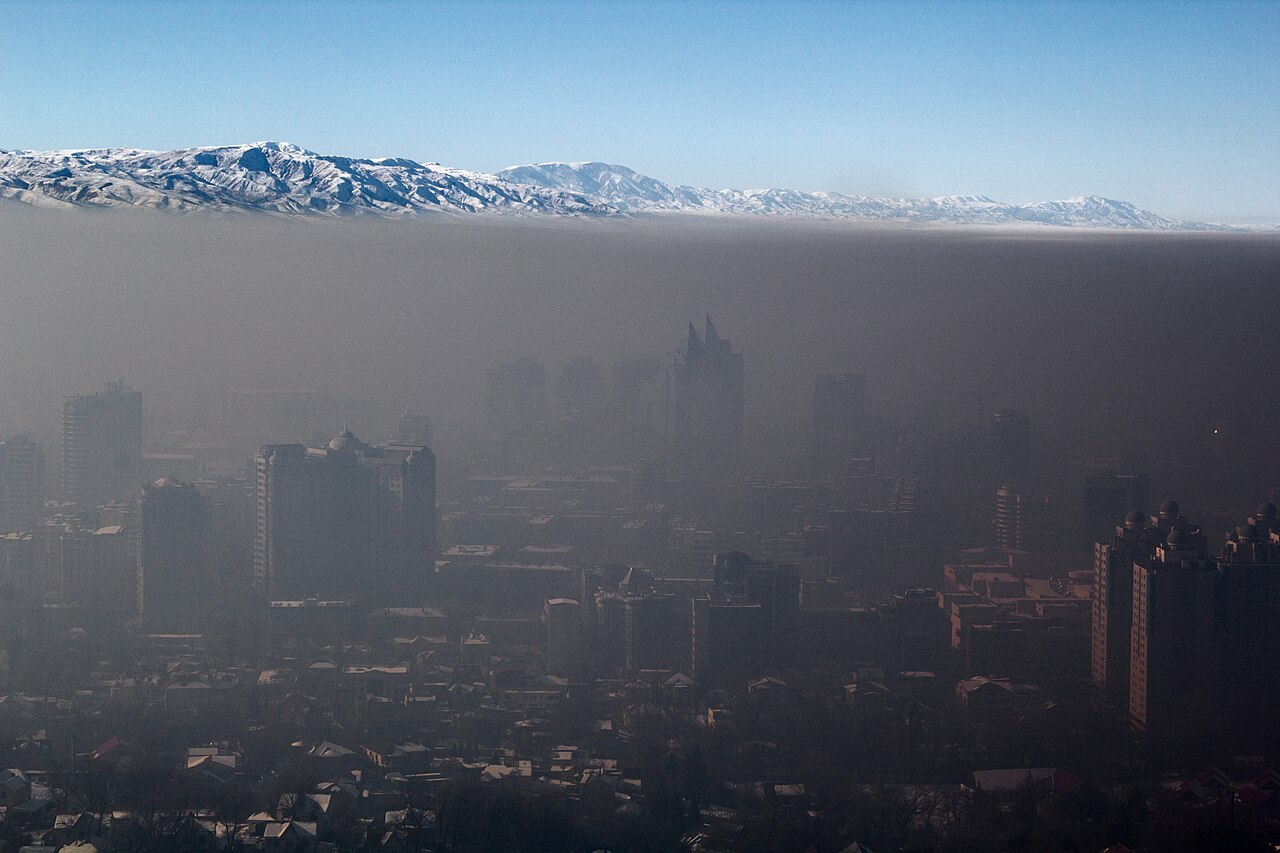
This is the one that surprises people. Almaty sits in a bowl against the mountains, and in winter a temperature inversion traps vehicle emissions and coal smoke over the city. On 8 January 2026 Almaty’s air quality index hit 174 — “unhealthy” — and it ranked the sixth most polluted major city in the world that morning. The city’s 2024 annual average PM2.5 was around 20 micrograms per cubic metre, roughly four times the WHO annual guideline. Peer-reviewed work has found that during the cold season nearly all daily samples exceed the 35 microgram daily limit, and that indoor exposure remains high too.
If you have asthma or another respiratory condition, this belongs in your planning. Practical mitigations: stay uphill — the south of the city, towards the mountains, is measurably cleaner than the north — pick shoulder-season or summer dates if you can, and on bad days go up to Medeu or Shymbulak, which sit above the inversion layer entirely. Our guide to when to visit Kazakhstan and the Almaty in winter page go into the seasonal picture.
Altitude
Altitude sickness is a genuine risk in the Kazakh mountains. Risk begins around 2,500 metres. Guidance is to spend a few days below 3,000 metres before going higher, avoid ascending from below 1,200 metres to above 3,500 in a single day, and above 3,000 metres not to increase sleeping elevation by more than 500 metres a day with a rest day every three or four. Symptoms of acute mountain sickness are headache, fatigue, loss of appetite, nausea and disturbed sleep — stop ascending. The severe forms need immediate descent and emergency treatment.
The Almaty-specific version of this: the Shymbulak gondola takes you from 800 metres in the city to 3,200 at Talgar Pass in about an hour. That is a fast gain. Most people feel nothing worse than mild breathlessness. Some get a headache. Do not go straight from the airport to the top station on your first morning.
Sun
UV at 3,000 metres is fierce, and it reflects off snow. Sunscreen, sunglasses and a hat, even in winter, even when it is cold.
Stray dogs, food and roads
Stray dogs are present in most Kazakh cities and are generally unthreatening, but avoid contact and keep children from petting them. Food hygiene in restaurants is broadly good; street food from a busy stall with high turnover is a better bet than a quiet one. And road safety deserves a mention — motor vehicle crashes are the leading cause of death among otherwise healthy travellers abroad, street lighting is poor in parts of the country, and driving at night on rural roads is the single riskiest thing most visitors do here. Our car hire guide covers this in more detail.
Frequently asked questions
Do I need travel insurance for Kazakhstan?
Not legally, for entry. Practically, yes — private treatment is billed to you and international medical evacuation from a remote region can cost tens of thousands of dollars. Kazakhstan’s electronic travel authorisation also asks for policy details in its health declaration.
Is travel insurance mandatory for a Kazakhstan visa?
It is not listed among the required documents on Kazakhstan’s e-government visa pages. Individual consulates occasionally ask for supporting documents beyond the published list, so if you are applying for a visa rather than entering visa-free, have a policy ready.
What should travel insurance for Kazakhstan cover?
A high medical limit, medical evacuation and repatriation, and — the two most commonly missed — an altitude limit above 3,200 metres if you plan to use the Shymbulak gondola or trek, and winter sports cover if you plan to ski. Also check that remote-area travel is not excluded.
Can you drink the tap water in Almaty?
It is treated and chlorinated to national standards and it is not dangerous, but the pipe network is old in places and many residents filter or buy bottled. Most visitors use bottled or a filter bottle and drink tap water without worry in modern buildings. Do not drink from mountain streams.
What vaccinations do I need for Kazakhstan?
None are legally required unless you are arriving from a yellow-fever risk country. Health authorities commonly recommend routine vaccines and tetanus, hepatitis A and typhoid for most travellers, and hepatitis B, rabies and tick-borne encephalitis depending on your plans. Speak to a travel clinic four to eight weeks before you go.
Do I need the tick-borne encephalitis vaccine?
It is worth discussing if you will be hiking, camping or spending time in forest and parkland in Almaty, East Kazakhstan, Akmola, Kostanai, Karaganda or North Kazakhstan between spring and autumn. It is a three-dose course, so it needs planning months ahead. Whether or not you vaccinate, use repellent and do daily tick checks.
What is the emergency number in Kazakhstan?
112 for all emergencies, 103 for an ambulance specifically, 102 for police and 101 for fire. Calls are free. Do not assume the operator speaks English.
Can you buy antibiotics over the counter in Kazakhstan?
Rules have tightened and you should not plan on it. Basic over-the-counter medicines are widely available and cheap. For anything prescription-only, you will need a local doctor’s prescription or your home prescription translated into Kazakh or Russian.
Can you get altitude sickness in Almaty?
Not in the city itself, which sits around 800 metres. You can above it: Big Almaty Lake is at 2,511 metres and the Shymbulak top station at roughly 3,200 metres, both reachable in a morning. Ascend gradually, drink water, and turn back if you get a headache that will not shift.
Is Almaty’s air pollution a problem for tourists?
In winter, it can be. Almaty regularly appears in global “most polluted city” rankings during January cold snaps. Most short-stay visitors will notice a haze and nothing more, but if you have asthma or a respiratory condition, plan for it — stay in the higher southern districts and head up to Medeu and Shymbulak, which sit above the inversion layer.
Final thoughts
Kazakhstan is a straightforward country to stay healthy in. The food is safe, the cities are clean, the pharmacies are excellent and the private clinics in Almaty and Astana handle routine problems perfectly well. The genuine risks are specific and manageable: ticks if you hike in spring, altitude if you go up fast, winter air if your lungs are sensitive, and distance if something goes wrong in Mangystau or the Altai.
Buy insurance with a real medical limit and evacuation cover. Read the altitude clause. Get a tetanus booster, ask a travel clinic about hepatitis A, typhoid and TBE, and pack repellent. Save 103 in your phone. Then stop worrying about it and go and look at the country.
Next reads: is Kazakhstan safe covers the non-medical side, what to pack includes the small medical kit worth bringing, and the hiking guide has the trail-by-trail detail if you are heading into the mountains.
This article provides general travel-health information only and is not a substitute for professional medical advice. Consult a travel clinic, pharmacist or your doctor about vaccinations, medication and any pre-existing condition before travelling.
Photo credits
Hiking trail toward Big Almaty Lake — Nessi Gileva, CC0, via Wikimedia Commons. Kazakh pharmacy signage — Uralsk Review, CC BY 3.0, via Wikimedia Commons. Winter smog over Almaty — Igors Jefimovs, CC BY 3.0, via Wikimedia Commons.