Contents
- What street food is like in Kazakhstan
- The Green Bazaar in Almaty — the best place to taste it all
- Savoury bazaar eats, one by one
- Korean, Uyghur and Dungan street foods
- Bread, sweets and snacks
- What to drink
- Where to find street food in Almaty and Astana
- Street food through the seasons
- How to order and eat safely
- Beyond the big markets
- Frequently asked questions
- Final thoughts
Some of my best meals in Kazakhstan cost less than a coffee back home and were eaten standing up. A samsa pulled straight from a tandyr, still too hot to hold. A skewer of charcoal-blackened lamb from a park grill. A paper cup of tart Korean carrot salad from a bazaar tub. If you only eat in restaurants here, you’re missing half the story — the tastier, cheaper, more chaotic half.
Kazakh street food is hearty, cheap and shaped by the Silk Road: tandyr-baked samsa and flatbread, charcoal shashlik, steamed manti, hand-pulled lagman, and a surprising layer of Korean, Uyghur and Dungan snacks. The best place to graze it all is a bazaar — above all Almaty’s Green Bazaar — where a filling meal costs a couple of dollars and everything is cash.

What street food is like in Kazakhstan
Street food here sits on top of the same nomadic, meat-and-milk base as the rest of Kazakh cuisine, but with extra layers piled on by history: Silk Road trade, the Soviet century, and the Uyghur, Dungan and Korean communities who made Kazakhstan home. The result is a street scene that runs from a tandyr kiosk selling samsa to a Korean stall selling spicy noodles to a park grill smoking with shashlik — often within a hundred metres of each other. Much of it draws on the same repertoire as the sit-down classics — the beshbarmak and traditional dishes — just faster, cheaper and eaten on your feet.
It happens at bazaars, at roadside tandyr and mangal (grill) stands, at transport hubs, and along pedestrian streets. It’s overwhelmingly cash-based, cheap, and generous with portions. And it’s one of the most enjoyable, low-stakes ways to understand the country: you learn a place through what it sells on a street corner.
The Green Bazaar in Almaty — the best place to taste it all
What and where it is
If you do one food thing in Almaty, make it the Green Bazaar (Zelyony Bazar). It’s the city’s most famous market, in the centre near the Rahat chocolate factory, right by the Zhibek Zholy metro station, and entry is free. It’s a working market, not a tourist trap — locals do their real shopping here — which is exactly what makes it such good eating. We’ve a dedicated Green Bazaar guide if you want the full tour. It’s been trading here since the 1970s under its big arched roof, with the open-air produce section rebuilt in recent years, but the feel is unchanged: a proper city market where the food is for locals first and travellers second. Reckon on rough hours of around 9am to 8pm, and go in the morning when everything is freshest and the canteens are firing up.

How to explore it
Move through it in zones. The meat and dairy hall is where you’ll find kazy and other horse sausages, kurt, kurdyuk (sheep-tail fat), and cups of kumis and shubat. Around it, Tajik-run stalls pile up dried apricots, raisins and walnuts; Dungan sellers measure out spices by the shot glass; and tubs of Korean salads glow orange and red. Upstairs and around the edges, small canteens fry and steam manti, lagman and plov. Come hungry and graze — a slice of kazy here, a scoop of morkovcha there, a hot samsa to finish.
Bargaining and etiquette
Prices soften the further you get from the main hall, and gentle bargaining is normal for dried fruit, nuts and non-fixed items (less so for a cooked samsa). Ask to taste before you buy the fruit and nuts — vendors expect it — and carry small notes, because nobody’s breaking a big bill for a 500-tenge snack.
A hungry walk through the bazaar
Here’s how I’d actually eat my way through the Green Bazaar. Start at a tandyr kiosk near the entrance and get a samsa to eat while you walk — it buys you time to look. Drift into the meat hall and ask for a few slices of kazy; the vendors are used to curious foreigners and will often let you taste. Grab a handful of kurt if you like salty, or skip it if you don’t (it’s an acquired thing). Then hit the Korean tubs: a scoop of morkovcha, maybe some funchoza, a pigodi bun if they’re steaming. Cross to the dried-fruit rows for apricots and walnuts, tasting as you go, and buy a mixed bag for the road. Finish upstairs or at an edge canteen with a bowl of lagman or a plate of manti and a pot of tea, sitting down at last among the traders on their lunch break. That loop — maybe an hour, a few thousand tenge — is one of the best-value food experiences in the country, and you’ll leave understanding Kazakhstan better than any restaurant could teach you.
Savoury bazaar eats, one by one
Samsa
The flagship. A parcel of dough stuffed with minced meat and onion (or pumpkin in autumn), slapped onto the inner wall of a tandyr clay oven and baked until blistered and golden. Note that word: baked, not fried — a lot of guides get this wrong. Eat it straight from the oven, when the crust crackles and the juices run. At a few hundred tenge, it’s the perfect walking snack, and the smell of a tandyr firing up is one of the great street signals in Kazakhstan. Fillings vary — classic lamb-and-onion, beef, chicken, cheese, and in autumn a sweet-savoury pumpkin (kabak) version that’s genuinely worth seeking out. The good stalls have a queue; join it.
Shashlik
Chunks of marinated lamb, beef or chicken threaded on skewers and grilled over charcoal on a mangal, served with raw onion, flatbread and sauce. It’s everywhere — parks, bazaars, roadside stands — and it’s reliably excellent. A skewer runs somewhere around 700–1,500 tenge; two or three with bread makes a proper meal. The marinade and the char are everything, so follow the smoke and the crowd; a busy grill turns its meat over fast and cooks it fresh.

Manti and lagman
Bazaar canteens do a roaring trade in manti — big steamed dumplings of spiced minced meat, sometimes pumpkin — and lagman, the Uyghur hand-pulled noodle dish topped with a meat-and-vegetable stir-fry, served dry or in broth. Either one with a pot of tea is a cheap, filling, deeply satisfying lunch, usually around 2,000–3,500 tenge. They’re the workhorses of everyday eating out, and every regular has an opinion on which canteen does them best. Lagman in particular repays hunting down a good Uyghur or Dungan spot, where the noodles are pulled to order.
Plov from the kazan
At markets and celebrations you’ll find plov ladled straight from a giant cast-iron kazan — rice cooked with meat, carrot and onion until every grain is glossy with fat. Bought by the plate from a bubbling cauldron, it’s cheap, generous and comforting. At weddings and big gatherings you’ll see plov cooked at an almost industrial scale, one cook wielding a shovel-sized spoon; the market version is the same dish, scaled down and served all day.
Kazy, kurt and quick bites
For grazing, buy a few slices of kazy (horse-meat sausage) from the meat hall, a handful of kurt (hard, salty dried-curd balls) as a savoury snack, and maybe a doner or shaurma wrap if you want something to eat on the move. This is the edible heart of the bazaar, and it’s how locals actually snack. If you want something more substantial in hand, doner and shaurma wraps — shaved meat, salad and sauce rolled in flatbread — are sold from countless small windows across every city, quick and filling for a few hundred tenge.
Korean, Uyghur and Dungan street foods
Why there’s Korean food here
One of Kazakhstan’s most distinctive food stories is Korean. In 1937 the Soviet authorities deported the Korean population of the Russian Far East — well over 170,000 people — to Central Asia, and the survivors, the Koryo-saram, built new lives here. Their cooking became part of the everyday landscape, and today Korean salads are a fixture of every bazaar. It’s a poignant history behind a delicious result.
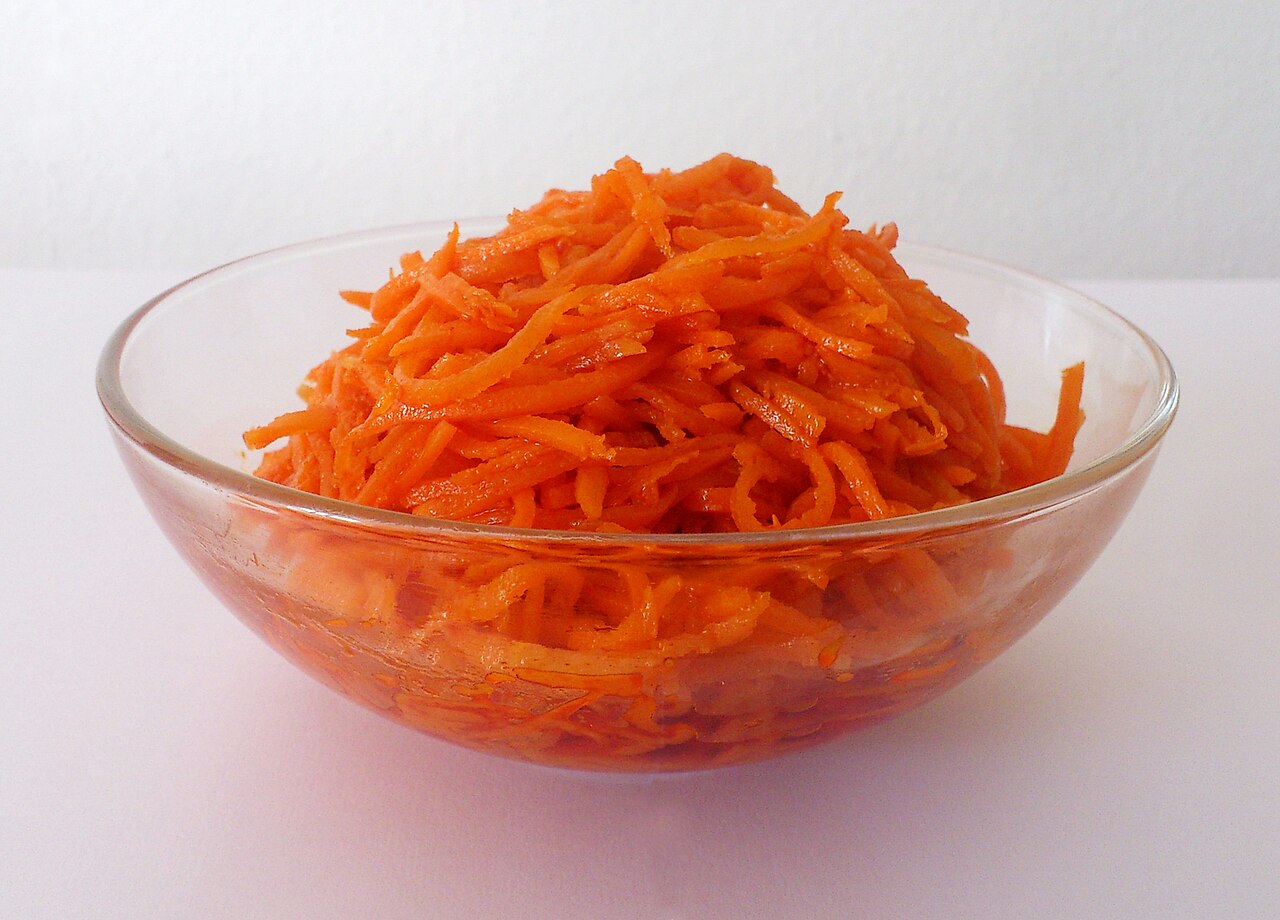
Morkovcha, funchoza and pigodi
The star is morkovcha — spicy julienned-carrot salad, invented by Koryo-saram cooks as a stand-in when Korean radish wasn’t available, and now eaten across the whole post-Soviet world. Alongside it look for funchoza (a cold glass-noodle salad), various pickled-vegetable salads, and pigodi (also called pyanse), steamed buns of dough stuffed with meat and cabbage. There’s also kuksi (kuksu), a cold buckwheat- or wheat-noodle soup that’s a summer favourite. Many of the salads are vegetable-based, which makes this corner of the bazaar a lifesaver for anyone avoiding meat.
The Uyghur and Dungan influence
Lagman, the pulled-noodle dish, is Uyghur in origin, and the Dungan (Hui Muslim) community brought their own spice-forward cooking, including the fiery cold noodle dish ashlyan-fu. When you eat noodles at a Kazakh bazaar, you’re usually eating this heritage. Look for the spice stalls too — the Dungan sellers with their jars of ground chilli and cumin are part of the same story.
Bread, sweets and snacks
Baursak and tandyr nan
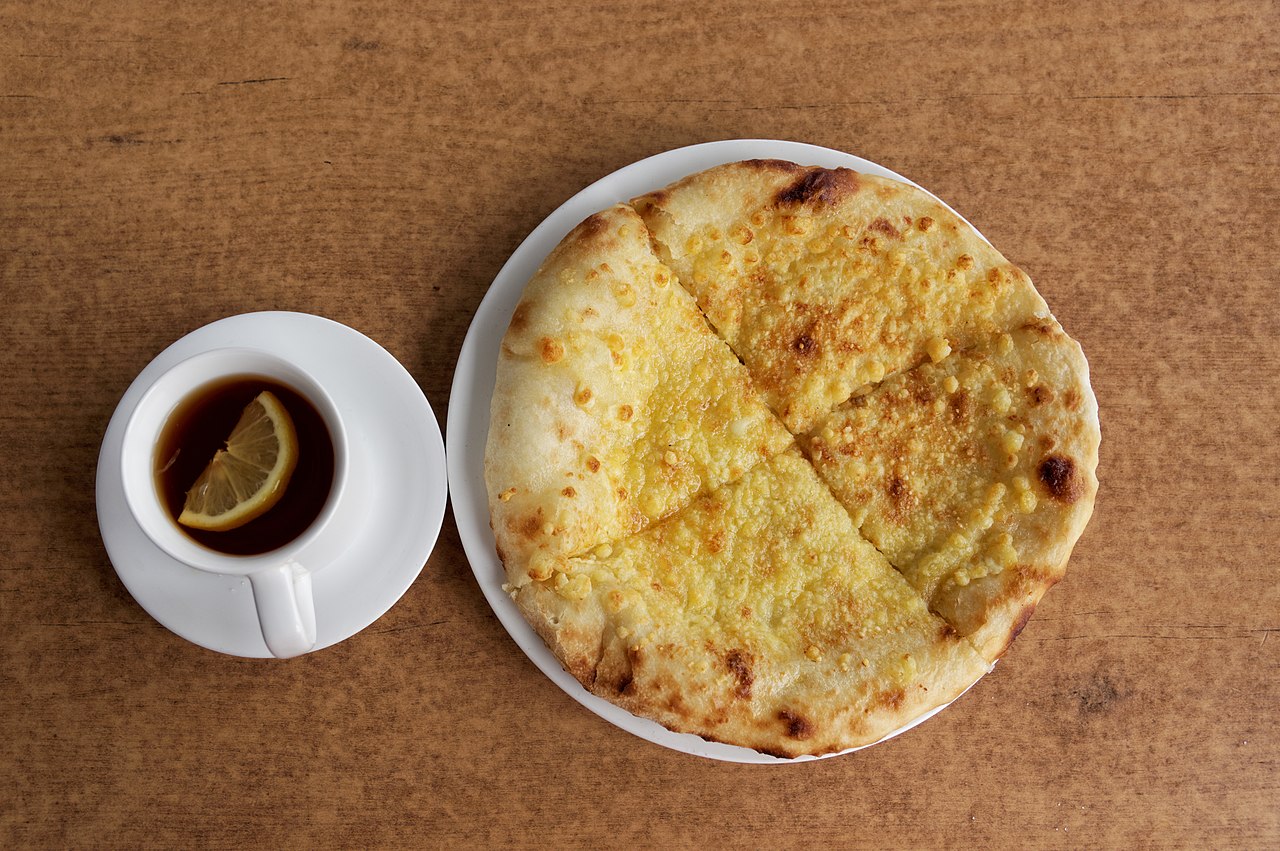
Two breads to know. Baursak are puffy squares of deep-fried dough, slightly sweet, sold in bags and eaten with tea. Tandyr nan (lepyoshka) is round flatbread baked on the wall of a tandyr, stamped in the centre and puffed at the rim — the everyday bread, and a warm one straight from the oven is a snack in itself.

Sweets, dried fruit and nuts
The sweet stalls are their own pleasure: chak-chak (fried dough bound in honey), churchkhela (nuts threaded on string and dipped in thickened grape or pomegranate juice), medovik honey cake, and mountains of dried apricots, raisins, walnuts and almonds. Buy a mixed bag of dried fruit and nuts for the road — it’s the perfect thing for a long drive or a train.

What to drink
Wash it down like a local. Bazaars and stalls sell kumis and shubat (fermented mare’s and camel’s milk — an acquired taste, covered in our Kazakh drinks guide), tart kvass from barrels in summer, kompot and mors (fruit drinks), and of course endless tea. On a hot day, a cold ayran or kvass is honestly the best-value refreshment going. And don’t skip the ice cream: Soviet-style plombir, rich and eggy, is sold from kiosks everywhere and beloved across Kazakhstan — a cheap, nostalgic treat that locals will happily argue about the best brand of.
Where to find street food in Almaty and Astana
Almaty
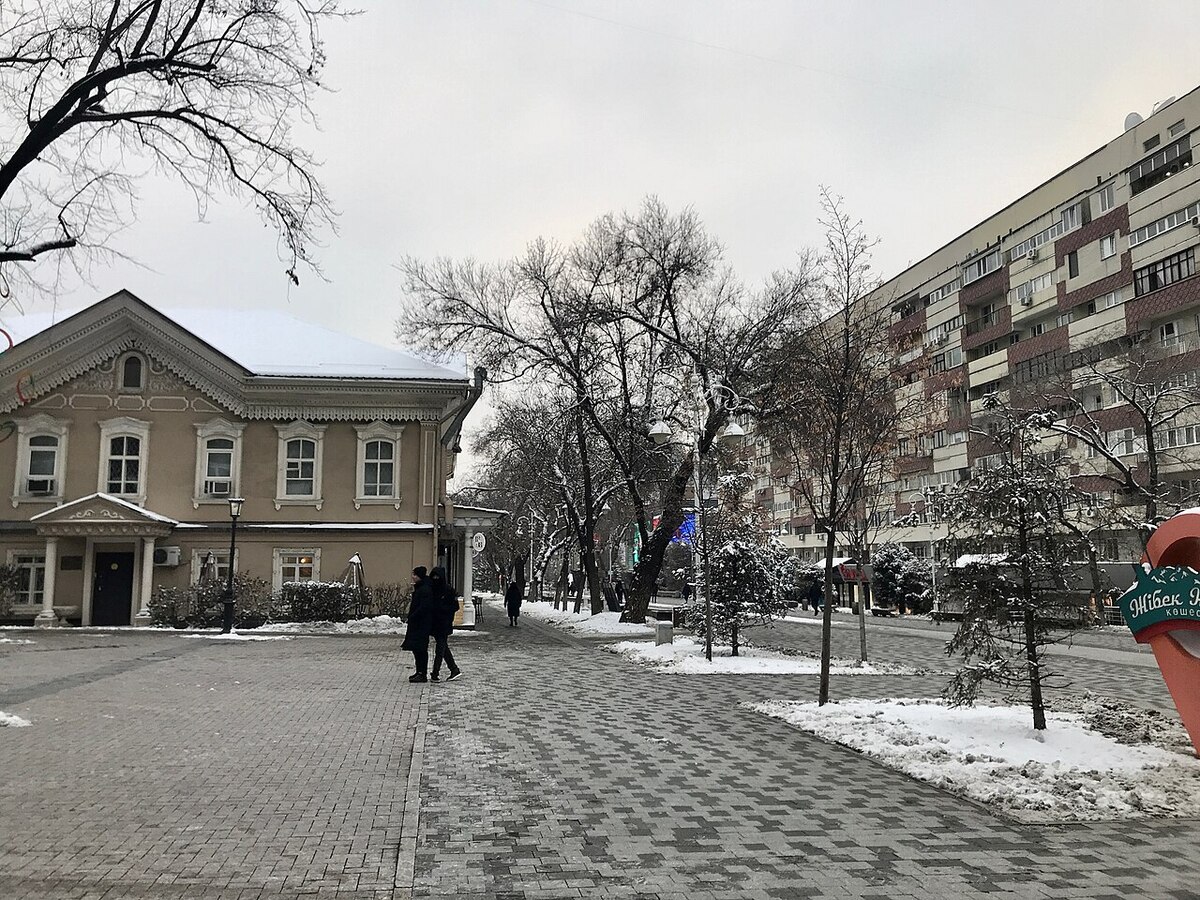
The Green Bazaar is the hub, but it’s not the only place. The Zhibek Zholy pedestrian street (Almaty’s “Arbat”) has snack stands and kiosks; samsa and shashlik kiosks dot the city; and the sprawling Barakholka market on the outskirts is street food at its most local. For getting between them, our guide to getting around Almaty helps. And when you want to graduate from a stall to a table, our roundup of the best restaurants in Almaty picks up where the street leaves off.
Astana
The capital’s street food centres on its bazaars and, in the warmer months, charcoal-shashlik stands and seasonal stalls, with a dining strip of restaurants along the Left Bank. It’s less street-foody than Almaty overall, but the bazaars deliver the same samsa, manti and Korean salads, and a summer evening by a Left Bank grill, skewer in hand and the futuristic skyline lit up behind you, is its own kind of Astana experience.
Street food through the seasons
What’s on the street shifts with the weather, so it helps to know what to expect when. In summer, the grills come out in force — shashlik in every park, cold kvass and ayran from barrels, ice cream on every corner, and the bazaars overflowing with fresh produce and cheap melons. Autumn is arguably the best eating season: the pumpkin samsa appears, the dried-fruit and nut stalls are at their fullest after the harvest, and the weather is perfect for wandering a market. Winter narrows things down — the outdoor grills thin out and you’ll lean more on tandyr kiosks, warm samsa, hot manti and lagman, and steaming tea to thaw out. If you’re timing a trip partly around food, autumn and late summer are the sweet spot; our guide to the best time to visit Kazakhstan has the full seasonal picture.
How to order and eat safely
Street food here is generally safe if you use the usual traveller sense: choose busy stalls with high turnover, eat things freshly cooked and hot (a samsa or skewer straight off the heat is a safe bet), be a little more careful with salads and dairy in the heat, and drink bottled or filtered water. Carry small cash. Halal is the norm for most meat, often marked “халал.” And no, it isn’t spicy by default — the heat lives mostly in the Korean and Dungan dishes, so ask if you’re sensitive. Tip only at sit-down places, not stalls. Language needn’t be a barrier: pointing works, numbers on a calculator or phone settle the price, and a smile goes a long way. Most vendors are patient with foreigners, and learning even a couple of words — rakhmet (thank you), qansha? (how much?) — earns real warmth. Keep a mix of small notes and coins; change for a large bill can be a genuine hassle at a busy stall.
Beyond the big markets
Street food isn’t only a bazaar thing. Some of the most reliable eating in Kazakhstan happens at the humble stolovaya (canteen) — cafeteria-style spots where you slide a tray past trays of salads, soups, plov, cutlets and manti and pay by weight or by plate for next to nothing. They’re not glamorous, but they’re cheap, fast, and a brilliant way to try a lot of different things without committing to a full portion of any. You’ll also find samsa and shashlik at highway stops on any long drive, which turns a road trip into a rolling food tour. Wherever you are, the rule holds: busy, freshly cooked and hot is the winning combination, and the best meals are often the ones with no menu and no English — just a pointing finger and a plate.
Frequently asked questions
What are the must-try street foods in Kazakhstan?
Samsa (tandyr-baked meat pastry) first, then shashlik (charcoal skewers), manti (steamed dumplings) and lagman (pulled noodles). Add the Korean salads like morkovcha, some kazy and kurt from the bazaar meat hall, and baursak with tea. That covers the meat, noodle, dairy and Korean layers of the street scene.
Where can I find the best street food in Almaty?
The Green Bazaar (Zelyony Bazar) in the city centre, by Zhibek Zholy metro, is the top spot — meat, dairy, dried fruit, Korean salads and canteens all in one place. Beyond it, the Zhibek Zholy pedestrian street and samsa/shashlik kiosks around the city are reliable, and Barakholka market is street food at its most local.
Is street food in Kazakhstan safe to eat?
Generally yes. Choose busy stalls with high turnover, eat freshly cooked hot items, go easy on salads and dairy in hot weather, and stick to bottled or filtered water. Freshly baked samsa and grilled shashlik are safe bets, and Kazakhstan’s markets are generally clean and well-run by regional standards. Standard traveller caution is all you need.
How much does street food cost in Kazakhstan?
Cheap. A samsa is a few hundred tenge, a shashlik skewer roughly 700–1,500, and a plate of manti or lagman with tea around 2,000–3,500. You can eat very well for a few dollars. Bring small cash, since stalls and bazaars rarely take cards.
Is Kazakh street food spicy?
Traditional Kazakh street food is savoury, not spicy. The heat comes from the Korean salads (morkovcha and friends) and Dungan dishes like ashlyan-fu. If you’re spice-sensitive, ask before you order those; the samsa, manti and shashlik are mild.
Can I find vegetarian street food in Kazakhstan?
It takes effort but it’s possible. Korean vegetable salads (morkovcha, funchoza), pumpkin samsa in autumn, fresh bread, dried fruit and nuts, and some Uyghur/Dungan vegetable dishes are your friends. Be aware that many savoury items contain meat or are cooked in meat fat, so ask.
Final thoughts
The street and the bazaar are where Kazakhstan feeds itself, and where a curious traveller eats best. Skip a sit-down lunch now and then, wander into the Green Bazaar with a pocket of small notes, and just graze — a hot samsa, a slice of kazy, a scoop of spicy carrot, a bag of apricots for later. It’s cheap, it’s delicious, and it hands you the country’s whole tangled history — nomadic, Silk Road, Soviet, Korean, Uyghur — one bite at a time. Pair it with an understanding of Kazakh food culture and you’ll eat better than most visitors ever do. Come hungry and follow your nose.
Photo credits
- Samsa — Fumikas Sagisavas, CC0, via Wikimedia Commons
- Green Bazaar meat hall — sly06, CC BY 2.0, via Wikimedia Commons
- Shashlik — www.Pixel.la Free Stock Photos, CC0, via Wikimedia Commons
- Korean carrot salad (morkovcha) — Off-shell, CC BY-SA 4.0, via Wikimedia Commons
- Baursak — Vidor, public domain, via Wikimedia Commons
- Dried fruit and nuts — neiljs, CC BY 2.0, via Wikimedia Commons
- Zhibek Zholy pedestrian street — ShadZ01, CC BY 4.0, via Wikimedia Commons