Contents
- Kazakhstan visa for UK citizens at a glance
- Do UK citizens need a visa for Kazakhstan?
- How long can you stay? The 30, 90 and 180 rules
- Passport requirements — and the six-month myth
- Registration: who does it and when
- The QazETA app and travel authorisation
- Staying longer than 30 days, working or studying
- FCDO advice and the laws that catch tourists out
- Your practical arrival checklist
- Getting to Kazakhstan from the UK
- When should Britons visit?
- What to do with your 30 days
- Money and everyday costs
- Frequently asked questions
- Final thoughts
British travellers have discovered Kazakhstan in a big way over the last few years, and the entry rules are one of the reasons it is such an easy sell: no visa, no fee, no forms for a normal holiday. Yet the search results are full of visa-agent pages trying to sell Britons paperwork they simply do not need, alongside a stubborn myth about passport validity that even airline staff repeat. Let me clear all of it up.
UK citizens do not need a visa for Kazakhstan for stays of up to 30 days. Holders of a full British citizen passport can enter visa-free for tourism or business — no application, no fee, no invitation. A Kazakhstan visa for UK citizens is only required for stays longer than 30 days or for work, study, or residence. The one limit to watch is a cap of 90 days in any 180-day period.

Kazakhstan visa for UK citizens at a glance
| Question | The short answer (2026) |
|---|---|
| Do Britons need a visa? | No, for stays up to 30 days (tourism or business) |
| Who this covers | Full “British citizen” passport holders |
| Maximum visa-free stay | 30 days per entry; 90 days in any 180-day period |
| Cost | Free — no application or fee for visa-free entry |
| Passport validity needed | Valid at least 30 days from arrival, with one blank page |
| Registration | Logged on air arrival; hotels handle any notification |
| QazETA travel authorisation | Optional during the pilot; not required by gov.uk |
| Longer than 30 days | Requires a visa or work permit |
| FCDO advice | Does not advise against travel to Kazakhstan |
Do UK citizens need a visa for Kazakhstan?
No. If you hold a full British citizen passport and you are visiting for up to 30 days, you enter Kazakhstan visa-free. The FCDO’s own travel advice confirms it, as does Kazakhstan’s migration service: British passport holders can visit without a visa for up to 30 days for business or tourism. You arrive, your passport is stamped, and you are in.
This has been the arrangement since around 2017, when Kazakhstan opened up visa-free access to citizens of the UK and a growing list of other countries. It covers the things almost everyone comes for — sightseeing, hiking, business meetings, visiting friends and family. It does not cover paid work or study, which need the appropriate visa.
It is worth appreciating how recent and how deliberate this openness is. Kazakhstan chose to waive visas for British and dozens of other nationalities to grow tourism and business ties, and rather than pulling back, it has steadily lengthened the list. For a British visitor that translates into a rare thing in long-haul travel: a major, fascinating country you can decide to visit on relatively short notice without a consulate appointment or a courier envelope of documents.
A note on which UK passport you hold
The visa-free rule, as the FCDO frames it, is for full “British citizen” passports. If you hold another type of British nationality — British National (Overseas), British Overseas Territories Citizen, and so on — you should confirm your position with the Kazakh embassy before travelling, because the rules can differ. For the great majority of readers with a standard maroon British citizen passport, none of that applies.
How long can you stay? The 30, 90 and 180 rules
Three numbers govern your time, and only the first matters for a normal holiday.
30 days per visit
Each visa-free entry allows up to 30 days, counted from your entry stamp. That is a generous window for Kazakhstan — enough to combine the mountains around Almaty, the capital Astana, and a western foray into the Mangystau deserts without rushing. Very few visitors use anything close to the full 30 days on a first trip, so the limit rarely feels like a constraint; it is there for people spending an extended spell in the country.
90 days in any 180
You can make unlimited visits, but you may not spend more than 90 days without a visa in any rolling 180-day period. Officers count back 180 days and total up the time you have already spent. For one or two trips a year this never comes into play; it only concerns frequent visitors.
The 120-day annual cap
There is a third, less-publicised limit that appears in Kazakhstan’s own migration rules: on top of 90-in-180, your total stay should not exceed 120 days within a single calendar year. Almost no travel page mentions it, but if you are planning to spend big chunks of the year in Kazakhstan, factor it in and read our wider Kazakhstan visa guide before committing to back-to-back trips.
Passport requirements — and the six-month myth
Here is the correction that saves the most needless passport renewals: Kazakhstan does not require six months of validity for visa-free British visitors. The FCDO states the actual requirement plainly — for visa-free entry your passport must be valid for at least 30 days from the date you arrive, with at least one blank page. The “six months” figure that gets pasted onto blogs and quoted at check-in desks is simply not Kazakhstan’s rule for visa-free tourists.
The six-month, two-blank-page standard does apply in a different case — if you are travelling on a visa rather than visa-free, your passport should be valid at least three months beyond the visa’s expiry. And I still travel with a healthy buffer, because airlines sometimes impose their own stricter policies and a nearly-expired passport is worth renewing anyway. But you do not need to rush to the Passport Office because you have “only” four months left before a Kazakhstan trip.
Registration: who does it and when
The registration question causes more worry than it deserves, largely because the rules changed and old advice lingers.
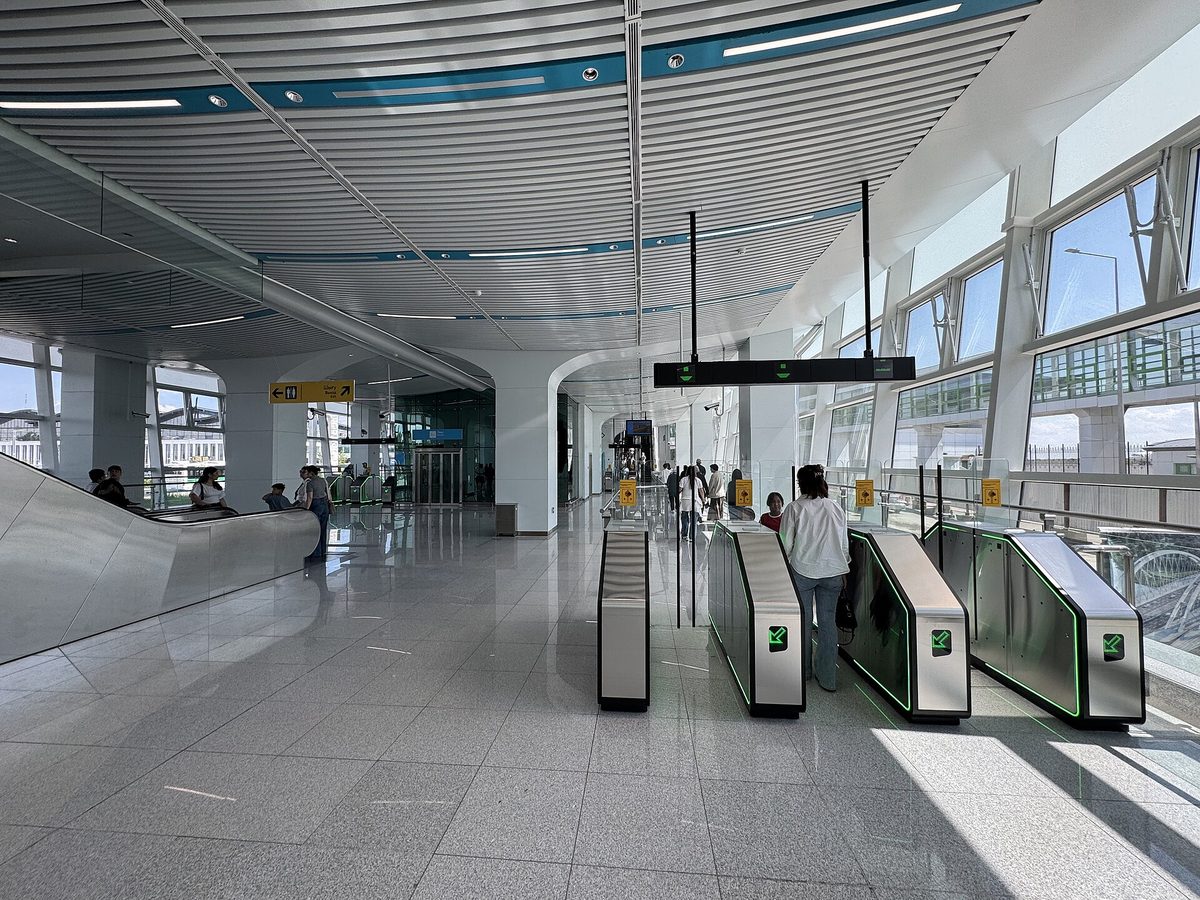
Arriving by air
When you land at a major airport, your entry is recorded automatically at passport control. Kazakhstan scrapped the old paper migration cards years ago; the stamp in your passport is the record, and there is nothing else to do at the airport.
The 2025 easing and the host’s duty
Kazakhstan eased its rules in 2025 so that stays of up to 30 days effectively require no separate registration — which happens to cover the entire British visa-free window. The underlying obligation, where it applies, falls on your host: a hotel, landlord, or person putting you up must notify the migration service within three working days, and hotels do this automatically when they scan your passport at check-in. In practice, a British visitor on a hotel-based trip does nothing. The only time to pay attention is a longer stay in private or rural accommodation, where you should make sure your host files the notification.
The wider rules sit in our guide to Kazakhstan’s entry requirements, and the 90/180 rule explains the cap on repeat visits within a year.
The QazETA app and travel authorisation
You may have seen mention of a Kazakhstan “ETA” and wondered whether Britons now need an electronic travel authorisation to visit. As of 2026 the answer is reassuring: no, not for a standard visa-free trip. Kazakhstan launched the QazETA system and it is being rolled out gradually, but during the pilot it is recommended rather than mandatory for visa-free travellers, it is free, and it is applied for shortly before departure. Crucially, the FCDO does not currently list an ETA as a requirement for UK visitors. It is a “watch this space” item — worth a quick check before you fly in case the pilot becomes compulsory — not something to arrange today.
Staying longer than 30 days, working or studying
If your plans run past 30 days, or into work, study, or residence, you need a visa. British nationals have two main routes.
E-visa or consular visa
Kazakhstan’s e-visa covers tourist, business, and medical categories, but it requires an invitation from a registered host in Kazakhstan and is only valid for entry through the Almaty and Astana international airports — it does not work at land borders. For land entry, multiple entries, or categories the e-visa does not cover, you apply for a consular visa at the Kazakh embassy. Single-entry consular fees are around US$80, with multiple-entry visas around US$200, and applicants aged 17 and over give fingerprints as part of the process. You apply through Kazakhstan’s Visa and Migration Portal or the embassy.
Work and residence
Employment and residence require the correct visa category plus sponsorship and registration. Overstaying or working on the wrong visa brings fines and exit problems, so if you are moving beyond tourism, get the category right before you travel rather than trying to fix it in-country.
Our guide to the Kazakhstan e-visa covers how that route works and where its limits bite.
FCDO advice and the laws that catch tourists out
As of 2026 the FCDO does not advise against travel to Kazakhstan, and the country is a calm, straightforward place to visit. Our fuller assessment of whether Kazakhstan is safe goes into detail, but a few specifics are worth knowing before you go.
Restricted areas and borders
Some places need prior permission — notably the town of Baikonur (the cosmodrome), and a handful of villages and districts near sensitive sites such as Gvardeyskiy and parts of the Kyzylorda region. You will not blunder into these on a normal itinerary. Border crossings can also close at short notice, so if you are travelling overland between Kazakhstan and its neighbours, keep some flexibility.
Dual nationality
Kazakhstan does not recognise dual nationality. A British-Kazakh dual national can face a fine and loss of Kazakh citizenship, so if that describes you, travel on one status and read the FCDO guidance carefully first.
Local laws to respect
Two catch tourists out. Vaping is heavily restricted — the sale and import of e-cigarettes is illegal and carries real penalties, so leave your vape at home rather than risk it at customs. And a law passed at the end of 2025 restricts the “promotion” of non-traditional sexual relationships, with fines, detention, or deportation as possible penalties; LGBT+ travellers should be aware of the changed legal climate. On the road, you will need a 1968-Convention international driving permit alongside your UK licence if you intend to drive.
Your practical arrival checklist
A quick run through the things worth sorting for a smooth entry. Carry a passport valid at least 30 days beyond arrival with a blank page. Have a card that works abroad plus a little cash — remember you must declare currency above the equivalent of US$10,000, and you cannot export more than that in cash. No vaccinations are required unless you are arriving from a yellow-fever country. If you want a local SIM, bring your passport to buy one, but note Kazakhstan registers phones by IMEI and can block an unregistered handset after about a month, so an eSIM or roaming is simpler for a short trip. That is genuinely the extent of the admin.
One thing worth arranging that is not a border requirement: travel insurance with good medical cover. There is no reciprocal healthcare agreement between the UK and Kazakhstan, so a GHIC or EHIC is no use here, and while private clinics in Almaty and Astana are decent, serious cases can mean an expensive repatriation. A standard travel policy that covers your activities — trekking and altitude if you plan to hike the Tian Shan — is money well spent, and the FCDO recommends it as a matter of course.
Getting to Kazakhstan from the UK

Kazakhstan is a genuine long-haul trip from Britain, but a well-connected one. Air Astana operates the flagship link between London and Kazakhstan, flying to both Almaty and Astana, and there are frequent one-stop routings through hubs such as Istanbul, Frankfurt, and the Gulf with Turkish Airlines, Lufthansa, and the Gulf carriers. Flying time is roughly seven to eight hours nonstop, or longer with a connection; schedules change seasonally, so it pays to compare a direct fare against a one-stop, which is sometimes cheaper. Almaty in the southeast puts you next to the mountains and lakes; Astana lands you in the showpiece capital. Many British itineraries fly into one and out of the other to avoid backtracking. Once you are in the country, our guide to getting around Kazakhstan covers the trains, domestic flights, and shared taxis.
When should Britons visit?
Timing makes a big difference in a country with such an extreme continental climate. The two sweet spots are late spring — May, when the steppe is green and the wild tulips bloom — and early autumn, especially September, when the weather is stable and mild and the mountains are at their most photogenic. Summer is hot in the cities but the peak season for the high mountain lakes, while winter is bitterly cold and best reserved for skiing at Shymbulak above Almaty. If your dates are flexible, our guide to the best time to visit Kazakhstan breaks it down season by season so you can match your trip to what you most want to see.
What to do with your 30 days
A month is more than enough for a superb first trip. Most people base themselves in Almaty for the Tian Shan — Big Almaty Lake, the Kolsai and Kaindy lakes, and a day trip to Charyn Canyon — then add Astana for the architecture and, budget permitting, fly west to the surreal deserts of Mangystau. For structure, our Kazakhstan itinerary and the broader list of things to do in Kazakhstan are the place to start, and the trip cost guide keeps the budget honest.
Money and everyday costs
Kazakhstan is inexpensive by British standards and refreshingly cashless in the cities. The currency is the tenge, and Visa and Mastercard are accepted almost everywhere in Almaty and Astana, with ATMs on most corners. The local Kaspi super-app that residents pay with is tied to a Kazakh bank account, so as a visitor you will lean on your cards plus a modest amount of tenge in small notes for bazaars, rural taxis, and park entry fees. A meal out, a taxi across town, or a museum ticket all cost a fraction of the UK equivalent, and our Kazakhstan trip cost guide has the day-to-day numbers. Tell your bank you are travelling so a Central Asian transaction does not trip a fraud block.
Frequently asked questions
Do UK citizens need a visa for Kazakhstan in 2026?
No. Full British citizen passport holders can enter Kazakhstan visa-free for up to 30 days for tourism or business, with no application or fee. A visa is only needed for stays longer than 30 days or for work, study, or residence. Other types of British nationality should check separately with the Kazakh embassy.
How long can British citizens stay in Kazakhstan without a visa?
Up to 30 days per entry, capped at 90 days within any 180-day period, plus an annual limit of 120 days per calendar year. The 30-day figure covers virtually every holiday; the longer caps only matter to frequent or long-stay visitors.
How many months must my passport be valid to enter Kazakhstan?
For visa-free entry, your passport only needs to be valid for at least 30 days from your arrival date, with one blank page — not the six months many sites wrongly claim. The six-month-style rule relates to travelling on a visa. Carrying extra validity is still wise because airlines may apply stricter policies.
Do I need to register with the migration service in Kazakhstan?
Not personally, for a normal trip. Air arrivals are logged at passport control, and hotels file any required notification automatically. Since 2025, stays of up to 30 days need no separate registration, covering the whole visa-free window. Only long stays in private accommodation require your host to submit the notification.
Does the UK need a QazETA or ETA for Kazakhstan?
Not currently. Kazakhstan’s QazETA travel-authorisation system is being introduced gradually, but during the pilot it is recommended rather than required for visa-free travellers and the FCDO does not list it as mandatory. Check shortly before you fly in case the pilot becomes compulsory, but as of 2026 there is nothing you must arrange.
Is Kazakhstan safe to travel to right now?
The FCDO does not advise against travel to Kazakhstan as of 2026, and Almaty and Astana are calm, modern cities. Ordinary precautions against petty theft and care with the busy traffic cover most of it. Avoid restricted border and military zones, steer clear of any demonstrations, and be aware of local laws on vaping and the 2025 restrictions affecting LGBT+ visitors.
How much does a Kazakhstan visa cost for UK citizens?
Nothing for a standard trip, because visa-free entry is free — there is no application or fee for stays up to 30 days. If you need a visa for a longer or non-tourist stay, a single-entry consular visa is around US$80 and a multiple-entry visa around US$200, while the tourist e-visa is inexpensive but requires an invitation from a licensed Kazakh host.
Can I work or study in Kazakhstan on visa-free entry?
No. Visa-free entry covers tourism and short business such as meetings and conferences, but not employment or study, which require the appropriate visa and, for work, a permit. If you intend to work or enrol in a course, arrange the correct category before you travel rather than trying to convert a tourist entry once you are there.
Final thoughts
For British travellers, Kazakhstan is about as low-friction as a long-haul trip gets: no visa, no fee, no forms for up to 30 days. Ignore the agents selling paperwork you do not need, don’t panic-renew a passport with a few months left on it, and remember that an e-visa is only for longer or non-tourist stays and only works at the two big airports. Keep an eye on the QazETA pilot, respect the local laws on vaping and the 2025 legal changes, and confirm the current FCDO position shortly before you fly. Then the only hard decision left is how to spend the month.
Photo credits
Almaty skyline and mountains: Dauren Nabijan (CC0) via Wikimedia Commons. Astana airport arrivals: Kristianmusic (CC0) via Wikimedia Commons. Bayterek Tower, Astana: User:Zenwort (CC BY-SA 4.0) via Wikimedia Commons.


