Contents
- How hard is it, really?
- Why Kazakh food is so meat-centric
- The hidden-meat traps
- Traditional and bazaar options that can be meat-free
- The cuisines that will save you
- A sample vegetarian day
- Vegan versus vegetarian — the dairy problem
- Vegetarian and vegan restaurants in Almaty
- Vegetarian and vegan options in Astana
- Self-catering and shopping the bazaars
- Useful Russian and Kazakh phrases
- Tips for tours, homestays and long journeys
- What to drink
- Frequently asked questions
- Final thoughts
Let me be straight with you: Kazakhstan is not an easy country to be vegetarian in, and it’s harder still to be vegan. This is a proudly meat-and-dairy culture built on centuries of herding, and “I don’t eat meat” can genuinely puzzle people. But — and this is the important bit — it’s entirely doable, especially in the cities, once you know the traps and the workarounds. I’ve travelled here with vegetarian friends and watched them eat very well. Here’s how.
Being vegetarian in Kazakhstan is challenging but manageable, easiest in Almaty and Astana and tougher on the steppe. The keys are watching for hidden meat broth and fat, leaning on Georgian, Korean, Uyghur, Indian and Middle Eastern food, shopping the bazaars, and learning a couple of phrases. Vegans face a bigger hurdle because dairy is everywhere — but there are real options.

How hard is it, really?
Three different difficulty levels
First, calibrate your expectations, because “vegetarian” covers very different challenges here. If you eat dairy and eggs and just avoid meat, you’ll manage fine in cities with a bit of effort. If you’re vegan, it’s markedly harder — dairy hides in almost everything, from the butter on your dumplings to the sour cream on your soup. And if you’re the kind of vegetarian who’s relaxed about broth and stock, you’ll have an easier time than a strict one, because meat stock is the single most common hidden ingredient. Know which of these you are before you order.
Cities versus the steppe
Geography matters as much as diet. Almaty is by far the easiest place — it’s cosmopolitan, has actual vegetarian and vegan cafes, and offers a world of Georgian, Indian and Korean food. Astana, the capital, is next best. Once you’re out in small towns, on the steppe, or staying in a village guesthouse, choices narrow fast, and you’ll rely more on bread, dairy, eggs, produce and whatever you’ve packed. Plan your hardest days for where the options are thinnest. One reliable cushion wherever you are: hotel breakfasts, which usually include eggs, porridge, bread, cheese, yogurt, fruit and salads, so you can start every day well-fed regardless of what dinner throws at you. Eat a big breakfast and you buy yourself flexibility for the rest of the day.
Why Kazakh food is so meat-centric
It helps to understand what you’re up against. Kazakh cuisine grew out of a nomadic life where survival meant livestock — horses, sheep, cattle, camels — and where meat and milk were simply what there was. There’s even a wry local saying that the only creatures eating more meat than Kazakhs are wolves. Vegetables were historically a minor part of the diet, and the idea of choosing to skip meat is, to some, genuinely novel. None of this is hostility; it’s just a food culture where the classic dishes are almost all built around animals. Once you accept that and work around it, you’ll do fine. It’s worth reading our overview of Kazakh food and drink and the bazaar and street food guide alongside this one, so you know both what to avoid and what to grab.
The hidden-meat traps
Broth, stock and fat — the invisible meat
This is the big one. A dish can look vegetarian and still be cooked in meat broth or animal fat — soups, rice, even some vegetable dishes. The vegetables in a plov may have simmered in the same fatty pot as the lamb. This is where strict vegetarians get caught, so it’s worth asking specifically, not just “is there meat in this?” but “is it cooked with meat broth or fat?”
“We’ll just pick the meat out”
A well-meaning cook may offer to remove the visible meat from a dish — and to them, that solves it. But the broth, fat and flavour remain, so a “meat-picked-out” plov or soup isn’t vegetarian in the way most Westerners mean. Be gently clear that you need it cooked without meat from the start, not de-meated after. It’s not that anyone’s trying to trick you — it’s a genuine difference in how the diet is understood. In a culture where a little meat in everything is simply how food is made, “vegetarian” can be read as “not much meat” rather than “no meat at all,” so specificity is kindness on both sides.
Dishes that are almost always meat
Assume the headline Kazakh dishes are off the table unless told otherwise: beshbarmak, plov, manti, samsa, kuyrdak and shashlik are all meat by default. There are occasional exceptions — pumpkin samsa in autumn, potato or pumpkin manti — but treat them as the exception to confirm, not the rule to assume. And obviously, everything in our horse-meat guide is one to skip.
Traditional and bazaar options that can be meat-free
Pumpkin and potato fillings
Autumn is your friend. When pumpkin (kabak) is in season, you’ll find pumpkin samsa and pumpkin manti, and some places do potato or cheese versions year-round. Always confirm there’s no meat or animal fat mixed in, but these are genuine traditional options that happen to be meat-free.
Bread, dairy and produce
The staples save you. Fresh tandyr nan and lepyoshka flatbread, cheese, eggs, kaymak (clotted cream) and a huge range of fresh and dried produce are everywhere. A meal of warm bread, cheese, tomatoes and tea is simple, cheap and completely satisfying, and it’s available almost anywhere.

Korean bazaar salads
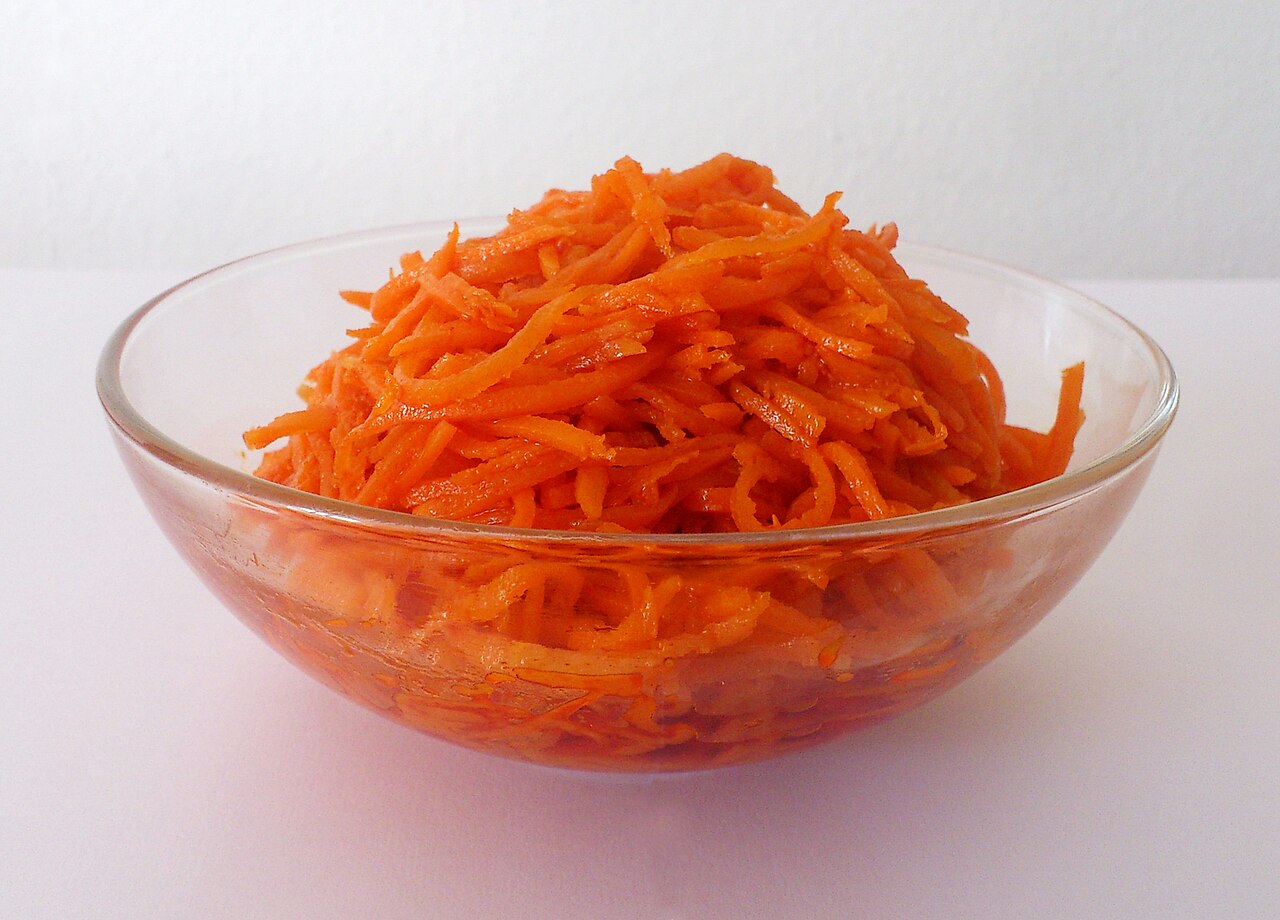
Kazakhstan’s Korean-Kazakh (Koryo-saram) salads are a quiet vegetarian lifeline. Morkovcha (spicy carrot salad), funchoza (glass-noodle salad) and various pickled-vegetable salads are sold at every bazaar and are frequently plant-based — though some contain fish sauce or bits of meat, so ask. Piled onto bread with some cheese, they make a proper lunch. Because they’re sold everywhere — even in small-town markets — they’re one of the few genuinely reliable meat-free options you can count on outside the big cities, so it’s worth getting to know which ones you like.
The cuisines that will save you
Georgian — the vegetarian’s best friend
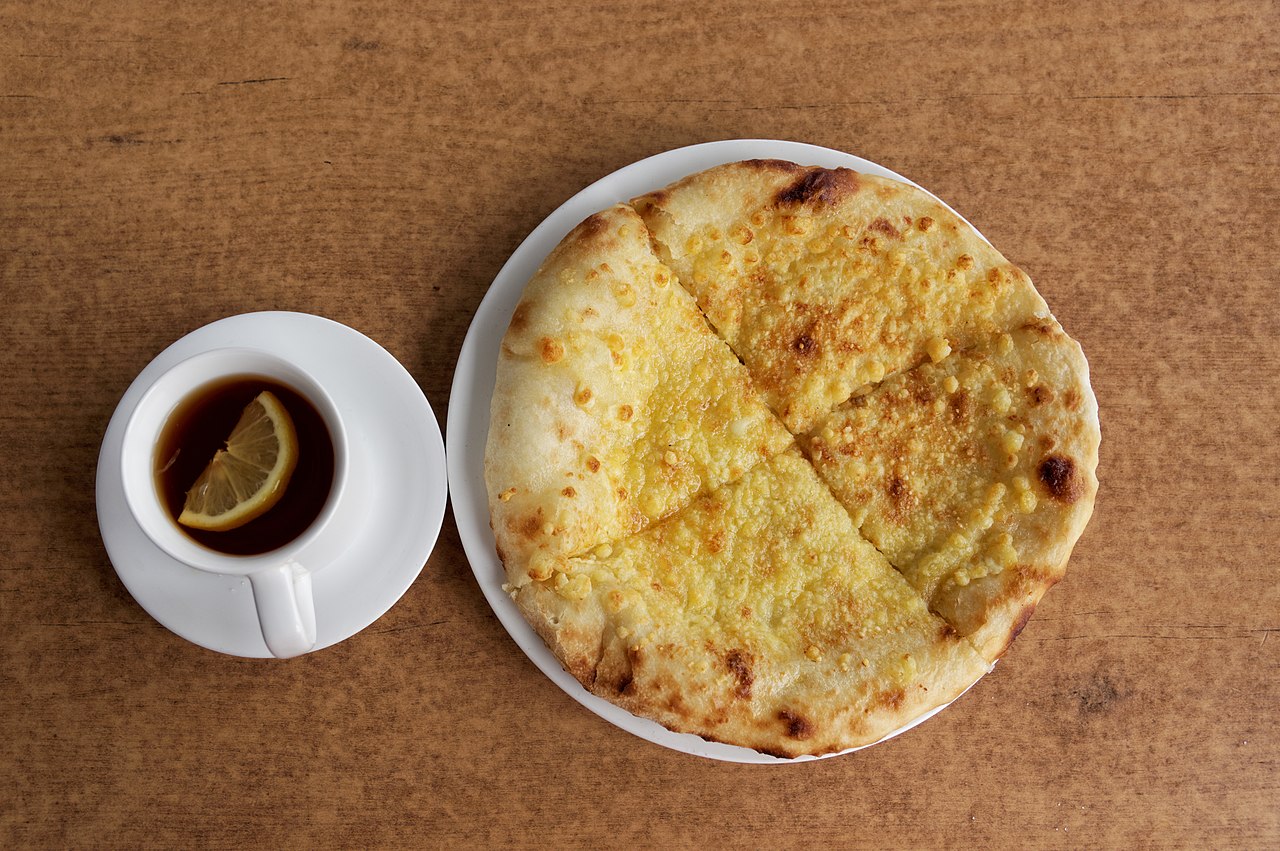
If you remember one tip, make it this: find Georgian restaurants. Georgian food is a joy for vegetarians — lobio (stewed spiced beans), badrijani (fried eggplant rolls with walnut), pkhali (vegetable-and-walnut pâtés), fresh salads, and of course khachapuri, the glorious cheese-filled bread. Georgian restaurants are common in Almaty and Astana, and they’ll reliably give a vegetarian a feast rather than a sad side plate. Order a spread — lobio in a clay pot, a plate of badrijani, a fresh tomato-and-cucumber salad, khachapuri to share — and you’ll wonder why you worried. It’s genuinely some of the best vegetarian eating in the region, and it’s on your doorstep in any Kazakh city of size.
Indian — the most reliable vegan option
Indian restaurants are the surest bet for vegans, with dal, chana, vegetable curries and rice that skip dairy entirely (just confirm no ghee or cream). Almaty and Astana both have several. One caveat travellers note: Indian food here is often milder than the original, tuned to local palates, so ask for it spicy if that’s your thing. For vegans specifically, an Indian thali or a couple of vegetable curries with rice and naan (check the naan is dairy-free, or take rice) is about the most reliable full meal you’ll find in the country.
Korean, Uyghur and Dungan
Beyond the bazaar salads, Uyghur and Dungan restaurants can do vegetable lagman (ask for it without meat), tofu dishes and vegetable stir-fries, and Korean spots offer more of those plant-based sides. These noodle cuisines are more vegetable-forward than Kazakh food, so they’re worth seeking out. A vegetable lagman done well — hand-pulled noodles, peppers, tomato, garlic, cumin — is a hearty, satisfying meal in its own right, not a compromise.
Middle Eastern, Lebanese and Turkish
Hummus, falafel, tabbouleh, baba ganoush, stuffed vine leaves, fresh flatbread — Middle Eastern and Lebanese places are reliably vegetarian- and vegan-friendly, and there are good ones in the big cities. A mezze spread is one of the easiest full meals a vegan can order here.
Russian and European fallbacks
When all else fails, the Russian and European end of the menu helps: blini (pancakes) with jam or cheese, vareniki dumplings with potato or cottage cheese, salads like vinaigret, borscht (usually meat-stock, so check), and the pizza and pasta that are everywhere. Not glamorous, but dependable. Italian restaurants in particular are everywhere in Kazakh cities, and a margherita pizza or a tomato pasta is the universal fallback when you’re tired and just want something certain.
A sample vegetarian day
To make it concrete, here’s how a comfortable vegetarian day in Almaty can look. Breakfast at your guesthouse or a cafe: bread, butter or cheese, eggs, tea, maybe some kaymak and jam — easy. Mid-morning, duck into the bazaar and graze: a scoop of morkovcha, some other Korean salads, a handful of nuts and dried apricots, a warm lepyoshka. Lunch at a Georgian place — lobio, khachapuri and a salad — or an Indian spot for a vegetable thali. Afternoon snack: fresh fruit from a stall, or a slice of medovik with tea. Dinner at a Middle Eastern restaurant with a full mezze of hummus, falafel, baba ganoush and flatbread, or back to that dedicated veg cafe. Not a scrap of meat, not a moment of hunger, and honestly a more varied day of eating than a lot of meat-eaters manage. The trick is simply to plan around the cuisines that welcome you rather than fighting the ones that don’t.
Vegan versus vegetarian — the dairy problem
For vegans, dairy is the real battle. Kazakh food leans on kaymak, qurt, ayran, kumis and shubat, and butter, cream and cheese slip into breads, pastries and sauces you wouldn’t expect. Baursak may be fried in animal fat or contain dairy and egg; many “safe-looking” dishes hide butter. The workaround is to lean hard on the naturally vegan cuisines — Indian, Middle Eastern, some Korean and Uyghur — and to scrutinise everything else. Learn the words for milk, butter, cheese and egg so you can spot them, and when in doubt, assume dairy is present and ask.
Vegetarian and vegan restaurants in Almaty
Almaty has the country’s best selection, including dedicated vegetarian and vegan cafes (Govinda’s, an all-vegetarian Indian spot, and green/raw-food cafes among them), plus the Georgian, Indian, Lebanese and Asian restaurants above. There are also vegan groceries and online shops selling tofu, plant milks and vegan cheeses. Things open and close, so cross-check current hours on a live listings app before you set out — dedicated veg spots can keep short or shifting hours — and see our best restaurants in Almaty guide for the broader dining scene. A quick search on HappyCow or a local maps app the morning of will save you a wasted trip across town.
Vegetarian and vegan options in Astana
The capital is a step behind Almaty but perfectly workable. Look for a dedicated veg-forward spot or two (Veggie House has been the go-to), Indian restaurants for reliable vegan food, Middle Eastern places for falafel and mezze, and meat-free shawarma (with cheese and potato) as a quick fix. Our Astana restaurants guide has more on eating in the capital.
Self-catering and shopping the bazaars
When restaurants disappoint, feed yourself. Supermarkets stock produce, bread, eggs, dairy, tinned beans, nuts and increasingly some plant milks and tofu. The bazaars — Almaty’s Green Bazaar above all — are a wonderland of fresh and dried fruit, nuts, vegetables, pickles, bread and Korean salads. Before heading somewhere rural, stock up: bread, cheese, nuts, dried fruit, tomatoes, fruit and a few instant options will carry you through places where the only restaurant dish is meat. Health-food and organic shops exist in the big cities for specialist items (plant milks, tofu, vegan spreads), and some deliver, so if you have specific needs it’s worth finding one before you leave the city for the countryside. A little forward planning here is the difference between eating happily and living on bread for three days.

Useful Russian and Kazakh phrases
A few words go a long way. In Russian, the lingua franca: “Ya ne yem myaso” (Я не ем мясо) — “I don’t eat meat.” Add “bez bulona, tolko ovoshchi” (без бульона, только овощи) — “no broth, only vegetables” — to dodge the hidden-stock trap, and “ya vegetarianets” (я вегетарианец, or “vegetarianka” if you’re a woman) to state the diet plainly. In Kazakh, “Men et zhemeimin” (Мен ет жемеймін) means “I don’t eat meat.” For vegans, learn milk (moloko / süt), butter, cheese and egg so you can ask about them. Showing a written note or a translation app screen works well when spoken language fails, and a smile and patience get you a long way.
Tips for tours, homestays and long journeys
The trickiest situations are organised tours, village homestays, yurt stays and long train rides, where you can’t just pick a different restaurant. The fix is to communicate early and clearly: tell your tour operator or host about your diet well in advance, ideally in writing, and don’t assume it’ll be remembered without a reminder. At a homestay, understand that a meat-free meal may genuinely puzzle a generous host, so be gracious, eat the vegetable and dairy elements, and carry your own snacks to fill gaps. On long trains, pack food — bread, cheese, fruit, nuts, instant noodles — because dining-car options for vegetarians are thin. And a note on hospitality: refusing a proudly offered meat dish can sting, so decline warmly, praise the rest, and never make your host feel they’ve failed. Our Kazakh culture guide helps you navigate that graciously.
What to drink
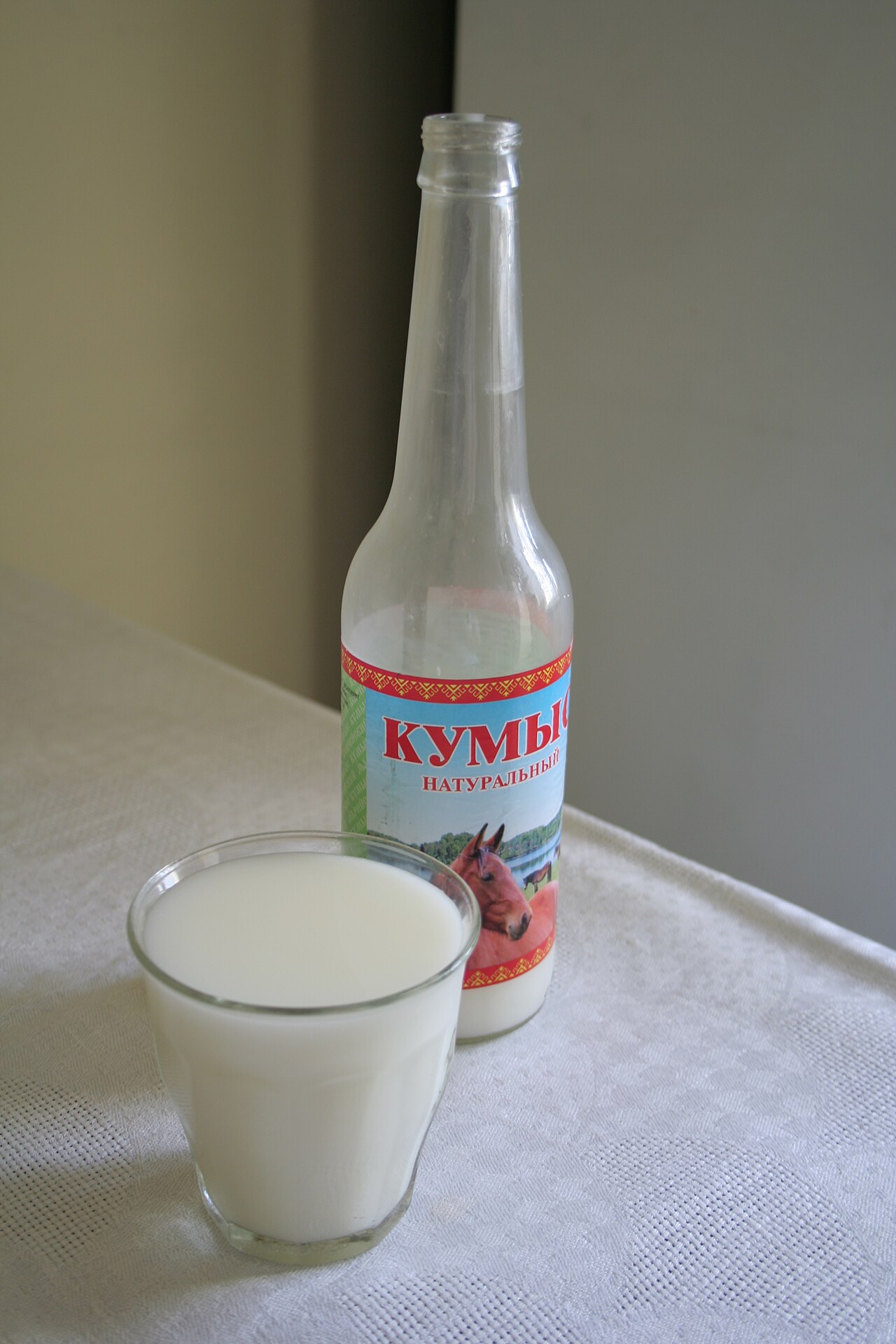
Drinks are mostly straightforward. Tea, coffee, fruit juices, kompot and mors (fruit drinks), kvass and the endless bottled waters and soft drinks are all fine. The two traditional drinks to note are animal-derived — kumis (mare’s milk) and shubat (camel’s milk) — so vegans will skip them, and ayran is a yogurt drink, also dairy. If you’re vegetarian and curious, though, a small bowl of kumis is a cultural experience worth having. Plant milks for coffee are increasingly available in city cafes but far from universal, so a vegan flat-white habit may need to go on pause in smaller places — carry your own if it matters to you.
Frequently asked questions
Is it hard to be vegetarian in Kazakhstan?
It’s challenging but doable. Kazakh cuisine is meat-heavy, and hidden broth and fat are the main trap, but in Almaty and Astana you have Georgian, Indian, Korean, Middle Eastern and dedicated veg restaurants, plus abundant bazaar produce. It gets harder in small towns and on the steppe, where you’ll rely more on bread, dairy and self-catering.
Can you be vegan in Almaty?
Yes. Almaty is the easiest place in the country for vegans, with dedicated vegan and vegetarian cafes, reliable Indian and Middle Eastern food, vegan groceries selling tofu and plant milks, and the Korean bazaar salads that are often plant-based. You’ll still need to watch for hidden dairy elsewhere, but it’s very manageable.
What do vegetarians eat in Kazakhstan?
Georgian dishes (lobio, khachapuri, badrijani), Indian and Middle Eastern food, Korean vegetable salads, vegetable lagman, pumpkin or cheese samsa and manti, plus bread, cheese, eggs, and fresh and dried produce from the bazaars. Self-catering fills the gaps in rural areas.
Is Kazakh food spicy or vegetarian-friendly?
Traditional Kazakh food is savoury and meat-centric rather than spicy or vegetarian-friendly. The vegetarian-friendly options mostly come from other cuisines present in Kazakhstan — Georgian, Indian, Korean, Middle Eastern — plus bread, dairy and produce. The heat, when you find it, is usually in Korean and Dungan dishes.
How do I say “I don’t eat meat” in Kazakhstan?
In Russian, “Ya ne yem myaso” (Я не ем мясо); in Kazakh, “Men et zhemeimin” (Мен ет жемеймін). Add “no broth, only vegetables” — “bez bulona, tolko ovoshchi” — to avoid hidden meat stock. A written note or translation app helps a lot.
Will I offend people by being vegetarian?
Not if you’re gracious about it. A meat-free diet can genuinely puzzle a host in a culture where feeding guests meat is an act of love, so decline warmly, praise and eat the other dishes, and never make anyone feel they’ve fallen short. Explaining it as a personal habit rather than a criticism smooths things entirely.
Final thoughts
Vegetarian travel in Kazakhstan is a game of preparation, not deprivation. Learn the hidden-broth trap, keep Georgian and Indian restaurants in your back pocket, treat the bazaar as your pantry, carry a phrase or two, and stock up before you head into the steppe. Do that and you’ll eat khachapuri and lobio and spicy carrot salad and warm bread and honestly not feel like you’re missing out. It takes more effort than in a lot of countries — I won’t pretend otherwise — but Kazakhstan will feed you well if you meet it halfway. Go in prepared rather than anxious, treat every bazaar as a pantry and every Georgian restaurant as a treat, and you may be surprised how happily — and how cheaply — you end up eating.
Photo credits
- Green Bazaar produce — Carl Malamud, CC0, via Wikimedia Commons
- Tandyr nan — Benjamin Goetzinger, CC BY-SA 4.0, via Wikimedia Commons
- Korean carrot salad (morkovcha) — Off-shell, CC BY-SA 4.0, via Wikimedia Commons
- Georgian khachapuri — Vyacheslav Argenberg, CC BY 4.0, via Wikimedia Commons
- Dried fruit and nuts — neiljs, CC BY 2.0, via Wikimedia Commons