Contents
- National parks vs nature reserves: what’s the difference?
- Kazakhstan’s national parks at a glance
- National parks near Almaty (the most visited)
- National parks of northern and central Kazakhstan
- National parks of the east and Altai
- National parks of the south: the Western Tian Shan
- The west: Mangystau and the steppe reserves
- Kazakhstan’s UNESCO natural World Heritage sites
- The wildlife of Kazakhstan’s national parks
- A national parks route to build your trip around
- How to visit Kazakhstan’s national parks
- Frequently asked questions
- Final thoughts
Kazakhstan’s national parks are the whole reason to come. In the ninth-largest country on Earth, protected land runs from the red canyons and alpine lakes of the Tian Shan to Altai glaciers, granite steppe oases and Caspian deserts — and because so few travellers make it here, you can often have a world-class landscape almost to yourself. This is the complete guide to Kazakhstan’s national parks: what each one protects, when to go, and how to actually visit.
Kazakhstan has 14 national parks (the newest, Ulytau, was created in 2021), alongside ten strictly protected nature reserves and a handful of wildlife sanctuaries. The distinction matters for planning, so let’s start there before running through the parks region by region.
National parks vs nature reserves: what’s the difference?
People use the terms interchangeably, but in Kazakhstan they mean very different things for a visitor.
A national park (in Kazakh, a memlekettik ulttyq tabigi park) is built for visitors: it has marked trails, gates, entrance fees, campsites and, usually, some infrastructure. You can turn up, pay a small fee and explore. Charyn, Kolsai Lakes, Altyn-Emel and Burabay are all national parks.
A nature reserve — the Soviet-era zapovednik — is a different animal: strictly protected, research-focused, and often closed to casual tourism. You generally need a permit and a ranger to enter the core zone, and some are effectively off-limits. Aksu-Zhabagly, Korgalzhyn and Ustyurt are reserves, not parks, even though every travel article lumps them in. I’ll flag which is which as we go, because turning up at a reserve expecting a national-park experience is a classic mistake.
Kazakhstan’s national parks at a glance
The fourteen national parks, where they are and what they’re known for. Reserves worth visiting are covered further down.
| Park | Region | Known for | Nearest city | Best season |
|---|---|---|---|---|
| Altyn-Emel | Jetysu (SE) | Singing Dune, painted Aktau hills, wild horses | Almaty (~250 km) | Apr–Jun, Sep–Oct |
| Charyn | Almaty (SE) | Valley of Castles canyon | Almaty (~200 km) | Apr–Jun, Sep–Oct |
| Kolsai Lakes | Almaty (SE) | Three alpine lakes + Lake Kaindy | Almaty (~300 km) | Jun–Sep |
| Ile-Alatau | Almaty (SE) | Big Almaty Lake, Medeu, Shymbulak | Almaty (adjacent) | Jun–Sep (ski Dec–Mar) |
| Zhongar-Alatau | Jetysu (SE) | Remote ranges, wild apple forests | Tekeli / Sarkand | Jun–Sep |
| Burabay | Akmola (N) | Pine-and-granite lake country | Astana (~245 km) | Jun–Sep |
| Kokshetau | Akmola / North KZ | Blue lakes and forested hills | Kokshetau | Jun–Sep |
| Bayanaul | Pavlodar (N) | Granite formations, oldest park (1985) | Ekibastuz (~140 km) | Jun–Aug |
| Buiratau | Akmola / Karaganda | Steppe-forest transition, wildlife | Astana | May–Sep |
| Karkaraly | Karaganda (C) | Granite “mountain oasis,” Shaitankol lake | Karaganda | Jun–Sep |
| Ulytau | Ulytau (C) | Sacred steppe, petroglyphs, khan graves | Zhezkazgan | May–Sep |
| Katon-Karagai | East / Altai | Largest park; Belukha, Rakhmanov Springs | Oskemen | Jul–Sep |
| Tarbagatai | East | Untouched mountain-steppe, endemics | Oskemen / Ayagoz | Jun–Sep |
| Sairam-Ugam | Turkistan (S) | Western Tian Shan, homestays | Shymkent | May–Sep |
National parks near Almaty (the most visited)
If your time is short, the southeast is where to spend it: five parks radiate out from Almaty, and between them they hold most of the scenery Kazakhstan is famous for. Our guide to day trips from Almaty covers the logistics of reaching them.
Ile-Alatau — the mountains on Almaty’s doorstep
Ile-Alatau wraps around the southern edge of Almaty, which makes it the single most accessible park in the country. Within it sit the turquoise Big Almaty Lake at 2,511 m, the Medeu skating rink and Shymbulak ski resort, the Tuyuksu glaciers and the wildflower plateau of Kok-Zhailyau. You can be hiking among snow leopards’ territory (they’re here, though you won’t see one) within an hour of a city café.

Charyn — the Valley of Castles
Charyn National Park protects Kazakhstan’s answer to the Grand Canyon: a system of gorges cut by the Charyn River, the most famous being the Valley of Castles, a corridor of red sandstone towers up to 300 m high. It’s about 200 km east of Almaty, an easy long day trip, with a token entrance fee and a relict grove of Sogdian ash at the canyon floor. Best in spring and autumn, when the walls glow and the heat is bearable.

Kolsai Lakes — the Pearls of the Tian Shan
Kolsai Lakes National Park holds three alpine lakes strung up a forested valley toward the Kyrgyz border, plus the celebrated Lake Kaindy with its sunken spruce forest. The lower Kolsai lake is road-accessible with guesthouses in Saty village; the middle and upper lakes are a proper hike. This is the best short-trek country in the country — and, deservedly, one of its most photographed. Full route details are in our hiking in Kazakhstan guide.

Altyn-Emel — dunes, painted mountains and wild horses
Altyn-Emel is the desert park: home to the 150-metre Singing Dune that hums in the wind, the striped chalk Aktau (“White Mountains”), the volcanic Katutau, and the Besshatyr burial mounds of the ancient Saka. It’s also a stronghold for reintroduced kulan (wild ass) and Przewalski’s horses. You need a permit from the park office at Basshi and a 4×4, so most people visit on a one-or-two-night tour — it’s less a day trip than a small expedition.

Together, Charyn, Kolsai/Kaindy and Altyn-Emel are often sold as Kazakhstan’s “Golden Triangle” — the classic multi-day loop east of Almaty, and the single best introduction to the country’s nature. The fifth southeastern park, Zhongar-Alatau, is a wilder, far less visited range further north, prized by botanists as a home of the wild apple and by trekkers wanting genuine solitude.
National parks of northern and central Kazakhstan
The northern steppe hides pockets of pine, granite and lake that feel like green islands — most within reach of Astana. Several appear in our guide to northern and eastern Kazakhstan.
Burabay (Borovoe)
Burabay is the north’s beloved holiday park — the “Kazakh Switzerland” — where pine forests, clear lakes and weathered granite hills break the flatness a few hours from Astana. The emblem is Zhumbaktas, the “Sphinx rock” rising from Lake Borovoe. It’s the most developed park on this list, busy with domestic tourists in summer, and lovely for a relaxed lake-and-forest weekend.

Bayanaul, Karkaraly and Kokshetau
Three more steppe-and-granite parks reward anyone travelling the north. Bayanaul, in Pavlodar region, is Kazakhstan’s oldest national park (established 1985), full of wind-sculpted rock and pine-fringed lakes. Karkaraly, near Karaganda, is a granite “mountain oasis” wrapped around the legend-haunted Shaitankol (“Devil’s Lake”). And Kokshetau, further north, mixes blue lakes with the taiga-steppe transition and the Botai archaeological sites, where horses may first have been domesticated.
Buiratau and Ulytau
Closer to the capital, Buiratau protects a steppe-forest transition zone with reintroduced deer and bison and early-Turkic monuments. And in the dead centre of the country, Ulytau — the newest national park, created in 2021 — guards the symbolic heartland of the Kazakh nation: sacred low mountains dotted with petroglyphs, ancient necropolises and the graves of khans. It’s remote and thinly visited, but few places carry more historical weight.
Korgalzhyn: the reserve with the flamingos
Two hours from Astana, the Korgalzhyn Nature Reserve (a reserve, not a park) protects Lake Tengiz, the northernmost breeding site of the greater flamingo and part of the Saryarka UNESCO World Heritage Site. Spring and early summer bring vast flocks of migrating birds. You’ll want a guide and to respect the protected zones, but the sight of pink flamingos on a steppe lake is unforgettable.

National parks of the east and Altai
The far east is Kazakhstan’s greenest, most mountainous corner, and its parks are the wildest of all — a long way from Almaty and often needing a 4×4 and, in places, a border permit.
Katon-Karagai — the largest park
Katon-Karagai is Kazakhstan’s biggest national park, sprawling across the Kazakh Altai toward the Russian, Chinese and Mongolian borders. Within it are Belukha (4,506 m), the country’s highest and most sacred peak; the Rakhmanov hot springs; the Berel royal burial mounds; and endless alpine meadow and taiga. It’s a summer-only destination reached via Oskemen, and the Belukha/Rakhmanov area needs a border-zone permit arranged in advance — but it’s the most spectacular wilderness in the country.

Tarbagatai
Newer and even less visited, Tarbagatai National Park protects the mountain-steppe of the Tarbagatai ridge, rich in endemic plants and Bronze Age monuments. It’s genuine off-the-map territory, for travellers who want a park with essentially no other tourists in it.
National parks of the south: the Western Tian Shan
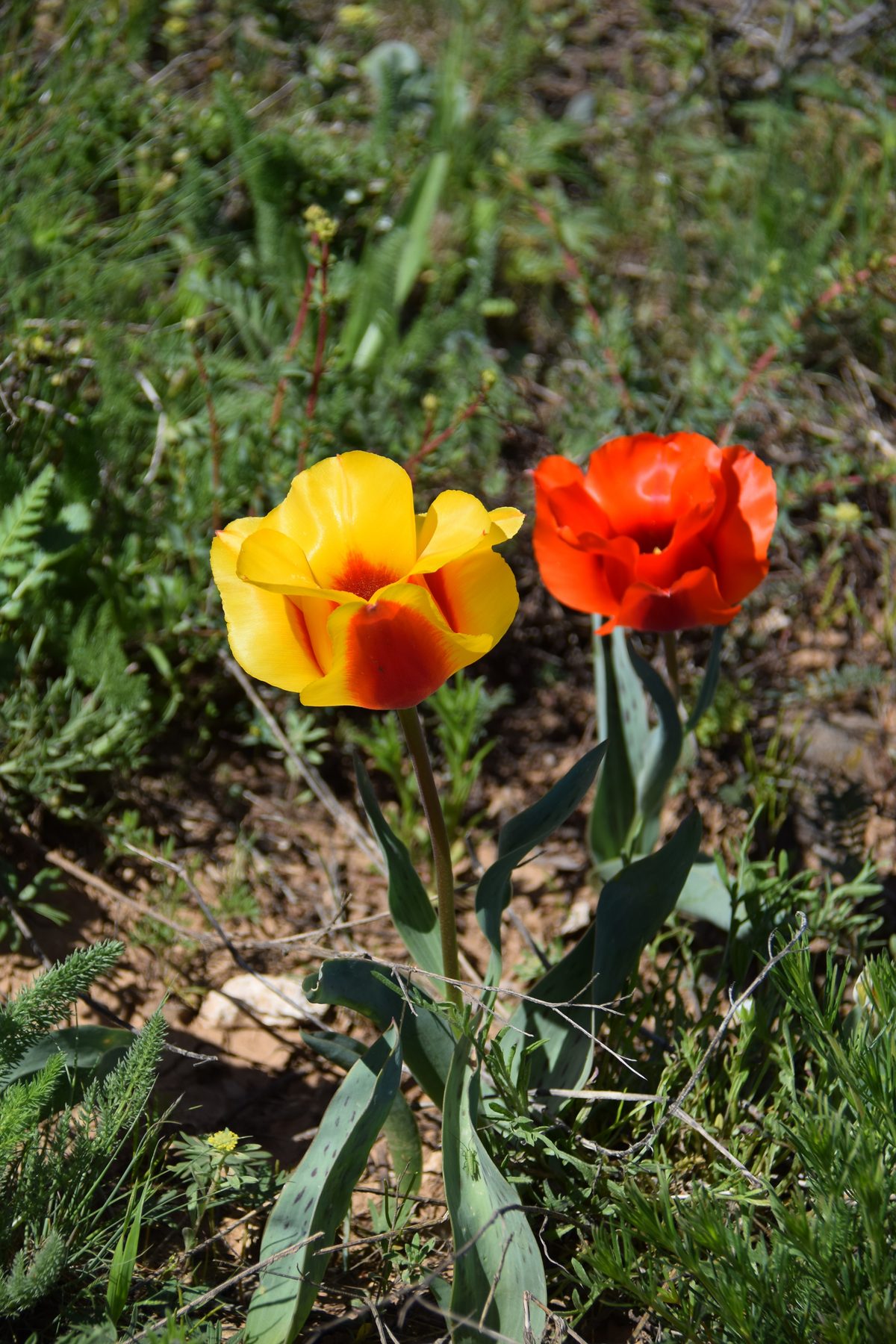
Sairam-Ugam National Park, near Shymkent, protects the Kazakh flank of the Western Tian Shan — alpine meadows, the endemic Menzbier’s marmot, and a growing network of village homestays that make it one of the best places for community-based mountain tourism. It borders the famous Aksu-Zhabagly Nature Reserve, Central Asia’s oldest (established 1926), whose deep canyon and April hillsides of wild tulips are legendary among naturalists. Aksu-Zhabagly is a reserve, so you enter the core zone with a ranger — well worth arranging for the birds, ibex and the tulips that are the wild ancestors of the ones in gardens worldwide.
The west: Mangystau and the steppe reserves
The far west has no classic national park, but it does have the vast Ustyurt Nature Reserve — a remote clay-desert reserve of chalk buttes, salt pans and endangered urial sheep, out beyond the surreal landscapes of Mangystau. It’s strictly protected and expedition-only; most travellers experience the region through the wider Mangystau desert rather than the reserve itself. Our Mangystau guide covers how to explore that corner responsibly.
Kazakhstan’s UNESCO natural World Heritage sites
Two of Kazakhstan’s protected areas carry the highest global designation. Saryarka – Steppe and Lakes of Northern Kazakhstan (inscribed 2008) bundles the Korgalzhyn and Naurzum reserves, a critical flyway for migrating birds including Siberian cranes and flamingos. Western Tien-Shan (2016), shared with Kyrgyzstan and Uzbekistan, includes Aksu-Zhabagly, Karatau and Sairam-Ugam, protecting snow leopards and the wild fruit-and-nut forests that gave the world the apple. Both are strong reasons to build a trip around Kazakhstan’s nature.
The wildlife of Kazakhstan’s national parks
Part of what makes these parks special is what lives in them. The mountain parks — Ile-Alatau, Aksu-Zhabagly and Katon-Karagai — are snow leopard country; you almost certainly won’t see one, but knowing the ghost of the mountains is up there changes how the high valleys feel. Alongside them roam Siberian ibex, argali sheep, brown bears, elk and the marmots whose whistles are the soundtrack of a Tian Shan summer.
The steppe and desert parks have their own cast. Altyn-Emel is a reintroduction success story, with herds of kulan (Asiatic wild ass) and rare Przewalski’s horses — the last truly wild horse — grazing beneath the painted mountains, along with goitered gazelle. Out on the northern steppe, the critically endangered saiga antelope, with its extraordinary trunk-like nose, has rebounded into the millions, and the lakes of Korgalzhyn and Saryarka fill each spring with flamingos, pelicans, and migrating cranes on one of Asia’s great flyways. For birdwatchers and wildlife photographers, Kazakhstan is one of the most underrated destinations anywhere.
A national parks route to build your trip around
Because the parks cluster by region, the easiest way to plan is to pick a base and loop. For a first trip, nothing beats the southeast: from Almaty, string together the “Golden Triangle” of Charyn, the Kolsai and Kaindy lakes and Altyn-Emel over four or five days, with an easy extra day in Ile-Alatau above the city. That single loop shows you canyon, alpine lake, desert dune and glacier — the whole range of Kazakh landscape — without a domestic flight.
With more time, add a region: fly north to Astana for Burabay and the Korgalzhyn flamingos; east to Oskemen for the Altai grandeur of Katon-Karagai; or south to Shymkent for Sairam-Ugam and Aksu-Zhabagly, which pairs beautifully with the Silk Road city of Turkestan. Our Kazakhstan itinerary guide turns these building blocks into day-by-day plans, and our roundup of beautiful places in Kazakhstan helps you decide which landscapes matter most to you.
Parks are only one thread of a Kazakhstan trip. Our guide to things to do in Kazakhstan sets them alongside the cities and Silk Road sites, while lakes in Kazakhstan and Kazakhstan off the beaten path pick up where the protected areas end.
How to visit Kazakhstan’s national parks
A few practicalities that apply almost everywhere.
Fees and permits
Entrance fees are small — typically a few hundred to around 1,500 tenge per person (a dollar or two or three), usually cash-only at the gate, so carry small notes. Charyn and Kolsai sit in border zones, so bring your passport. Altyn-Emel and the Altai border areas need permits arranged in advance (at the park office or through an operator); most other parks you can simply drive into.
Getting there and around
Almaty is the hub for the southeast parks, Astana for the north, Oskemen for the Altai and Shymkent for the south. Public transport reaches the gateway towns but rarely the parks themselves, so you’ll want a rental car, a driver or an organised tour — and a proper 4×4 for Altyn-Emel, the Altai and anywhere described as “rough.” Our guide to getting around Kazakhstan covers the options.
When to go
Spring (April–June) and autumn (September–October) are best for the southeastern canyons and steppe; the high Altai and alpine lakes are a summer game (July–September); and Ile-Alatau doubles as a winter park for skiing above Almaty. Match the season to the region and check our best time to visit guide before locking in dates.
Travel responsibly
These parks are lightly managed and easily damaged. Stick to tracks, camp only where allowed, take all rubbish out, keep your distance from wildlife, and hire local guides and homestays where you can — it keeps the money in the communities that steward the land. Kazakhstan’s greatest travel asset is that its wild places are still wild; keeping them that way is on all of us.
Where to stay
Accommodation ranges from full resorts to a mattress in a village home. Burabay has hotels and Soviet-style sanatoriums; Ile-Alatau has the Shymbulak mountain resort, with Almaty itself as the obvious base. For the wilder parks, the norm is a guesthouse or homestay in the gateway village — Saty for the Kolsai lakes, Basshi for Altyn-Emel, Zhabagly for Aksu-Zhabagly, Katon-Karagai village for the Altai — or your own tent. Homestays are inexpensive, usually include hearty home cooking, and put your money straight into the communities that look after the land; our guide to where to stay in Kazakhstan runs through the options. Book ahead in July and August, when domestic tourism peaks and the popular parks fill up.
Frequently asked questions
How many national parks does Kazakhstan have?
Kazakhstan has 14 national parks as of 2026, the newest being Ulytau (established 2021). It also has ten strictly protected nature reserves (zapovedniks) and several wildlife sanctuaries, which are managed differently and often need permits to enter.
What is the largest national park in Kazakhstan?
Katon-Karagai in the Altai is the largest, covering over 640,000 hectares of mountains, glaciers and taiga, including Mount Belukha, the country’s highest peak. Altyn-Emel, near Almaty, is the biggest of the popular southeastern parks.
Is Charyn Canyon a national park?
Yes. Charyn Canyon lies within Charyn National Park, established in 2004. Its most famous feature, the Valley of Castles, is one of several gorges in the park and the easiest to visit as a day trip from Almaty.
What is the difference between a national park and a nature reserve in Kazakhstan?
National parks are set up for visitors, with trails, fees and infrastructure. Nature reserves (zapovedniks) are strictly protected for science and conservation; access is limited, usually requiring a permit and a ranger. Aksu-Zhabagly, Korgalzhyn and Ustyurt are reserves, not parks.
Which national parks are near Almaty?
Five: Ile-Alatau (on the city’s doorstep), Charyn, Kolsai Lakes, Altyn-Emel and the remote Zhongar-Alatau. The first four make up the classic “Golden Triangle” loop and are the most popular parks in the country.
What is the oldest national park in Kazakhstan?
Bayanaul, in Pavlodar region, is the oldest national park, established in 1985. The oldest protected area of any kind is the Aksu-Zhabagly Nature Reserve in the south, created in 1926 — the first nature reserve in Central Asia.
Do you need a guide to visit Kazakhstan’s national parks?
Not for the accessible ones. You can visit Charyn, Ile-Alatau and Burabay independently. But Altyn-Emel, the Altai border areas around Belukha, and the core zones of nature reserves like Aksu-Zhabagly require permits and usually a ranger or guide, so those are best arranged through a local operator.
Are Kazakhstan’s national parks worth visiting?
Absolutely — they are the country’s single biggest draw. From canyons and alpine lakes near Almaty to Altai glaciers and flamingo-filled steppe lakes, the parks offer world-class scenery with a fraction of the crowds you’d find in better-known destinations. For most visitors, the parks are the trip.
When is the best time to visit Kazakhstan’s national parks?
It depends on the region. The southeastern canyons and steppe parks such as Charyn and Altyn-Emel are best in spring (April to June) and autumn (September to October), when the heat eases and the light is beautiful. The high-mountain parks and alpine lakes — Kolsai, Ile-Alatau and Katon-Karagai in the Altai — are at their finest in summer, roughly July to September. Ile-Alatau above Almaty also becomes a ski destination from December to March, so there is genuinely no bad season, only a right park for the month you are travelling.
Final thoughts
Kazakhstan’s parks are its case for a visit, full stop. You could spend a fortnight in the southeast alone and not exhaust the canyons and lakes, and still have the Altai, the northern lake country and the western deserts untouched. Start with the roundup in our guide to the most beautiful places in Kazakhstan, pick a region, and go while these places are still this quiet.
Photo credits
All images via Wikimedia Commons. Big Almaty Lake by Nessi Gileva / red_fox (CC0); Charyn by Bgag (CC0); Kolsai Lake by Dimash Kenesbek (CC BY-SA 4.0); Singing Dune, Altyn-Emel by Jjm2311 (CC BY-SA 4.0); Lake Borovoe, Burabay by Yevgeny Yemelyanov (CC BY-SA 4.0); Korgalzhyn flamingos by Dildakhmet (CC BY-SA 4.0); Mount Belukha by Gai Sever (CC BY-SA 4.0); wild tulips by V.A. Kovshar (CC BY-SA 4.0). Licensed under the respective Creative Commons terms.


